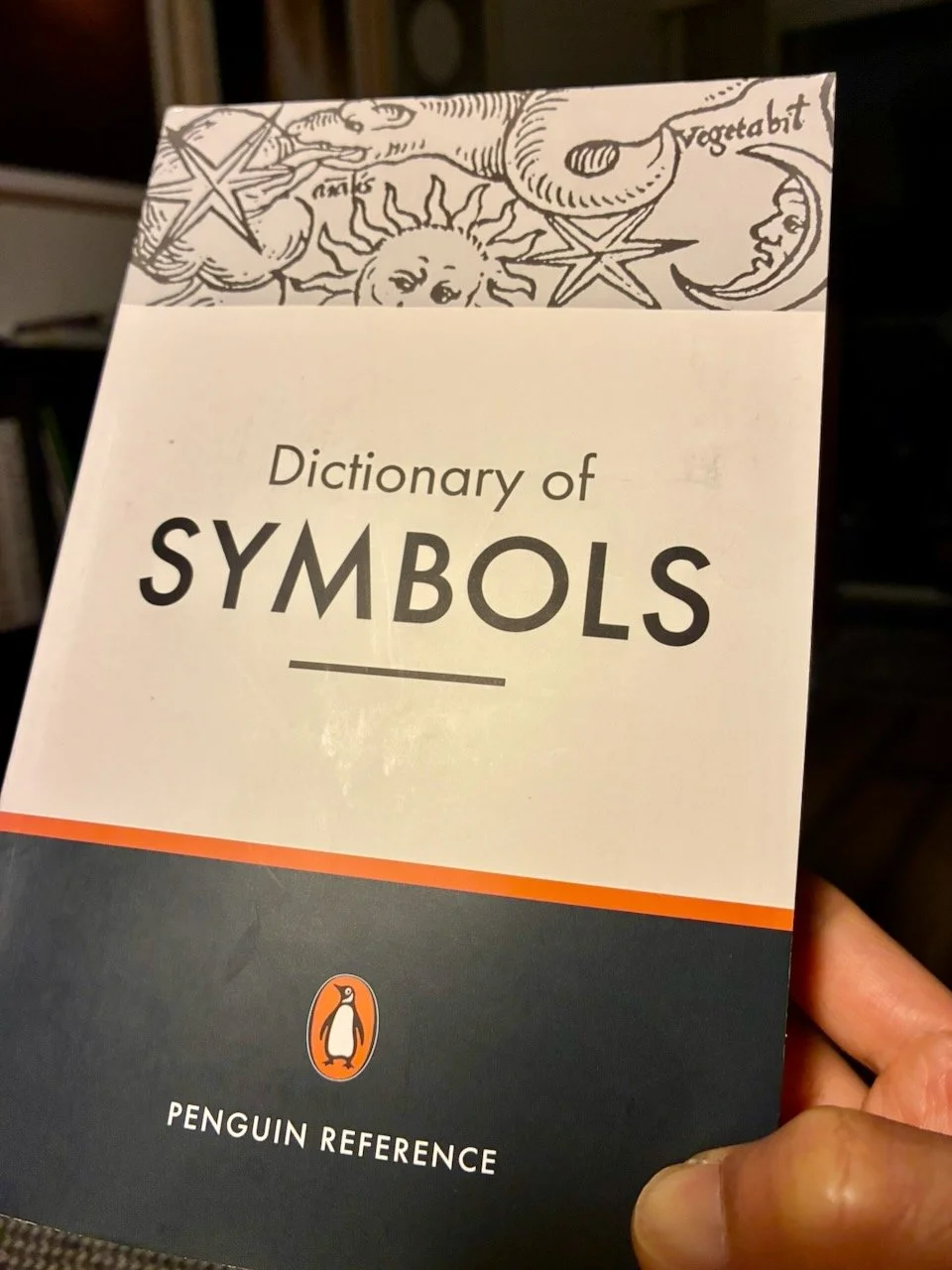
Dictionary of SYMBOLS, ‘tile’
tile In the Masons' language, to tile or cover the Temple is to protect it from 'rain-damage' caused by the intrusion of the uninitiated and of external influences. Thus one of the Outer Guards is the Tyler who only admits the candidate after he has answered questions suited to his grade. Unless it is "tiled" or covered, the Temple will let in the rain and hence, in French Masonry, the words 'It's raining' mean that there are uninitiated intruders in the Lodge meeting (BOUM).
Tiles symbolize the protection of a secret, and in their nocturnal aspect utter indifference to spiritual influences and the powers of self-development, a regression into what has been acquired and fixed. Thereupon the secret becomes corrupted and void of meaning.
Dictionary of SYMBOLS, ‘tile’
Paul Bowles
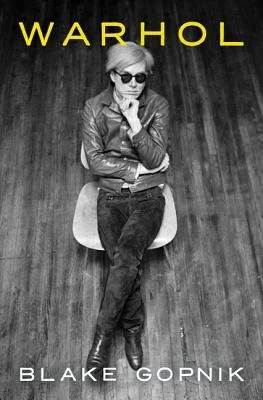
Warhol
If there's any single force behind the wild range of Warhol's art, it is his hatred of the already done.
Philip Pearlstein remembered that, more than anyone else in their clique, the young Warhol believed "that you should always try to find something new." This idea, so central to Warhol's entire career, wasn't something he was born with; we can track him learning it as a student aesthete in Pittsburgh. A teacher of his at Tech is supposed to have laid down the law to him: "You have got to do things the way you want them, and be damned with what I think, be damned with what anybody else around you thinks. Go do it the way you see it, to please yourself, or you'll never amount to anything."
Warhol, lake Gopnik, page 65
Theory of Colours, Goethe
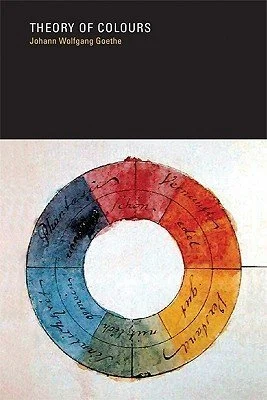
The completeness of nature displays itself to another sense in a similar way. Let the eye be closed, let the sense of hearing be excited, and from the lightest breath to the wildest din, from the simplest sound to the highest harmony, from the most vehement and impassioned cry to the gentlest word of reason, still it is Nature that speaks and manifests her presence, her power, her pervading life and the vastness of her relations; so that a blind man to whom the infinite visible is denied, can still comprehend an infinite vitality by means of another organ.
And thus as we descend the scale of being, Nature speaks to other senses—to known, mis-understood, and unknown senses: so speaks she with herself and to us in a thousand modes. To the attentive observer she is nowhere dead nor silent; she has even a secret agent in inflexible matter, in a metal, the smallest portions of which tell us what is passing in the entire mass. However manifold, complicated, and unintelligible this language may often seem to us, yet its elements remain ever the same.
Theory of Colours, Johann Wolfgang Goethe,
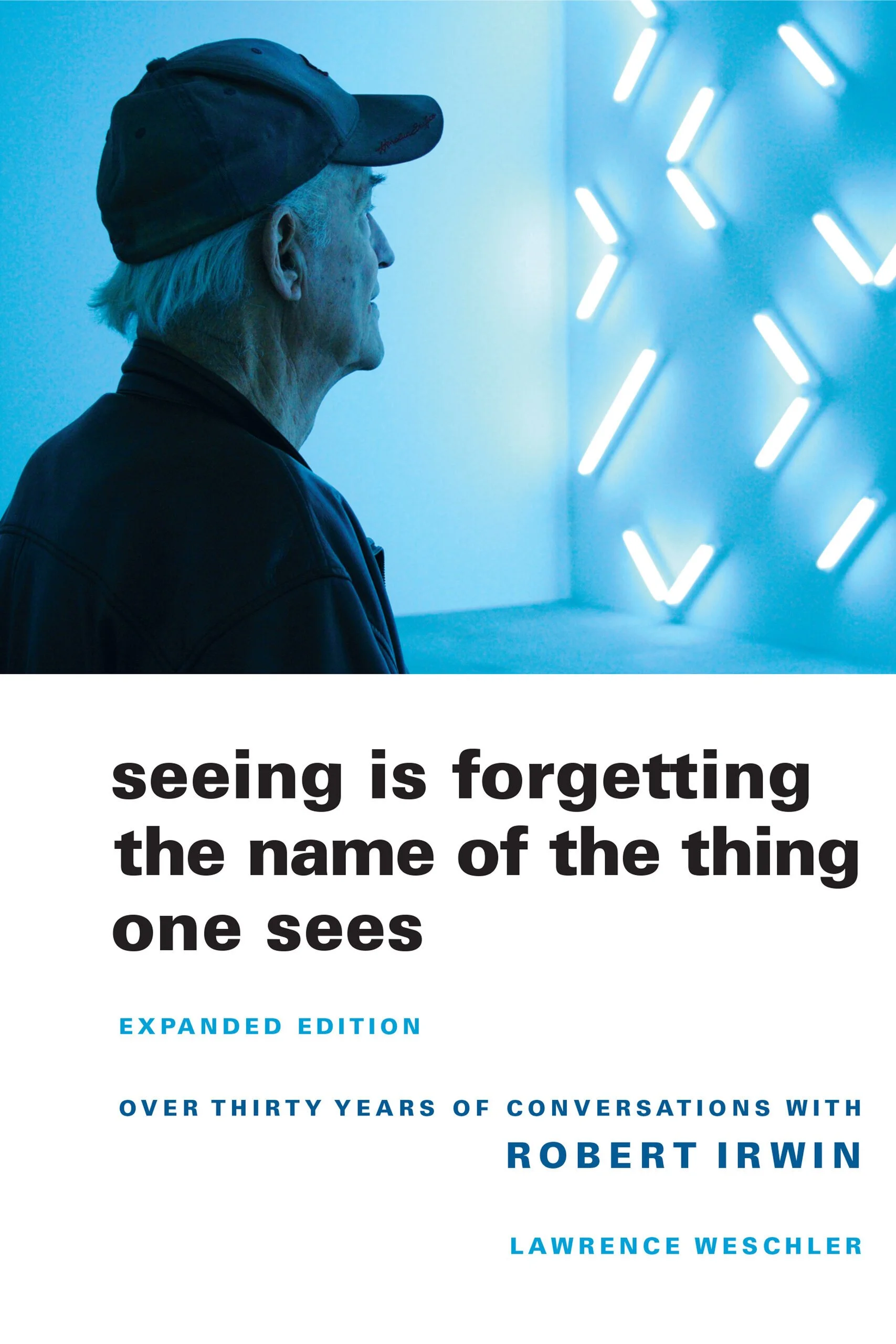
seeing is forgetting the names of the thing one sees
Bob had been headed south from Paris toward Morocco, when, passing through Barcelona, he first heard about Ibiza, a small island off the Spanish Mediterranean coast. He continued to North Africa, but several weeks later, for no particular reason—it was cheap, it was warm, it was said to be peaceful —he ventured out to the dry, barren island. In subsequent years Ibiza (pronounced "E-bē-tha" by native Castilians) became known as something of an artist's colony, a winter resort, but during the season Irwin spent there, it was still utterly remote. On the edge of a barren peninsula, Irwin installed himself one day in a small rented cabin and then did not converse with a soul for the next eight months.
Artists who came to abstract expressionism with a literate pictorial bias, Irwin feels, were especially unprepared to confront these physical issues. This was particularly the case with the European abstract expressionists, he argues, steeped as they were in the tradition of post-Renaissance pictorial expression. Paradoxically, one artist who exercised a pivotal fascination for the young Californian, particularly in terms of his mastery of those physical laws, was a contemporary European, but not one of those who is usually considered an abstract expressionist. "The Italian painter Giorgio Morandi captivated a lot of us," Irwin recalls, "and we eventually even staged a small show of his paintings at Ferus" (in 1961). "Now, here was a painter whit been repeating the same subject, the same theme, over and over again, for year.
In his studio, he had a collection of bottles and jars, and he painted them continuously: small paintings of groups of these bottles on his table, a kind of still life.
So in one sense they seemed extremely traditional, extremely formal. They still had a subject matter in the most classical sense, the simplest, most direct kind of subject matter, unloaded in any way. This especially seemed the case when you compared Morandi with some of his bold, gestural contemporaries, say, someone like Pierre Soulages, with his modernist imagery, the strokes and slashes and all that.I mean, someone with a conceptual, literate eye, oriented toward looking at the imagery, would certainly think of the Soulages as the modern painting and the Morandi as the old-fashioned one. But if you looked at them on the physical level, in terms of how they actually dealt with the time and space relationships within the painting per se, the Soulages was pre-cubist, almost floating in like a seventeenth-century space, with its sense of distinct figure and ground; whereas the Morandi was essentially the same as a de Kooning or a Kline, with its intimate interpenetration between figure and ground. In Morandi they were never really separate. In fact, even with the figurative elements, there were cases where his ground actually got in front of the figures or in many cases couched them so intimately that there was no separating the two. Physically he carved a space for each one of these elements, where the amount of space left by the so-called ground was exactly that which the object occupied, so that it was as if the air had taken on substance. They were really good paintings.
"But anyway, my discovery was that from one hundred yards away—this was just one of those little breakthroughs—that from this distance of one hundred yards, I looked over, and that goddamn Guston.... Now, I'm talking not on quality, and not on any assumption of what you like or don't like, but on just pure strength, which was one of the things we were into. Strength was a big word in abstract expressionism; you were trying to get power into the painting, so that the painting really vibrated, had life to it. It wasn't just colored shapes sitting flat. It had to do with getting a real tension going in the thing, something that made the thing really stand up and hum.... Well, that goddamn Guston just blew the Brooks right off the wall.
"Now, by all overt measures—size, contrast, color intensity that shouldn't have happened. Everything was in favor of the Brooks. But the Guston blew it right off the wall. Just wiped it out. Not on quality, just on power. The Brooks fell into the background, and the Guston just took over. And I learned something about... some people call it 'the inner life of the painting, all that romantic stuff, and I guess that's a way of talking about it. But shapes on a painting are just shapes on a canvas unless they start acting on each other and really, in a sense, multiplying.
A good painting has a gathering, interactive build-up in it. It's a psychic build-up, but it's also a pure energy build-up. And the good artists all knew it, too. That's what a good Vermeer has, or a raku cup, or a Stonehenge. And when they've got it, they just jump off the goddamn wall at you. They just, bam!"
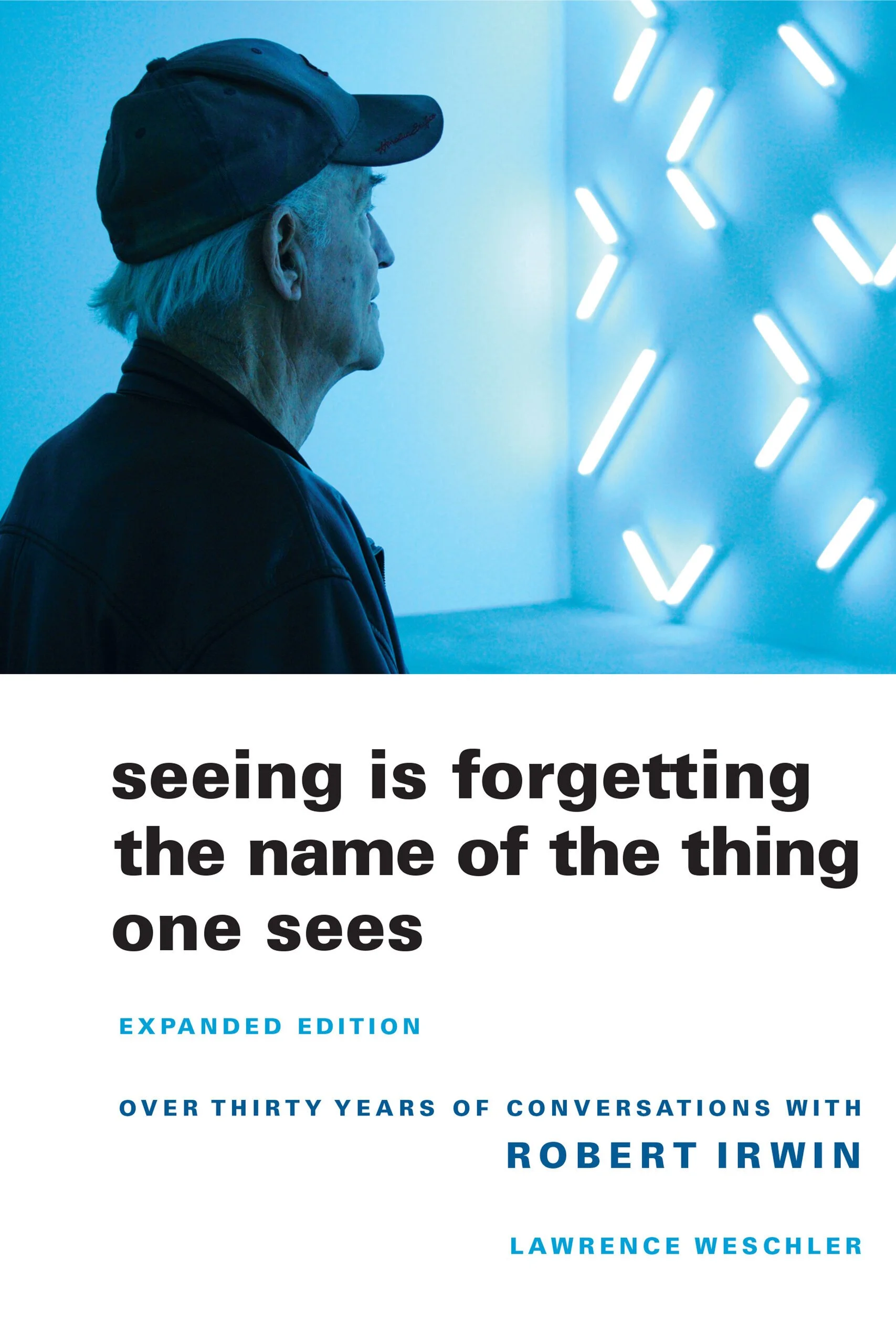
seeing is forgetting the names of the thing one sees
Though Irwin now began visiting the museums, for a long while his curiosity remained at best perfunctory. Mainly he walked around the cities aimlessly. "I walked in the daytime for a long, long time, but then I got into the habit in the evening of buying myself a couple bottles of beer, sticking them in my pocket, and then just walking, for example, in Paris, all night long in Paris until it became dawn, and then returning to my hotel room, sleeping till evening, having dinner, and starting out again. Just walking by myself. At certain times of night I'd be the only one out in the whole city. I mean, whole areas were just dead silent. And it was an incredibly romantic, very beautiful city, especially late at night like that."
It was a strange way to see Europe. "After I'd been over about six or eight times during that decade," Bob recalls, "having spent maybe two or more years there al-together, I remember once having a conversation with some people who'd just come back from a two-week tour and being unable to convince them that I'd been there at all. They'd talk Étoile and Élysées and Opéra and all those names, and I couldn't remember any of that stuff. I'd probably seen more of Paris than all of those people combined, but I couldn't tell them anywhere I'd been in terms of the name of the street or the café or whatever. I just wasn't interested in that. In fact, I maybe saw all the churches in Paris, but I never went to see any of the churches in Paris. In my wanderings there would be this building and I'd walk into it just like I walked into every building, but I didn't care whether it was built in the Whatever or who did it. I mean, even to this day, I couldn't care less. On the other hand, I retained a very real sense of the differing textures of each of those places..." With each new trip Irwin began spending more and more time in the muse-ums. As his own involvement in art grew, his interest in the masters expanded— but only to a point. "After going through the Louvre twenty times and the National Museum and the Prado and whatever—I can't remember the names of the ones in Amsterdam and Florence—well, after a while it got to the point where Id enter a room and just twirl around and go to the next one and twirl and then the next one.... I mean, it got to the point where if I ever saw another fucking brown painting ... I was so fucking tired of brown paintings. I mean, they all looked exactly the same! After a while my whole relationship to the history of art got cleared out to a matter of trusting my own eye. I mean, I could enter a room and go like. that, zap, and pick out the one or two paintings that were at all interesting in terms of technique, like some Davids that were technically really incredible; and there were some that really just jumped out at you, like some Vermeers which were just spectacular. Now and then a piece of Egyptian art or something would really bang you. And if you ever saw an impressionist painting in that atmosphere-which I did once, saw a Gauguin through a haze of brown—it just summoned you back to your senses. But as for the Renaissance and the high tradition, I just came to see that—man, are you kidding? I wasn't interested in any of that stuff. And I'm still not. I look at Da Vincis and Piero della Francescas, and I'm not interested at all. I look at them with the same kind of interest I'd have turning the pages of a magazine.
Auguste Rodin, by Rainer Maria Rilke
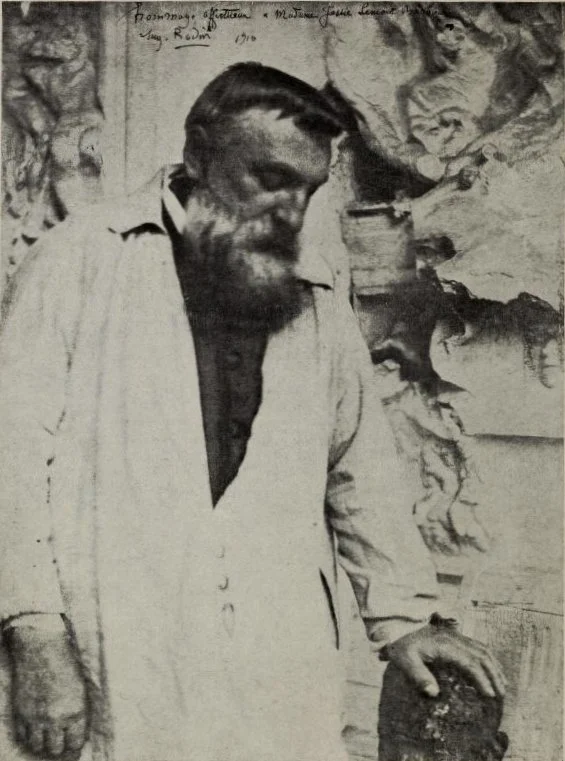
The work that is to be spoken of in these pages developed through long years. It has grown like a forest and has not lost one hour. One walks among these thousand forms overwhelmed with the imagination and the craftsmanship which they represent, and involuntarily one looks for the two hands out of which this world has risen.
One thinks of how small man's hands are, how soon they tire, and how little time is given them to move. And one longs to see these hands that have lived like a hundred hands; like a nation of hands that rose before sunrise for the accomplishment of this work. One asks for the man who directs these hands. Who is this man?
He is a man rich in years; and his life is one that cannot be related. It began and still continues; stretches out deeply into a great age, and to us, it seems as though it had passed many hundreds of years ago. It perhaps had a childhood; a childhood in poverty-dark, groping and uncertain. And maybe it possesses this childhood still, for, says St. Augustine somewhere, whither should it have gone? It holds, perchance, all its past hours, the hours of expectation and abandonment, the hours of doubt and the long hours of need. It is a life that has lost nothing and has forgotten nothing; a life that has absorbed all things as it passed, for only out of such a life as this, we believe, could have risen such fulness and abundance of work; only such a life as this, in which everything is simultaneous and awake, in which nothing passes unnoticed, could remain young and strong and rise again and again to high creations. Perchance the time will come when someone will picture this life, its details, its episodes and its conflicts.
Someone will tell a story of a child that often forgot to eat because it seemed more important to him to carve inferior wood with a cheap knife, and someone will relate some event of the days of early manhood that contained promise of future greatnessone of those incidents that are intimate and prophetic.
Auguste Rodin, by Rainer Maria Rilke, Translated by Jessie Lemon and Hans Trausil
Page 4,5
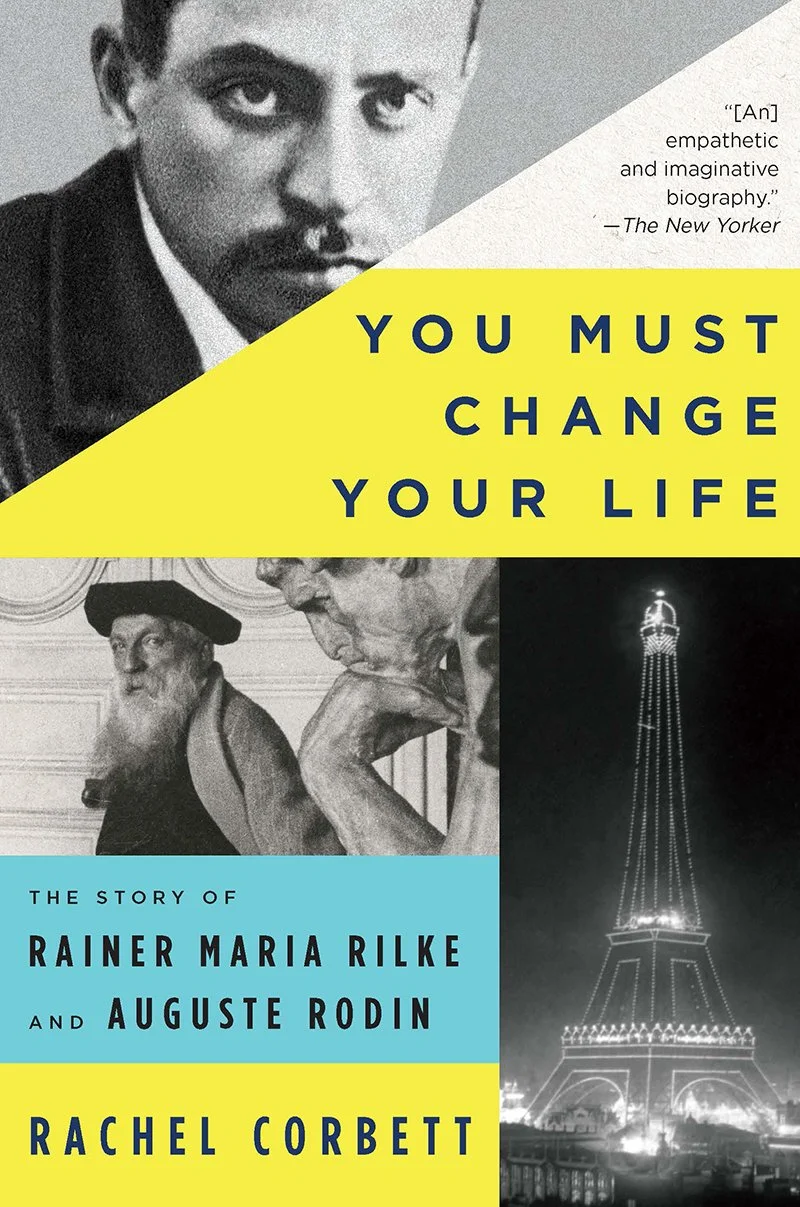
YOU MUST CHANGE YOUR LIFE - Rachel Corbett
AFTER JUST TEN DAYS with Rodin, Rilke sent his new master a letter. He confessed that it might seem strange to write since they saw each other so often, but he felt the language barrier prevented him from fully expressing himself. In the quiet of his little room he could work out the words to tell Rodin precisely how much he had inspired him. He had given him the strength to suffer through loneliness, to accept sacrifice and to "disarm even the anxieties of poverty." He told him that his wife had agreed with him on this, and would be joining him in Paris soon. If they could both find work there, they hoped to stay indefinitely. He sensed that this journey would prove "the great rebirth of my life."
You must change your life, Rachel Corbett page 90
Rodin did not await inspiration, for some pure expression to flov from his soul onto passive materials, as Rilke had always done. To Rodin, god was "too great to send us direct inspiration." Instead, it was up to the artist to create "earthly angels." That's why Rodin approached unformed clay "without knowing what exactly would result, like a worm working its way from point to point in the dark, Rilke would write in the monograph. He would grab hold of it with his huge hands, work it over, spit on it and come to know it entirely, energizing the object and stirring it to life in the process. "The creative artist has no right to select. His work must be imbued with a spirit of unyielding dutifulness," Rilke wrote.
Rodin's hyper-animated style of sculpting produced no less dynamic bodies of work. Rodin manipulated light to enhance the sense of movement in his figures. When the geometry of the planes aligned just right, light would coast and dart across the surfaces and create the illusion of motion. Sometimes Rodin measured the success of this effect by employing a candle test, which illuminated the points of intersection between light and shadow. Rodin once demonstrated the test to a student at the Louvre. Arriving in the evening, just before the museum closed, he held up a candle to the Venus de Milo. He instructed the student to watch the light as he moved it around her contours. Notice how it glided across over the surfaces without jumping at a single hollow, rift or seam. Candlelight revealed all flaws, he believed.
You must change your life, Rachel Corbett page 92
Each day after the library closed, the poet walked back toward his hostel along the Seine, pausing at the ile de la Cité to watch the sun set over the two towers of Notre Dame. The cathedral built for the Virgin Mary had been ravaged and restored in battle after battle, its ornaments were looted, yet its walls stood as strong as its namesake's will was chaste. To Rilke, it was all the more beautiful for enduring that humiliation. This was the hour when the river turned to "gray silk" and the city lights glowed like stars fallen from the sky. Once darkness fell, people would once again pollute the air with their music and perfume, but cathedrals always offered asylum from the senses. Like a forest or an ocean, a cathedral was a place where the world hushed up and time stood still.
You must change your life, Rachel Corbett page 93
Rodin's mantra, Travailler, toujours travailler, contradicted everything Rilke had learned about the fusion of art and life in Worpswede. But the poet had spent years watching the clouds, anxiously awaiting a muse that never came. Rodin's example gave him permission to act. Now, to work was to live without waiting. More than that, Rilke con-cluded, "to work is to live without dying."
You must change your life, Rachel Corbett page 93,94
The Creative Act: A Way of Being, by Rick Rubin
Art may only exist, and the artist may only evolve, by completing the work.
Page 164
Carl Rogers said, "The personal is the universal." The personal is what makes art matter. Our point of view, not our drawing skills or musical virtuosity or ability to tell a story-Consider the difference between art and most other trades. In the arts, our filter is the defining factor of the work. In science or technology, the aims are different. The reason we create art isn't with the intention of making something useful for someone else. We create to express who we are.
Who we are and where we are on our journey.
Page 178
A point is an idea intentionally expressed. A point of view is the perspective-conscious and unconscious-through which the work emerges.
What causes us to notice a piece of art is rarely the point being made. We are drawn to the way an artist's filter refracts ideas, not to the ideas themselves. It's of no use to know your point of view. It's already there, working in the background, ever evolving. Efforts to portray point of view on purpose often lead to a false representation. We hold on to stories about our perspective that are inaccurate and limiting.
Wayne Dyer said that when you squeeze an orange, what comes out is orange juice. When you get squeezed, whatever comes out is what's inside you. And part of that extract is the point of view you don't even know you have. It's baked into the art you make and the opinions you share. Long after a work is completed, we may look back and understand our true point of view in it. We don't need to make a point of making a point. It will appear when it appears. The true point is already made in the innocent act of perception and creation.
Page 179
Much of art's greatness is felt on a gut level. Your self-expression allows the audience to have their own self-expression. If your work speaks to them, it is of no consequence if you are heard and understood. Set aside such concerns about whether your work will be comprehended. These thoughts can only cause interference, for both the art and audience. Most people aren't interested in being told what to think or feel. Great art is created through freedom of self-expression and received with freedom of individual interpretation.
Great art opens a conversation rather than closing it. And often this conversation is started by accident.
Page 180
Self-awareness is a transcendence. An abandonment of ego. A letting go. This notion may seem elusive, because in the same breath, it includes tuning in to the self and surrendering the self. Yet these are not as contradictory as they may seem. As artists, we are on a continual quest to get closer to the universe by getting closer to self. Moving ever nearer to the Point where we can no longer tell where one begins and the other ends. We're on a distant metaphysical journey from the here to the now.
Page 259
It's helpful to work as if the project you're engaged in is bigger than you.
Page 261
Think to yourself:
I'm just here to create.
Page 315
The most truthful and irrational aspects of ourselves are often hidden, and our access to them lies through the creation of art. Each work tells us who we are, often in ways the audience understands before we do. Creativity is an exploratory process to find the concealed material within. We won't always discover it. If we do, it may not make sense. A seed could draw us because it contains something we don't understand, and this vague attraction will be as close to knowing as we ever get. Some aspects of the self don't like to be approached head-on. They prefer to arrive indirectly, in their own way. As sudden glimpses caught in accidental moments, like sunlight glinting off the surface of a wave. These apparitions don't fit into words that can easily be expressed in ordinary language. They're extra-ordinary. Beyond the mundane. A poem can convey information that can't be transmitted through prose or conversation. And all art is poetry. Art goes deeper than thought. Deeper than the stories shout vourself. It breaks through inner walls and accesses
what's behind. If we get out of the way and let the art do its work, it may vied the sincerity we seck. And sincerity may look nothing like we expected.
Page 381
The goal is to get the work to the point that when you see it, you know it couldn't have been arranged any other way. There's a sense of balance. Of elegance. It is not easy leaving behind elements you've put so much time and care into. Some artists fall in love with all the crafted material to the point where they resist letting go of an element even if the whole is better without it. "Making the simple complicated is commonplace," Charles Mingus once said. "Making the complicated simple, awesomely simple, that's creativity."
Page 388
Ultimately, the act of self-expression isn't really about you. Most who choose the artist's path don't have a choice. We feel compelled to engage, as if by some primal instinct, the same force that calls turtles toward the sea after hatching in the sand
Page 391
This is the call to self-express, our creative purpose. It's not necessarily to understand ourselves or be understood.
We share our filter, our way of seeing, in order to spark an echo in others. Art is a reverberation of an impermanent life.
Page 392
Cy Twombly 24 Short Pieces
One can imagine the drawings »24 Short Pieces« as moments of a journey through a changing landscape of changing seasons. But at the same time they are the memory, the subjective recollection of what was seen. But finally they do not tell us how something could have been. In a deep space without degrees - the place of their origin - with flowing transitions between memory and projection, between the intellect and sureness of the hand, they assume their own reality. No metaphysics and axiomatics lead us behind the unrecognizable space of this physiognomy, because its written words have disappeared. The lightness, the transparent materiality is only an apollonic image of reflection, no more than an echo.
Heiner Bastian
The Songlines, Bruce Chatwin
The Songlines struck me, on first reading it, almost as a sacred text around which I could arrange my life and meaning. A decade later, I wrote in a notebook three days' walk east of Herat: "Most of human history was conducted through contacts, made at walking pace ... the pilgrimages to Compostela in Spain ... to the source of the Ganges, and wandering dervishes, sadhus, and friars, who approached God on foot. The Buddha meditated by walking, and Wordsworth composed sonnets while striding beside the Lakes. Bruce Chatwin concluded from all these things that we would think and live better, and be closer to our purpose as humans, if we moved continually on foot across the surface of the earth."
The Songlines, Bruce Chatwin, Introduction, by Rory Stewart
The Songlines, Bruce Chatwin
The "Notebooks" which form the third section of the book consist of more than a hundred vignettes, quotes, and episodes-each between seventy and seven hundred words long-reflecting seventeen years of thinking and writing. Scraps of academic research, lines of poetry, epiphanies on desert tracks, fragments of ancient lore; references to Muslim pilgrims, Indian monks, Lapland legends, modern Florida, Elizabethan plays; reflections on Stone-Age humans, nomadic tribes, and ancient myths, are combined to suggest that humans are forged and defined by two things—"the beast in the dark" and "the nomadic instinct." These themes, Chatwin argues, were present in the earliest hominids; they underlie many of the tensions in modern society; they echo through our religion, our dreams, and our literature. They are part of our origin, our life, and our purpose, Early hominids were not violent cannibals. Instead, they were themselves the prey of a great leopard like cat, Dinofelis, at the mouth of whose caves they were forced to camp. Fire, weapons, and even song evolved to keep the beast at bay. The primal terrors of this predator were hardwired into our consciousness.And when the cat was no longer a threat we invented substitutes, such as the devil and nuclear extinction, to meet our need for such an enemy.
Second, Chatwin argues, hominids were made by walking, and made to be in movement. It was our ability to walk upright that allowed us to hunt, and survive—when other apes couldn't—on the flat savannah, and ultimately to cover the world. Our brains evolved to fit our stride. Homo sapiens is Homo ambulans. Babies are happiest when being carried by a walking adult. Our minds, our souls, our bodies work most efficiently, most profoundly, most happily, when moving and, in particular, walking. Modern civilization imprisons us in offices, and treats tramps, Gypsies, mystics, and nomads as misfits. But in fact these wanderers are in tune with an ancient and more natural form of human life. It is homes and cities and sedentary jobs that are unnatural. To find yourself, you must travel.
The Songlines, Bruce Chatwin, Introduction, by Rory Stewart
The Songlines, Bruce Chatwin
ARKADY ORDERED a couple of cappuccinos in the coffee-shop. We took them to a table by the window and he began to talk. I was dazzled by the speed of his mind, although at times I felt he sounded like a man on a public platform, and that much of what he said had been said before. The Aboriginals had an earthbound philosophy. The earth gave life to a man; gave him his food, language and intelligence; and the earth took him back when he died. A man's 'own country', even an empty stretch of spinifex, was itself a sacred ikon that must remain unscarred. 'Unscarred, you mean, by roads or mines or railways?' 'To wound the earth', he answered earnestly, 'is to wound yourself, and if others wound the earth, they are wounding you. The land should be left untouched: as it was in the Dreamtime when the Ancestors sang the world into existence.' 'Rilke'', I said, 'had a similar intuition. He also said song was existence.''I know,' said Arkady, resting his chin on his hands. '"Third Sonnet to Orpheus."
The Song lines, Bruce Chatwin, Chapter 3, page 11
A New history of western art Page 338
The importance of the works discussed here lay not, incidentally, in their pictorial qualities alone: their revolutionary political character was at least as important. Painters such as Géricault, Delacroix and Courbet were the first to demand the autonomy of the artist as critical citizens in a society where power and authority were no longer unambiguous certainties. Citizens were gradually given a decisive voice in the political system and, above all, the freedom to choose: Catholic or liberal? Royalist or republican? Religious or freethinker? For the first time, artists were able to make ideological choices, and they wasted no time in doing so. The greatest in their ranks were no longer the visual ideologues of power, but critical thinkers in a complex society. Freedom loomed on the horizon.
A New history of western art Page 338
Gauguin - History of Modern Art, H.H. Arnason
Gauguin advised a fellow painter not to "copy nature too much. Art is an abstraction; derive this abstraction from nature while dreaming before it, but think more of creating than the actual result." In these statements may be found many of the concepts of twentieth-century experimental painting, from the idea of color used arbitrarily rather than to describe an object visually, to the primacy of the creative act, to painting as abstraction. Gauguin's ideas, which he called Synthetism, involved a synthesis of subject and idea with form and color, so that his paintings are given their mystery, their visionary quality, by their abstract color patterns. His purpose in creating such an anti-Realist art was to express invisible, subjective meanings and emotions. He attempted to free himself from the corrupting sophistication of the modern industrial world, and to renew his spirit, by contact with an innocence and sense of mystery that he sought in non-industrial societies. He constantly described painting in terms of an analogy with music, of color harmonies, of color and lines as forms of abstract expression. In his search he was attracted, to a greater degree even than most of his generation, to so-called"primitive" art. In his work we find the expression of modern primitivism, the tendency to understand non-Western or pre-industrial societies as more pure, more authentic than those of the West. Primitivism simultaneously valorizes and denigrates pre-industrial cultures, because their appeal rests in their perceived simplicity and resistance to progress.
Only by casting these societies as relatively naive and ineffectual could their potential as sources for aesthetic as well as economic exploitation be justified. Such notions were, of course, forged at a time when European countries were aggressively colonizing the very societies Western artists sought to emulate. For Gauguin, primitivism held appeal as a means of relieving himself of the burden of Western cul-ture, industrialization, and urbanization. Attracted not only to primitive-seeming motifs, Gauguin also cultivated a deliberately naive style. Like the paintings of Henri Rousseau, Gauguin's works convey an immediacy and authenticity that is generally absent in academic art.
History of Modern Art, H.H. Arnason page 59
New history of western art
Where, until relatively recently, these aspects of art history were viewed as stable factors, it is now increasingly likely to be stressed that this is not correct at all. An artist's thinking evolves, and it is safe to assume that even Rembrandt and Poussin had days when they achieved very little. People are fallible, after all. Furthermore, a work of art is a record of its history: paint discolours, restoration alters the physical condition. It was discovered only recently, for example, that the Ghent Altarpiece, one of the most innovative paintings in Western art, had as much as 50-70% of its surface overpainted in the sixteenth century. For hundreds of years, countless thousands of people had been admiring the handiwork of a sixteenth-century master with a little Van Eyck thrown in for good measure. The perception of an image is not a stable factor either: everyone brings their personal baggage with them and looks at things with their own specific pattern of expectations. The period eye', as the renowned art historian Michael Baxandall called it, simply cannot be reconstructed in its entirety. In response, a third viewpoint was added to the traditional pairing of iconography and iconology, namely that of semiotics. Through cross-fertilisation with linguistics and the social sciences, which had analysed communication models for much longer, the understanding has grown that meaning is not only provided by the sender (the artist) of a message (the artwork), but that the recipient (the viewer of the artwork) adds meaning too. The brain invariably makes associations and these are similar for everyone but also distinctly individual. When two Europeans see an image of Christ, a non-believer will respond to it emotionally and cognitively in a very different way to a devout Catholic. A strict Protestant with an aversion to idolatry' will view it in another way again.
The challenge when seeking a good understanding of style and iconography (or of form and content) is to grasp the interaction between the two and its constant instability. Why do we see what we see and why do we interpret it the way we do? The way people respond to an image is highly sensitive to shifts and sudden ruptures in context. A photograph of the twin towers of the World Trade Center had an entirely different significance for New Yorkers (and not only them) the day before 11 September 2001 (9/11) than it did the day after. Art historians have not always taken account of this phenomenon.
New history of western art Page 362
Conversations with Cezanne
"This man thought only of painting, loved only painting" Monet, a worldlier type, said of Cézanne long after his revered Impressionist confrere was gone. It was, in fact, a common observation, one shared in 1907 from less temporal but more personal distance by Charles Morice, the critic who asked the survey question, "What do you make of Cézanne?" Morice set the significance of the recently deceased artist into the context of modernity: "We hardly dare say that Cézanne lived; he painted...[His is] painting estranged from the course of life, painting with the [sole] aim of painting... [His art constitutes) a tacit protest, a reaction... He put everything in question." How does painting—of a nude, a tree, a mere apple-"put everything in question"?
Richard Shiff, April 2000
Conversations with Cezanne
Intro page 33
In Search of Lost Time, Marcel Proust
At the time, given that I had no idea then of the influence that family would have on my life, this mention should have passed me illy by. But it gave me a sharp stab of pain, the pain felt by a self that had long since mostly ceased to exist but which could still mourn the absence of Gilberte. For a conversation about the family of the "chief undersecretary at the Postmaster General's," which Gilberte and her father had once had in my presence, had gone completely from my mind. Memories of love are, in fact, no exception to the general laws of remember-ing, which are themselves subject to the more general laws of habit. Habit weakens all things; but the things that are best at reminding us of a person are those which, because they were insignificant, we have for-gotten, and which have therefore lost none of their power. Which is why the greater part of our memory exists outside us, in a dampish breeze, in the musty air of a bedroom or the smell of autumn's first fires, things through which we can retrieve any part of us that the reasoning mind, having no use for it, disdained, the last vestige of the past, the best of it, the part which, after all our tears seem to have dried, can make us weep again. Outside us? Inside us, more like, but stored away from our mind's eye, in that abeyance of memory which may last for-ever. It is only because we have forgotten that we can now and then return to the person we once were, envisage things as that person did, be hurt again, because we are not ourselves anymore, but someone else, who once loved something that we no longer care about. The broad daylight of habitual memory gradually fades our images of the past, wears them away until nothing is left of them and the past becomes irrecoverable. Or, rather, it would be irrecoverable, were it not that a few words (such as "chief undersecretary at the Postmaster General's") had been carefully put away and forgotten, much as a copy of a book is deposited in the Bibliothèque Nationale against the day when it may become unobtainable.
Page 222, Book 2 of In Search of Lost Time, Marcel Proust, Translation by James Grieve
A NEW HISTORY OF WESTERN ART
The marriage of art and ideology became a recurring phenomenon in the course of the twentieth century. Few of the many successive and overlapping 'isms' were entirely free of political, ideological or philosophical underpinnings. The democratisation of art and visual language enabled artists to develop revolutionary or reactionary reflexes, become politically or religiously engaged or, at the very least, pick a side in national and international conflicts. There are countless examples of politically engaged works of art in the twentieth and twenty-first centuries. They seldom attained the status of Manet's Execution of Emperor Maximilian or Picasso's Guernica, but the reciprocal influence between art and politics and/or religion remains a constant factor to this day. Ai Wei and Banksy [4.105] are the most recent examples of artists who systematically address political issues, but countless others have gone before them in recent decades.
If we view the political and religious component of art from a long historical perspective- as we have sought to do in this chapter - it is notable that today's artists rarely allow themselvesto be used by the political powers-that-be. On the contrary, they almost systematically embody public opposition, the gnawing conscience of the nation, especially in the Western democracies. More than that, the work of artists who dance to the tune of autocratic regimes is simply not perceived as art in democratic countries. This creates fascinating paradoxes, such as the majestic, classicising statues of exotic dictators that are reviled as kitsch in Europe, even though similar statues from antiquity were seen as authoritative there until well into the twentieth century. Sculpted tributes, like the statues dedicated to the guardians of the demos in Athens twenty-five centuries ago, are still carved from blocks of marble, only now the busts are those of presidents and prime ministers. You will not find them in surveys of important artworks, except perhaps as negative examples. This conundrum illustrates how we citizens of the twenty-first century struggle with our own visual past and how certain genres and types of art have been contaminated by twenty-five centuries of political history. Above all, however, it shows how art has been transformed from a weapon of the powerful into one that is now also wielded by the people.