
• Home
  • About
    • All posts
    • Music
    • Art
    • Literature
    • Inspiration
    • Environment
    • Film
    • Dance
    • DJ set
    • Philosophy
    • Timeline
    • Useful Links
    • All Study
    • Artist Research
    • Composers
    • Art Exhibitions
    • Literature
    • Music Pieces
    • Places/Institutions
    • History/movements
    • Environment
  • stories
  • classicasobi
  • Signup
Menu

BALSE

amor fati next human
  • Home
  • About
  • flow
    • All posts
    • Music
    • Art
    • Literature
    • Inspiration
    • Environment
    • Film
    • Dance
    • DJ set
    • Philosophy
  • Research
    • Timeline
    • Useful Links
    • All Study
    • Artist Research
    • Composers
    • Art Exhibitions
    • Literature
    • Music Pieces
    • Places/Institutions
    • History/movements
    • Environment
  • stories
  • classicasobi
  • Signup
×

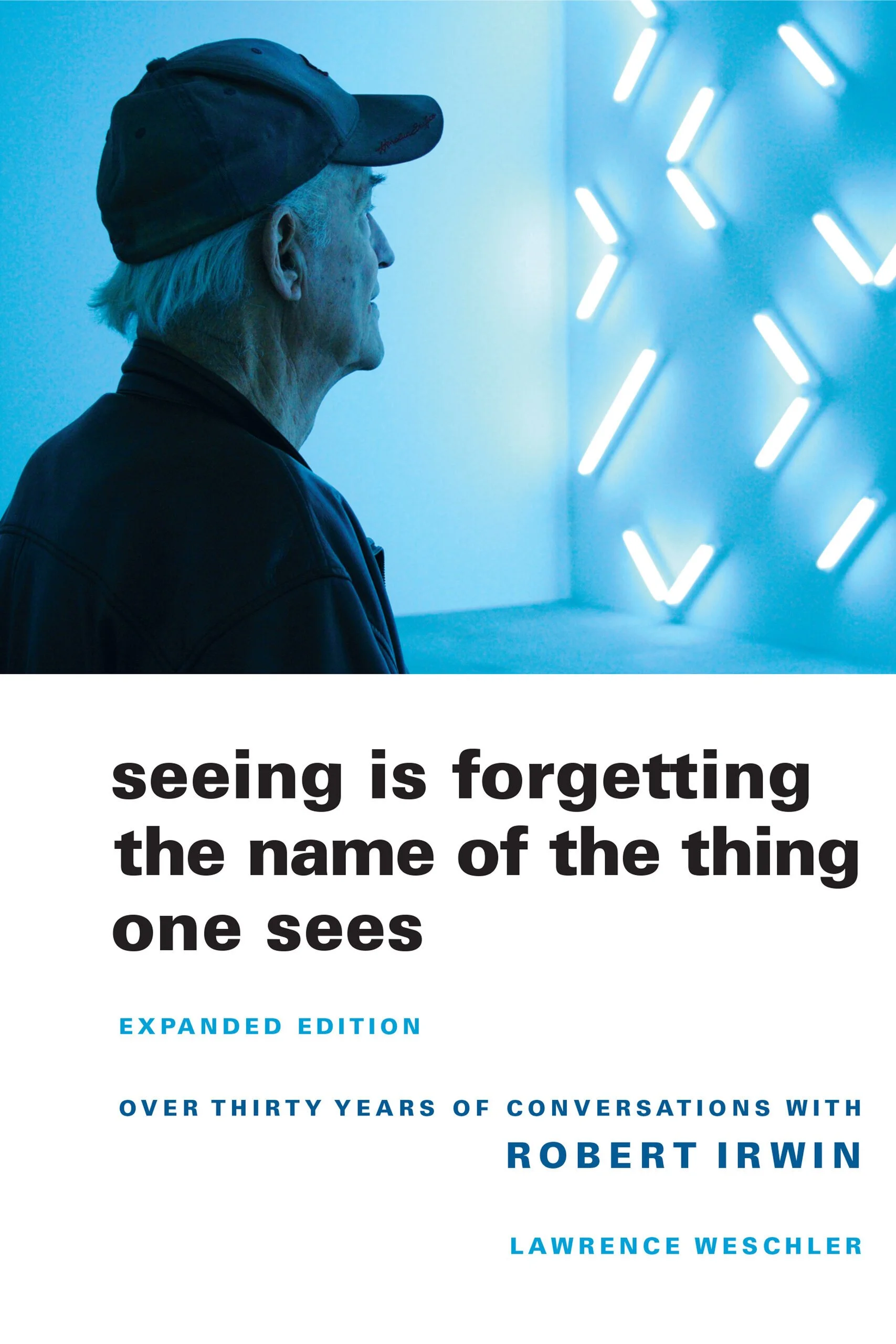
seeing is forgetting the names of the thing one sees

Yohei Abe February 14, 2026

Bob had been headed south from Paris toward Morocco, when, passing through Barcelona, he first heard about Ibiza, a small island off the Spanish Mediterranean coast. He continued to North Africa, but several weeks later, for no particular reason—it was cheap, it was warm, it was said to be peaceful —he ventured out to the dry, barren island. In subsequent years Ibiza (pronounced "E-bē-tha" by native Castilians) became known as something of an artist's colony, a winter resort, but during the season Irwin spent there, it was still utterly remote. On the edge of a barren peninsula, Irwin installed himself one day in a small rented cabin and then did not converse with a soul for the next eight months.

seeing is forgetting the names of the thing one sees, over thirty years of conversation with ROBERT IRWIN, by Lawrence Weschler, Page 40

Artists who came to abstract expressionism with a literate pictorial bias, Irwin feels, were especially unprepared to confront these physical issues. This was particularly the case with the European abstract expressionists, he argues, steeped as they were in the tradition of post-Renaissance pictorial expression. Paradoxically, one artist who exercised a pivotal fascination for the young Californian, particularly in terms of his mastery of those physical laws, was a contemporary European, but not one of those who is usually considered an abstract expressionist. "The Italian painter Giorgio Morandi captivated a lot of us," Irwin recalls, "and we eventually even staged a small show of his paintings at Ferus" (in 1961). "Now, here was a painter whit been repeating the same subject, the same theme, over and over again, for year.

In his studio, he had a collection of bottles and jars, and he painted them continuously: small paintings of groups of these bottles on his table, a kind of still life.

So in one sense they seemed extremely traditional, extremely formal. They still had a subject matter in the most classical sense, the simplest, most direct kind of subject matter, unloaded in any way. This especially seemed the case when you compared Morandi with some of his bold, gestural contemporaries, say, someone like Pierre Soulages, with his modernist imagery, the strokes and slashes and all that.I mean, someone with a conceptual, literate eye, oriented toward looking at the imagery, would certainly think of the Soulages as the modern painting and the Morandi as the old-fashioned one. But if you looked at them on the physical level, in terms of how they actually dealt with the time and space relationships within the painting per se, the Soulages was pre-cubist, almost floating in like a seventeenth-century space, with its sense of distinct figure and ground; whereas the Morandi was essentially the same as a de Kooning or a Kline, with its intimate interpenetration between figure and ground. In Morandi they were never really separate. In fact, even with the figurative elements, there were cases where his ground actually got in front of the figures or in many cases couched them so intimately that there was no separating the two. Physically he carved a space for each one of these elements, where the amount of space left by the so-called ground was exactly that which the object occupied, so that it was as if the air had taken on substance. They were really good paintings.

 seeing is forgetting the names of the thing one sees, over thirty years of conversation with ROBERT IRWIN, by Lawrence Weschler, Page 60,61

"But anyway, my discovery was that from one hundred yards away—this was just one of those little breakthroughs—that from this distance of one hundred yards, I looked over, and that goddamn Guston.... Now, I'm talking not on quality, and not on any assumption of what you like or don't like, but on just pure strength, which was one of the things we were into. Strength was a big word in abstract expressionism; you were trying to get power into the painting, so that the painting really vibrated, had life to it. It wasn't just colored shapes sitting flat. It had to do with getting a real tension going in the thing, something that made the thing really stand up and hum.... Well, that goddamn Guston just blew the Brooks right off the wall.

"Now, by all overt measures—size, contrast, color intensity that shouldn't have happened. Everything was in favor of the Brooks. But the Guston blew it right off the wall. Just wiped it out. Not on quality, just on power. The Brooks fell into the background, and the Guston just took over. And I learned something about... some people call it 'the inner life of the painting, all that romantic stuff, and I guess that's a way of talking about it. But shapes on a painting are just shapes on a canvas unless they start acting on each other and really, in a sense, multiplying.

A good painting has a gathering, interactive build-up in it. It's a psychic build-up, but it's also a pure energy build-up. And the good artists all knew it, too. That's what a good Vermeer has, or a raku cup, or a Stonehenge. And when they've got it, they just jump off the goddamn wall at you. They just, bam!"

seeing is forgetting the names of the thing one sees, over thirty years of conversation with ROBERT IRWIN, by Lawrence Weschler, Page 64

In Literature Tags Robert Irwin, Lawrence Weschler
seeing is forgetting the names of the thing one sees →

RESEARCH

Archive
  • 16th Century 1
  • 17th Century 3
  • 18th Century 1
  • 19th Century 2
  • 20th Century 8
  • Art 325
  • Artist 36
  • Composers 5
  • Contemporary 31
  • History 2
  • Interview 2
  • Literature 118
  • Music Pieces 6
  • Painting 5
  • Philosophy 1
  • Photography 5
  • Places 10
  • environment 2

INFLOW

Archive
  • February 2026 19
  • January 2026 14
  • December 2025 6
  • November 2025 67
  • October 2025 69
  • September 2025 24
  • August 2025 5
  • July 2025 5
  • June 2025 17
  • May 2025 55
  • April 2025 43
  • March 2025 42
  • February 2025 50
  • January 2025 68
  • December 2024 30
  • November 2024 47
  • October 2024 39
  • September 2024 21
  • August 2024 48
  • July 2024 46
  • June 2024 45
  • May 2024 47
  • April 2024 54
  • March 2024 39
  • February 2024 67
  • January 2024 47
  • December 2023 26
  • November 2023 23
  • October 2023 34
  • September 2023 61
  • August 2023 90
  • July 2023 70
  • June 2023 89
  • May 2023 35
  • April 2023 66
  • March 2023 60
  • February 2023 48
  • January 2023 26
  • December 2022 47
  • November 2022 4
  • October 2022 27
  • September 2022 13
  • August 2022 10
  • July 2022 33
  • June 2022 5
  • May 2022 20
  • April 2022 34
  • March 2022 18
  • February 2022 11
  • January 2022 21
  • December 2021 17
  • November 2021 5
  • October 2021 16
  • September 2021 7
  • August 2021 13
  • July 2021 1
  • June 2021 5
  • May 2021 1
  • April 2021 11
  • March 2021 3
  • February 2021 6
  • January 2021 4
  • December 2020 8
  • November 2020 6
  • October 2020 8
  • September 2020 12
  • August 2020 7
  • July 2020 13
  • June 2020 15
  • May 2020 20
  • March 2020 2
  • February 2020 2
  • January 2020 6
  • December 2019 3
  • November 2019 14
  • October 2019 15
  • September 2019 8
  • August 2019 17
  • July 2019 5
  • June 2019 7
  • April 2019 2
  • February 2019 1
  • January 2019 1
  • December 2018 1
  • October 2018 3
  • September 2018 1
  • August 2018 3
  • July 2018 3
  • June 2018 2
  • May 2018 1
  • January 2018 1
  • December 2017 2
  • September 2017 2
  • July 2017 9
  • June 2017 7
  • May 2017 4
  • April 2017 4
  • March 2017 1
  • February 2017 7
  • January 2017 3
  • November 2016 7
  • October 2016 4
  • September 2016 1
  • August 2016 1
  • July 2016 1
  • June 2016 2
  • May 2016 2
  • March 2016 2
  • December 2015 2
  • October 2015 1
  • August 2015 1
  • June 2015 3

STORIES

Archive
  • February 2026 1
  • January 2026 1
  • December 2025 1
  • November 2025 1
  • September 2025 1
  • May 2025 1
  • April 2025 1
  • March 2025 2
  • February 2025 1
  • January 2025 2
  • December 2024 1
  • November 2024 2
  • September 2024 1
  • August 2024 2
  • July 2024 2
  • June 2024 2
  • May 2024 1
  • April 2024 2
  • March 2024 3
  • February 2024 2
  • January 2024 4
  • December 2023 2
  • November 2023 2
  • October 2023 1
  • September 2023 3
  • August 2023 1
  • July 2023 3
  • June 2023 1
  • May 2023 3
  • April 2023 8
  • March 2023 13
  • February 2023 14

classicasobi

Archive
  • February 2026 7
  • January 2026 1
  • December 2025 9
  • November 2025 14
  • October 2025 11
  • September 2025 11
  • August 2025 9
  • July 2025 1
  • June 2025 3
  • May 2025 2
  • April 2025 5
  • March 2025 7
  • February 2025 10
  • January 2025 3
  • December 2024 10
  • November 2024 2
  • October 2024 3
  • September 2024 1
  • August 2024 8
  • July 2024 11
  • April 2024 1
  • March 2024 1
  • December 2023 9
  • November 2023 4
  • October 2023 2
  • September 2023 1
  • March 2023 4
  • February 2023 2
  • January 2023 1
  • October 2022 1
  • July 2022 1

Subscribe to Balse

Sign up with your email address to receive our bi-weekly newsletter.

We respect your privacy.

Thank you!