
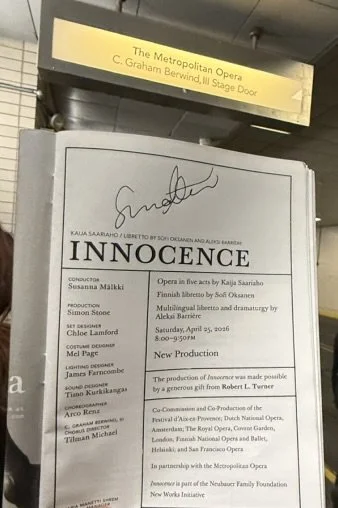
In Innocence, the idea began taking shape in 2013, premiered in 2021, and was brought to the Metropolitan Opera in 2026. Then, standing at the stage door and seeing the artists face to face. To witness a work being born, to experience it, and to encounter the artists themselves is something that cannot happen in the same way with 19th-century masterpieces—yet it carries the same intensity of excitement that audiences must have felt in that era.
To experience a work in the very moment of its creation, and to meet the artists behind it: this is impossible with the great masterpieces of the 19th century, and yet the sensation felt by those original audiences still exists here.
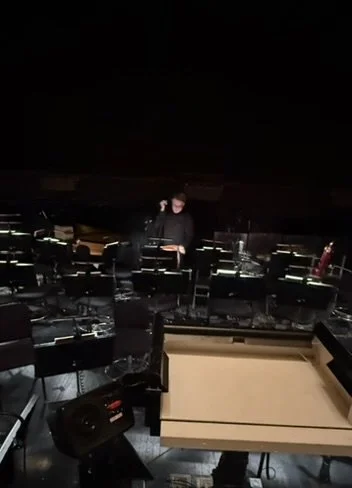
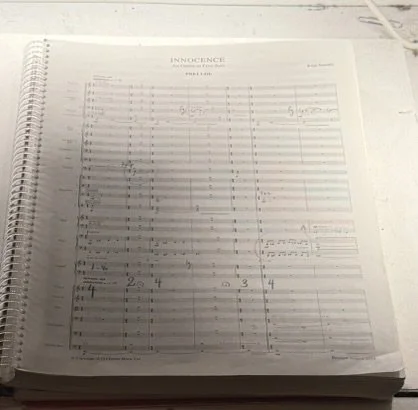
On opening night, April 6, the many cast members, their voices, the stage, the lighting, and the amplified chorus all came together in a kind of chaos, and I could only think vaguely: this is a total artwork unlike anything I have ever seen before. By the third performance on April 14, its structure gradually began to reveal itself. I listened to the opening prelude again and again. The string drones, fragments of winds, piano, harp, celesta, and various percussion instruments slowly brought the world into focus. Concertmaster Angela’s solo felt like the shadow of a mother’s heart as she prepares a birthday cake for her deceased daughter. The rough, jagged piano attacks felt like pangs of guilt. Dialogue was spoken in English, while inner thoughts emerged in each character’s own language. Is it singing, or is it speech? The orchestra wraps these raw shadows and thorns of the human psyche in Saariaho’s tapestry of sound.
By the sixth performance on April 25, each performer’s individuality increasingly shaped the characters, and everything fused into the music. Each plotline felt like a completely different gallery, unfolding within a beautiful square set without interruption. Under Susanna Mälkki’s direction, movement, words, and music were arranged like a fresco in all directions, giving the listener a single unified impression. Anyone who separates these elements is a true specialist; most people simply experience it like a film.
Simon Kluth’s Anton, in German, was striking: movement, speech, and music were fully integrated. Even after three performances, I still felt I had never truly seen him. Rather, it was a stripped-down, extraordinarily cool portrayal of Anton. Something only he could reach, formed through repeated embodiment of the role, entered together with the tapestry of the Met Orchestra. The same could be said of Julie Hega, Camilo Delgado Díaz, Beate Mordal, Marina Dumont Anastassiadou, and Vilma Jää. All three performances were completely different experiences, but by the third, I was finally able to see the stage itself and fully appreciate its richness.
Stephen Milling, as the Pastor, was chilling: in his conversation with the mother, he maintained an almost terrifyingly emotionless exterior, carefully composed, while underneath lay a grotesque, unspeakable confession of the heart. The other performers each brought their characters into sharp focus, and the solos, duets, and overall flow were superb. This was precisely what Saariaho meant by “good taste.”
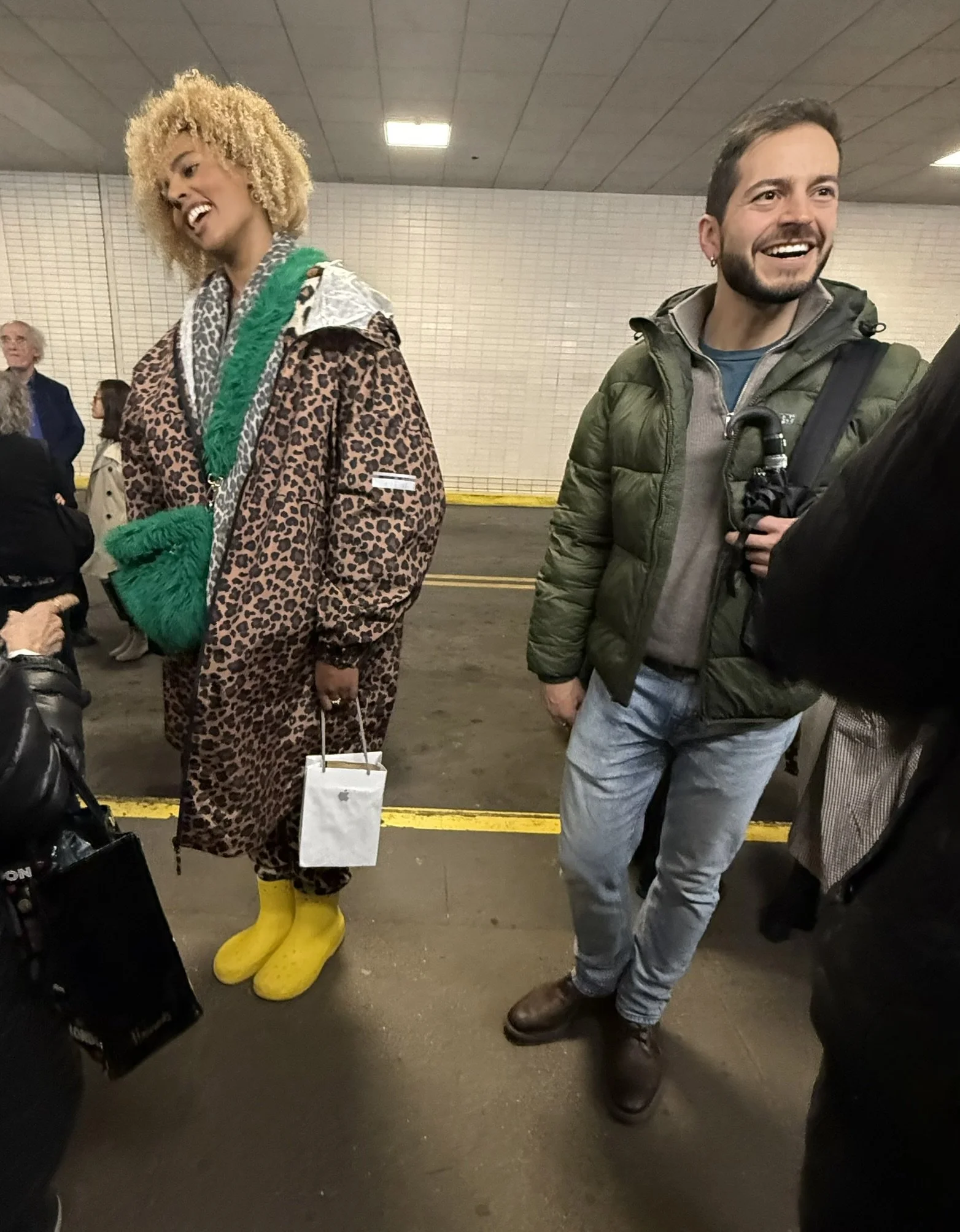
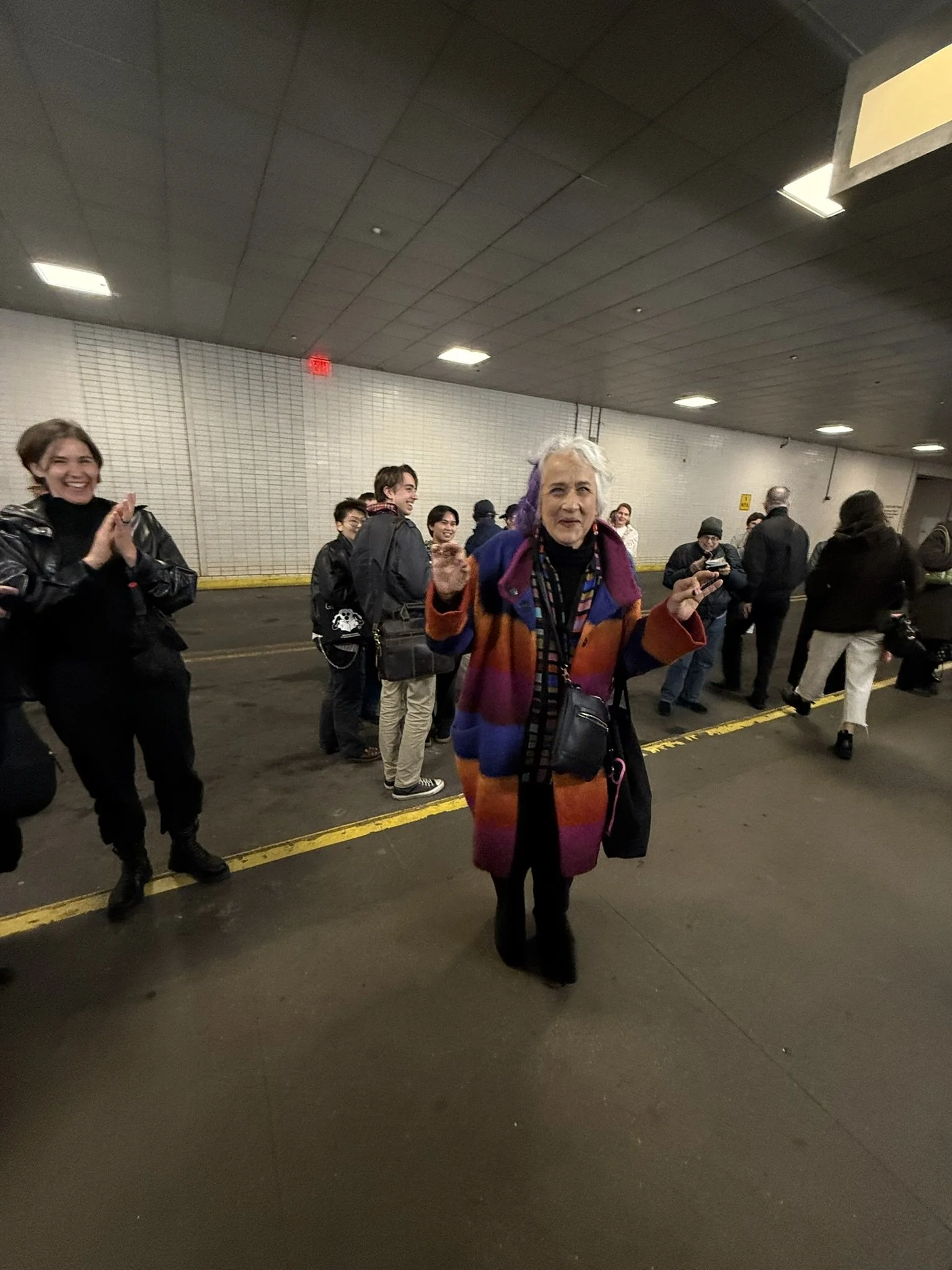
After the performance, at the stage door, I met many of the performers. Singers, dancers, actors—various artists and those moved by them gathered there. High school students experiencing the Metropolitan Opera for the first time passionately explained to Joyce DiDonato how fascinating it had been.
Seeing that, I realized I had once experienced DiDonato and was still living with the same sense of wonder. Her Rosina, her Cenerentola, the Strauss Ariadne I heard at her recital, Cleopatra with the Chicago Symphony, and many others—since encountering her, I have been on a journey of experiences unlike anything before. And now, having encountered Innocence, I am filled with deep gratitude.
innocence では、そのアイディアが2013年から作られ始めて2021年に初演され、そして2026年にメットで公開された。そして、楽屋口でアーティストを目の前にする。作品がうまれ、それを体験し、そのアーティストたちに触れることは、19世紀のマスターピースではできないが、それは当時の興奮と同じだ。
作品が生まれた同じ時間を体験し、そのアーティストたちに触れる。これは19世紀のマスターピースにはできないが、その聴衆が味わったセンセーションが存在している。
4月6日の初日では、数々のキャストとその音色、ステージ、照明、合唱のPA、それらが混沌として、ただこれがかつて見たことのない総合アートだと漠然と思った。3回目の14日では、その内容がだんだんわかってきた。初めの序曲を何度も聴いた。弦楽器のドローンに、管楽器の断片や、ピアノ、ハープ、チェレスタ、様々な打楽器がその世界を明らかにし、コンサートマスター、アンジェラのソロは亡くなった娘の誕生日にケーキを用意する母親の心の影。次々と襲ってくるピアノのごつごつした音色は心の呵責のようだ。対話では英語、そして心のつぶやきは彼らそれぞれの言葉で語られる。歌なのか語りなのか。生々しい心の影や棘をオケはサリアホが描いた音色のタペストリーで包み込む。4月25日の6回目は、それぞれの出演者の個性が、キャストをどんどん引き立て行く、そして、それは音楽と融合され、ひとつひとつのプロットが違う全く違うギャラリーのようで、四角く美しいセットの中で淀みなく展開されていった。マルッキの指揮のもと、左右前後にフレスコのように、動き、言葉、そして音楽が、聴き手に一つの印象を与える。それらそれぞれを分けてみている人はすごいマニアだ。普通の人は映画を見る様にみるだろう。ドイツ語のアントンのSimon Kluthの体の動きと言葉、そして音楽。私は3回見たが、3回目でも見たことがない、むしろ、物凄くかっこいい表現だった。そぎ落とされたアントンの姿。ステージを踏んでいった結果生まれた彼にしか到達できない何かがメットオケの奏でるタペストリーと一緒に入ってきた。それは、Julie Hega、Camilo Delgado Díaz、Beate Mordal、Marina Dumont Anastassiadou、そして、娘のVilma Jää。3回とも全く違う体験だったが、3回目はやっとステージを見ることができて、その面白さを堪能した。Stephen Millingは牧師として、母親との対話ではぞっとするほど無感情で繕い、グロテスクな言葉にできない心の告白。他の出演者も、それぞれのキャラクターをひきたて、ソロ、デュエットなど、流れもすばらしかった。まさにこれがサリアホがいうグットテイスト。
公演が終わり、楽屋口で沢山の出演者に出会う。そこには、歌手、ダンサー、俳優、様々なアーティストたちとそれに魅了された人たちが集まる。初めてメトロポリタンオペラを体験した高校生たちは、ジョイス・ディドナートに熱心にその面白さを伝える。
公演後、楽屋口では多くの出演者たちに出会った。歌手、ダンサー、俳優——さまざまなアーティストと、それに心を動かされた人々が集まっていた。初めてメトロポリタン・オペラを体験した高校生たちは、ジョイス・ディドナートにその感動を熱心に語っていた。
その姿見て、私がかつてディドナートを体験し、かつて見たことがないセンセーションをいまだに味わっていることに気が付いた。ロジーナ、チェネレントラ、リサイタルで聴いたシュトラウスのアリアドネ、シカゴ交響楽団とのクレオパトラなどなど、彼女に出会って以来、私はこれまでにない経験の連続を旅してきた。そして今、Innocenceに出会い、私は深い感謝で満たされている。