New York–based contemporary music ensemble and artist community InfraSound presents The Edge of the Abyss: The Music and Legacy of Sofia Gubaidulina (1931–2025) from August 28 to 30, 2026, at St. Malachy – The Actors’ Chapel in Times Square.
Named after Gubaidulina’s work for seven cellos and two waterphones, The Edge of the Abyss is more than a concert series. Across three days of performances, panel discussions, and community improvisation, it offers a multifaceted encounter with her music and ideas—a music festival, a memorial, and a gathering place for musicians and audiences. Through Gubaidulina's music and works inspired by her, the festival traces her music and legacy over three days.
Schedule and Program
Night 1 — Friday, August 28, 6:00–9:30 PM
Gubaidulina Panel Discussion & Community Jam — FREE
Beginning at 6 PM, musicians who worked directly with Gubaidulina—Jules Biber, Lucy Shelton, and Susan Botti—will discuss her life, music, and their experiences of collaborating with her and premiering her works. Biber and Shelton will also give special performances.
At 8 PM, InfraMantle will lead a community improvisation session. Participants will read and perform text scores by members of InfraSound, creating music together through improvisation. Anyone may join with an instrument or voice.
Night 2 — Saturday, August 29, 8:00–9:30 PM
Dots, Lines, and Zigzags — Solos and Duos — TICKETED
InfraCore performs some of Gubaidulina’s most exciting and virtuosic solo and duo works. The program brings the individual sound and physicality of each instrument to the foreground, offering a direct encounter with Gubaidulina’s musical world.
Program
Aus den Visionen von Hildegard von Bingen
From the Visions of Hildegard von Bingen (1994)
for solo alto
The voice emerging from the body becomes music, and through it, a “vision” is spoken.
Written for Alfred Schnittke’s 60th birthday, the opening text says God brought everything into existence through His will, an idea that also resonates with Gubaidulina’s own religious outlook. With only a solo alto, the work evokes Hildegard’s visions through breath, voice, and words. A voice born from the body gradually moves beyond language toward a spiritual realm.
Detto I: Sonata for Organ and Percussion
(1978)
for organ and percussion
Detto I is a single-movement work consisting of three large sections. In each section, static lines are gradually layered, eventually leading toward a kind of resolution.
Each section is further divided into three parts and can be understood as an unconventional form of sonata form. Horizontal lines accumulate to create the primary movement, set against the vertical movement of chords.
In the final section, resonant organ glissando clusters and bell-tremolo clusters lead these opposing elements toward a “resolution.”
Lines — chords — glissandos create the music.
Sonatina
(1978)
for solo flute
Sonatina (1978) is a sonatina for unaccompanied flute. Breath, fingers, sound, and silence become the materials from which the music is made.
Rather than simply presenting a flute melody, the work focuses on the force of the breath, the emergence of each sound, changes in timbre, resonance, and even the silence between sounds. It explores the possibilities of a single instrument while allowing us to hear how sound appears, moves, and disappears.
Although it bears the traditional title “Sonatina,” Gubaidulina focuses less on conventional form than on the physical body of the flute and the movement of sound that emerges from it.
Punkte, Linien, und Zickzack
Dots, Lines, and Zigzags (1976)
for bass clarinet and piano
Punkte, Linien, und Zickzack (1976) is a work for bass clarinet and piano. As its title suggests, what matters here is less melody or theme than how sound moves and what kinds of shapes it creates.
The “dots” can be understood as short, isolated particles of sound; the “lines” as sustained sounds and their movements; and the “zigzags” as sudden changes of direction.
Sounds produced by two instruments with very different physical bodies—bass clarinet and piano—become dots, lines, and changing trajectories that create the shape of the music.
The bass clarinet has breath, fingers, keys, and the vibration of its low register. The piano has fingers pressing keys, hammers, strings, and resonance. Gubaidulina treats the sounds produced by these different instrumental bodies not simply as materials for constructing melodies, but as things that move and possess shape in themselves.
Chaconne
(1962)
for solo piano
A chaconne is a variation and dance form that developed during the sixteenth and seventeenth centuries, in which a short bass pattern or harmonic progression is repeated while the music above it continually changes.
Gubaidulina takes this traditional form as a starting point while exploring the sound and physicality of the piano itself. Powerful chords and sharp movements of sound sit against dense sonorities and quiet passages, revealing the instrument's many acoustic possibilities. It can sound as though masses of sound appear, transform, and move into entirely different resonances.
Gubaidulina treats the piano as a vibrating body made of strings and hammers. Starting from a traditional form, she explores the instrument's resonance and possibilities, allowing the movement of sound itself to generate form.
In Croce
On the Cross (1991)
for cello and bayan
In Croce (1991) is a work for cello and bayan, the Russian button accordion. The title, meaning “on the cross,” is also connected to the way the two instruments cross and intersect as they create the music.
The cello produces sound by drawing a bow across strings, while the bayan sends air through its bellows to vibrate reeds. In other words, sound emerges from two fundamentally different physical bodies: strings and air.
The two instruments move independently, sometimes crossing one another, sometimes seeming to pass a sound from one to the other. Sounds born from different instrumental bodies intersect, come into conflict, disappear, and return. Through this movement, sound itself moves toward a spiritual experience.
It can be heard as a work that symbolizes Gubaidulina’s musical world:
different bodies → sound → intersection → tension → silence → spirit
Night 3 — Sunday, August 30, 4:30–7:00 PM
On the Edge of the Abyss — Chamber Music — TICKETED
For the final night, InfraCore takes us on a journey toward “cosmic ecstasy.” The program brings together dramatic, ethereal, and “liminal” chamber works.
Sounds produced by different bodies—voices, strings, winds, percussion, and organ—intersect and expand into fantasy, joy and sorrow, angels, memory, death, and prayer.
The journey that began on the second night with the “body of sound” moves further, toward the spiritual realm beyond sound.
Program
Galgenlieder à 5
Gallows Songs (1996)
from the work for mezzo-soprano, flute, percussion, organ, and double bass
VI. Die Prozession (The Procession)
XIV. Das Mondschaf (The Moon Sheep)
Galgenlieder à 5 (1996) is written for five performers: mezzo-soprano, flute, percussion, organ, and double bass. It is based on the collection Galgenlieder (Gallows Songs) by German poet Christian Morgenstern.
Morgenstern’s poetry features wordplay, nonsense, strange creatures, and fantastical worlds. Gubaidulina incorporates the sound of the words themselves and the voice's physicality into her music. Words, voice, breath, impacts, vibration, and resonance mix together, creating a world that seems slightly removed from reality.
The mezzo-soprano’s voice, the breath of the flute, the impact of percussion, the sustained sound of the organ, and the strings of the double bass: bodies that produce sound in completely different ways gather in a single space, crossing through timbre, rhythm, voice, and language.
The sounds of multiple bodies come together to create a strange and fantastical world.
Garten von Freuden und Traurigkeiten
Garden of Joys and Sorrows (1980)
for flute, viola, harp, and narrator
Garten von Freuden und Traurigkeiten is a single-movement work for flute, viola, harp, and narrator.
In this work, Gubaidulina places an Eastern sound world against a Western consciousness. The inspiration came from Iv Oganov’s Sayat-Nova, concerning the Eastern troubadour and singer, and poetry by the German-language writer Francisco Tanzer.
The music is extremely delicate. The flute and harp frequently occupy high registers, while harp glissandos and the flute’s melismatic movements create sonorities reminiscent of Eastern music. From the very beginning, the harp produces a long glissando using a tuning key.
Particularly important is the opposition between “natural overtones” and “artificial equal temperament.” Gubaidulina sets the bright resonance of the natural harmonic series against intervals such as minor seconds and minor thirds that create tension.
In other words, “joy” and “sorrow” are not simply emotional expressions. They exist within the work as different acoustic states.
The “garden” in the title is not merely a beautiful natural landscape. Gubaidulina herself described it as a concrete auditory experience inspired by images in Sayat-Nova—flowers, gardens, lotuses, roses, and a lotus burning through music.
At the same time, Tanzer’s text introduces the idea that “boundaries are merely artificially drawn.”
This is especially interesting. The work questions the boundaries between things that seem naturally separate: joy and sorrow, East and West, nature and artifice, sound and silence.
Through the delicate sounds of flute, viola, and harp, these oppositions intersect. Sound spreads like a garden, and within it, the boundaries between different worlds gradually become blurred.
Ein Engel
An Angel (1994)
for contralto and double bass
Ein Engel is a work of approximately seven minutes for alto or mezzo-soprano and double bass. Composed in 1994, it is based on a poem by the German poet Else Lasker-Schüler. The premiere took place in Berlin on May 28, 1994.
The poem tells of an angel walking through a city in search of love. A figure reminiscent of the returning Christ also appears.
Although the work deals with a religious figure, Gubaidulina does not simply depict a religious scene. Instead, she creates an extraordinarily delicate sonic world from two physical bodies: the human voice and the double bass.
The double bass is particularly fascinating. Normally an instrument associated with extremely low and heavy sounds, here it uses harmonics and glissandos to create light, thin, shimmering sonorities.
In other words, rather than using high, heavenly sounds to represent an “angel,” Gubaidulina draws an angelic delicacy from the enormous, low body of the double bass.
The alto voice is not simply there to sing the poem. The voice and double bass lean toward one another; at times the bass seems to surround the voice, before eventually developing an independent movement of its own.
The human voice as a body, and the enormous body of the double bass.
The sounds emerging from these two bodies do not directly “depict” the invisible figure of an angel. Instead, through sound itself, they allow us to sense something invisible.
voice → instrumental body → love → invisible presence
String Quartet No. 2
(1987)
for two violins, viola, and cello
String Quartet No. 2 is a single-movement string quartet of approximately nine minutes, written for two violins, viola, and cello. Commissioned by the Kuhmo Chamber Music Festival in Finland for the Sibelius Quartet, it was composed in 1987.
In this work, Gubaidulina explores what she called the problem of “musical symbolism.”
For her, symbolism did not mean that a particular sound represented something else. Instead, she found meaning in the individual elements that make up an instrument and in their inherent qualities.
For this reason, the contrast between ordinary string sounds and harmonics is crucial to the quartet.
The same string can produce completely different sounds depending on how it is touched. A normal bowed sound and a harmonic produced by lightly touching the string at a particular point may sound like entirely different instruments. That difference itself becomes the music.
The same sound becomes another sound depending on how it is touched.
The same instrument begins to sound like another instrument.
So sei es
So Be It / Amen (2013)
for violin, double bass, piano, and percussion
So sei es is a work for violin, double bass, piano, and percussion, composed in 2013 as a memorial to Viktor Suslin, Gubaidulina’s friend and longtime musical partner.
The title So sei es means “so be it,” corresponding to “Amen.”
The violin and double bass engage in a dialogue, almost like two protagonists. Around them, the piano and percussion sometimes support them and sometimes seem to oppose them.
At the end, a shimmering chorale of harmonics appears. It can be heard as a farewell to Suslin, but not as a complete ending. The connection between the two remains, suggesting something that continues beyond death.
In String Quartet No. 2, Gubaidulina explores the materiality of sound—the strings themselves, harmonics, and resonance.
From there, in So sei es, sound moves toward memory, death, prayer, and spiritual acceptance.
Sofia Gubaidulina
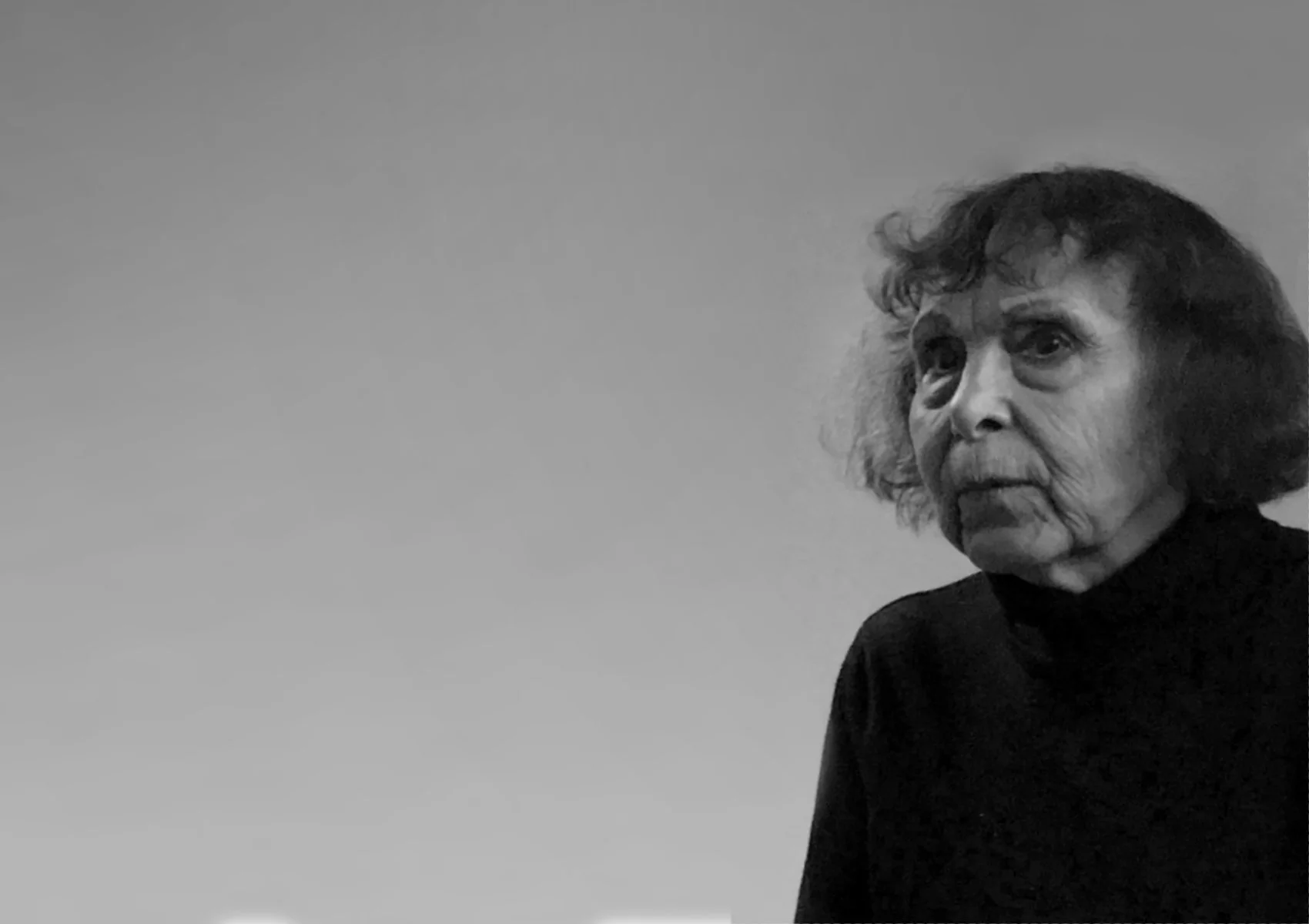
Sofia Gubaidulina (1931–2025) was, together with Alfred Schnittke and Edison Denisov, one of the leading composers of Soviet contemporary music.
For Gubaidulina, religion and spirituality meant moving consciousness somewhere else through a deep experience of sound. Through sound itself, the physicality of instruments, time, silence, religion, and East and West, she explored what sound could bring to human consciousness and the spirit.
Born in 1931 in Chistopol, in the then Soviet Tatar Republic, she studied at the Kazan Conservatory and later at the Moscow Conservatory. In the Soviet Union, where Socialist Realism placed strong restrictions on artistic expression, she pursued a personal and experimental musical path outside the officially sanctioned direction of music.
When her approach was criticized at the Moscow Conservatory as going in the “wrong direction,” Dmitri Shostakovich, who was one of the judges, reportedly encouraged her to continue along precisely that “wrong path.”
From childhood, she explored not only the piano keyboard but also the strings of the piano, touching and plucking them to discover sound itself. She seems to have understood sound not simply as a symbol or notation, but as something physical and tangible.
In 1975, she founded the improvisational group Astreya with Viktor Suslin and Vyacheslav Artyomov. They improvised using traditional instruments from Russia, the Caucasus, and Central Asia. Here too, her interest was not so much in established musical forms as in timbre, resonance, the body, and time itself.
She explored the physical phenomena through which sound is produced—string vibration, the movement of air, friction, resonance—while pursuing the connection between sound and spirit.
Christian spirituality is deeply connected to Gubaidulina’s music. Darkness, tension, suffering, silence, and light often appear as states of sound, changing the consciousness of the listener.
When we listen deeply to sound, an experience beyond sound can emerge. Where it takes us—that, perhaps, is what it means to listen to Gubaidulina’s music.
One of her major works is the Violin Concerto Offertorium (1980). Violinist Gidon Kremer strongly supported the work, and its 1981 premiere in Vienna brought Gubaidulina significantly greater international recognition.
And now, in New York, InfraSound offers the opportunity to experience Gubaidulina’s music over three days through The Edge of the Abyss.
InfraSound
InfraSound is a New York–based ensemble and artist community of young musicians devoted to contemporary and experimental music.
The group originally emerged from students in the Contemporary Performance Program at the Manhattan School of Music. Beyond performing contemporary music, InfraSound explores new approaches through improvisation and experimental musical practices.
What InfraSound has created with The Edge of the Abyss is not simply a collection of Gubaidulina’s works. Rather, the festival is structured as a three-day experience of her musical philosophy.
The first day is about people and ideas.
Through the panel discussion, we encounter Gubaidulina as a person and learn about her musical ideas through the experiences of musicians who actually worked with her.
The community jam that follows uses text scores and improvisation. Rather than simply listening to completed works, we witness the moment when music itself comes into being.
The second day is about the body of sound.
Chaconne
Sonatina
Punkte, Linien, und Zickzack
Detto I
In Croce
Piano, flute, bass clarinet, organ, percussion, cello, and bayan—all instruments with different physical bodies—come into play.
Here, the material phenomena through which sound is produced come to the foreground: the instrument itself, the body, vibration, lines, dots, and resonance.
And the third day moves from sound toward spirit.
Galgenlieder
Garten von Freuden und Traurigkeiten
Ein Engel
String Quartet No. 2
So sei es
Voice, fantasy, angels, joy and sorrow, harmonics, memory, death, and prayer.
Sound gradually moves beyond its material existence toward emotion, memory, and the spiritual realm.
Seen across the three days, a path begins to emerge:
body → sound → form → emotion → fantasy → spirit → prayer
And at the end of this journey stands So sei es.
“So be it.”
It sounds like both a prayer and an act of acceptance.
To explore sound, touch the body of sound, discover its form, move from there into the spiritual realm, and finally arrive at prayer.
When we listen deeply to sound, an experience beyond sound can emerge.
Perhaps this is precisely the kind of music Gubaidulina spent her life searching for.
Another important element: these three days take place at St. Malachy – The Actors’ Chapel, a church.
Gubaidulina’s profound spirituality is encountered within a sacred space. We listen not only to the vibration of sound itself, but also to the way that sound fills the space and to the time in which it gradually disappears.
This festival does not simply introduce Gubaidulina’s music. Through three days of performances, panel discussions, and community improvisation, it creates a place where musicians and audiences can gather and experience her music from multiple perspectives.
The project is supported by a 2026 Chamber Music America Artistic Projects Grant, funded by the Howard Gilman Foundation. Howard Gilman Foundation is a major arts foundation supporting the performing arts in New York over the long term. As of 2026, it provides approximately $37 million in annual grants.
The festival’s support reflects this broader commitment to sustaining artistic activity that goes beyond performances alone, including dialogue, experimentation, and community.
Tickets
A Festival Pass is $45 and includes two tickets to the Saturday and Sunday performances.
General admission is $30, while tickets for students, seniors, and artists are $25.
A limited number of Pay-What-You-Can tickets are also available for the Saturday and Sunday performances. The festival follows a “No one turned away for lack of funds” policy, ensuring that financial circumstances do not prevent anyone from attending.
The Musicians Who Take Us Beyond Sound
The musicians who will guide us through this three-day journey are:
InfraSound Ensemble
Sophie Delphis — mezzo-soprano
Luke Paulino — countertenor
Yoshi Weinberg — flute
Kathryn Vetter — bass clarinet
Giancarlo Latta — violin
Madeline Hocking — violin
Elijah Spies — viola
Elizabeth Kate Hall-Keough — cello
Sam Zagnit — double bass
J Clancy — percussion
Daniel Schreiner — piano
Austin Philemon — organ, accordion
Violetta Norrie — harp
David Bloom — conductor
From the materiality of sound to what lies beyond it.
How far can sound carry human consciousness?
The Edge of the Abyss is a three-day festival that explores that question.
Beyond the body of sound, toward the other side of sound.
音の向こう
深淵の縁 — The Edge of the Abyss
ニューヨークを拠点とする現代音楽グループ、InfraSoundは、2026年8月28日から30日まで、タイムズスクエアのSt. Malachy – The Actors’ Chapelで、**「The Edge of the Abyss: The Music and Legacy of Sofia Gubaidulina(深淵の縁――ソフィア・グバイドゥーリナの音楽と遺産)」**を開催する。
グバイドゥーリナが7台のチェロと2台のウォーターフォンのために作曲した作品にちなんで名付けられたこの企画は、単なるコンサート・シリーズではない。3日間の演奏、パネルディスカッション、コミュニティ・インプロヴィゼーションを通して、彼女の音楽と思想をさまざまな角度から体験する、音楽祭であり、追悼の場であり、音楽家と聴衆が集うコミュニティの場でもある。
そこには、グバイドゥーリナの音楽をたどる一つの道筋が見えてくる。
身体から音へ。音から形へ。そして、形から精神へ。
ソフィア・グバイドゥーリナとは
ソフィア・グバイドゥーリナ(Sofia Gubaidulina, 1931–2025)は、アルフレート・シュニトケ、エディソン・デニソフとともに、ソ連の現代音楽を代表する作曲家である。
グバイドゥーリナにとって、宗教や精神性とは、音を深く経験することによって、意識を別の場所へ移動させることだった。音そのもの、楽器の身体性、時間、沈黙、宗教、東洋と西洋――そうした要素を通して、音が人間の意識や精神に何をもたらすのかを探求した。
1931年、当時のソ連領タタール共和国のチストポリに生まれ、カザン音楽院を経てモスクワ音楽院で学んだ。社会主義リアリズムが芸術を強く制約していたソ連で、彼女は公式の音楽の方向から外れた、個人的で実験的な音楽を追求した。
モスクワ音楽院でその姿勢を「間違った方向」と批判された際、審査員だったショスタコーヴィチは、逆に「その間違った道を進みなさい」と彼女を励ましたという。
彼女は幼い頃から、ピアノの鍵盤だけでなく、ピアノの弦を直接触ったり弾いたりしながら、音そのものを探っていたという。音を単なる記号としてではなく、触れることのできる物質として捉えていたのだろう。
その関心は、後の作品にも一貫している。
弦の振動、空気の動き、摩擦、共鳴、倍音。
楽器が音を生み出す物質的な現象そのものを探りながら、音と精神の結びつきを追求していった。
1975年には、Viktor Suslin、Vyacheslav Artyomovとともに即興グループAstreyaを結成し、ロシア、コーカサス、中央アジアなどの民族楽器を用いて即興を行った。そこでも彼女が探っていたのは、既成の音楽の形式というより、音色、響き、身体、そして時間そのものだった。
グバイドゥーリナの音楽には、キリスト教の精神も深く結びついている。
暗闇、緊張、苦悩、沈黙、そして光。
そうした状態が音の動きとして現れ、聴くものの意識を変えていく。
その代表作の一つが、ヴァイオリン協奏曲《Offertorium》(1980)である。ヴァイオリニストのギドン・クレーメルがこの作品を強く支持し、1981年にウィーンで初演したことで、グバイドゥーリナの国際的な評価は大きく高まった。
音を深く聴いたとき、音を超えた経験が現れる。
グバイドゥーリナが生涯を通して探っていたのは、まさにそういう音楽だったのではないだろうか。
InfraSound — グバイドゥーリナの音楽をニューヨークで聴く
そのグバイドゥーリナの音楽を、ニューヨークで3日間にわたって体験できるのが、InfraSoundによる《The Edge of the Abyss》である。
InfraSoundは、ニューヨークを拠点とする若手音楽家による実験音楽・現代音楽のアンサンブル/アーティスト・コミュニティである。もともとはManhattan School of MusicのContemporary Performance Programの学生たちから始まったグループで、現代音楽の演奏だけでなく、即興や実験的な音楽活動を通して、新しい音楽のあり方を探っている。
そのInfraSoundが今回企画した《The Edge of the Abyss》は、単なる「グバイドゥーリナ作品集」ではない。
彼女の音楽観そのものを、3日間かけて体験させるような構成になっている。
第1夜 — 8月28日(金)18:00–21:30
グバイドゥーリナ・パネルディスカッション&コミュニティ・ジャム
入場無料
18時からは、グバイドゥーリナと実際に仕事をしたJules Biber、Lucy Shelton、Susan Bottiを迎え、彼女の生涯と音楽、作品の初演や協働を通した経験について語るパネルディスカッションを行う。
BiberとSheltonによる特別演奏も予定されている。
20時からは、InfraMantleによるコミュニティ・インプロヴィゼーション。
InfraSoundのメンバーによるテキスト・スコアをもとに、楽器や声を持参した参加者も加わり、即興で音楽をつくる。
完成された作品を聴くだけではなく、音楽が生まれる瞬間そのものに立ち会う夜である。
第2夜 — 8月29日(土)20:00–21:30
Dots, Lines, and Zigzags — ソロとデュオ
有料公演
2日目は、グバイドゥーリナの刺激的でヴィルトゥオーゾ的なソロ作品とデュオ作品を、InfraCoreが演奏する。
ここで焦点となるのは、楽器そのものの響きと身体性である。
ピアノ、フルート、バスクラリネット、オルガン、打楽器、チェロ、バヤン。
異なる身体を持つ楽器から、どのように音が生まれ、どのように動き、どのように形をつくっていくのか。
プログラム
《Aus den Visionen von Hildegard von Bingen》
(『ヒルデガルト・フォン・ビンゲンの幻視から』、1994)
アルト独唱
身体から出る声が音楽になり、それが「幻視」を語る。
この作品はアルフレート・シュニトケの60歳の誕生日に書かれ、冒頭のテキストは「神がその意志によってすべてを存在させた」という内容で、グバイドゥーリナ自身の宗教観とも重なっている。
アルト独唱だけで、呼吸、声、言葉を通してヒルデガルトの幻視を描く。身体から生まれた声が、やがて言葉を超えた精神的な領域へ向かっていく。
《Detto I: Sonata for Organ and Percussion》
(1978)
オルガンと打楽器のためのソナタ
《Detto I》は一楽章の作品で、大きく三つの部分から成っている。
それぞれの部分では、静的な線が少しずつ重ねられていき、最後には、いわば一つの解決へと導かれる。
それぞれの部分はさらに三つに分かれており、通常とは異なるソナタ形式として捉えることができる。そこでは、水平的な線が積み重なっていくことが主要な動きを形成し、それに対して垂直的な和音の動きが対置される。
最後の部分では、オルガンの響きのあるグリッサンド・クラスターや、ベルのトレモロによるクラスターによって、これらの対立が「解決」へと導かれる。
線 ― 和音 ― グリッサンド。
音そのものの運動が、音楽をつくっていく。
《Sonatina》
(1978)
無伴奏フルートのためのソナチネ
《Sonatina》(1978)は、無伴奏フルートのためのソナチネである。
息、指、音、沈黙が音楽をつくっていく。
息の強さや音の立ち上がり、音色の変化、響き、そして音と音の間にある沈黙までが音楽の素材となる。
一本の楽器から生まれる音の可能性を細かく探りながら、音がどのように現れ、動き、消えていくのかを聴かせる作品である。
「ソナチネ」という伝統的な形式よりも、フルートという楽器の身体と、そこから生まれる音の運動に焦点を当てている。
《Punkte, Linien, und Zickzack》
(『点、線、そしてジグザグ』、1976)
バスクラリネットとピアノのための作品
タイトルが示すように、ここで重要なのは旋律や主題というより、音そのものがどのように動き、どのような形をつくるかである。
「点」は短く切り取られた音の粒、「線」は持続する音やその動き、「ジグザグ」は音が急激に方向を変える運動として捉えることができる。
バスクラリネットとピアノという異なる身体を持つ楽器から生まれる音が、点となり、線となり、方向を変えながら音楽の形をつくっていく。
バスクラリネットには息や指、キー、低音の振動があり、ピアノには鍵盤を押す指、ハンマー、弦、共鳴がある。
グバイドゥーリナは、こうした異なる楽器の身体から生まれる音を、単なる旋律を構成する素材としてではなく、それ自体が動き、形を持つものとして扱っている。
《Chaconne》
(1962)
ピアノ独奏
《Chaconne》(シャコンヌ)とは、16〜17世紀に発展した変奏形式・舞曲形式であり、短い低音のパターンや和声進行を繰り返し、その上に音楽を次々と変化させていく形式である。
グバイドゥーリナは、この伝統的な形式を出発点としながら、ピアノという楽器そのものの響きや身体性を探った。
力強い和音や鋭い音の動き、密度の高い響きと静かな部分が対比され、ピアノの持つさまざまな音響が引き出される。
音の塊が現れ、変化し、別の響きへと移っていくように聴こえる。
グバイドゥーリナはこの曲で、ピアノを弦とハンマーによって振動する身体と捉え、伝統的な形式を出発点に、音そのものが形式をつくっていくような、ピアノの響きと可能性を探っている。
《In Croce》
(『十字架上で』、1991)
チェロとバヤンのための作品
《In Croce》(『十字架上で』、1991)は、チェロとバヤン(ロシアのボタン式アコーディオン)のための作品である。
タイトルの In Croce は「十字架上で」を意味し、二つの楽器が交差しながら音楽をつくっていくこととも結びついている。
チェロは弓によって弦を擦り、バヤンは蛇腹から空気を送り込んでリードを振動させる。
つまり、弦と空気という異なる身体から音が生まれる。
二つの楽器は互いに独立して動きながら、ときに交差し、ときに一方の音がもう一方の音を受け継ぐように響いていく。
異なる楽器の身体から生まれた音が、交差し、対立し、消え、再び現れる。
その運動を通して、音そのものが精神的な経験へと向かっていく。
異なる身体から音が生まれ、交差し、緊張し、沈黙を経て精神へ向かう。
《In Croce》は、そんなグバイドゥーリナの音楽世界を象徴する作品として聴くことができる。
第3夜 — 8月30日(日)16:30–19:00
On the Edge of the Abyss — 室内楽
有料公演
最終夜は、InfraCoreとともに「宇宙的な恍惚(cosmic ecstasy)」への旅へと向かう。
劇的で、幽玄で、そして「境界的(liminal)」な室内楽作品を集めたプログラムである。
声、弦、管、打楽器、オルガンなど、異なる身体から生まれる音が交差し、幻想、喜びと悲しみ、天使、記憶、死、そして祈りへと音楽が広がっていく。
第2夜で探られた「音の身体」から、さらにその先にある精神的な領域へと進んでいく夜である。
プログラム
《Galgenlieder à 5》
(『絞首台の歌』、1996)
メゾソプラノ、フルート、打楽器、オルガン、コントラバスのための作品より
VI. Die Prozession(行列)
XIV. Das Mondschaf(月の羊)
《Galgenlieder à 5》(『絞首台の歌』、1996)は、メゾソプラノ、フルート、打楽器、オルガン、コントラバスの5人のために書かれた作品である。
ドイツの詩人クリスティアン・モルゲンシュテルン(Christian Morgenstern)の詩集『Galgenlieder(絞首台の歌)』をもとにしている。
モルゲンシュテルンの詩は、言葉遊びやナンセンス、奇妙な生き物や幻想的な世界を描いた独特の詩である。
グバイドゥーリナは、その言葉そのものの響きや、声が生まれる身体性を音楽に取り込んでいる。
言葉、声、息、打撃、振動、響きが混ざり合い、現実とは少し違う世界が音によって立ち上がる。
メゾソプラノの声、フルートの息、打楽器の打撃、オルガンの持続音、コントラバスの弦。
それぞれ異なる方法で音を生み出す身体が一つの空間に集まり、音色やリズム、声と言葉が交差していく。
複数の身体から生まれる声と楽器の音が、奇妙で幻想的な世界をつくり出す作品である。
《Garten von Freuden und Traurigkeiten》
(『喜びと悲しみの庭』、1980)
フルート、ヴィオラ、ハープ、語り手のための作品
《Garten von Freuden und Traurigkeiten》は、フルート、ヴィオラ、ハープのための一楽章の作品である。
グバイドゥーリナはこの作品で、東洋的な音の世界と西洋的な意識を対置している。きっかけとなったのは、東洋の吟遊詩人・歌手を扱ったIv Oganovの『Sayat-Nova』と、ドイツ語作家Francisco Tanzerの詩であった。
音楽は非常に繊細で、フルートやハープは高音域を多く使い、ハープのグリッサンドやフルートのメリスマ的な動きによって、東洋の音楽を思わせる響きがつくられる。
特に重要なのが、「自然な倍音」と「人工的な平均律」の対立である。グバイドゥーリナは、自然倍音による明るい響きと、短2度・短3度のような緊張を生む音程を対置させている。
つまり、「喜び」と「悲しみ」は単なる感情の表現ではなく、異なる音響の状態として作品の中に存在しているのである。
そして、タイトルの「庭」は、単なる美しい自然の風景ではない。
グバイドゥーリナ自身は、Sayat-Novaに登場する花、庭、蓮、バラ、音楽によって燃える蓮などのイメージから、この「庭」を具体的な聴覚体験として捉えたと説明している。
その一方で、Tanzerのテキストには、
「境界は人工的に引かれたものにすぎない」
という考えが現れる。
喜びと悲しみ、東洋と西洋、自然と人工、音と沈黙――本来は分けられているように見えるものの境界を問い直しているのである。
フルート、ヴィオラ、ハープという三つの楽器から生まれる繊細な響きを通して、東洋と西洋、自然と人工、喜びと悲しみという対立が交差する。
音は庭のように広がり、その中で異なる世界の境界が次第に曖昧になっていく。
《Ein Engel》
(『天使』、1994)
コントラルトとコントラバスのための作品
《Ein Engel …》は、アルト(またはメゾソプラノ)とコントラバスのための約7分の作品である。
1994年、ドイツの詩人エルゼ・ラスカー=シューラー(Else Lasker-Schüler)の詩をもとに作曲された。初演は1994年5月28日、ベルリンで行われた。
詩に登場するのは、愛を求めて街を歩く天使である。そこには、帰ってきたキリストを思わせる人物も現れる。
天使という宗教的な存在を扱っているが、グバイドゥーリナは宗教的な情景を説明するのではなく、人間の声とコントラバスという二つの身体から、非常に繊細な音の世界をつくっている。
特に面白いのがコントラバスである。
本来、非常に低く重い音を持つ楽器だが、この作品ではフラジオレットやグリッサンドを使い、軽く、細く、揺らめくような響きをつくる。
つまり、「天使」という題材に対して、必ずしも天上を思わせる高い音を使うのではなく、巨大で低い身体を持つコントラバスから、天使のような繊細な音を引き出しているのである。
アルトの声も、単純に詩を歌うためだけのものではない。声とコントラバスが互いに寄り添い、時にはコントラバスが声を取り囲むように響き、最後にはコントラバスが独立した動きを見せる。
人間の声という身体と、コントラバスという巨大な身体。
その二つから生まれた音が、天使という目に見えない存在を直接「描く」のではなく、音そのものによって、目に見えないものを感じさせる。
声 → 楽器の身体 → 愛 → 目に見えない存在
《String Quartet No. 2》
(弦楽四重奏曲第2番、1987)
ヴァイオリン2、ヴィオラ、チェロのための作品
《String Quartet No. 2》は、ヴァイオリン2、ヴィオラ、チェロのための作品で、約9分の一楽章の弦楽四重奏曲である。
フィンランドのクフモ音楽祭の委嘱を受け、シベリウス・カルテットのために1987年に作曲された。
この作品でグバイドゥーリナが取り組んだのは、彼女自身の言葉によれば、**「音楽的象徴」**という問題である。
彼女にとって象徴とは、ある音が何か別のものを表すことではなく、楽器を構成する個々の要素や、その性質そのものに意味を見いだすことであった。
そのため、この四重奏では、通常の弦楽器の音と、フラジオレット(倍音)による音の違いが重要になる。
同じ弦から生まれる音でありながら、弓で普通に音を出す場合と、弦の特定の位置に触れて倍音を鳴らす場合とでは、まったく違う響きになる。
その違いそのものが音楽をつくっていく。
同じ音が、触れ方によって別の音になる。
同じ楽器が、別の楽器のように響く。
《So sei es》
(『そうでありますように』/『かくあれ』、2013)
ヴァイオリン、コントラバス、ピアノ、打楽器のための作品
《So sei es》は、ヴァイオリン、コントラバス、ピアノ、打楽器のための作品で、2013年に作曲された。
グバイドゥーリナの友人であり長年の音楽的パートナーでもあったViktor Suslinへの追悼作品である。
タイトルの So sei es は「そうでありますように」、つまり**「Amen(アーメン)」**にあたる言葉である。
ヴァイオリンとコントラバスが二人の「主人公」のように対話する。その周囲でピアノと打楽器が、ときには支え、ときには敵対するように響く。
最後には、フラジオレットによる揺らめくようなコラールが現れる。
これはSuslinへの別れの挨拶でありながら、完全な終わりではない。
《String Quartet No. 2》では、弦そのもの、倍音、響きという音の物質性を探る。
そこから《So sei es》では、その音が記憶、死、祈り、そして精神的な受容へ向かっていく。
3日間の旅
こうして3日間を通して見ると、このフェスティバルには一つの道筋が浮かび上がってくる。
第1夜――人と思想。
グバイドゥーリナと実際に仕事をした音楽家たちの経験を通して、彼女という人物と、その音楽観を知る。
そしてコミュニティ・ジャムでは、完成された作品を聴くだけではなく、音楽が生まれる瞬間そのものを体験する。
第2夜――音の身体。
ピアノ、フルート、バスクラリネット、オルガン、打楽器、チェロ、バヤン。
異なる身体を持つ楽器から生まれる、息、振動、摩擦、倍音、線、点、響き。
音がどのように現れ、動き、形をつくるのかを聴く。
第3夜――音から精神へ。
声、幻想、天使、喜びと悲しみ、倍音、記憶、死、祈り。
音は次第に物質的な存在を離れ、感情や記憶、そして精神的な領域へと向かっていく。
そこには、
身体 → 音 → 形 → 感情 → 幻想 → 精神 → 祈り
という道筋が浮かび上がってくる。
そして、その旅の最後に置かれているのが《So sei es》である。
「そうでありますように」。
それは祈りにも、受容にも聞こえる。
音を探り、音の身体に触れ、音の形を見つけ、そこから精神的な領域へ進み、最後に祈りへと至る。
音を聴く場所
そして、この3日間を聴く場所がSt. Malachy – The Actors’ Chapelという教会であることも重要である。
グバイドゥーリナの音楽に深く結びついている宗教性を、教会という空間の中で聴く。
音そのものの振動だけでなく、その響きが空間を満たし、消えていく時間まで含めて聴くことになる。
このフェスティバルは、単にグバイドゥーリナの音楽を紹介するだけの企画ではない。
3日間の演奏に加えて、パネルディスカッションやコミュニティ・インプロヴィゼーションまで含め、音楽家と聴衆が集まり、彼女の音楽をさまざまな角度から体験する場となっている。
その活動を支えているのが、Chamber Music Americaの2026 Artistic Projects Grantであり、助成資金はHoward Gilman Foundationによって提供されている。
チケット
チケットは、土曜・日曜の公演をそれぞれ2枚ずつ含むFestival Passが45ドル、一般が30ドル、学生・シニア・アーティストが25ドル。
また、土曜・日曜の公演には、支払える金額で購入できるPay-What-You-Canチケットも数量限定で用意されている。
経済的な理由によって誰も公演を諦めることがないよう、**「No one turned away for lack of funds」**という方針を掲げている。
そして、この音をつくる音楽家たち
この3日間の旅を実際に音にしてくれるのが、InfraSound Ensembleの音楽家たちである。
InfraSound Ensemble
Sophie Delphis — メゾソプラノ
Luke Paulino — カウンターテナー
Yoshi Weinberg — フルート
Kathryn Vetter — バスクラリネット
Giancarlo Latta — ヴァイオリン
Madeline Hocking — ヴァイオリン
Elijah Spies — ヴィオラ
Elizabeth Kate Hall-Keough — チェロ
Sam Zagnit — コントラバス
J Clancy — 打楽器
Daniel Schreiner — ピアノ
Austin Philemon — オルガン、アコーディオン
Violetta Norrie — ハープ
David Bloom — 指揮
音の向こうへ
グバイドゥーリナの音楽では、音は決して音だけでは終わらない。
身体から音が生まれ、音が動き、形をつくる。
その形が、感情や幻想を呼び起こし、やがて記憶、死、祈り、精神へと向かっていく。
音の物質性から出発し、音の向こう側へ。
音は、人間の意識をどこまで連れていけるのか。
《The Edge of the Abyss》は、その問いを3日間かけて体験できるフェスティバルである。