What It Means to Listen.
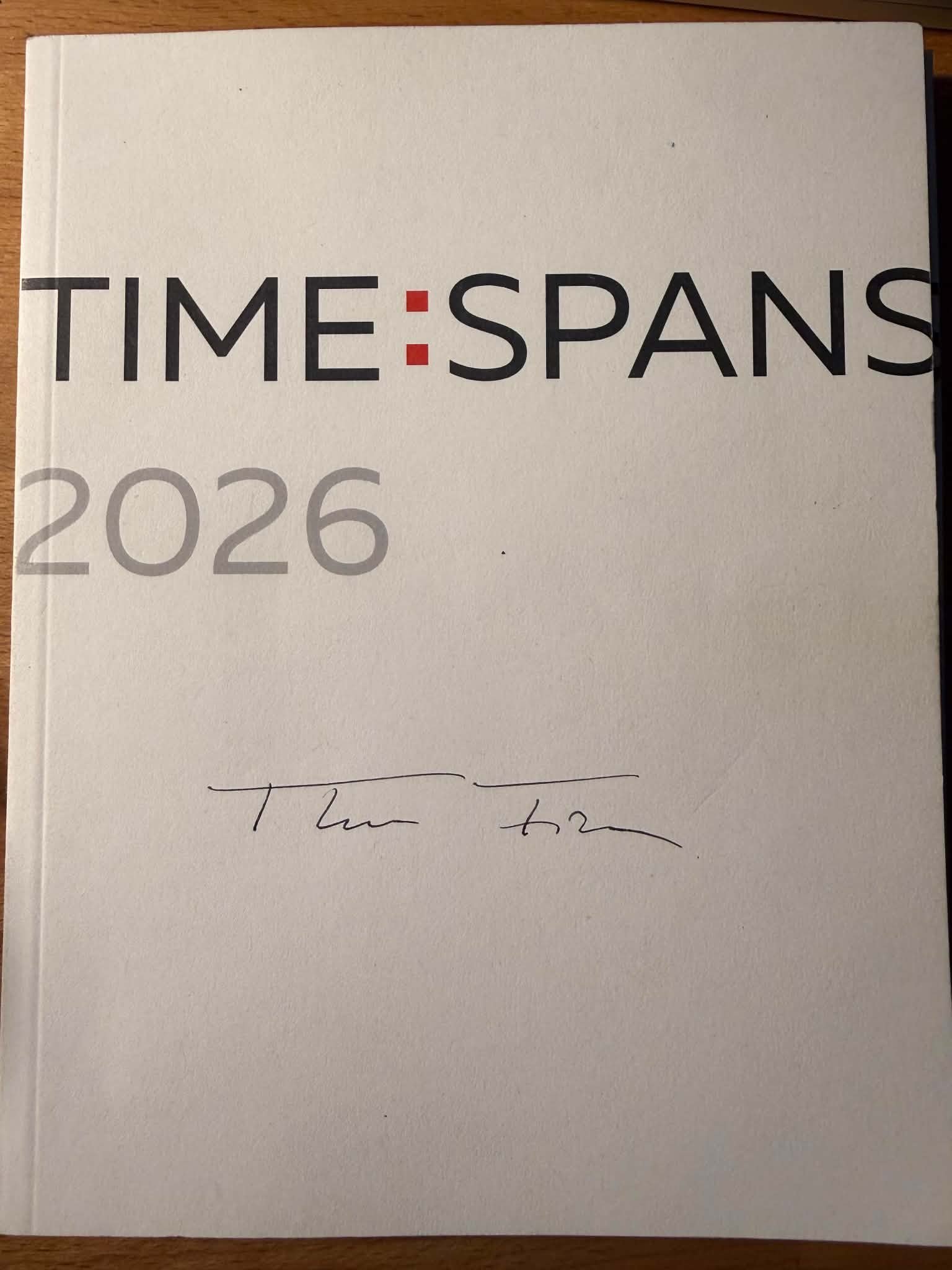
TIME:SPANS 2026 was held from August 8 to 22, 2026, at Mary Flagler Cary Hall at the DiMenna Center in New York.
#1, on August 8, with Rihm’s Jagden und Formen, I was following the “form” of the music. In the Talea Ensemble performance with conductor James Baker, as I tried to catch the forms as they appeared and changed, sharp fragments of sound kept spilling out of the instruments.
#2, on August 9, with Ergün and Haas, in the JACK Quartet's performance, the music went nowhere, and eventually I could no longer even follow the sound itself.
#3, on August 10, with Kurtág’s Officium breve, Parker Quartet’s extraordinarily delicate performance drew my ears toward the brief moments that remained after the sounds had disappeared. As I listened to the silence between sounds, the space itself seemed to expand gradually, and each short fragment of sound emerged and disappeared with extraordinary clarity, almost like a work in itself. Here, I was not following the sounds, but listening to the very moment in which they disappeared. Suzanne Farrin’s SEA-DRIFT, which followed, deepened this sensation further, turning my ears away from the sound itself and toward what remained after the sound was gone.
#4, on August 12, with Mark Andre’s …selig ist…, my ears moved even further toward the disappearance of sound itself. Through Ning Yu’s piano playing and the electronic sound of Michael Acker and Joachim Haas of SWR Experimentalstudio, the overtones, string vibrations, resonance, and noise within the piano sound stretched out into the space as the sound disappeared. Even after the sound was gone, sound remained until the boundary between the live piano and the electronics themselves became impossible to distinguish. I listened to the moment sound disappeared, and to the sound that remained after it did.
#5, on August 14, with Kelley Sheehan’s O Maria, I moved away from recognizing sound as something identifiable. Ty Bouque’s voice seemed to leave the body and was transformed by electronics, while Sarah Saviet’s violin also changed until it became impossible to tell whether I was hearing a voice or an instrument. The boundaries between voice, instrument, electronic sound, and machine dissolved. I stopped asking myself, “What kind of sound is this?” and simply listened to the sound itself.
Philippe Manoury’s Le temps, mode d'emploi followed, performed by GrauSchumacher Piano Duo and SWR Experimentalstudio, bringing together piano and electronics. At first, I was listening through the familiar music I already knew—IRCAM, Messiaen, the idea of the super-virtuoso. But after Sheehan, when I stopped following the technology and the piano's timbre, I began to hear in Manoury, just as in Sheehan, moments when sound could be separated from recognition itself.
#6, on August 15, with Grossman Ensemble, I returned to the instruments. I was captivated by the instruments' skill, the fascination of their timbres, and the polished ensemble playing. In Melinda Wagner, I could hear the physical sensation of the wood of the xylophone and the metal of the triangle; in Sean Shepherd, the combinations and repetitions of instruments; in Ramon Lazkano, the physical movements through which sound was born, extended, and broke apart; and in Augusta Read Thomas, the richness of timbre, rhythm, harmony, and melody themselves. The possibilities of sound discovered by composers of the past had been passed on to the present, emerging as new sounds through the bodies of performers.
#7, on August 16, with Sarah Hennies’s The Blue Hour, I entered once again into the physical body of the instruments themselves. Through repetition, Sarah Saviet’s violin and Joseph Houston’s piano gradually moved from the sounds of playing an instrument toward the sound of the instruments themselves sounding. I heard the overtones produced by the bow on the violin, the metallic resonance of the piano, and the way the two instruments' timbres merged until even their boundaries disappeared. Over 90 minutes, I stopped following sound; I entered a world where the instruments themselves seemed alive and were producing sound.
#8, on August 17, with ICE, made me think about the individuality of sound. The four composers were each supposed to be different, yet what I heard in the performance was “the sound of contemporary music.” There were extended techniques and complex methods, but I could not hear why those sounds belonged to that particular composer or that particular work. Even when diverse works are placed together, if they cannot be heard as different from one another, diversity can instead erase individuality.
#9, on August 18, with Pamela Z, I heard works spanning from 1986 to 2024 through a single voice. Through delay and sampling, the voice moved back and forth between the body and electronic sound, gradually leaving the body and transforming into another voice, another acoustic space. The forty-year process itself sounded like an exploration of how far a single voice could become music.
#10, on August 19, with Sciarrino, words peeled away, and voice, breath, the vibration of the throat, overtones, noise, resonance, and silence could all be heard as a single sound world. In Readable Silences, ancient words became sound rather than meaning; resonance became reverberation, and eventually reached silence. By losing meaning, sound itself became more powerful. In Stupori as well, Ty Bouque’s voice and the resonance of the instruments reflected each other’s afterimages, until even the presence that remained after the sound had disappeared became music.
Michael Hersch’s Carrion-Miles to Purgatory, which followed, expanded this “disappearance” from individual suffering toward death, purgatory, hell, God, the body, the earth, and time. A canary beating against the bars of its cage and crying out, followed finally by a city collapsing. Individual suffering expanded into the collapse of the world itself, until the very order of heaven and hell fell apart.
Beyond Sciarrino’s “readable silence,” I could hear Hersch’s crying canary. And after the city collapsed, Sciarrino’s silence returned. The disappearance of sound eventually became the collapse of the world, and at its end, returned once again to silence.
#11, on August 21, with Haas’s in vain, I physically experienced the confusion and collapse of the world itself. In the performance by Alarm Will Sound and Alan Pierson, microtones, overtones, and long drones overlapped, and the orchestra no longer maintained a single form but divided itself through minute shifts and beats. Twice, the lights went out, and freed from vision, my ears perceived the direction of sounds and the waves created when they collided more sharply. In the darkness, the resonance transformed into another kind of existence, and music that had been precisely constructed finally collapsed as a “broken symphony.” Haas’s own history, along with the confusion and violence of the world, politics, and ideology, seemed to overlap within it.
#12, on August 22, with Rebecca Saunders’s Scar and Skull, I entered the interior of the body of sound, beyond the broken resonance. In the performance by Talea Ensemble and James Baker, friction, noise, breath, impacts, and resonance collided, and sound appeared and disappeared as if wounding the body. In Scar, I entered the interior of sound as though tearing through the surface of silence, searching for what lay beneath the wound. In Skull, a “kernel of melody” eventually emerged from what remained inside. The melody that Saunders had stayed away from for so long had returned in another form. Rather than breaking sound, she entered into its interior and listened to its body.
What does it mean to listen?
This was the question I kept thinking about throughout TIME:SPANS 2026. Music is sound before it is music. We give something sound and make it music. Composers write music, performers make it sound, and audiences listen. Listening at TIME:SPANS made me think about this simple fact.
People are always thinking about something. Even while listening to music, we think about its structure, the composer, its meaning, and connect it to our own memories. But when I encountered these twelve extreme musical worlds, there were moments when I forgot to think and simply listened to sound. And strangely, those moments stayed with me most deeply afterward.
As I continued to follow the form in Rihm, before I knew it, sound was spilling out of the instruments. With Haas, following sound itself lost its meaning. With Kurtág, I listened to silence; with Mark Andre, I listened to sound's disappearance. With Sheehan, I no longer knew what kind of sound I was hearing in the first place. From there, I returned once again to the timbres of instruments. The sensation of wood, the resonance of metal, bow and string, the interior of the piano. I entered Hennies’s sonic landscape, physically experienced Haas’s symphony in darkness, and felt as though I were standing inside Saunders’s sculpture of sound.
Sciarrino set sound to the words of the seventeenth-century Japanese poet Bashō, and Ty Bouque sang that sound. The same Bouque also sang a new work by Kelley Sheehan, born in 1989. Across time, culture, and generations, words become sound, and the body transforms sound into something else.
The composer gives something to sound, the performer brings it forth through the body, and the listener receives it. Within that cycle, music returns to being sound once again.
At TIME:SPANS 2026, I was listening to that sound.
TIME:SPANS 2026は、2026年8月8日から22日まで、ニューヨークのDiMenna CenterにあるMary Flagler Cary Hallで開催された。
1回目、8月8日のRihm《Jagden und Formen》では、音楽の「形」を追いかけていた。Talea Ensembleと指揮者James Bakerの演奏では、現れては変化する形を捉えようとしているうちに、楽器から鋭い音の断片が次々と飛び出してきた。
2回目、9日のErgünとHaasでは、JACK Quartetの演奏で、音楽はどこにも到達せず、やがて音そのものを追いかけることさえできなくなった。
**3回目、10日のKurtág《Officium breve》**では、Parker Quartetの極めて繊細な演奏によって、音が消えたあとに残るわずかな時間へ耳が向かっていった。音と音のあいだの沈黙を聴いていると、空間そのものが次第に大きくなり、一つひとつの短い音の断片が、作品のようにくっきりと浮かんでは消えていった。ここでは音を追うのではなく、音が消えていく瞬間そのものを聴いていた。続くSuzanne Farrinの《SEA-DRIFT》では、その感覚がさらに深まり、音そのものよりも、音が消えたあとに何が残るのかへと耳が向かっていった。
**4回目、12日のMark Andre《…selig ist…》**では、さらに音の消滅そのものへ耳が向かった。Ning YuのピアノとSWR ExperimentalstudioのMichael Acker、Joachim Haasによる電子音響によって、ピアノの音が消えていくとき、その内部にある倍音、弦の振動、残響、ノイズが空間へと引き延ばされていく。音が消えたあとにも音が残り、やがて生のピアノと電子音響の境目さえわからなくなる。私は、音が消える瞬間と、消えたあとに残る音を聴いていた。
**5回目、14日のKelley Sheehan《O Maria》**では、音を何かとして認識することから離れていった。Ty Bouqueの声は身体から離れ、電子音響によって変形し、Sarah Savietのヴァイオリンも、声なのか楽器なのかわからないほど変わっていく。声、楽器、電子音、機械の境界が溶け、私は「これは何の音なのか」と考えるのをやめて、ただ音そのものを聴いていた。
Philippe Manoury《Le temps, mode d'emploi》では、GrauSchumacher Piano DuoとSWR Experimentalstudioによるピアノと電子音響の融合を聴いた。最初はIRCAMやMessiaen、スーパーヴィルトゥオーゾといった既知の音楽を重ねて聴いていた。しかし、Sheehanの後では、技術やピアノの音色を追うのをやめると、マヌーリの音に、Sheehanと同じように、音を認識から切り離す瞬間が現れた。
6回目、15日のGrossman Ensembleでは、そこから再び楽器に戻った。楽器そのものの巧みさ、音色の面白さ、磨き上げられたアンサンブルに耳を奪われた。Melinda Wagnerでは木琴の木やトライアングルの金属の感触、Sean Shepherdでは楽器の組み合わせと反復、Ramon Lazkanoでは音が生まれ、伸び、崩れていく身体的な動き、Augusta Read Thomasでは音色、リズム、和声、旋律そのものの豊かさが聴こえた。過去の作曲家たちが発見した音の可能性は現在へ受け継がれ、演奏者の身体を通して新しい音として生まれている。
**7回目、16日のSarah Hennies《The Blue Hour》**では、再び楽器そのものの身体へ入っていった。Sarah SavietのヴァイオリンとJoseph Houstonのピアノは、反復を重ねるうちに楽器を演奏する音から、楽器そのものが鳴る音へと変わっていく。ヴァイオリンの弓が生む倍音、ピアノの金属的な響き、二つの楽器の音色が交わり、やがてその境界さえ消えていった。90分という長い時間の中で、音を追うのではなく、楽器そのものが生きて音を生み出している世界に入り込んでいた。
8回目、17日のICEでは、音の個性について考えさせられた。4人の作曲家はそれぞれ違うはずなのに、演奏から聴こえてきたのは「現代音楽らしい音」だった。特殊奏法や複雑な技法はあっても、その音がなぜその作曲家、その作品でなければならないのかが聴こえてこない。多様な作品を並べても、それぞれが違うものとして聴こえなければ、多様性は逆に個性を消してしまう。
9回目、18日のPamela Zでは、1986年から2024年までの作品をひとつの声を通して聴いた。声はディレイやサンプリングによって身体と電子音響のあいだを行き来し、次第に身体から離れ、別の声、別の音響空間へと変容していく。その40年の過程そのものが、ひとつの声がどこまで音楽になり得るのかという探求に聴こえた。
10回目、19日のSciarrinoでは、言葉が剥がれ、声、息、喉の震え、倍音、ノイズ、残響、沈黙が一つの音響として聴こえてきた。《Readable Silences》では、古代の言葉は意味ではなく音となり、響きは残響となり、やがて沈黙に至る。意味を失うことで、むしろ音そのものが強く現れていた。《Stupori》でも、Ty Bouqueの声と楽器の響きが互いの余韻を映し合い、音が消えたあとに残る気配までが音楽になった。
そのあとに続くMichael Hersch《Carrion-Miles to Purgatory》では、その「消滅」が個人の苦しみから死、煉獄、地獄、神、身体、大地、時間へと広がっていく。檻を叩いて叫ぶカナリア、そして最後に崩れ落ちる都市。個人の苦しみが世界の崩壊へと拡大し、天国と地獄という秩序そのものまで崩れていく。
Sciarrinoの「読むことのできる沈黙」の向こうから、Herschのカナリアの叫びが聞こえる。そして都市が崩れ落ちたあとには、再びSciarrinoの静寂が戻ってくる。音の消滅は、やがて世界の崩壊となり、その果てに再び沈黙へ戻っていった。
**11回目、21日のHaas《in vain》**では、世界の混乱や崩壊そのものを身体で体験した。Alarm Will SoundとAlan Piersonによる演奏では、微分音や倍音、長いドローンが重なり、オーケストラは一つの形を保ったままではなく、微細なずれやうなりのなかで分裂していった。二度、明かりが消えると、視覚から解放された耳は音の方向や、音と音がぶつかって生まれる波をより鋭く捉えた。暗闇のなかで響きは別の存在へと変わり、正確に組み立てられた音楽が、最後には「壊れたシンフォニー」として崩れていく。そこには、Haas自身の歴史と、世界の混乱や暴力、政治や思想までが重なっていた。
**12回目、22日のRebecca Saunders《Scar》《Skull》**では、壊れた響きの向こうから、音の身体の内部へ入っていった。Talea EnsembleとJames Bakerによる演奏で、摩擦、ノイズ、息、打撃、共鳴が衝突し、音は身体を傷つけるように現れては消えていく。《Scar》では、沈黙の表面を引き裂くように音の内部へ入り込み、傷の下にあるものを探る。《Skull》では、その内部に残るものから、やがて「メロディーの核」が浮かび上がった。サンダースが長いあいだ離れていたメロディーが、別の姿で戻ってきた。音を壊すのではなく、音の内部へ入り、その身体を聴く。
聴くとは何か。
音楽は、音楽である前に音である。人は音に何かを与え、音楽をつくる。作曲家は音楽を書き、演奏家はそれを演奏し、聴衆はそれを聴く。この聴取体験は、当たり前のことを考えさせた。
人はいつも何かを考えている。音楽を聴いていても、曲の構造を考え、作曲家を考え、意味を考え、自分の記憶と結びつけている。けれど、この12回の極まった音楽の世界に触れていると、ときどき考えることを忘れ、ただ音を聴いている瞬間があった。そして不思議なのは、その瞬間が、あとになって深く残っていることだった。
Rihmの形を追い続けていると、いつの間にか楽器から音がこぼれ出していた。Haasでは、音を追い求めることそのものが意味を失った。Kurtágでは沈黙を聴き、Mark Andreでは音の消滅を聴いた。Sheehanでは、そもそも自分が何の音を聴いているのかがわからなくなった。そこから、もう一度楽器の音色を楽しんだ。木の感触、金属の響き、弓と弦、ピアノの内部。Henniesのソニックスケープの中に入り、Haasの暗闇のシンフォニーを身体で受け、Saundersの音の彫刻の内部に立っているような感覚を味わった。
17世紀の日本の詩人、芭蕉の言葉にSciarrinoが与えた音をTy Bouqueが歌い、Bouqueは、1989年生まれのKelley Sheehanの新作も歌った。時間も文化も世代も越えて、言葉は音になり、音は身体を通って別の音へと生まれ変わる。
作曲家が音に何かを与え、演奏家がそれを身体から生み出し、聴衆がそれを受け取る。その循環のなかで、音楽は再びただの音に戻っていく。
TIME:SPANS 2026で、私はその音を聴いていた。