
Journey to Tanglewood in Summer — Meeting HIMARI
Part 1: Journey to Hudson, Reunion with Paddle, and Yoga Sutra 3.17: Consciousness
I traveled to Tanglewood in the summer to meet HIMARI.
On July 24, I boarded the Berkshire Flyer at 11:06 a.m. from Moynihan Train Hall on my way to visit a friend in Hudson. Before departure, I stood beneath the enormous glass ceiling, supported by its steel framework, watching sunlight pour through it. The train was extremely crowded, and the announcement repeated several times: “This train is full. Please take the first available seat you can find.” Fortunately, I found a seat shortly after departure and settled in.
The journey to Hudson takes about two hours. Leaving New York City behind, the train traveled north along the Hudson River. The carriage was crowded, and I did not have much space in my mind to appreciate the scenery outside the window. Yet rivers, mountains, and vast rural landscapes continued to unfold, and before I realized it, we had arrived in Hudson.
I had some time before my friend arrived, so I stepped outside the station, sat down, and smoked a cigarette. Leaning back on a reclining chair made of thin metal strings woven together, I slowly inhaled the smoke. Gradually, the tension in my body began to dissolve—from my ears to my shoulders, and finally to my eyes. The pressure I always felt in New York City was absent in Hudson.
There was a single black Ford taxi waiting in front of the station. The driver, a white woman, was sitting inside. Since I was hungry, I asked if there was a supermarket nearby. She kindly told me where I could find one and even offered to drive me there. But just then I received a message from my friend saying he would arrive soon, so I politely declined.
A short while later, Paddle arrived. It had been since the winter before last that we had seen each other. Hudson in winter had been beautiful, but summer revealed another side of the landscape—the endless green fields, forests, and clear blue sky. As we drove through country roads surrounded by farmland and woods, we talked about the yoga session planned for that evening with Linda and Joshua. Before that, we decided to have lunch at a diner.
On the way there, Paddle told me about Yoga Sutra 3.17.
Consciousness.
The understanding that arises from words and sounds is normally mixed together. But by separating these elements and observing them deeply, one gains the knowledge to understand the voices of all beings.
Paddle had already been exploring this theme with Linda and Joshua for three months. My own understanding was that, through yoga, I had come to know my body. Through breathing exercises, practice, and the words of my teachers, I had continued to think about how my body and thoughts respond when I encounter sound.
Since the previous season, I had realized that the impressions created by sound and music were not simply emotions felt by the heart. Rather, they were phenomena created when thought projected itself onto the heart.
When Paddle explained Yoga Sutra 3.17—the nature of consciousness and the method of training it—I felt a deep connection with this realization.
What if I could observe HIMARI, Nelsons, and the Boston Symphony Orchestra without passing through my own thoughts? What if I could record that experience and share it with many people?
Paddle carefully explained the three stages of the practice.
First, choose someone you know well and repeat their name silently in your mind again and again until the image of their face disappears and only the sound remains.
Then describe that person as precisely as possible: their age, their hair color, who they are, and what they do.
The third step is to simply imagine that person sitting beside you.
I chose Mozart.
I chose him because I had come to hear HIMARI’s violin. In this performance, she would play Mozart’s Violin Concerto No. 1. Also, although the second half of the program would be Tchaikovsky, I thought that if my awareness of Mozart deepened, perhaps I would naturally become more open to the music that followed.
After some time, we arrived at the diner.
The diner had been operating since 1953. It possessed something that could only be called history. The chairs, the tables, the curtains hanging beside the windows, the restroom, even the container holding the paper towels—everything seemed frozen in time.
The current owners had taken over the restaurant from the previous owner only several months earlier, yet the spirit of the place remained untouched.
I ordered a turkey club sandwich, and Paddle ordered an egg sandwich. The dishes came with a large cucumber pickle and roughly cut lettuce. I had been traveling since early morning and did not have much appetite. But after taking a sip of black coffee and biting into the lettuce, my mouth suddenly filled with water. The lettuce was incredibly fresh.
The turkey club had another slice of bread in the middle, creating two layers. Soon, the waiter came by and asked how the meal was. I said everything was fine. Then he suddenly returned with something he had forgotten—a red sauce. I dipped the lettuce into it, and it was extraordinary. It had a flavor similar to ceviche, yet it also transformed the sandwich itself. Since it was sold by the bottle, I bought one. I felt it would work beautifully with both meat and vegetables.
Paddle had to leave for work, so he left me at the diner for a while. The restaurant seemed to close at 3 p.m., but when I asked whether I could stay until Paddle returned, they kindly welcomed me to remain.
It was Friday afternoon, and the staff were busy discussing how they would welcome their weekend guests. Watching them prepare with such care, I felt the true warmth of Hudson.
To give your heart fully for someone else.
A clean dining room that seemed to have remained unchanged since the 1950s. A meal prepared with fresh vegetables and carefully chosen ingredients. A place created through attention and kindness.
This was the heart of Hudson.
Part 2: Linda’s House, Yoga, Meditation, and the Sound of Consciousness
After spending some time at the diner, I looked outside and saw Paddle returning. I said goodbye to the people there and got back into the car.
Linda’s house was only a short drive away, along a narrow path through the woods. Two deep-green buildings stood among the trees, with a small cabin nearby. As we parked, André came out to greet us. We shook hands, and he moved our hands up and down several times in his warm, energetic way. In front of the house were Joshua and Robin, and when we entered, Linda was there waiting for us.
It had been since my previous visit that I had seen them all. If someone asked me whether I remembered everyone clearly, I probably could not say yes. But I remembered Linda and Joshua.
Joshua and I immediately began talking about music. He told me about Lutosławski and some of the noise music he had recently been enjoying. Linda handed me a glass of water. I changed clothes, went upstairs, and prepared for yoga.
We never discuss details such as who sits where or when exactly we should begin. Everyone simply prepares their body and mind, reflects on the theme, places their mat, and waits for Paddle to begin speaking.
It felt like preparing for a concert.
We gather at a designated time, enter the space, take our seats, regulate our breathing, and wait for the music to begin. Sometimes, at a venue, there is no announcement and no bell. When the time comes, the musicians simply walk onto the stage, the orchestra forms, and the music begins. Sometimes there is applause at the end, and sometimes there is silence.
Contemporary classical music performances in America often feel like a show. Advertisements, announcements, reminders about etiquette—the sounds unrelated to music fill the space before we even begin listening. Concerts are made possible by people who contribute large sums of money, and in this country, there is often a need to visibly acknowledge those patrons to the audience who purchased tickets.
But here, there was none of that.
I sensed the presence of Linda and Joshua beside me. I tried to empty myself as much as possible and waited for Paddle to begin.
Paddle spoke about the three stages they had been exploring over the previous three months: dharana, dhyana, and samadhi. Until then, they had focused on larger themes such as peace and health. This time, however, they decided to focus their awareness on a single person.
First, we prepared the body.
Together, we practiced kapalabhati breathing. Normally, we inhale and exhale twenty-five times for three sets, but this time Paddle asked us to do one longer set. Afterward, she asked how many breaths we had taken.
It was long.
Fifty.
She gently reminded us: counting matters.
In music, the most important thing is tempo.
After that, Paddle’s breathing counts during Sun Salutation A and B were remarkably steady. She does not teach yoga simply to earn money. She practices yoga for Linda and Joshua. But because I was there that day as well, the sequence after the sun salutations felt somewhat gentler than usual.
We began with cat-cow movements, slowly releasing tension from the hips and shoulders. Then we moved through the shoulders and upper arms, the waist, the hips, and finally down to the toes. That was the most challenging part for me. The other two moved with ease.
However, two days later, on the morning of HIMARI’s performance, I truly understood the effect. My body moved differently. Especially walking felt effortless.
Paddle’s sequence began with the foundation of yoga: creating stability from the hips, then extending outward through the shoulders and arms. My breathing was far from perfect, but Paddle’s counting remained constant throughout every sequence.
This was the work of a professional.
Joshua’s tripod headstand was remarkable. He had started only about two years earlier, yet his body axis had become so beautifully aligned. More importantly, the movement was connected to his awareness. It was not simply a physical achievement. It was a visible expression of consciousness.
After two hours of sweat and tears, it felt as if I had been inside a vast symphony where many different eras and layers of time had merged together.
When I realized it, Linda was sleeping peacefully beside me.
What a calm and gentle sound her breathing made.
Eventually, Paddle began creating a different soundscape. From a quiet and stable electronic tone, metallic high frequencies emerged, creating expanding ripples of different pitches throughout the space. The air entering through my nose seemed to pass through my eyes and leave through my ears. My perception of sound was sharper than it had been at the Hudson station.
Gradually, the sounds blended with the distant resonance of cowbells from the pasture and something resembling the shimmering tones of a gamelan.
Under Paddle’s guidance, we slowly lifted our bodies and began meditation.
I repeated the name Mozart silently in my mind.
I knew Mozart’s music, but I did not know Mozart as a person. The face I had seen in portraits appeared in my imagination. Then it disappeared. So I began repeating the names of his compositions instead.
I had listened to the First Violin Concerto many times because HIMARI would perform it. The melodies appeared naturally in my mind. I thought of Isaac Stern’s recording—the beauty of its sound, its natural richness, and its generous resonance.
After completing this process, I imagined Mozart sitting beside me.
The Mozart I had seen in paintings appeared there.
But Mozart was already inside the resonance itself. It was difficult to separate the person from the music.
There are moments when Mozart suddenly appears in my daily life. While walking. While choosing something in a store. Sometimes it is the first movement; sometimes the second.
Is Mozart already part of my life?
After the meditation ended, Paddle asked me what I had experienced, and I shared these thoughts.
The yoga session, which had seemed both long and short, finally came to an end.
Part 3: André’s Paintings, Dinner in the Forest, Hudson’s Nature, and the Journey to Tanglewood
After the yoga session ended, André had prepared aperitifs in the garden, so we spent some time relaxing together. The conversation naturally moved toward music and art.
André creates replicas of famous paintings for people who own the original works. When I mentioned that I liked Cy Twombly, he showed me the work he was currently creating.
Standing in his studio, I found myself surrounded by an enormous Twombly painting that stretched across an entire wall. Looking at this monumental work, I thought about how André studies a photograph of the original and reconstructs its brushwork, rhythm, spatial balance, and spirit on a vast canvas.
To remain surrounded by such a consciousness must be exhausting.
Every day, André spends long hours inside the mind of another great artist. Looking at the original work, reading the movement of the brush, the rhythm of the marks, the balance of empty space, and the energy behind the surface, he attempts to rebuild not only the image but the awareness that created it.
The exhaustion must be beyond imagination.
And yet André is always calm.
Perhaps he wants to remain as empty as possible.
Watching him work reminded me of a conductor placing notes one by one onto an empty musical staff, gradually revealing the structure of an enormous symphony.
That is why I also want to approach concerts as lightly as possible—to prepare my body so that I can simply offer myself to the musicians and allow the music to pass through me.
Especially at Tanglewood, where I rarely have the opportunity to visit, I wanted to be completely prepared to receive the experience.
When we returned to the house, Linda and the others began preparing dinner.
All of the vegetables had been grown by Linda herself in her own garden. To eat them was to receive the life she had carefully cultivated with her own hands. It felt almost as if she were sharing an extension of her own life with us.
André, Joshua, and I walked around the backyard together. Flowers of many kinds covered the landscape. Beyond the trees was another hillside, and the setting sun slowly disappeared behind it.
When I was young, every day was like this.
I did not always recognize the beauty of nature because it was simply part of everyday life. Yet even as a child, the quiet whiteness of winter always gave me a special sense of excitement.
We returned to the kitchen and helped prepare the meal. I cut large leaves and prepared them to be cooked with oil. André told us to put on some music, so I played music by Kelley Sheehan and Sarah Hennies, composers I would hear later at Timespan in August.
As the music played, something remarkable happened.
Paddle was spinning a bowl to remove water from the vegetables. Linda was cutting vegetables on the wooden board. Everyone’s movements and sounds became part of the music itself.
The entire space became a live artwork.
Joshua, Linda, and I talked about Adorno. Joshua described him as someone who predicted the future. Adorno analyzed the world and showed where its tendencies might lead.
I explained a little about total serialism during Adorno’s era and shared my own feeling that musical expression had gradually moved from the developments of the 1970s toward the world of spectrum and sound itself.
What was fascinating was that Adorno had died in 1969.
We were not surprised or disappointed that we understood each other so quickly. Rather, each of us simply shared the music we loved. Linda introduced me to New York minimalism, and Joshua showed me the noise music he was currently fascinated by.
After a while, dinner was ready, and we sat together outside at the table.
The sun had disappeared, and insects were singing in the darkness.
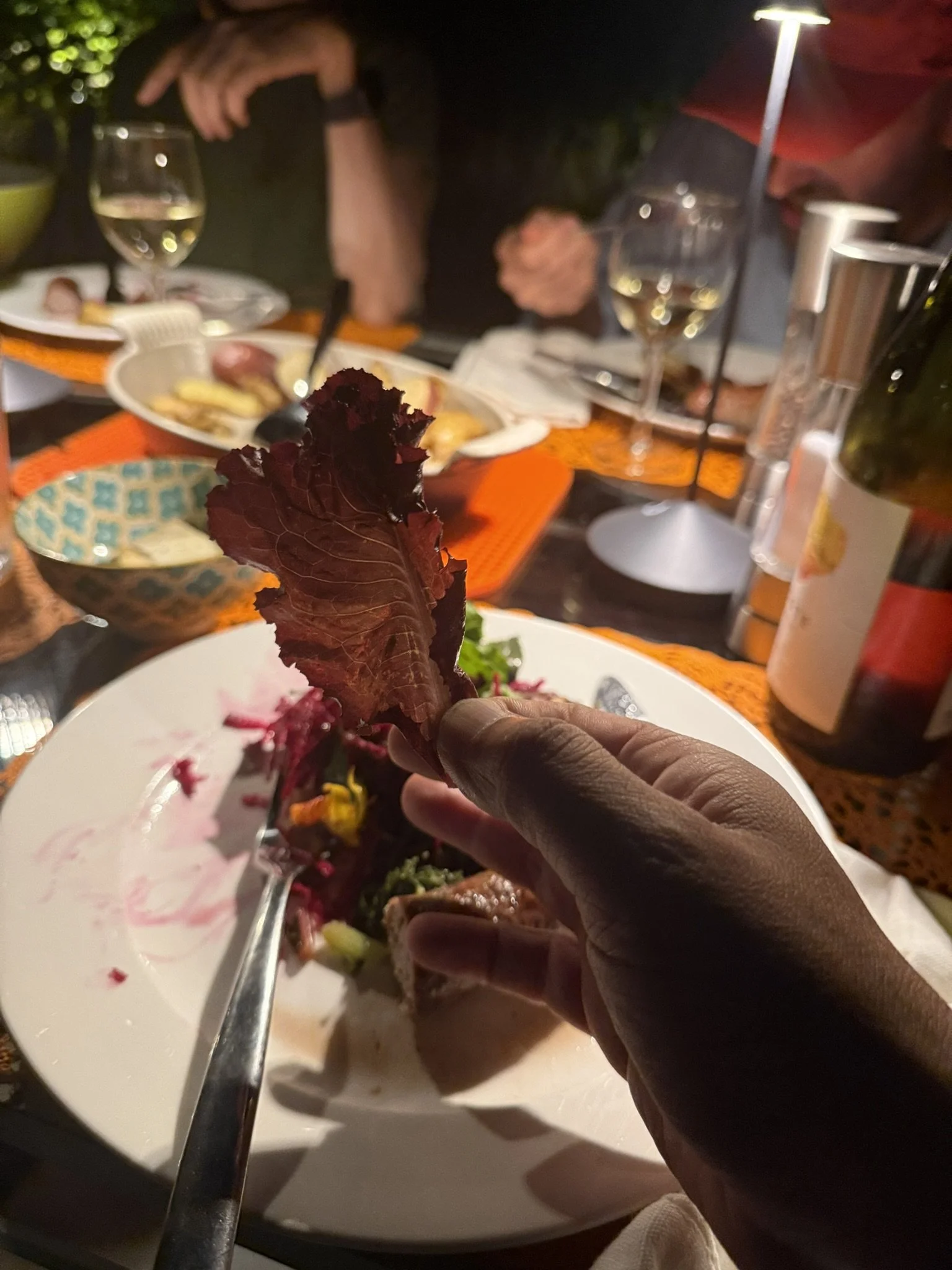
We drank wine and served ourselves salad, grilled vegetables, and Robin’s sausages.
There I was, deep in the Hudson woods, one and a half years after my previous visit, saying “itadakimasu” before dinner with people I barely knew.
Everything was delicious.
The vegetables especially were extraordinary.
The bitterness of the leaves. The fragrance of flower buds. The flavors of Hudson itself.
Linda’s sincerity was present in every bite.
The sweetness and aroma of the potatoes. The stems of the fried leaves reminded me of fuki growing in my grandmother’s garden in Iide, the mountain region where I grew up in Yamagata. The slight saltiness brought back the taste of home.
During dinner, I told André about the food I ate growing up in the mountains of Yamagata—bear, wild boar, and rabbit. I told him stories of going hunting with my uncle and Tocchi, and how afterward we cooked and ate what we had hunted.
Linda’s dinner came from the same spirit.
Receiving something from nature, preparing it with human hands, and sharing it with others.
That was the meaning of the meal.
When I finished eating, the evening slowly came to an end.
“Thank you all for this wonderful dinner.”
I returned to Paddle’s house, drank a little beer, took a shower, and rested.
When I lay down in bed, I could barely feel my body. The pain in my shoulders and lower back had disappeared.
But my mind continued projecting images: the metallic circles of sound created by Paddle, the bitterness of Linda’s vegetables and the fragrance of flowers, Joshua’s words, and the smell of André’s paint.
Before I realized it, morning had arrived.
Paddle prepared coffee and breakfast. There were eggs, sausages, and cucumbers. The cucumbers were seasoned simply with salt, pepper, and oil. Everything had apparently been purchased in Chatham.
The moment I took a sip of coffee, its richness spread from the sides of my tongue through my throat and down into my stomach.
“This egg is amazing. Where did you buy it?”
“Chatham.”
“This sausage is delicious. Where did you get it?”
“Chatham.”
During this journey, almost everything I found truly delicious seemed to come from Chatham.
After breakfast, we headed toward Tanglewood to meet HIMARI.
The drive from Hudson to Lenox, Massachusetts, took about forty minutes through quiet country roads. Along the way, Paddle and I talked about Mozart, the yoga experience from the previous day, the programs we would hear, the Boston Symphony Orchestra, and Andris Nelsons.
I hardly knew HIMARI.
Next spring, she will come to Carnegie Hall with Nelsons and the Boston Symphony Orchestra. I had already bought my ticket. They will perform Prokofiev’s Violin Concerto.
I do not know exactly why, but before that concert, I felt I needed to hear HIMARI’s sound.
I had occasionally heard about her from Yayoi. Apparently, she had also appeared on Japanese television programs.
I thought about Midori.
In the early 2000s, Midori performed frequently at Carnegie Hall. Even after moving her base to California, I occasionally had the opportunity to experience her live performances. Not long ago, I heard her perform Beethoven’s Violin Concerto, and I was moved to tears.
Midori was also one of the young violinists who performed at Tanglewood.
And now, another young violinist was about to stand in front of us.
Part 4: Arrival at Tanglewood — Nelsons, Boston Symphony Orchestra, and HIMARI’s Mozart Violin Concerto No. 1
We parked the car and passed through the security checkpoint at the gate before scanning our tickets and entering the grounds.
Tanglewood, located in Lenox, Massachusetts, was originally the summer estate of the Tappan family. The next day, a local usher told me that the property had been donated to the Boston Symphony Orchestra in 1936, and the first Tanglewood Music Festival was held there the following year.
Walking across the lawn, the Koussevitzky Music Shed soon came into view.
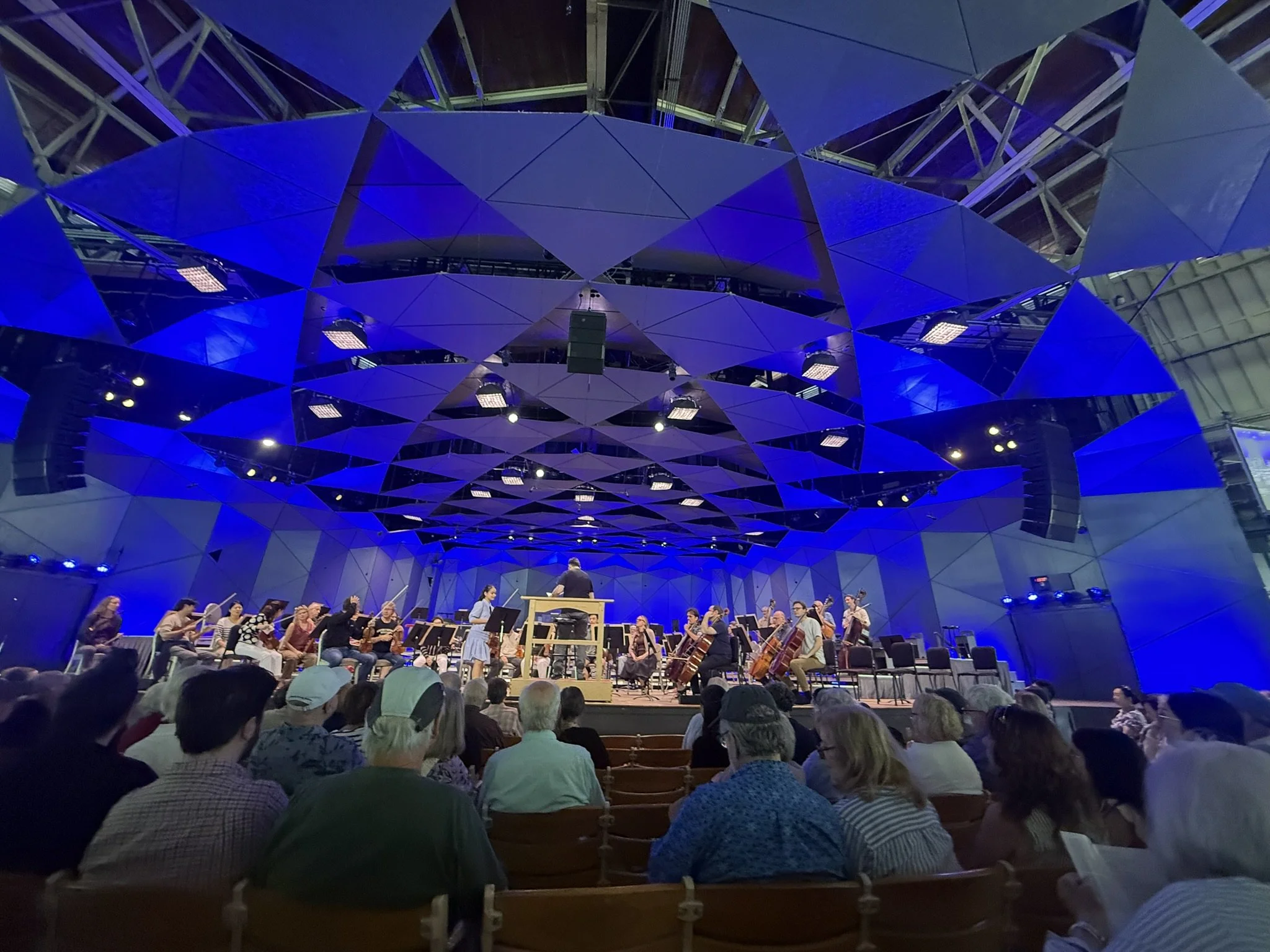
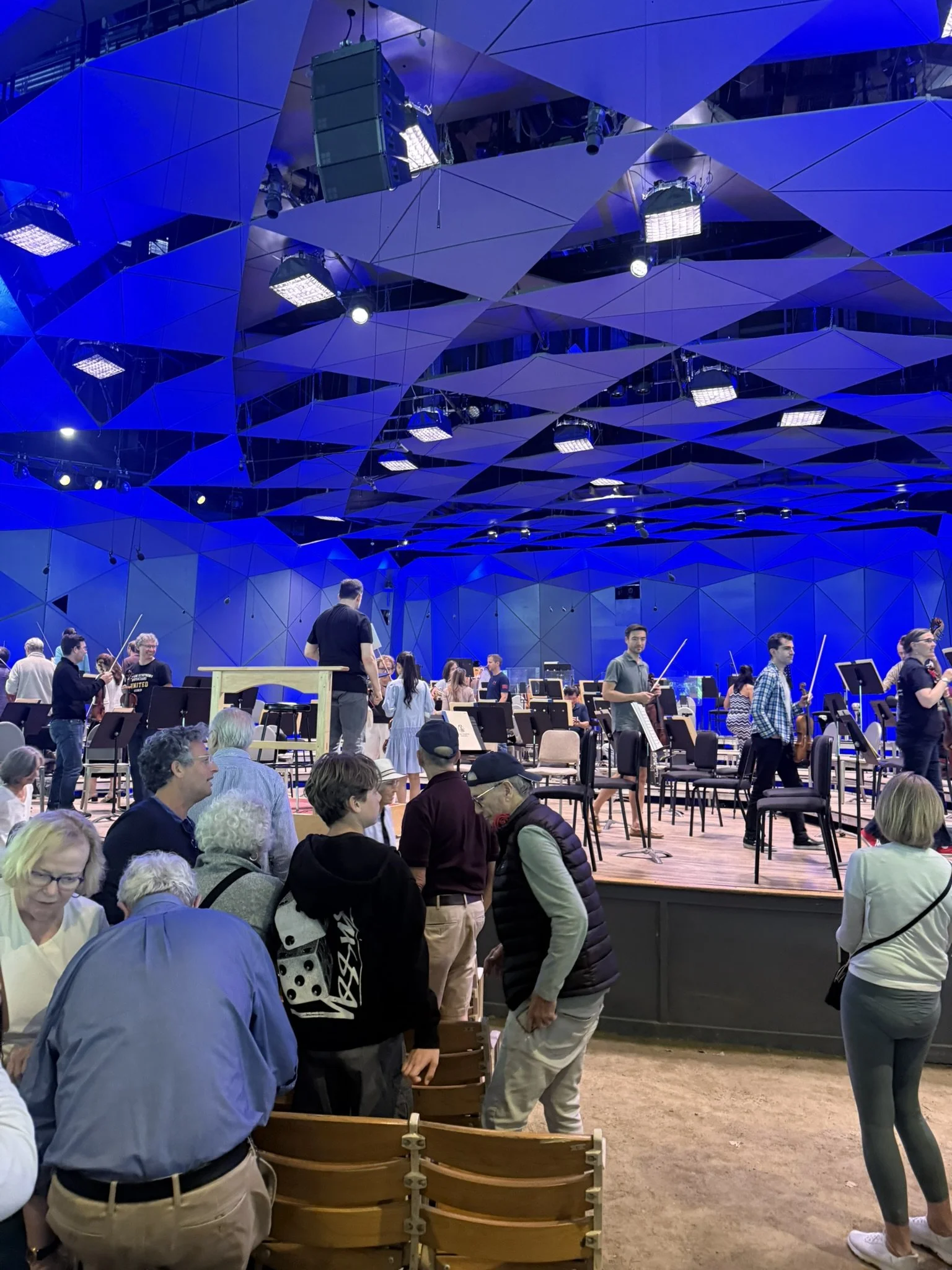
It had been four years since I had last visited this place with another friend and his family. At that time, I listened to Bach outside the Shed. The Koussevitzky Music Shed has a fan-shaped seating area that accommodates approximately 5,700 people. The stage area is enclosed, while the sides and back are completely open to the surrounding landscape. Acoustic panels hang above the front seating area to help shape and control the sound.
We sat slightly to the right of the center, near the front.
An assistant was seated in the same row, his score open in front of him.
The rehearsal began with Tchaikovsky’s Symphony No. 5.
Rehearsals often begin with the larger orchestral works, and soon the maestro appeared on stage.
Andris Nelsons was wearing his Boston Taekwondo T-shirt as usual. When I saw him conduct in Vienna and at Carnegie Hall, the same shirt had displayed the logo on the back. This time, during Tchaikovsky, the “Boston Taekwondo” spirit once again appeared through his conducting.
There was a moment when everything seemed to move in slow motion.
Within the variations of the theme, a solo line emerged as if time itself had expanded. I felt as though I was receiving a personal greeting from each of the great musicians of the Boston Symphony Orchestra.
Every musician sounded as distinctive and profound as ever, but the new principal flutist, Maggie, was especially striking. I had heard her several times at Carnegie Hall, yet her sound at Tanglewood felt completely different.
The atmosphere of the Shed transformed the color of the instrument.
They did not rehearse much of the fourth movement. The rehearsal ended just before the famous transition into the fast-paced Alla breve section.
I was listening while following the score, so I was barely watching the stage. Yet tears began falling onto the pages and would not stop.
It was an extraordinarily deep performance.
The movement of fingers, the friction of bows, the waves of sound from the first violins, and the breathing between sections—all of it became visible through the music. From Nelsons’ large physical presence, the waves of his arms, and the delicate trembling of the tip of his baton, the smallest pianissimo from the percussion section and the overwhelming force of the timpani emerged naturally inside the Shed.
Because the sides of the venue are open, the impact of the sound, the layers of harmony, and the core of the melodies do not become trapped by reflections from walls. Instead, they pass through the audience and flow outward into the surrounding landscape.
That is why the sound feels so clean.
The sound remains transparent.
Each instrument retains its individual character while the entire musical landscape expands with richness and depth.
I first heard Nelsons in February 2011, when he made his New York Philharmonic debut. He was only 32 years old at the time. The following month, in March, he stood in the pit at the Metropolitan Opera for The Queen of Spades.
At that time, James Levine, then music director of the Boston Symphony Orchestra, was already reaching the limits of his physical ability. Nelsons came to Boston and Carnegie Hall as Levine’s replacement, conducting Mahler’s Ninth Symphony.
I heard that performance from the center box seats of the second tier.
It was chaotic in some ways, but I still remember Nelsons’ persistence and the unique sound of the Boston Symphony Orchestra.
Many of the musicians from that time are still sitting on this stage today, alongside new generations of players.
My impression of Nelsons has hardly changed.
Nelsons is still Nelsons.
So what has changed?
The Boston Symphony Orchestra has changed.
From Ozawa to Levine, and then to Nelsons—has Boston changed?
The answer is both yes and no.
The identity of the orchestra remains, yet today the Boston Symphony Orchestra receives Nelsons’ unspoken consciousness with remarkable sensitivity and transforms it into sound for us to experience.
I remembered Paddle’s words:
To see beyond words and sounds.
The vibration at the tip of Nelsons’ baton. The awareness behind that movement. The orchestra receiving that awareness and transforming it into music through human beings.
That growth is still continuing.
When the Tchaikovsky rehearsal ended, I looked around and noticed that everyone was wearing red roses.
Not only the musicians on stage, but also the audience members and staff.
There was a reason.
Due to circumstances that often exist behind the scenes in the professional world, Nelsons will leave his position as music director of the Boston Symphony Orchestra after the 2027 Tanglewood season. It will mark fifteen years since his first appearance with the orchestra at Carnegie Hall.
Such changes are common in the classical music world.
But the musicians, staff, and Boston audience members deeply trust and admire Nelsons.
The red roses were a quiet expression of their affection—and perhaps a gentle protest against his departure.
At the Carnegie Hall performance in April, the Boston Symphony Orchestra entered the stage one musician at a time before Nelsons appeared, following the style established by Ozawa. After the performance ended, there were five curtain calls—the first time in my experience of live performances that I had witnessed so many.
Concertmaster Nathan repeatedly stood and sat, unable to leave the stage.
His desire to continue making music with Nelsons for as long as possible was unmistakable.
During the rehearsal, I spoke with a Black woman sitting beside me. She smiled and asked what instrument I played because she had noticed me moving my fingers while following the score.
When I answered “saxophone,” she smiled happily.
Following melodies and passages with the fingers of a saxophonist helped me hear the musicians’ individual voices more clearly. But when sounds merged together and formed an ensemble, or when I wanted to focus only on the movement of the bass line, I stopped moving and listened completely still.
For Maggie’s delicate passages, I relaxed every muscle in my body and listened quietly. When I wanted to understand the dynamic range of the new double bass section, I removed my own physical reactions and allowed the sound to enter completely.
The second piece was Gambit by Esa-Pekka Salonen, written in 1998 for Magnus Lindberg’s 40th birthday.
The orchestra moved like chess pieces.
Each instrument seemed to make predetermined movements, creating a completely different sound world from Tchaikovsky.
Salonen himself sat beside the assistant conductor and listened. The next day, during the performance, he was seated in the same place.
During the intermission, I stood up and looked down.
The floor was earth.
This too contributed to preserving the purity of the sound.
I walked around for a while, enjoying the feeling of discovering a new venue. Outside the Shed, I stepped into the summer sunlight and the green grass. The refreshing air flowing over the hills of Lenox surrounded me.
After a while, I heard the sound of a violin.
I returned inside the Shed.
Near the stage, HIMARI was warming up beside the podium.
She repeated the same passage from Mozart’s Violin Concerto No. 1 several times, listening carefully to how the sound carried in the presence of the audience and the space around her.
Many people gathered with their phones raised, taking photographs and videos.
I slowly walked from left to right in front of the stage.
On the stand was written “BSO” in spray paint.
Then I saw HIMARI.
I continued toward the cello section on the right side of the stage. It felt surprisingly intense to approach so close.
Standing at the edge of the stage and listening to HIMARI’s sound, I noticed Wakao, the Boston Symphony Orchestra’s longtime principal oboist who would retire after this Tanglewood season, quietly saying to HIMARI:
“Do your best.”in Japanese.
It was a small moment, but it carried the weight of one generation welcoming another.
Part 5: HIMARI and Mozart’s Violin Concerto No. 1 — The Lake, Dinner, Picnic, and the End of My First Encounter with HIMARI at Tanglewood
Because some people who had left after the first half of the rehearsal kindly offered their seats, we were able to sit in the very center, only five rows from the stage, for HIMARI’s Mozart.
Nelsons returned to the podium, and the opening orchestral introduction of the first movement began.
It was the sound of the Boston Symphony Orchestra on a summer morning at Tanglewood.
A Gramophone-like sound.
Clear, yet full and richly resonant.
The key of B-flat major possesses a warmth close to the human voice. Mozart wrote this concerto in Salzburg in 1773, after completing three journeys to Italy, when he was only seventeen years old. The music contains an operatic quality—the singing melodies, elegant and flowing phrases, and the natural dialogue between soloist and orchestra.
It revealed HIMARI’s character as a musician.
Her playing carried the presence of Isaac Stern, the elegance and transparency of Yehudi Menuhin, and the warm humanity of David Oistrakh.
There was no unnecessary force in her sound.
It was rich, fresh, and alive.
The music was filled with delicate shades where light and shadow intertwined.
In the second movement, Adagio, she created a warm and trembling sound, as if another delicate wave was rising from beneath the larger waves created by double stops and arpeggios. She sang Mozart’s beautiful melody with extraordinary depth and tenderness.
The third movement, Presto, was full of elasticity and energy. Her bow moved with remarkable flexibility, and the rapid passages traveled through the space with extraordinary clarity. The variations Mozart scattered throughout the movement came alive through her exceptional sense of timing and natural physicality.
During the rehearsal, she had allowed the long notes to last longer than in the performance.
Paddle, listening beside me, said something fascinating.
It was about consciousness.
When the tutti ended and HIMARI’s long note began, that single sound contained the energy from which the brilliant variations that followed would emerge.
The first long note after the orchestra’s tutti was the ocean of consciousness itself.
The following virtuoso passages were only a single cup of water drawn from that vast ocean.
No matter how complicated the musical figures became, everything already existed within that first sound.
That was why that resonance was truly HIMARI’s violin.
The rehearsal ended at 12:30 p.m.
Afterward, we drove back to Hudson Station to pick up another friend, Margiela. We bought groceries and ate ramen together.
In the evening, we loaded paddleboards into the car and went to a lake with André and the others.
It was a breathtaking evening.
There was almost no wind, and the surface of the water trembled gently. Countless lines of reflected light appeared across the lake, forming soft curves that slowly changed shape.
André went into the water first and taught me how to use the board.
I sat on the paddleboard and pushed against the water with the paddle. Since I had experience with boats and skiing, I quickly understood the feeling of movement.
They moved farther and farther ahead.
After we had gone some distance, Andre taught me how to stand.
At first, I was tense. Even when I stood up, my body felt unstable. But once I learned how to use the paddle and soften my knees, my balance naturally returned.
The yoga from the previous day was helping as well.
As I moved across the lake, ripples spread out from the front of the board.
I remembered an artwork I had seen recently at the Guggenheim—a piece made of countless thin wires that changed shape with the slightest movement of air.
But this was nature’s own version.
Light and water creating constantly changing forms.
Strangely, it felt almost silent.
Only the lines of light moving across the surface remained.
In the middle of the lake, we connected our boards together, sat down, drank beer, and then went swimming.
The water smelled of algae.
It felt rich with life.
Apparently, there were many fish living there.
Perhaps it was only my imagination, but I felt that floating in the water was easier than usual.
We spent a long time enjoying the water, the green forests, and the summer sun. Before sunset, we returned to shore, thanked Andre, and went back to Paddle’s house to prepare dinner.

We cooked large shellfish with sake, removed the meat, and used the rich broth to cook maitake mushrooms. After that, we added komatsuna greens and enjoyed them with beer. We made a simple salad with tomatoes and cucumbers and slowly warmed sake together.
We talked about music and mutual friends, but they were also deeply focused on preparing what they would bring to the Tanglewood picnic the next day—food, drinks, and everything needed for the gathering.
Margiela had worked in the fashion industry for many years and had come from New York just for the weekend. The previous year, she had listened to Trifonov at Tanglewood while having a picnic.
People travel all the way from New York, buy the least expensive lawn tickets, listen to world-class performances through the speakers, enjoy nature, and drink together.
That is another unique form of Tanglewood.
The next morning, Paddle and Margiela prepared various foods and several kinds of alcohol for the picnic. They changed into kimonos, picked flowers from the garden, arranged them in bottles, and brought them along.
I only wanted to place my body there and completely immerse myself in the music.
However, I cannot drive.
The reason I was able to come this far was that Paddle drove and brought me here. Out of gratitude, I wanted to support what she wanted to do as much as possible.
But the unfamiliar environment, the outdoor event, transportation, and carrying everything needed for the picnic the following day required much more physical energy than I expected.
After we arrived at the venue and Paddle and the others settled down, I received a message from Kinoshita-san, so I decided to separate for a while.
I was exhausted.
Looking at the map, I saw that Ozawa Hall was nearby. I wanted to walk over and see it, but I simply did not have enough energy.
I had a seat inside the Shed, so I slowly walked through the venue while looking for Kinoshita-san.
I had not slept well again and woke up at 6 a.m. That gave me time to read through the Tchaikovsky score carefully, but my body still carried the weight of fatigue.
I spoke with bar staff, ushers, security personnel, and many volunteers at the venue. Among the audience members was a seventy-five-year-old person who had been coming to Tanglewood for sixty years.
I heard many precious stories.
A summer tradition of classical music that has continued in this historic retreat.
A place where countless legendary performances have been born.
Within that long history, I was perhaps too tired to fully receive everything HIMARI and Nelsons would offer through Mozart and Tchaikovsky.
Yet, while watching the musicians warm up near the stage, I spoke with a patron who had traveled from New York. Because a member of their group could not attend due to an emergency, they kindly offered me their extra seat.
Thanks to them, I was able to hear HIMARI from directly in front of the stage once again.
The HIMARI of the performance was different from the HIMARI of the rehearsal.
During rehearsal, she seemed to search for the center of each sound, listening deeply into the inner resonance of every long note.
But during the performance, she expanded the sound outward, using the full range of her bow to reach the many listeners gathered beneath the Shed.
The same melody transformed.
The inward-facing resonance of the rehearsal became a resonance that filled the entire space.
I hardly looked at HIMARI herself.
Instead, I listened to Nelsons’ conducting, the breathing of the orchestra, the ensemble, the control of the lower voices, and the colors created by the instruments.
By listening in this way, I could hear more clearly the axis of sound within HIMARI’s melodies and variations, and the transformations that emerged from that foundation.
Nelsons guided the entire performance with extraordinary care, allowing HIMARI the freedom to move her arm and expand the music naturally.
The orchestra became one with her, sometimes supporting her, sometimes creating the space where the shape of her bow and the contour of her sound could emerge more clearly.
It was a remarkable collaboration between soloist, conductor, and orchestra.
During the first movement, I sensed the tone gradually becoming deeper. I lifted my eyes and saw HIMARI slightly tilting her head, bringing her face close to the violin as she drew the bow.
The last time I experienced Mozart this deeply was in 2018, when Rudolf Buchbinder played Mozart as an encore.
Why did that same feeling return here, from the violin of a fifteen-year-old girl at Tanglewood?
Because Mozart was standing beside HIMARI.
Paddle’s words came back to me.
HIMARI’s consciousness, the countless hours of discipline that had led her there, and her deep concentration had brought Mozart—someone who lived centuries ago—back into existence at that very moment.
The second half followed the Ozawa style.
The musicians entered one by one. Then Nelsons appeared, and the audience immediately stood with enthusiastic applause.
From the fifth row in the center, I shouted:
“Andris!”
The maestro smiled.
The Tchaikovsky Symphony No. 5 continued with the extraordinary sense of live performance that only Nelsons and the Boston Symphony Orchestra can create.
It was a magnificent summer afternoon.
At the end, everyone celebrated Wakao, the longtime principal oboist who would retire after this Tanglewood season. Wakao came onto the stage, exchanged greetings, and shook hands with Nelsons and the musicians.
The concert came to an end.
After returning home, I listened to HIMARI again while eating dinner.
Yes.
Her playing truly reminded me of Stern and Menuhin.
That night, I was exhausted and finally fell into a deep sleep.
The next morning, even at 9 a.m., I was still tired. But I needed to catch the 11 a.m. train, so Paddle drove me to the station, and I returned to New York.
And so, my first encounter with HIMARI at Tanglewood came to an end.
妃鞠に会いに夏のタングルウッドに出かけた。
7月24日の昼のアムトラックでハドソンの友人を訪ねるために、モイニハン・トレイン・ホールの鉄骨フレームで支えられた巨大なガラスの天井から差し込む光を眺めてから、11:06分のバークシャー・フライヤー行きに乗った。とても混雑していて、車内アナウンスで、「満席です。最初に見つけた席に座ってください。」と何度もアナウンスがあった。
ハドソンまでは2時間くらいで着く。席も列車が出発して間もなく見つかり、席に着いた。ニューヨークシティからハドソン川沿いにどんどん北上していく。車内は混雑していて窓の景色を眺めている心の余裕がなかったが、川や山、田園のパノラマがどんどん抜けていき、あっという間にハドソンに到着した。
友人が迎えに来るまで、しばらく時間があったので、駅舎の外に出て椅子に腰かけてたばこを吸った。金属の細いストリングを編み込んだようなリクライニングシートにもたれて、煙をゆっくり肺に入れながら、耳から肩、そして目へと、身体の緊張が少しずつほどけていった。ニューヨークでいつも感じるプレッシャーが、ハドソンにはなかった。駅前には黒いフォードのタクシーが一台止まっていて、白人女性のドライバーがいたので、お腹が空いたので、どこかにスーパーがないか尋ねたら、近くの場所を教えてくれて、よかったら乗っていくかと言ってくれたが、友人から間もなく到着するとテキストが来たので、丁寧に断った。
それから間もなくパドルがやってきた。一昨年の冬以来の再会。冬のハドソンも素晴らしかったが、夏も緑と澄んだ空が気持ちがいい。畑や林が広がる田舎道を走りながら、この日は夕方から、リンダとジョシュアとヨガをすることになっていたので、その前に昼食をとるため、ダイナーに向かった。パドルはダイナーに向かう途中で、ヨガスートラ第3章17節の話をしてくれた。
コンシャスネス 意識
言葉や音から生じる理解は、通常は混ざり合っているが、それらを分離して深く観察することで、すべての存在の声を理解する知が得られるというものだ。パドルは、リンダとジョシュアとこのテーマに既に3カ月取り組んでいた。私の理解では、私は、自分の体をヨガを通じて知った。そして、音を感じた時に体や思考がどう働くか、ヨガの練習や呼吸、先生方の言葉を通じて考えて来た。私は先のシーズンから、音や音楽の印象は心で感じている物ではなく、思考が心に映している現象だと気が付いていた。パドルが話してくれたヨガスートラ第3章17節、意識の話と、その訓練の方法は、このことと深く結びついていると感じた。
もし、私が心を通さずに、妃鞠やネルソンスやボストンの話していることを観ることができたら。そしてその記録を、沢山の人々に伝えることが出来たら。パドルは丁寧に、その訓練の3つのステップを教えてくれた。あなたがよく知る人物について、心の中で何度も唱える。その顔がイメージできなくなり、ただの音になるまで唱える。そうしたら、今度はその人についてできるだけ説明する。何歳で、髪の色は何色で、何者で、何をして働いているのか。3番目に、漠然とその人が隣にいることを想像する。私はモーツァルトを選んだ。なぜなら、私は妃鞠のバイオリンを聴くためにやってきた。妃鞠は今回、モーツァルトのヴァイオリン協奏曲第1番を演奏する。それと、この公演のプログラムの後半はチャイコフスキーだが、モーツァルトへの意識が高まれば、その後の音楽もおのずと意識しやすくなるのではないかと考えたからだ。
しばらくしてダイナーに到着した。1953年から営業しているダイナーだ。味しかない。椅子、テーブル、窓にかけてあるカーテン。トイレ。トイレの中の手をふくための紙のロールが入った入れ物。コーヒーカップから何もかも時間が止まっている。彼らは数か月前に元オーナーから譲り受け営業していた。私はターキークラブを、パドルは卵サンドを頼んだ。付け合わせは大きなきゅうりのピクルスと、ざっくりカットのレタス。朝から忙しくシティからやってきてあまり食欲がなかったが、ブラックコーヒーを一口飲んで、レタスを噛んだら口の中に水が溢れた。とても瑞々しいレタスだ。ターキークラブは真ん中にもう一枚食パンが挟まっていて2層になっていた。間もなくウェイトがやってきて、食事はどうかと尋ねられたので問題ないと答えた。そしたら、すぐにこれを忘れていたと赤いソースのようなものを持ってきた。レタスに着けて食べたら抜群にうまい。セビーチェの様な味だがサンドイッチに浸けて食べてもやはりうまかった。瓶で売っていたので1本買った。このドレッシングは、肉でも野菜でもどちらにでもよく合うと思った。
パドルは仕事中だったので、ダイナーに私を残してどこかへ行った。店は3時で終わるようだったが、パドルが来るまでしばらくいてもいいか尋ねたら、かまわないと言ってくれた。金曜の午後だったので、彼らは週末にやってくるゲストたちにどんなサービスをするか、忙しそうに話し合っていた。ハドソンの真心だ。誰かのために心を尽くす。清潔で、50年代から時間が止まったようなダイニングルームで、おいしい野菜や肉でできた料理をいただくのだ。外を眺めていたら、パドルがやってきたので店の方々にさよならを言って車に乗り込んだ。
リンダの家はそこから、林の小道を通ってすぐの所にあった。林の中に深緑の建物が2つあり、小さい小屋が1つ。車を止めるとアンドレがやってきて握手を交わした。上下に何度か振られた。家の前にはジョシュアとロビンがいて、家に入るとリンダがいた。みんなとはこの間訪れた時以来だ。覚えているかと言われたらそんなに覚えていないが、リンダとジョシュアのことは覚えている。ジョシュアとはすぐに音楽の話になった。ルトスワフスキや最近好きなノイズを教えてくれた。リンダが水が入ったグラスをくれた。着替えて2階に上がって、ヨガの準備を整えた。私たちは、準備するとか、だれがどこに座るとか、そういうのは一切話さない。みんなテーマについて考え、体と心を準備し、3人がマットをひき、パドルが話出すのを待った。
まるで、演奏会のようだ。私たちは決められた時間に音楽が始まるように、集まり、会場し、着席し、呼吸を整え、音楽が始まるのを待つ。時にべニューではアナウンスもないし、チャイムもならない。時間になるとステージに演奏家があつまり、オーケストラが出来て、音楽が始まる。終わると喝采になるときもあるしならないときもある。
今のアメリカのクラシックはまるでショーだ。広告、アナウンス、マナーのアナウンス。音楽以外の音が音楽を聴く前に蔓延する。誰かが大量に寄付をして成立する演奏会。しかし、彼らも誰から大量にお金を受け取っている。それを切符を買ってきた客に、大きな文字で見せる必要がこの国ではあるのだ。私はジョシュアとリンダの気配を感じながら、なるべく自分を空にして、パドルが話始めるのを待った。パドルは、彼らが3カ月間取り組んできたダーラナ、ディヤーナ、サマディという3つの段階について話してくれた。これまでは「平和」や「健康」といった大きなテーマを意識してきたが、今回は一人の人物を意識にしてみようということだ。
まあとりあえず体を整える。みんなでカパラバティをした。吸って吐くのを25回3セットがいつものやつだが、今回は長いのを一回。終わった後、パドルが何回やったかみんなに尋ねた。長かった。50回。カウント大事だよねと、さりげなくくぎを刺された。演奏で一番大事なのはテンポだ。その後のパドルの呼吸のカウントはサンサリテーションAとBでとても安定していた。彼女はお金を稼ぐためにヨガを施していない。リンダとジョシュアのためにヨガを施している。でもこの日は私もいたので、サンサリの後は随分リラックスしたメニューだったと思う。とりあえず、キャットカウで、腰と肩を少しずつほぐしていく。そのあとは肩回りと上腕、そして、腰回りと足の付け根からつま先。これが一番きつかった。他の2人はらくらくとやっていた。しかし、翌々日、ひまりの本番の日の朝、その効果がよく分かった。動くのが、特に歩くのがとても楽だった。ヨガの座法ではじめに腰回り、そして上腕をと肩回りから作っていく。パドルの流れは基本中の基本に基づいていた。私の呼吸はめちゃくちゃだったが、パドルのカウントはそれぞれのシークエンスで一定だった。これがプロの仕事だ。ジョシュアの三転倒立が見事だった。初めてから2年?そのくらいで、こんなに奇麗に体の軸が整ってくるのだ。しかもそれはジョシュアの意識とずっと結びついている。見事な倒立だった。汗と涙の2時間が過ぎた。まるで、さまざまな時代がまざった壮大なシンフォニーの中にいたようだった。気が付くと、隣でリンダが寝息を立てて眠っていた。なんて穏やかな寝息なんだろうか。
やがてパドルは静かで安定したエレクトロから金属の高い音で空間に違うピッチの波が大きな波紋を描いていった。鼻から吸う空気が目を通り耳を抜けていった。駅前の感覚よりも研ぎ澄まされて音を知覚していた。やがて、そこに牧場の牛がならすカウベル、ガムランのような響きがブレンドされていった。
パドルの導きで、私たちはゆっくりと体を起こし瞑想を始めた。私はモーツアルトを心の中で唱えた。私はモーツアルトの音楽は知っているが人物は知らない。絵で見た顔が浮かんだ。そして消えたので、今度はモーツアルトの作った作品を唱え始めた。ひまりが演奏する1番は大分聴いたので、メロディがどんどん出て来た。アイザックスターンの演奏を聴いていた。響きが美しい自然で豊かな演奏だ。一通り終わったので、今度はモーツアルトが隣に座っているのを想像した。絵で見たことがあるモーツアルトが座っていた。モーツアルトは響きの中にいたので、その人そのものを意識するのは難しかった。
私はある時、ある場面で、突然、モーツアルトを歌いだす。歩いているときや、物を選んでいるとき。1楽章の時もあれば、2楽章の時もある。私にとってモーツアルトは生活の中にあるだろうか。やがて、瞑想をやめ、パドルに尋ねられたので、そのように話した。
長いようであっという間のヨガが終わった。アンドレが庭に、アペリティフを用意してくれていたので、しばらくゆっくりした。音楽や絵の話になった。アンドレは本物の有名絵画を所有する方の依頼で、レプリカを作っている。私がサイトーンブリーが好きだというと、今やっている仕事を見せてくれた。私は、本物の絵の写真を見ながら、スタジオの壁全面を使って進めている巨大なサイトーンブリーに囲まれた。こんな意識に囲まれていては、へとへとになるに違いない。アンドレは、本物のサイトーンブリーの作品の写真を見ながら、その筆致、リズム、空間、精神性を読み取り、巨大なキャンバスの上に再構築している。毎日、一人の偉大な芸術家の意識の中に長時間いるのだ。その消耗は計り知れない。それでもアンドレはいつも穏やかだ。なるべく彼は空でいたいのだ。
指揮者が、何も書かれていない五線譜の上に、巨大なシンフォニーの音符を一つ一つ並べていくのと同じことだ。だから私も、演奏会にはなるべく身軽で、自分の身体だけを彼らに差し出せるよう整えて臨みたい。特に、めったに足を運べないタングルウッドでは、貴重な機会なのでなおさらだ。家に戻ってリンダたちが食事の用意を始めた。沢山の種類の野菜と、ロビンが持ってきたソーセージが並べてあった。うまそうだ。野菜は全て、リンダが自分の畑で育てたものだ。手間暇かけて育てた野菜の命をいただくのだ。まるでリンダの命のエクステンションを分けていただくようなものだ。アンドレとジョシュアと3人で裏庭を散歩した。いろんな花が一面咲いていてた。林の向こうに別な斜面が広がっていて、その向こうに夕日が沈んでいくのが見えた。小さいころは毎日こうだった。自然の美しさに驚くことがなかったが、小さいころから冬の白さにはいつも静かな興奮を味わっていた。
キッチンに戻って食事の用意を手伝った。大きな葉っぱを切って油でいためる準備した。アンドレが音楽をかけろと言ったので、8月にTimeSpansで聴くケリーシーハンとサラヘインズをかけたら、パドルは野菜の水気を取るボウルを回してたり、リンダはまな板で野菜を切っていたり、そこにいるみんなが出す音が音楽の一部になってしまった。この空間ひとつがライブアートだった。ジョシュアとリンダとアドルノの話をした。ジョシュアは彼をプリディクションだといった。アドルノは世界を分析して、その傾向がどこに向かうかを示した。私はアドルノの時代のトータルセリエについて少し説明して、今、音楽表現が70年代からスペクトラムに向かっていると感じた自分の経験を話した。面白いのはアドルノは1969年に亡くなっている。彼らは少し話すと通じるため、私たちは驚きもがっかりもしなかったが、2人はそれぞれ、彼らの好きな音楽を私に教えてくれた。リンダはニューヨークミニマルをジョシュアは今一番気に入っているノイズを教えてくれた。
しばらくして、料理が出来上がってきたので、外のテーブルでみんなでいただいた。日が暮れて虫が鳴いていた。ワインをいただいて、皿にサラダと野菜のグリルとロビンのソーセージを取り分けた。1年半ぶりのハドソンの山奥で、いただきますと声に出してほぼ知らない人たちと晩御飯を食べている。全ておいしかった。特に野菜がすごかった。葉っぱの苦味と花のつぼみの香りだ。ハドソンの地元の味だ。リンダの真心だ。芋の甘さと香り。炒めた葉っぱの茎は私が育った飯豊のばあさんの畑のフキのようだった。少し塩気があって実家の味を思い出した。食事をしながら、アンドレに私が育った山形で食べた熊やイノシシやウサギの話をした。おじさんととっちと狩りに行った話。その後、料理して食べたこと。リンダの夕食も同じだった。自然からいただいたものを、人の手で料理し、誰かと分け合う。私が食べ終えると食事はお開きになった。みなさん、おいしい食事をありがとうございます。
パドルの家に戻り、少しビールを飲んでシャワーを浴びて休んだ。ベットに横になると体の感覚があまりなかった。肩や腰の痛みも感じなかった。でも脳がパドルの鳴らした金属の円を重ねた響きや、リンダの葉っぱの苦味と花の香、ジョシュアの言葉、アンドレのペンキの匂いを映していた。
気が付くと朝だった。パドルはコーヒーをいれてくれて、朝食を用意してくれた。卵やソーセージやきゅうりだ。きゅうりは塩コショウと油で味がついている。どれもチャタムから買ってきたらしい。コーヒーは一口飲むと、うまみが舌の横から喉を覆って胃に流れていった。
卵うまいねー。どこで買ったの?
チャタム。
このソーセージうまいね。
どこでかったの?
チャタム。
この旅で、うまいと思ったものは、だいたいチャタムだった。
食事を終えて、ひまりに会いにタングルにむかった。ニューヨークからマサチューセッツのレノックスの田舎道を車で40分だ。道中はモーツアルトや昨日のヨガの体験の話、今日明日、私たちが見るプログラムの話、ボストンシンフォニーやネルソンスの話をした。
私は妃鞠をほぼ知らない。来年の春、カーネギーホールにネルソンスとボストンとやってくる。切符はもう買ってある。プロコフィエフのコンチェルトだ。理由はわからないがその前にどうしても妃鞠の音を聴いてみたかった。やよいさんからひまりのことをたまに聞いた。日本の番組でも取り上げられているそうだ。私はみどりさんのことを考えた。2000年代初め、みどりさんはよく、カーネギーで演奏した。カルフォルニアに拠点を移されてからも、たまにみどりさんのライブに触れてきた。ついこの間も、ベートーベンのコンチェルトで号泣した。そして、みどりさんも若いころ、タングルで演奏した一人だ。
駐車場に車を止め、ゲートでセキュリティチェックを受けてチケットをスキャンし、会場に入った。レノックスにあるタングルウッドは、もともとタッパンファミリーの別荘だったと、翌日、地元のアッシャーから教えていただいた。1936年にボストンシンフォニーに寄贈され、翌年、初めての音楽祭がタングルウッドで開催された。
芝生を歩いて行くと、すぐにクーセビツキーシェードが見えた。別な友人家族とこの場所を訪れてから4年が立っていた。その時はシェードの外でマのバッハを聴いた。クーセビツキーシェードは5700席の扇型で、ステージ周りは密閉されていて、横と後ろは全開になっている。ステージから前の客席の上部にはアコースティックパネルが吊り下げられて、響きがコントロールされている。前の方の少し右の席で聴いた。同じ列の真ん中の端にアシスタントが譜面を開いて座っていた。
チャイコフスキーの5番から始まった。リハーサルは大体、大きな編成から始まっていく。ステージにマエストロが現れた。アンドリスは相変わらずボストンテコンドーのプリントTシャツを着ていた。ウィーンでカーネギーでやった時は、バックプリントだった。この日も、チャイコフスキーでアンドリステコンドーが炸裂した。ある場所はまるでスローモーションだった。変奏していく主題の中で、ソロがスローモーションだった。ボストンの名手ひとりひとりから丁寧にあいさつを受けている気持ちになった。みなさん相変わらず味わい深い演奏だったが、新しいフルートの首席のマギーが鮮やかだった。カーネギーでは数回聴いたが、タングルで聴くマギーの音色は全然違って聴こえた。4楽章はほとんどやらなかった。テンポが上がってアルコで猛然と進むAlla breveの手前で終わった。楽譜を開いて聴いていたのでステージはほぼ見ていなかったが、ページに涙がぽたぽたこぼれて止まらなかった。とても深い演奏だった。指の動きやボウの擦れ、ファーストバイオリンの波動、他のセクションとの呼吸。ネルソンスの大きな体と腕のうねりやタクトの先の繊細な震えから、打楽器のピアニッシモが、強烈なティンパニの連打がシェードの中にうまれていった。横に壁が無いため、その衝撃やハーモニーの音の膜、メロディの芯は、壁に反響して濁らずに私たちを通り過ぎて外に流れて消えていく。だから、音はすっきり、音は澄んでいる。それぞれの楽器の輪郭が残りながら、音楽全体の風味が豊かに広がる。
ネルソンスを初めて聴いたのは2011年の2月にニューヨークフィルデビューで。彼は当時32歳。そして翌月3月にスペードの女王でメットオペラのピットに立っていた。そして、当時、ボストンの音楽監督レバインはもう限界だった。彼はレバインの代役でボストンとカーネギーにやってきた。マーラーの9番だ。私はセカンドティアのど真ん中のボックスで聴いた。めちゃくちゃだったが、ネルソンのねばりとボストン響きは今でも覚えている。このシェードには当時のメンバーは今でも沢山いるし、新しい音楽家もいる。私のネルソンスへの印象はほぼ変わらない。ネルソンスはネルソンスだ。何が変わったか。ボストンが変わった。
小澤からレヴァイン、そしてネルソンスへ。ボストンは変わったのかと問われれば、変わったとも言えるし、変わっていないとも言える。しかし今、ボストン交響楽団は、ネルソンスの言葉にならない意識を繊細に受け取り、それを音楽として私たちに届けている。パドルが言った、言葉や音の奥にあるものを見ることを思い出した。ネルソンスのタクトの先の震え。その奥にある意識を、オーケストラが受け取り、人の意識が別の人間を通じて音になる瞬間。この成長はこれからも続くだろう。
チャイコが終わり、周りを見渡すとみんな赤いバラをつけていた。ステージだけではなく、聴衆もスタッフも。実は、よくある大人の事情で、ネルソンスは2027年の夏のタングルウッド音楽祭を最後に、あのカーネギーの初公演から15年目でボストン交響楽団の音楽監督を降りることになった。大人の事情はよくあることが、楽員もスタッフもボストンの聴衆もネルソンスを心から信頼し敬愛している。赤いバラは、彼が去ってしまうことへの静かな抗議である。4月のカーネギー公演でボストンは、空のステージに一人ひとり登壇し、オーケストラが出そろうとネルソンスが登場、小澤スタイルだ。そして演奏が終わると、私のライブ史上初のカーテンコールが5回。コンサートマスターのネイサンは、立っては座りを繰り返し、ステージから去ろうとしなかった。ネルソンスと出来るだけ一緒に音楽をつくりたい気持ちが伝わってきた。
隣の黒人女性と言葉を交わした。ニコニコしながら楽器はなんだと聴いてきた。私が楽譜を見ながら指を動かして聴いていたからだ。サックスだと答えたら、嬉しそうに笑っていた。メロディやパッセージをサックスの指で追うと彼らの歌がよく聴こえた。でも音が重なって、アンサンブルを組んだり、自分が拾いたいバスの動きだけにコミットしたいときは動きを止めてじっと聞いたりする。マギーの繊細なパッセージは体の力をずっと抜いて、心静かに、新しいコントラバスのダイナミックを確かめたいときも、自分の感覚を全部カットして、体全部の気を抜いて全部吸収した。
2曲目はサロネンが1998年にリンドベルクの40歳の誕生日を祝うために作ったGambit。オーケストラがチェスの駒の様に、決まった音がそれぞれ決まった動きをする。チャイコフスキーと全然ちがう響きだった。サロネンがアシスタントの横で一緒に聴いていた。翌日の本番も同じ位置で聴いていた。
休憩になったので、立ち上がって下を見下ろすと、床は土だった。これも響きを純粋に保つ効果だ。しばらくうろうろしてみた。初めて入ったべニューの感触は面白い。シェードの外に出ると夏の日差しと芝生。レノックスの丘の上を吹き抜ける清々しい空気を味わった。
しばらくすると、バイオリンの音色が聴こえてきたので、シェードの中に戻り、ステージに近づくと妃鞠がポディウムの横で音出しをしていた。モーツアルトのバイオリン協奏曲1番のメロディを同じ部分を数回繰り返し、人が入っている状態の響きを確かめている。周りには大勢スマホを構え写真やビデオをとっていた。私はゆっくりステージの前を左から右へ移動した。スタンドにはBSOとスプレーで書かれていて、妃鞠の姿が目に入った。右側のチェロの方までたどり着いたが、なかなかのプレッシャーだった。ステージの端で、妃鞠vの響きに耳を傾けていたら、このタングルを最後に引退するオーボエの若尾さんが妃鞠にがんばってねと声をかけていた。
前半のリハーサルで帰った方々に真ん中の席を譲っていただいたので、前から5列目のど真ん中でひまりのモーツアルトを聴いた。ネルソンが再びステージに現れ、1楽章の前奏が始まった。ボストン交響楽団の朝のタングルの響きだ。グラモフォンの響き。澄みながらも厚みのある豊かな音。変ロ長調には、人間の声に近い温もりがある。17歳のモーツアルトが3回のイタリア旅行を終え、ザルツブルクで1773年に書いたこの曲は、オペラを思わせる歌うような旋律、明るく流麗なフレージング、そして独奏とオーケストラが自然に語り合う優雅な対話で、妃鞠の特徴をよく伝えてくれた。Isaac Sternの音の存在感、Yehudi Menuhinの気品と透明感、そしてDavid Oistrakhの温かな人間味を併せ持つ演奏だった。音に無駄な力みがなく、豊かで瑞々しい。光と影が織り重なる陰影豊かな響きで満たされた。
2楽章アダージョでは、ダブルストップやアルペジオが描く音の波のさらに奥から、もう一つの細かな波が立ち上がるような、温かく震える音色でモーツァルトの美しい旋律を歌っていた。3楽章プレストは、弾力に富んだ弓さばきで俊敏なパッセージが次々と空間を駆け抜けた。抜群の瞬発力としなやかさで、モーツァルトが散りばめた数々の変奏は生き生きとしていた。リハーサルでは本番よりもロングノートを長めにとっていた。
横で聴いていたペダルが面白いことを言っていた。意識の話だ。トゥッティが終わって、妃鞠のロングノートが始まり、そのエネルギーをばねにして、華麗な変奏が繰り広げられていく。妃鞠が最初のロングノートを響かせるその一音が意識の大海原なのだという。続く華麗な変奏や超絶技巧は、その海から両手ですくい上げた一杯の水にすぎない。どれほど複雑な音型も、すべてはあの一音の中にすでに存在していたのである。だから、あの響が、妃鞠のヴァイオリンだった。
リハーサルは12時半に終わった。その後、駅へもう一人の友人マルジェラを迎えに行くため、ハドソン駅へ向かった。食料品を買い、みんなでラーメンを食べた。
夕方、パドルボートを車に積み、アンドレと4人で湖へ出かけた。とても美しい夕方だった。風はなく、水面は静かに震えていた。そこには無数の光のラインが浮かび、ゆるやかなカーブを描いていた。
アンドレが先に水へ出て、乗り方を教えてくれた。ボードに座り、パドルで水を押して進む。ボートやスキーの経験があったので、すぐに身体の感覚をつかむことができた。彼らはどんどん先へ進んでいった。少し進んだところで、アンドリューが立ち方を教えてくれた。最初は力が入り、立っても身体が不安定だった。しかし、パドルの使い方を覚え、膝を柔らかく使うと、自然にバランスが取れるようになった。昨日のヨガも効いていた。
湖面を進むとボードの先に波紋が広がった。この間、グッゲンハイムで見た沢山の細いワイヤーでできた、微風で形を変えるアートを思い出した。ここは自然の光と水が織りなす波紋だ。不思議だが何も音がしない感じがした。水面に光の線が揺れていた。湖の中くらいで、みんなのボードを横につなげて座ってビールを飲んでから泳いだ。藻の臭いがする水だ。栄養たっぷりそうだった。魚も沢山いるらしい。気のせいかもしれないが、浮くのが楽だった気がする。
たっぷり水と緑の林と夏の太陽を堪能し、日が暮れる前に岸に戻り、アンドリューにお礼を言って家にパドルの家に戻って食事の準備をした。
大きな貝に酒をふって火を通し、貝を取り出して、たっぷりの汁に、まいたけを入れて火を通し、そのあと、小松菜に火を通して食べた。ビールを飲んでトマトやきゅうりなど、夏野菜を簡単にサラダにして、3人で酒を軽く温めて飲んだ。音楽や共通の友人の話になったが、彼らは明日のタングルのピクニックに持っていくもので夢中だった。食事やお酒のことだ。マルジェラはファッションの世界で長く働いていて、土日を利用してやってきた。昨年もピクニックをしながらトリフォノフを聴いたそうだ。はるばるニューヨークからやってきて、一番安い芝生の入場券で超一流の演奏をPA越しに聴きながら自然を満喫したっぷり酒を飲むのだ。
翌朝、酒のあてを十分に準備し、数種類の酒を持って、ペダルとマルジェラは着物に着替えた。庭に咲いている花を何種類か瓶に生け、それも一緒に持って行った。私はただ、この身体をそこに置いて、音楽に没頭したかった。しかし、私は運転ができない。今回ここまで来ることができたのは、ペダルが車を運転して連れてきてくれたからだった。その感謝もあり、彼女がやりたいことには、できるだけ協力したいと思った。
ただ、慣れない場所での野外イベント、移動、そして翌日のピクニックセットの運搬は想像以上に体力を使った。会場に着き、彼女たちが腰を下ろしたところで、きのしたさんからテキストが届いたため、私は一度別れることにした。
もうヘトヘトだった。地図を見ると、少し離れた場所にオザワホールもあった。歩いて見に行ってみたかったが、そこまでの余裕はなかった。私は中の席を取っていたので、きのしたさんを探しながら、シェードの中をゆっくり歩いた。この日もよく眠れず、朝6時に目が覚めた。そのおかげで、ゆっくりチャイコフスキーのスコアを読む時間は持てたが、身体には眠気が残っていた。
会場のバーのスタッフ、アッシャー、警備員、そして多くのボランティアたちと話をした。聴衆の中には、60年間ここへ通い続けている75歳の方もいた。貴重な話を聞くことができた。由緒ある夏の避暑地で続いてきた夏のクラシック音楽。これまで数えきれないほどの名演が生まれてきた場所。
その歴史の中で、妃鞠とネルソンスによるモーツァルト、そしてチャイコフスキーを十分に受け止めるには少し疲れすぎていたが、ステージ前でメンバーの音出しの様子を眺めながら、ニューヨークからやってきたパトロンの方と話になった。彼らの仲間が急用でこれないため、空いている席を譲ってくれた。おかげで本番も妃鞠を目の前で聴くことができた。
本番の妃鞠は、リハーサルよりも音が大きかった。リハーサルでは一音一音の響きの中心を探るように、ロングノートの内部にある響きを聴かせていた。しかし本番では、シェードの下に広がる多くの聴衆へ音を届けるため、弓をたっぷりと使い、より大きなスケールで音を放っていた。
同じ旋律でも、リハーサルの内側へ向かう響きから、本番では空間全体へ広がる響きへと変化していた。私は目の前に立つ妃鞠の姿をほとんど見なかった。むしろ、ネルソンスの指揮の流れ、オーケストラの呼吸、アンサンブル、そして低音部のコントロールや音色を楽しんだ。そうして聴くことで、妃鞠が奏でるソロの旋律や変奏の中にある音の軸、そしてそこから生まれる変化が、より鮮明に感じられた。
ネルソンスは、妃鞠が自由に腕を振り、音楽を広げられるよう細心の注意を払いながら全体を導いていた。オーケストラは彼女と一体となり、時には彼女の弓の動きや音の輪郭が際立つように支えていた。それは、ソリストと指揮者とオーケストラが互いの存在を磨き合う、見事な演奏だった。
1楽章で、音色が少しずつ深みを帯びていく気配を感じ顔を上げると、妃鞠は頭を少し傾け、ヴァイオリンに横顔を寄せるようにして、弓を引いていた。私がモーツアルトを深く感じたのは、2018年のブッフビンダーがアンコールで演奏した時だ。そして、なぜタングルウッドで15歳の少女が奏でるヴァイオリンから、再びその感覚が現れたのか。
妃鞠の隣に、モーツァルトがいた。
ペダルの言葉が頭を過った。妃鞠の意識と、そこへ至る長い鍛錬。その深い集中が、過去に生きたモーツァルトを、この瞬間、タングルへ呼び戻したのだ。演奏が終わると、大きな体のネルソンスが妃鞠の手を取って丁寧にお辞儀をしお礼を伝えていた。
後半は、小澤スタイルで、みなさん登場し、ネルソンスが現れると、聴衆たちは立ち上がり熱い拍手が起こった。前から5列目の真ん中で、大きな声でアンドリス!と叫けぶと、マエストロは微笑んでくれた。チャイコフスキーの5番は、4楽章のAlla breveの後もネルソンスとボストンならではのライブ感万歳の演奏で素晴らしい夏の午後だった。最後はこの夏で引退する若尾さんの功績をみんなで祝福し、若尾さんもステージに上り、ネルソンスやほかの楽員たちとあいさつや握手を交わして公演が終わった。
帰って食事をしながら、妃鞠を聴いた。やっぱりスターンやメニューインのように聴こえた。この日はとても疲れていてよく眠れた。朝9時になってもまだ眠かったが、11時の電車に間に合うように、ペダルに駅まで送ってもらってニューヨークに戻った。
こうしてタングルでの妃鞠との初めての出会いは終わった。

私を2度タングルまで運んでくれたペダルに心から感謝いたします。