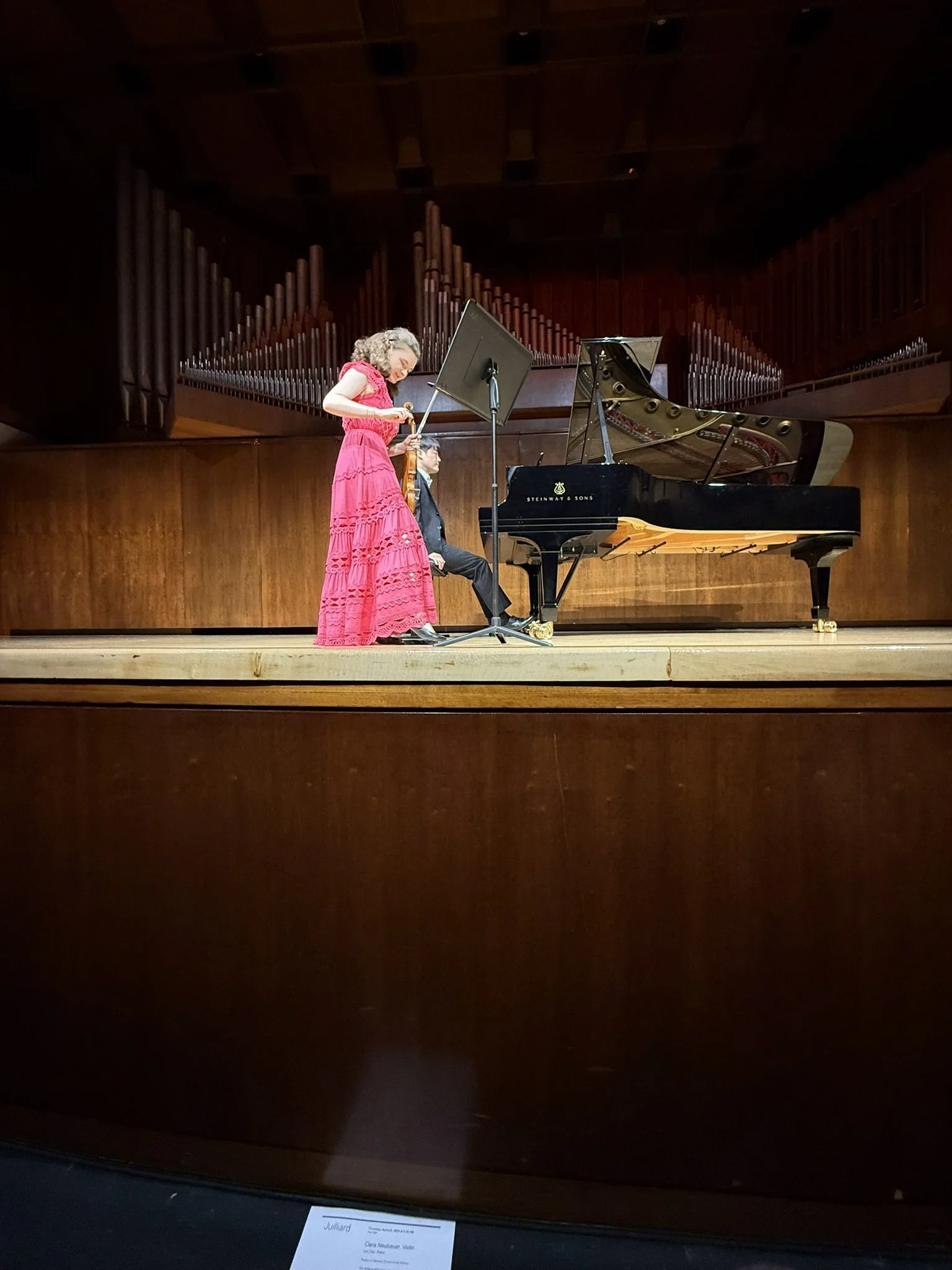
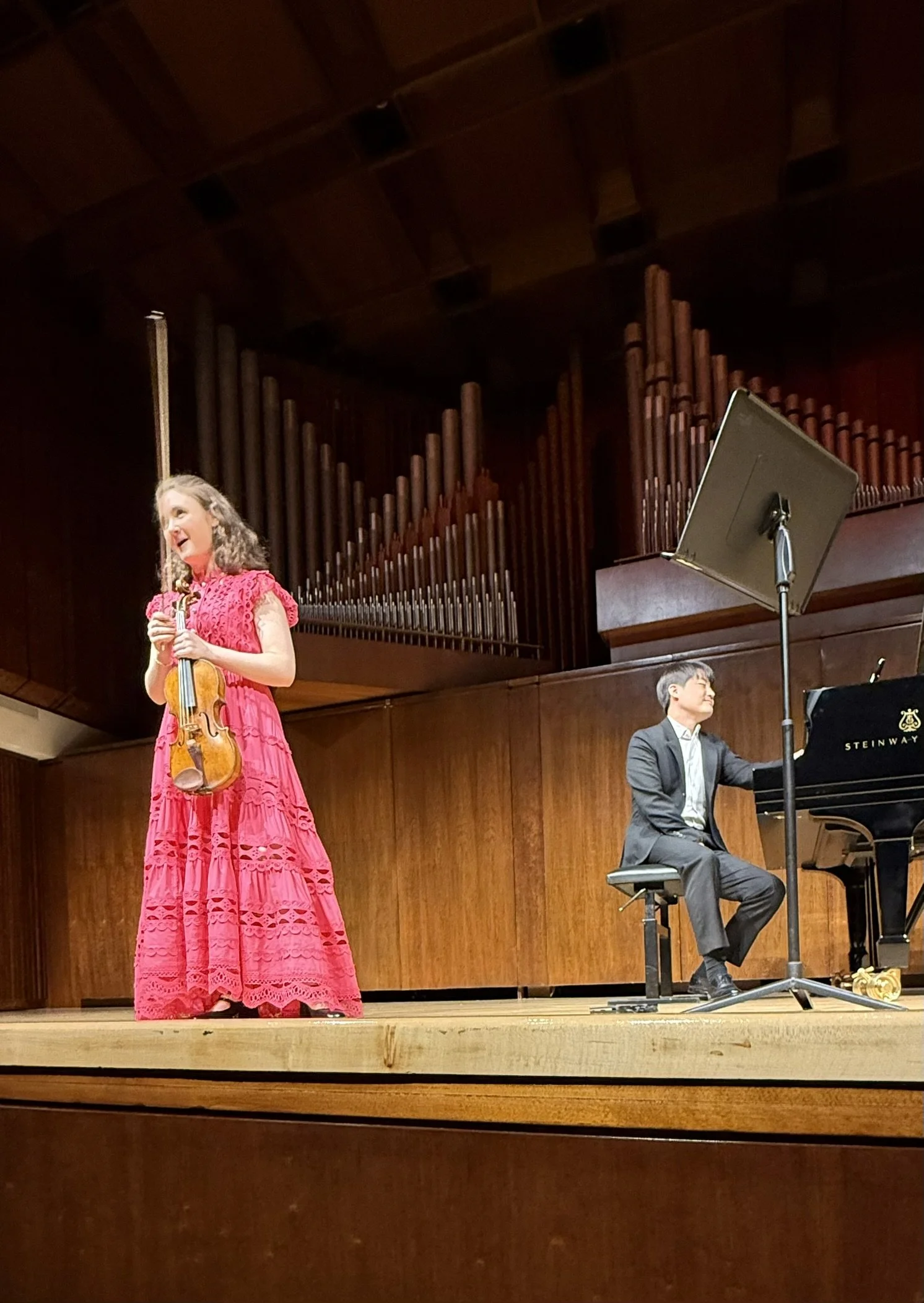
Clara's violin is imbued with pain. Deep within its timbre reside pain, hesitation, and the echoes of things lost.
Clara Schumann’s Three Romances: through them, she gains insight, bears the weight of the unattainable, and gives voice to her feelings—love, longing, and pain —all that she has gained and all that she has lost. At the piano, Clara speaks. The second movement is marked by intense emotion — a sudden impulse, drawn by some unseen force, to convey these feelings; the third movement finds stirred amid a surging dialogue of sound.
Prokofiev’s Violin Sonata No. 1 felt akin to setting fire to a letter in which Clara Schumann had poured out her heart, and watching it burn away. The piano's low tones slowly descended into the depths of the soul. Then, as the violin's flame suddenly ignited, a microcosm of the world unfolded within its flickering light, only to vanish like a wisp of smoke. The second movement was the frenzied rampage of a mind unhinged; the third, the flickering ember of a vanished soul. In the fourth movement, all these elements culminated in a violent surge—an explosive movement of energy. From this intensity, a melody was born, and emotions turned outward, reaching beyond. Finally, having burned itself out, it faded away—dissolving into tendrils of smoke and a mere film of consciousness.
The piece that followed—Bach’s Ave Maria, arranged by Gounod—served as a prayer offered in the aftermath of such extremes.
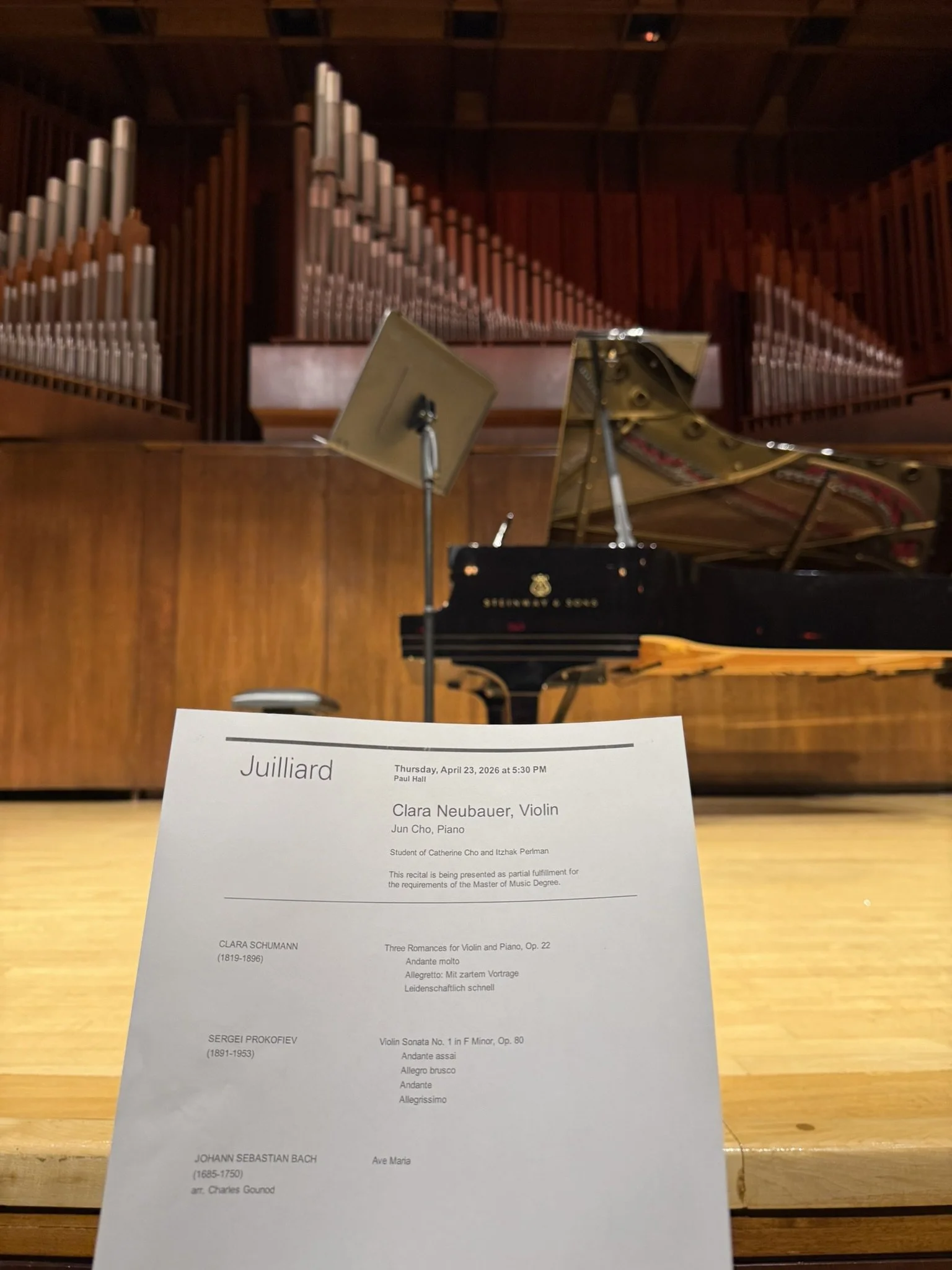
4.23.2026
Clara Neubauer, vl
Jun Cho, pf
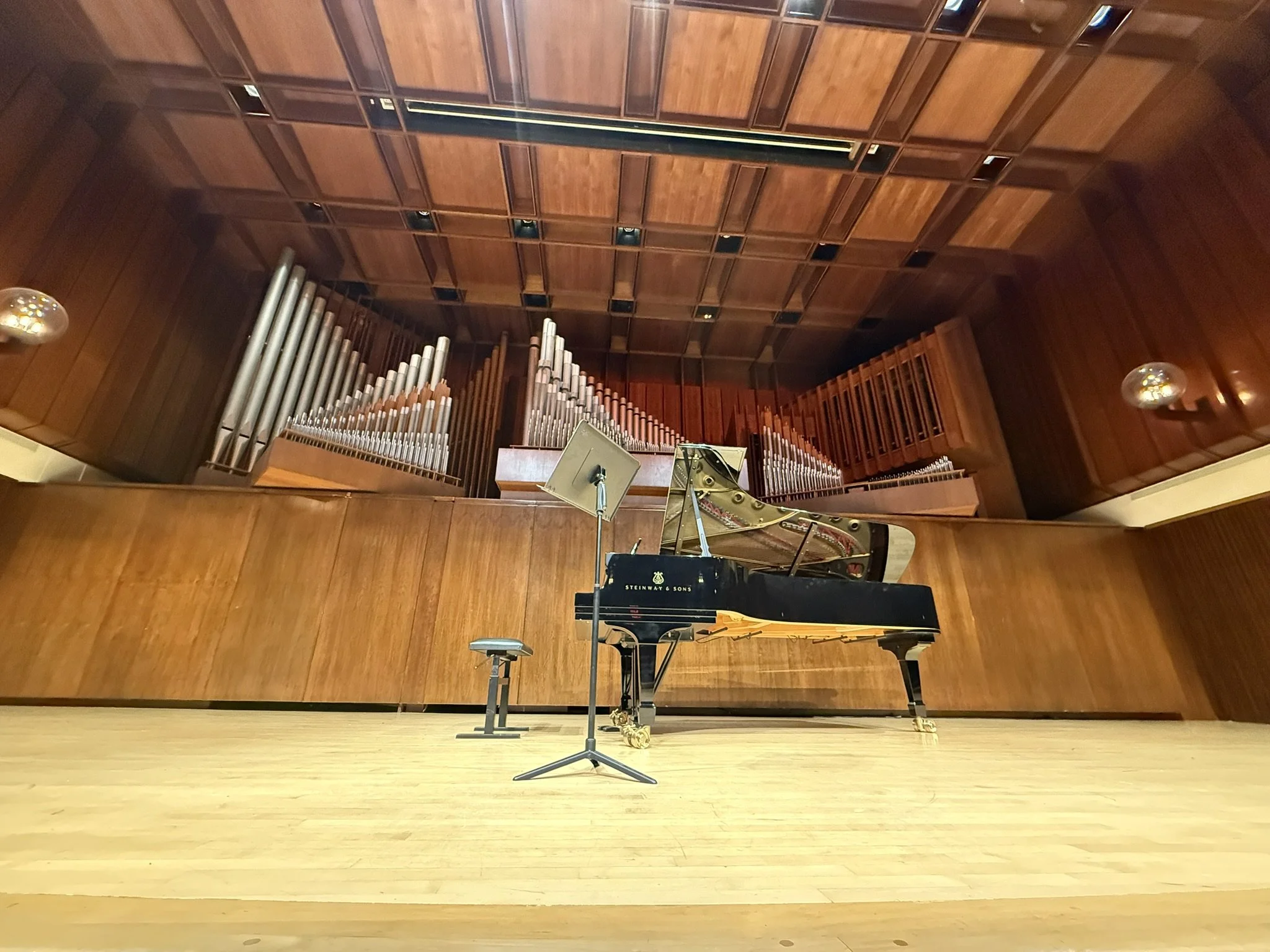
Paul Hall
The Juilliard School
Program
CLARA SCHUMANN Three Romances for Violin and Piano, Op. 22
SERGEI PROKOFIEV Violin Sonata No. 1 in F Minor, Op. 80
JOHANN SEBASTIAN BACH (arr. Charles Gounod) Ave Maria
音色と心。クララは語る。
クララの歌は痛みを伴っている。その音色の奥にある痛みやためらい、失われたものが宿っている。
クララ・シューマンの3つのロマンス。そこで何かを知り、届かないものを抱え、その思いを語る。愛、憧れ、痛み。得て来たものと失ってきたもの。ピアノの傍らで、クララは語る。2楽章は、感情の揺れが激しく、何かに引き寄せられてこの気持ちを伝えたくなる衝動に駆られ、3楽章では溢れる音の対話の中で激しく揺さぶられた。
プロコフィエフのバイオリンソナタ1ではクララ・シューマンが想いを綴った手紙に火をつけて燃やしてしまうようだった。ピアノの低い音色が心の中にゆっくり下りてくる。バイオリンの炎が突然灯ると、その揺らめく光の中に世界の縮図が広がり、最後は煙の筋となって消えていった。2楽章は狂った精神の暴走。3楽章は消えた魂の揺らめき。4楽章ではそういったことが、激しい動きエネルギーの解放。そこから、歌が生まれ、気持ちが外に向かっていた。最後は燃え尽きて、煙の筋や意識の膜となって消えていった。
続くグノー編曲のバッハのアベマリアは極限の後の祈り。