
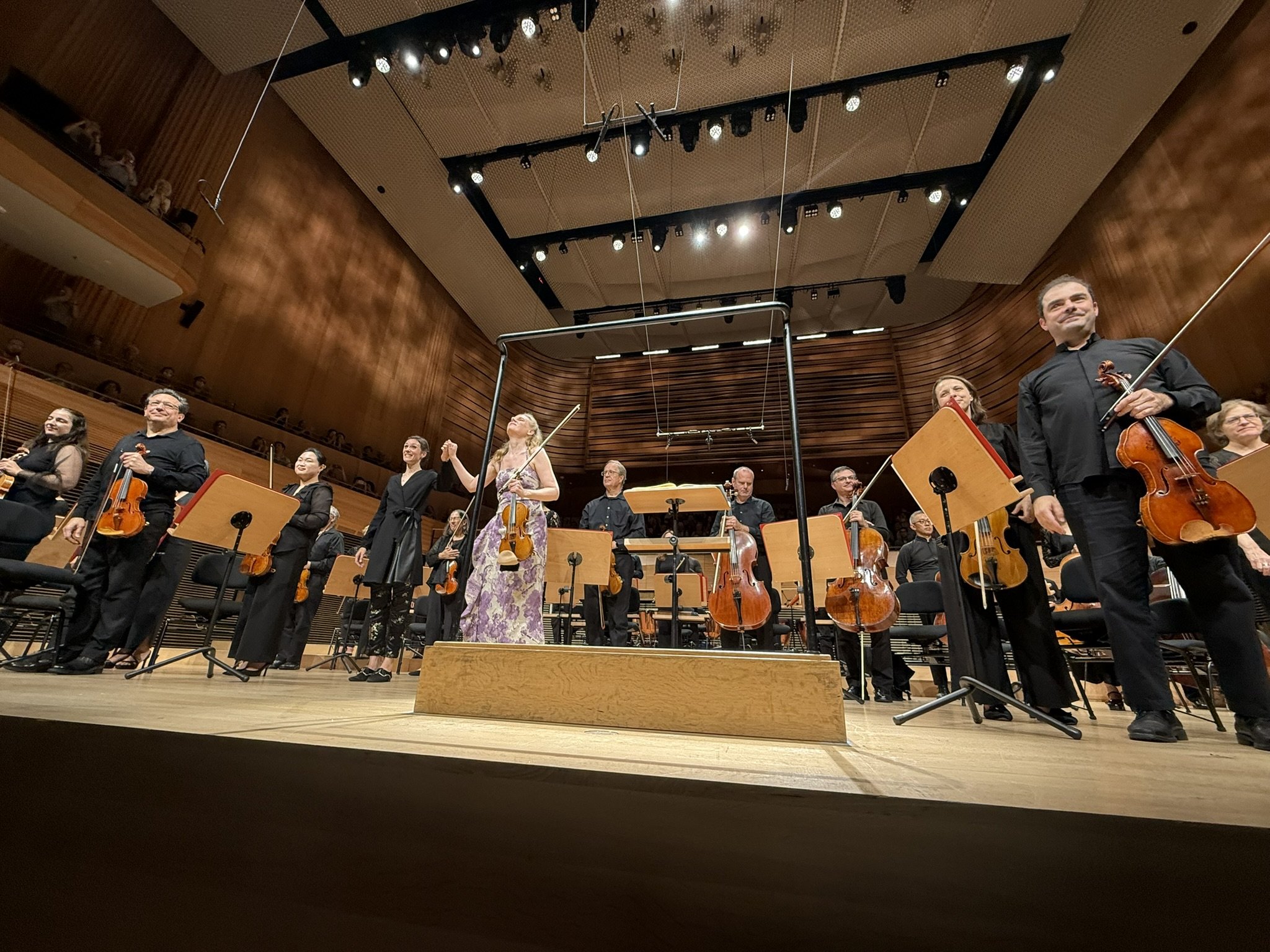
7.19.2026
I went to concerts on July 17 and 18. At Wylie’s, while checking to see if I had left anything behind, Benny shared with me some beef and potato stew. I gazed at the sheet music of a song written by Nick’s grandmother while eating—the piece that gave Wylie’s its name.
Finished my Magners and headed to David Geffen Hall to listen to the festival orchestra. The 17th was a bright summer afternoon with strong sunlight. The 18th was humid and overcast.
Downstairs at the bar, an Argentine fan bartender was watching soccer with the customers. I joined them, but he suddenly asked me for ten dollars. I told him, “Forget it,” and instead talked with the other customers about how England’s players had frozen and been unable to move when they conceded a goal in the previous match.
After drinking an espresso, I entered the venue.
The concert began with Valentin Silvestrov’s Hymn – 2001.
Like a landscape slowly emerging from the fog, one resonance called forth another. I surrendered myself to the slow pizzicatos of two double basses. It felt almost like hypnosis.
In front of me sat Shmuel Katz, the principal violist of the Metropolitan Opera Orchestra. His wife, Sophia Kessinger, was seated across the stage in the first violin section. I watched as the hairs gathered on his bow began to touch the strings. The sound was like a gentle hand placed quietly on my back.
It is impossible to experience such a precise and delicate touch from his unique-shaped viola in the pit of the Met. Here, in the concert hall, every subtle movement of the instrument was exposed.
As the many voices of the strings overlapped—sometimes becoming brighter, sometimes darker—it felt as if clouds were passing over the sun and then drifting away again. Familiar, beautiful harmonies appeared, yet occasionally they became dry and fragile, almost like the rustling of leaves.
Those small imperfections, those slight shifts and cracks in the sound, began awakening distant memories. It was like looking at a reflection in a puddle on the street.
As I stared into that puddle for a while, I suddenly remembered Anna.
Memories of the happy days we spent together passed through my mind. We lived together for a short time, but she cared for me deeply. She loved my cooking. In the morning, we would lie together in bed and watch the sunlight coming through the window, its reflection gently moving across the wall.
She loved matcha. On the morning we parted, we ate bagels together in a park. Anna looked so happy as she said, almost with delight, “I love bagels,” while taking bites.
Silvestrov’s Hymn – 2001 was bringing sleeping memories out from the cracks in the walls of my heart.
Then Laura Frautschi, the second violinist, began to play a beautiful melody. It felt as if Anna were sitting beside me again.
While Laura’s melody continued, Chihiro Allen’s viola quietly began to rustle from behind on my right. At that moment, Silvestrov’s mystery was revealed to me.
Why did he abandon the avant-garde and begin his journey into Meta-Music? Why did he create a new kind of silence after John Cage?
There was distance between Laura’s melody and Chihiro’s fragile viola sound. They were far apart. That distance itself restored a sense of time—of memories separated by years, by places, by lives.
Perhaps that is why Silvestrov’s music can draw warm memories out from a heart clouded by the noise of everyday life.
The next time I hear this piece, I may remember my late mother. Or perhaps a friend living far away in my homeland. This is the message Silvestrov sent to his friend Giya Kancheli.
I listened to this piece twice. The second time, I could see the colors of the Festival Orchestra’s sound more clearly than the first.
At the end, the colors of the puddle’s reflection trembled as a wind passed over it, and then disappeared. Before I realized it, I had returned to myself.
The resonance and silence created by the Festival Orchestra’s strings—the vanishing echoes of Silvestrov—polish the mirror of the listener’s heart, allowing our deepest human warmth to appear.
When the first piece ended, the wind players and percussionists began entering the stage one by one. The audience applauded from different corners of the hall—perhaps many of them were friends or colleagues of the musicians. Small bursts of applause appeared everywhere.
This is a special orchestra that exists only during the summer in New York.
The musicians come from some of the city’s finest ensembles, including the Metropolitan Opera Orchestra, the Orpheus Chamber Orchestra, and Orchestra of St. Luke’s. Others come from orchestras outside New York, such as Cincinnati and Baltimore. For several weeks, these musicians—who normally perform on different stages throughout the year—come together in New York to create this festival orchestra.
This summer, I have already enjoyed two of their programs. Their trumpets and horns may even rival those of the New York Philharmonic, and their string ensemble possesses a sound unlike any other orchestra.
Perhaps one day this orchestra will travel the world like the Budapest Festival Orchestra, the Lucerne Festival Orchestra, the Mahler Chamber Orchestra, or the Chamber Orchestra of Europe—an ensemble of sufficient size to move freely and bring its unique sound to different places.
The three programs I have heard this summer have made me believe that such a future is possible.
The second piece was Bruch’s Violin Concerto No. 1. The soloist was the Dutch violinist Simone Lamsma.
I had heard her before in Chicago, performing Korngold’s Violin Concerto outdoors. The opening theme began briefly in the orchestra, and Simone entered not with force but at a medium dynamic, allowing the sound to gradually unfold.
On the first day, more than the second, she seemed to let the music soak into David Geffen Hall, holding back and allowing each phrase to resonate deeply before moving forward.
On the first day, she wore a dress of pale violet. On the second day, she appeared in a dress covered with circles, almost as if someone had painted them with a brush. On the second day, she was more daring.
The first performance felt as if she were offering Bruch’s concerto to this hall—a deeply authentic interpretation, full of warmth and taste. The second performance was different. She breathed together with the orchestra, becoming part of its sound.
The fascinating thing about Bruch’s concerto is the relationship between the soloist and the orchestra. The violin does not simply rise above the orchestra, nor does the orchestra merely accompany the violin. They are always singing together, staying close while maintaining their own voices.
I made eye contact several times with the cellist Ilya Finkelshteyn. The bows of his cello created endless colors—legato lines, arpeggios, and pizzicatos—supporting the passionate drama of the first movement, where the soloist and orchestra seem to collide, the warmth and emotional intensity of the second movement, and the simple dance-like character of the third.
In that final movement, I could hear echoes of Beethoven’s Fifth Symphony, which I had heard the previous week. The music seemed to transform into many different forms.
No matter how expressive Simone became, and no matter how beautifully Bruch shaped his unforgettable melodies, the Festival Orchestra remained precise, warm, and remarkably close to the listener. Yet they were refined.
They never tried to appear impressive. They simply served the music with complete sincerity.
Several times, tears rose to my eyes because of the orchestra’s honest and devoted support. Each time, I tightened my abdominal muscles and held them back.
Because if I surrendered completely to my own emotions, I would no longer be able to truly see what was happening in front of me.
On a beautiful, clear morning, my neighbors happily carried their barbecue equipment outside. Every day, they squeeze their minds for money, receive their reward in the form of a paycheck, and eventually buy the perfect barbecue set they have dreamed of.
In a small backyard filled with the noise of a highway only one block away, they invite friends over and continue their celebration past midnight. Surrounded by smoke and laughter, their lives slowly disappear into the night.
Yet on the other side of the wall they lean against, there are people living in completely different rhythms of time.
The world they see, the sounds they hear, and the memories they carry are all different. Each life is separated from another by nothing more than a thin wall.
In my previous apartment, the noise became unbearable. I asked my landlord—like the old moneylender in Crime and Punishment—to do something because the situation was making me sick. His response was, “If you get sick, go to the hospital.”
There was no conversation possible. So I moved.
And now, here, the same thing is happening again.
The violin Simone played seemed to portray the ancient struggles of the human heart—the conflicts that have existed within us for generations.
She looked so much like Anna.
It felt as if Anna were sitting before me, speaking through the music.
For both performances, I waited outside the stage door for a while. But I could not meet her.
Anna had left only music behind inside my heart.
After the performance ended, I was unable to find words.
Ilya, the cellist, looked down at his bow held vertically in his hand. His expression seemed to say, “Well... that was something,” and when our eyes met, a smile appeared on his face.
At last, I felt released.
On the first night, the audience did not call Simone back for an encore. But on the second night, the hall erupted with enthusiasm. Simone returned to the stage and performed the third movement from Hindemith’s Sonata No. 6 as an encore.
She was different from Vengerov and Shaham. Her playing was lyrical, dramatic, technically brilliant, and filled with the true refinement of classical music.
She was lyrical yet powerful, expressive yet virtuosic. But her technique was never something to display. Instead, it revealed the elegance and grace inherent in classical music itself.
It was like quietly watching a candle's flame. If you gaze long enough into its warmth and light, another world begins to appear—a world that cannot be grasped immediately, but slowly reveals itself.
That is not simply a style of playing. It is a way of living. It is a posture of the heart.
Elegance is not something one possesses. It is something slowly created within oneself through time.
A person may decorate themselves with money and possessions, but they cannot polish their heart or acquire true elegance.
When I see young couples on the subway happily carrying large shopping bags, I find myself thinking about the kind of happiness people seek.
There is a distance between what we obtain and what remains inside us.
After being immersed in the Festival Orchestra's time, memories, and extraordinary musicianship, I wanted a glass of Prosecco. But there was a long line at the bar, so I asked Asher if there was another place where I could buy a drink. She did not know, so I went downstairs and bought one at another bar.
When I told Asher immediately, she began explaining the rules regarding drinks.
At that moment, something inside me suddenly cooled.
“Are you here to help me, or are you here to tell me the rules?”
The feeling I had carried with me until then disappeared.
People often want to show what they know, to demonstrate their own superiority, rather than simply helping another person.
True elegance is the ability to quietly offer what someone needs.
That was the elegance Simone’s violin taught me.
Her technique was not meant to overwhelm others. It was a skill for touching another person’s heart.
In the final movement, she offered herself completely to the violin, the cello, and the winds around her. She was not standing above the orchestra; she was giving something of herself to it.
That is why I feel disappointed when, in ordinary conversations, I encounter people who focus on protecting their own position.
Why do people feel the need to prove their superiority?
Knowledge and rules should exist to help someone—not to establish power over them.
Elegance is not having power.
Elegance is using whatever power you have for the sake of another person.
The couple I met last week, Mr. and Mrs. Goto, possessed that kind of elegance—in both body and spirit.
Asher would never explain drink regulations to them.
The final piece was Mendelssohn’s Symphony No. 5, the “Reformation.”
In fact, it was his second symphony, written when he was still in his early twenties. However, it was published after the “Italian” and “Scottish” Symphonies.
At the age of twenty, Mendelssohn discovered Bach’s St. Matthew Passion and conducted its historic performance in Berlin in 1829, helping to spark the revival of Bach’s music. In the autumn of that same year, he began composing his Fifth Symphony to commemorate the 300th anniversary of the Augsburg Confession of 1530, a foundational document of the Lutheran tradition.
At a time when conservative forces were restricting freedom, and people felt spiritually trapped, this symphony became a declaration—an attempt to revive the spiritual heritage of Lutheranism in the nineteenth century.
Through Bach, Mendelssohn was looking again at the soul of Germany.
The opening of the first movement begins with a veil of string sound, like the chaos of the world before creation. The trumpet fanfare emerges like human activity, while the strings that carry the confusion gradually reveal a gentle place of refuge within the human heart.
When the music enters the Allegro, the full force of the Festival Orchestra explodes with a powerful statement of the theme.
Having spent every day surrounded by people and alcohol at Wylie’s, I heard something deeply human in their playing. Their sound brought to mind people living with sweat and oil on their hands—people working, struggling, and simply trying to live.
As the music progressed, Chloé’s conducting reminded me more and more of Gustavo Dudamel. With refined control over dynamics and ensemble, she carefully communicated every detail to the orchestra.
She had also studied with Marin Alsop. I felt in her a genuine ability to bring people together—not through authority, but through human connection.
On the first day, she paid attention in every direction, guiding the orchestra with remarkable sensitivity. Watching her lead dozens of musicians, each with their own individuality and ego, without speaking a single word—only through her fingertips and arms—she appeared almost like a goddess.
The second day was different. It was a collision of inspirations.
The Festival Orchestra shaped every movement with a living sense of motion. The winds and individual instruments passed short flashes of musical ideas from one voice to another, like sparks moving through a conversation.
The restrained bass lines of Andrew Gantzer, principal double bassist of the Metropolitan Opera Orchestra, blended beautifully with the cello and the sincere energy of the other instruments. A tragic mass of sound, almost like Schubert’s Unfinished Symphony, covered the hall and exposed the fragile heart of humanity.
Then, from somewhere in the distance, the trumpet fanfare appeared.
It was an experience of being drawn into the light.
The second movement felt like a simple village festival—a rustic dance. I remembered the beautiful dresses worn by Eastern European women I had seen in Astoria.
The woodwind ensemble was magnificent.
Especially Jasmine Choi’s attitude as a flutist was extraordinary. As in the Bruch concerto, there were moments when her tone completely dissolved into the ensemble, moments when a gentle sound emerged quietly on its own, and the solo passage that appeared between the third and fourth movements.
Before her virtuosity, what came through was Mendelssohn’s musical message.
She was a model of what an instrumentalist should be.
The concertmaster, Ruggero Allifranchini, was extraordinary. His awareness extended to every section of the orchestra. The direction of his eyes and the angle of his face revealed it.
His pizzicatos and simple, warm legato lines, which blended naturally with the whole orchestra, supported the ensemble's unity from within.
His expression constantly communicated anticipation toward the other soloists and awareness of how his own section connected with every other part.
A concertmaster is not defined only by instrumental ability. A concertmaster shows how a person relates to others.
The reason Chloé could fully reveal her talent in New York and inspire such enthusiasm from the audience was that Ruggero was watching over the entire orchestra.
He reminded me of Jason at Wylie’s.
I had opened my heart to the world that came after Silvestrov’s sounds, touched the elegance of Bruch, and experienced Mendelssohn’s deeply human symphony.
All three composers had faced disappointment in people and society, studied the past, and transformed the light they discovered into music.
On my way home, I stopped at Wylie’s. David poured me a Guinness, and while listening to Oasis, I devoured Nick’s buffalo wings.
I had three pieces left, so I went into the kitchen, called out to Nick, and asked for some aluminum foil. I wrapped them up and ate them the next morning.
Even cold, they were delicious.
A stranger gave me 1 pint for me.
And across the counter sat a woman wearing an Oasis T-shirt.
7.17/18.2026
David Geffen Hall
Festival Orchestra of Lincoln Center
Chloé Van Soeterstède, conductor
Simone Lamsma, violin
Valentin Silvestrov Hymn – 2001
Max Bruch Violin Concerto No. 1
Felix Mendelssohn Symphony No. 5, “Reformation”
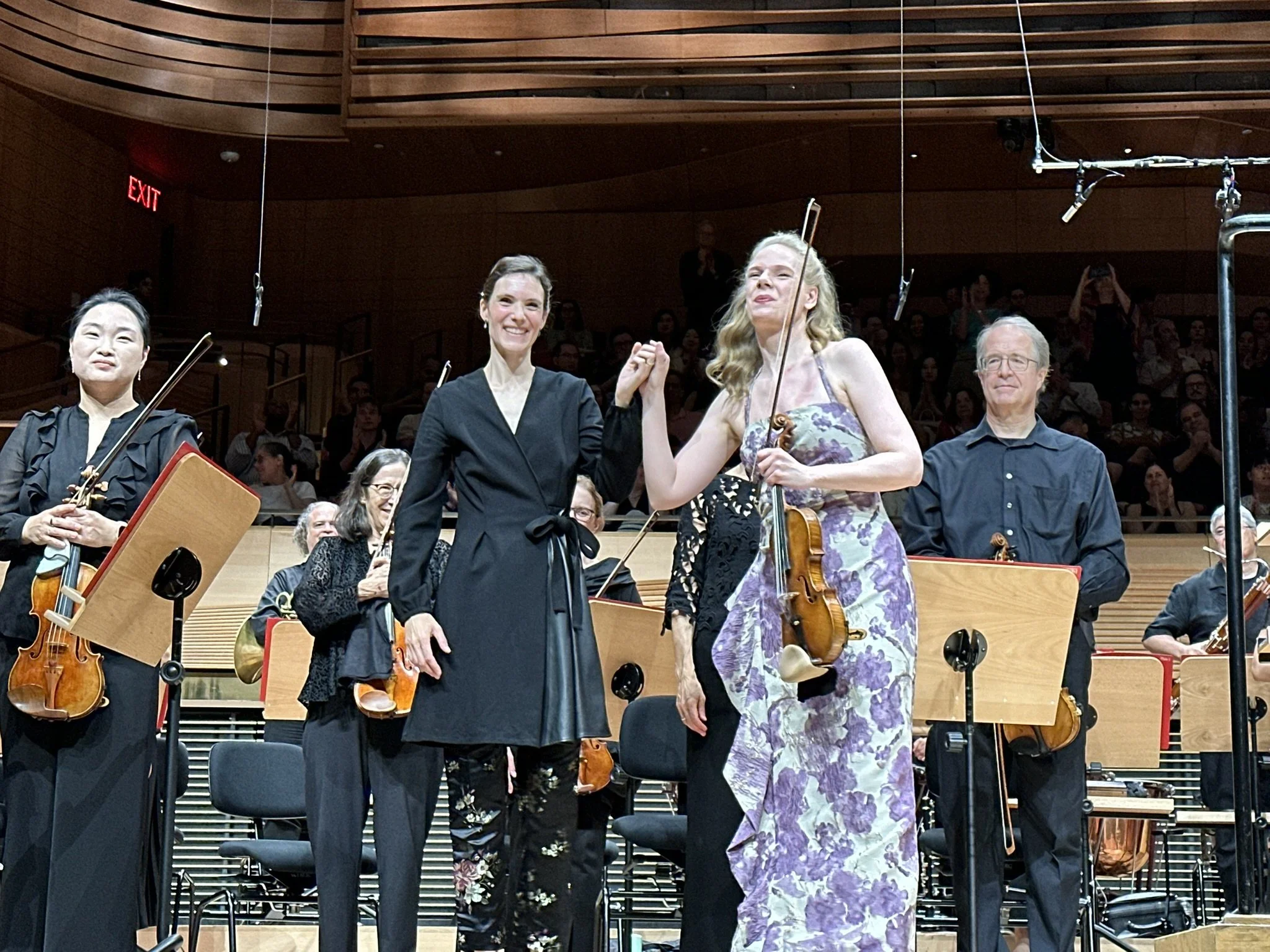
7.19.2026
7.17.18に演奏会に出かけた。
ワイリースで忘れ物がないか点検していたら、ベニーがジャガイモと牛肉を煮込んだものを少し分けてくれた。マグナースに氷を入れて一緒に食べた。横にはワイリースの名前の元になった、ニックのおばあさんが作った曲の楽譜が飾ってある。私はワイリースに挨拶をして、マグナースを飲み干し、フェスティバルオーケストラを聴くためにデビットゲフィンホールに向かった。17日は日差しが強い夏の午後だった。18日は蒸し暑く曇っていた。
下のバーではアルゼンチンファンのバーテンが客とサッカーを見ていたので混じったら、10ドルよこせと言ってきたので、しるかといって他の客とイングランドが前の試合で点を決められた時に動けなかった話をした。エスプレッソを飲んでべニューに入った。
公演はシルヴェストロフの讃歌から始まった。霧の中から少しづつ景色が見えてくるように響きが響きを呼ぶ。2本のコントラバスのゆったりしたピッツィカートに身をゆだねる。それはまるで催眠術のようだった。目の前にメットのビオラ首席、シュムエル・カッツが座っている。ちなみにカッツの嫁のSophia Kessingerは反対側のファーストバイオリンの位置に座っている。彼の弓に束ねられた毛が弦を擦り始める。私の背中にそっと手を当てるような音色だった。メットのピットで、彼の特殊な形をしたビオラの一枚の鳥の羽が空間を漂うような繊細なタッチをここまで精密に感じ取ることは不可能だ。弦楽器の沢山の音が重なって明るくなったり暗くなったりする度に、空の雲が太陽を覆ったり晴れたりするようだった。親しみある美しい響きに、たまにカサカサなったりする。その音の揺れやずれが私の遠い記憶を蘇らせていく。まるで道路の水たまりに映った風景を眺めているような感覚だ。その水たまりをしばらく眺めていたら、アンナのことを思い出した。彼女と過ごした幸せな日々が頭を過った。私たちは短い間だったが一緒に暮らした。彼女は私をとても大切にしてくれた。彼女は私の料理が大好きだった。朝、2人でベットの中で外から差し込む光が壁に映ってゆらゆらする様子をしばらく一緒に眺めた。彼女は抹茶が大好きだった。別れる日の朝、公園で2人でベーグルを食べた。アンナはとてもうれしそうに私はベーグルが大好きだとほおばっていた。シルヴェストロフのHymn – 2001、賛歌は、眠る記憶を心の壁のひだから取り出し蘇らせていた。やがてセカンドバイオリンのLaura Frautschiが美しいメロディーを奏で始めた。まるでアンナが隣に座っているようだった。ローラが奏でている間、右の後ろから、ビオラのChihiro Allenが静かにカサカサはじめた時、シルベストロフの謎が解けた。なぜ彼は前衛をすてMeta-Musicを始めたのか。なぜ彼が次のジョン・ケージの沈黙を編み出したのか。旋律を奏でるローラとちひろの間はかなり離れている。遠いのだ。この距離が聴く人に遠く離れた時間の感覚を蘇らせる。だから私の雑音で曇った心から、暖かな記憶を引き出すのかもしれない。次に聴いたら、亡くなった母を思い出すかもしれないし、遠く離れた祖国に暮らす友人を思い出すかもしれない。シルベストロフが友人のカンチェリに送ったメッセージだ。私はこれを2度聴いた。1度目より2度目は、フェスティバルオーケストラの彼らの音色がよく見えた。最後は水たまりに風が吹いてきて揺れて消え、気が付くと自分を取り戻していた。フェスティバルオーケストラの弦楽器が奏でる残響や沈黙。シルベストロフの消えていく余韻が、聴く人の心の鏡を磨き、人の温かな感覚を映しだすのだ。
1曲目が終わると、管楽器や打楽器の人たちがそれぞれステージに入ってきた。お客さんたちは、知り合いも沢山来ているのかもしれないが、パチパチ、いろんな場所で拍手が起こっていた。ニューヨークで夏だけの特別なオーケストラだ。彼らはメトロポリタン歌劇場管弦楽団、オルフェウス室内管弦楽団、セント・ルークス管弦楽団など、ニューヨークを中心に活躍する演奏家たち、さらにシンシナティやボルティモアなど、普段はそれぞれ違うステージで活躍する演奏家がニューヨークに集まって数週間演奏会を開催している。私はこの夏、既に2つのプログラムを楽しんだ。ニューヨーク・フィルよりもトランペットやホルンはうまいかもしれないし、弦楽合奏も、どんなオケとも違う響きを持っている。彼らはやがて、ブダペスト祝祭管弦楽団やルツェルン、あるいやマーラーチェンバーやヨーロッパ室内のような移動しやすいサイズで世界をツアーするようになるかもしれない。この夏3回聴いたプログラムは私にそう思わせた。
2曲目はブルッフのバイオリン協奏曲。バイオリニストはオランダのシモーヌ・ラムズマだ。私は彼女をシカゴで聴いた。野外のドームでコルンゴルトのコンチェルトだった。開始のテーマがオケから短く始まり、シモーヌは中くらいの音からじっくり演奏を始めた。1日目の方が2日目よりもデビットゲフィンに音を染み込ませるように溜めて弾いていた。1日目は彼女は淡い紫のようなドレスを着ていた。2日目はペンキで沢山の丸が書いてあるようなドレスだった。2日目の彼女はもっと大胆だった。1日目はブルッフをこのべニューに奉げるようなオーセンティックな演奏だった。味わい深かった。2日目はオケと一体になって呼吸していた。ブルッフの面白いところは、ソロがオケに、またはオケがソロにつかず離れず、いつも一緒に歌っているようだった。チェロのIlya Finkelshteynと何度か目があった。彼らのボウがはじき出す、レガートやアルペジオやピッツィカートがシモーヌのカデンツァを含む熱いドラマがソロとオケが激突する1楽章、暖かで情熱溢れる2楽章、そして素朴なダンスの3楽章3楽章では先週のベートーベンの5番が聴こえてきた。彼らの表現は何種類にも変わっていた。シモーヌは表情豊かなブルッフが描いた見事な旋律の数々を繰り広げ、フェスティバルオーケストラの精緻でぬくもりがあり、飾らないサポートが身近に感じる。そしてとても洗練されている。一切かっこつけない。フェスオケの真摯なサポートに何度も涙がこみ上げてきたが、その度に、腹筋に力を入れて、溢れてくる涙を止めた。自分の感傷に溺れると、何も見えなくなってしまうからだ。初日のブルッフで一番感激したのは、3楽章の終盤コーダに入ってからのビオラのアルペジオだ。夏の朝露の匂いを嗅ぐような音色だ。
人は不満をため、口から吐き出し、変わりにアルコールを流し込む。よく晴れた気持ちの良い朝、嬉しそうにバーベキューセットを運ぶ近所の人たちの。彼らは毎日、金のために脳を絞り、その対価をお金で受け取り、理想のバーベキューセットを手に入れる。高速道路から1ブロックも離れていない騒音にまみれた小さな庭で友人を呼んで12時過ぎまで宴を開き、煙と笑い声の中で人生が消えていく。しかし、彼らが寄りかかるビルの壁の向こうには、まったく異なる時間を生きる人々がいる。見えている世界も、聞こえている音も、抱えている記憶も違う。それぞれの人生が、薄い一枚の壁によって隔てられている。昔の住まいで、あまりにも騒音がひどく、罪と罰の金貸しのような大家に「病気になるから何とかしてくれ」とお願いしたら、「病気になったら病院に行きなさい」と言われた。話にならないので引っ越したら、ここでも同じことが起こっている。
シモーヌの奏でるヴァイオリンは、昔から続く人間の心の葛藤を描いているようだった。彼女はアンナによく似ていた。まるでアンナが目の前に座り、音楽を通して語りかけているようだった。2日とも、ステージドアでしばらく待った。しかし、会うことはできなかった。アンナは私の心の中に、音楽だけを残して去っていった。
演奏が終わると、言葉にならなかった。チェロのIlyaが自分の弓を縦に見つめながら、まあまあかなーという顔をして私と目が合い、笑みがこぼれた。やっと解放された。1日目の聴衆は彼女をアンコールでステージに呼び戻さなかったが、2日目は完全に熱狂し、シモーヌは再びステージに姿を現し、ヒンデミットのソナタ6番から3楽章を演奏してくれた。
彼女はベンゲロフやシャハムとも違う、リリカルでドラマチックで、技巧に溢れ、本物の優雅なクラシック音楽の洗練を与えてくれた。リリカルなのに劇的で技巧に満ちている。でも、その技巧は誇示されるものではなく、古典音楽が持つ洗練と優雅を私たちに伝えてくれた。それは蝋燭の灯をじっと眺めるような、熱と光をじっと目を凝らしてみていると見えてくる帆脳のような世界だった。それは生き方であり、心の姿勢なのだ。優雅とは所有するものではなく、時間をかけて心の中に作られていくものだ。
人はお金で身を飾られても、心を磨くことはできないし、優雅な心を持つこともできない。地下鉄で嬉しそうに若いカップルが大きな紙袋を抱えている姿を見ると、人が求める幸福について考える。手に入れたものと、心に残るもの。その間には距離があるのだ。
たっぷり時間と記憶とフェスオケの卓越に浸ったのでプロセッコが飲みたくなったが、バーには長い行列ができていたので、アッシャーに他に飲み物を買える場所を尋ねると知らなかったので、仕方なく下のバーに下りて買った。早速さっきのアッシャーに伝えたら、彼女は飲み物に関するルールを説明し始めた。その瞬間、「あなたは私を助ける人なのか、それとも規則を伝える人なのか」それまでの気分が急に覚めてしまった。人は、相手を助けることより、自分が知っていること、自分の優越を示したくなる。本当の優雅さとは、相手が必要としているものを静かに差し出せることだ。シモーヌのヴァイオリンが教えてくれた優雅さはそういうものだった。彼女の演奏は、圧倒するための技巧ではなく、相手の心に触れるための技術だった。次の展開で、バイオリンやチェロや管楽器に彼女は自分の心を差し出していた。だから、会話の中で、立場を守ろうとする態度に出会うとがっかりする。人はなぜ、自分の優位性を示したくなるのか。知識や規則は、本来、誰かを助けるために使われるべきものなのに。優雅とは、力を持っていることではない。その力を相手のために使えることなのだ。先週あった、後藤さん夫妻は身も心も優雅だった。さっきのアッシャーは彼らに飲み物の説明はしないだろう。
最後はメンデルスゾーンの交響曲5番。実は2番目にできた交響曲で20代の早いころの作品。発表されたのがスコティッシュとイタリアのあとだった。彼は20歳の時に、バッハのマタイを発見し、1829年ベルリンで演奏しバッハ復興のきっかけを作った。そしてその年の秋に、プロテスタントの1530年のアウクスブルク信仰告白300周年を記念して5番の作曲を開始している。保守勢力が自由を抑制し、人は精神の行き詰まりを感じていたに、この曲はルター派の伝統を19世紀によみがえらせようとした宣言なのだ。メンデルスゾーンはバッハにドイツの精神をもう一度見つめなおしていたのだ。
1楽章の冒頭は弦楽の音の膜が、世界の混沌の様に始まり、トランペットのファンファーレは人々の営みの様に聴こえ、混沌を奏でる弦楽は、人の心のよりどころを示すようにさやしく奏でられていく。曲はアレグロに突入すると、力づよくテーマを鳴らすフェスティバルオーケストラの総奏が始まる。毎日、ワイリースで人々とアルコールに囲まれて生活していたので、彼らの演奏がとても人間臭くて、人が汗や油にまみれて生活している様子が浮かんでくるような演奏だ。クロエの指揮は曲が進むほどデュダメルのようだった。ダイナミクスやアンサンブルを洗練されたコントロールで、オケに丁寧に伝えていく。彼女はオルソップにも師事していた。真摯に人を巻き込んでいく人間力を感じた。1日目は、彼女はあらゆる方向に気を配り、見事にオーケストラを導いていった。指先や両腕を言葉を使わずに、数十人のエゴの塊のメンバーを導いていく姿はまさに女神だ。2日目はインスピレーションのぶつかり合いだった。フェスオケは躍動する動きをいろんな形で丁寧に刻んでいく。そして、木管やソロの様々な楽器が、違う声で閃きのような短い動機をリレーしていく。メットの首席コントラバスのAndrew Gantzerらの抑制されたバスのドットにチェロ、他の楽器のひたむきな躍動が見事にブレンドされ、シューベルトの未完成のような悲壮な塊がべニューを覆い人間の脆弱な心を抉り出す。そして、遠くからトランペットのファンファーレが聴こえる。光の中に吸い込まれるような体験だった。2楽章は素朴な村祭りのワルツ。アストリアで見かけた東ヨーロッパの女性が着ていた素敵なドレスが目に浮かんだ。管楽器のアンサンブルが見事だった。特にフルートのJasmine Choiの態度が見事だった。ブルッフでもそうだったが、音色が完全に全体に溶け込んでいるときと、優しい音色でかすかに響かせるとき、そして、3楽章が終わり4楽章に入るときの、ソロ。彼女のフルートは、うまさより先にメンデルゾーンが込めた音楽のメッセージが伝わってきてた。演奏家の鏡だ。コンサートマスターのRuggero Allifranchiniがすごかった。彼は全てのパートに意識を持っていた。目や顔の角度がそれを物語っていた。彼がはじき出すピッチカートや全体に溶け込む素朴で優しいレガートが、オケの一体感を心からサポートしていた。彼の顔は、他のソロへの期待や、自分たちのセクションが、他のパートとどう関わるのかを常に示していた。コンサートマスターは楽器のうまさだけでなく、人として他とどうかかわるかを示す存在だ。指揮者のクロエが自分の才能をこのニューヨークで十分に発揮し聴衆の熱狂をさせるのは、ルッジェーロがオケ全体に目を配っているからだ。ワイリースのジェイソンを思い出した。
シルベストロフの音の後の世界に心を寄せ、ブルッフのエレガンスに触れ、メンデルスゾーンの人間味あふれるシンフォニーを体験した。いずれも、彼らが人や社会に失望し、昔を研究した結果見つけた光を音楽にしたものだった。
帰りはワイリースでギネスをデイビットに注いでもらい、オアシスを聴きながらニックのバッファローウィングを夢中で食べた。3本残ったので、キッチンでニックに声をかけ、アルミホイルを貰い包んで、よく朝食べたが、冷めてもうまい。しらない人が私にギネスを一杯ごちそうしてくれた。そして、カウンターの向こうにオアシスのTシャツを着た女性が座っていた。
Chloé Van Soeterstède (born 1988) is a French conductor. After studying viola in Paris, she studied conducting at the Royal Academy of Music and the Royal Northern College of Music in the United Kingdom. She gained international recognition early in her career, receiving awards at the 2019 Deutscher Dirigentenpreis and being selected for both the Taki Alsop Fellowship and the Dudamel Fellowship.
She currently serves as Principal Guest Conductor of the Bournemouth Symphony Orchestra and regularly appears as a guest conductor with major orchestras across Europe and North America. Known for her refined musical sensitivity and ability to inspire musicians, she has become one of the most promising conductors of her generation.
Simone Lamsma (born 1985) is a Dutch violinist. She moved to the United Kingdom at the age of eleven, where she studied at the Yehudi Menuhin School and the Royal Academy of Music. She made her orchestral debut at the age of fourteen and has since performed with leading ensembles around the world, including the New York Philharmonic, Chicago Symphony Orchestra, and Royal Concertgebouw Orchestra.
Recognized for her wide-ranging repertoire, technical brilliance, and profound musical expression, Lamsma is regarded as one of the outstanding violinists of her generation.
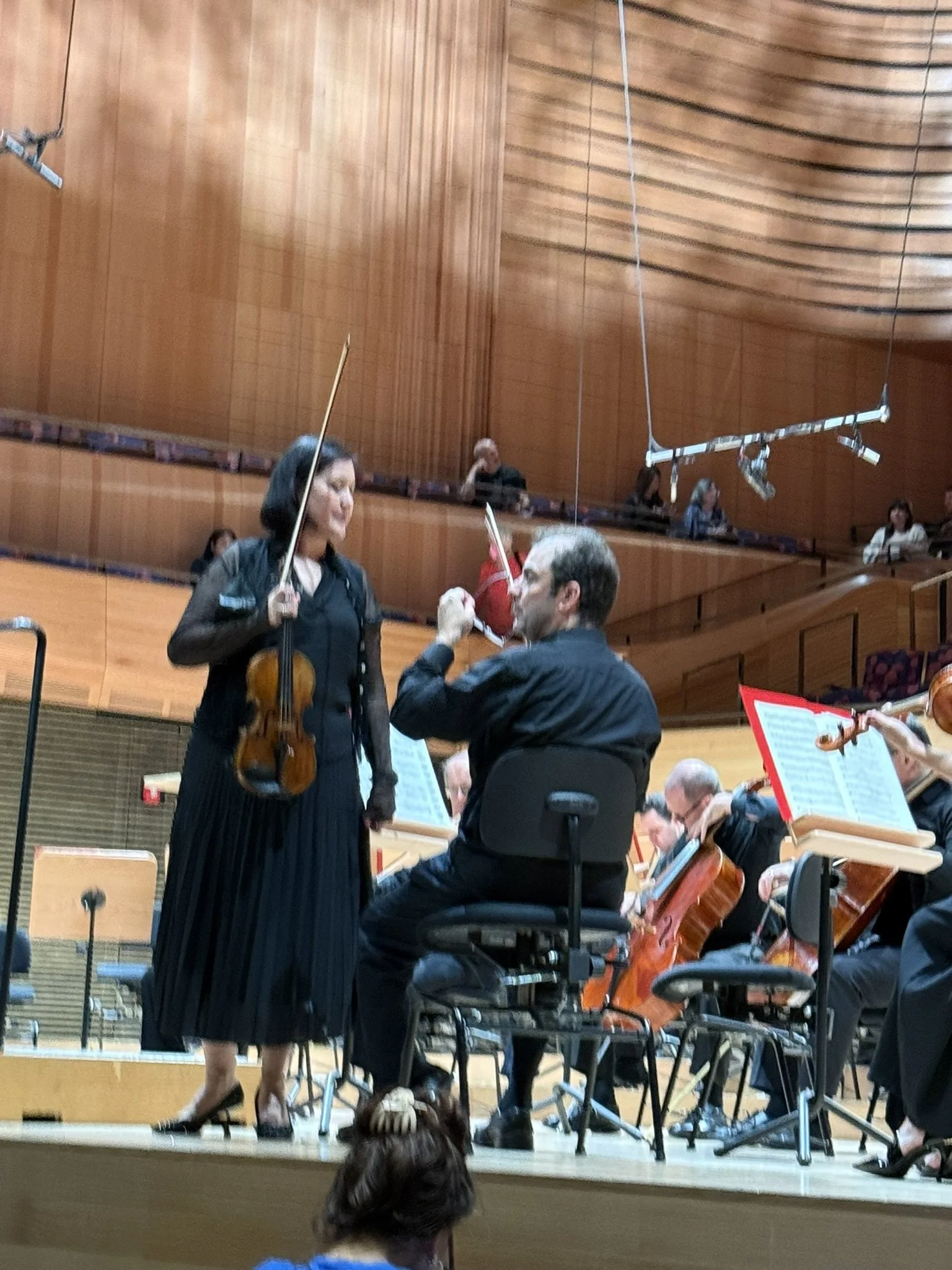
This article is dedicated to my beloved Shmuel Katz and his wife, Sophia Kessinger.
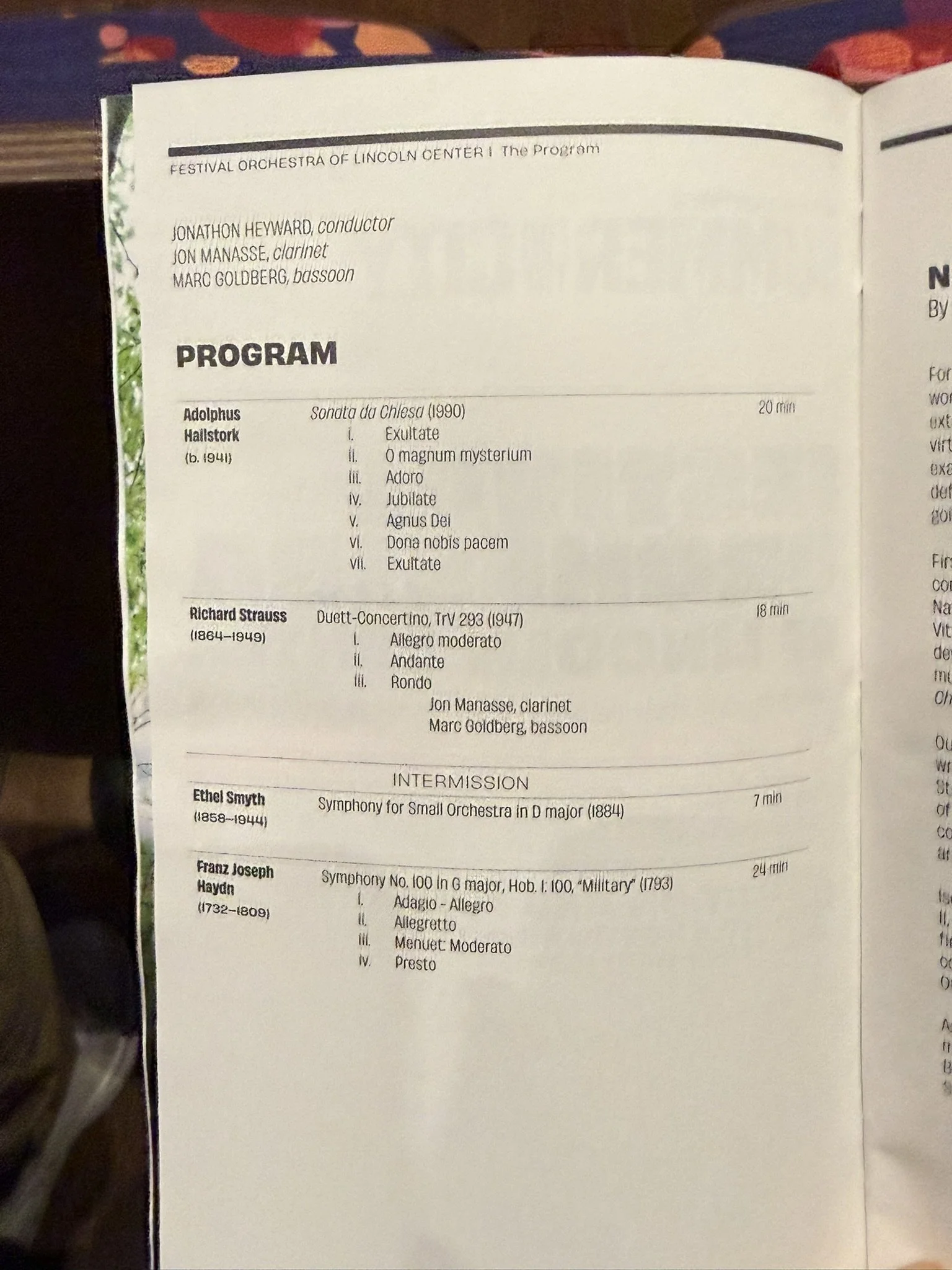
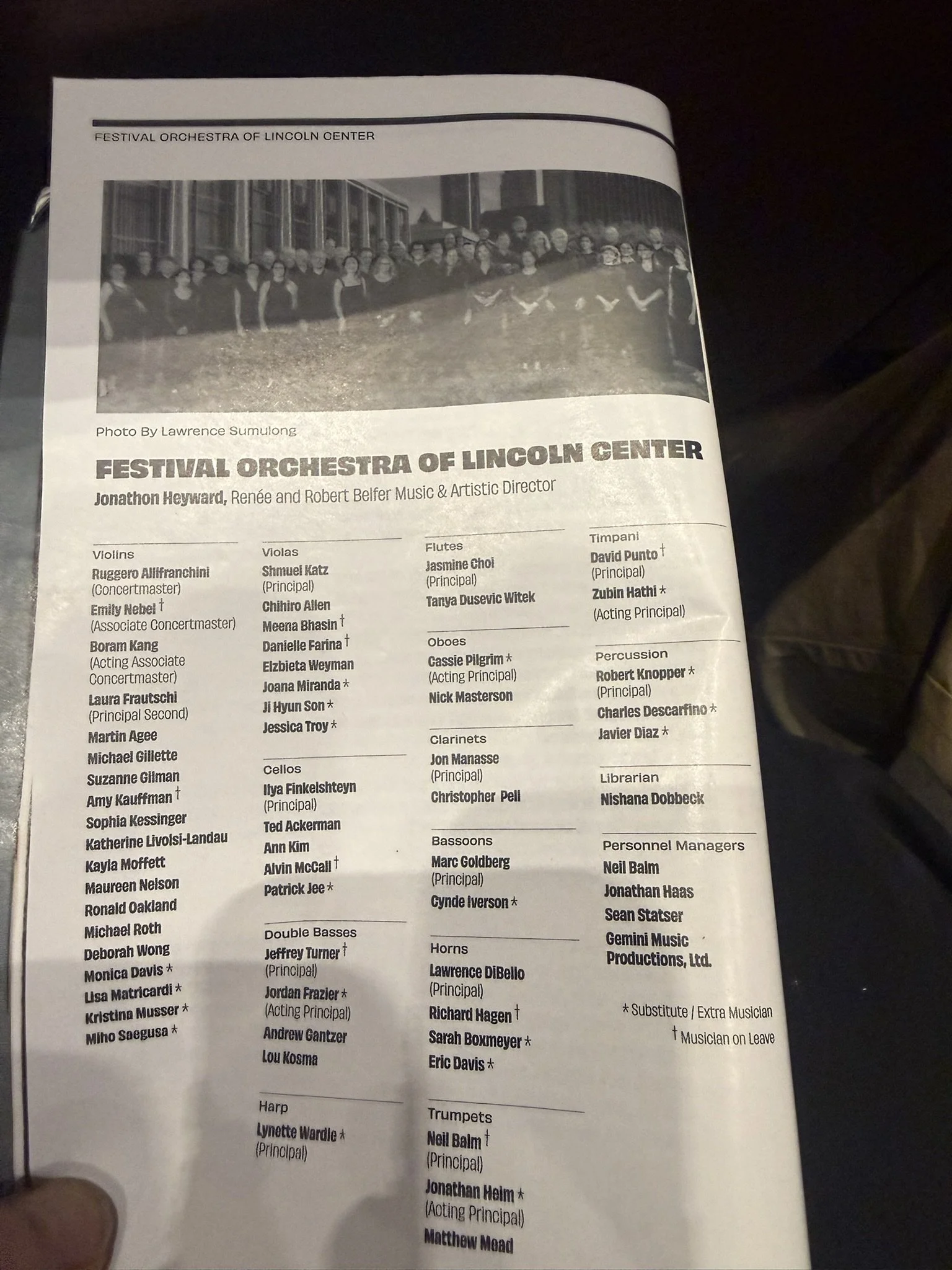
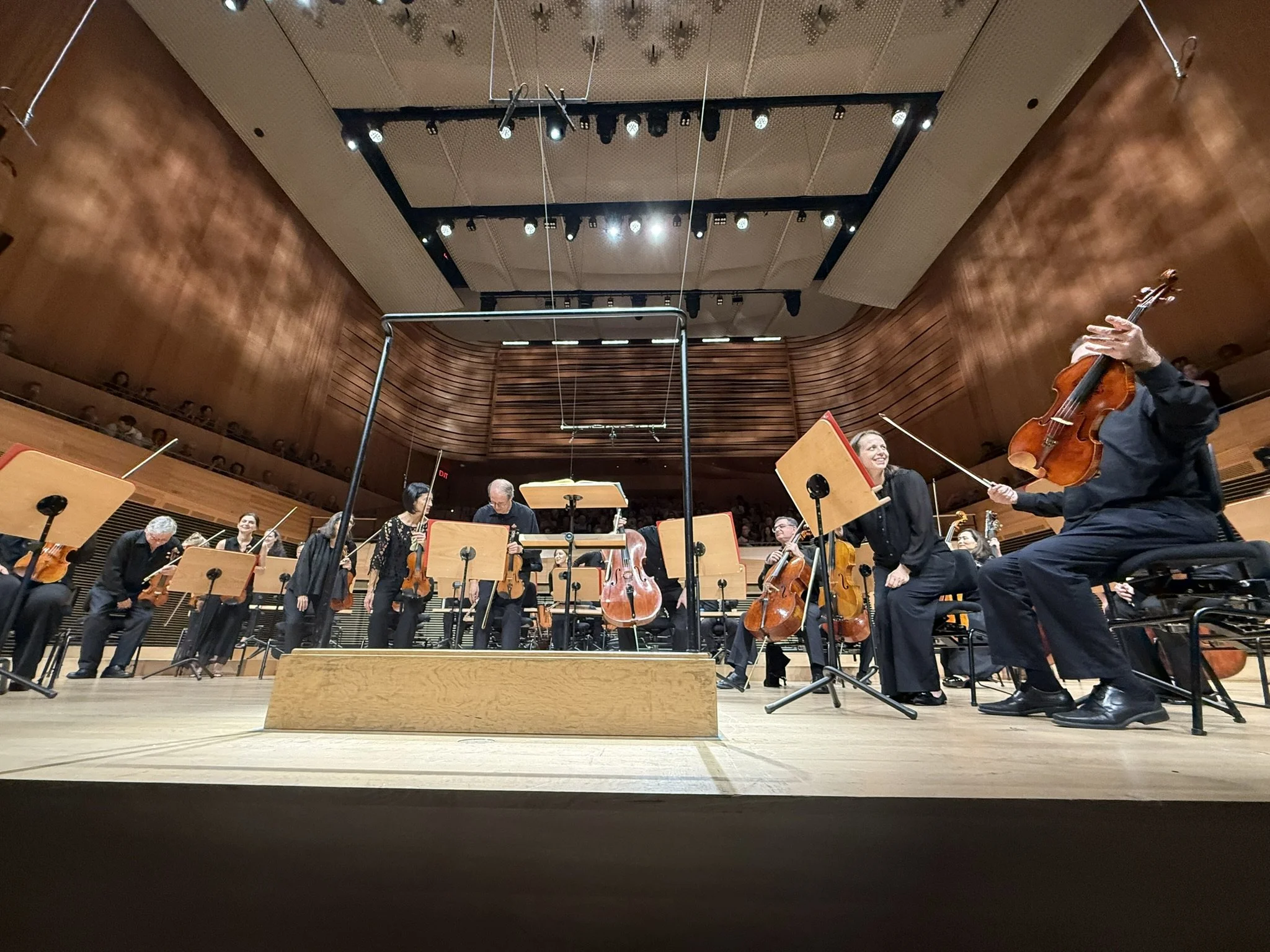
After Bruch on 7.17
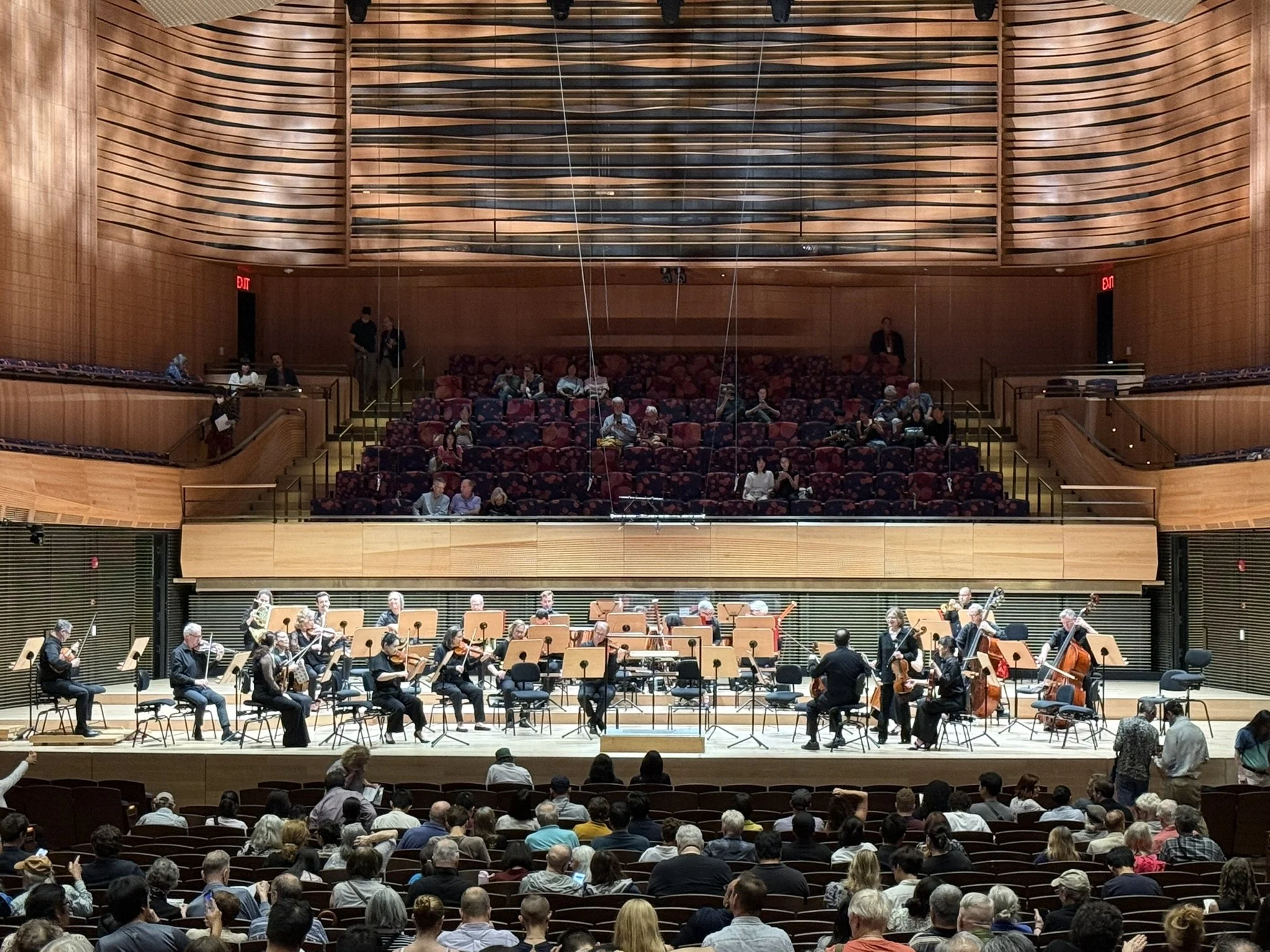
Silvestrov set
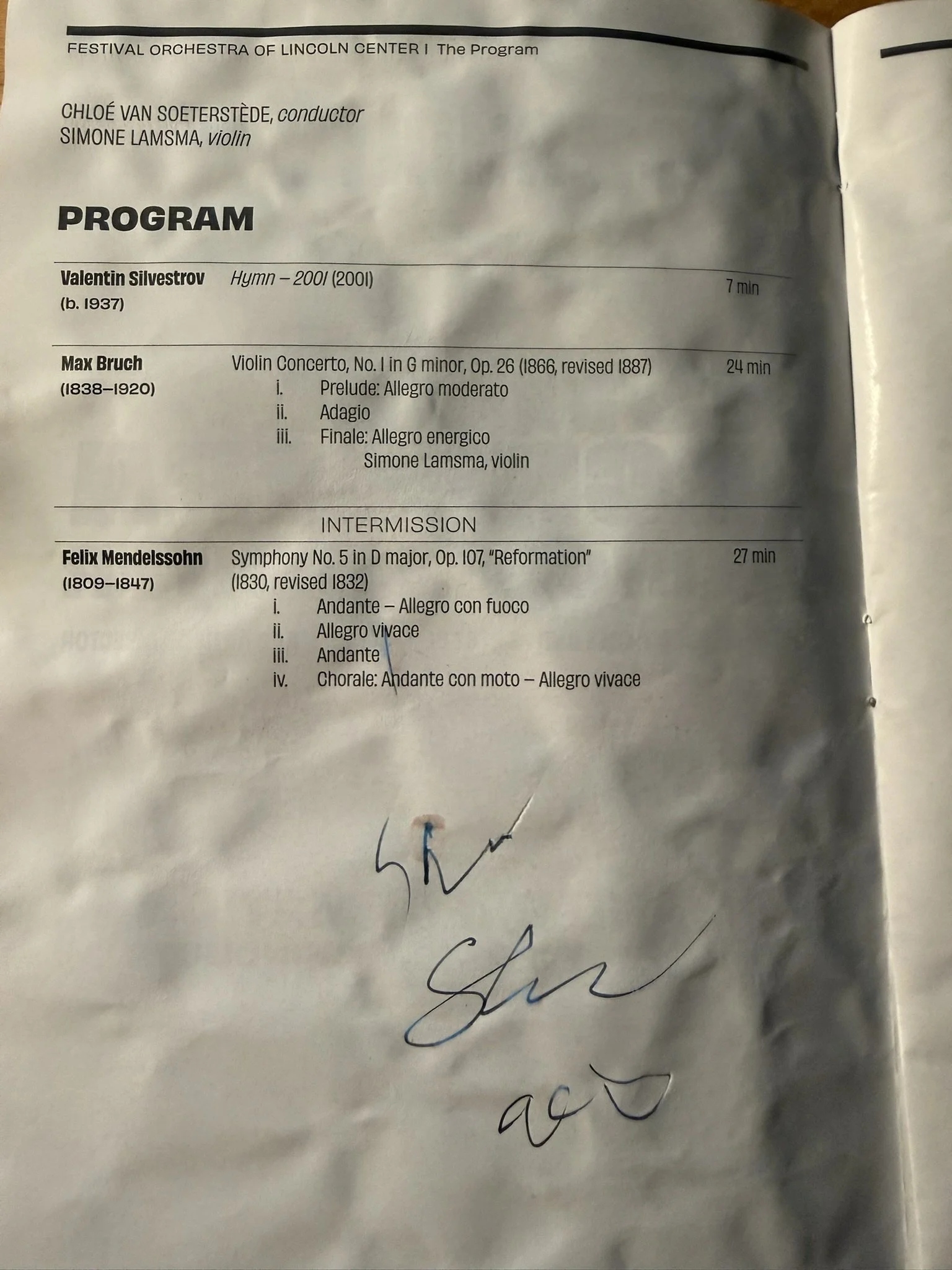
My very 1st autgraph from Katz, va on 17th and Gantzer, cb on 18th
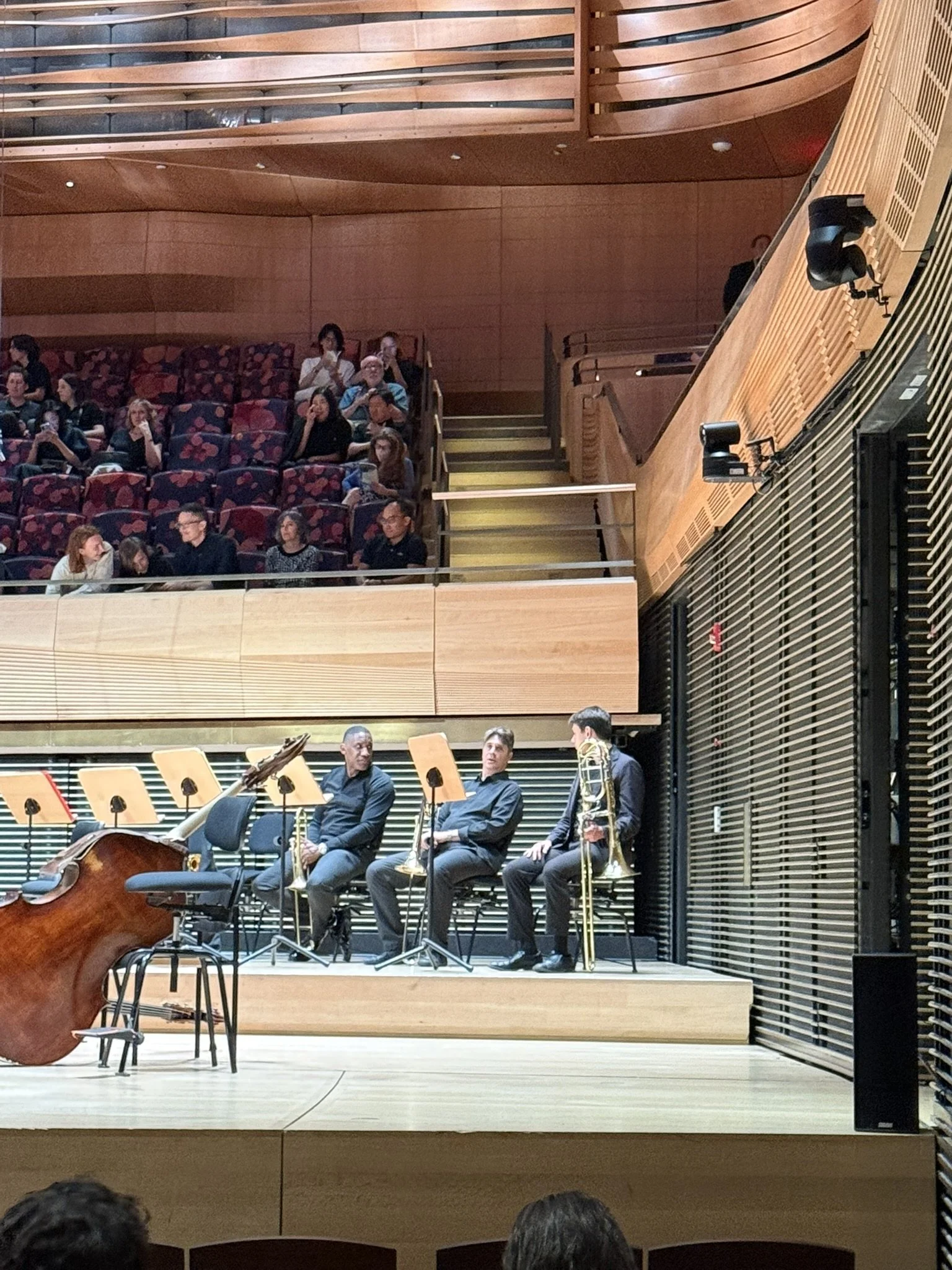
tbs bfore Mendelssoh on 17th
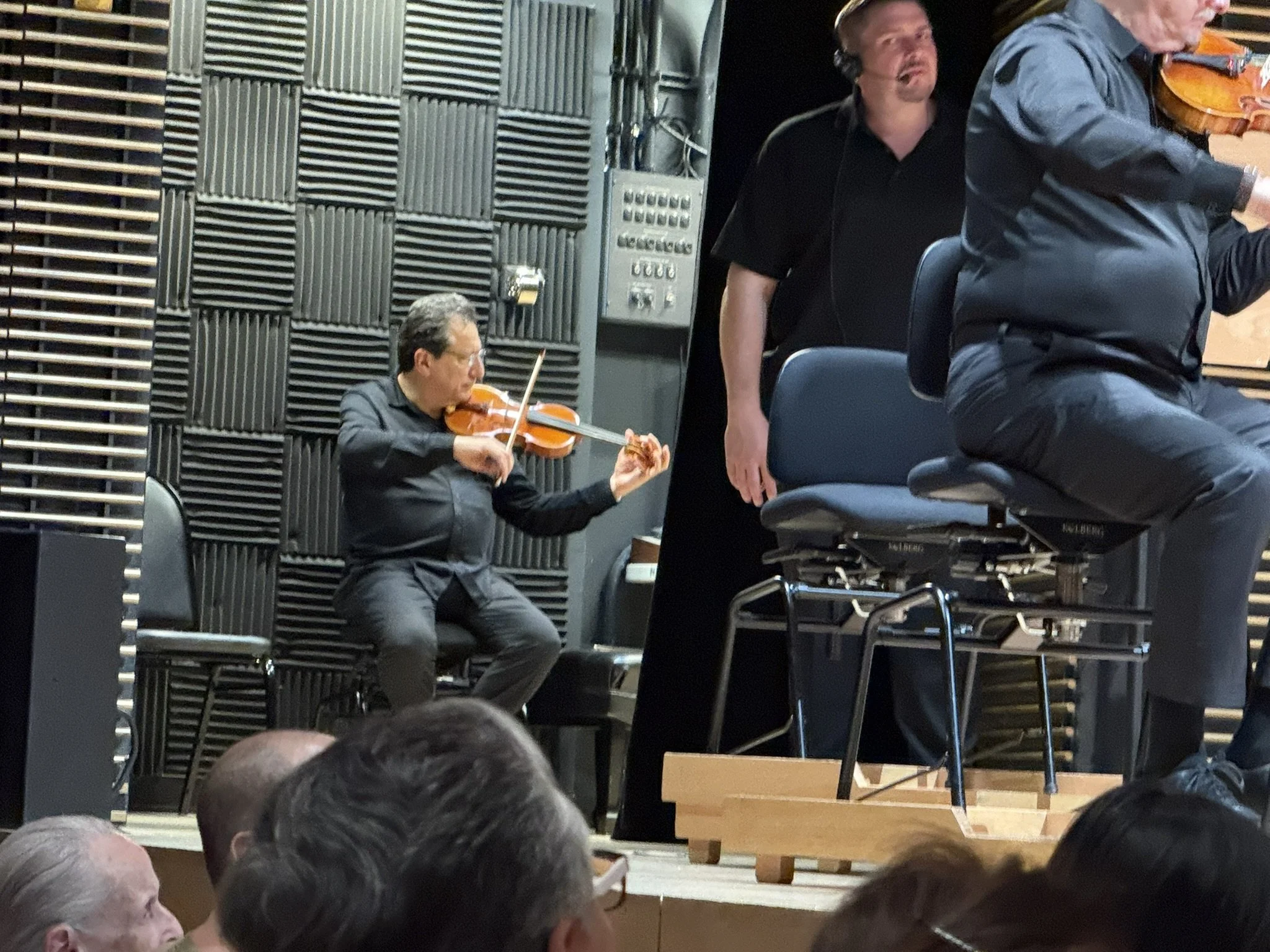
Ruggero Allifranchini, Concertmaster of Festival Orchestra of Lincoln Center
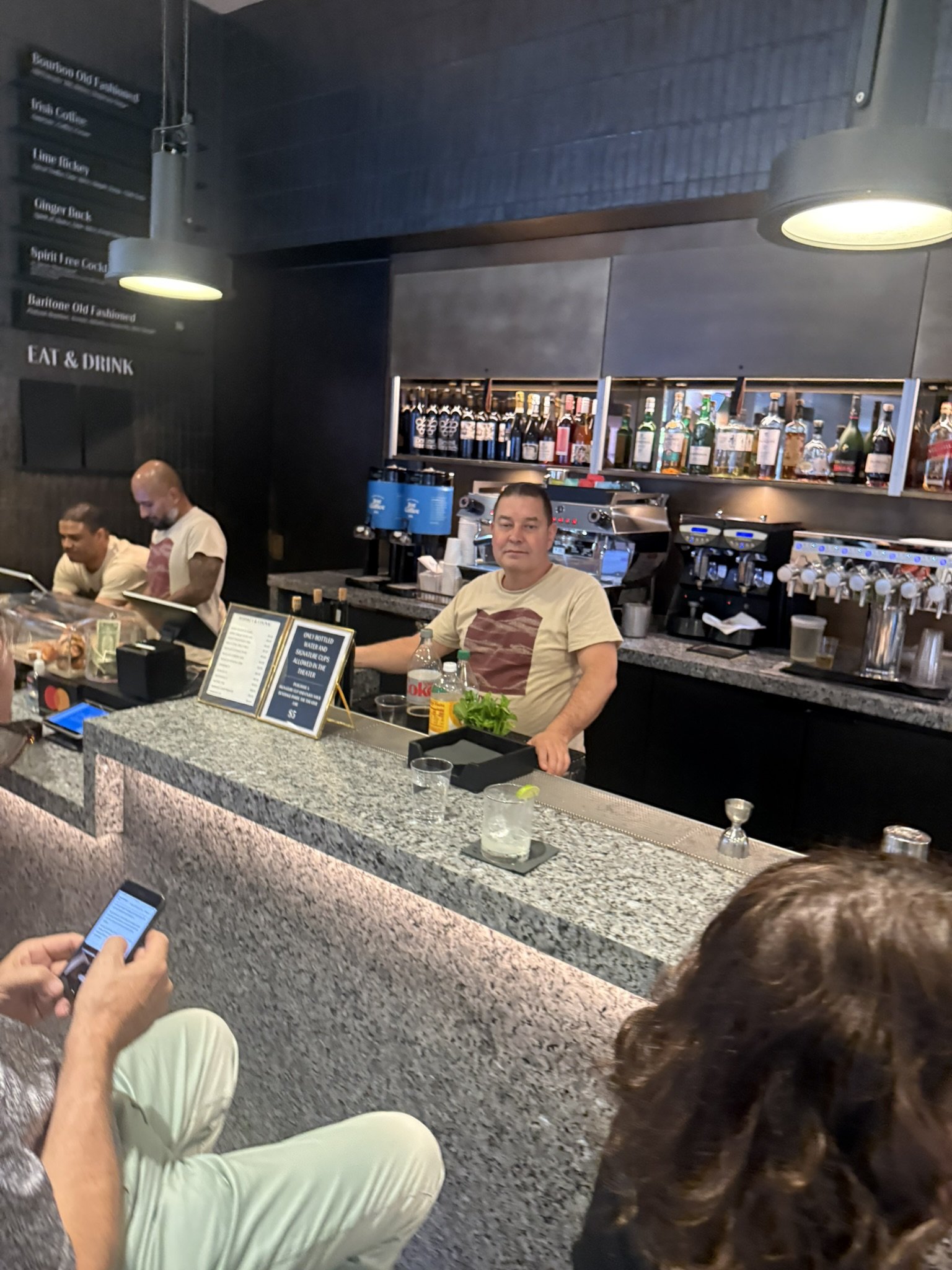
John, Lobby Bartender, usually he at Allice Tully, and left end guy asked me 10$ watching world cup, fuck off.

Nick’s buffalo wing at Wylie’s