
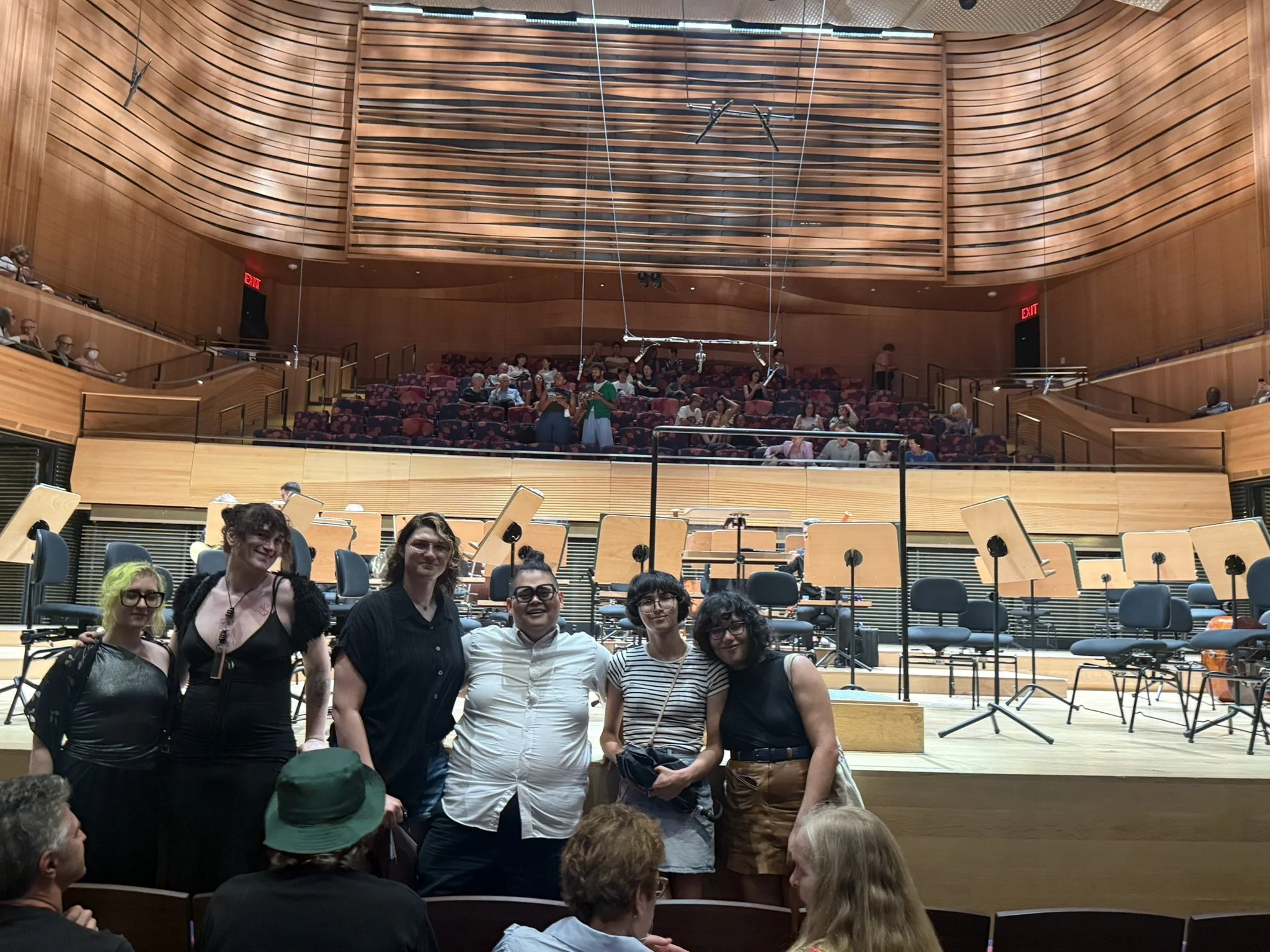
7.16.2026
The World Cup at Wylie's semi-final yesterday between England and Argentina, England scored first early in the second half. No. 18 (Bauden)—who had previously fouled Messi—scored a goal. Afterward, Argentina unleashed a barrage of shots; in the 84th minute, No. 24 received a pass from Messi and fired a magnificent middle shot. He was unmarked, and the English defense was practically frozen. Argentina’s movement was incredible. Having survived grueling battles—including extra time—to get here, there was no hesitation in their passing. They seemed utterly dedicated to the game of football. Argentina won 2-1 and advanced to the final. I was left speechless seeing the stunned expressions of the England players as they walked off the field. It took a long time for the tension of the match to subside; that feeling lingered right up until the next concert.
I asked Abbey for a hot dog and water, and devoured it in four bites. The combination of meat, sauerkraut, and bun in my mouth was superb. I washed it down with the water Abbey had served in a pint glass.
It was a muggy summer evening, just after the rain had stopped. Stepping outside, the breeze felt wonderful.
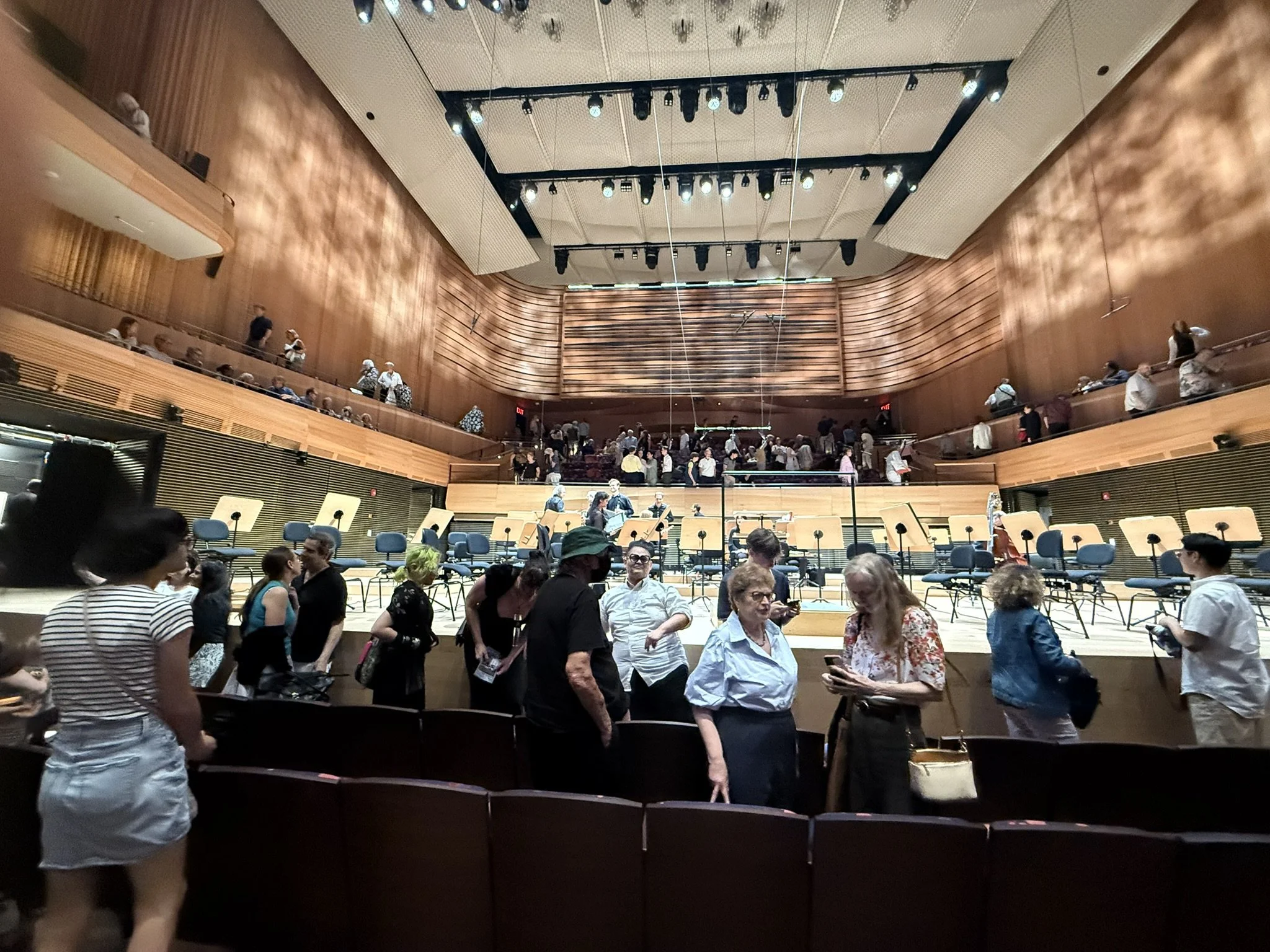
Upon entering the venue, David Geffen Hall, I got to talking with a friend about the Joe Hisaishi concert she attended. I asked a few times how they were; they told me what had happened, but wouldn't say much more than that. When the time came, I took my seat. A gentleman in a well-tailored suit sitting next to me struck up a conversation; when I mentioned I am Japanese, he told me he had lived in Kobe from the age of three to fifteen. He nodded happily when I told him it was my first time hearing Strauss's *Duett-Concertino*.
Just as the performance was about to begin, a group of four Chinese men and women arrived. They were clearly intent on filming with their smartphones, so I told them not to use them before the performance began. Yet, as soon as the music started, they eagerly raised their phones to record; I tried to block the view with my hand, but they showed no signs of stopping. A man sitting next to them seemed to switch seats to warn the woman who kept filming, but even then, they continued talking and fiddling with their phones. It was reminiscent of that appalling behavior I witnessed in France the other day. The first piece—Adolphus Hailstork’s *Church Sonata*—was packed with highlights, including the rich, powerful sound of a compact nine-person first violin section and a solo by Katz, the Met’s principal violist; yet, I hardly remember any of it. When the glare from a neighbor's phone is blinding, the music itself becomes inaudible. After the first piece ended, I called over a nearby usher to warn them, but they seemed completely oblivious as to why their actions were unacceptable. The audience members sitting in front and behind were also clearly annoyed and repeatedly urged them to be quiet. That is the reality of listening to live classical music performed by an orchestra in the heart of New York City. However, it was heartening to see a young American man speak up about the noise; it showed an audience mindset that values disconnecting from the digital, technological, and trendy world to listen to—and be emotionally enriched by—a "poem of sound" created by others. I hope that Chinese visitors, too, will cultivate a sense of shared experience—beyond mere etiquette—before they return home. Yet, this very issue lies at the root of the friction between China and the rest of the world.
During the second piece—Strauss’s *Concertino* (composed in 1947)—the neighbor’s appalling behavior persisted, even as Jon Manasse (clarinet) and Marc Goldberg (bassoon) began their solos. It was a luxurious experience. Opportunities to hear wind instrument solos or concertos are rare in New York. The piece was filled with the fascinating qualities of Strauss’s later works. It was the only piece in the program to feature a harp. *Wasser*. Splashing water. The blend of high-pitched violin tremolos and the harp—set in the tonic key characteristic of Strauss—seemed to wash away the summer heat with a refreshing, effervescent quality. I delighted in the musical "conversation" between the two soloists, as well as the interplay of the orchestra, which performed with a similarly virtuosic, soloistic flair. Mr. Goto—a gentleman of Caucasian appearance who speaks Japanese—was beaming with a smile. As the piece concluded, I whispered "Bravi" and caught Mr. Goto’s eye; then, unable to contain myself, I stood up and shouted "Bravi!" twice toward the stage. I did so simply because I love Strauss. I do not know if it was the Maestro who curated this program, but I want to offer my heartfelt thanks.
During the intermission, Kinoshita, who was seated in the front row, beckoned me over. He invited me to take the empty seat next to him—an offer I had no reason to refuse. After returning to my original spot to greet Mr. Goto and moving next to Kinoshita, I noticed Charlie and his friends in the front row. Later, Charlie told me he had listened from the seat I usually occupy, sharing his impressions of the sound from the front row. It was an experience that had both positive and negative aspects for him. Yet, it is precisely that kind of experience—the reality of the sound—that keeps me chasing after live classical music.
The third piece was a short symphony by the British female composer Ethel Smyth. Its structure and sonority were reminiscent of Brahms, while the way the entire orchestra surged forward in a unified direction evoked Sibelius. It was a delightful piece, featuring a colorful and engaging wind ensemble.
The concert concluded with Haydn’s Symphony No. 100, the "Military," written for London audiences. The drumming in the latter half had a vibe akin to UK rock; it made me feel that the spirit of the English people—whether in soccer, music, or their general energy—has remained unchanged for ages.
At soccer matches, angry shouts fly through the air. The deeper the love for the team, the angrier people get when players make mistakes or the opposition plays roughly. I wish concert halls could be like that, too—places where people aren't afraid to speak their minds. It is a pity that the conductor failed to rein in the orchestra's volume to create those gentle, quiet moments or brief respites where the audience could simply relax. Watching the orchestra listen to one another and drive the ensemble forward is like seeing a ball travel toward the goal, guided by intent through the players. Yet, the conductor failed to bring out the light, focused, rapid-fire strokes of the timpani amidst the sound of the bowed strings and the rhythmic pulse. David Geffen Hall has excellent acoustics; the disruptive behavior of the Chinese audience members didn't bother me as much as it would have at Carnegie Hall. With the ambient noise of the audience filtered out, the musicians on stage should have been able to hear each other’s playing with microscopic clarity—far better than at Carnegie. And yet, I couldn't hear the timpani during the Haydn piece. While the sound lacked that crisp, dry, light-yet-solid quality—reminiscent of a meticulously manicured lawn—that one associates with Haydn, the performance evoked a sense of familiarity, like sharing a Guinness at a pub near Lincoln Center. It was a truly delightful time, made even better by seeing Charlie, Kinoshita-san, and other friends enjoying the music. What pleased me most was that the oboe, which had been inaudible during last week’s Beethoven performance, was ringing out beautifully this time. However, during the curtain call, the tall conductor stood on the podium and introduced everyone from the center, blocking my view of her. When introducing people, please stand where everyone can see them.
Afterward, I had a drink with Charlie and friends at a drag bar in the Village before heading home.
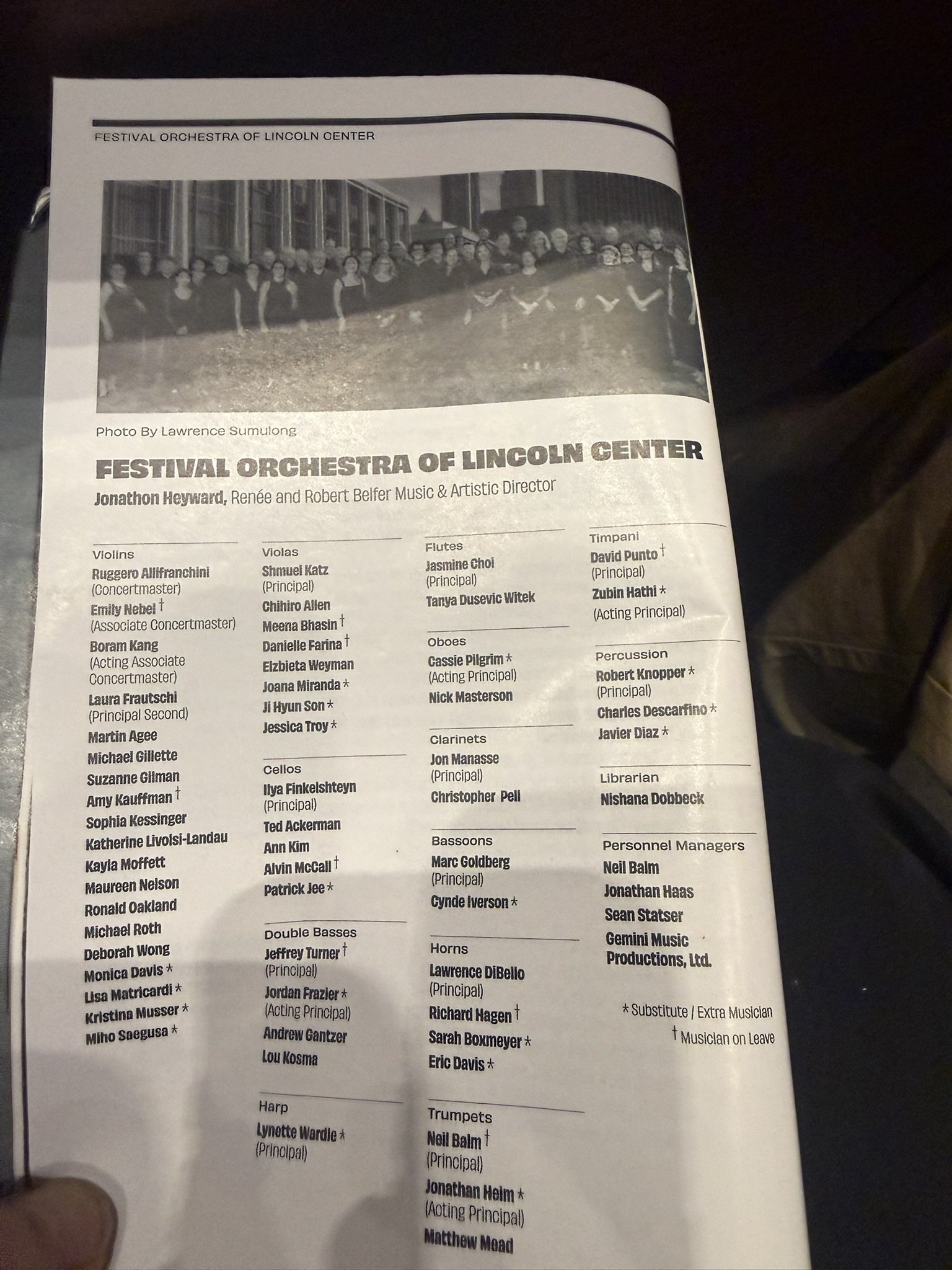
Jonathon Heyward, conductor
Jon Manasse, clarinet
Marc Goldberg, bassoon
Adolphus Hailstork Sonata da Chiesa
Richard Strauss Duett-Concertino
Jon Manasse, clarinet
Marc Goldberg, bassoon
Ethel Smyth Symphony for Small Orchestra
Franz Joseph Haydn Symphony No. 100, “Military”
On the subway ride home, a middle-aged white woman was speaking loudly to the man sitting next to her about why she loved Astoria so much. The man seemed to work in the food and beverage industry, and he was opening up about whether he should try becoming a bartender. I felt a sense of instability, as if everything around me was floating without a firm ground. Yet, beneath the surface, I can see that the number of unemployed people around me is increasing, regardless of generation. And whenever people open their mouths, they often pour out their frustrations and drink alcohol.
At yesterday’s concert, it took me some time to truly grasp and hear the sounds that were unfolding. No matter what happens, if I can maintain a heart that remains curious and excited about discovering what I want to find, the noise disappears. I can once again remove that noise through my own strength. What matters is recognizing when my heart has become clouded, and knowing whether I can ask others for help when it does.
Before listening to the sounds around me, I must first listen to the sound within my own heart.
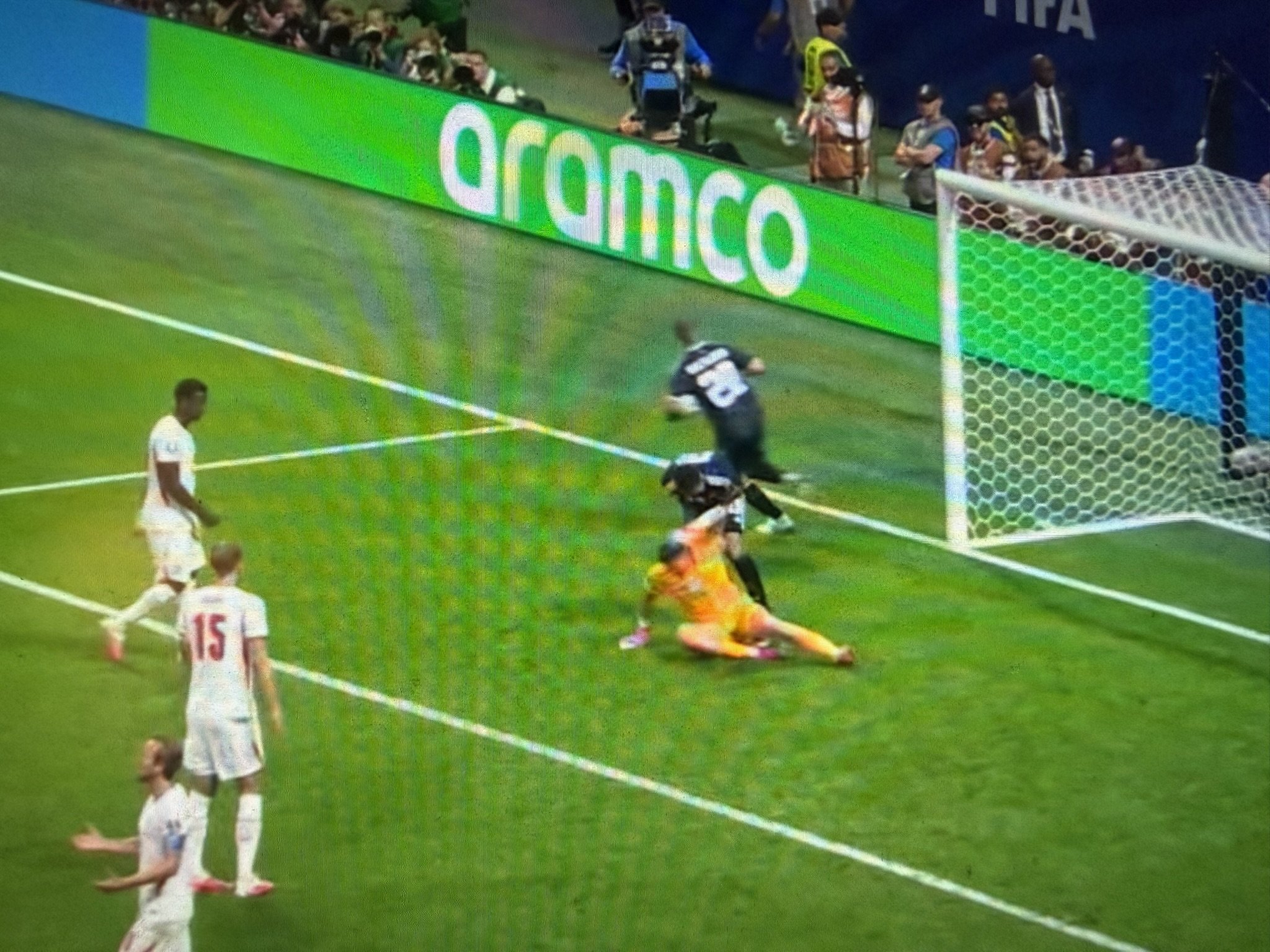
イングランドが後半84分にアルゼンチンに同点に追いつかれたとき、アルゼンチン選手がゴールキーパーを馬鹿にするような態度のあと、くやしさで地面を叩きつける。
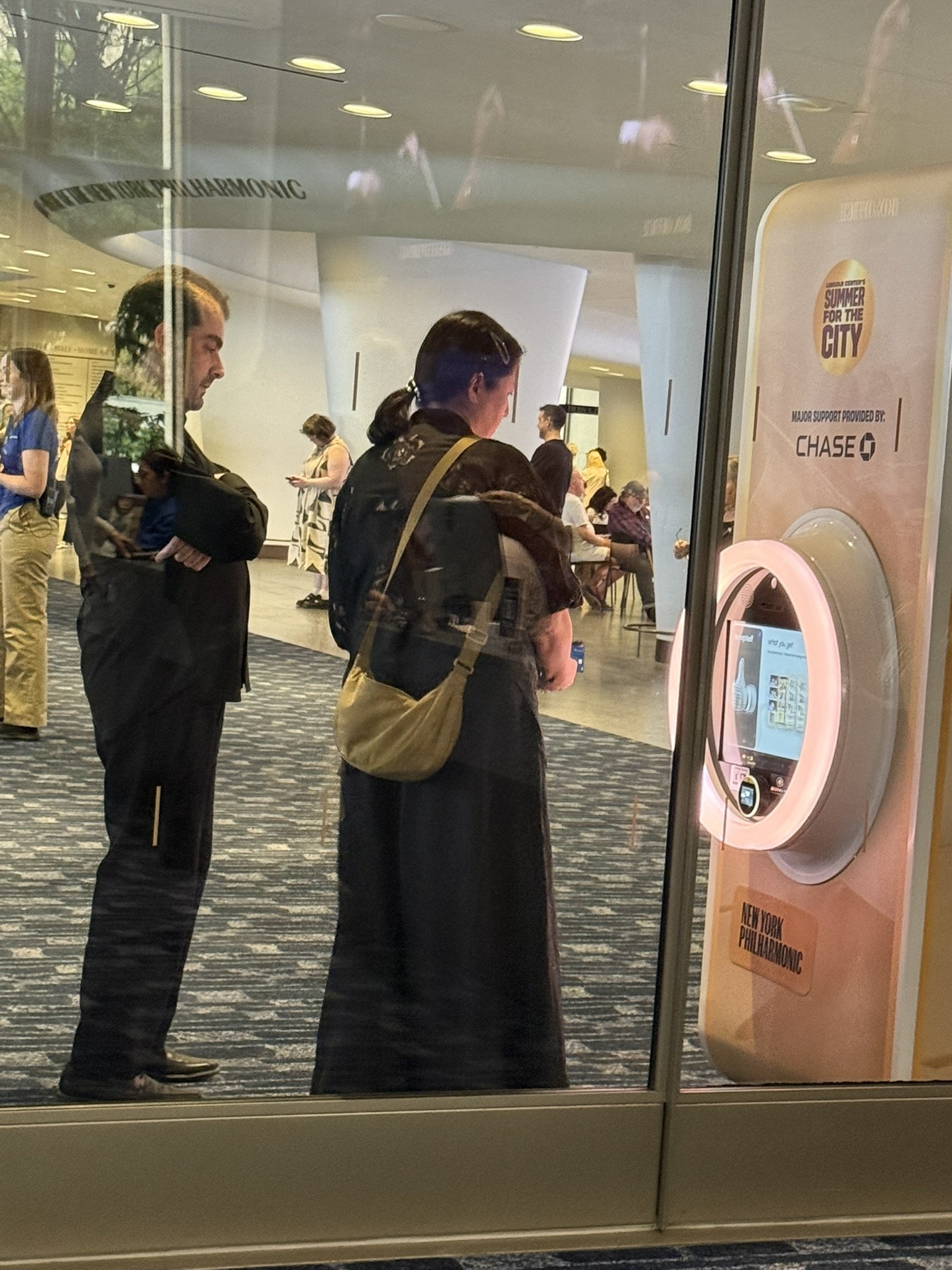
プリクラを静かに待つ、マエストロたち。
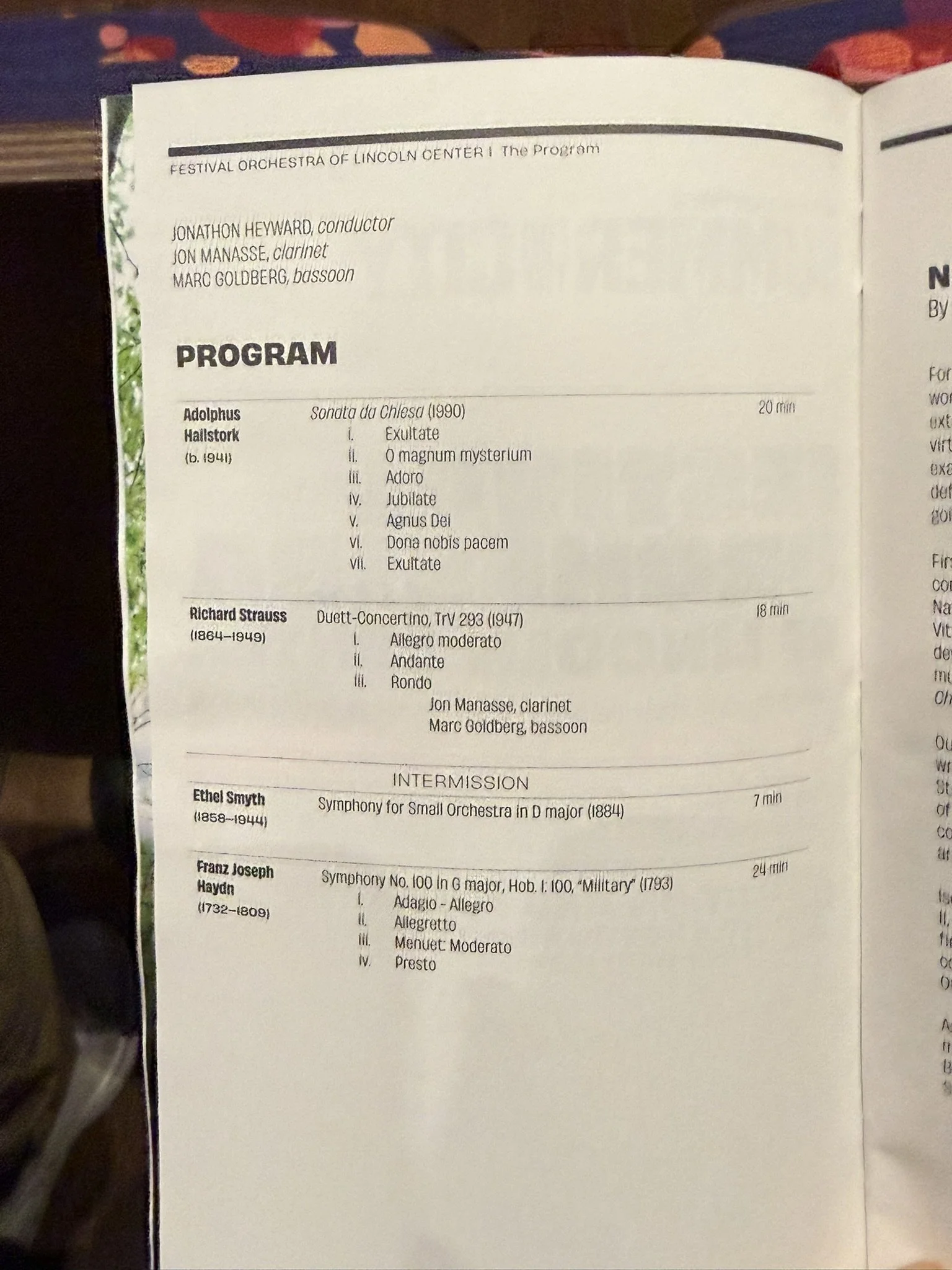
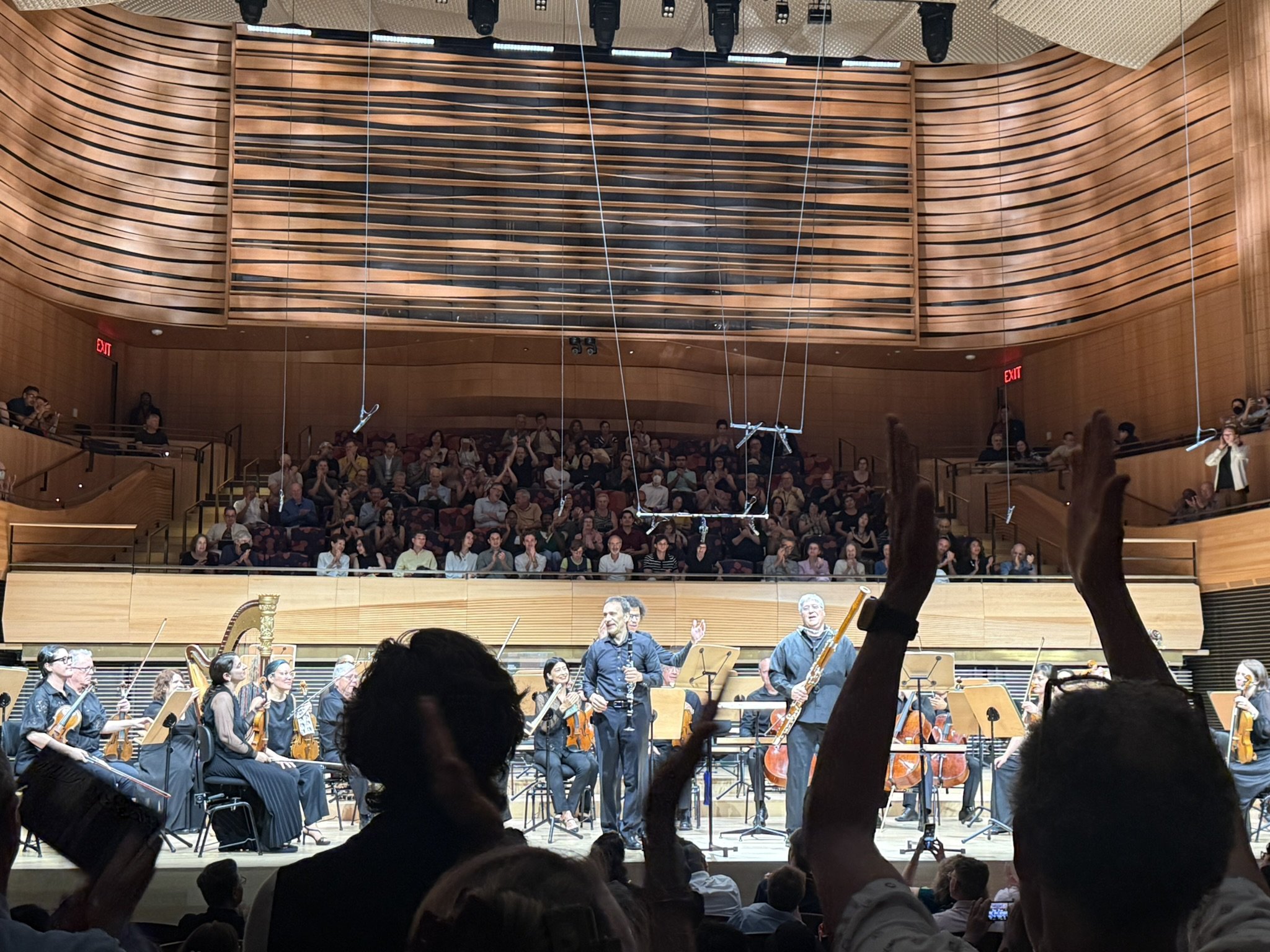
シュトラウスのソリスト
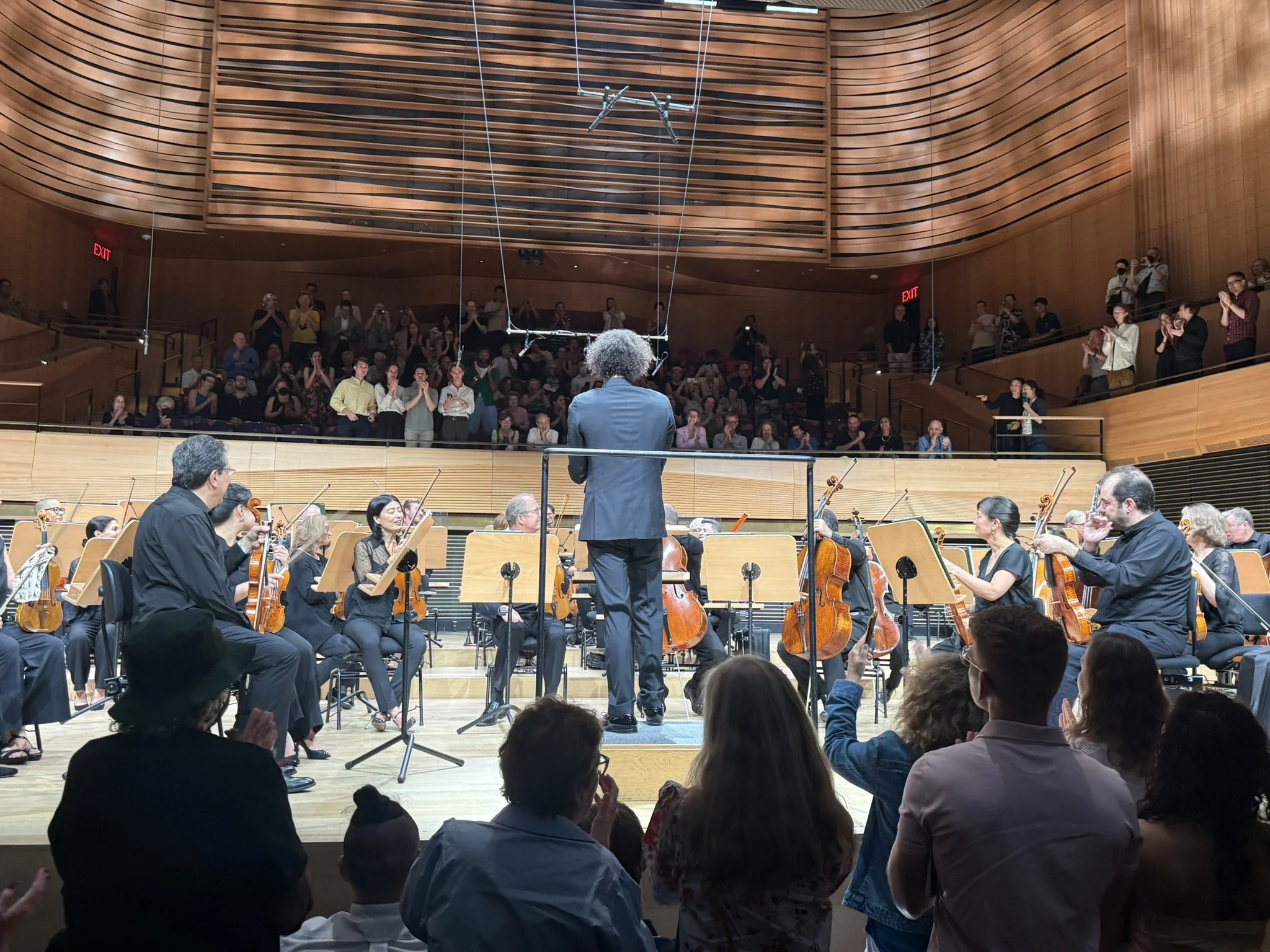
オーボエの音色が楽しかった。マエストロが真ん中に立っていて全くみえない。
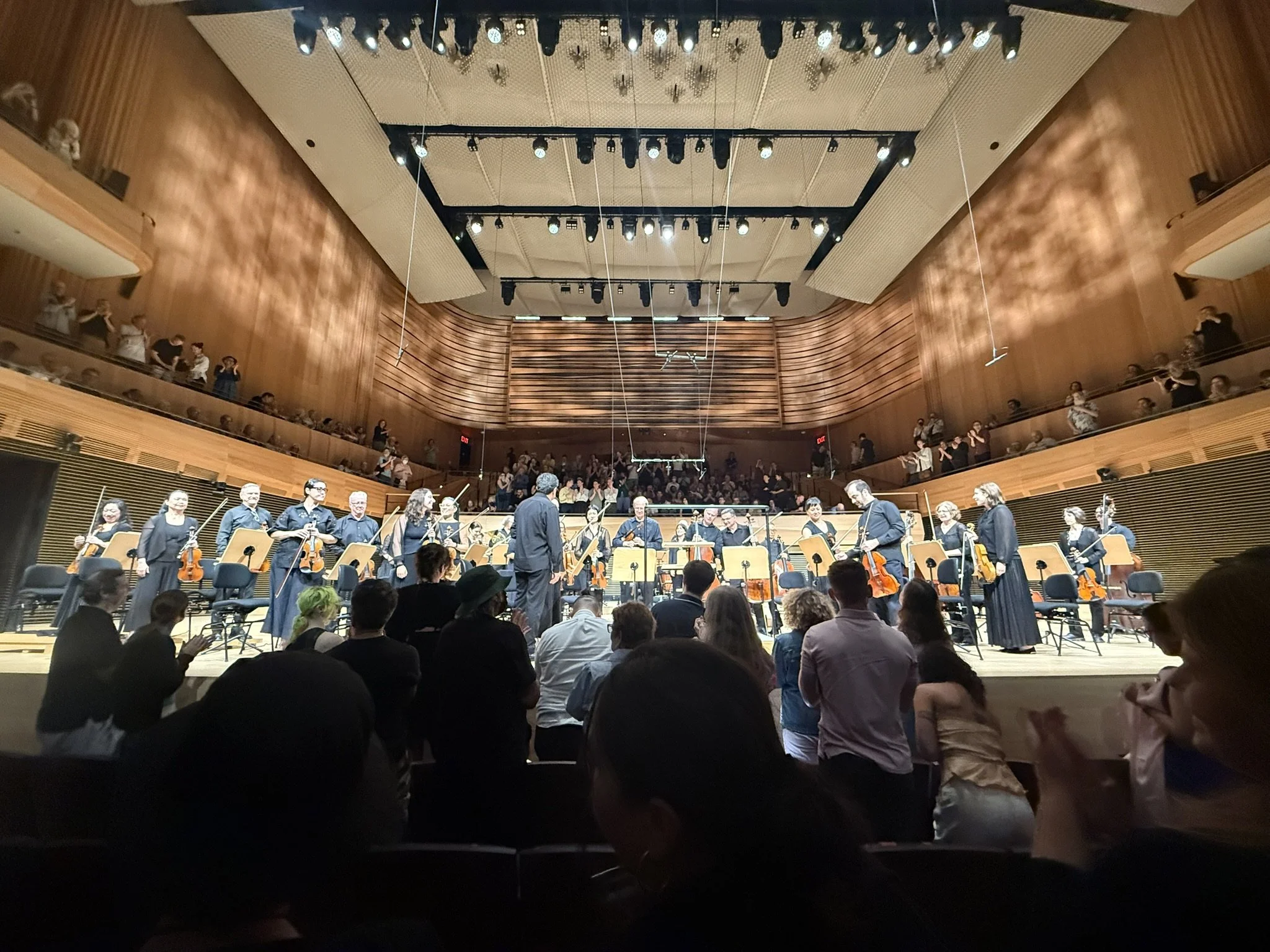
cu soon Chrlie
7.16.2026
昨日もワイリースでワールドカップを観戦した。イングランドとアルゼンチンの試合は、前半はイングランドが後半の序盤でメッシにファールした18番のボーデンがゴールを決め、その後、アルゼンチンが数々のシュートを放って84分に24番がメッシからパスもらって見事なミドルシュート。完全にフリーでイングランドのディフェンスはほぼ動けなかった。アルゼンチンの動きがすごかった。延長戦も含めて今まで厳しい戦いを潜り抜けて来て、彼らのパスに迷いを感じなかった。彼らはフットボールにひたすら徹しているように見えた。試合は2-1でアルゼンチンがファイナルに進んだ。去っていくイングランドが呆然とする姿に言葉を失った。この試合の緊張が解けるのに時間がかかった。それは次の演奏会まで続いた。
アビーにホットドックと水をお願いして、4口で食べた。肉とサワークラフトと口の中でバンズが一緒になって最高。アビーがパイントのグラスにいれてくれた水で胃に流し込んだ。
蒸し暑い夏の雨上がりの夕方。外に出ると風が吹いていて気持ちよかった。
会場のデビットゲフィンホールに入って、友人と先日あった久石譲のコンサートの話になった。私は数回、どうだったか尋ねたが、何があったかは教えてくれたが、それ以上は教えてくれなかった。時間になったので自分の席に座ると、隣に仕立ての良いスーツを着た紳士に何人か尋ねられたので、日本人だと答えると、神戸に3歳から15歳まで住んでいたそうだ。私が、シュトラウスのドッペルコンチェルトを聴くのが人生で初めてだと話すと、嬉しそうにうなずいてくれた。
時間ぎりぎりで、4人の中国人の男女がやってきた。彼らは明らかにスマホで撮影する気が満々だったので、演奏が始まる前にスマホは使うなと促したが、演奏が始まると張り切ってカメラを構え撮影し始めたので手で遮ったが、やめる気配がながかった。その隣の男性が席を交代して、撮影し続ける女性に注意していたようだが、彼らはそれでも話をしたり、スマホをいじり続けていた。まるで先日のえげつないフランスのプレーのようだった。1曲目のAdolphus Hailstorkの教会ソナタは1stバイオリンが9人のコンパクトでパワフルで豊かな音色に、メットの首席ビオラのカッツのソロなど、聴きどころ満載だったのに、ほとんど覚えていない。隣の席の携帯の明かりが眩しいと音が聴こえなくなってしまう。1曲目が終わり、近くのアッシャーを呼んで彼らに注意してもらったが彼らはなぜそれがNGなのか全くわかっていない様子だった。前後のお客さんにもすごく嫌がられていたし、彼らも何度も静かにするように促していた。ニューヨークのど真ん中でオーケストラのセットでクラシック音楽を生で聴くとはそういうことだ。しかし、アメリカ人の若い男性も、彼らのノイズに注意を与えるというのは、聴衆の意識がそれだけデジタルやテクノロジーや、はやりの世界から自分を切り離して、誰かがどこかで作った音の詩に耳を傾けて心を満たしたいと思っているということが、とてもうれしかったし、中国の方々も、マナーというよりはみんなで時間を共有する意識を自分の心に育てて帰ってきてほしい。しかし、これが中国と世界の摩擦の原因なのだ。
2曲目も、隣の客のえげつないプレーが続くなかで、Jon Manasseのクラリネット、Marc Goldbergのファゴットのソロでシュトラウスの1947年に書いたコンチェルティーノが始まった。贅沢だった。管楽器のソロや協奏曲はニューヨークではほぼ機会がなかった。シュトラウスの晩年の面白さが詰まっていた。このプログラムでは唯一ハープが登場した。ワッサー。水しぶき。バイオリンの高音のトレモロとハープがブレンドし、シュトラウス独特のトニックのキーでシュワシュワと夏の暑さを洗い流してくれた。ソリスト2人のおしゃべりと、これもまたソリスティックなオーケストラのおしゃべりを楽しんだ。日本語を話す見た目白人紳士の後藤さんもニコニコだった。曲が閉じた瞬間に、Braviとつぶやくと後藤さんと目が合った。そして、思わず立ち会りステージのみなさんにBraviと2回叫んだ。なぜなら私はシュトラウスが大好きだからだ。このプログラムを組んでくださったのはマエストロなのかわからないが、心からお礼を言いたい。
休憩になると前に座っているきのしたさんに手招きされた。隣が空いているからどうですかと誘われたので断る理由がない。もう一度、後ろに戻り後藤さんに挨拶して、きのしたさんの隣にいったら、1列目にチャーリーと仲間たちがいた。あとでチャーリーから、今日はおまえがいつも座っている席できいたぞと、1列目の音の印象を話てくれた。それは彼にとっていいことでも悪いことでもあった。でも、私はそれが好きで生のクラシック音楽を追いかけ続けているのだ。
3曲目はイギリスの女性作曲家、Ethel Smythの小さな交響曲だった。構造と響きはブラームスのようで、流れは一度オケ全体が一つの方向に向かってぐんぐん進んでいく雰囲気はシベリウスのようだった。管楽器のアンサンブルが色とりどりで楽しい曲だった。
最後はハイドンの100番。ハイドンがロンドンの聴衆のために書いたミリタリー。後半のドラムがUKロックのようで、やっぱりイングランドは昔からサッカーも音楽も、人々のノリも変わっていないんだと感じた。
サッカーの試合では怒号が飛び交う。愛があればあるほど、選手がミスをしたり、相手にラフなプレーをすると怒るのだ。演奏会もそうなったらいい。だれも文句を言わない。指揮者がオケが響いているのを抑制して、小さな音色の優しい場面や、聴衆がふと気を抜ける一コマを用意できないのは残念だ。オーケストラが自分たちで聴き合ってアンサンブルを動かす様子は、ボールが意思をもって選手を通じゴールに向かう軌跡の様だ。しかし、指揮者は弦のアルコの響きや、刻みの中に、ティンパニの軽くて芯のある連打が聴こえない。デビットゲフィンはレスポンスがとても高い。中国人が暴れているのがカーネギーほど気にならない。客席のノイズをカットして、ステージ上でも彼らはそれぞれの演奏が、カーネギーよりも顕微鏡レベルで聴きとれるはずだ。なのに、私はハイドンでティンパニが聴こえなかった。ハイドンのクリスピーで乾いた軽いが芯のある、丁寧に手入れされたどこかの庭の芝の様な響きではなかったが、リンカーンセンター付近のパブでギネスを飲んでいるような親しみが曲全体を通じて感じられ、チャーリーやきのしたさんや、他の友人たちも音楽を楽しむ様子が視界にはいってきてとても嬉しい時間だった。一番うれしかったのは先週のベートーベンで聴こえなかったオーボエがよく鳴っていたことだ。彼女をカーテンコールで紹介するとき、背の高い指揮者が指揮台の上にたって中央からみんなを紹介していて、見えなかった。人を紹介するときは全体に見える位置で紹介してください。
そのあとチャーリーたちとビレッジのおかまバーで一杯飲んで家に帰った。
帰りの地下鉄では白人の中年女性が大きな声で、自分がなぜアストリアが大好きなのかを隣の男性と話をしていた。その男性は、飲食店で働いているようだが、バーテンになろうかどうかと打ち明けていた。とても不安定でふわふわした気持ちになったが、見えないところで、私の周りには失業した人たちが世代関係なく増えている。そして、みんな口を開けば不満を吐き出し、アルコールを飲む。
私は昨日の演奏会で音を把握して聴きとるまでに時間がかかった。どんなことがあっても自分が見つけたいことに興味をもってわくわくできる心があれば、ノイズは消え、また自分の力でノイズを消すことができる。大切なのは心が曇った時に曇っているとわかること。他の人に助けを求めることができるかどうかだ。
周りの音を聴く前に自分の心の音を聴くことだ。