
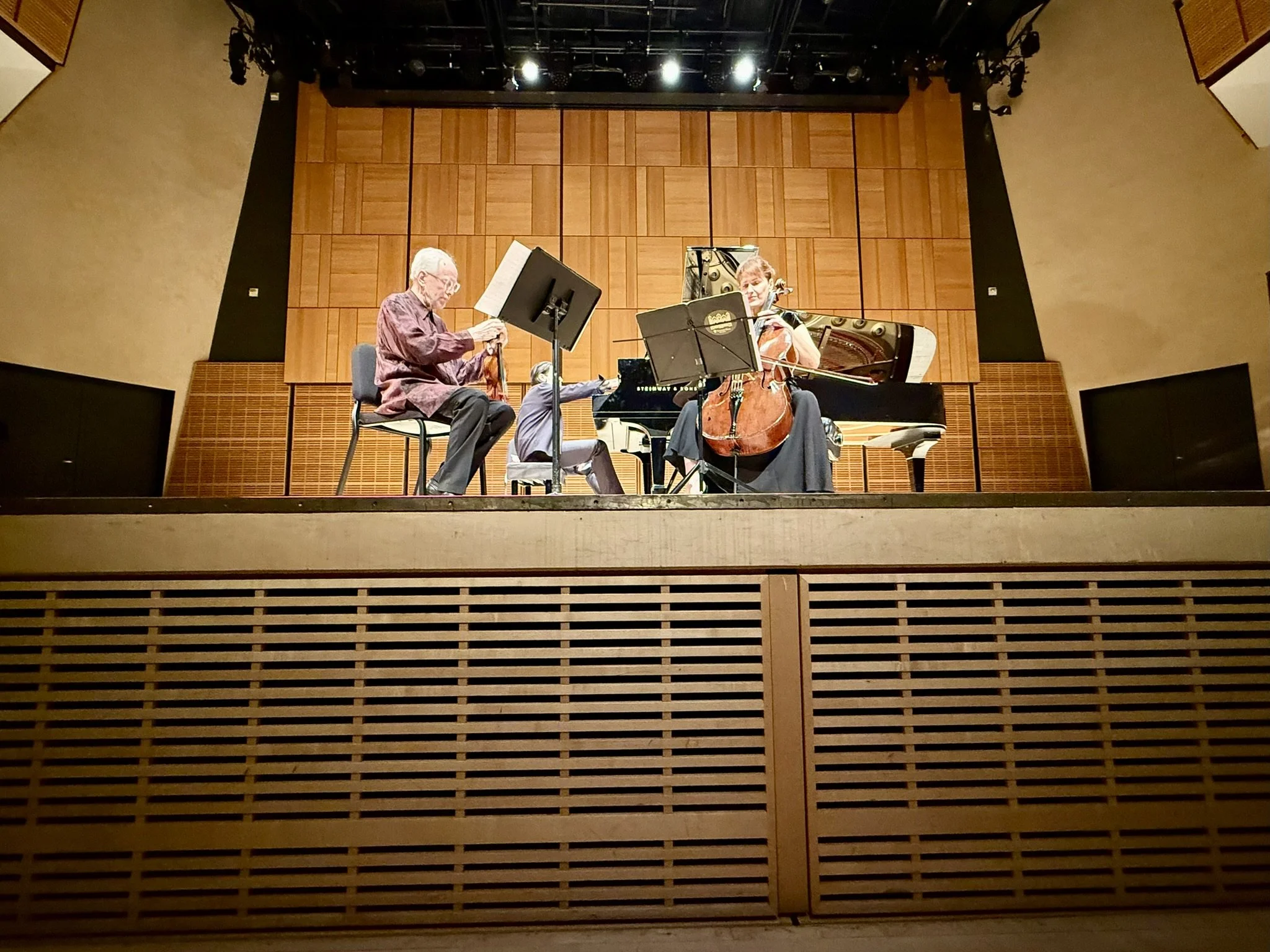
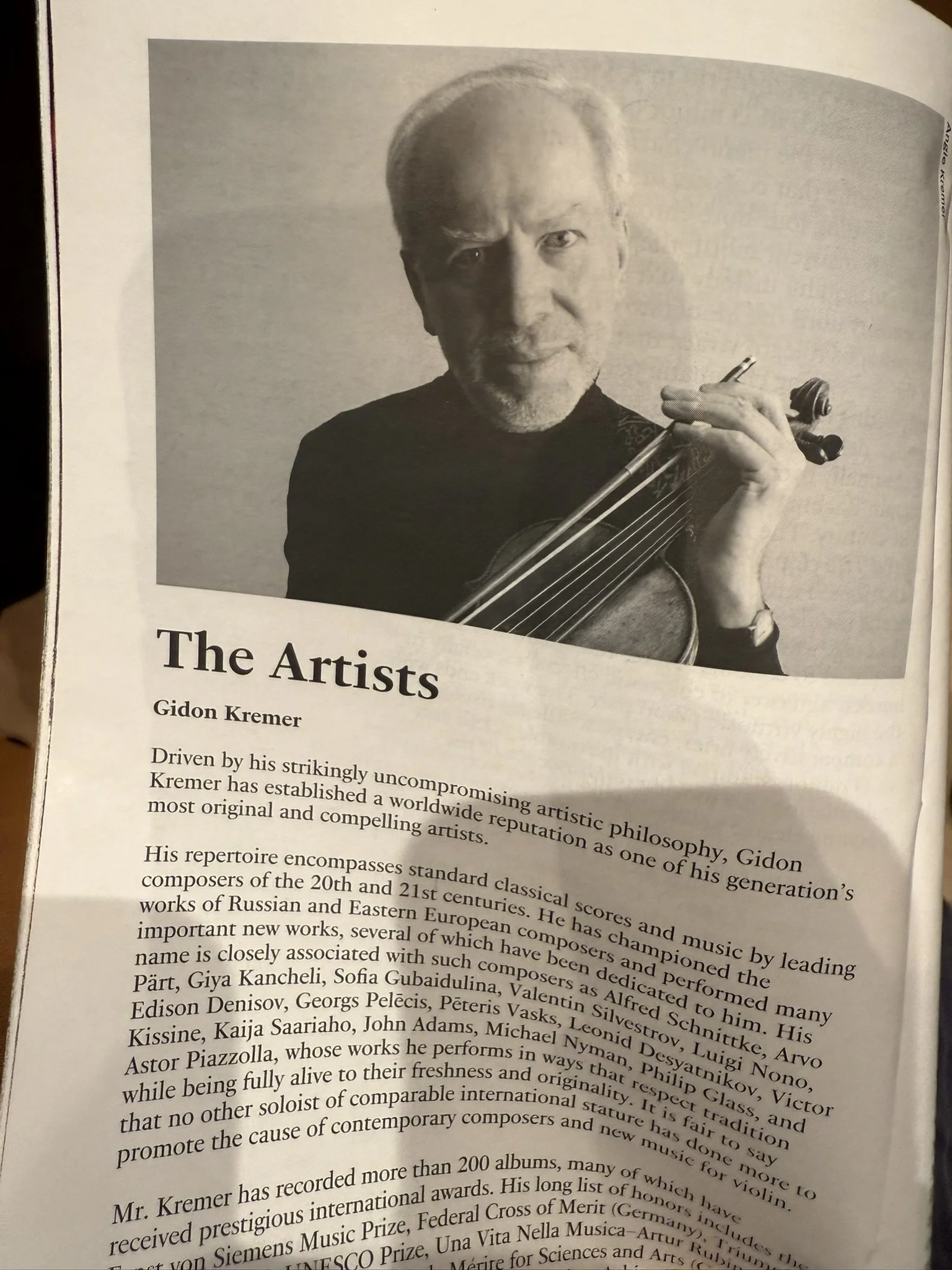
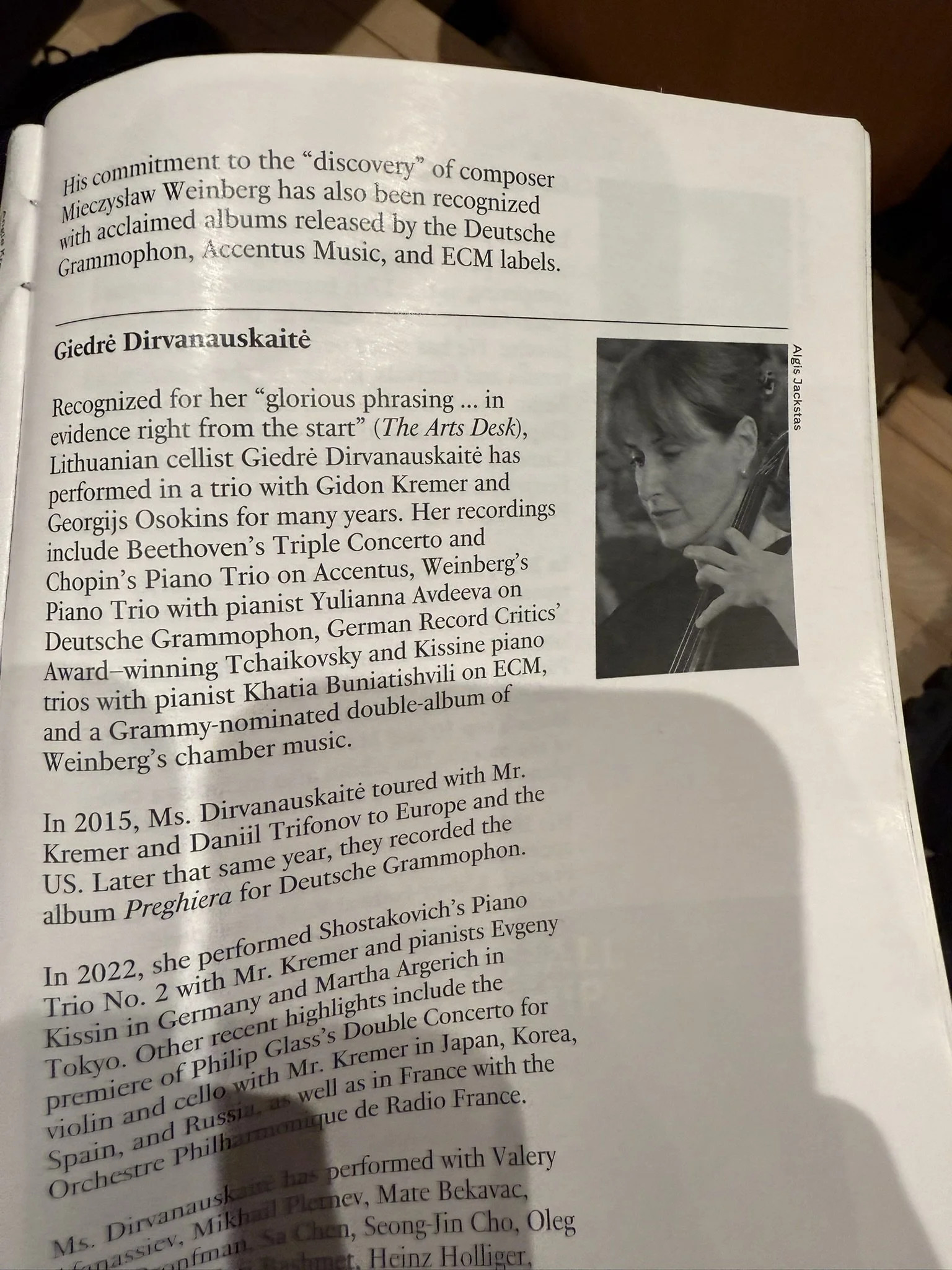
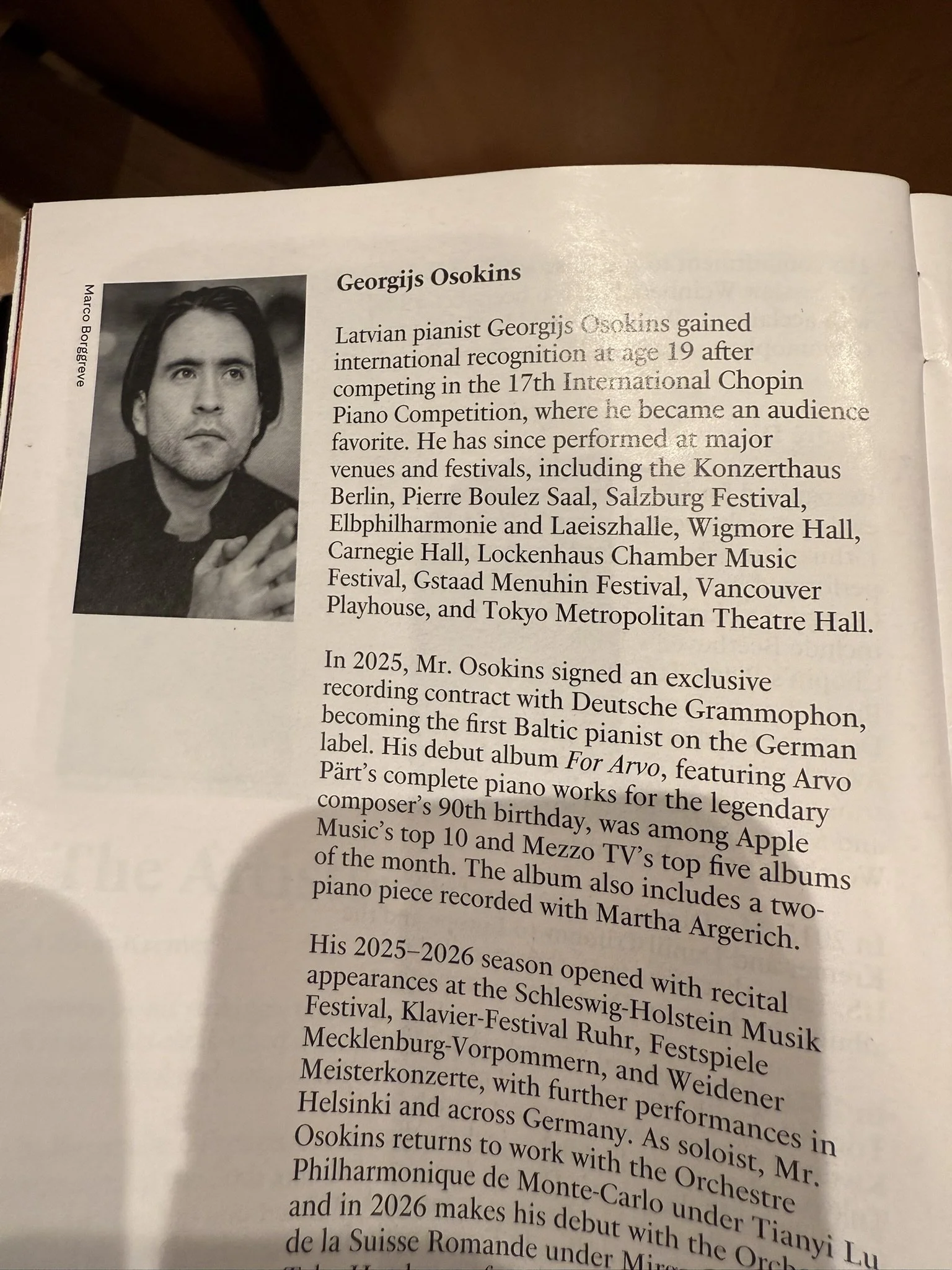
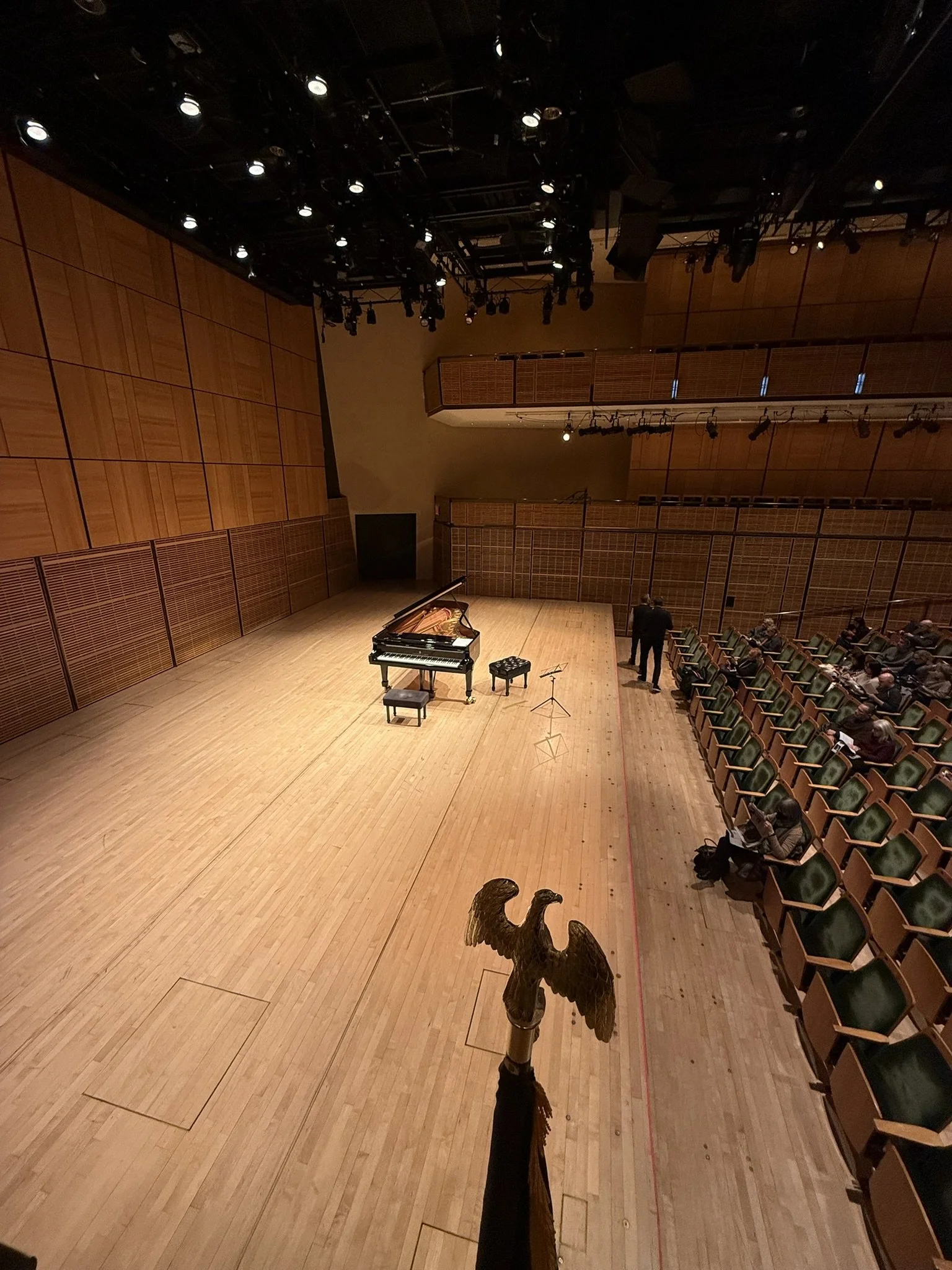
Three Latvian musicians, Gidon Kremer, Giedrė Dirvanauskaitė, and Georgijs Osokins, gave a trio recital at Zankel Hall on 12.4.2025.
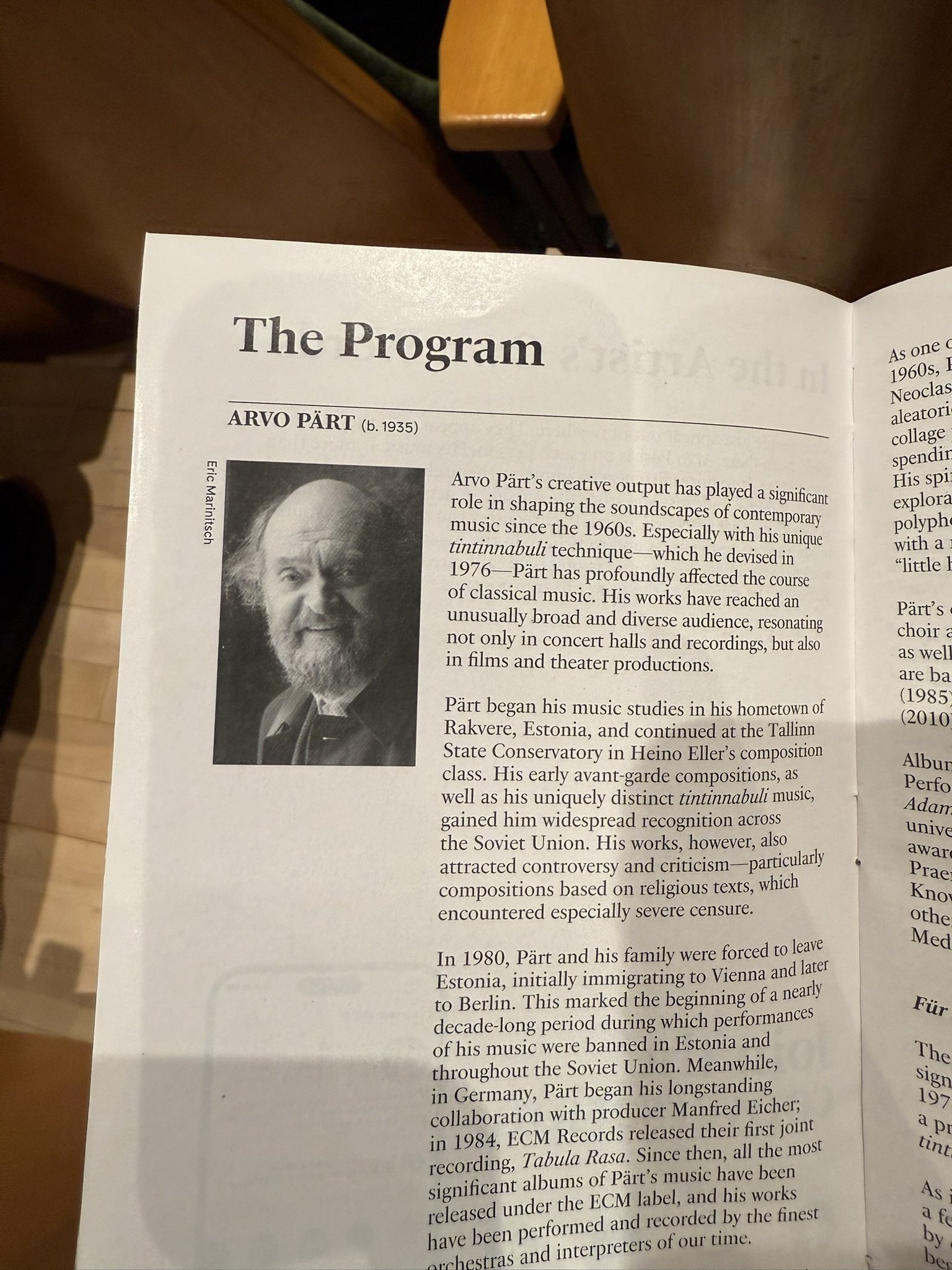
In Für Alina, Osokins's quiet piano tones resonated throughout the hall. This piece, written by Pärt after leaving collage and developing his tintinnabuli style during long periods of silence, seemed to mark the beginning of a new journey. Pärt reportedly wrote in the score that it should be performed while listening to one's inner voice. Osokins attuned himself to every sound in the space. Freedom within strict rules blended naturally, and various layers of awareness emerged from the silence. The audience's curiosity, stillness, and murmurs all became part of this soundscape, highlighting the invisible resonance that filled the hall. Even the roar of a passing subway train was absorbed and accepted as a fragment of time—this is the power of Pärt's tintinnabuli.
The next piece, Fratres, Latin for "brothers," was composed in 1977 and is one of Pärt's works that exemplify the principles of tintinnabuli music. Commissioned by the Salzburg Festival, it was reworked for violin and piano and dedicated to the Kremers, premiering in 1980. The arpeggios spiral like rotating drones. Kremer's tone was remarkable. He suppressed vibrato, allowing minimal oscillations only at the necessary moments, speaking through the instrument as if uttering words. In slower sections, his tone became even more distinct, resonating deeply with Pärt's sense of silence and prayer. It felt completely different from the Estonian performance I had heard previously—utterly raw yet profoundly expressive. Kremer coaxed vibrations and the subtle roughness of the strings, as if embedding the instrument’s very life into the hall. The rise and fall of notes created a delicate interplay of relaxation and tension, like watching a trail of smoke in silence. His playing conveyed deep emotion while maintaining careful control, capturing the innermost prayerful character of tintinnabuli.
In the Mozart Adagio, Dirvanauskaitė joined for a trio performance. Against the K.280 bass line, her tone was lush and rich, contrasting with Kremer's, yet equally precise and controlled. She drew the bow as if confirming the subtle resonances and phrasing of the recitative, engaging in dialogue with Mozart’s simple musical flow. The three musicians complemented each other’s sounds, weaving patterns and textures in the interplay of their tonal lines.
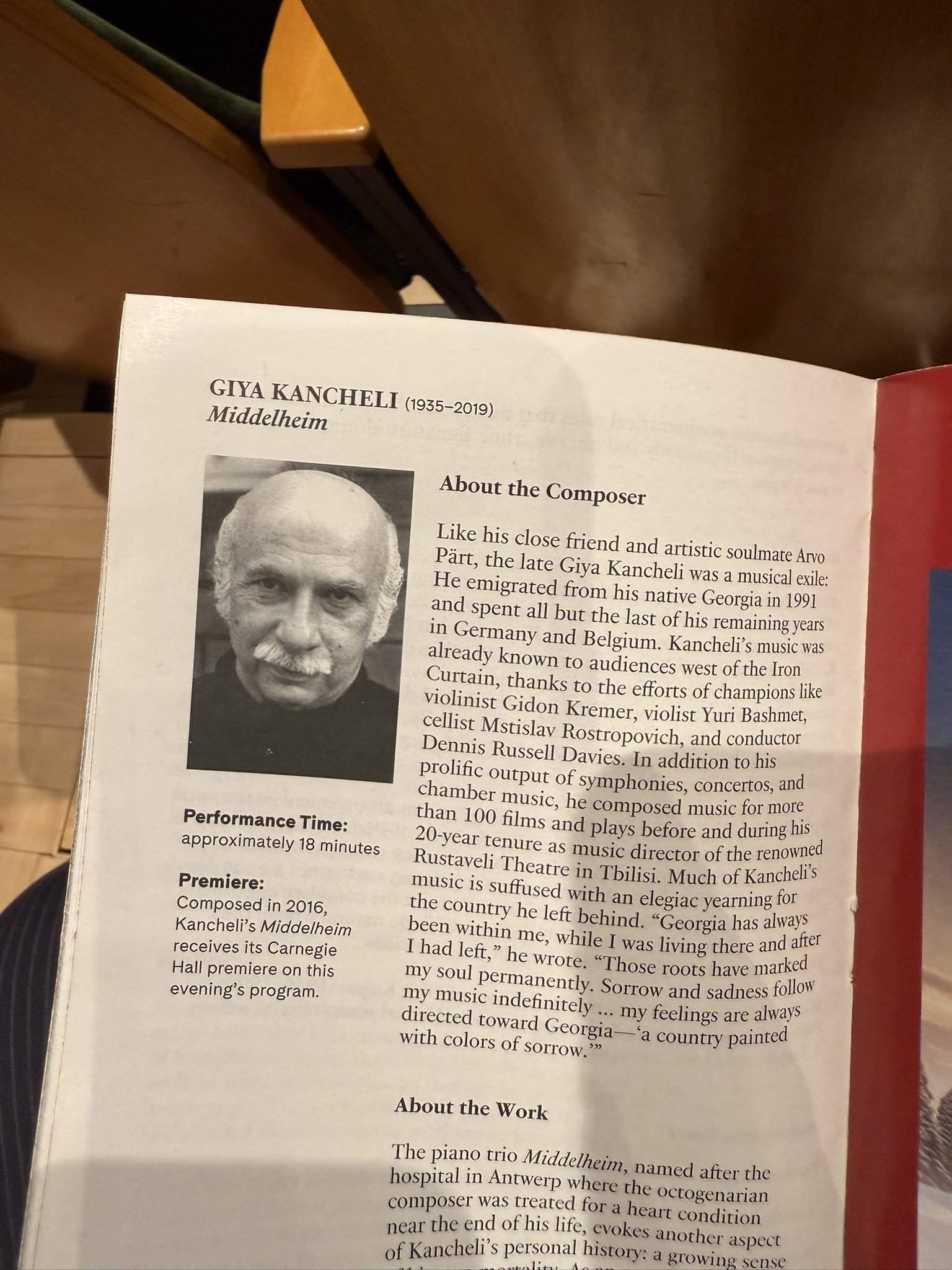
Kancheli, a Georgian composer from the same Soviet era as Pärt, wrote Middelheim in 2018 as a tribute to his doctor, sensing the end of his own life. The title refers to the hospital in Antwerp where he had been hospitalized. Kancheli explained that when composing, he did not focus on daily conflicts but sought to capture life from a higher perspective, like a bird in flight. Rather than reacting directly to small events and troubles, he composed with an overarching view of time and life, expressing a universal, profound spirit free from personal emotion. Like the previously performed pieces, the work emphasized pauses, resonance, and a narrative sense of time, though from a perspective distinct from Pärt's.
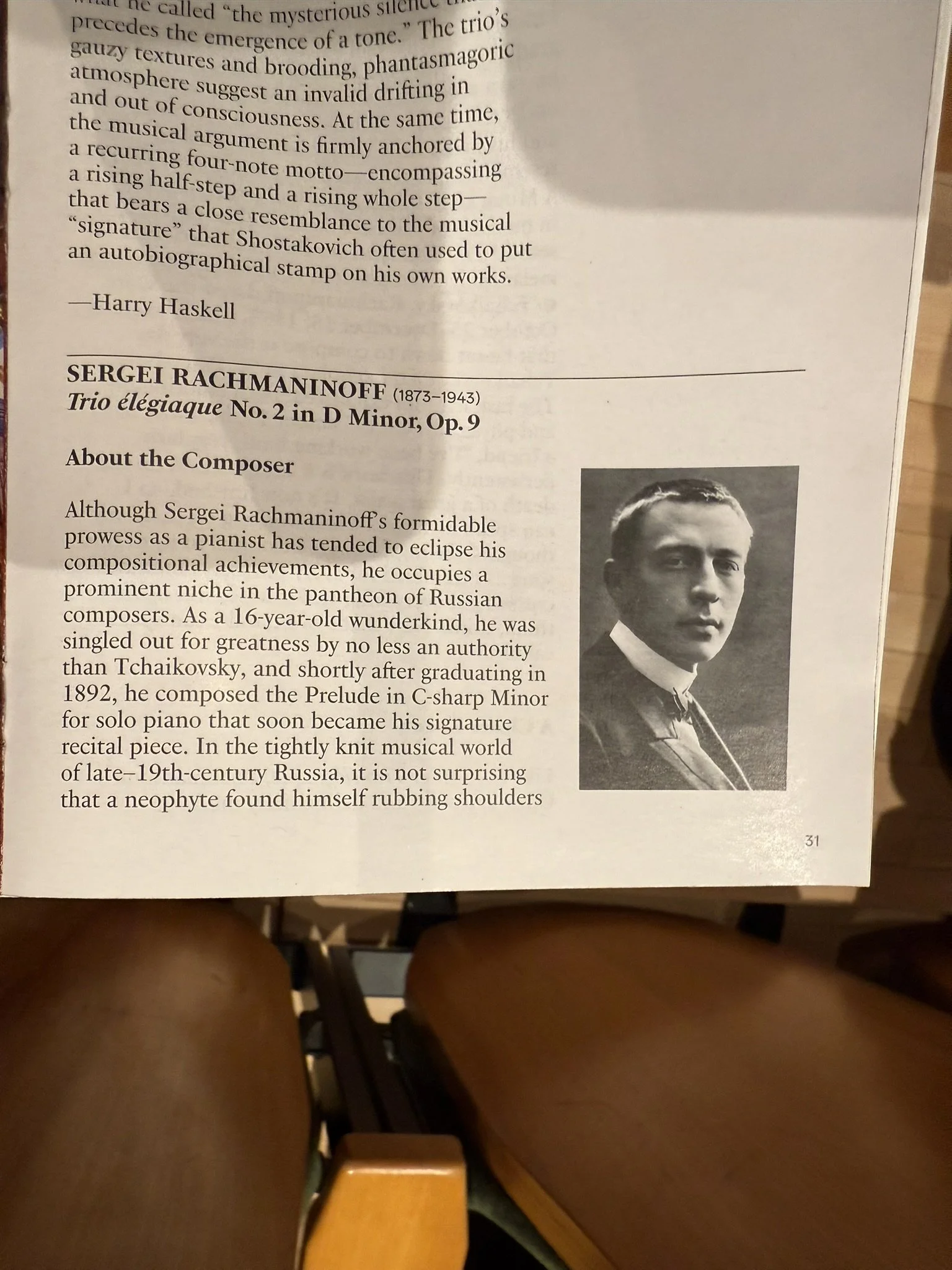
The second half of the concert featured Rachmaninoff. Their approach emphasized drawing out the materials present in the hall rather than showcasing technique. Music arose from within, not from external display. Their performance felt akin to the Marlboro Trio that Mitsuko Uchida gave last fall, creating sound and resonance from the very heart of the music.
Date: December 4, 2025
Venue: Zankel Hall
Artists:
- Gidon Kremer, Violin
- Giedrė Dirvanauskaitė, Cello
- Georgijs Osokins, Piano
Program:
- ARVO PÄRT Für Alina
- ARVO PÄRT Fratres
- ARVO PÄRT Mozart-Adagio
- KANCHELI Middelheim
- VALENTIN SILVESTROV Serenade for Solo Violin
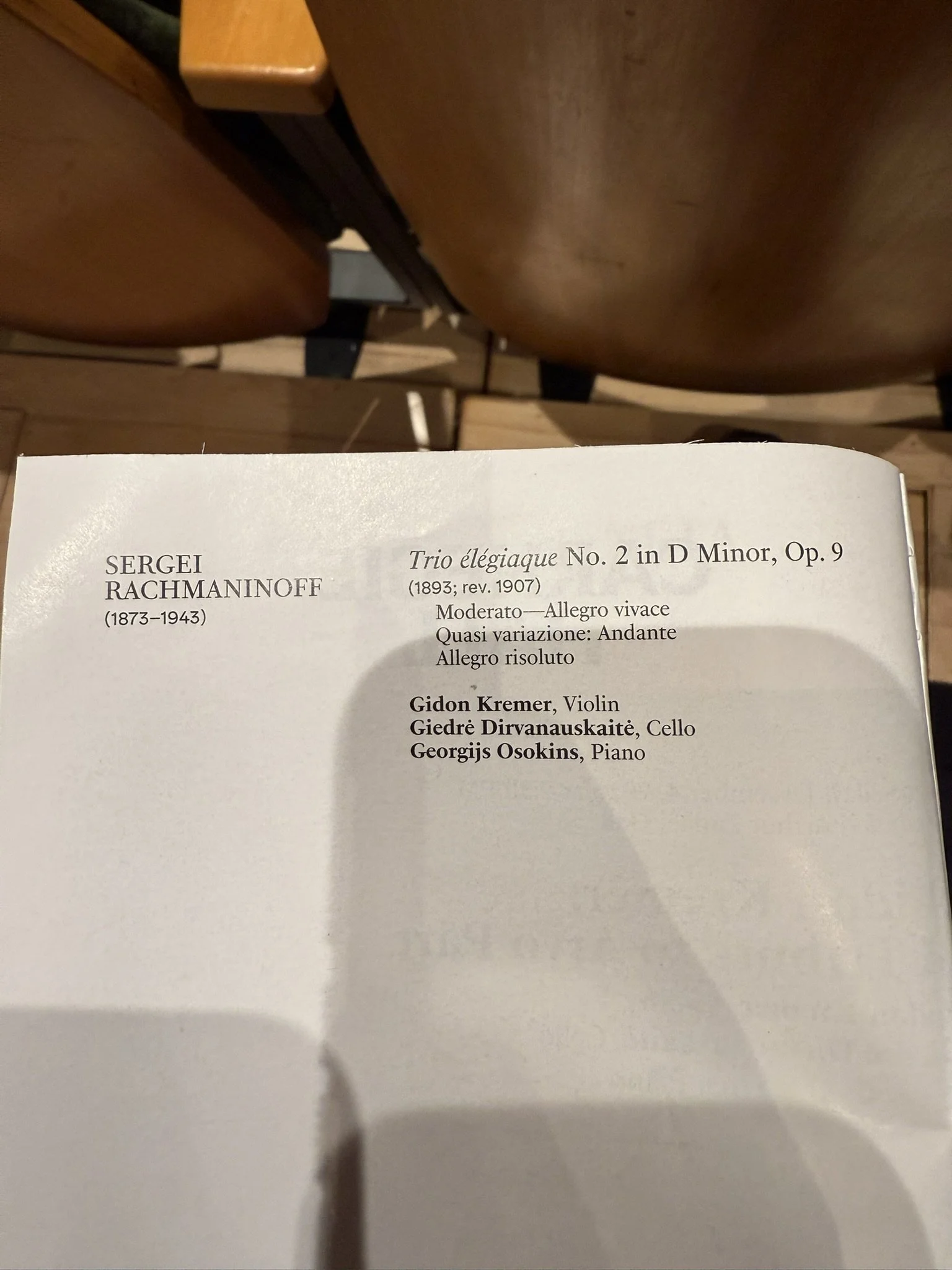
- RACHMANINOFF Trio élégiaque No. 2
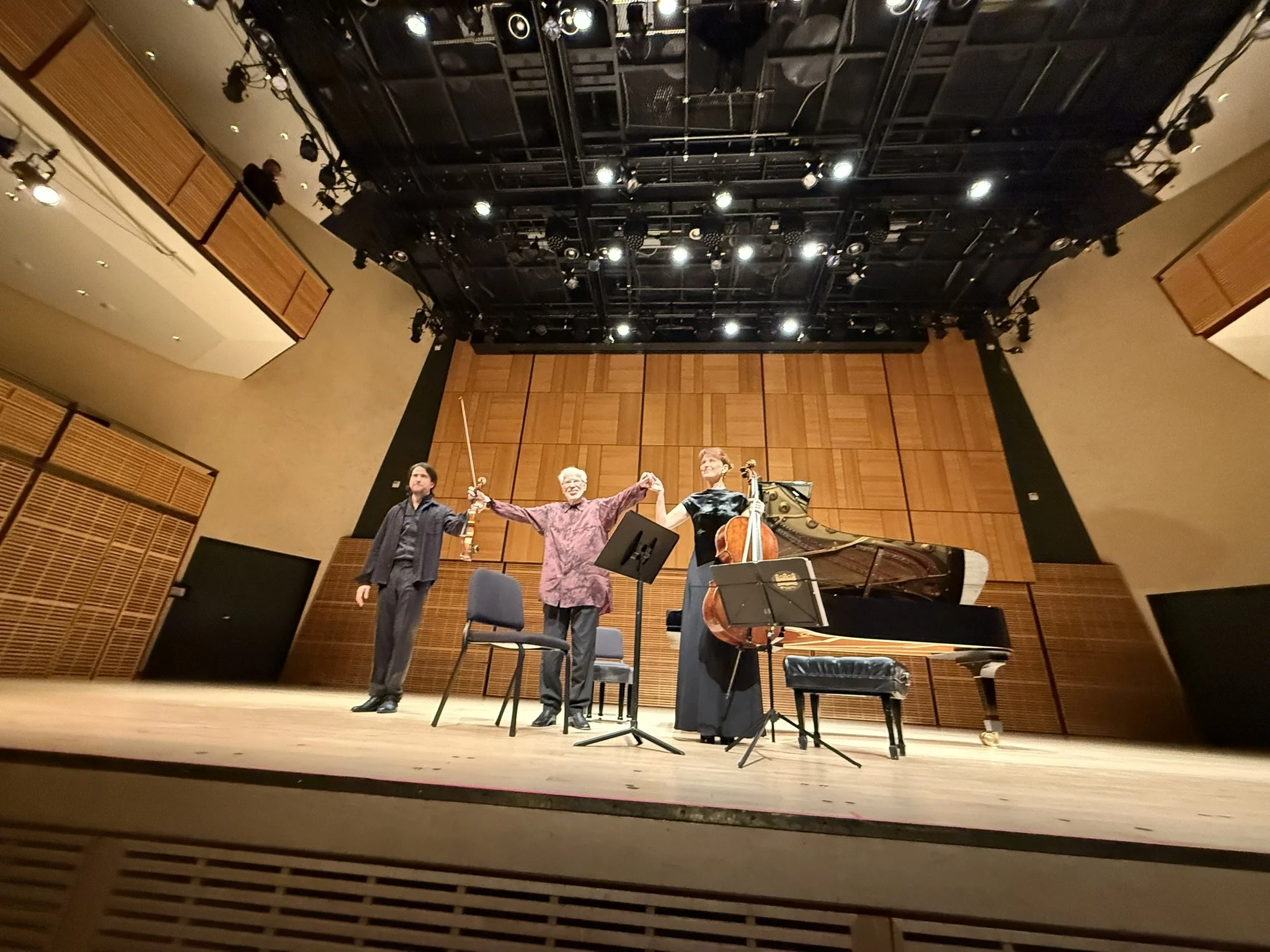


ギドン・クレーメル、ギードレ・ディルヴァナウスカイテ、ゲオルギス・オソーキンスの3人のラトビア出身の演奏家がザンケルにやってきた。
Für Alinaではオソキンスの静かなピアノの音色がザンケルに響く。ペルトがコラージュを離れ、長い沈黙からティンティナブリを開発し書いたこの曲から新しい旅が始まるようだ。ペルトは楽譜に自分の内なる声に耳を傾けながら演奏すると書いた。オソキンスが会場の全ての音に意識を傾けている。厳格なルールの内側にある自由が溶け合い、静寂の中にさまざまな意識を浮かび上がらせる。聴衆の興味や心の静けさ、ざわつきもその一部となり、ホールに満ちる目に見えない響きを際立たせる。そして横を通る地下鉄の轟音さえ包み込み、その時間の断片として受け入れてしまう。これがペルトのティンティナブリだ。
次の曲、フラトレスはラテン語で兄弟を意味する。1977年に作曲され、ティンティナブリ音楽の原理を理解したペルト作品の数々の一つ。ザルツブルク音楽祭の委嘱によりヴァイオリンとピアノのために改めて作曲され、クレーメル夫妻に献呈され1980年に初演された。分散和音がドローンが旋回するように螺旋を描いていく。クレーメルの音色がすごかった。ヴィブラートを抑え、必要な瞬間だけ最小限の揺れで言葉のように語る。 ゆっくりなところだと音色はもっとはっきりする。ペルトの静寂と祈りの感覚と深く共鳴している。先日聴いたエストニアの演奏とは全然ちがう。とにかく生々しい。クレーメルは振動や弦のざらつきまで響かせ、楽器の生々しい音色をザンケルに染み込ませているようだった。音の立ち上がりと消えていく音が静寂の中でまるで煙の筋を眺めているようなリラックスと緊張感をつくるセンスが際立った。感情をコントロールしながら、深く訴える情緒を持つ特別な音だった。ティンティナブリの声を上げない祈りのような特徴をクレーメルはその奥を捉えている。
Mozart-Adagio ではGiedrė Dirvanauskaitėのチェロが入りトリオで演奏した。K280のべースにDirvanauskaitėの音色はクレーメルと全然違う。艶があってとても豊に響きもするが、クレーメルのようにとてもよくコントロールされていて、モーツアルトのシンプルな流れと対話するように、レチタティーボの響きや位置を確かめるように弓を引く。クレーメルとオソーキンスと3人で響きを引き合うような、お互いの音色の線の影に模様をつけていくような演奏だった。
ペルトと同じソビエト時代のグルジアの作曲家、カンチェリは2018年に自分の死期を感じながら医師への感謝としてMiddelheimを書いた。タイトルは入院していたアントワープの病院の名前。彼は音楽を作曲する際、人生の日々の衝突に焦点を当てるのではなく、高みから、ある角度から、飛んでいる鳥のように捉えたいと語っている。人生の小さな出来事やトラブルに直接反応するのではなく、時間や人生全体を見渡すような視点で音楽を作ることを意図していた。個人の感情にとらわれず、普遍で深い精神を表現している。ここまで演奏された曲同様。間と響きと、語りの時間。しかし、ペルトとは視点が違う。
後半はラフマニノフを演奏した。彼らの音楽に対するスタンスが、他の演奏家と違うアプローチを大切にして長い間演奏活動をしていると感じた。場にある素材を引き出す演奏。プレイを魅せるのではない。外から作るのではない。内から生まれる音色と響きが音楽を作る。彼らの演奏は内田光子が昨年の秋に行ったマルボロのトリオの演奏に近かった。