
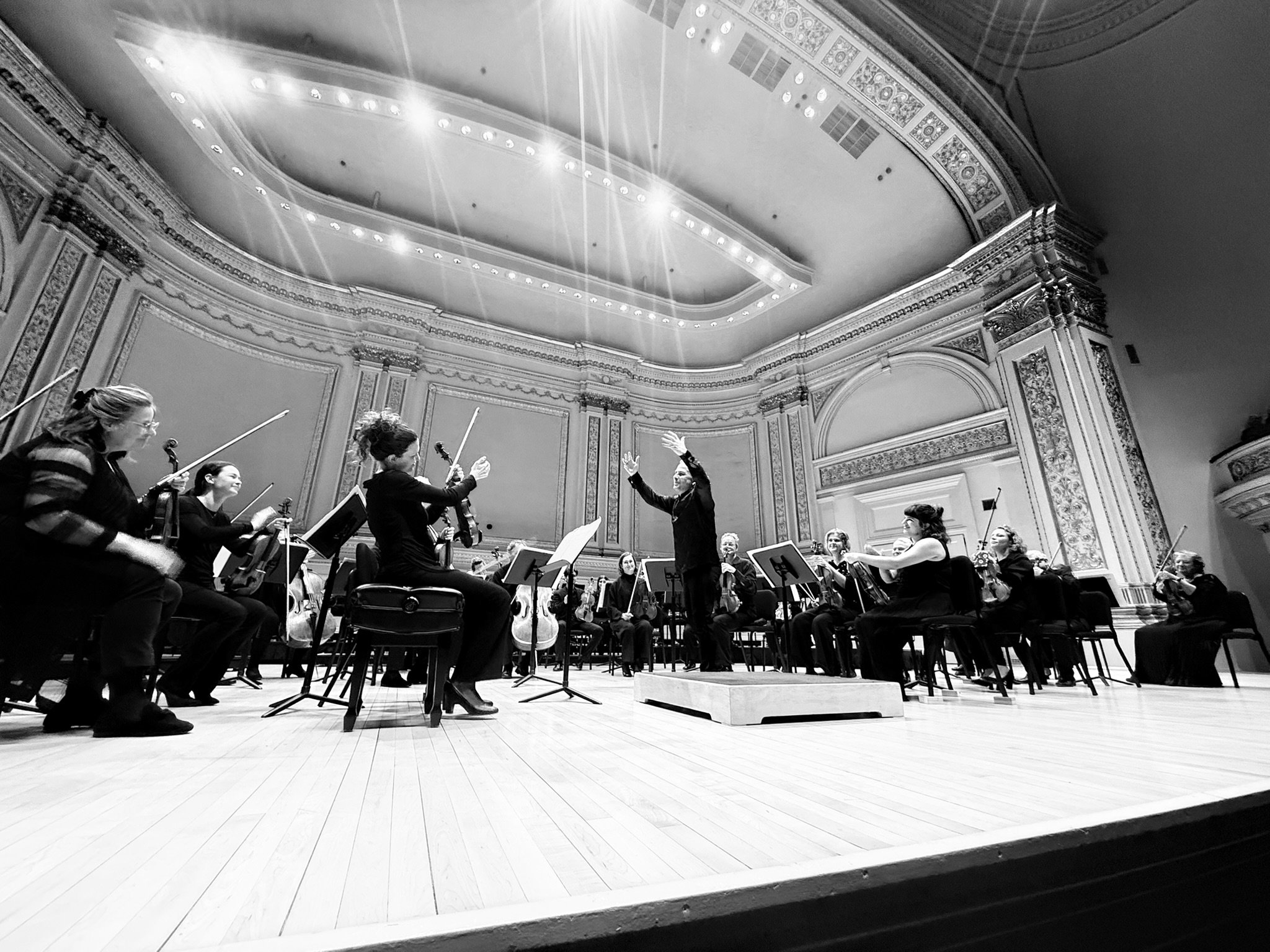
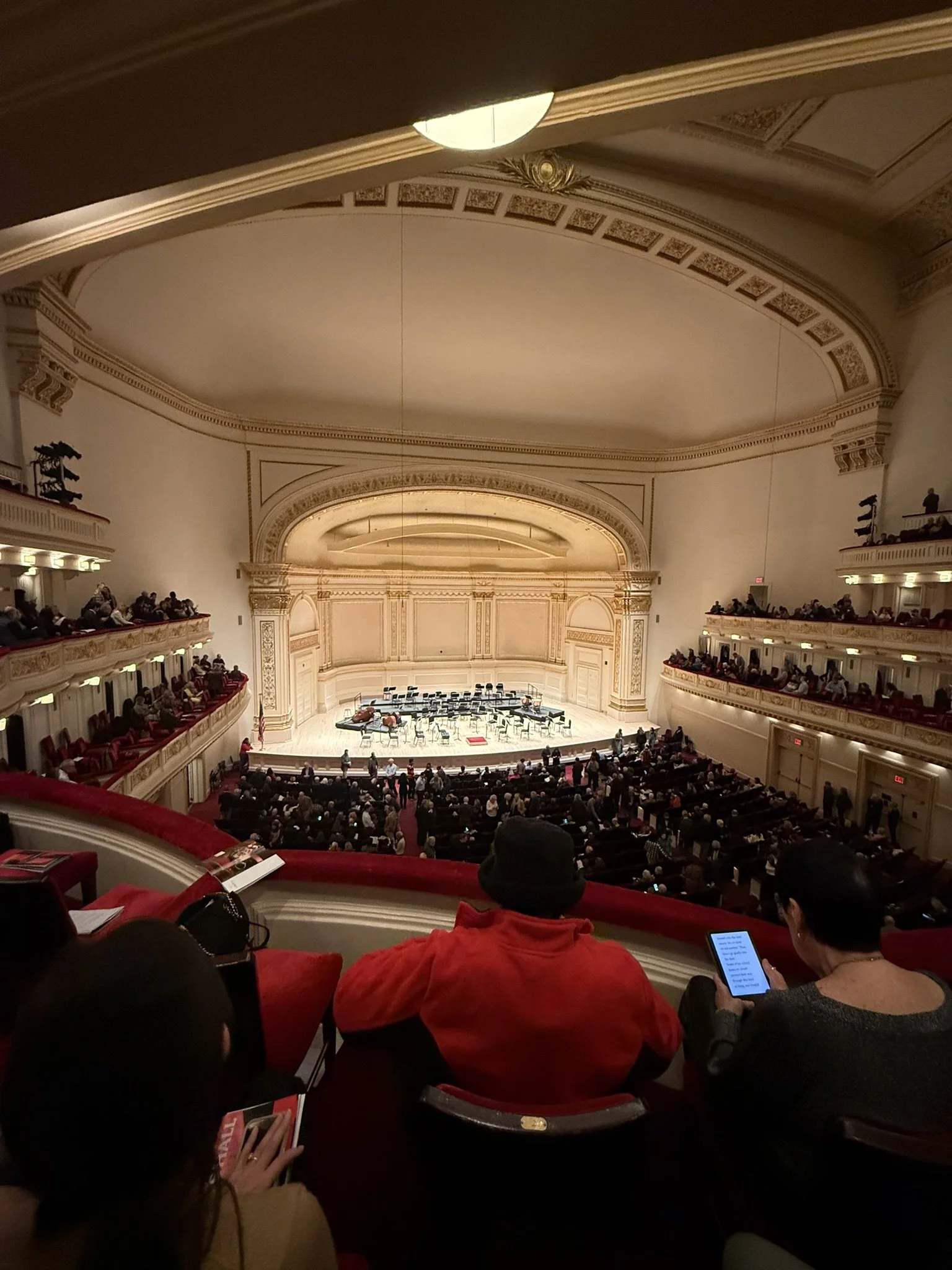
Chamber Orchestra of Europe and Yannick Nézet-Séguin's All Brahms at Carnegie Hall on December 9, 2025.
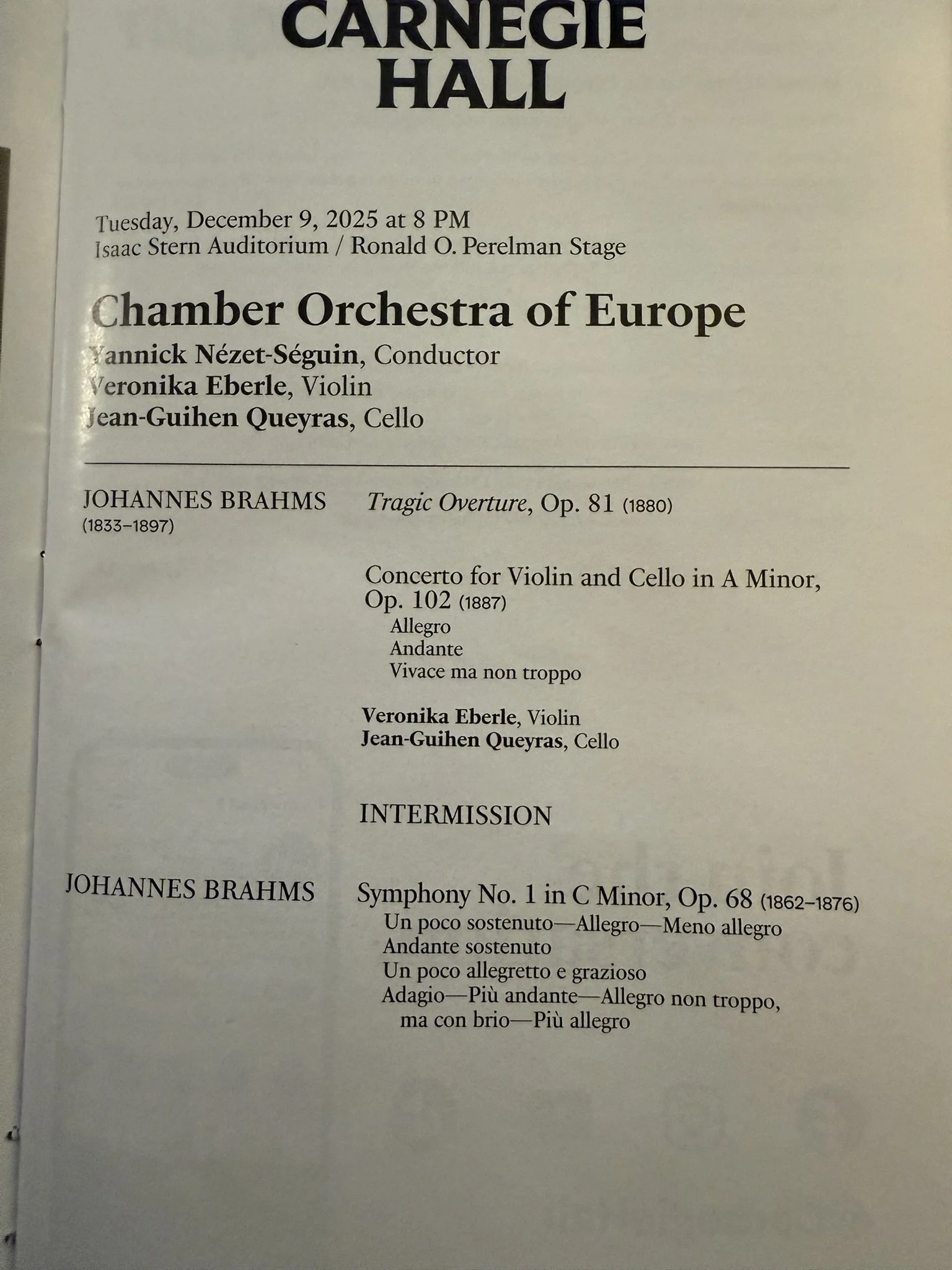
Chamber Orchestra of Europe
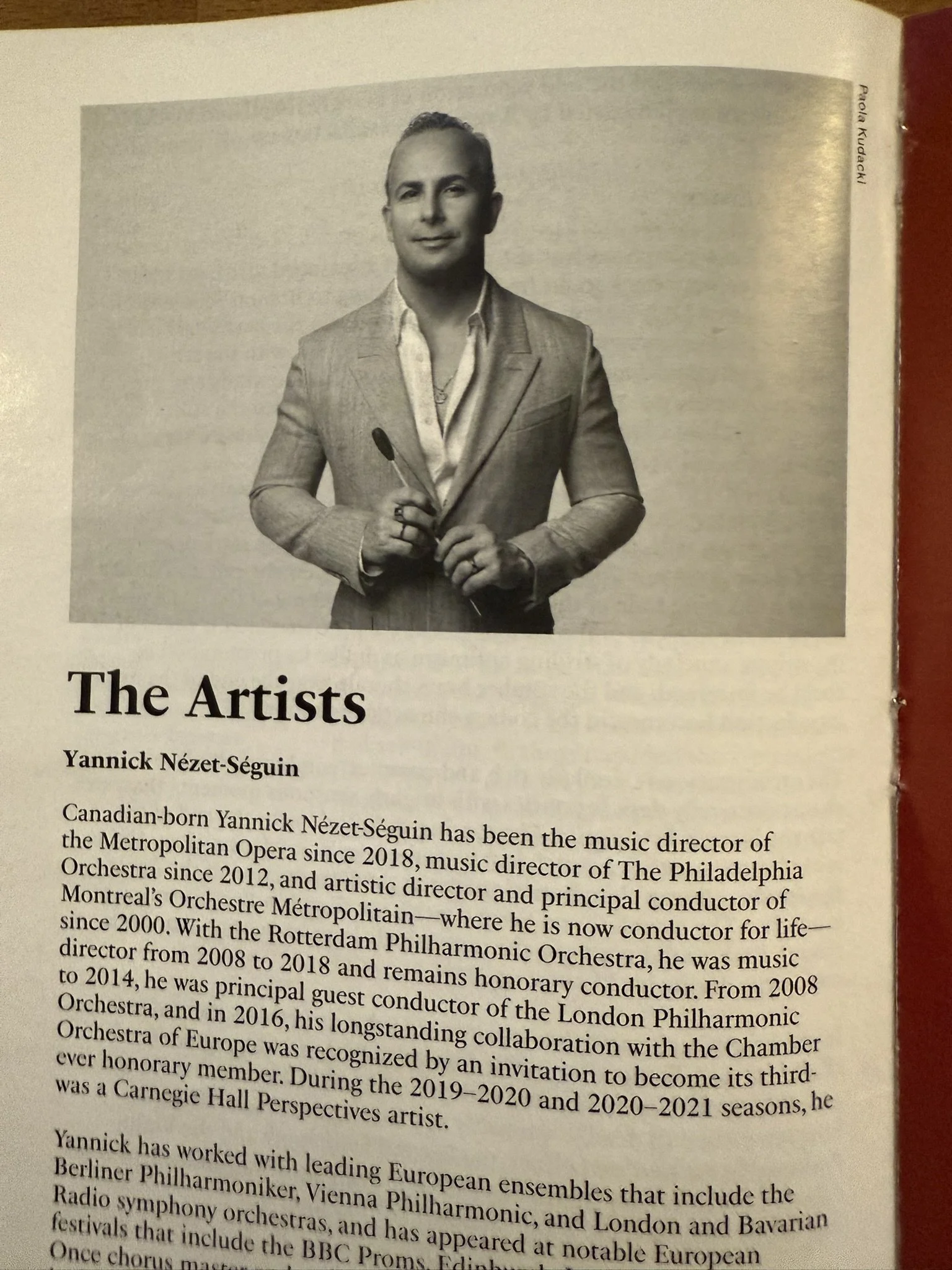
Yannick Nézet-Séguin, Conductor
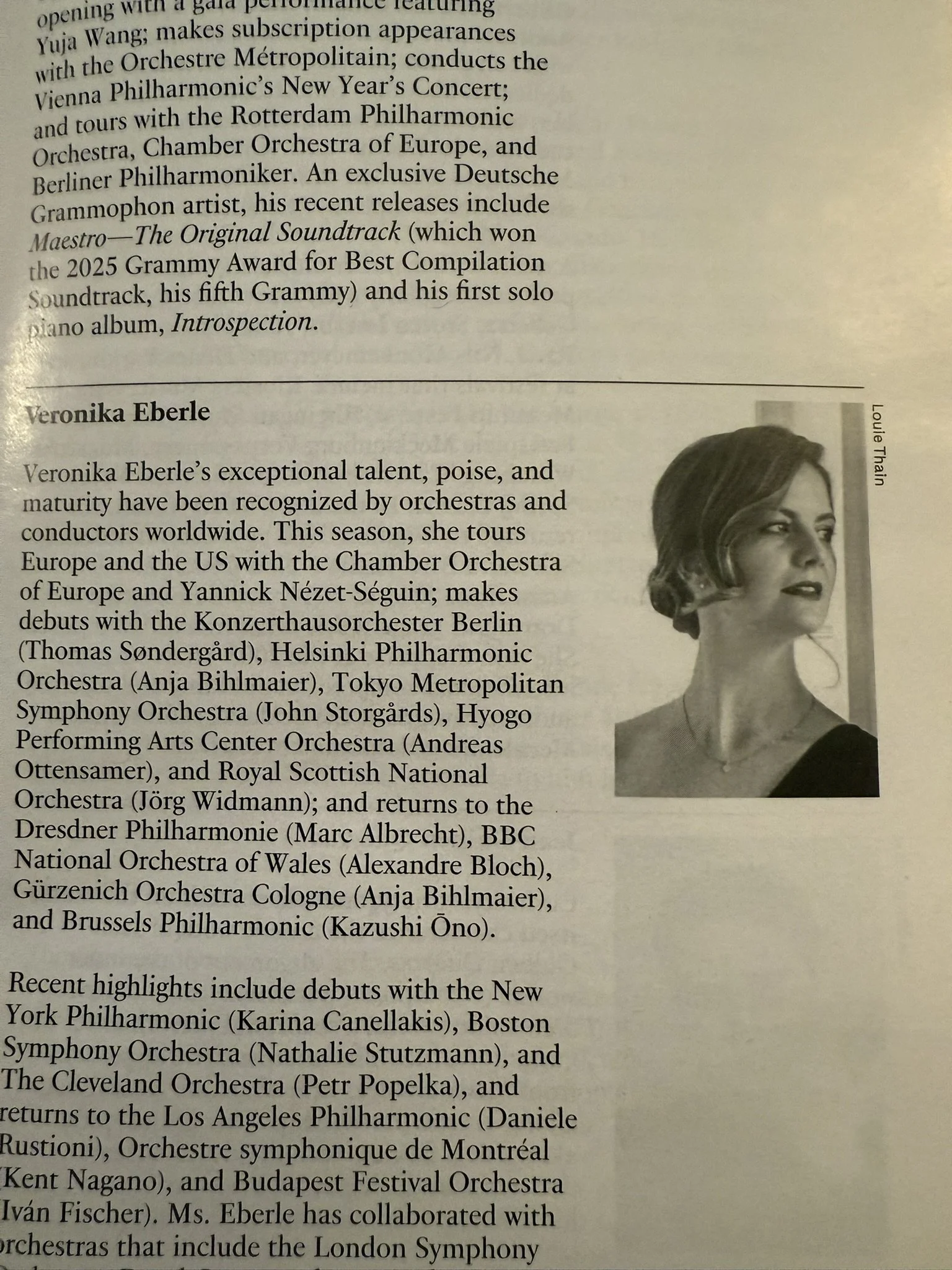
Veronika Eberle, Violin
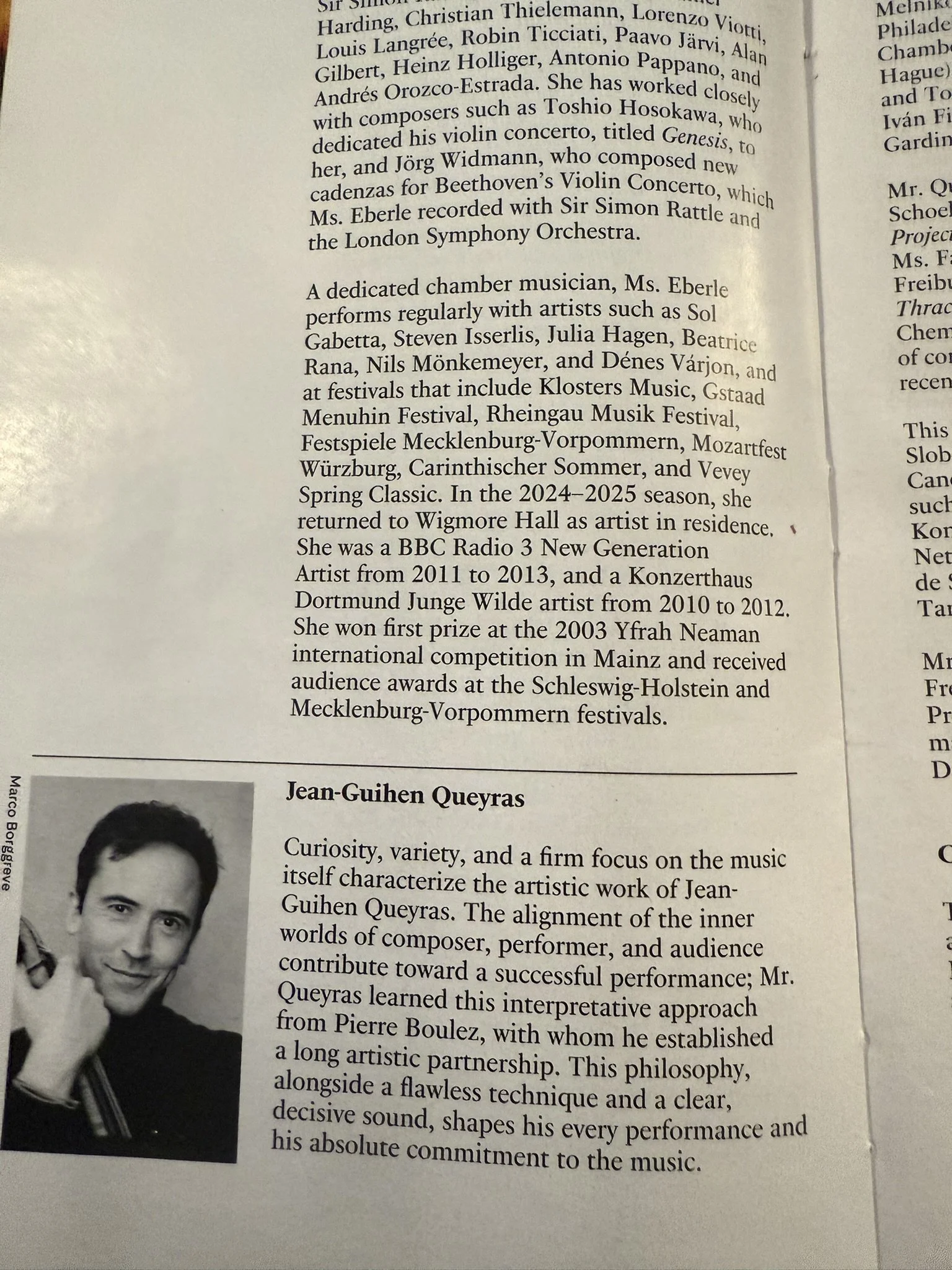
Jean-Guihen Queyras, Cello
ALL-BRAHMS PROGRAM
Tragic Overture
Double Concerto
Symphony No. 1
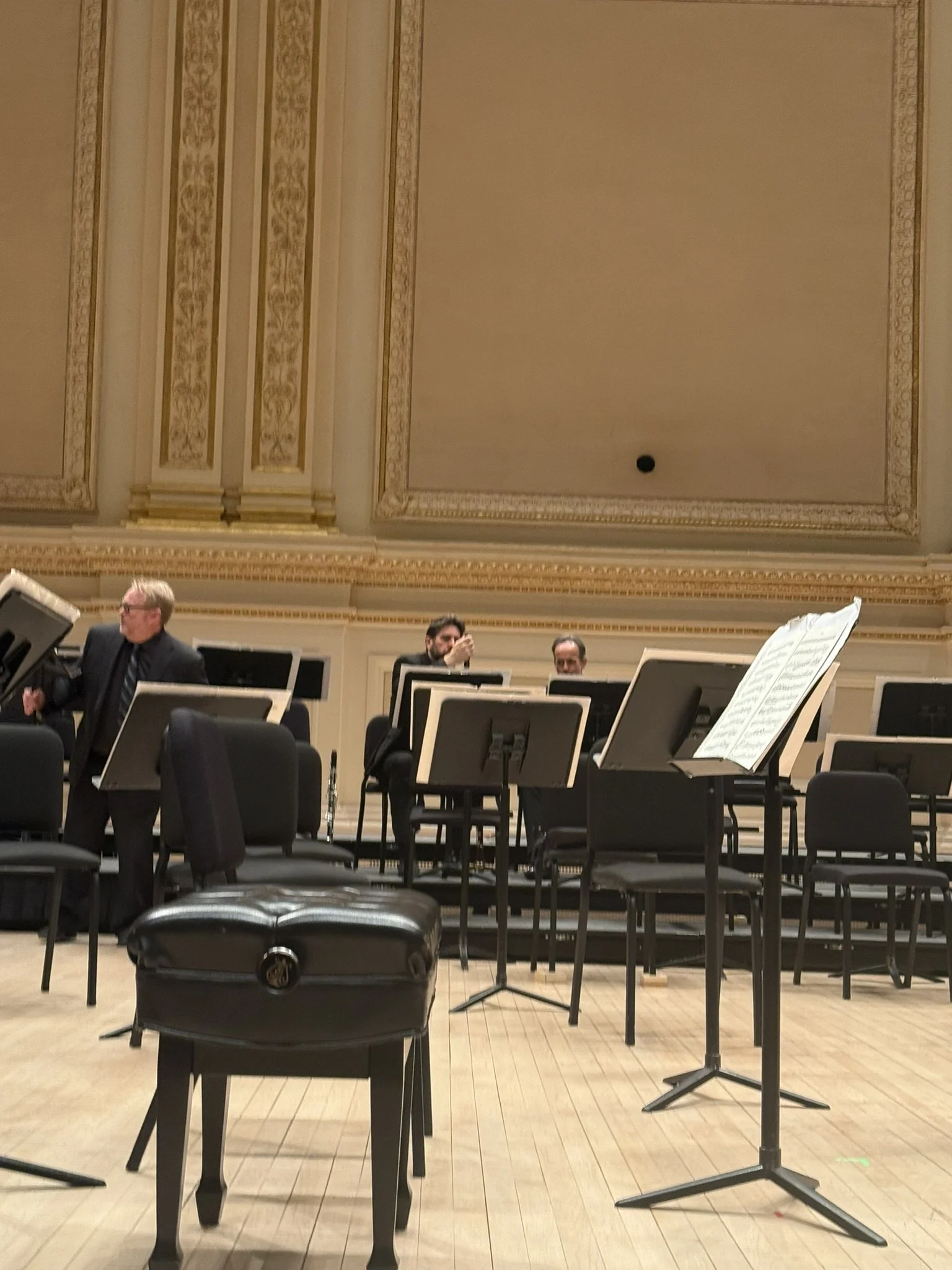
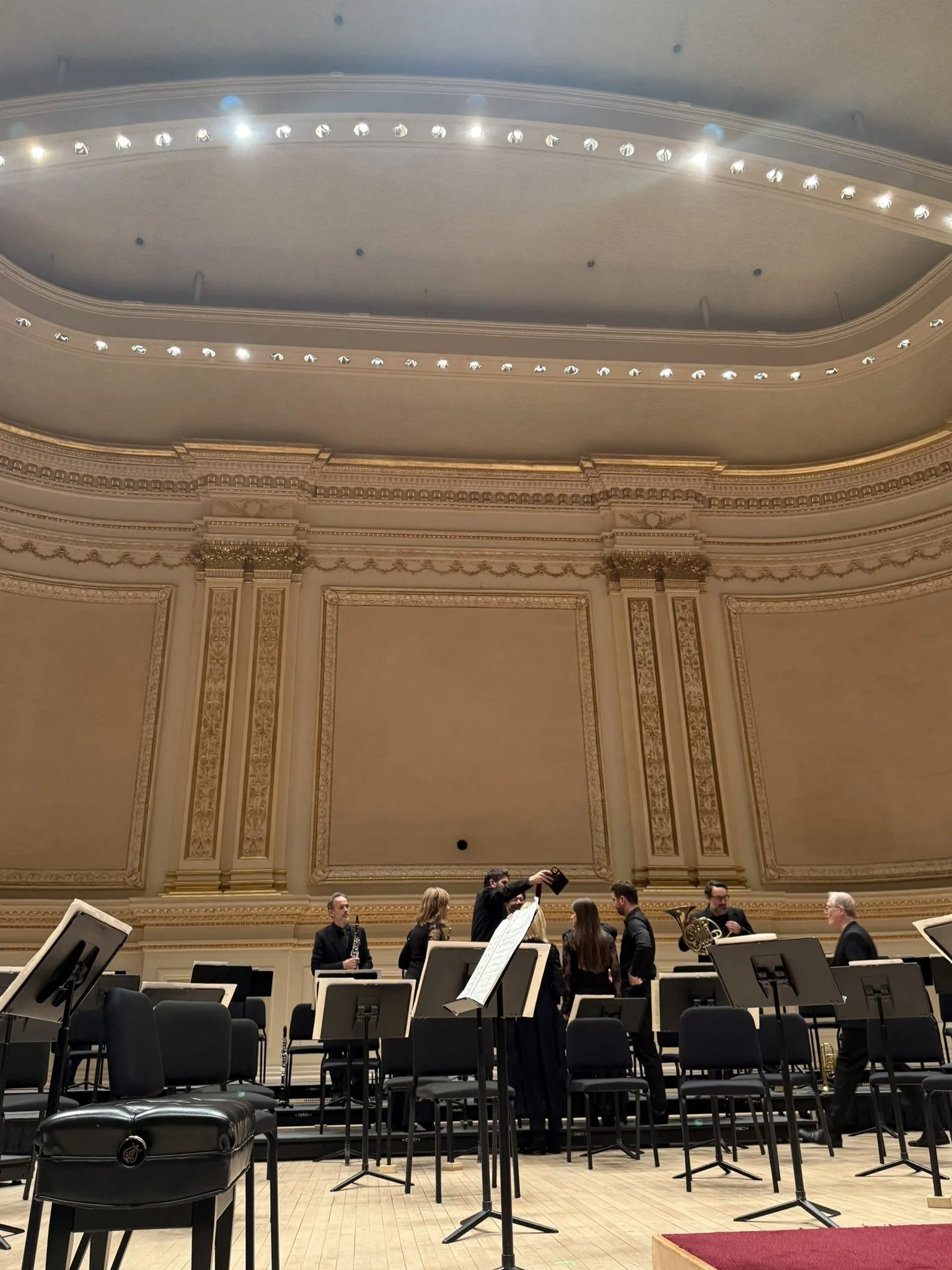
The concert began with the Tragic Overture, which premiered in 1880. Brahms composed this piece in his 50s and called it a "weeping overture," and with the powerful opening two chords, they shed the tragic nature. The sound reminded me of the Orchestre National de France, yet their timbres weren't blended. Each musician understood their sonorities and played freely. The sound was more raw, and the timbres weren't blended, so every single note was distinguishable; yet the tempo and rhythmic drive were strongly unified. Short motifs accumulated energy and then exploded. This process was repeated many times, continuously building tension and creating an inescapable structure of tragedy. However, their performance suggested that tragedy is something to be overcome; the extreme leaps were full of energy, and the strings' higher register sounded like a glimmer of hope piercing through the tragedy, like a saving angel, a goddess winning freedom through sound. Carnegie Hall's acoustics vividly reflected the structure and essence of the work more than the performance itself, making it clear that everyone was working towards a single goal in their own way. In the middle section, the brass drew soft leaps on a membrane of tied notes; the flute appeared like a ray of light; the oboe offered a final gleam; and the strings brought a warm, gentle breeze, but eventually the music returned to a rigorous stacking of sounds. They possessed the sure technique and will to overcome any tragedy by integrating their individualities, understanding one another, and allowing each to express themselves fully. This small orchestra, composed of 3 double basses and 9 violins across Europe, embodied under Yannick's direction all the elements that Brahms cherished in his works: Mozart's unconscious and irregular rhythms, the expansion and contraction of phrases. And the clear space, meticulous attention to detail in every structure, respect for form, and a sense of frugality that nonetheless yielded richness.
The second piece, the Double Concerto, Brahms's last orchestral work in 1886, was written when he wrote to his friend Joachim that he couldn't resist composing a concerto for violin and cello. He had been inspired by hearing Dvořák's Cello Concerto, and it is also said that this reconciled him with Joachim, who had been jealous for many years because of his wife's affection for Brahms. However, it transcends a private message, rigorously depicting the relationship between the individual and the collective. In this piece, the soloists are part of the orchestral ensemble, employing techniques such as imitation, counterpoint, call-and-response, melodic accompaniment, and retrograde motion to create a complex tapestry. The solo parts emerge from within the orchestra, sometimes leading, sometimes supporting, sometimes being pulled back; rather than Romantic self-expression, there is dialogue and tension, compromise and reassertion. The unintegrated timbres and bare voices were even more pronounced in this piece. The violin and cello do not blend; their timbres do not merge, but run parallel, maintaining their differences. There is a Brahmsian ethic that reconciliation is not assimilation. Frei aber froh (Free but joyful). Jean-Guihen Queyras, also a member of the Arcanto Quartet, did not exaggerate emotions, not playing sadly because the music was sad, or aggressively because it was intense. He continued to reveal the message hidden within Brahms. Veronika Eberle, the violinist discovered by Rattle at the age of 12, exhibited an even greater degree of restraint. She quietly and honestly conveyed the discord with a natural tone. It was like watching a couple who had been together for many years conclude their separation. Veronika's performance was restrained for 98% of the approximately 35-minute piece. She wore a beautiful red dress befitting Carnegie Hall, and her playing was exact and consistently engaging in a dialogue. There were only two moments where she unleashed a tremendous brilliance. The second movement was a time of silently acknowledging each other. In the calm tempo of the Andante, there were times when the two solos had completely different sounds, and other times when they extended each other's melodies. The Hungarian Dance theme, used for Joachim, was light and propulsive, yet restrained, maintaining tension and moving forward until the very end. It was a progression based on agreement, not necessarily conviction. That is the conclusion of this piece. The tragedy is not resolved, but the way the relationship, the idea that is so close to Schonberg's works.
After the intermission, Brahms' Symphony No. 1 was a close dialogue between Yannick and the orchestra. The expansion and contraction of the themes were more drawn out than in the Tragic Overture, and the dynamic development required ample space. Still, they're in tempo, bouncing beyond those Brahms difficulties, published in 1876. According to a friend's testimony, he carried a notebook containing ideas for the symphony for over 10 years. Beethoven's influence is evident in the whole orchestral passage in C major in the fourth movement. The day after this performance, I experienced the same program in Philadelphia, and when this section began, the person next to me whispered, "Beethoven." Brahms’s liberté from Beethoven. However, their Brahms at Carnegie Hall resonated more with my heart and mind than with my emotions. This was because they strived to convey Brahms' intentions in every note, with interest, courage, and a free spirit, as a resolution and a message to the audience. All the sounds arose and faded away there. Now, the shadow of that resonance remains in my heart. That shadow remains in my life. And Yannick and their recordings can be heard anywhere.
This program features a single artist, exploring their ideas and spirit by delving deeply into harmony, motifs, and structure. Unlike recent programs where new pieces are used as warm-ups but don't contribute meaningfully to the main work, this program embodies Brahms' motto of achieving professional excellence with freedom and joy, without the complacency that can lead to overconfidence in young performers. It felt like a culmination of Yannick's career as he reached his 50s in Carnegie Hall.
*Dedicate this article to my friend, Kinoshita.
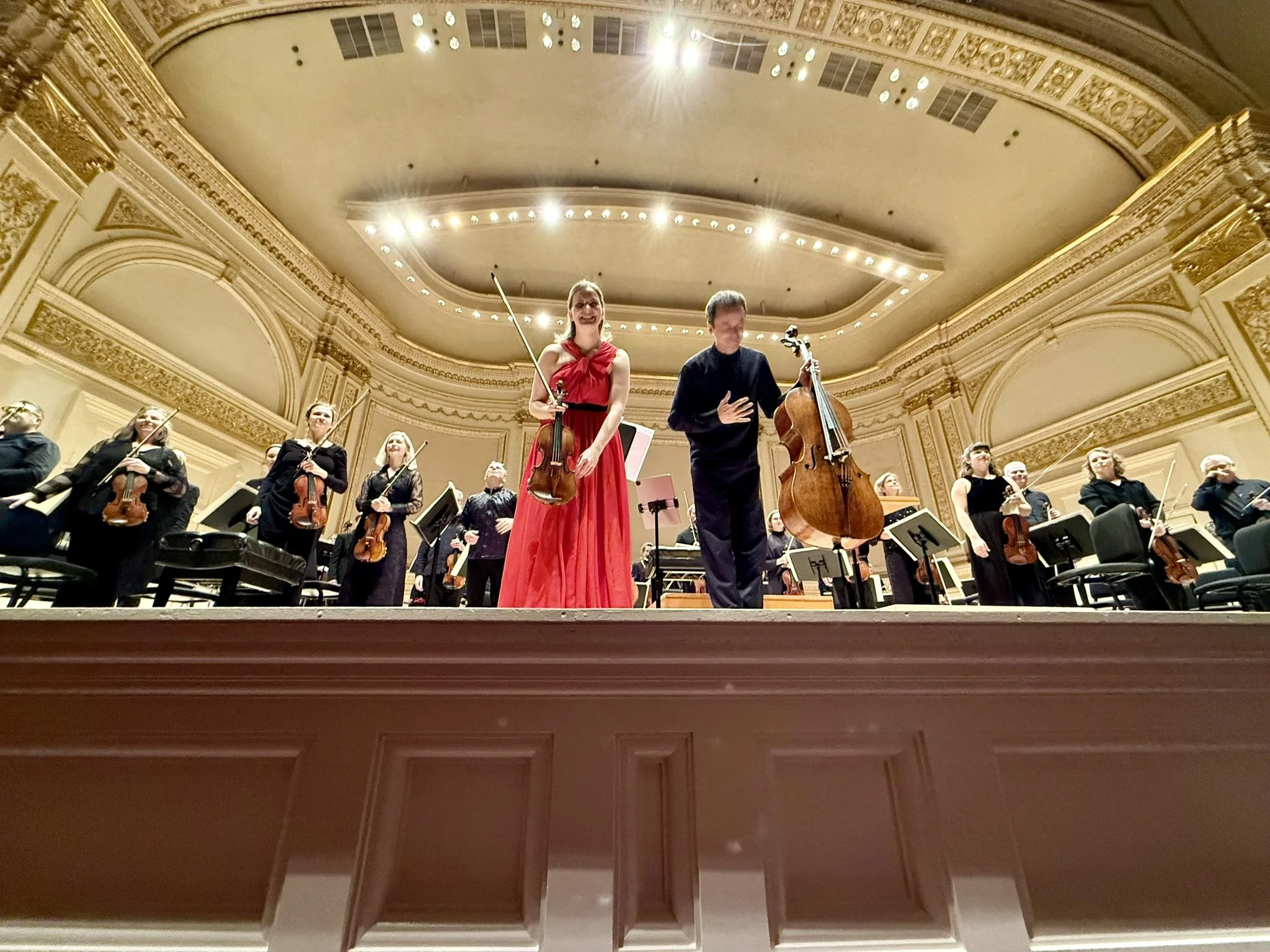
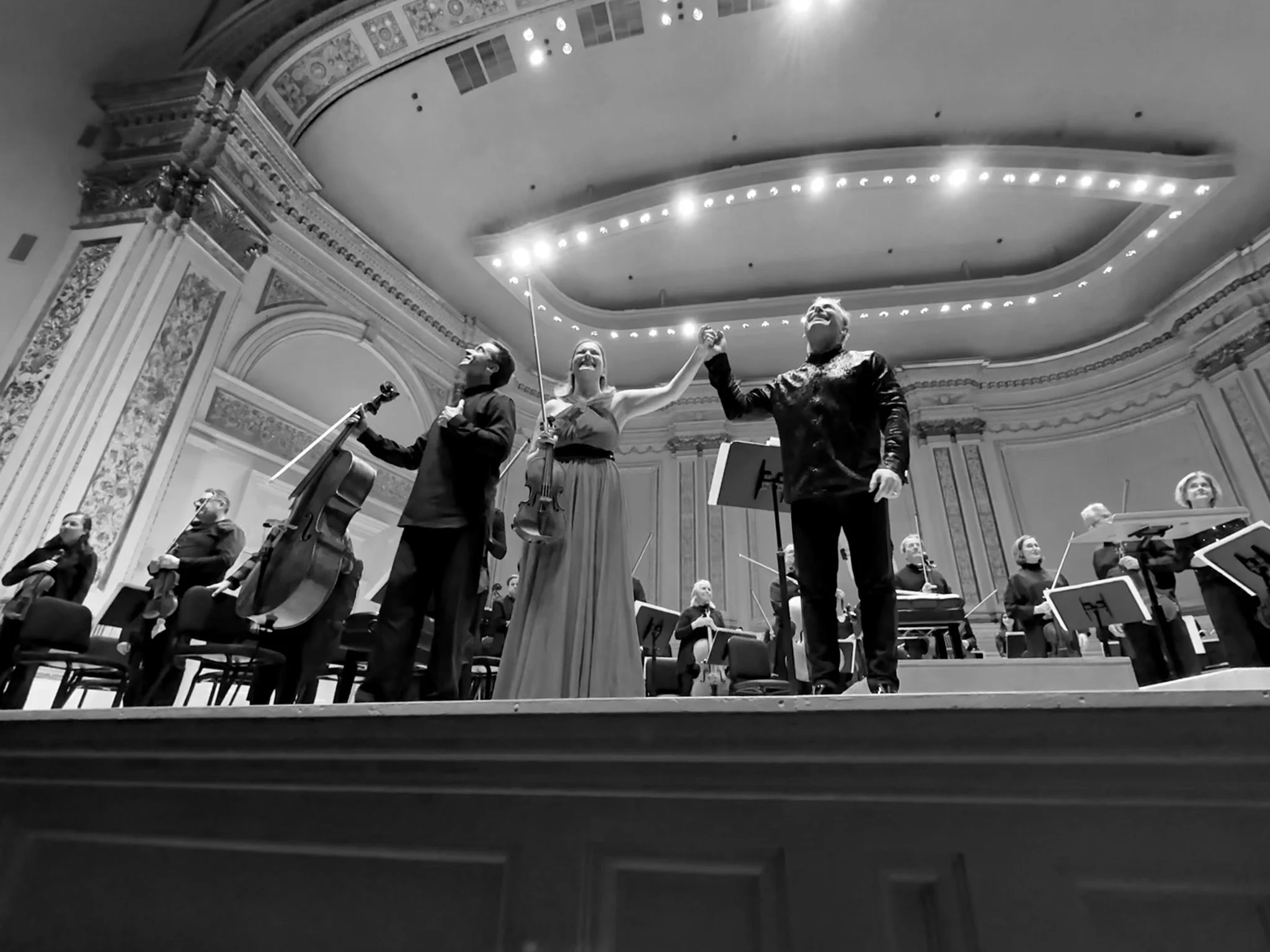
The one photo before, two solos were front, but Velonica took Yannick’s hand to bring him, and this is three together. Bravi Brahms squad.
ヨーロッパ室内管弦楽団とヤニック・ネゼ=セガンのブラームスを12.9.2025、カーネギーホールで聴いた。
1880年初演の悲劇的序曲から始まった。ブラームスはこの曲を50代で作曲し、泣く序曲と呼んだ。彼らは冒頭の強烈な二打で、この世界が悲劇であることを認める。フランス国立管弦楽団を思わせる響き、しかし彼らの音色は統合されず、それぞれのソノリテで自由に働いている。音はより裸で各声部の最後列のスタンドの音まで聴き分けられるほど音色はブレンドされていないのに、テンポとリズムの推進力は強固に統合されている。短い動機がエネルギーを溜めやがて爆発する。その過程が何度も繰り返され緊張は蓄積され続け、逃げ場のない悲劇の構造を産む。しかし、彼らの演奏は、まるで悲劇は乗り越えるためにあるというように、跳躍はエネルギーに満たされ、ヴァイオリンの高音域は、悲劇を突き抜ける希望の輝きのように響き、それはまるで救済のエンゲル。自由を音で勝ち取る女神のようだ。カーネギー・ホールのアコースティックは、演奏より作品の構造と本質を鮮やかに写し、全員がそれぞれの方法で、一つのゴールに向かって働いていることがよく聴こえる。中間部はタイで結ばれた音の膜に、ブラスが柔らかな跳躍を描き、フルートが光の筋のように現れ、オーボエが最後の輝きを差し出すと、弦のアルコが暖かでやさしい風を運んでくるが、やがて音楽は再び厳格な音の積み上げ始める。彼らは、どんな悲劇でも、個性の統合で乗り越える確実な技術と意思を持っている。しかも互いにそれを理解しそれぞれが自分を爆発させる。コントラバス3と1stヴァイオリン9のヨーロッパから集まった音楽家で結成されたこのプチオーケストラは、ブラームスが作品の中で大切にしていた、モーツアルトの無意識で不規則な拍節、フレーズの拡大と縮小の他、明瞭なスペースの確保、どんな構造も細部まで仕上げることを大事にする、そして、節約、それでいて豊かであること、これら全てをヤニックの指揮のもと確実に実践されていった。
2曲目、二重協奏曲はブラームスの最後の管弦楽作品で1886年に友人ヨアヒムに、ヴァイオリンとチェロのための協奏曲の楽想を我慢できないと書き送っている。彼はドボルザークのチェロコンチェルトを聴き、自分も書きたい衝動に駆られたらしいが、ヨアヒムが妻がブラームスに好意を抱いていると嫉妬し、長年疎遠だったため和解を意図して書いたそうだ。しかし、それは私的なメッセージを超え、個と集団の関係を厳格に描いている。この曲ではソリストたちはオーケストラ・アンサンブルの一部で、模倣、競争、コール・アンド・レスポンス、メロディー伴奏、そして逆行といった技法を駆使し複雑なタペストリーを描く。独奏はオーケストラの内部から立ち上がる。ときに主導し、支え、引き戻され、ロマン派の自己表出より、対話と緊張、譲歩と再主張がある。統合されない音色と裸の声部は、この曲ではさらに露骨だった。ヴァイオリンとチェロはブレンドされない。音色は溶け合わず、違いを保ったまま並走する。和解とは同一化ではないブラームスの倫理がある。Frei aber froh。チェロのアルカント・クァルテットのメンバーでもある、ジャン=ギアン・ケラス(Jean-Guihen Queyras)は感情を誇張せず、悲しいから悲しそうに弾いたり、激しいから激しく煽ったりしない。ブラームスの内部に秘められたメッセージをひたすら示し続ける。12歳でラトルに見いだされたバイオリンのヴェロニカ・エーベルレ(Veronika Eberle)はさらにその上を行く控えめさ。静かに不仲を自然な音色で誠実に語る。長年連れ添って別れることに至った夫婦が結論を導く過程を見ているようだ。ヴェロニカの演奏は約35分の演奏の内98%控えめだった。彼女はカーネギーにふさわしい赤いドレスを纏いとても美しいが、とても確実でずっと対話している。2か所だけ物凄い輝きを放った場所があった。2楽章は互いの存在を黙って認め合う時間。アンダンテの落ち着いたテンポの中で、2つのソロがそれぞれ全く違う響きの時間もあれば、お互いがメロディの延長となる。ヨアヒムのため、ハンガリアン舞曲のテーマが用いられているが、軽やかな推進力はあるが、抑制され、最後まで緊張がほどけず前に進む。納得ではなく合意して前進する。それがこの曲の結論だ。悲劇は解決されない。しかし、関係の持ち方は選べる。ブラームス晩年のこの静かな強さは、派手さとは無縁だが、極めて現代的だ。
休憩後はブラームスの交響曲1番。ヤニックとヨーロッパ室内の緊密な対話。悲劇的序曲よりもテーマの拡大と縮小は引き伸ばされて、ダイナミクスの展開も沢山のスペースを要する。ブラームスが1876年に発表した。友人の証言では10年以上、アイディアを書いたノートを放さず持ち歩いていたそうだ。ベートーベンの足音は、4楽章のハ長調の総奏で示される。この公演の翌日、フィラデルフィアで同じプログラムを体験したが、隣のお客さんが、この部分の演奏が始まると、「ベートーベン」と私に耳打ちした。リベラルテ。しかし、カーネギーの彼らの演奏は、感情よりも心と私の思考に響いた。それは彼らが全ての音符に込められたブラームスを、興味と勇気と自由な精神で、解決と聴衆へのメッセージとして伝え続けることに努めていた。全ての音色はそこで起こり消えていった。私の心にはその響きの影が残る。その陰は私の人生の影として残る。そして、ヤニックたちの録音はどこでも聴ける。
このプログラムでは一人のアーティストを特集しているため、そのアイディアや精神を和声や動機、そして構造を深く掘り下げて展開している。最近のプログラムに見られる、新曲でワームアップしても、メインの曲のなんの足しにもならない、若い演奏家の自信過剰につながるような甘えの無い、プロの高みを自由で楽しくというブラームスのモットーで体現する。50歳を迎えたヤニックの一つの到達点と感じた。