Rather than sheer volume or raw power, the performance possessed a quality that pierced deep into the heart. It was a matter of harmony and the very texture of time. The opening note—a D minor chord—struck me like a solemn pronouncement: "You are bound for hell." It suggested that this fate might await anyone—even the most virtuous among us. (I’ve since stopped tossing my cigarette butts onto the street.)
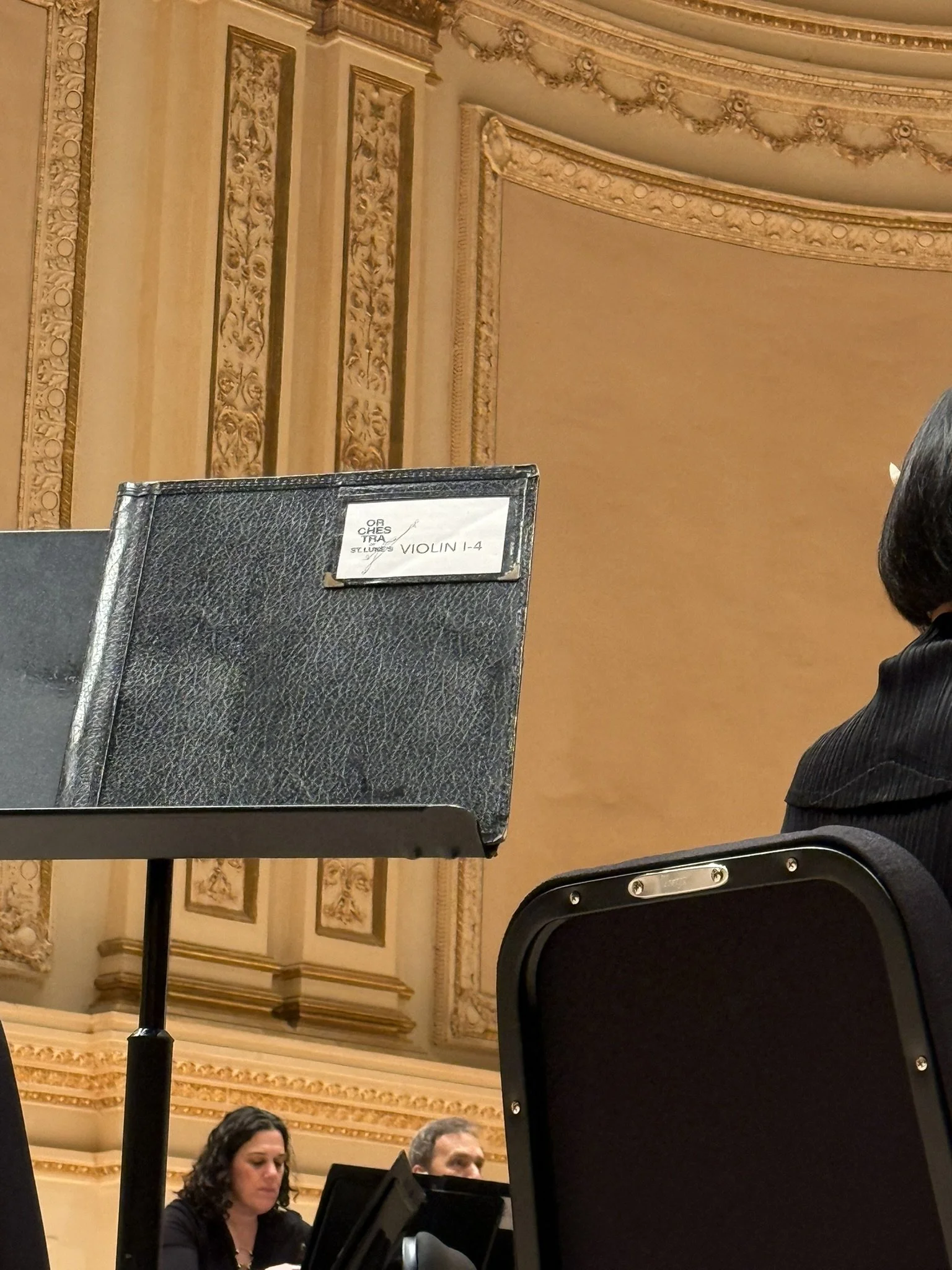
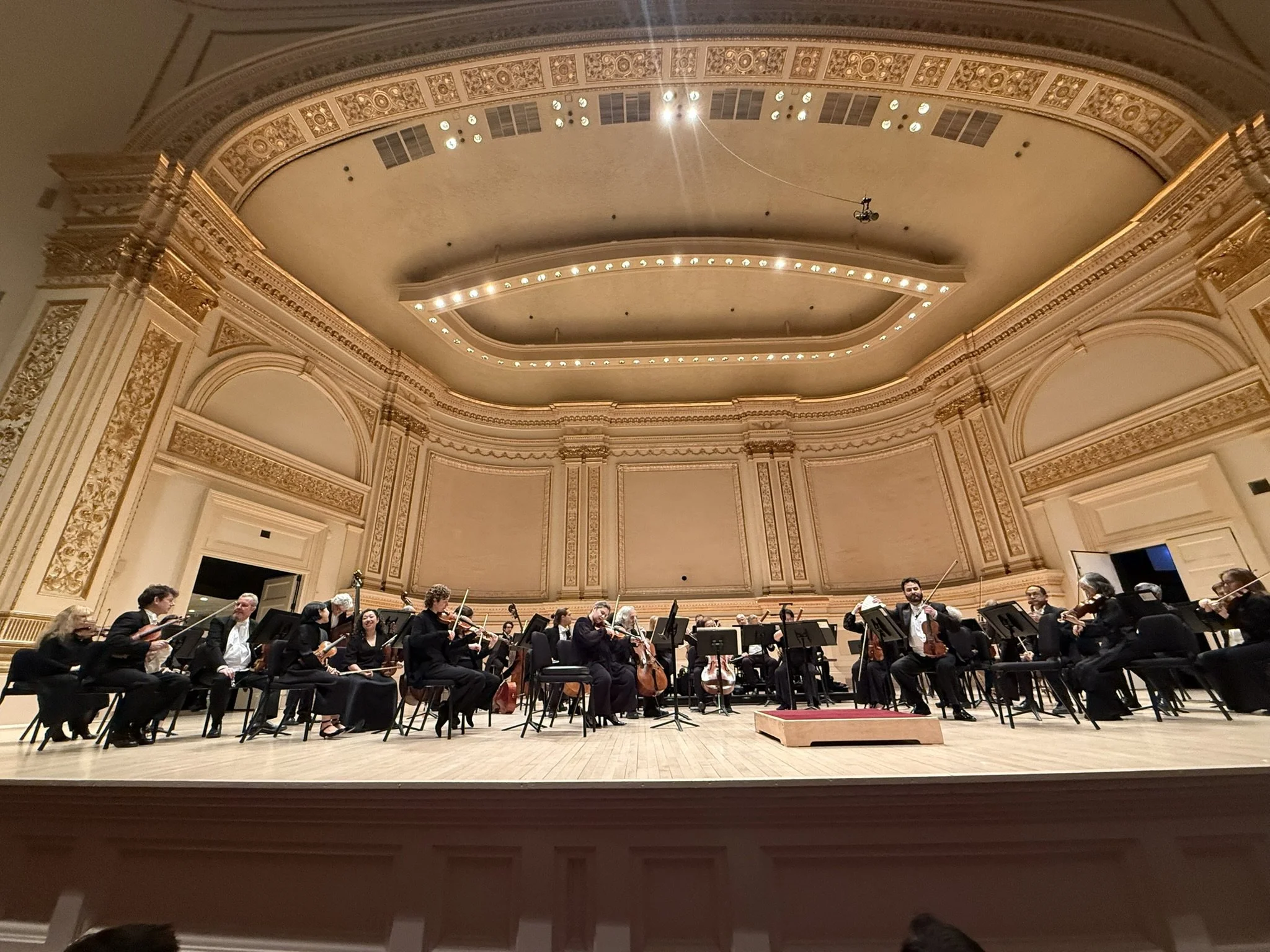
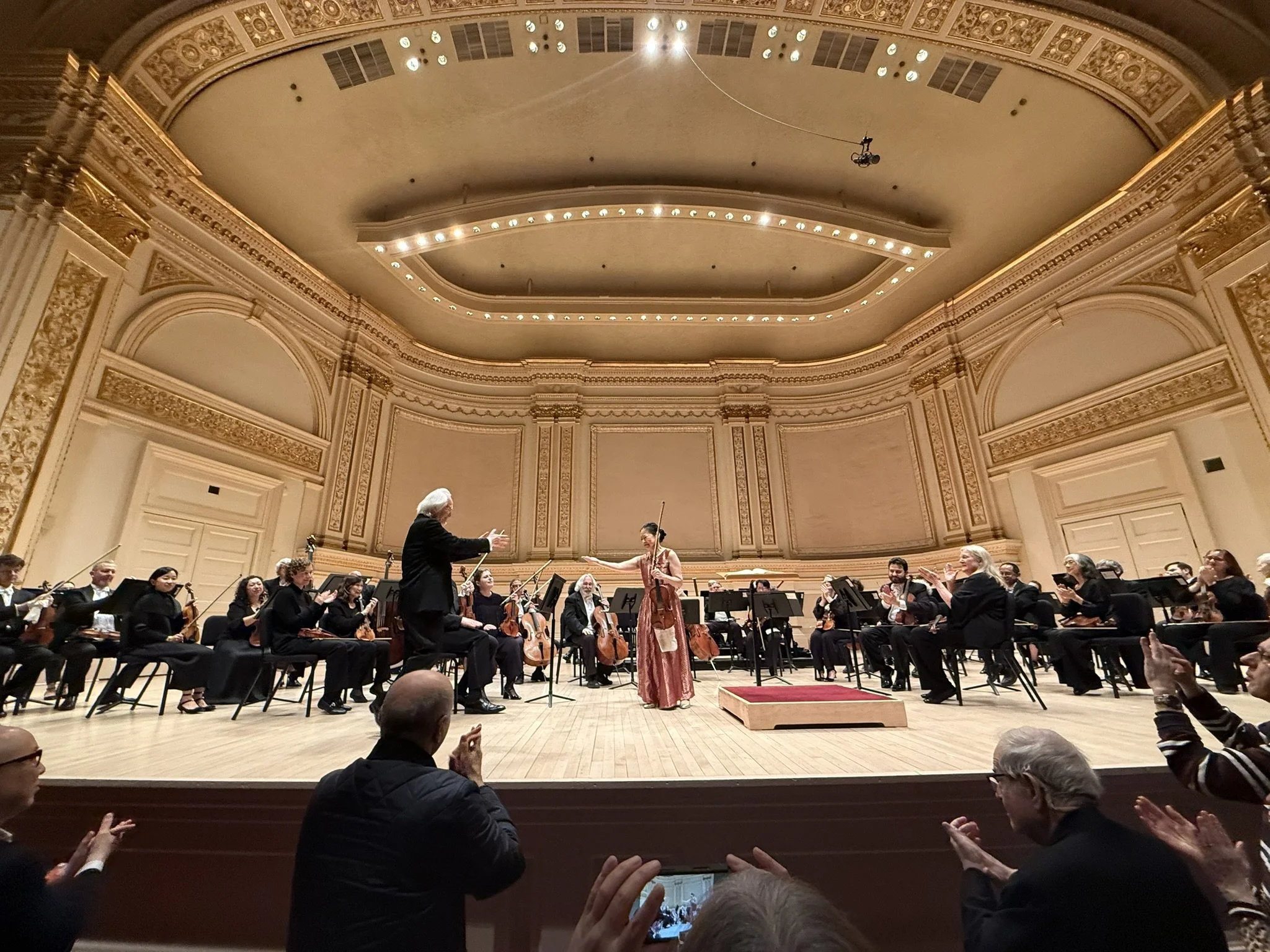
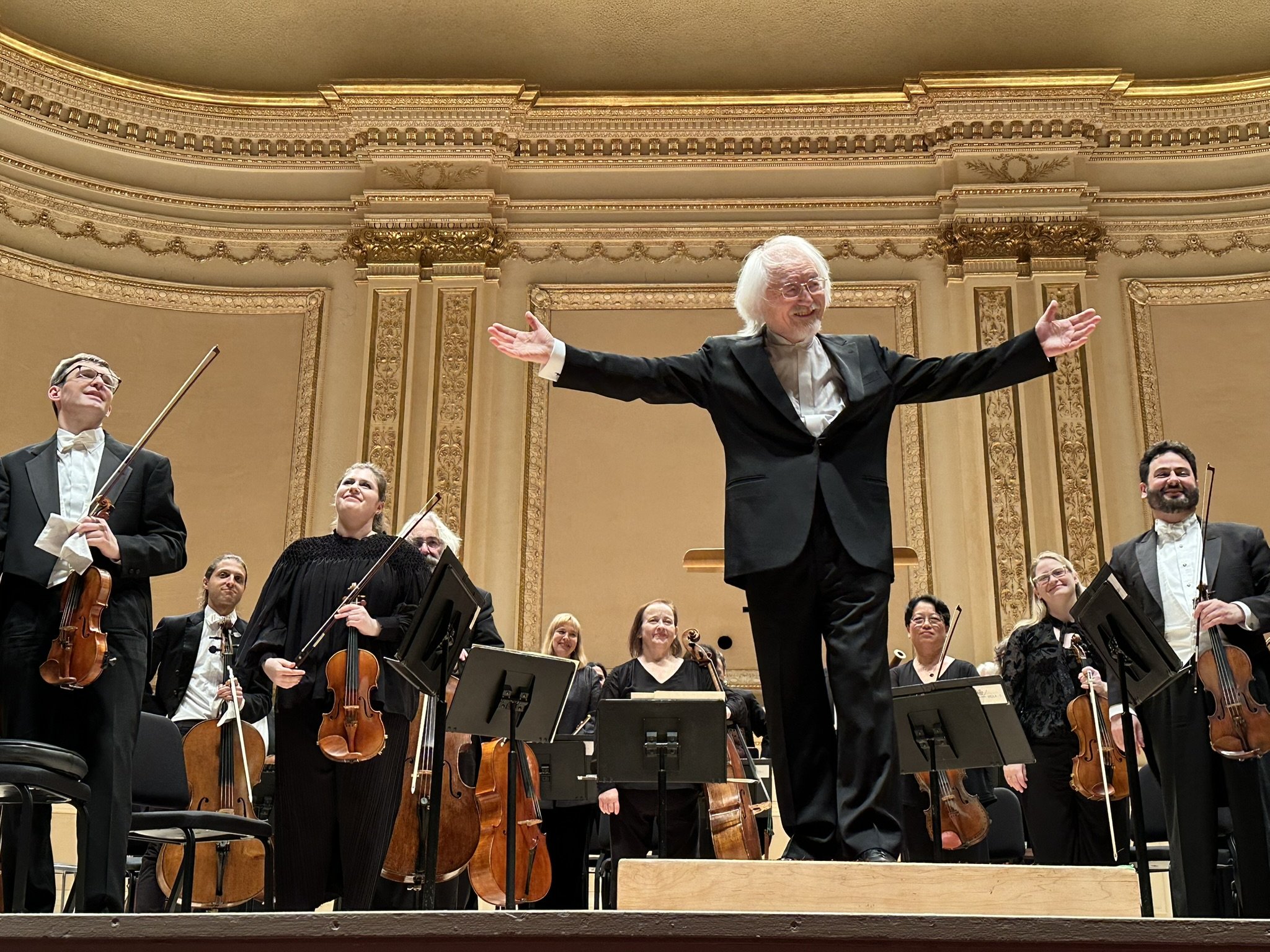
Jesse Mills’s high-frequency tones felt like shafts of light breaking through a rift in storm clouds. His timbre evoked the sensation of light itself gliding through the air. The second violins, cello, and viola—each with its own distinct personality—weaved in and out of the central theme; yet, thanks to the magic of Maestro Suzuki, the ensemble never felt disjointed. The key, it seemed, lay in knowing when to simply "let them be." As the players gradually broke free from the terror of that initial pronouncement and transitioned into the Allegro, the double bass sustained a deep, resonant drone beneath the violins' melody on the left—creating a spine-tingling effect. The seating arrangement—first violins, cello, viola, and second violins, positioned from front-left to back-left—is the same as that of the Metropolitan Opera Orchestra. The timpani were placed in the back-right corner. The sound was at once light yet substantial—at times suspenseful, at times murky and visceral, and occasionally startlingly lucid. The French horns were situated in the back-left, while the inner voices emanated from the right side; the resulting soundscape felt distinctly split between left and right. Yet, when the violins on both flanks played the same melodic line in unison, the sound expanded into a vast, boundless space; conversely, when the violas and cellos took up the inner voices, the entire sonic dimension seemed to shift. The double basses anchored the sound with a mighty presence—at times booming with force, at others resonating with a smooth, buttery warmth. It was the exact same sensation one experiences while listening to an opera at the Metropolitan Opera House: human emotion passing from one soul to another, driving the narrative ever forward.
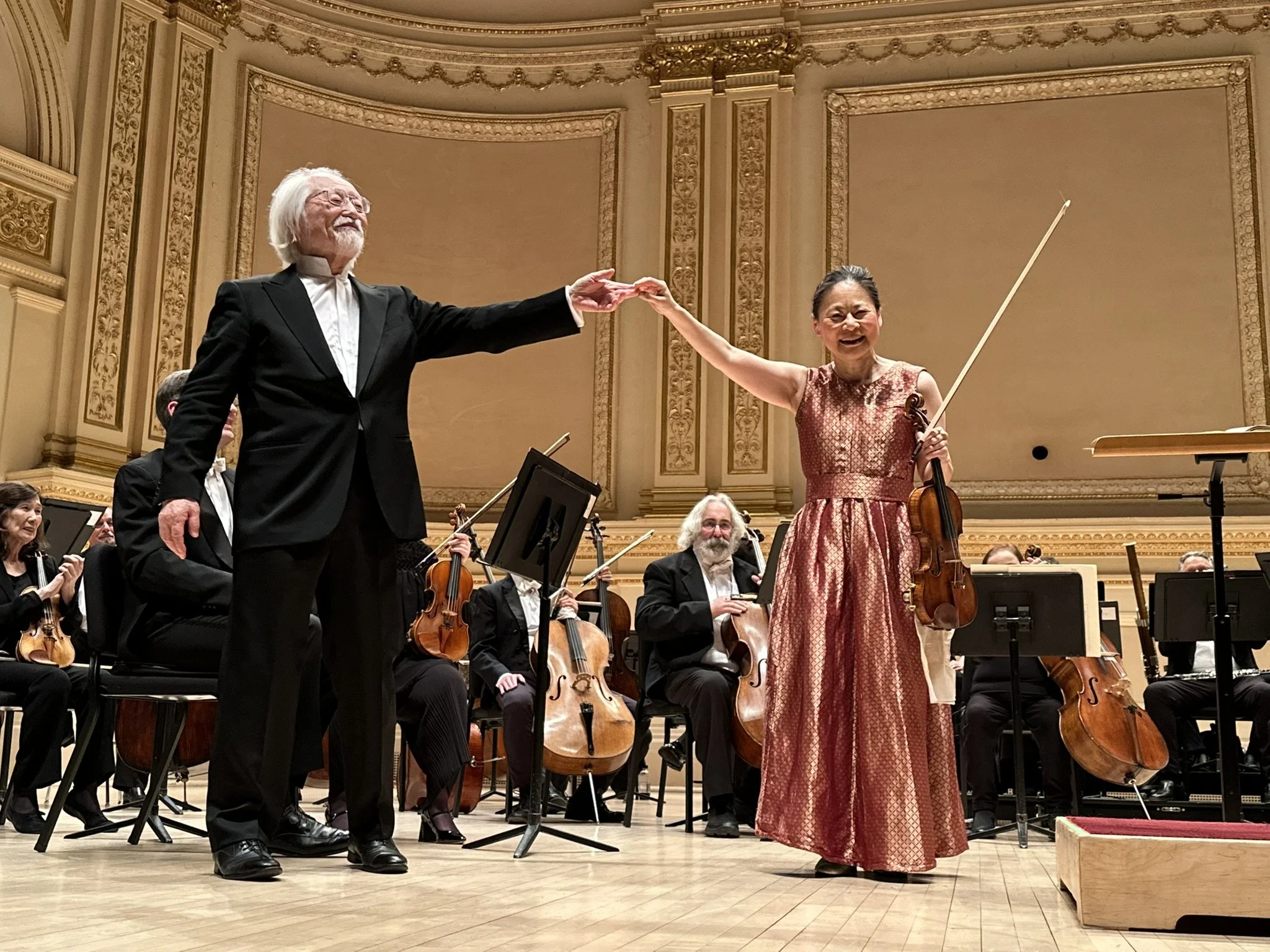
For the second piece, Midori "sang" Beethoven’s violin concerto as if it were an opera. I found myself thinking that if she were ever to be reborn, she ought to become an opera singer. Furthermore, this was the first time I had ever experienced Beethoven’s Violin Concerto feeling quite so expansive—so *long*—in its scope. In the opening passage, the way the tremolos—spanning from the double basses on the left to the timpani—coalesced into a single, massive swell felt uncannily like the Met. In the first movement, the alternating *tutti* and solo passages begin with the orchestra sounding like a solemn, weighty confession of Beethoven’s struggles; then, Midori enters—deliberate yet incisive—to tell the story. When she concludes, the orchestra begins to sing. Beethoven is a true master of the orchestra. The interplay between various instruments—an illumination of timbres—expands across multiple dimensions. It feels akin to listening to Bach in a church. At times, the narrative unfolds right before your eyes; at others, the resonance shifts in character, seeming to envelop the entire hall. Even when the double basses and timpani trace the same musical motif, one might drop out while the other remains—a true dialogue. A conversation. Midori’s performance was not "pretty." It was full of scars. Full of idiosyncrasies. There were moments that made you start in surprise. It felt like a journey racing through the depths of human consciousness. At one point, the tempo slowed to an extreme crawl. Time stood still. I only actually watched Midori play during the latter part of the final Rondo. Yet, their dialogue was vividly visible to me. I stopped thinking entirely. As I listened—eyes open, a handkerchief pressed against them to catch my flowing tears—the music became incredibly vivid to my inner vision. For most of the performance, I was listening to the orchestra. It wasn’t a dynamic like that of the Boston Symphony with Lang Lang; it felt much more intimate. But whenever time stood still, Midori revealed the very essence of the violin: the fascination of the instrument itself, the beauty of its timbre, its intensity, its rawness, its severity, its warmth—every conceivable human emotion. Midori’s violin playing possesses a certain quirkiness—like peeling back the bark of a tree to inhale its scent. It is asymmetrical, like street graffiti—never "well-behaved," yet infinitely cool. It is the very embodiment of a musician’s way of life. During the cadenza, with every repetition of the arpeggios, the sheer sonic pressure felt as if it might shatter Carnegie Hall—leading straight back into the *tutti*. Such was this Beethoven. Who exactly *is* Maestro Suzuki? Is he a latter-day Michelangelo? The reason Brahms never wrote an opera was that he felt there was no need to set *everything* to music; he believed that if a passage worked well simply as drama, it should remain so. Today, while Beethoven left us only one opera—*Fidelio*—I found myself wondering if perhaps even *he* hadn't truly needed to write one, despite his persistent efforts to do so throughout his life. I also realized today that the essence of opera can be conveyed through a wide variety of instrumental forms.
For her encore, Midori performed a piece by Bach. Greta remarked that this was the absolute highlight of the evening, yet to me, the entire performance—from start to finish—felt like a single, unified experience.
After *Innocence*, hearing Maestro Suzuki conduct the orchestra was a revelation; the sheer intensity with which the timbres were unleashed was extraordinary. It was as if we had entered a prismatic world, where a vibrant dialogue unfolded before our very ears. The voices of those participating in this musical conversation were vivid and luminous.
During the Mendelssohn piece—specifically after the hunting horn calls—I distinctly heard echoes of Bellini. This particular work reflects a pivotal moment in Mendelssohn’s life: a time when, having traveled to Italy, the once austere composer underwent a profound emotional transformation. Its premiere took place in 1833—just two years prior to the debut of Bellini’s *I puritani*.
At the stage door, I spoke with Shari Hoffman, a clarinetist in the Metropolitan Opera Orchestra, about *Innocence*. I wanted to understand how it felt for her to perform today’s program immediately following her work on *Innocence*—a production in which she had also participated. I asked because the two experiences felt inextricably linked to me. Both seemed to exist as a spectrum of light, growing ever more radiant with each repetition. Each individual musician radiated a unique brilliance that eventually coalesced into the ensemble's transparent, prismatic timbre. The distinct personal narratives that each musician had traversed ultimately merged into a single, unified radiance—an experience akin to passing through a stream of pure light.
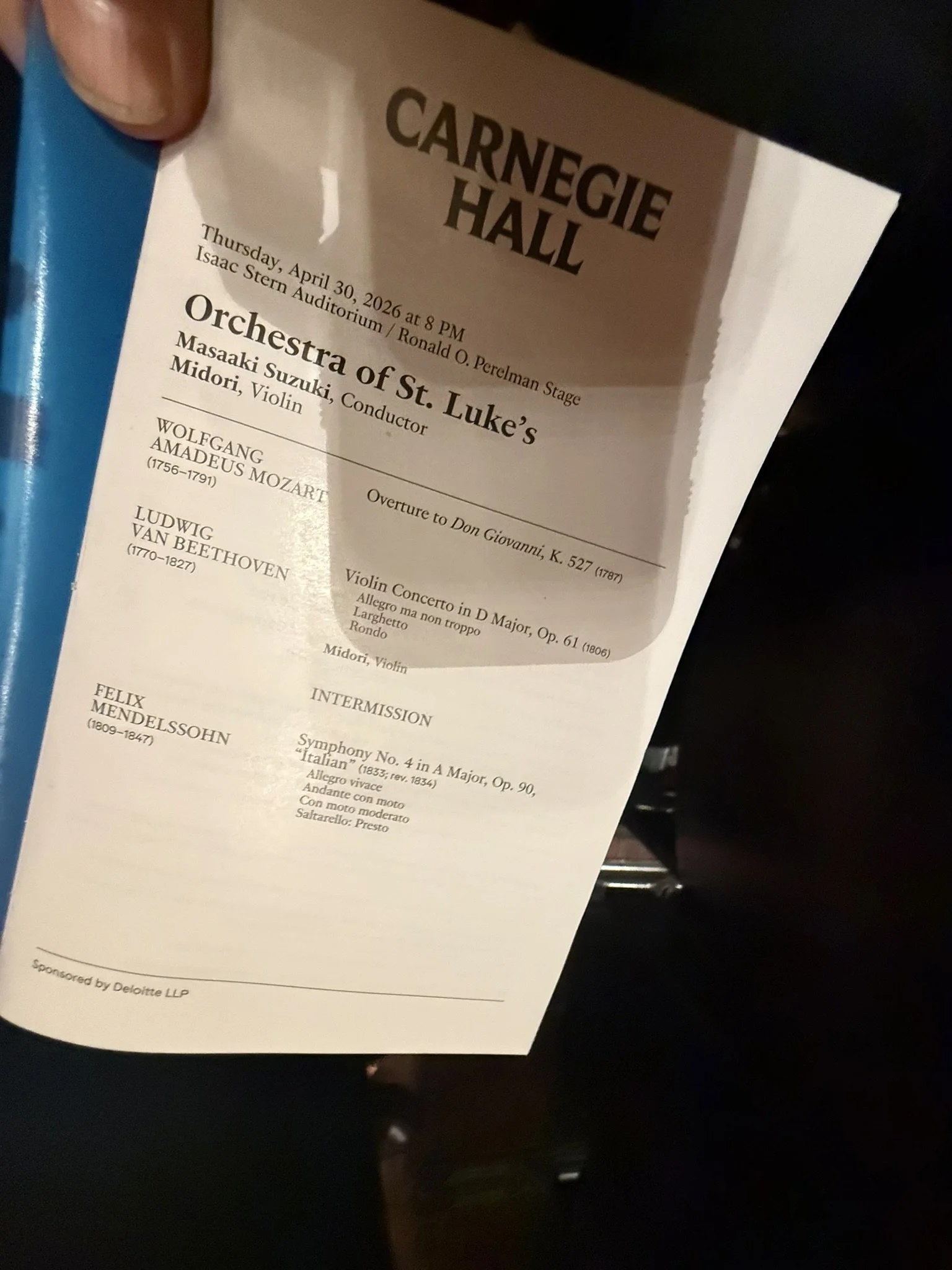
Performers
Orchestra of St. Luke's
Masaaki Suzuki, Conductor
Midori, Violin
Program
MOZART Overture to Don Giovanni
BEETHOVEN Violin Concerto
FELIX MENDELSSOHN Symphony No. 4, "Italian"
Encore:
J. S. BACH Largo from Solo Violin Sonata No. 3 in C Major, BWV 1005 (Midori)
3つが一つのオペラのようだった。
音の大きさや迫力よりも、ずーんと心に刺さる感じ。和声と時間の質。最初のDマイナーの音が宣告のように心に突き刺さる。お前は地獄に落ちる。どんな善人でもそうあるかもしれない。たばこの吸い殻は道に捨てるのはやめた。
Jesse Millsの高いフリークエンシーは嵐の雲の裂け目から光が差し込むようだった。彼の音色は光の中をすり抜けるような感覚がする。セカンド、チェロ、ビオラ、それぞれの強い個性が、テーマを駆け巡るのに、ばらばらな感じがしない鈴木先生のマジック。ほっとくのが大事。彼らは宣告の恐怖から、徐々に解放されアレグロになると、左のバイオリンのメロディの奥でバスがズーンとながーい余韻をひいていて、ぞくぞくする。左手前からファーストバイオリン、チェロ、ビオラ、セカンドバイオリン。メットオーケストラと同じ。右奥にティンパニ。軽くて芯がある、ハラハラ、ドロドロ、時には目が覚める。左奥にホルン。内声は右側から。右左が分かれて聴こえる。ところが両サイドのバイオリンが同じラインを奏でるととてつもなく広がり、ビオラ、チェロが内声のラインを弾くとディメンションが変わる。コントラバスはどーんと、ときに、バターのように響く。メトロポリタン歌劇場でオペラを聴いているときと同じ感覚だった。人の感覚が人へと伝わり、物語が続いていく。
2曲目はみどりさんがベートーベンのバイオリンのためのオペラを歌った。みどりさんは生まれ変わったらオペラ歌手になったらいいとおもった。そして、ベートーベンのバイオリン協奏曲をこんなに長く感じたのは初めてだった。冒頭で左のベースからティンパニのトレモロがひとつに繋がって大きくうねる様子はまるでメットだ。1楽章も、交互にやってくるトゥッティとソロは初めはオーケストラがべーとベーンの苦難の告白のようで、そこに、じっくり、鋭くみどりさんがやってきて物語を語る。終わるとオーケストラが歌いだす。ベートーベンはオーケストラ使いだ。様々な楽器のやり取り、音色のイルミネーションが何次元にも拡大される。教会でバッハを聴いているような。時には物語は目の前で繰り広げられ、時に会場全体を包むように響きが何種類にもかわる。コントラバスやティンパニも、同じ音型を辿っていも一方はやめ、一方は残った。これは対話だ。ダイアログだ。みどりさんの演奏は奇麗ではなかった。傷が沢山あった。癖が沢山あった。一瞬どきっとするときもあった。人の意識の中を駆け巡る旅のようだった。どこかで物凄くテンポが遅くなった。時間が止まった。みどりさんの演奏する姿を見たのは最後のロンドの最後のほうだけだ。でも彼らの対話はとてもよく見えた。何も考えなかった。目を開けたまま目にハンカチをあてて流れてくる涙をそのままにして聴いたら、物凄くよく見えた。ほとんどの時間はオーケストラを聴いていた。ボストンとランランのようなものではなくて、もっと近い。でも、時間が止まるとみどりさんはバイオリンその物の面白さ、音色の美しさ、激しさ、粗さ、厳しさ、温かさ、人が持つあらゆる気持ちを披露してくれた。みどりさのバイオリンは、木の皮をはぎとって匂いを嗅ぐような、そういうクセがある、いびつな、街のグラフィティのような、決して行儀がいいものではないが、ずっとかっこいい。ひとりの音楽家の生きざまそのもの。カデンツァでアルペジオが繰り返される度に、カーネギーが壊れるんじゃないかと思うような音圧、そしてそのままトゥッティへ。そんなベートーベンだった。鈴木先生は一体何者なんだろう。ミケランジェリなのかな。
ブラームスがオペラを書かなかった理由は、全部音楽にする必要ないと考えていたから。ドラマでいい部分はそうでいいと。今日、ベートーベンが残したオペラはフィデリオだけだが、彼ももしかしたら、オペラを書く必要なかったんじゃないかとおもった。ずっと書こうとしてたはしていたけど。いろんな楽器でオペラをやっていることが今日わかった。
みどりさんはアンコールにバッハを演奏した。グレタはここが最高だったと言っていたが、はじめから最後までがひとつに感じた。
イノセンスの後で、この鈴木先生がふるのを聴くと、音色の放出が半端なく、まるでプリズムの世界のように、対話が繰り広げられていった。その会話に加わる人たちの声が鮮やかだった。
メンデルスゾーンではハンティングホルンの後、ベッリーニが聴こえた。
この曲はメンデルスゾーンが堅物でイタリアにいって気持ちが変わった曲だ。初演は1833年ということは清教徒の2年前だ。
ステージドアでメットオペラオーケストラのクラリネットのシャリホフマンと話した。イノセンスの話だ。彼女がイノセンスから今日のプログラムを演奏した気持ちをしりたかった。なぜなら、これはつながった体験に感じたからだ。どちらもスペクトラムで、繰り返される度に輝いていったからだ。それは一人ひとり別の輝きでやがてプリズムの透明な音色となっていった。それぞれの音楽家が通ってきたそれぞれの物語はやがてひとつの輝き。光の中をすり抜ける体験だった。