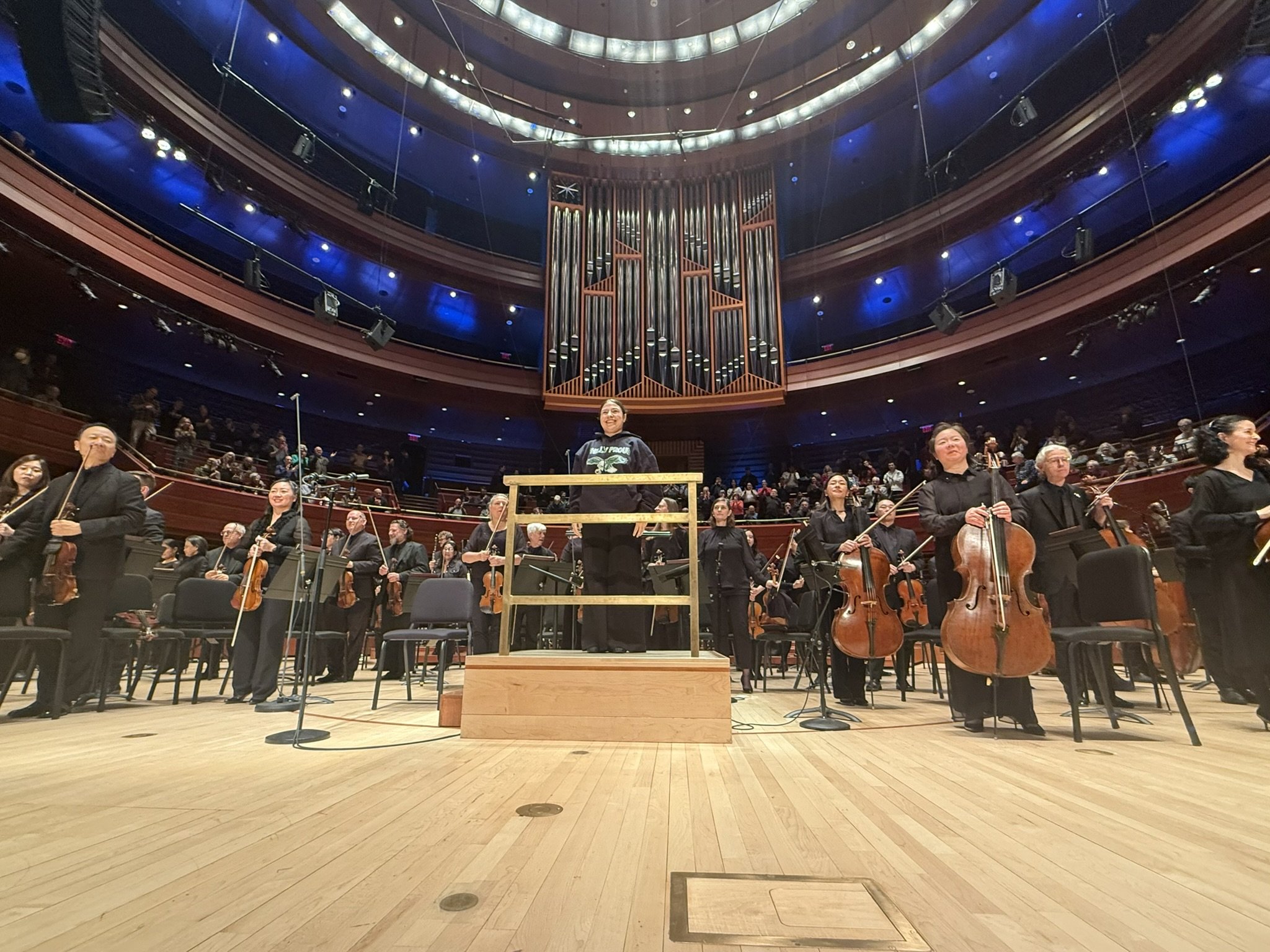
In Philadelphia on Sunday afternoon, January 11th, at Anderson Hall, Dalia Stasevska conducted the Philadelphia Orchestra. She has the unique ability to shape the string phrasing into long, continuous lines, to balance the texture so that percussion and brass never obscure the sound, and to switch between contemporary and Romantic styles. When working with the Philadelphia Orchestra, whose instrumental colors and responsiveness are highly developed, her clarity of structure and spontaneous breathing were evident in the music, making it come to life.
John Adams’ Short Ride in a Fast Machine (1986) was like “being in a car driven too fast—exciting, yet frightening for a four-minute ride.” The orchestra kept the pulse like an engine, while the brass and woodwinds blended into a dense, colorful soundscape. The orchestra's movement felt theatrical, like a neighborhood drive; the music progressed with an exhilarating intensity that seemed almost beyond control, mixing excitement with anxiety.
At few moments, the Philadelphia Orchestra’s balance was unclear, and I felt like losing one’s place in a piece when memorization fails. Some principal glanced at the conductor. Stasevska’s gestures never changed, yet the ensemble regained its stable tempo, and the piece concluded.
In Barber’s Violin Concerto, the orchestra’s weight was kept low, providing a stable foundation so that the soloist could venture in any direction while always being able to return. Augustin Hadelich appeared completely free, yet in reality, he was granted maximum freedom within a clearly defined structure—a highly sophisticated interaction.
Hadelich’s Barber gave a strong presence throughout, as if he were witnessing a private matter. In the first movement, time was compressed and stretched so that moments arose when the orchestra held its breath, while the violin alone continued its thought, making time itself feel fluid. The orchestra’s position was going up and swallowing the solo violin, yet when Hadelich soared upward, time seemed to stop.
In Mahler’s Symphony No. 4, I felt Stasevska pulls more. The cello accents and phrasing were so unique, compressing the musical space and causing the listener to lose time— hypnotic effect. Within this compressed space, condensed solos emerged vividly.
In the intense space, the sounds seemed to pull against each other, and the horn and oboe solos were so delicate that you could feel the subtle tremor in the players’ lips. In the second movement, concertmaster Kim vividly embodied an individual crushed within a broken system, and soon the neighbor, Julietta, also appeared to break. The warped irony was pain. The third movement was a transparent world, losing all sense, feeling as if the solos, like myself, were drifting alone on the edge of life and death. Guided by harp glissandi and brass fanfares, Joélle Harvey sang the music of heavenly life. Her voice, while celestial, was as familiar as my favorite cafe person.
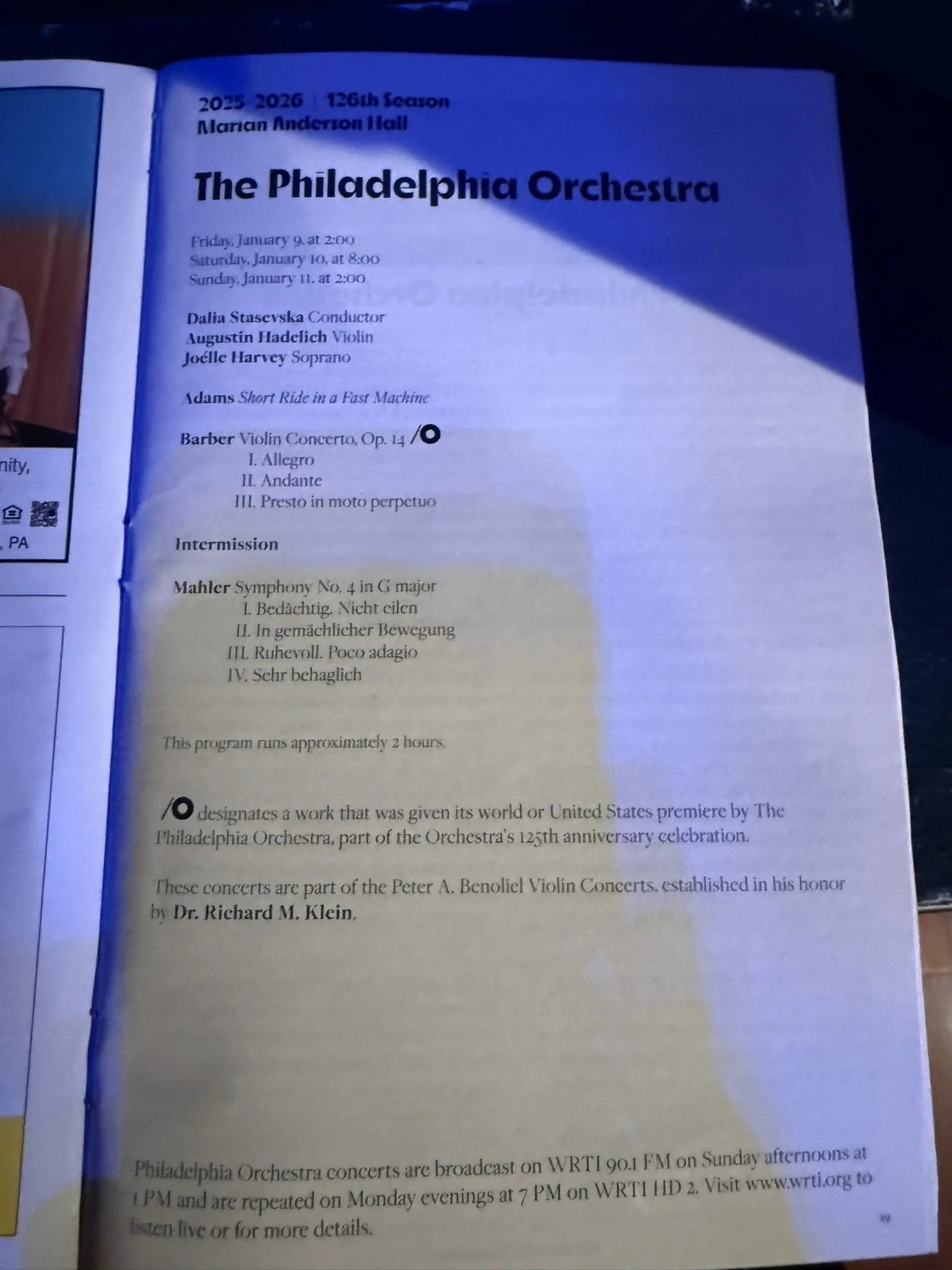
The Philadelphia Orchestra
Sunday, January 11, at 2:00
Dalia Stasevska Conductor
Augustin Hadelich Violin
Joélle Harvey Soprano
Adams Short Ride in a Fast Machine
Barber Violin Concerto, Op. 14
I. Allegro
II. Andante
III. Presto in moto perpetuo
Intermission
Mahler Symphony No. 4 in G major
I. Bedächtig. Nicht eilen
II. In gemächlicher Bewegung
III. Ruhevoll. Poco adagio
IV. Sehr behaglich
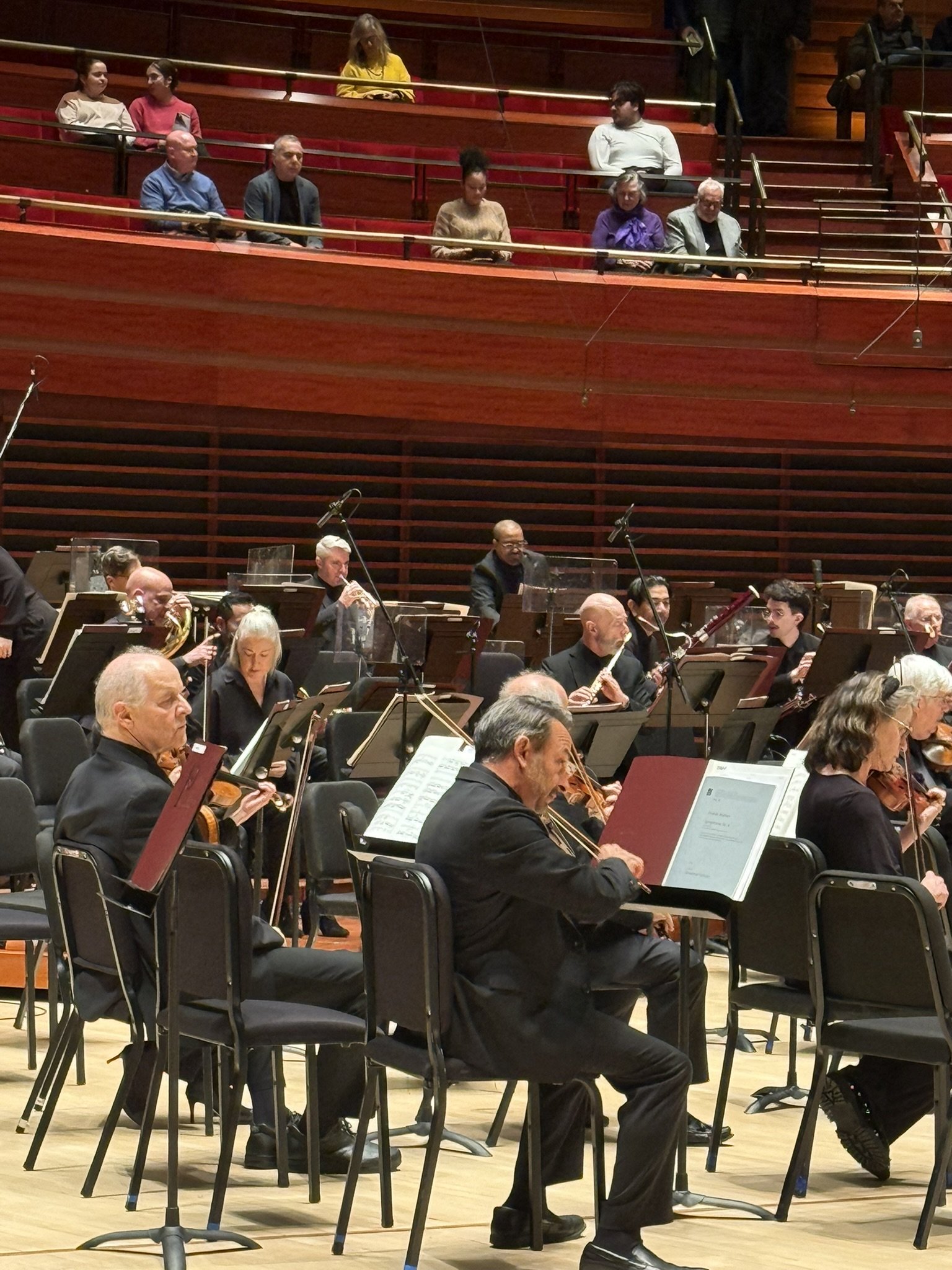
Jeffrey Khaner, the principal flutist of the Philadelphia Orchestra on Mahler 4, was devine. この日一番感激したのは、マーラーの中でケイナーが歌う笛の音。
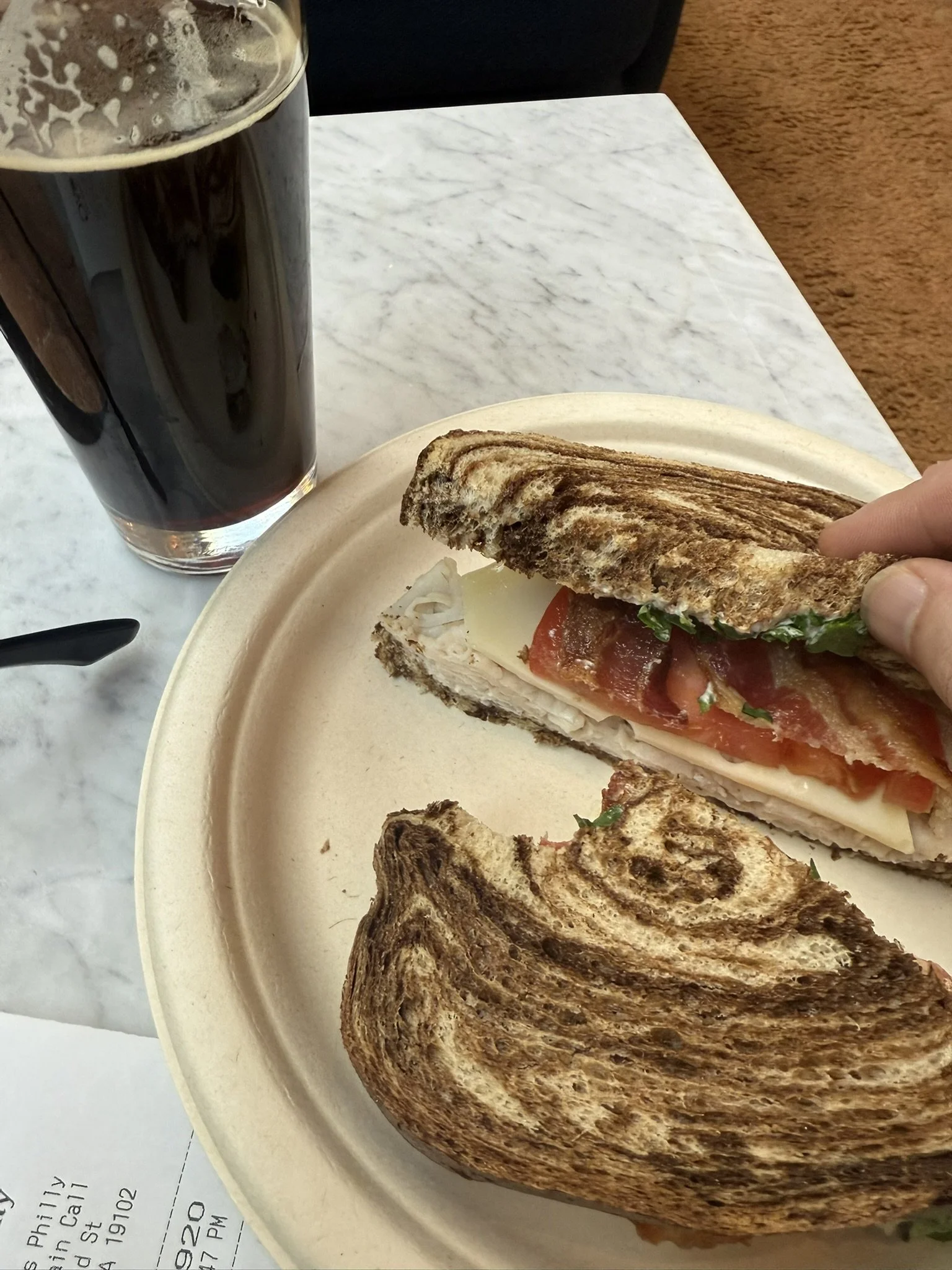
ターキーサンドとドラフトスタウトで32ドル。マンハッタンではありえないおいしさと価格。
2026年1月11日の日曜午後、冬のフィラデルフィア。アンダーソンホールで、Dalia Stasevska、ダリア・スタセフスカの独特の重力を味わった。特に弦の長いフレージングに、打楽器や金管のテクスチュアを濁らせないバランス、そして現代からロマン派まで自在に切り替える柔軟さ。フィラデルフィアオーケストラのように、音色の個性と反応が高いオーケストラと、彼女の明晰な即興がそのまま音に現れたライブだった。
ジョン・アダムズのShort Ride in a Fast Machine(1986)4分の「スピードを出しすぎる運転手の車に乗ってしまい、楽しいが少し怖い感覚」。車のエンジンの様に拍を刻み続けるオーケストラに金管、木管などがブレンドされた音響の密度と色彩。オケの運動が近所をドライブするような特有の劇に見える。実際、音楽は制御不能な高揚と軽い不安を同時に進んでいった。
途中、フィラデルフィアオーケストラの重心がどこかわからなくなり、何度かぐらっときた。暗譜が飛んで、繰り返しの場所を見失った時のような不安だった。途中、首席が指揮者の顔を見る。指揮者の身ぶりは全く変わっていない。そしてまた安定したテンポを取り戻し曲は閉じた。
バーバーのバイオリン協奏曲では、オーケストラの重心を低く置いて独奏がどの方向へ踏み出しても、必ず戻ってこられる支え方だった。独奏バイオリンのAugustin Hadelich、アウグスティン・ハーデリッヒは自由に見えて、実際には構造の内側で最大の自由を与えられた高度なやりとりだった。
ハーデリッヒのバーバーは、どの演奏でも音の気配が強く、独白を間近で見ているような感覚を与えた。第1楽章では、時間の流れが均質ではなく、圧縮と伸張を繰り返す。その結果、オーケストラが呼吸を止めたように感じられる瞬間に、ヴァイオリンだけが思考を続けているかのように聴こえ、時間そのものが揺らぐ。低く保たれたオーケストラの重心がやがてハデリッヒのソロを飲み込もうとするが、彼が高く駆け上がった瞬間、時間がとまった。
マーラーの交響曲第4番では、Stasevskaの重力を一番強く感じた。チェロのアクセントやフレーズは独特で、音楽は空間が圧縮され、聴き手は時間の感覚を失っていく。一種の催眠術のようだった。その圧縮された空間に、凝縮されたソロが浮かび上がる。
張り詰めた空間では、音は互いに引き合い、ホルンやオーボエのソロは、繊細すぎて、唇が震える感じが伝わってきた。2楽章では、コンサートマスターのキムが、壊れたシステムの中の壊れた個人を見事にみせる。やがて隣のジュリエッタもまた、見事に壊れていく。そのゆがんだ皮肉が痛々しい。3楽章は、あまりにも透明な世界だった。初めて眼鏡をはずしてじっと聞き続けた。時間を忘れ、楽器のソロたちもたった一人、私も一人で生と死の淵を漂っているようだった。ハープのグリッサンドと金管のファンファーレに導かれて天上の生活を、Joélle Harveyが歌った。その歌声はいつも立ち寄るカフェの店員のように身近だった。