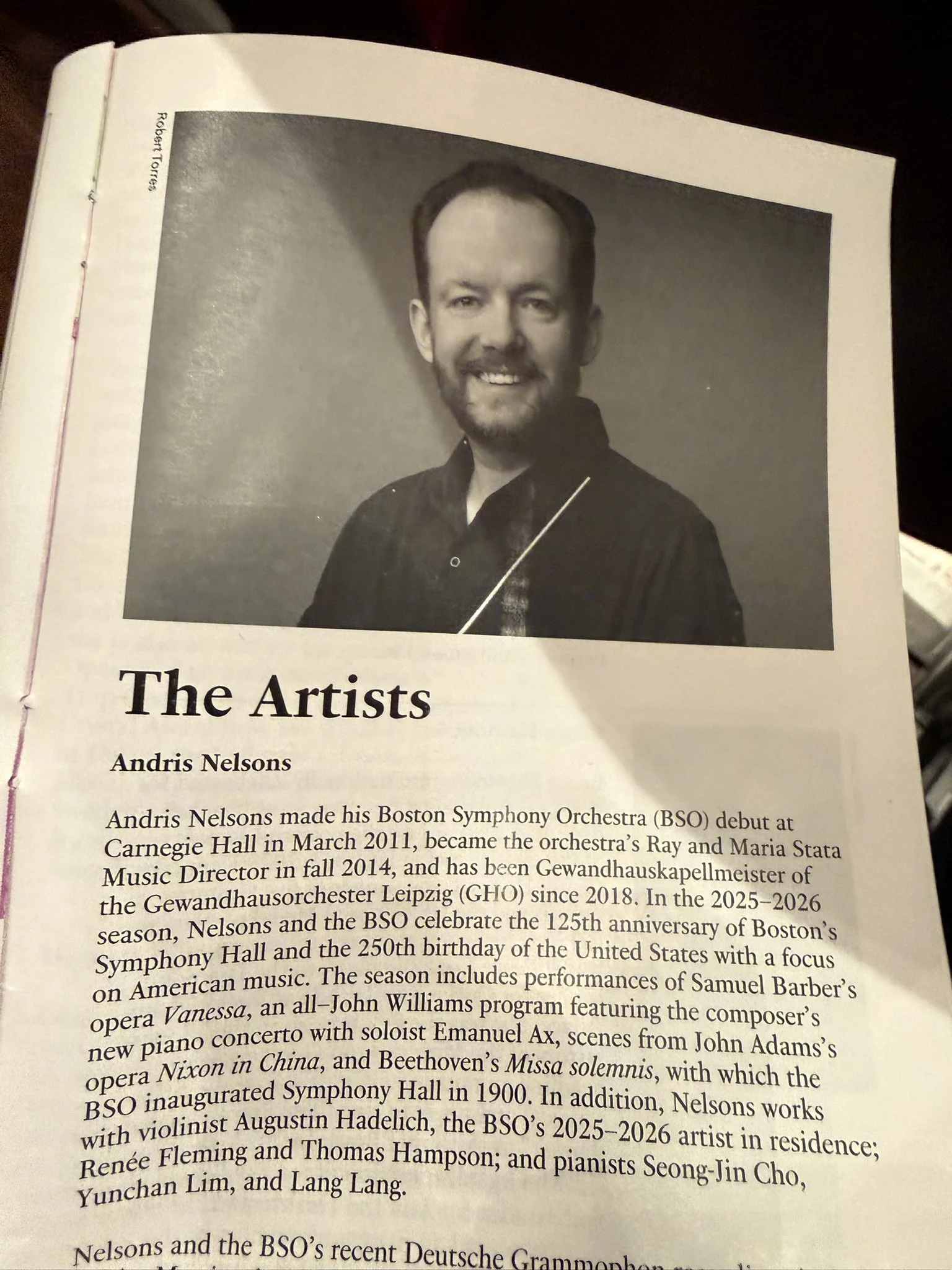
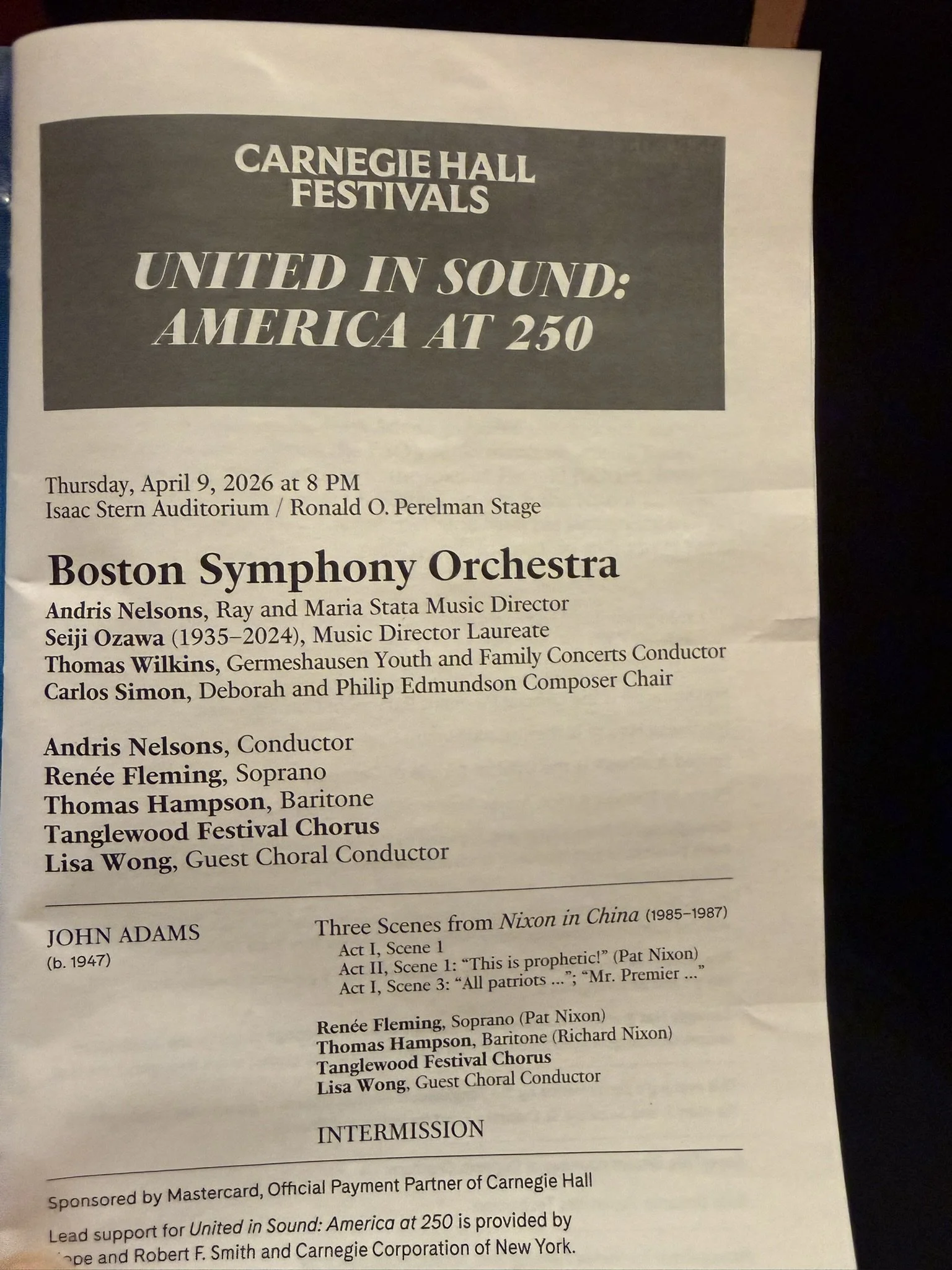
The Boston Symphony Orchestra and Andris Nelsons at Carnegie Hall on 4.9.2026. Through works spanning two distinct eras, this program captures the concept of America—from its inception to the present day—and offers a multilayered portrayal of its musical history and identity. *Nixon in China*—John Adams’s first opera and a seminal work of contemporary American opera—takes as its subject Nixon’s historic 1972 visit to China. The work depicts how America is perceived by the world and how history is experienced in the media age. The three scenes presented here—the Arrival, Pat’s Fantasy, and the Toast—offer perspectives that represent the "external," the "internal," and the "symbolic," respectively. Antonín Dvořák’s *New World Symphony*, meanwhile, portrays the birth of American music from an outsider’s perspective—specifically, through the lens of a European observer interested in elements such as African American spirituals.
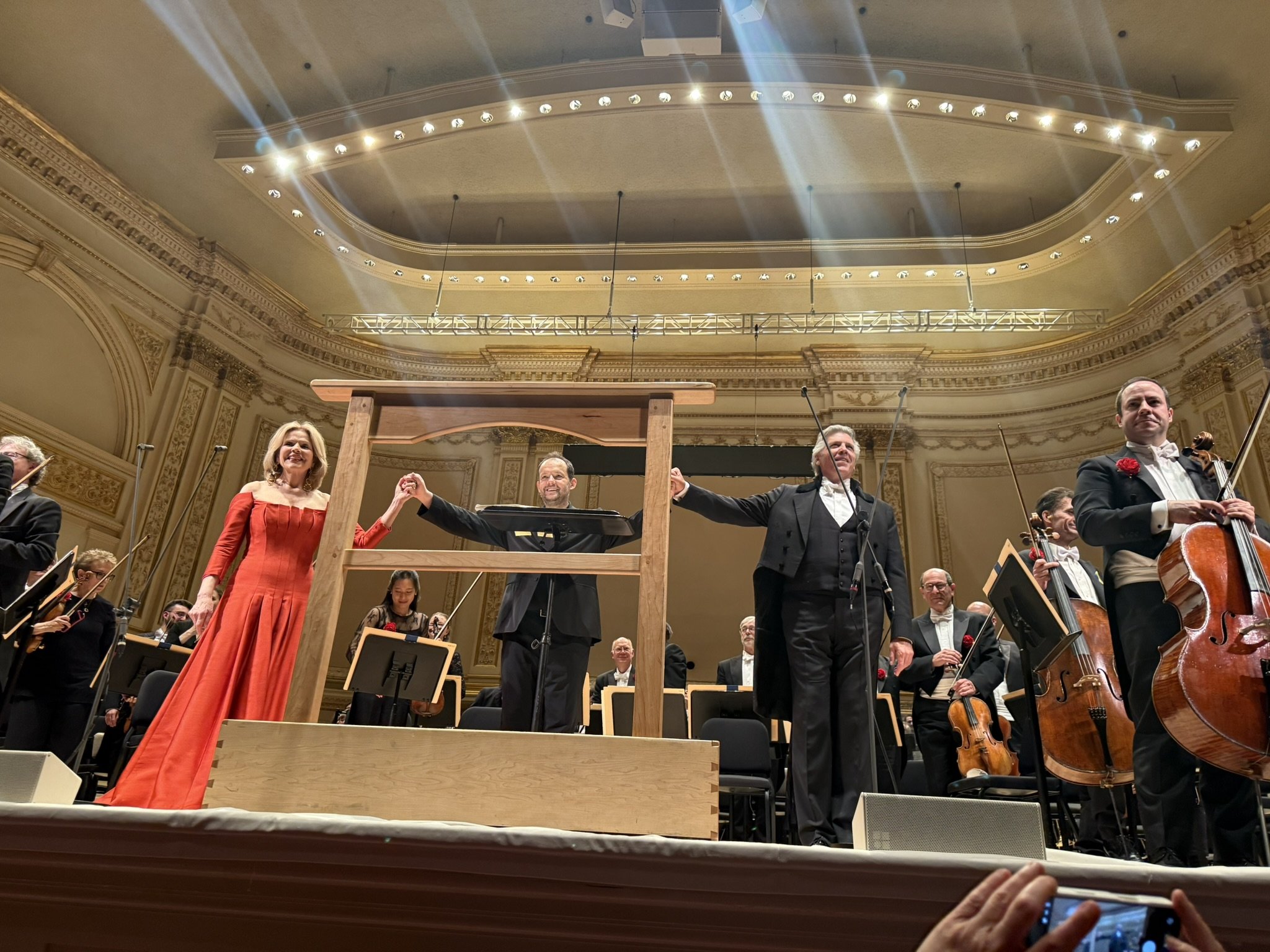
For this performance, *Nixon in China* was presented in three excerpts. The opening—marked by Adams’s signature harmonic language—unfolded with an orchestra augmented by synthesizers, creating a sense that history itself was gradually stirring into motion. Sharp accents from the wind instruments rang out clearly, while the chorus—reminiscent of sacred music—intoned a vision of the Chinese People’s Liberation Army; here, too, the harmonic progressions constantly shifted and evolved. The orchestral performance during the scene depicting the aircraft’s landing was nothing short of tremendous—characterized by shifting chords and simple repetition, a quintessential expression of American minimalism. Into this sonic landscape entered the voice of Thomas Hampson, in the role of Nixon. His voice—rich, resonant, and commanding an overwhelming presence—rang out repeatedly with the word "News! News!" conveying a complex blend of urgency, excitement, and what sounded almost like a form of self-hypnosis. Eventually, this repetition transformed into an expression of the inner voice; emotions such as idealism, anxiety, and solitude surfaced, while Adams’s minimalist harmonic patterns maintained a steady tempo, moving forward yet continuing to harbor that underlying anxiety. Next, soprano Renée Fleming performs Pat Nixon’s aria from Act II, in which she envisions a utopia. It is a succession of disparate images: scenes ranging from the mundane—suburban life and family meals—to national symbols appear one after another, flowing together as if in a dream. It is a world where reality has been reconstructed as an ideal—a prayer that ordinary life itself might be a beautiful world.
Through Fleming’s voice, Pat’s psychological state manifests as an internal impulse to gently envelop an anxious reality; conversely, Adams’s rhythmic pulsations create a sense of detachment from that reality, resonating almost like self-hypnosis.
Adams’s minimalist chords weave an illusory tapestry, drifting endlessly in the same space. Within a steady tempo, the harmonies undergo subtle, continuous shifts, evoking a sense of never quite arriving anywhere; meanwhile, Fleming’s exquisite intonation and vocal luster attenuate the sense of reality, propelling the music further into a dreamlike realm.
In this aria—set against Pat’s serene and beautiful vocal line—the music continually widens the rift between reality and the ideal. A delicate psychological struggle—the attempt to mask anxiety by articulating an ideal—emerges through both the text and the music. It was a magnificent performance, featuring a superb collaboration between the rhythmic figures supporting the voice and the instrumental lines lending weight to the words.
In the subsequent banquet scene in Act I, Nixon delivers a series of speeches and brief remarks, layering them one upon another as he articulates the elation of diplomatic success and his conviction that he stands at the very center of history, creating an effect that resonates like a grand proclamation. The excitement is amplified through rhythmic repetition.
Pat, for her part, sings of impressions—the snow, the air, and the general atmosphere of the occasion. She gently absorbs these events, reconstructing them into dreamlike imagery; as these images are echoed by the chorus, the voice of the individual transforms into the voice of history. Apparently, the Boston Symphony Orchestra has performed Dvořák’s *New World Symphony*—featured in the second half of the program—at Carnegie Hall a total of three times in its history: in 1900, 1903, and 1910. Shifting from the rhythmic drive and tension of the Adams piece, Dvořák’s music unfolded with a sense of long-breathed lyricism; the tempo remained steady, and the melodies and solo passages were magnificent. The Boston players produced a sound that was simultaneously distinct and three-dimensional, offering superb clarity and transparency. The virtuosity of each section—from the second violins, violas, and cellos to the winds and percussion—interwove seamlessly, and within the symphony’s resonant tapestry, the very spirit of America seemed to rise to life. Bathed in this rich soundscape, I felt liberated from the torrent of Nixon’s words and was able to wholeheartedly delight in the sheer artistry of the Boston Symphony.
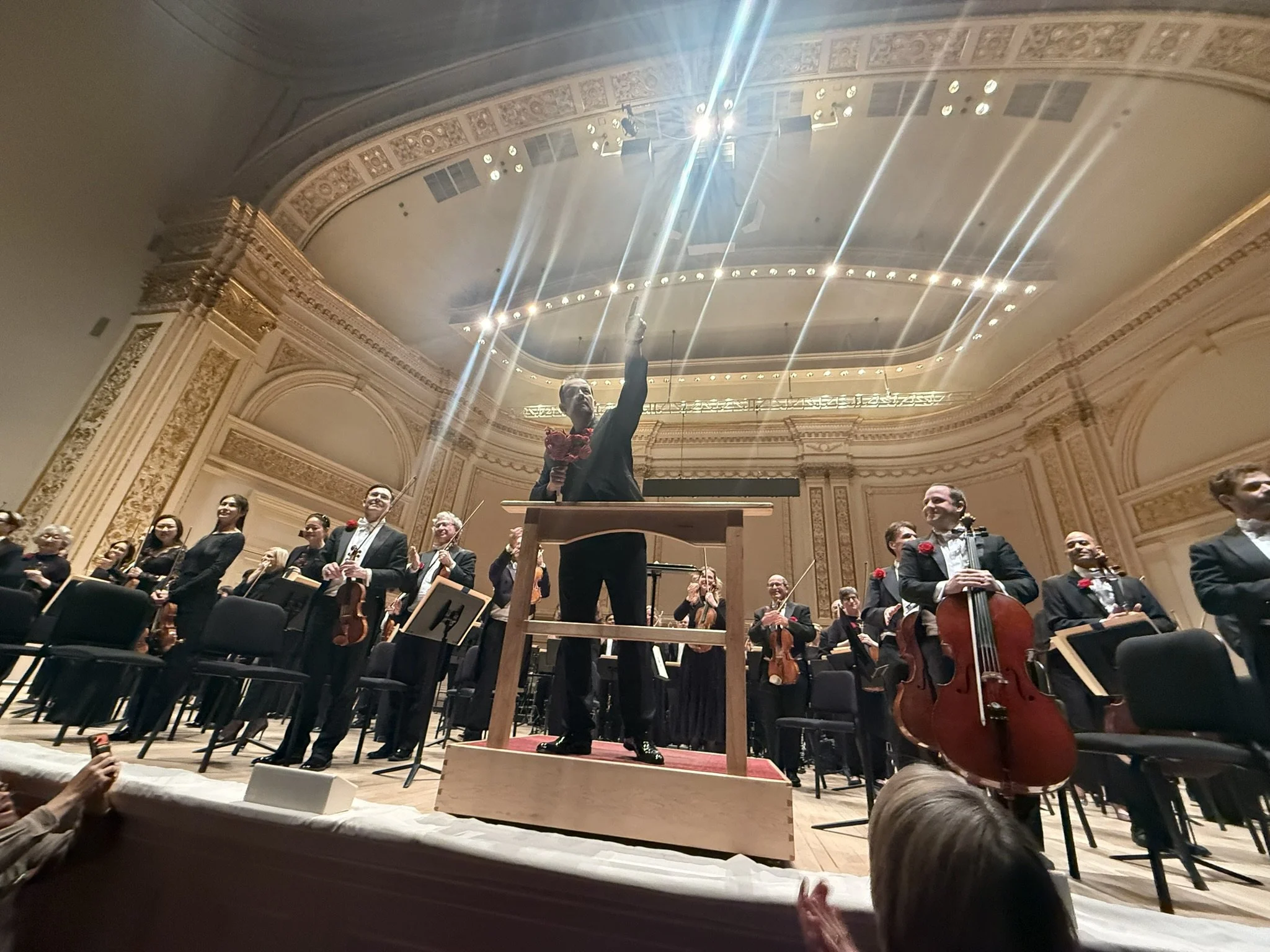
It was a truly superlative concert—one in which the unique brilliance of Nelsons and the Boston Symphony converged perfectly with the program's American themes. Even after Nelsons had exited the stage following the fourth curtain call, the orchestra remained seated, turning their attention toward both the audience and the stage. For a fifth curtain call, Nelsons reappeared on stage, creating a precious moment where he could share his boundless love for music with everyone present. I have never before witnessed five curtain calls. For both the Boston Symphony and music lovers alike, Andris Nelsons is truly indispensable.
Performers
Boston Symphony Orchestra
Andris Nelsons, Music Director and Conductor
Renée Fleming, Soprano
Thomas Hampson, Baritone
Tanglewood Festival Chorus
Lisa Wong, Guest Choral Conductor
Program
JOHN ADAMS Three Scenes from Nixon in China
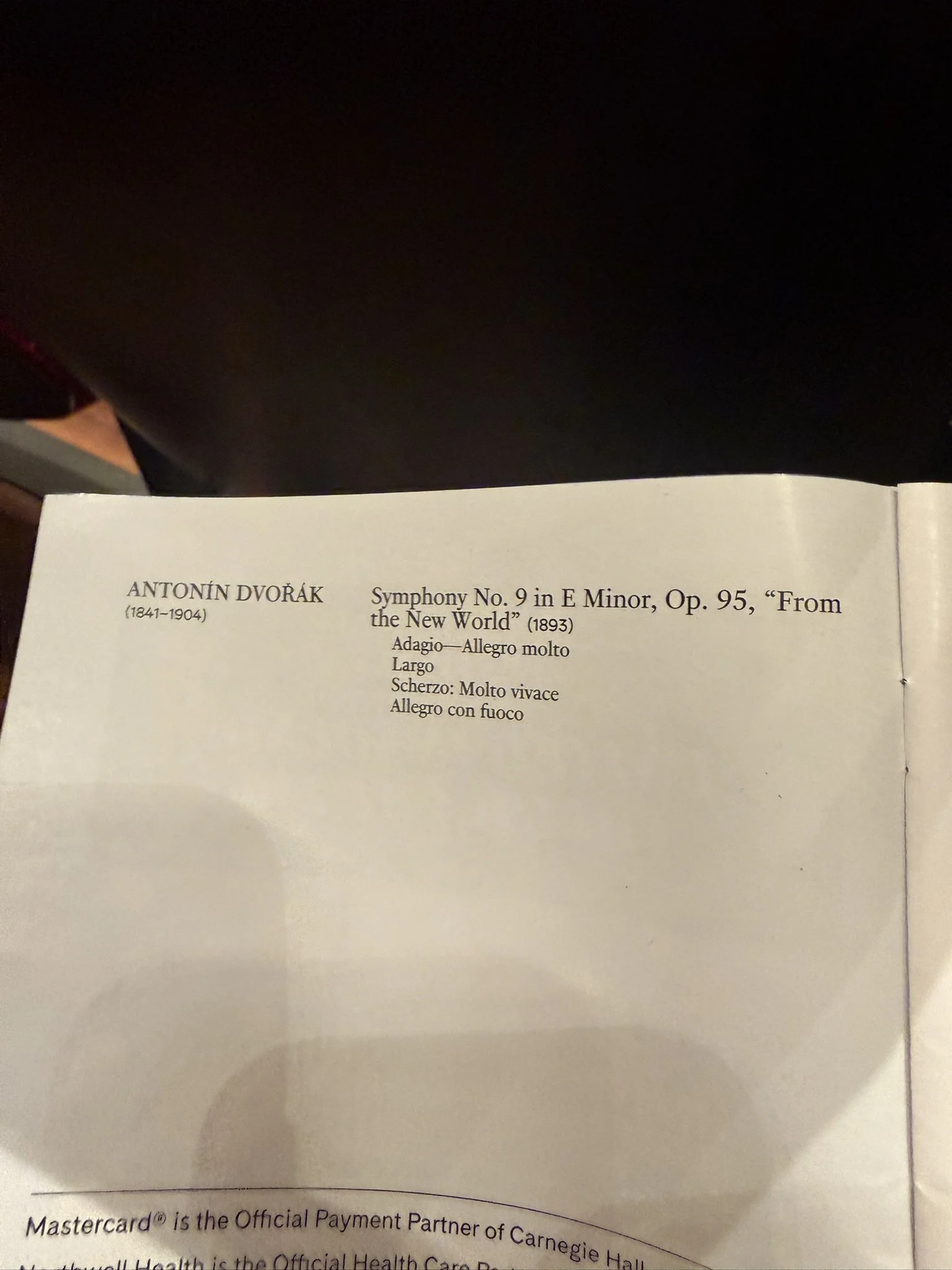
DVOŘÁK Symphony No. 9, "From the New World"
4月9日にボストン交響楽団とアンドリス・ネルソンスがカーネギーで演奏会を行った。このプログラムでは、2つの異なる時期の作品を通し、アメリカの概念を誕生から現代まで捉え、その音楽史とアイデンティティを多層に描く。ニクソン・イン・チャイナは、アダムスが初めて書いたオペラで、現代アメリカ・オペラを代表する作品であり、1972年のニクソン訪中を題材としている。これはアメリカが世界にどう映るか、メディア時代に歴史がどう経験されるかを描いている。この3つのシーンは到着、パットの幻想、乾杯の場面の視点から外側、内側、象徴を提示する。アントニン・ドヴォルザークの新世界は、ヨーロッパから見たアメリカ、黒人霊歌などへの関心を通して、外から見たアメリカ音楽の誕生を描いている。
今回、ニクソン・イン・チャイナは3つの抜粋で演奏された。出だしのアダムス独特のコードが、シンセが混ざったオーケストラとともに、少しずつ歴史が動き出すように進んでいく。管楽器のアクセントがはっきり響き、合唱が宗教音楽のように中国人民解放軍のビジョンを語る。ここでも絶えずコードが形を変え進んでいく。飛行機が着地するシーンのオーケストラがすさまじかった。コードを変え単純反復。アメリカのミニマリズム。そこにニクソン役のトーマス・ハンプソンの声が加わる。太く大きく、圧倒的な存在感を持つ声がニュース、ニュースと何度も響き渡り、焦りや興奮、さらに自己暗示のようにも聴こえる。やがてその反復は内面の声へと変化していく。理想、不安、孤独といった感情が浮かび上がり、アダムスのミニマルなコードは安定したテンポを保ち、不安を内包し進み続ける。
続いて、ソプラノ、ルネ・フレミングが2幕からニクソンの妻パットのアリアを歌い、ユートピアを予言する。バラバラなイメージの連なり。郊外の生活や家族の食卓といった日常、国家の象徴に至るまでが次々現れ、夢の中のように連続し、現実を理想として再構成した世界、普通の生活こそが美しい世界であってほしいという祈り。
パットの心理は、フレミングの声で、不安な現実をやわらかく包み込もうとする内面の動きとして現れ、アダムスの刻みは、かえって現実からの距離を感じさせ、一種の自己暗示のように響く。
アダムスのミニマルなコードは幻想を繰り広げ、果てしなく同じ場所を漂い続ける。安定したテンポの中で和声がわずかに変化し続け、どこにも到達しない感覚が生まれ、フレミングのイントネーションや声の張りは美しく、現実感を希薄にし、この音楽をより夢のような領域へと押し出していく。
このアリアは、穏やかで美しいパットの歌とともに、音楽が現実と理想のずれを広がらせ続ける。理想を語ることで不安を覆い隠そうとする繊細な心理が、言葉と音楽の両方で浮かび上がる。声をサポートする刻みと、言葉に力を添える楽器のコラボレーションが素晴らしい歌と演奏だった。
続く一幕の晩餐会では、ニクソンはスピーチや短い言葉を、外交成功の高揚や歴史の中心にいる確信を語るように重ね、宣言のように響かせる。リズムの反復によって興奮が増幅される。
パットは、雪や空気、場の雰囲気といった印象を歌う。出来事をやわらかく受け止めながら夢のようなイメージへ再構成していき、それらが合唱で繰り返され、個人の声が歴史の声となる。
後半のドヴォルザークの新世界をボストン交響楽団は、これまでに1900年、1903年、そして1910年の計3回、カーネギーホールで演奏しているそうだ。アダムスの刻みと緊張から、ドヴォルザークの音楽は長い呼吸で進み、安定したテンポで旋律やソロが見事だった。ボストンは分離しながら立体に響き、音の見通しが素晴らしかった。セカンドヴァイオリンやヴィオラ、そしてチェロ、管楽器、打楽器、それぞれのうまさが結びついて、そのシンフォニーの響きの中にアメリカの姿が立ち上がっていく。この豊かな響きでニクソンの言葉の洪水から解きほぐされ、ボストンのうまさを心から楽しんだ。
ネルソンスとボストンの面白さと、アメリカのテーマが結実した最高のコンサート。4回目のカーテンコールでネルソンスが下がった後も、オーケストラは腰を下ろし、聴衆とステージの両方に向けてもう一度5回目のカーテンコールでネルソンスは再びステージに現れ、惜しみない音楽愛をすべての人たちと分かち合えた貴重な体験。5度のコールは一度も体験したことがない。ボストンと音楽ファンにとってネルソンスは不可欠なのだ。