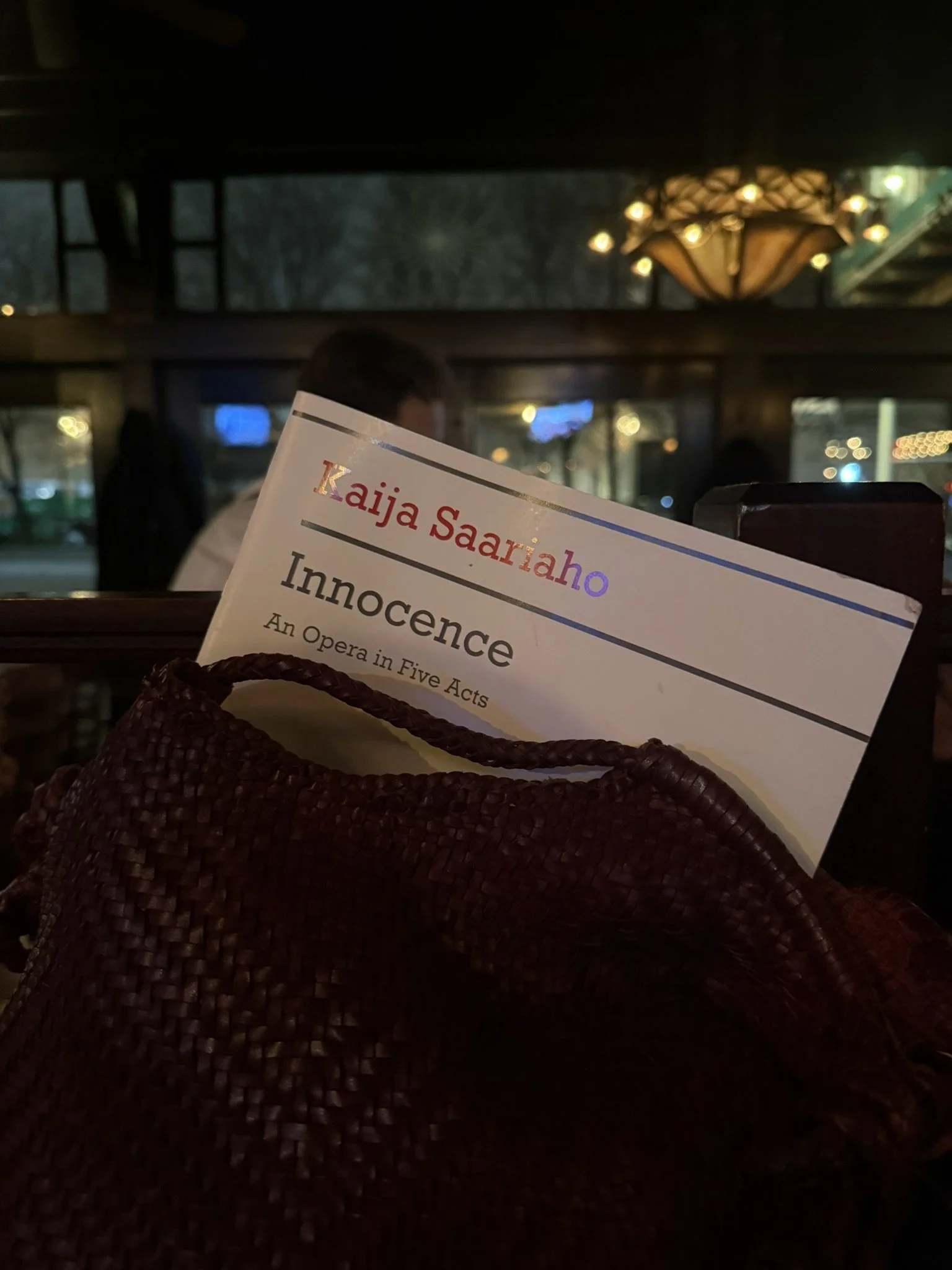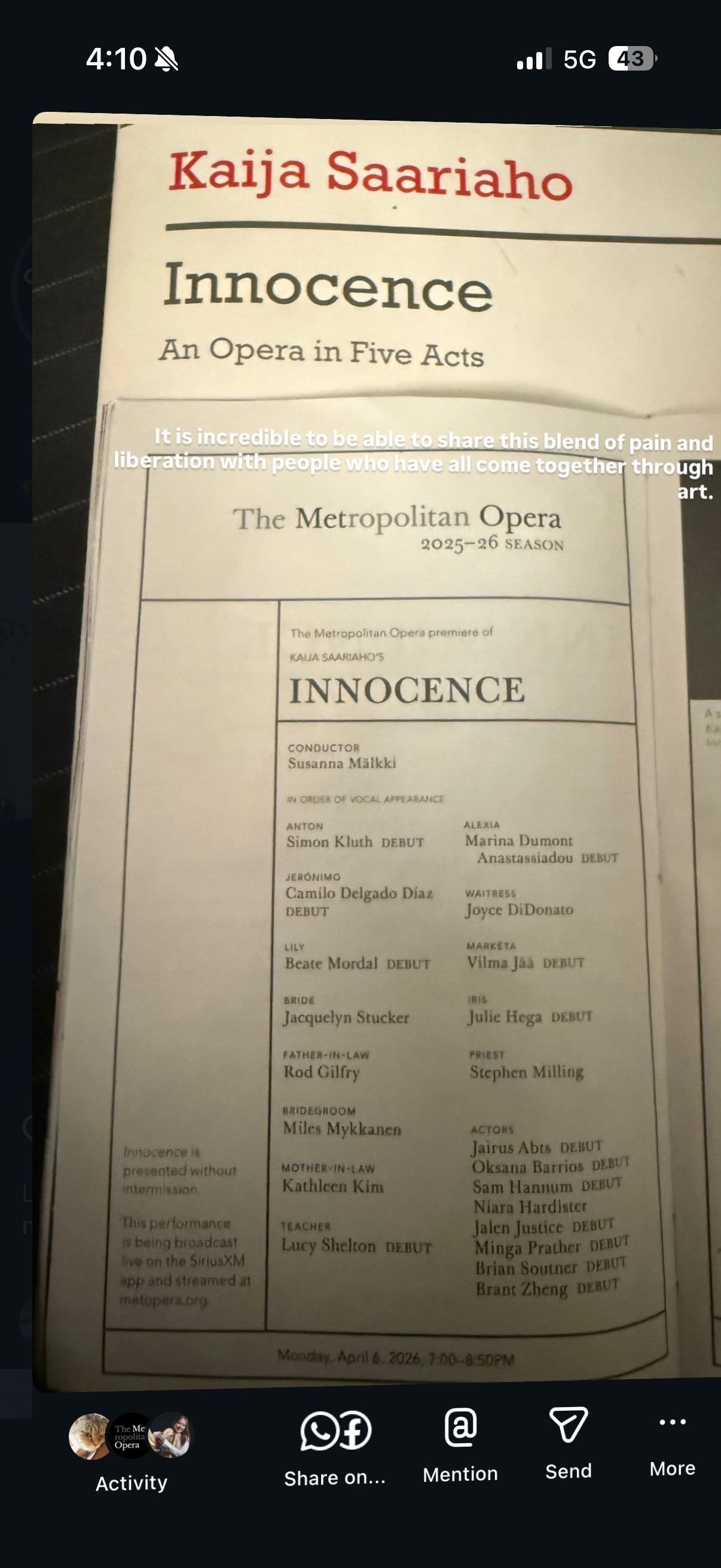
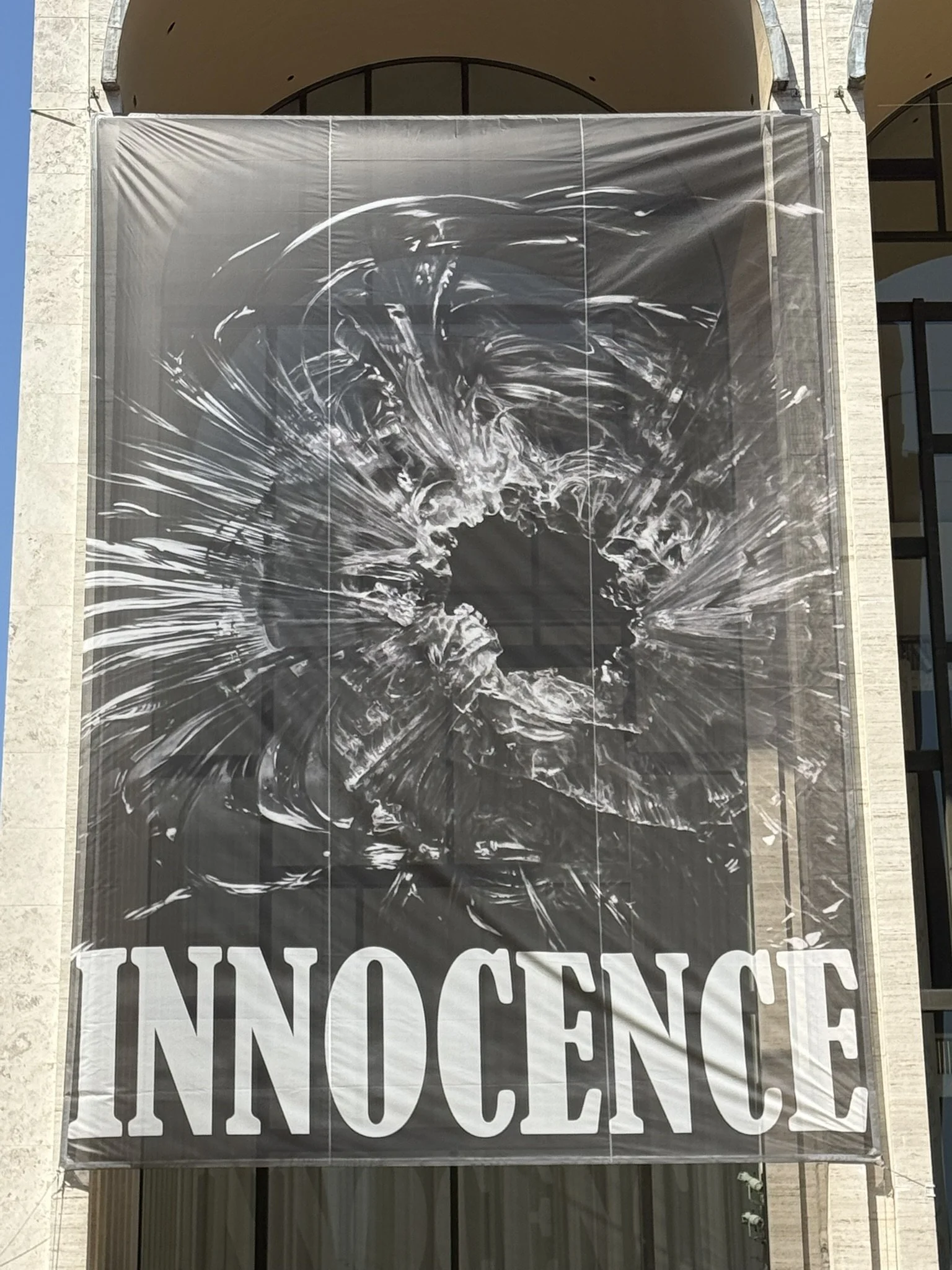
Innocence, an opera by Helsinki-born composer Kaija Saariaho, opened at the Metropolitan Opera on April 6. Premiering originally at the Aix-en-Provence Festival in 2021, its New York debut was delayed by two years due to the pandemic.
Addressing the questions of how trauma-stricken individuals navigate the path toward recovery—and how widely and deeply the ripples of a single act of violence can be etched into human lives—this work traces a journey from condemnation to empathy. Weaving together musical and multilingual perspectives, Saariaho confronts the senseless violence that continues to plague the modern world, depicting within a magnificent sonic fresco how human beings might nonetheless coexist.
Saariaho’s profound love for music permeates every element of the production. The score delicately portrays fundamental human sensations; moving beyond the confines of music and acting alone, the work freely employs diverse media to generate a unified, potent force. Transcending all boundaries, this production marks a pivotal turning point in the history of art—an event of immeasurable significance for both the future of the arts and the audiences who experience it.
At times, the very structure of the orchestral writing seemed to elude definition; its constituent elements were woven together with such exquisite intricacy. This singular world—a distillation of messages from Saariaho and her collaborators that defies the conventional framework of "opera"—reveals its true essence only when experienced live, in person, within the Metropolitan Opera. This is no mere opera; it is a work of total art.
Saariaho noted in her writings that what matters most are the multifaceted consequences unleashed by a single act of violence—and how we choose to confront unexpected tragedy and overcome trauma. *Innocence* confronts the violence inherent in society with a visceral intensity that pierces the soul; it portrays, as a raw and unsparing cry from the heart, the arduous journey toward recovery undertaken by those left behind in the wake of a tragedy—a chain of trauma triggered by a single event. Ultimately, it compels us to ask: just how many people, worldwide, share in this burden of guilt? This work represents the culmination of Saariaho’s artistic journey and her ethical inquiry, depicting—through a multilayered musical tapestry—society’s cycles of violence and trauma. Commissioned by the Royal Opera House in 2013, the project began with a conceptual phase involving the author Sofi Oksanen and the dramaturg-translator Aleksi Barrière. Based on Oksanen’s original premise, Barrière crafted the structural framework of the entire work—including its narrative arc, arias, polyphonic arrangements, and multilingual elements—to ensure its viability as an opera. It was also at his suggestion that the title was changed from *The Uninvited Guest* to *Innocence*. After more than three years of development, the work was completed in 2019 and premiered at the Festival d'Aix-en-Provence in 2021.
Opening night at the Metropolitan Opera was an experience enveloped by the palpable excitement of an audience eager to witness this new work. The Met Orchestra’s technical virtuosity and boundless spirit of inquiry captivated the listeners, opening up a new world of artistic possibility. Through the numerous solos performed by Concertmaster Angela, the ensemble work of the wind section, and the evocative contributions of the bass section and chorus—among countless other elements—the music transcends language to penetrate the human heart in myriad ways; it fosters a sense of shared empathy and ignites a new flame within the souls of the audience.
The musical flame of Saariaho’s score appears and vanishes within the space like a fresco; yet, as the percussion and other sections continuously reiterate a central theme, this instrumental repetition and continuity bridge the two temporal axes of the present and the past, creating the sensation that the tragedy itself is ceaselessly encroaching upon the listener’s consciousness. Saariaho harbored profound empathy for the reality of beloved children being cast out to the margins of society, as well as for the mothers compelled to bear witness to such circumstances. This perspective leads directly to the central inquiry of *Innocence*: the notion that "no one can ever be entirely innocent." The narrative unfolds through the intersection of two distinct timelines—a wedding taking place in the present day and a mass shooting that occurred in the past at an international school—as the voices and memories of the deceased students continue to intrude upon the present moment. The characters in the work harbor a shared tragedy within their hearts; yet, their ways of perceiving and confronting it are far from uniform. Burdened by distinct traumas—ranging from guilt and denial to a profound sense of loss—they remain unable to fully comprehend one another. This fractured inner landscape does not resonate as a unified sound or voice, but rather as a simultaneous chorus of multiple languages, disparate rhythms, and conflicting emotions. Fragments of memory and consciousness emerge through a diverse array of vocalizations—whispers, spoken narratives, noise, and song—while even silence and rupture are incorporated as integral elements of the music, thereby illuminating the very essence of trauma: its inherent ineffability.
This work transcends every boundary. It marks a pivotal moment in the history of art-an event of profound significance for the future of art and its audiences alike.
Author Sofi Oksanen and—on the left—dramaturg and translator Aleksi Barrière; Barrière is holding up Saariaho's score. ”Kaija, knowing she reveled in the precise idea of not doing opera, but something different with the instruments of opera. That something is here now.”-Barrière
作家ソフィ・オクサネン、そしてドラマトゥルク兼翻訳家であるアレクシ・バリエール(左)バリエールがサリアホのスコアを掲げている。「彼女がオペラではなく、オペラの楽器を使った全く新しい何かを創造するというアイデアに心底喜びを感じていたことを知っていた。そして今、その何かがここにある。」ーバリエール
Sometimes, I could not see the orchestration; the music was so elaborately woven by all elements. Even, it shouldn't be Opera, but it was a whole world of Saariaho and other creatives' message. We can't see the real elements unless we come to the Met Opera live. This is total art.
Furthermore, Saariaho’s multilingual approach expands the work by establishing a network that connects disparate cultures and perspectives. Through a rich musical palette ranging from *Sprechgesang* to folk melodies, the characters' inner lives and backgrounds are vividly portrayed. The work thus reflects the "psychological pandemic" spreading across contemporary society as a universal tragedy, bringing the intertwined themes of violence and trauma to the surface in a manner that transcends national borders.
Susanna Mälkki—a conductor and a profound interpreter of Saariaho’s oeuvre—recounted in an interview that, some fifteen years ago, Saariaho informed her via telephone of her decision to compose an opera, explaining that she felt an absolute imperative to keep this particular story alive. While acknowledging the story’s deeply harrowing nature, Mälkki notes that Saariaho nonetheless wished for a light to be kindled at its conclusion. Human beings must, eventually, internally process and come to terms with traumatic events—and, despite everything, they must continue to live. Mälkki suggests that the work embodies a hope: that if one can allow oneself to be transformed by such experiences, a brighter future may yet unfold.
Kaija Saariaho was born in Helsinki in 1952 and developed a close affinity for music from an early age. At university, she pursued studies in architecture, piano, and composition; subsequently, after participating in the Darmstadt Summer Courses, she traveled to Germany to study serialism. However, Total Serialism—the dominant trend of the time—involved the serialization of every musical parameter, from pitch and rhythm to dynamics and timbre, thereby excluding pulse, tonality, and melody; she found this approach stifling.
She declared that she did not wish to construct music through negation, asserting that—within the bounds of artistic sensibility—everything should be permissible. Consequently, she aspired to a creative freedom grounded in selection rather than exclusion.
Upon revisiting Darmstadt in 1980, she encountered the works of Tristan Murail and Gérard Grisey—composers of the French Spectralist school—and subsequently moved to Paris to engage in computer music research at IRCAM. This experience marked a turning point in her artistic trajectory, shifting her style from strict Serialism toward a Spectralist approach that prioritized timbre and resonance.
In her works from the 1980s and 90s, a keen interest in timbre and the incorporation of electroacoustic elements became increasingly prominent. Employing computers to analyze the complex resonances of the cello and using these analyses as a foundation for harmonic structures, she developed a compositional method that treated sound not merely as a structural entity but as a perceptual sensation. The fusion of live performance and electronics yielded rich, polyphonic textures.
Furthermore, Saariaho possessed a synesthetic sensibility, describing the realms of sight and sound as inextricably intertwined. For her, everything—from colors and the textures of light to even scents—was linked to sound, forming a unified, internalized world.
Her primary interest lay in the act of selection—specifically, what elements to choose and how to allow them to resonate. Rather than being constrained by imitation or rigid rules, the freedom to make choices based on her own aesthetic vision lay at the very core of her creative process. Consequently, elements such as pulse, harmony, and melody were incorporated whenever she deemed them necessary.
In *Innocence*, the delicate realms of human experience—including trauma, memory, and interpersonal relationships—are portrayed through a polyphony of sound, language, and theatrical performance. This opera embodies the transition from a formalism rooted in the prohibitions of Serialism to a musical aesthetic grounded in sensory perception and expressive depth. It symbolizes a major current in late 20th-century music—one that treats sound as a tangible sensory experience and shapes musical form through free choices guided by a distinct aesthetic sensibility.
What Saariaho achieved in *Innocence* is a compositional mode that integrates freedom and structure from within; the key to this lies in centering the music around *timbre*—that is, tone color. While traditional composition has typically revolved around harmony, melody, and rhythm, Saariaho constructs her music through the evolution of timbre itself. For instance, she translates into music the very processes by which the resonance of noise gradually converges into a pure tone, or by which dark sonorities transform into bright ones. This approach stems from her work at IRCAM in Paris, where she utilized computers to perform harmonic analysis on sound spectra, subsequently extracting musical material from the resulting data. Far from being arbitrary or a manifestation of absolute freedom, these sonorities possess a natural order rooted in the inherent properties of sound itself. Consequently, this creates acoustic trajectories in which a single sound gradually unfolds, and the timbres of various instruments blend together, blurring their boundaries.
Nevertheless, her choices of sound—as well as the direction of their evolution and the balance of their resonance—are subject to certain constraints, all of which are grounded in her personal aesthetic vision. In *Innocence*, vocal solos and choral passages are interwoven with these spectral sonorities to underpin the dramatic narrative. Folk songs, diverse vocal styles, and different languages are integrated within a single acoustic tapestry, creating a multilayered sense of unity. Ultimately, Saariaho’s music represents a synthesis of freedom and structure, sustained by an aesthetic philosophy deeply rooted in the auditory experience.
Spectral music is a compositional method that takes the harmonic overtones of a sound—its spectrum—as its fundamental starting point. Rather than constructing music by assembling harmonies or melodies, the composer analyzes a single sound and derives the musical material from the distribution of frequencies contained within it. It is, in essence, a concept of *extracting* music from within sound itself, rather than *constructing* it from external elements.
In this approach, the harmonic overtones of a single sound may be distributed across an entire orchestra, or the very process of noise gradually transforming into a pure tone becomes the flow of the music itself. Here, the focus shifts away from melody and rhythm toward the evolution of timbre and resonance; likewise, time is no longer segmented by a metrical beat, but is instead treated as a continuous process of sonic transformation. Spectral music is shaped through a constant interplay between computer-aided acoustic analysis and subjective aesthetic judgment, sustained by a fusion of science and sensibility. Saariaho, however, did not limit this approach to mere acoustic exploration; rather, she intertwined it with human emotion and drama. The sonic landscape of *Innocence* serves as the internal scaffolding for the entire work, facilitating the unfolding of complex themes, including multilingual texts, distinct character portrayals, memory, and trauma.
Yet, within this context, elements from which she once maintained a certain distance—such as pulse, tonal centers, and melody—now emerge; they rise naturally from within the very resonance of the sound itself. The human voice, too, is perceived as a continuous spectrum—ranging from whispers and spoken dialogue to singing and even pure noise—thereby blurring the boundaries between word and sound. Furthermore, the multilayered temporalities of the present-day wedding, a past tragedy, and the realm of the deceased coexist simultaneously, with the acoustic spectrum allowing these disparate times and perspectives to inhabit the same space without fragmentation.
At the same time, while *Innocence* grapples with ethically fraught subjects—such as perpetration and victimization, guilt and silence—it presents them without simplification, maintaining a multiplicity of perspectives. This delicate balance is deeply intertwined with what Saariaho describes as "good taste"—that is, a profound reliance on aesthetic judgment.
Thus, *Innocence* stands as a work in which an acoustic structure grounded in spectral music—alongside freely reintegrated elements of melody, harmony, and pulse—converges with a complex drama exploring human memory and trauma. It represents a "post-spectral" phase, in which spectral music’s treatment of sound as a tangible substance is seamlessly fused with the expression of the human condition.
ポスト・スペクトラム、イノセンス。メットで初演。
ヘルシンキ生まれの作曲家カイヤ・サーリアホのオペラInnocenceがメトロポリタン歌劇場で4月6日に公開された。エクサンプロヴァンス音楽祭で2021年に初演され、パンデミックで2年遅れの公開となった。
トラウマを抱えた人々がどのように回復へ向かい、一つの暴力が引き起こす波紋がどれほど広く深く人間の人生に刻印されるのかという問いに対し、これは非難から共感へと至る旅路である。サーリアホは音楽と多言語の視点を結びつけ、現代に繰り返される無意味な暴力と向き合い、その中で人間がいかに共存しうるかを壮大な音響フレスコで描いた。
登場するすべての要素にサーリアホの深い音楽愛が溶け込んでいる。音楽は人の根本にある感覚を繊細に描き出し、音楽や演技にとどまらず異なるメディアを自在に用い、統合された力を生み出す。この作品はあらゆる境界を超越し、芸術史上重要な転換点であり、芸術の未来、そしてそれを享受する聴衆の双方にとって計り知れない意義を持つ出来事である。
ある場面ではオーケストラの構造がわからなかった。あまりにも緻密に要素が織り上げられていた。このオペラという枠には収まらないサーリアホをはじめとするクリエイターたちのメッセージが凝縮された一つの世界は、メトロポリタンオペラに足を運び生で体験して初めて、その真髄を目の当たりにすることができる。これは単なるオペラではない。統合芸術である。
サーリアホは一つの暴力行為がもたらす多種多様な結果、そして私たちが予期せぬ悲劇にどう向き合いトラウマをどう克服するのかが重要だと書き残している。社会の暴力に向き合い深く心に突き刺さるInnocenceは、ある事件が引き起こしたトラウマの連鎖と悲劇の余波の中で残された人々の回復への道のりを、生々しく容赦のない心の叫びとして描く。そしてこの罪悪感をどれほど多くの人が分かち合っているのかという問いを投げかける。
これはサーリアホが到達した芸術とその倫理探究の集大成であり、社会の暴力とトラウマの連鎖を多層音楽で描いている。2013年ロイヤルオペラハウスから委嘱を受け、作家ソフィ・オクサネン、そしてドラマトゥルク兼翻訳家であるアレクシ・バリエールと構想が始まった。オクサネンの原案をもとにバリエールはオペラとして成立させるため構成や語り、アリア、ポリフォニーの配置、多言語化など作品全体の骨格を形作った。タイトルも彼の提案でThe Uninvited GuestからInnocenceに変わり、3年以上の歳月をかけて2019年に完成し、2021年にエクサンプロヴァンス音楽祭で初演された。
メトロポリタン歌劇場での初日は、この新作にワクワクする人たちの気持ちに包まれる体験だった。メットオケの卓越した技術と果てしない探究が彼らの興味を引き出し新たな世界を開く。コンサートマスター、アンジェラの数々のソロ、管楽器のアンサンブル、ベースや合唱の効果、それに留まらず音楽はトラウマを様々な形で言葉を超えて人々の心に入り込み、一つの共感を与え人の心に新しい炎を灯す。
サーリアホの音楽の炎はフレスコのように空間に現れては消えていくが、打楽器や他のパートが同じテーマを繰り返し続けることで、その器楽の反復と連続が、現在と過去という二つの時間軸を結びつけ、悲劇そのものが聴き手の心へ侵入し続ける。彼女は愛する子どもが社会の周縁へ追いやられていく現実と、それを見つめざるを得ない母親たちへ深い共感を持っていた。この視点はInnocenceの「誰も完全に無垢ではあり得ない」という問いへとつながる。物語は現在の結婚式と過去に起きた国際学校の銃乱射事件という二つの時間が交錯し、亡くなった生徒たちの声や記憶が現在に侵入し続ける。
登場人物たちは同じ悲劇を心に秘め、その受け止め方や向き合い方は一様ではなく、罪悪感、否認、喪失感といった異なるトラウマを抱え互いに理解しきれないままでいる。この分断された内面は統一された音や声ではなく複数の言語、異なるリズムや感情として同時に響く。記憶や意識の断片はささやきや語り、ノイズ、歌といった多様な発声によって立ち現れ、さらに沈黙や断絶さえも音楽の一部として取り込まれることでトラウマの本質である語りえなさを浮かび上がらせている。
またバリエールの多言語化は異なる文化や視点を接続するネットワークとして作品を拡張させる。シュプレヒゲザングから民謡に至る多彩な音楽によって登場人物の内面や背景が表現され、普遍的な悲劇として現代社会に広がる心理的パンデミックを映し出し暴力とトラウマが国境を越えて浮かび上がる。
指揮者でありサーリアホ作品の理解者であるスザンナ・マルッキはインタビューの中で約15年前にサーリアホからオペラを書くことにしたと電話で告げられ、どうしてもこの物語を語り継ぐ必要があったからだと伝えられたと語っている。彼女はこの物語は極めて悲痛であるとしながらもサーリアホがその終わりに光が灯ることを望んでいたと述べる。人はいつか出来事を内面で整理し受け入れ、それでもなお生き続けなければならない。そしてその経験によって自らが変化し得るならば未来はより明るいものへと開かれる、この作品にはそのような希望が託されていると語っている。
サーリアホは1952年にヘルシンキに生まれ幼いころから音楽に親しんだ。大学では建築、ピアノ、作曲を学び、その後ダルムシュタット夏期講習会を経てドイツでセリエリズムを学んだ。しかし当時主流であったトータルセリアリズムは音高、リズム、強弱、音色に至るまで数列化し拍動や調性、旋律を排除するものであり、彼女はそれに息苦しさを感じていた。
彼女は否定によって音楽を構築したくはない、良識の範囲内であればすべては許されるべきだと語り、排除ではなく選択に基づく創作の自由を志向した。
1980年再びダルムシュタットを訪れた彼女はフランスのスペクトル楽派の作曲家トリスタン・ミュライユとジェラール・グリゼの作品に触れ、パリへ移りIRCAMでコンピュータ音楽の研究に取り組む。この経験は彼女の作風が厳格なセリエリズムから音色や響きを重視するスペクトルのアプローチへと移行する転換点となった。
1980年代から90年代の作品では音色への関心と電子音響の導入が顕著となる。コンピュータを用いてチェロの複雑な響きを分析しそれを基盤に和声構造を築くなど音を構造ではなく聴こえた感覚として扱う作曲法を展開した。生演奏とエレクトロニクスの融合によって豊かな多声のテクスチュアが生み出されている。
またサーリアホは共感覚の感受性を持ち視覚と音の世界は一体であると語っている。色彩や光の質感さらには香りに至るまでが音と結びつき内面で統合された世界を形成していた。
彼女は何を選び取りどのように響かせるかに関心があった。模倣や規則に縛られるのではなく自らの美学で選択する自由が創作の核心だった。そのため拍動や和声旋律といった要素も必要であれば取り入れられた。
Innocenceではトラウマや記憶、他者との関係といった人間の繊細な領域が音響と言語舞台表現のポリフォニーとして描かれる。このオペラはセリエリズムの禁止に基づく形式主義から感覚と表現に根ざした音楽への転換を体現している。音を耳で感じるものとして扱い美意識に支えられた自由な選択によって音楽を形づくる20世紀後半の音楽の大きな流れを象徴する。
サーリアホがInnocenceで成し遂げたのは自由と構造を内側から統合する音楽づくりであり、その鍵が音色、ティンバーを中心に音楽を作る発想である。これまでは和声や旋律やリズムが軸だったが彼女は音色そのものの変化で音楽を作る。例えばノイズの響きが徐々に純音へと収束していく過程や暗い音響が明るい響きへ変わっていく様子をそのまま音楽にしている。これはパリのIRCAMで音のスペクトルをコンピュータで倍音分析しそこから素材を抽出しているためである。この音響は恣意的でも完全な自由でもなく音そのものの性質に根ざした自然な秩序を備えている。そのため一つの音が徐々に展開し異なる楽器の音色が溶け合い境界を曖昧にしていく音響の軌跡が生まれる。
しかし彼女の音の選択や変化の方向や響きのバランスには制約がありそれは彼女の美意識に根差している。Innocenceではスペクトルな音響に歌やコーラスが加わりドラマを支える。民謡や異なる歌唱や言語は一つの音響の中で統合され多層的な統一感を生む。サーリアホの音楽は自由と構造が聴覚に根ざした美学に支えられている。
スペクトル音楽とは音の倍音すなわちスペクトルそのものを出発点として作曲する方法である。和声や旋律を組み立てるのではなく一つの音を分析しその中に含まれる周波数の分布から音楽を導く。いわば音楽を作るのではなく音の中から取り出す発想である。
このアプローチでは一つの音の倍音をオーケストラに分散させたりノイズが徐々に純音へと変化していく過程そのものが音楽の流れとなる。ここでは旋律やリズムよりも音色と響きの変化が中心となり時間も拍によって区切られるのではなく音が連続して変容していくプロセスとして扱われる。
スペクトル音楽はコンピュータによる音響解析と耳による審美判断を往復することで形づくられ科学と感覚の融合によって支えられている。サーリアホはこの手法を単なる音響探求にとどめず人間の感情やドラマと結びつけた。Innocenceの音響は作品全体を内側から支え多言語のテキストや明確な人物像記憶やトラウマといった複雑なテーマを展開していく。
しかしここではかつて彼女が距離を感じていた拍動や調性の重心旋律といった要素も現れ音の響きの内部から自然に浮かび上がってくる。声もまたささやき語り歌唱さらにはノイズに至るまで連続したスペクトルとして捉えられ言葉と音の境界は曖昧になる。さらに現在の結婚式と過去の事件、そして死者の時間が同在する多層な時間が重なり合い、音響スペクトルが異なる時間や視点を分断することなく共存させている。
同時に、この作品は加害と被害、罪悪感と沈黙といった倫理的に困難な主題を扱いながら、それらを単純化せず多様な視点を保ったまま提示する。そのバランスはサーリアホが語る、グッドテイスト。すなわち審美判断と深く結びついている。
このようにInnocenceはスペクトル音楽に基づく音響構造を自由に再統合し旋律、和声、拍動そして、人間の記憶とトラウマを扱う複雑なドラマが結びついた作品であり、音を物質として扱うスペクトル音楽が人間表現と融合したポストスペクトルの段階を示している。
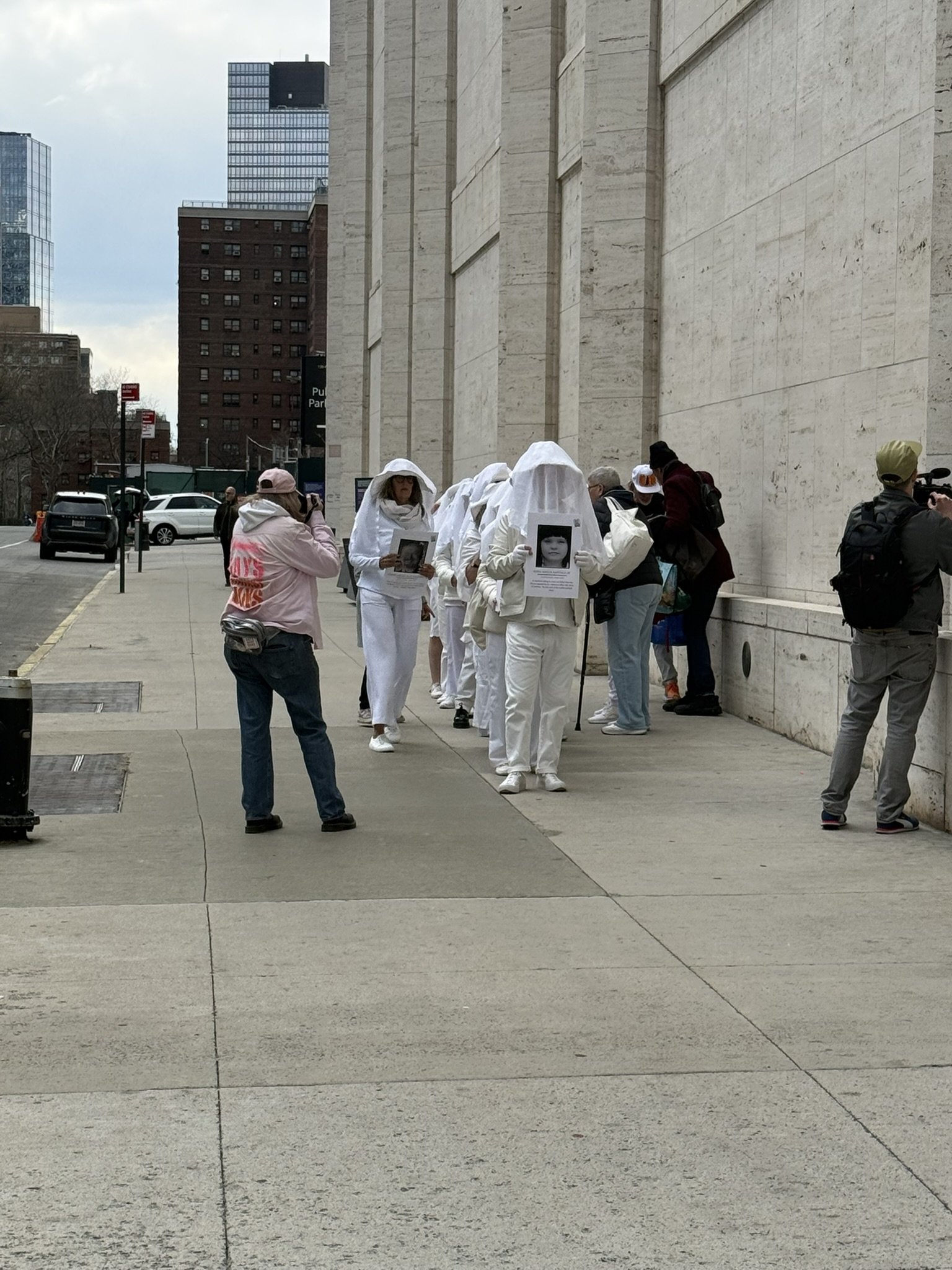
One mother experienced her first visit to the Metropolitan with a sense of innocence.