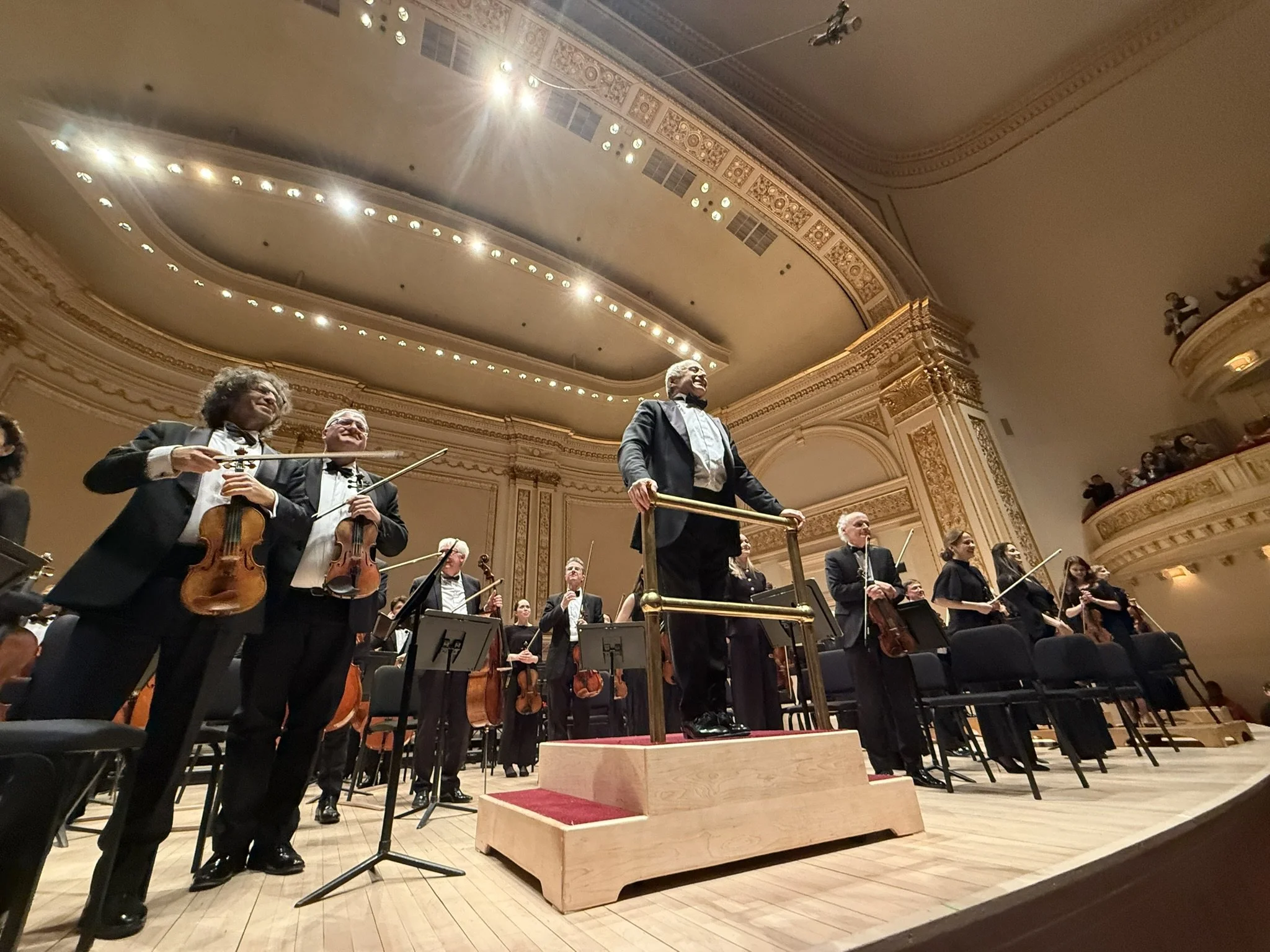
Budapest Festival Orchestra and conductor Iván Fischer at Carnegie Hall on 2.6.2026. The orchestra members come out without instruments with conductor Iván Fischer to the stage,
and start to sing Arvo Pärt's Summa (Sum meaning "to sum up" or "to gather"). This world-renowned orchestra, at Carnegie Hall, sang a Credo—"I believe." Women stood in a line in front, men behind them, repeating Pärt's unique tintinnabuli melodies and rhythms. Their vocal and phrasing were simple and distinctive, giving the impression of chanting rather than singing. Each individual voice sounded like light passing through a prism, as if the light of their belief was descending from within. The light they believed in seemed to descend from the sides and back of Carnegie Hall. It was a unique sensation, as if everyone were calling out to one another in hushed tones. A wave of light, representing their belief, seemed to descend into the heart.
In Tchaikovsky's Violin Concerto, the orchestra's individual voices supported Maxim Vengerov's eloquent, rich solo. It felt less like accompaniment and more like a mutual exchange, not an external embellishment, but rather the raw heart and intellect becoming sound, the music breathing with life. Conductor Iván Fischer seemed to be constantly posing the question, "What do you think?" to the music itself. Humor and intelligence coexisted among the musicians, each drawn to and responding to Vengerov's tone and phrasing. It was different from a European chamber orchestra and shared a sense of individual independence. The movement of each voice was audible beyond the strings, and the simple whispers of the horns were audible. Tchaikovsky's post-marriage tragedy was heard as a fresh and tangible concerto experience. For the encore, Vengerov played a piece from Bach's violin sonatas. In the second half, during Symphony No. 2, I enjoyed the transparent interplay between the members of the BFO. As Fischer asked, as if "What do we do?" regarding the spirit of nature depicted by Brahms, the orchestra began to breathe. The subtle angles of harmony and timbre, the rich low and mid-range tones, and the warmth of the brass and cellos, usually imperceptible, became clear. The delicate overlapping of each part reminded me of the individual voices I had heard in the Pärt piece. Like light passing through a prism, the ascending and descending lines of sound mingled and repeated, overlapping with the breath of nature. Within Fischer's unique pacing, the musical axis was always present somewhere, but the tempo and articulation were not fixed; they moved like a living organism. The music's breath came alive in the moment, making the symphony sound like a conversation. Waves of emotion naturally surged, creating a feeling of warmth. The musicians seemed to hold small worlds within themselves, and I felt even deeper expression beneath the surface of their performance. The sound of the bass clarinet came from behind the strings, and it was clear that the musicians were playing with their own breath within the space Fischer created.
For the encore, a medley of Hungarian folk dances was performed by violin, viola, and double bass. It wasn't refined, urban music, but rather the kind of music Brahms himself would have heard – short, powerful strokes of the double bass bow creating a strong driving force, the viola providing support in the middle, and the violin dancing above. The audience clapped along to the rhythm, sometimes listening intently to the violin's movements. The music seemed to return from the concert hall to the people's hands. It was as if the BFO and Fischer were saying, "Look, this is where we started."
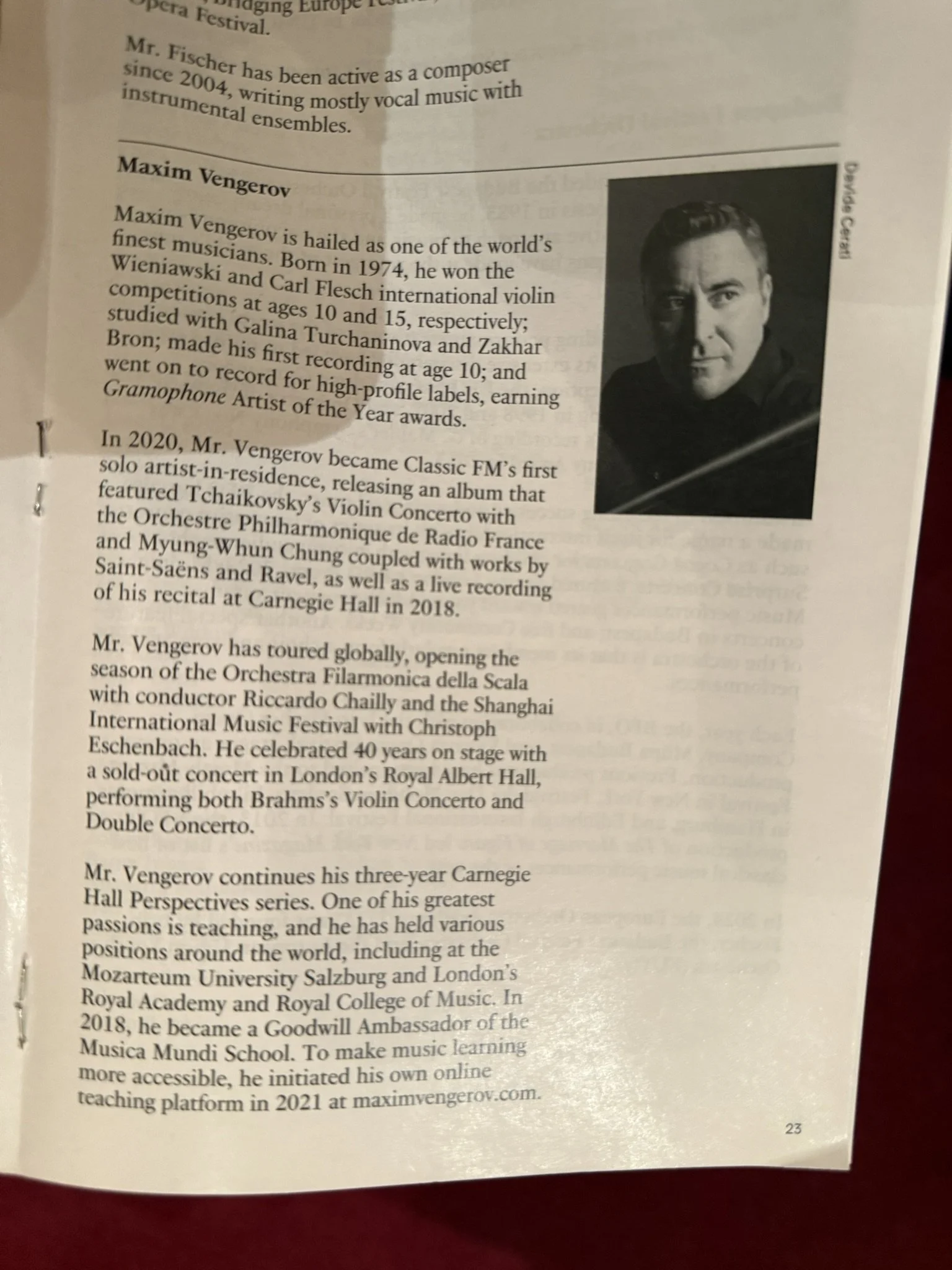
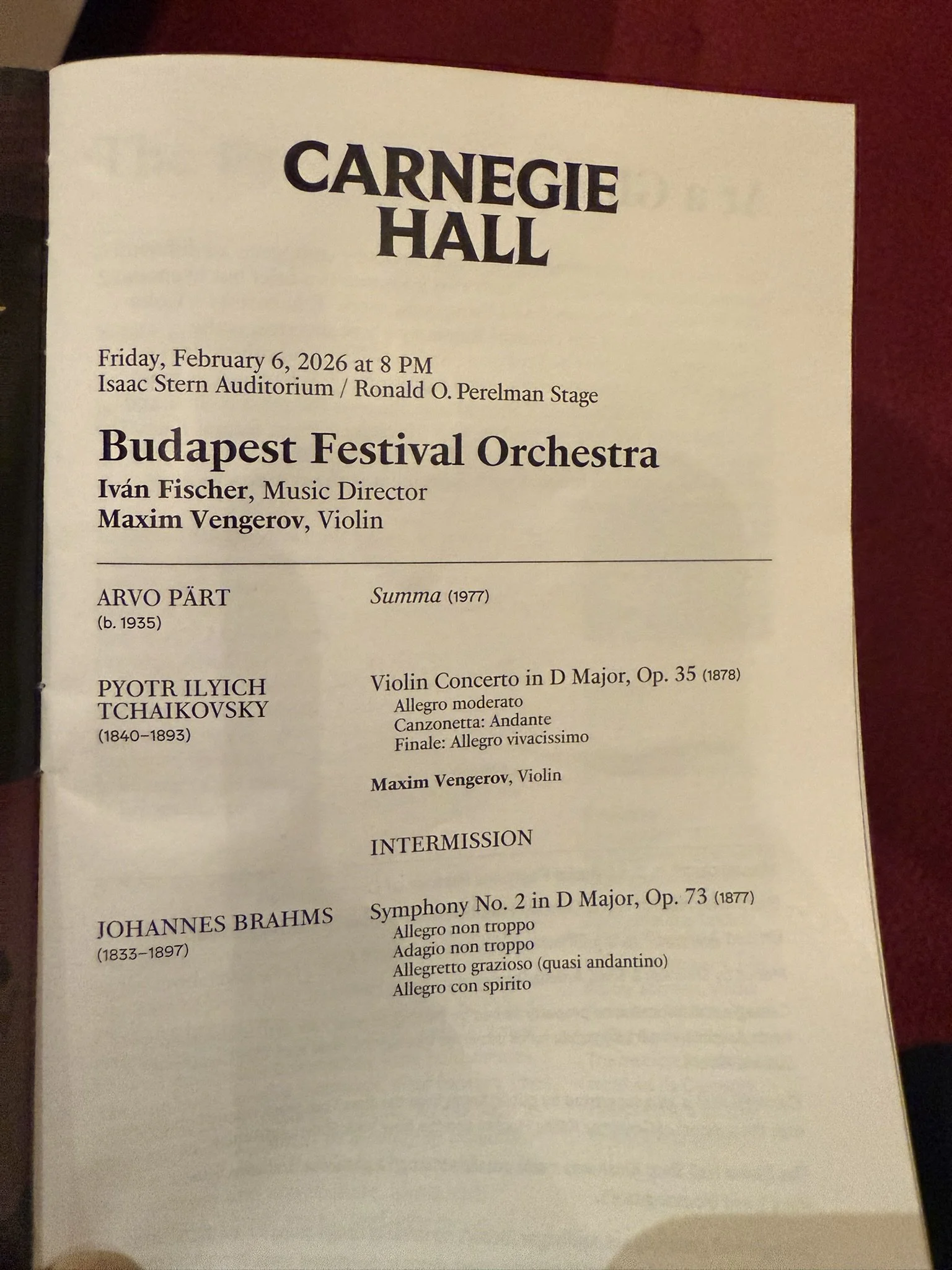
Performers
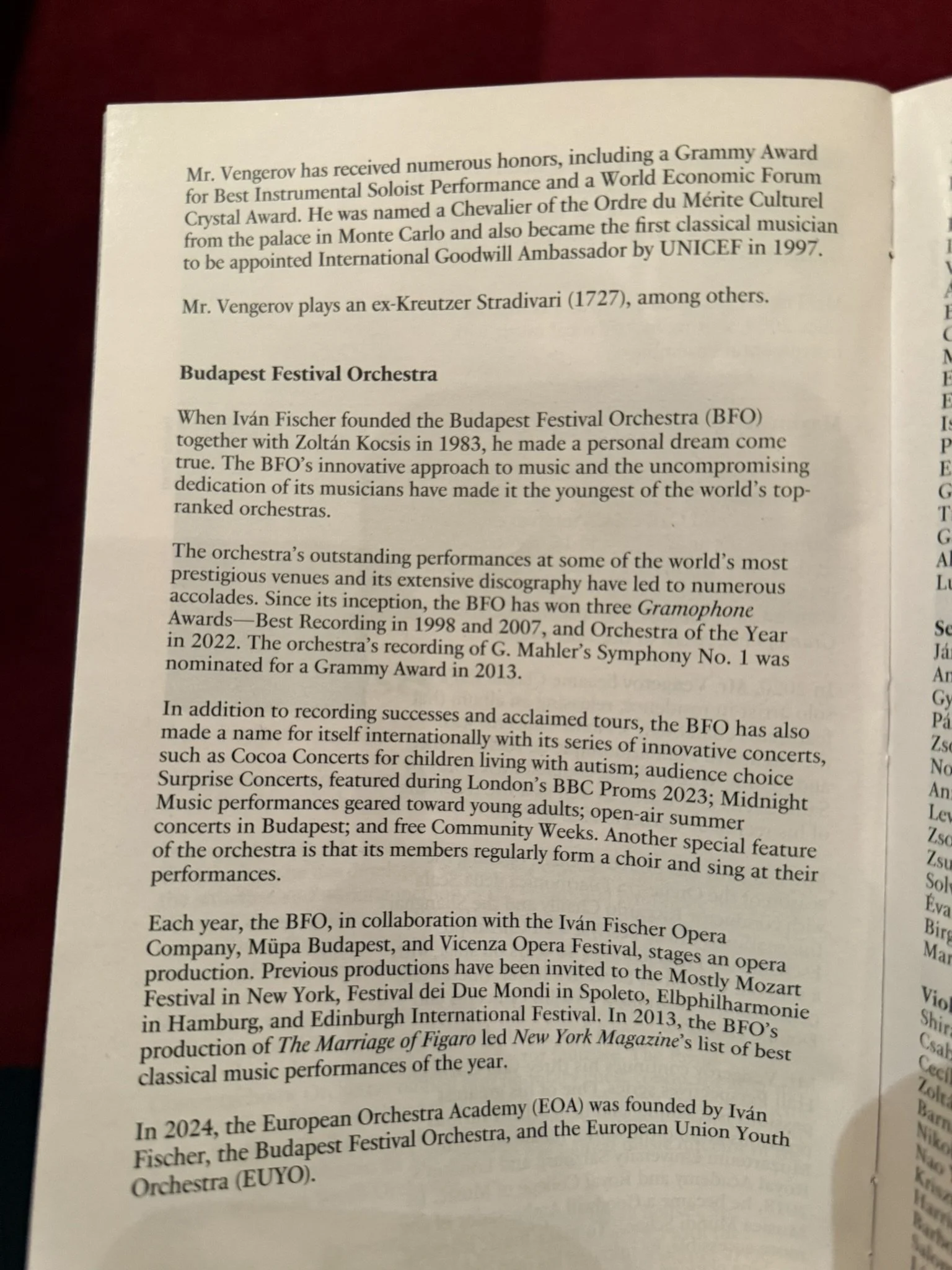
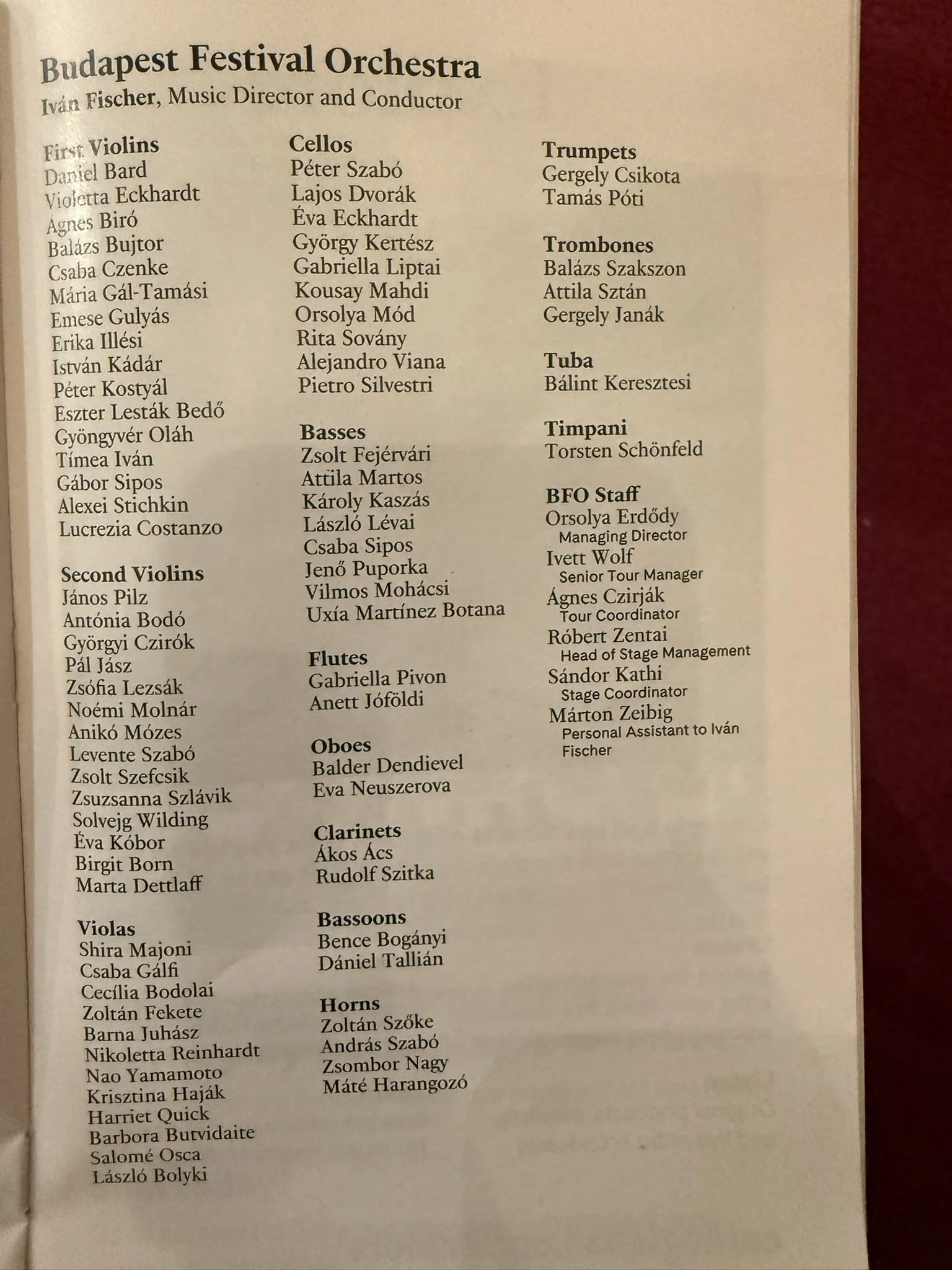
Budapest Festival Orchestra
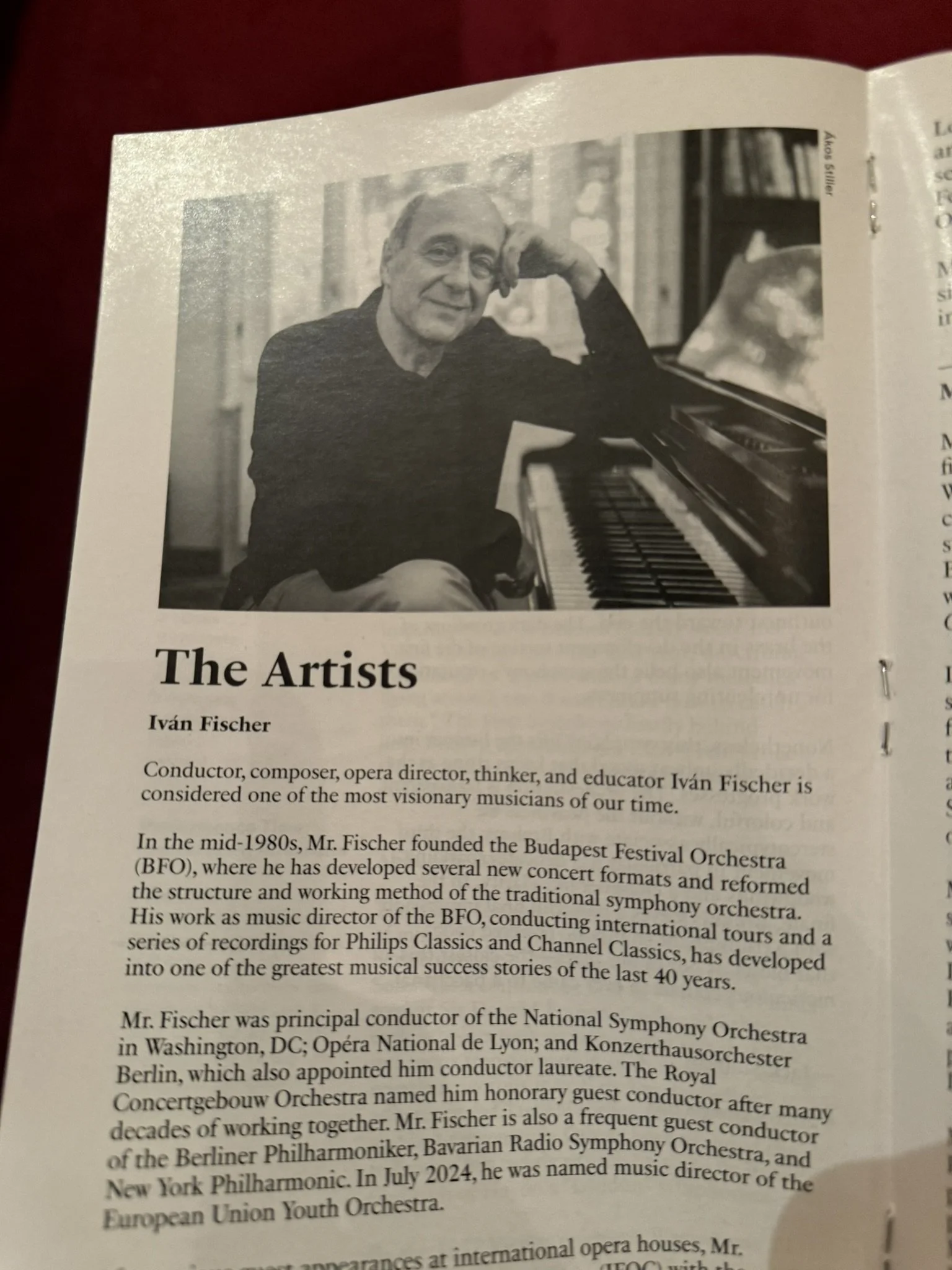
Iván Fischer, Music Director
Maxim Vengerov, Violin
Program
ARVO PÄRT Summa
TCHAIKOVSKY Violin Concerto
BRAHMS Symphony No. 2
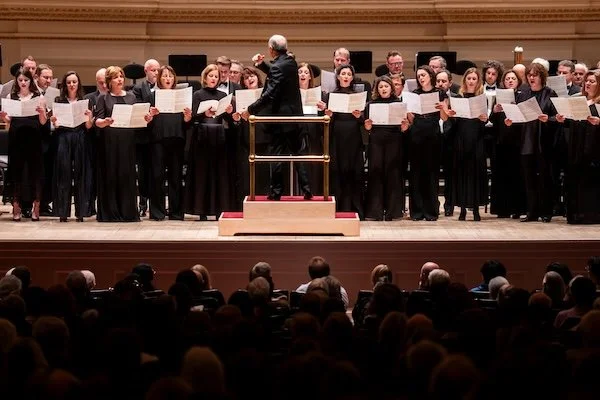
Arvo Pärt’s Summa to open Friday night’s concert at Carnegie Hall. Photo: Chris Lee
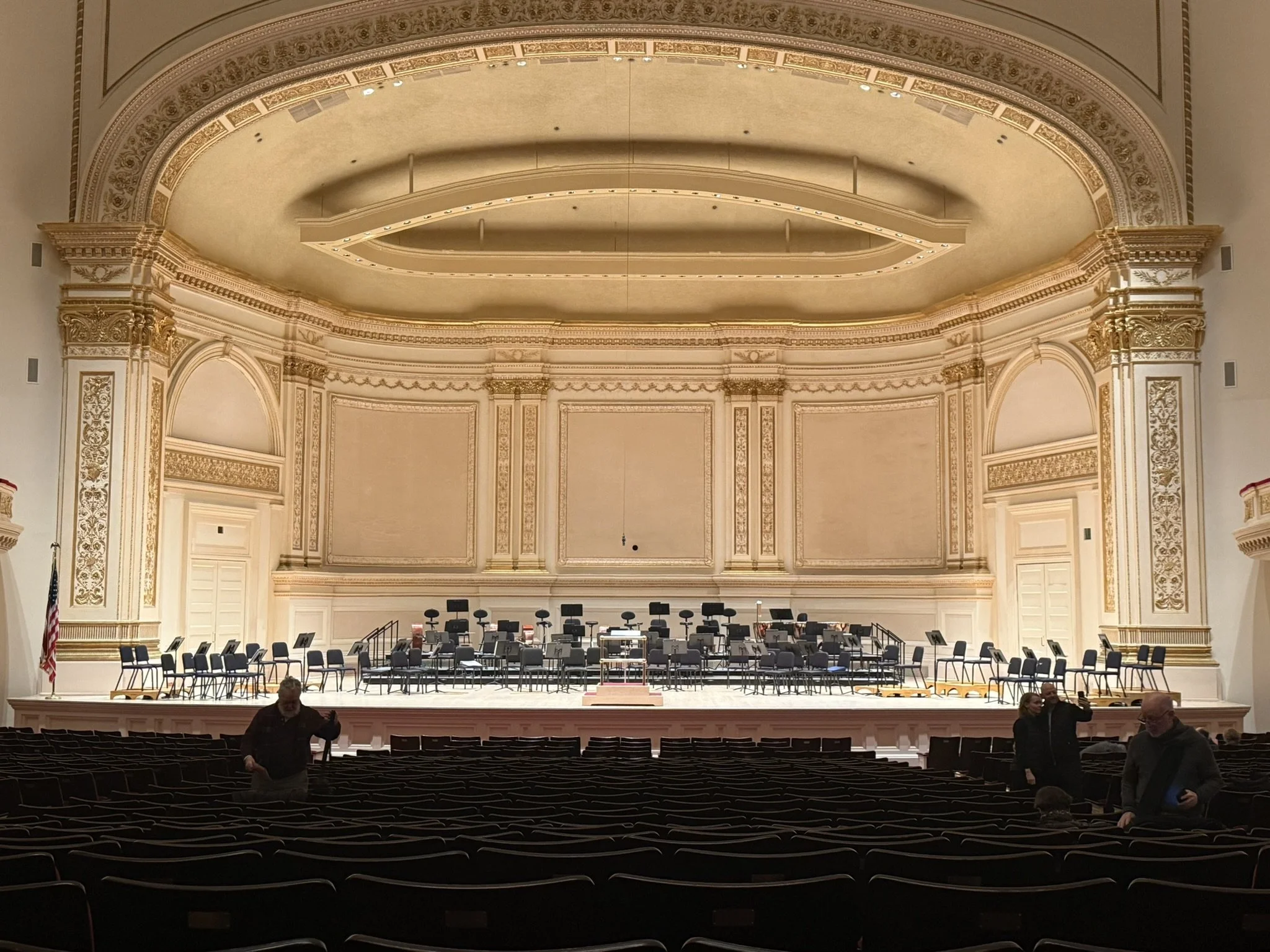
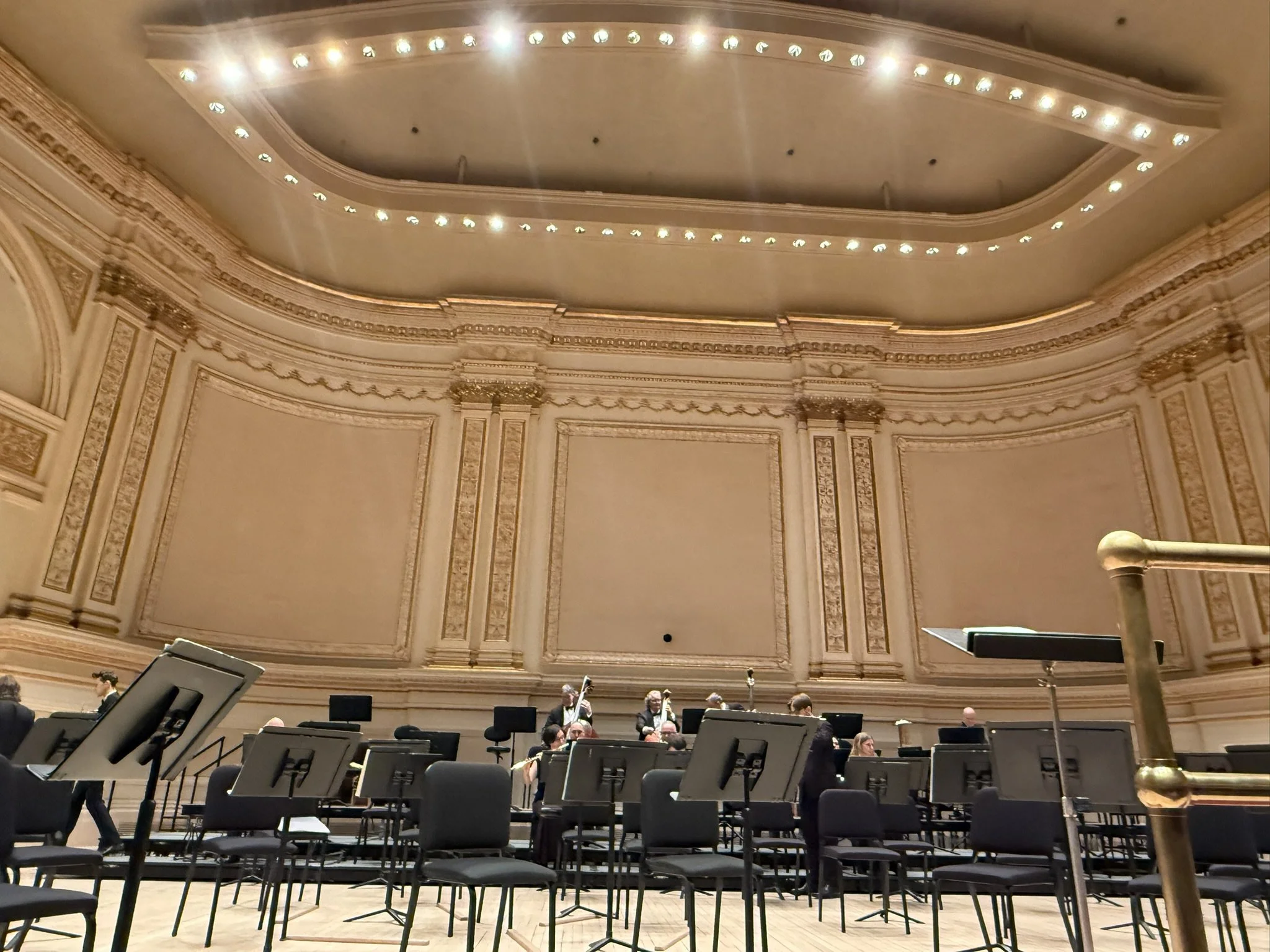
Basses on the back of the stage.
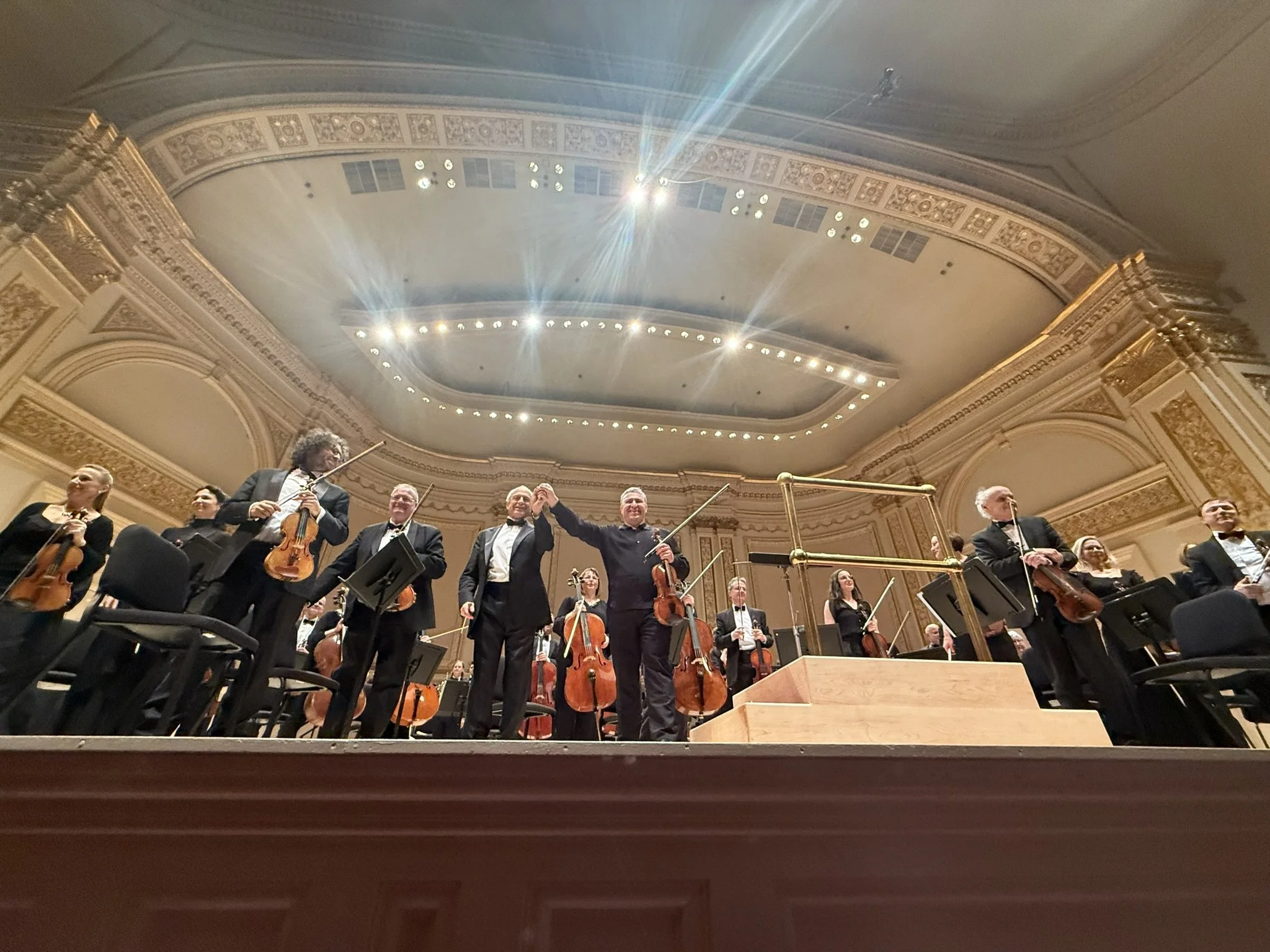
Many of the members are same generation to Vengerov.
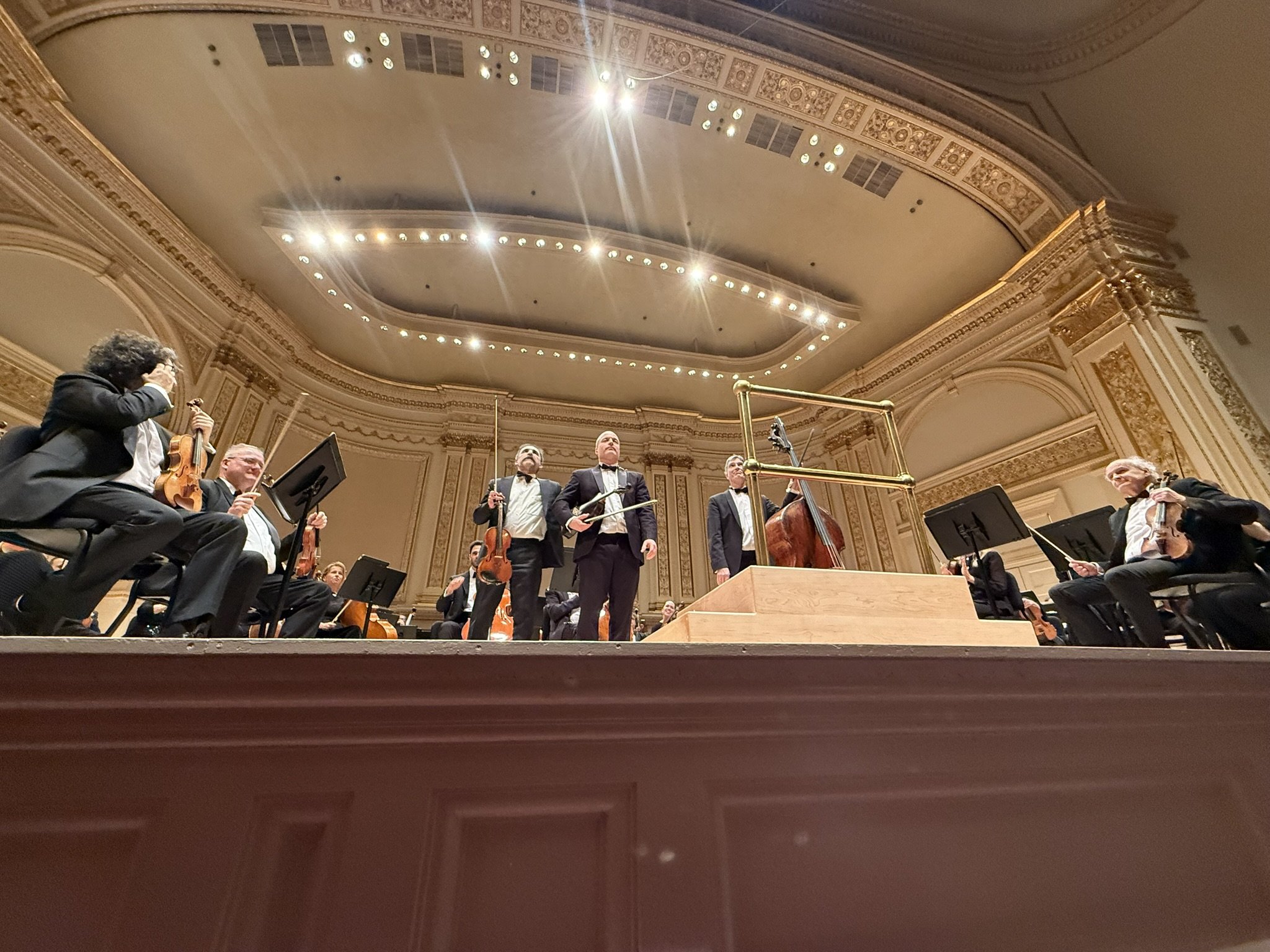
The origin of Brahms, Hagarian Dance by the three orchestra members.
ブダペスト祝祭管弦楽団と指揮者イヴァン・フィッシャーが、2.6.2026、カーネギーホールにやってきた。時間になると、指揮者のIván Fischerも混じってステージにオーケストラのメンバーが現れ、ペルトのSumma(Sumは「合計する・集める」の意味)を歌った。世界で評判の高いオーケストラがカーネギーで声を合わせるCredo―私は信じる。前に女性、後ろに男性が横一列に並び、ペルト独特のティンティナブリのメロディとリズムを繰り返す。発声や語尾が素朴で独特で、歌っているというよりは唱えているという印象だった。彼ら一人ひとりの声が、プリズムの中を通る光のように聴こえてきて、声が内側に光が下りてくるようだ。彼らが信じる光が、カーネギーホールの横からも後ろからも下りてくる。独特な感覚で、内緒話をみんなで呼び合っているようでもあった。内側に信じるという光の波が、心の中に下りてくるようだった。
チャイコフスキーのヴァイオリン協奏曲でも、楽員一人ひとりの声がマキシム・ベンゲロフの雄弁で豊かなソロを見事に支えた。それは伴奏というより互いに呼び合うようで、外側を飾るのではなく、裸の心や知性がそのまま音色になり音楽は生きた呼吸を繰り返す。指揮者イヴァン・フィッシャーは「みなさんはどう思う?」と音楽そのものに問いを投げ続けているようだった。そこには楽員のユーモアと知性が共存し、ベンゲロフの音色やフレーズに互いが引き寄せられ、応答し合う。ヨーロッパの室内管弦楽団とも違う、個人の独立した感覚を共有している。弦の向こうから各声部の動きが見え、ホルンの素朴なささやきも届く。チャイコフスキーの結婚後の悲劇も、新鮮で実体のある協奏感覚として聴こえる。アンコールは、バッハのバイオリンソナタからベンゲロフが演奏した。
後半、交響曲第2番では、BFOの透明な心同士の引き合いを楽しんだ。ブラームスが描いた自然の精神を、フィッシャーが「みんなどうする?」と呼びかけると、オーケストラが呼吸し始める。普段は見えない和声の角度や音色、豊かな中低音、ブラスやチェロの温もり。パートごとの微妙な重なりは、ペルトで聴いた彼ら一人ひとりの声を思い出させる。プリズムを通る光のように、上行と下降が混じって繰り返される音の彩と、自然の呼吸が重なる。フィッシャーの独特な間の中で、音楽の軸は常にどこかに存在し、テンポやアーティキュレーションは固定されず、生き物のように動く。その場の音楽の息づかいが生き生きと湧き起こり、交響曲がまるで会話しているかのようだ。感情の波が自然に押し寄せ、あたたかさを感じる。楽員たちは内側に小さな世界を抱えていて、その表現の奥にさらに表現を感じる。弦の向こうからはバスクラの響きも聴こえ、フィッシャーが作る間の中で楽員たちは自分の呼吸で演奏しているのが伝わる。
アンコールでは、ヴァイオリン、ヴィオラ、コントラバスによるハンガリーの田舎風の踊りのメドレーが演奏された。洗練された都会の音楽ではなく、当時ブラームスも耳にしただろう、短く太いコントラバスの弓が力強い推進力を生み、ヴィオラが真ん中で支え、その上でヴァイオリンが踊る。リズムに合わせて聴衆は手拍子を打ち、時にヴァイオリンの動きに耳を澄ます。音楽が、コンサートホールから人の手へと戻ってくるようだ。BFOとフィッシャーが「ほら、これが僕たちの出発点だよ」と語りかけているようだった。