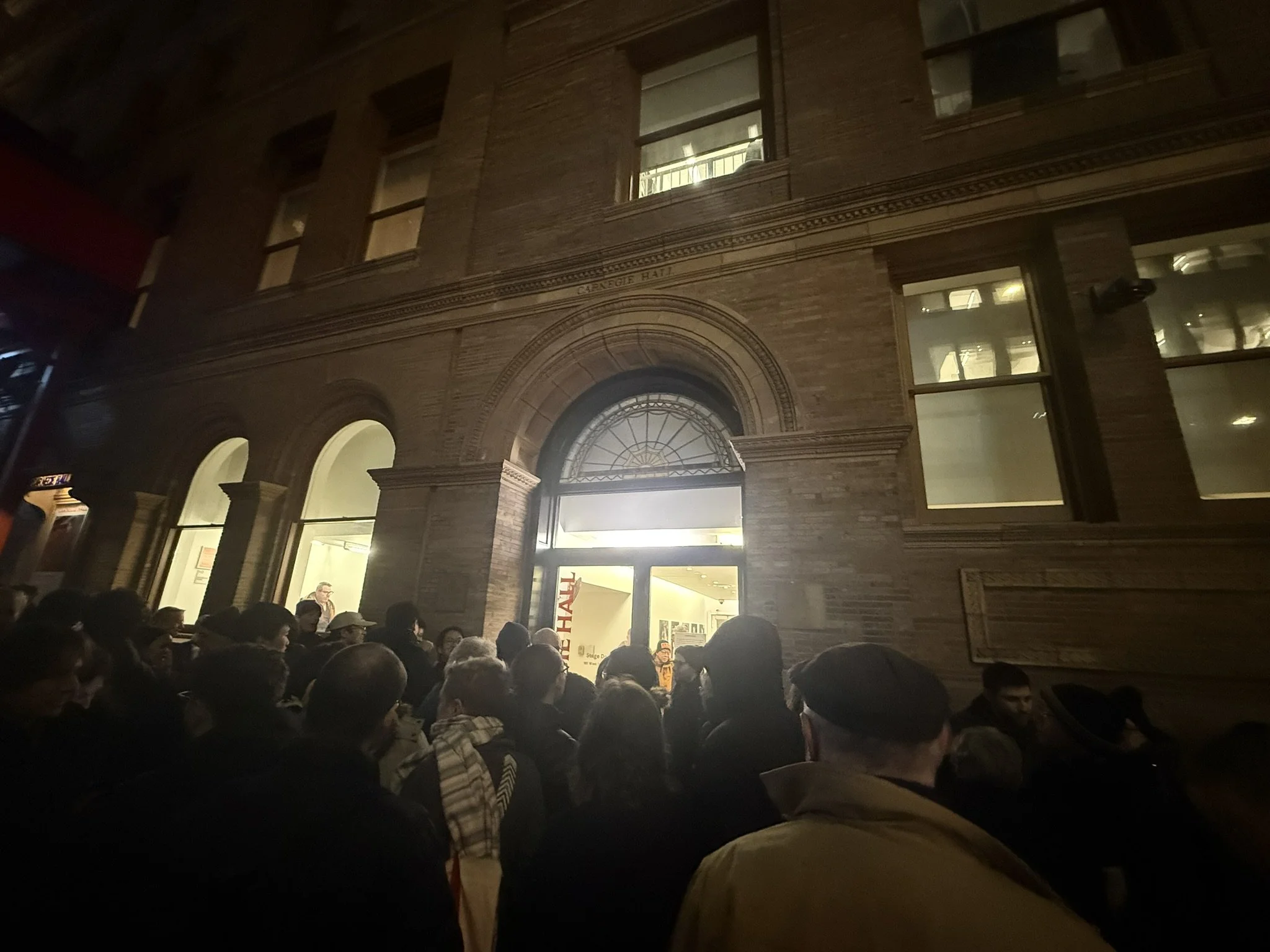
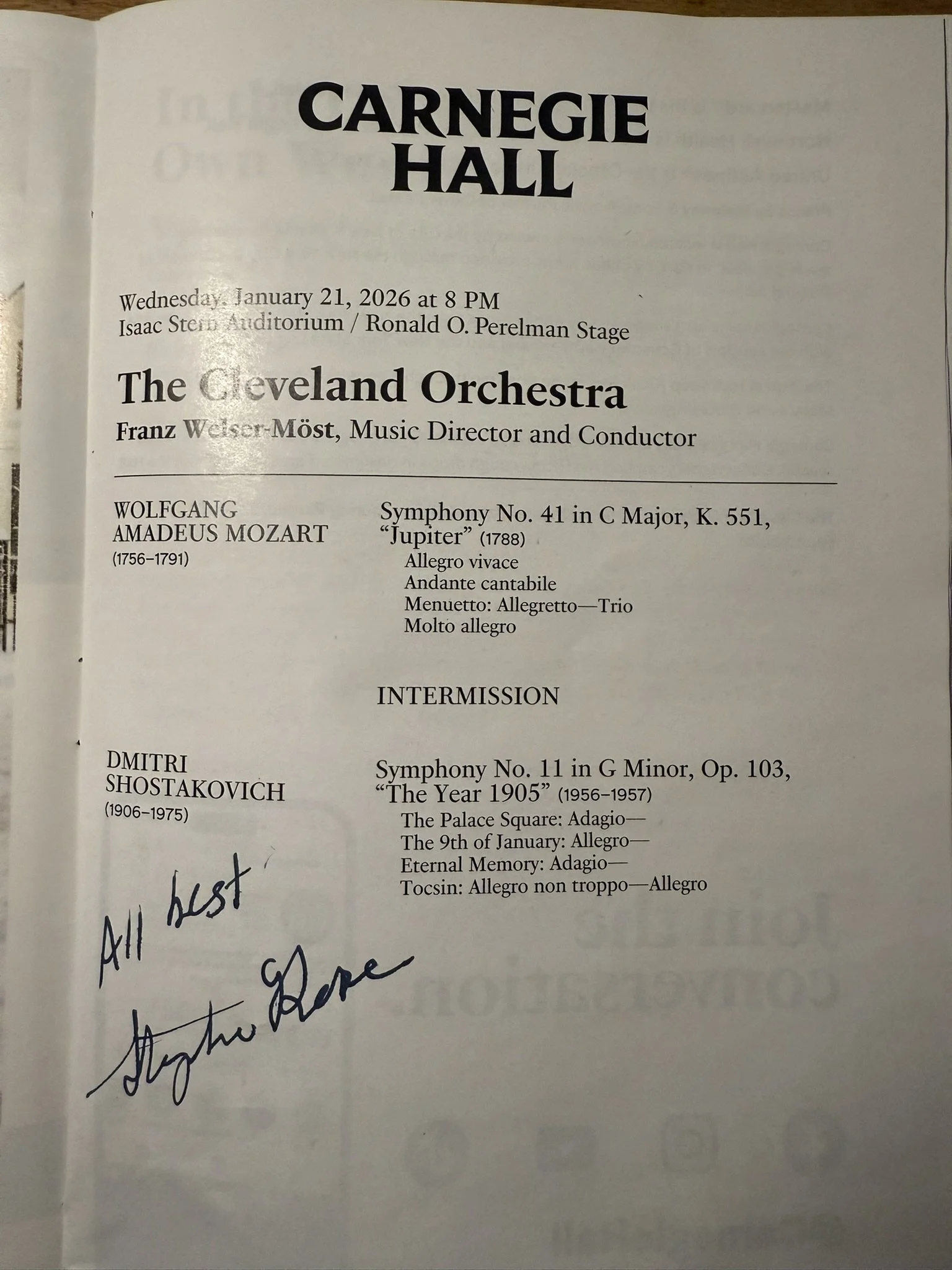
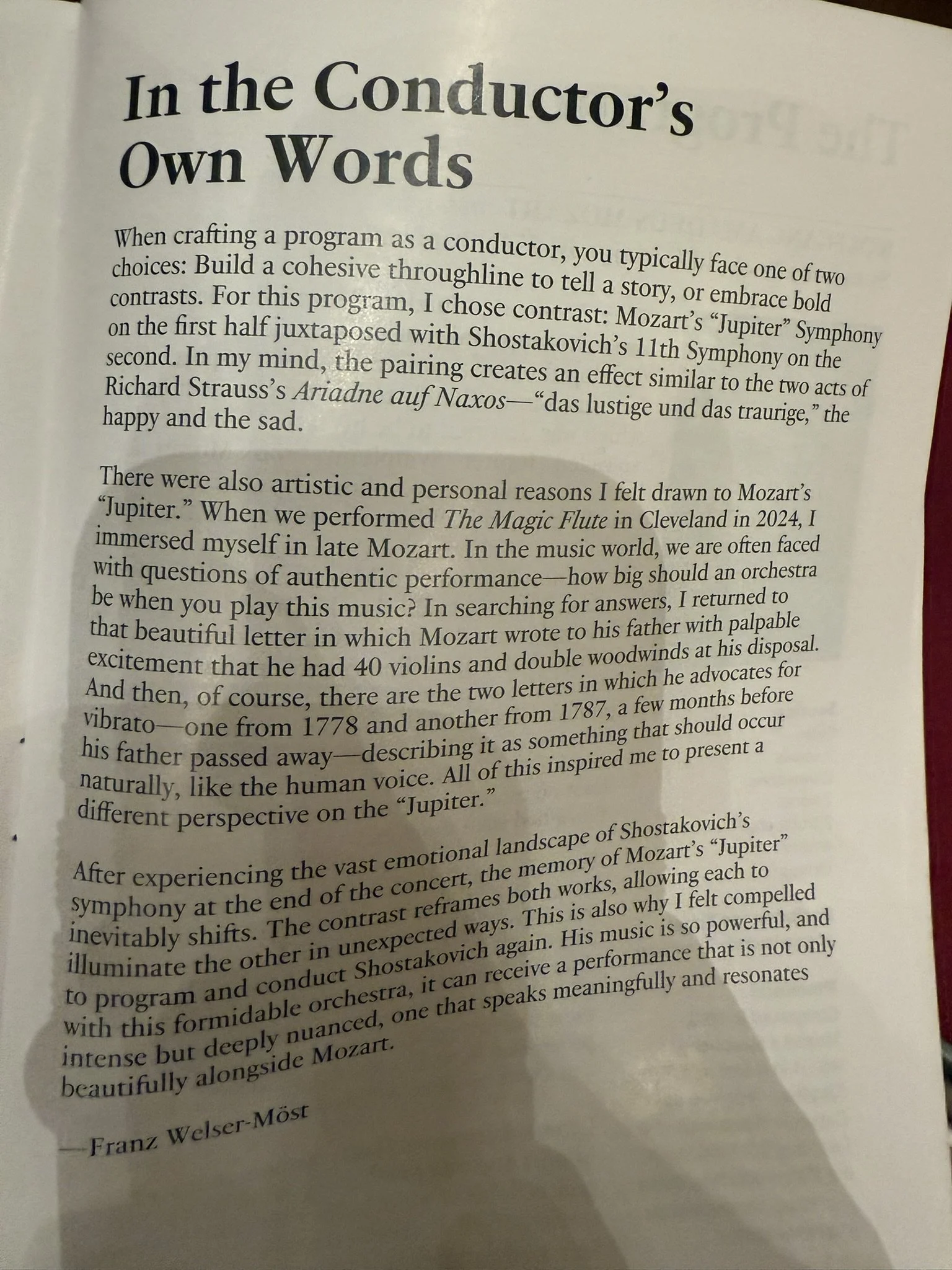
The Cleveland Orchestra performed Mozart's Symphony No. 41 and Shostakovich's Symphony No. 11 at Carnegie Hall, 1.21.2026. Conductor Franz Welser-Möst, in his program notes, posed the question of what constitutes authenticity. Mozart's letters to his father reveal his overwhelming excitement at being able to use 40 violins and a double woodwind section. And the vibrato was as natural as the human voice.
The day after Verdi's Requiem, Mozart's Jupiter Symphony felt physical and human-voiced. The second half featured Shostakovich's Symphony No. 11, depicting revolution, repression, and the cries of the masses. This program embraced bold contrasts, reflecting a willingness to accept the world as it is, rather than idealizing it.
The overlapping bows of the strings created a wave of breath in the phrases, and the crescendos felt like the very consciousness of humanity. The vibrato was like a human singing. The vocal quality of the second movement's Andante cantabile, especially the singing of the second violins led by Stephen Rose, was like opera.
The Cleveland Orchestra's Shostakovich did not overwhelm the listener with an outpouring of emotional sound. Instead, it presented cold repression through precise ensemble playing. Under Welser-Möst's direction, without exaggeration or tempo manipulation, the inner voices were brought to the forefront, revealing the structural process by which the fervor of revolution transforms into repression.
After hearing this collective action dominated by cold order, the innocence and perfection of Mozart in the first half were different. The approach of depicting the violence of history through precision rather than emotional appeal highlighted the work's brutality.
1.21.2026
Performers
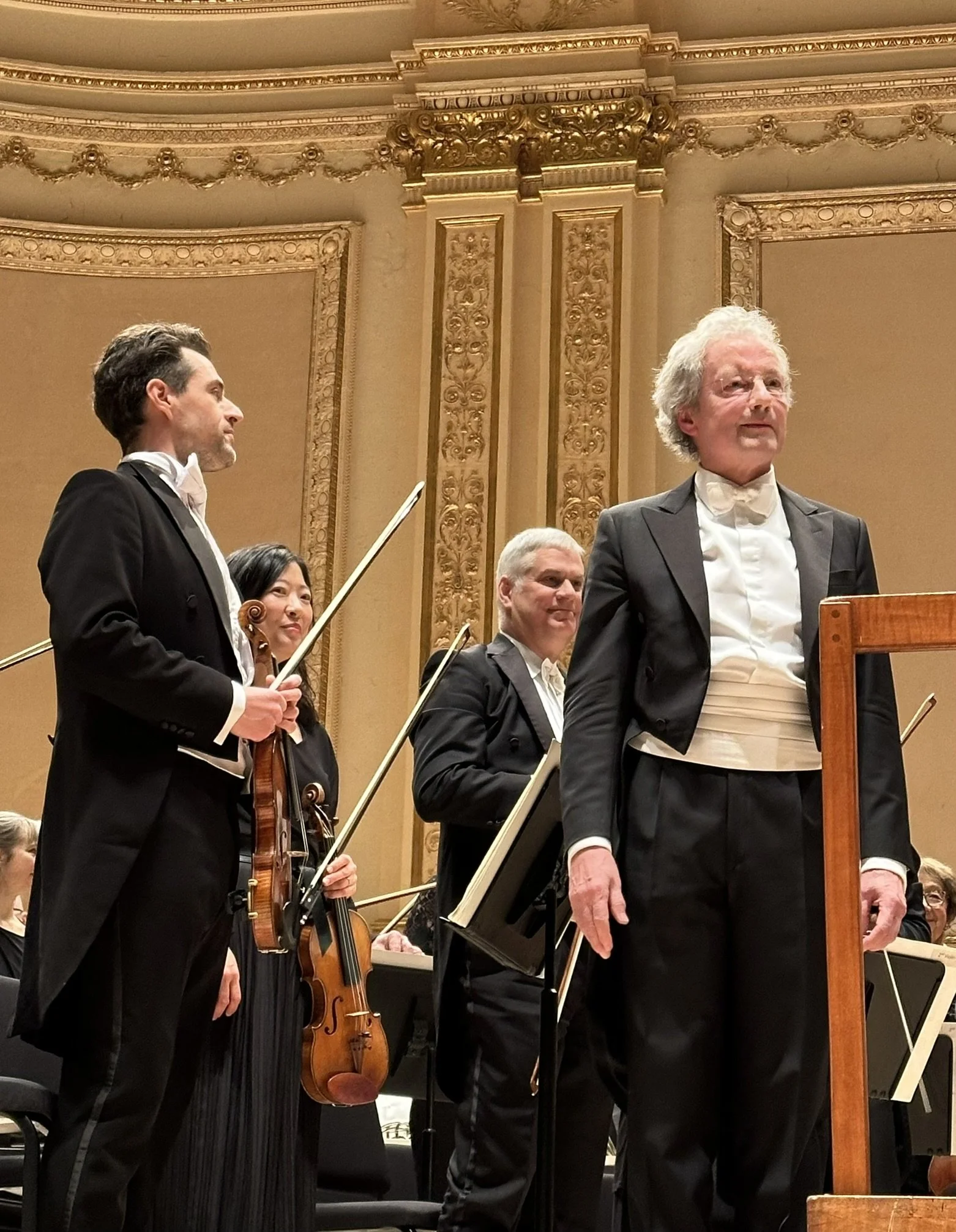
Franz Welser-Möst, Music Director and Conductor
Program
MOZART Symphony No. 41, "Jupiter"
SHOSTAKOVICH Symphony No. 11, "The Year 1905"
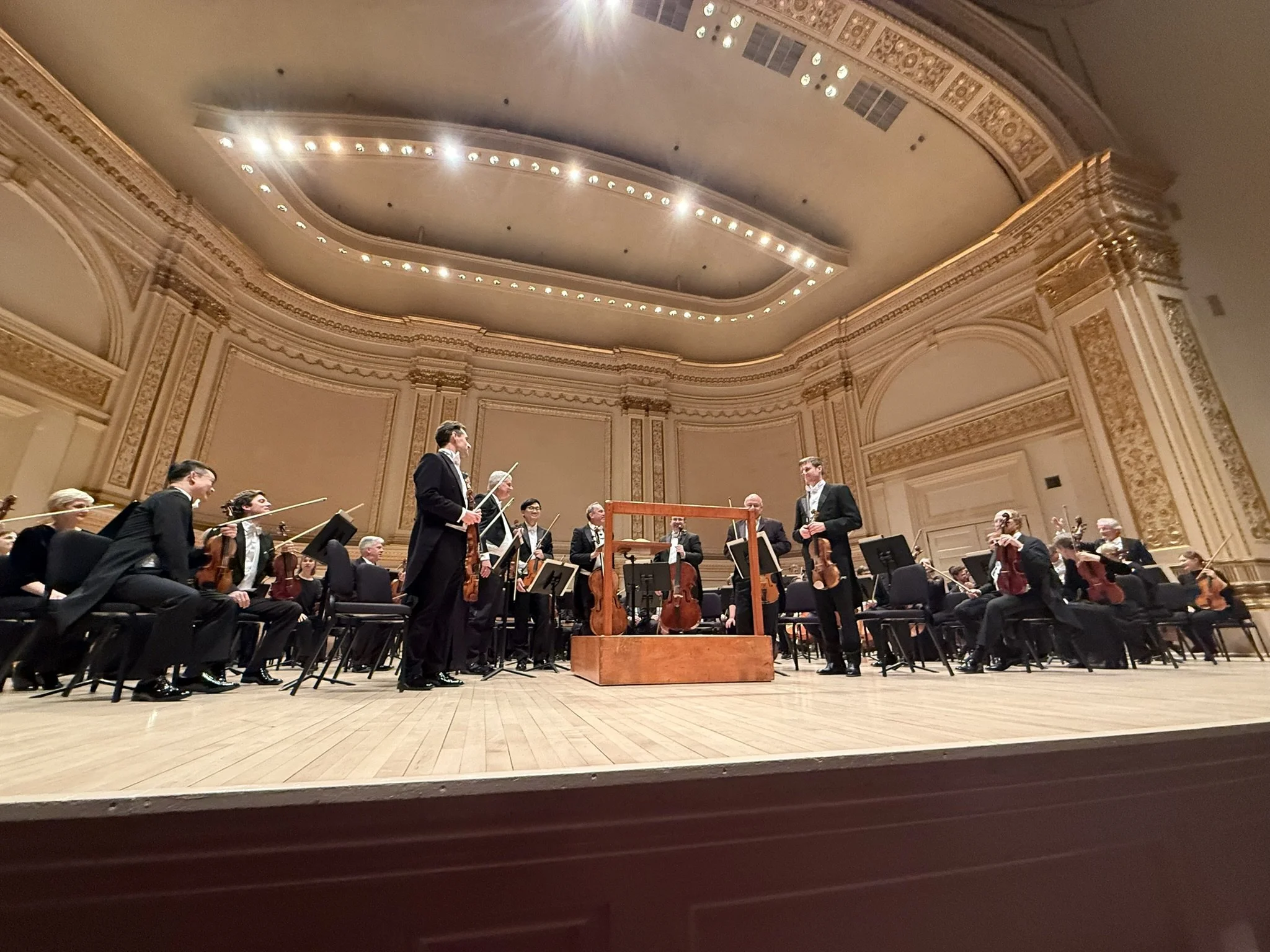
2日同じプリンシパル。これはショスタコ後
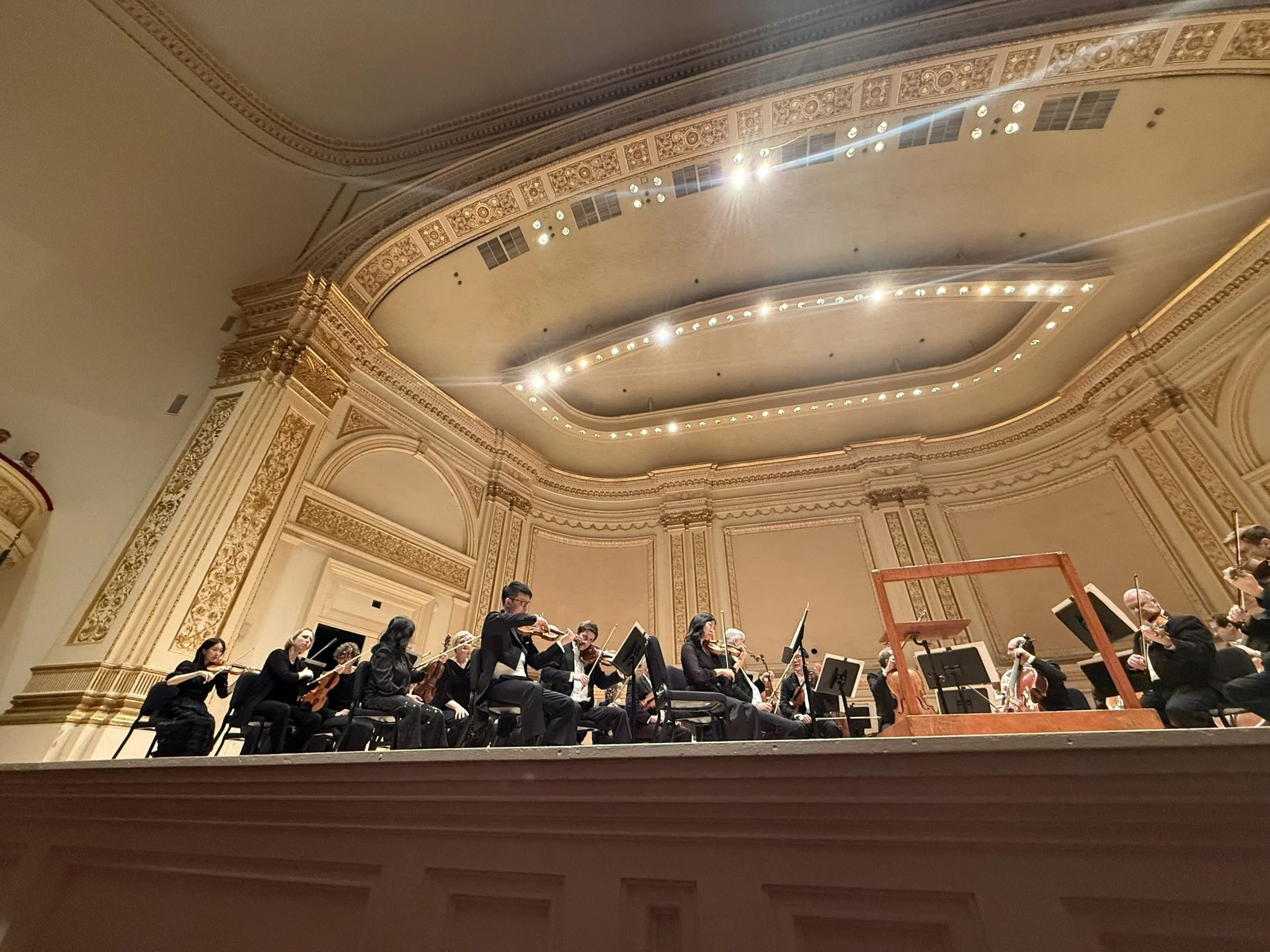
モーツアルトの第一バイオリンセット
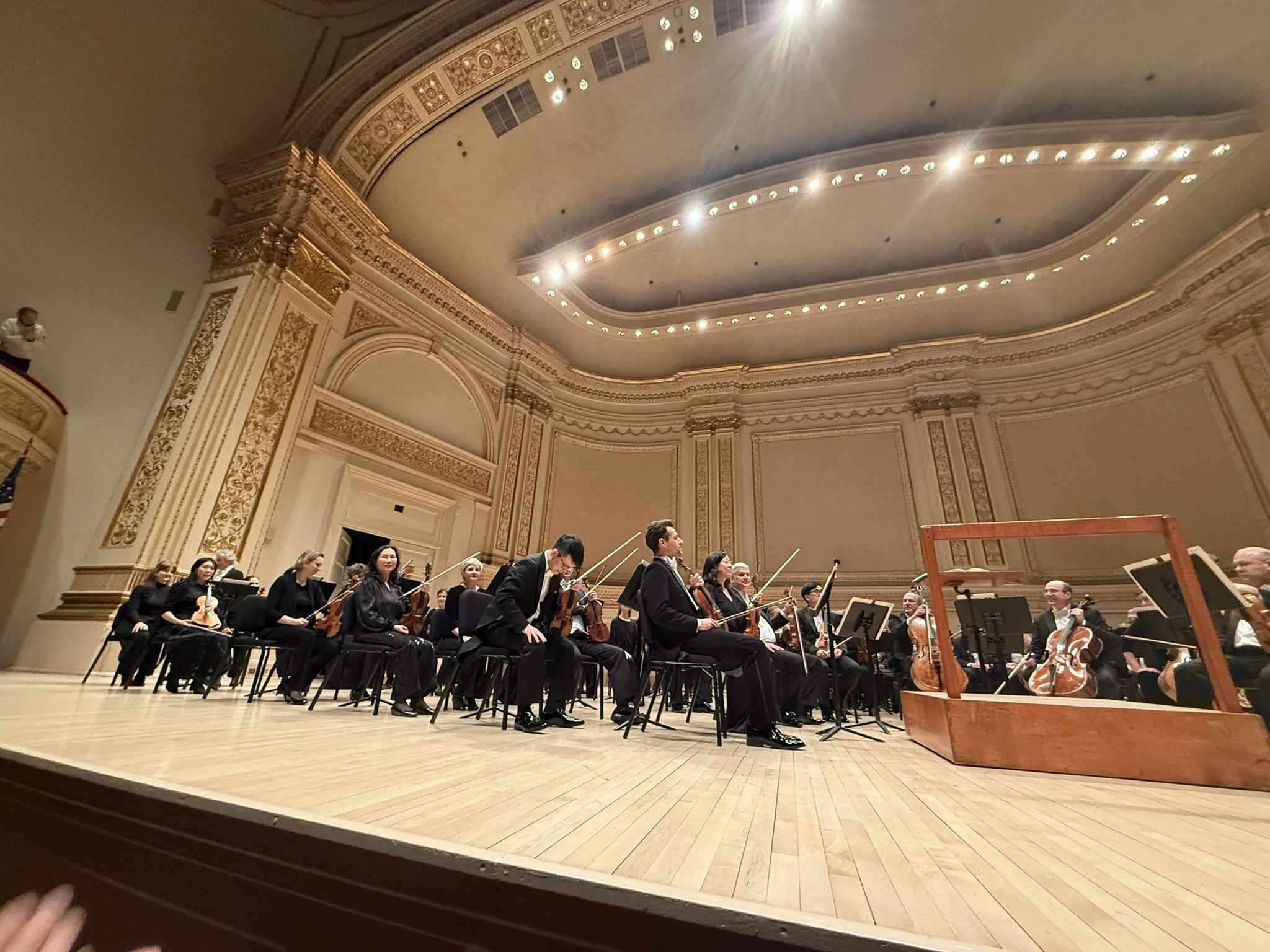
ショスタコの第一バイオリンセット
クリーブランド管弦楽団は1月21日に、カーネギーホールでモーツアルトの交響曲41番とショスタコービチの交響曲11番の公演を行った。指揮者のフランツ・ウェルザー=メストはプログラムノートにオーセンティックとは何かと投げかける。モーツァルトが父に宛てた手紙には、40本のヴァイオリンと二管編成の木管楽器を用いることができる喜びが、抑えがたい興奮とともに記されている。そして、ヴィブラートは人間の声のように自然に。
前日に聴いたヴェルディのレクイエムの翌日、モーツァルトのジュピターは肉体的で人の声のようだった。後半に置かれたショスタコーヴィチの交響曲第11番は革命、弾圧、群衆の叫びを現す。このプログラムでは、大胆なコントラストを受け入れ、世界を理想化するのではなく、ありのままに引き受ける姿勢を感じた。
弦が弾く弓が重なりやがて、フレーズは息のうねりとなり、クレッシェンドは人の意識そのもののようだった。ヴィブラートは、人間が歌っているようだ。2楽章のアンダンテ・カンタービレの声の幕、特に、ステファン・ローズが率いるセカンド・ヴァイオリンの歌はまるでオペラを聴いているようだった。
続くクリーヴランドのショスタコーヴィチは、溢れる感情の音圧で聴き手を圧倒しない。精度の高いアンサンブルで冷たい抑圧を繰り広げる。メストの指揮のもと、煽らず、テンポを保ち、内声を浮かび上がらせ、革命の熱狂がやがて抑圧へと転じていく過程が構造として浮かび上がるクリーヴランドのショスタコーヴィチだった。
この冷たい秩序に支配された集団行動を聴いたあとで、前半のモーツァルトにあった無垢さや完全さは失われたもののように感じられる。感情で訴えるのではなく、精密さによって歴史の暴力を描き出す姿勢が、作品の残酷さを際立たせていた。