May 19, 2026 – Zankel Hall
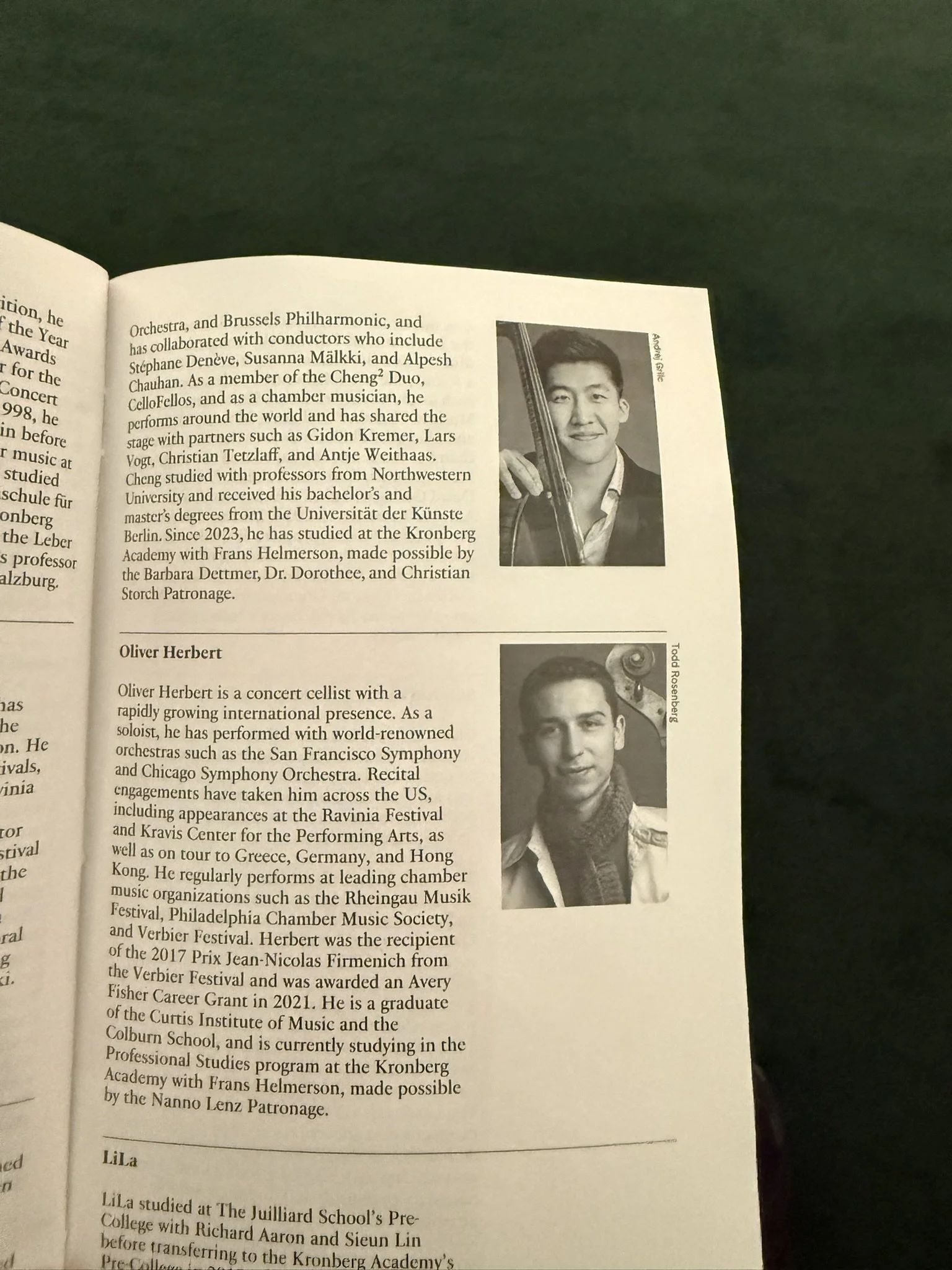
Oliver came back to Carnegie Hall. He is a cellist, and he previously performed at Weill Recital Hall last November. I wrote the following:
November 21, 2025 – Musicians From Marlboro at Weill Recital Hall
Felix Mendelssohn
String Quintet No. 1 in A Major, Op. 18
The Mendelssohn Quintet: 2 violins, 2 violas, and cello. Oliver's cello playing was excellent. His long, sweeping phrases, the way he grasped the keys, and his tone.
Listening with my eyes closed this time, Oliver Herbert’s cello sometimes dissolved completely into the viola and violins; at other moments, it carried the weight and depth of a double bass. What surprised me was not simply the instrument’s wide range, but the sense that a single cello could contain an entire spatial field of music.
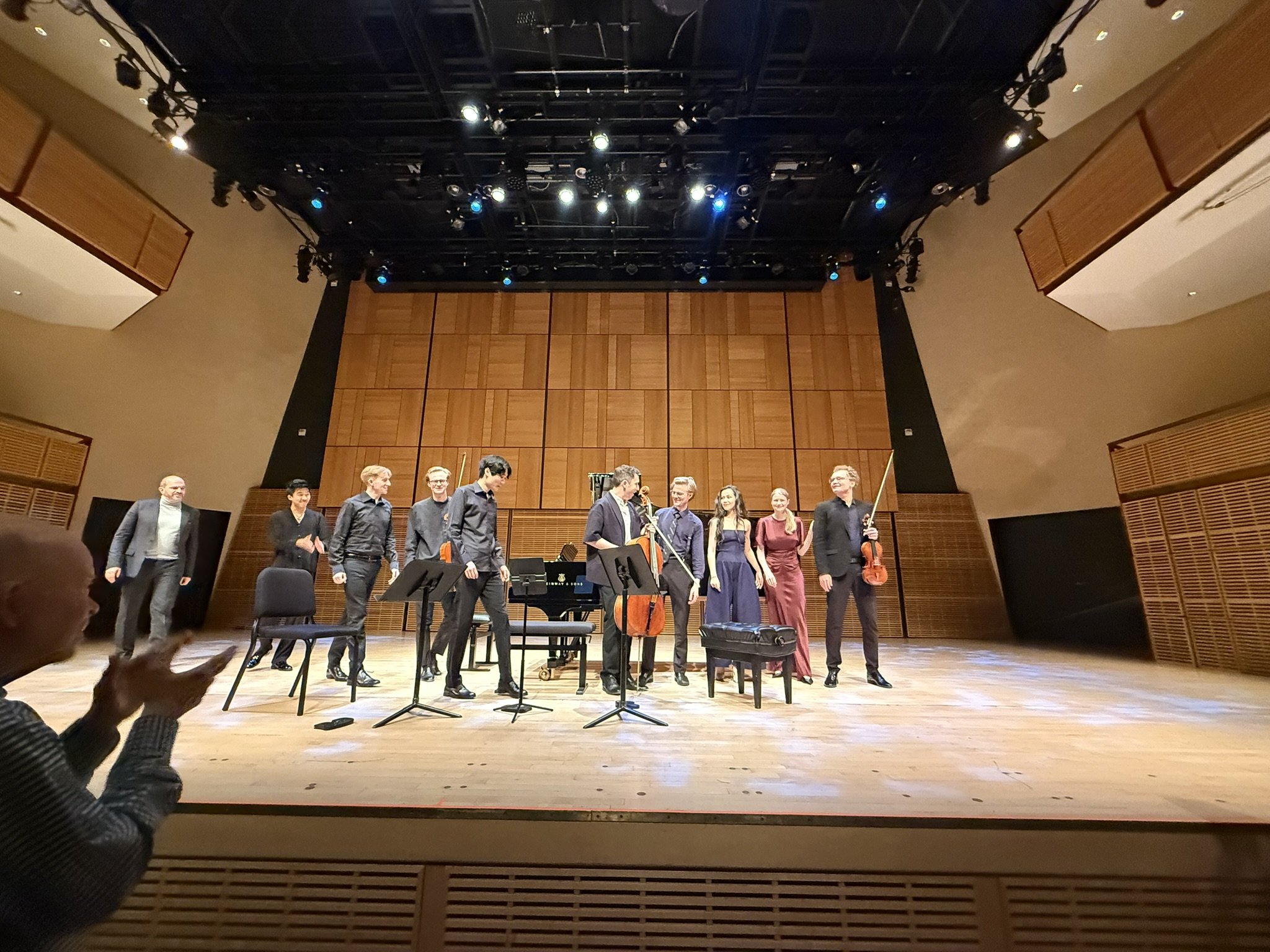
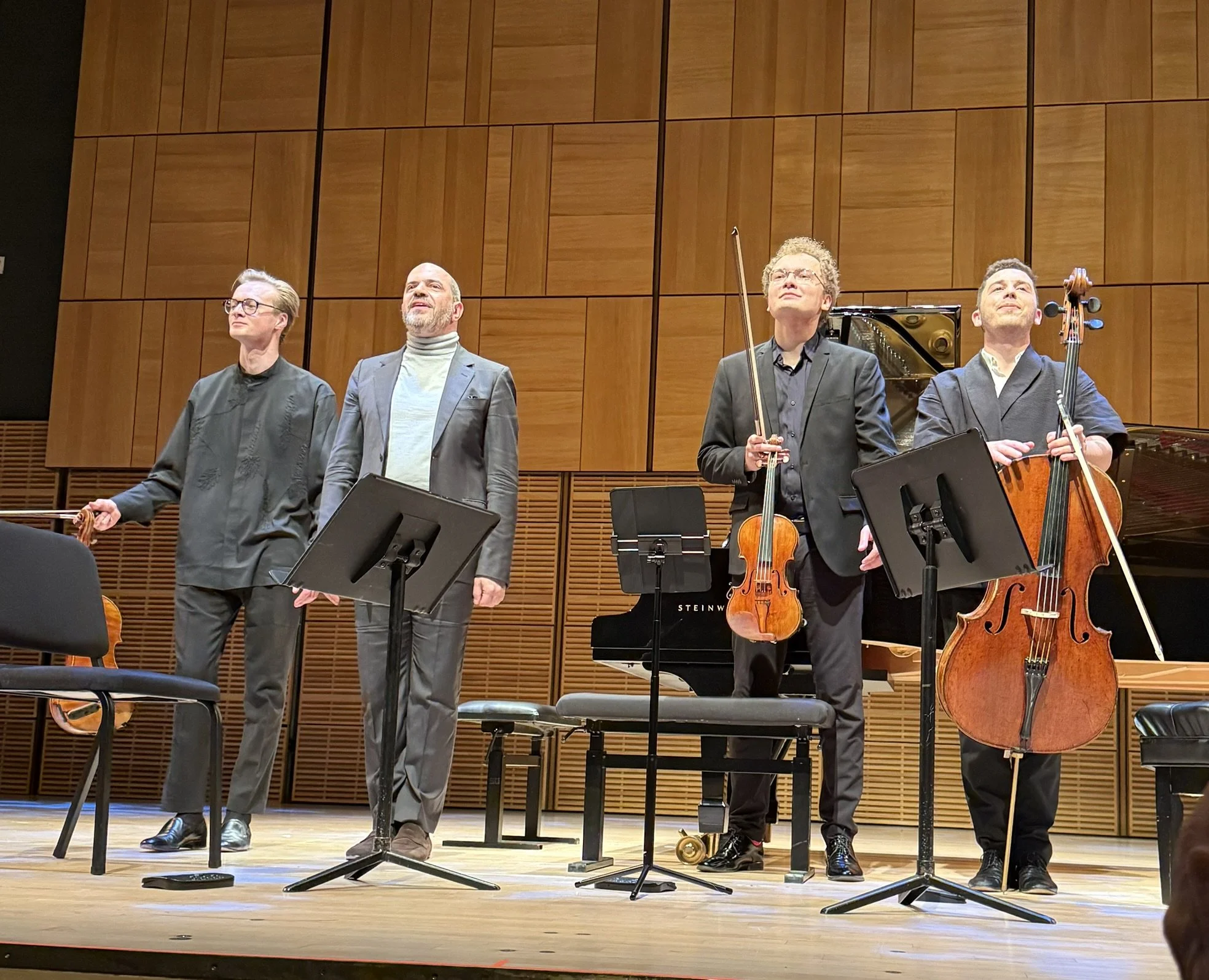
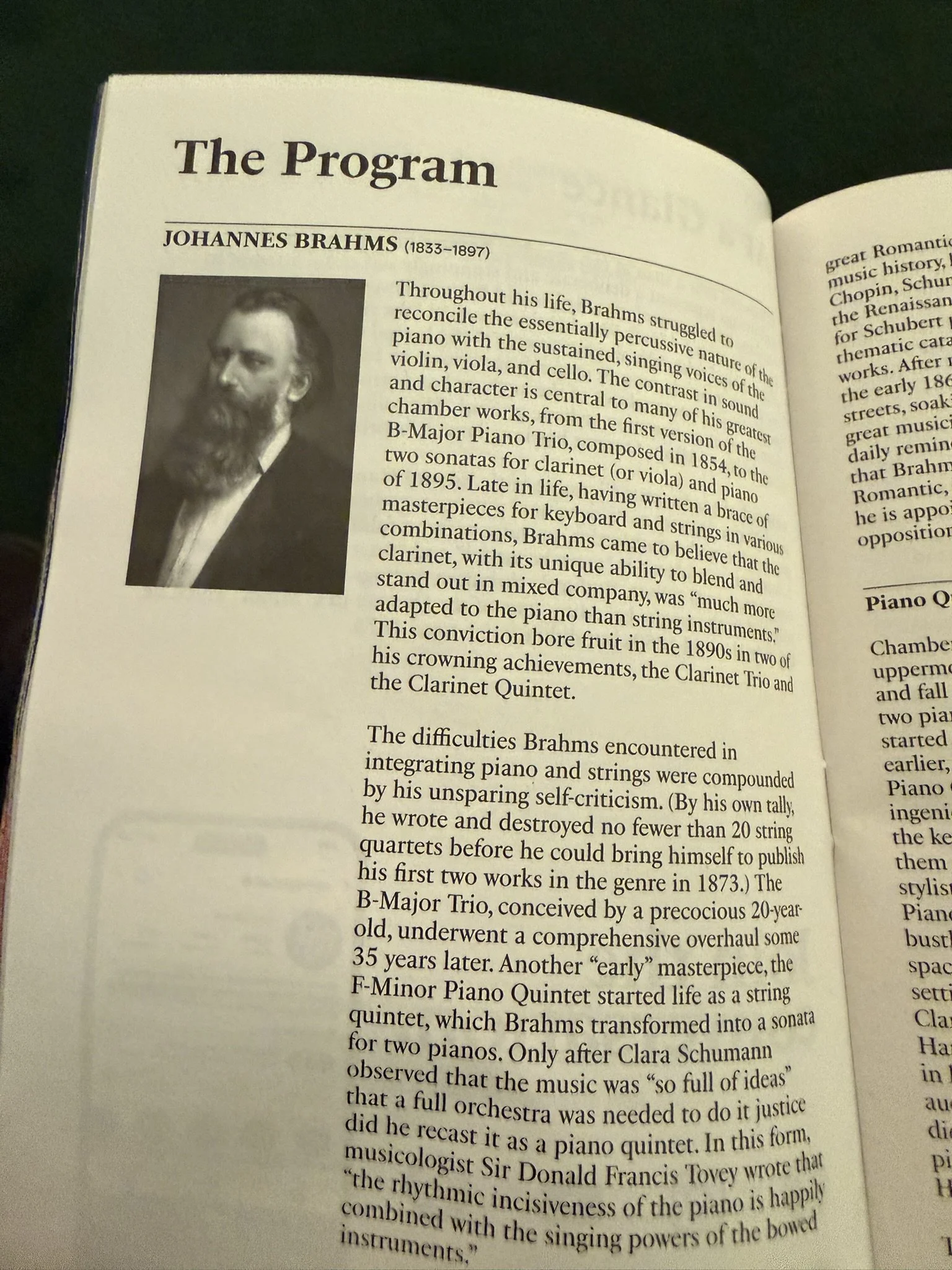
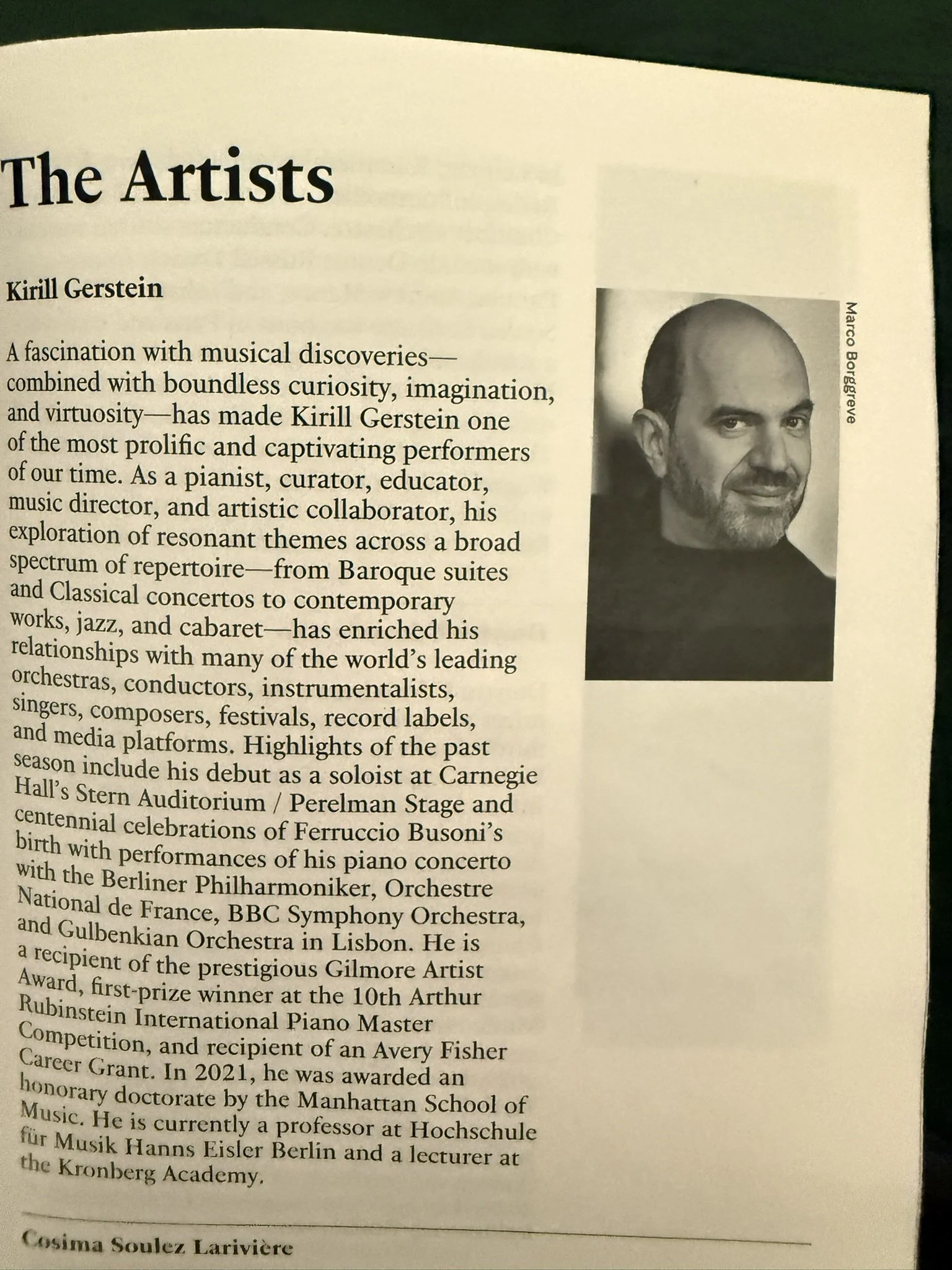
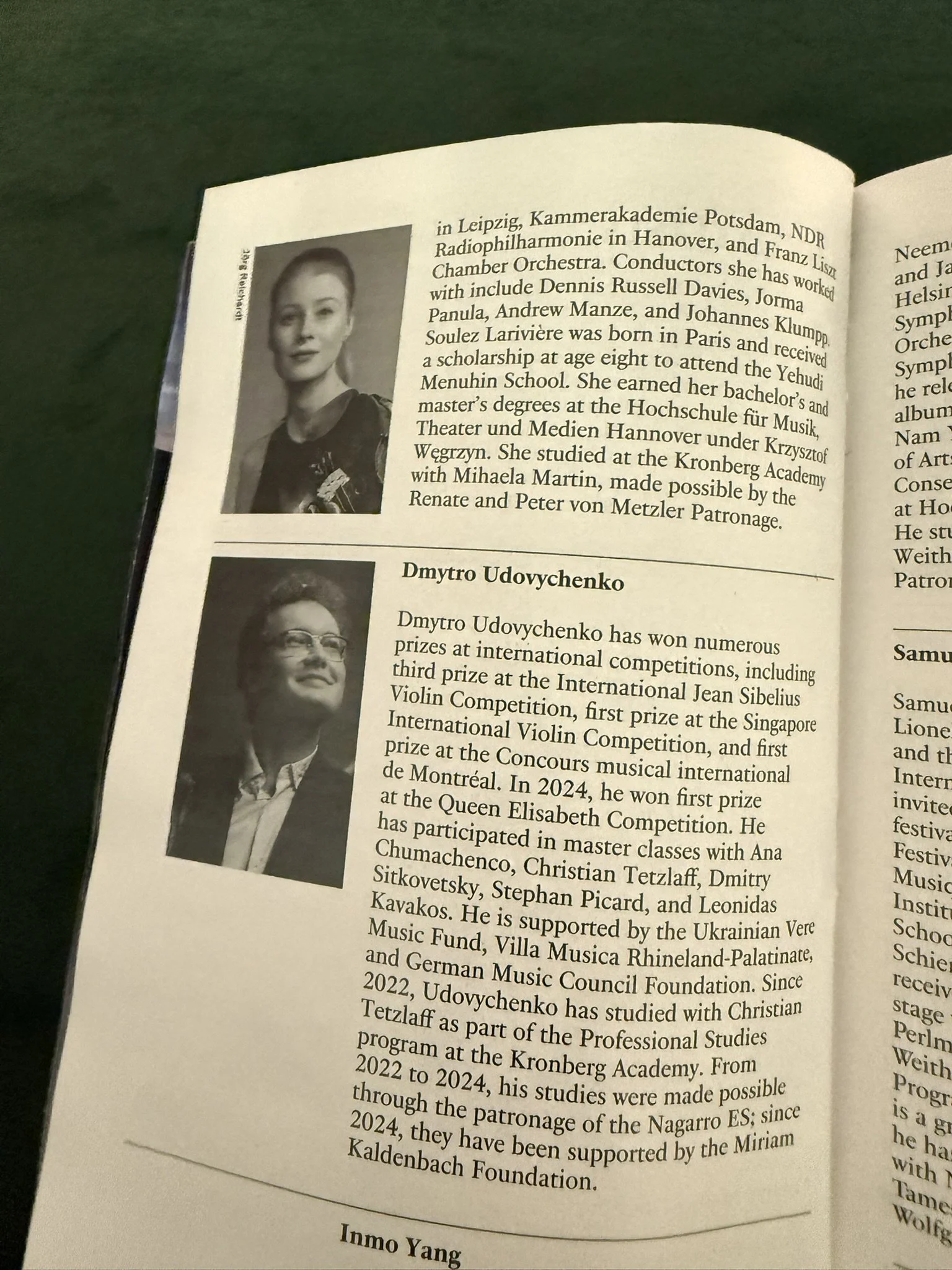
This performance featured a collaboration between soloists from the Kronberg Academy and pianist Kirill Gerstein. Together, they performed all three of Brahms’s Piano Quartets. Brahms’s writing here consists almost entirely of unison passages, rhythmic figurations, and tremolos; yet, the blend and balance achieved by these musicians unfolded across an infinite spectrum of sound. No explanation was needed; the music itself radiated light from within.
Oliver took the stage for the final piece, the Third Quartet. The cello was positioned on the right side of the stage. By this third piece of the program, Gerstein’s musical voice had settled into a state of effortless naturalness—so much so that, at times, it sounded reminiscent of Chopin or Schumann. Brahms, of course, had deeply studied the music of his predecessors—from Handel and Bach to Beethoven, Chopin, Schumann, and beyond—and he brought these influences to the surface through his use of rhythmic figurations and unison lines. He revealed musical "tricks" that went beyond mere melody and harmony; indeed, one could distinctly hear echoes of Beethoven’s Third and Fifth Symphonies. During the *Andante* movement, amidst the shimmering beauty of the harmonics, that iconic "da-da-da-DAAAH" motif resounded back and forth between the strings and the piano.
It emerged only when one gazed intently—as I found myself doing—at the metal screws in the stage fixtures right before my eyes. During the first two quartets, my body and mind had responded viscerally to the sheer beauty of the rhythms and timbres the musicians produced. But in Op. 60, the intricate web of sonic relationships woven by Brahms bound the four players together in an intimate union. As the musical lines played off one another—pulled by a unique gravitational force—my visual focus seemed to drift out of alignment, yet my concentration on the music remained unbroken. Their tone was airy and full of breath, with a restrained volume that nonetheless yielded a rich resonance; the timbre possessed a solid core, feeling light and luminous despite its high musical density. This condensed musical energy created a transparent, crystalline world. Within that space, Gerstein’s piano performance—vivid, pulsating, and crystal-clear—cut straight through to the listener’s heart, allowing us to savor that ultimate balance between piano and strings that Brahms had ceaselessly strived to achieve. The sheer power infused into their sound is on a completely different level. The violist Zimmermann—whom I heard perform recently—seemed to conjure up a Brahms that others might have to grit their teeth and strain to squeeze out, doing so himself with merely a light touch, as if gently stroking the notes into existence.
The world of Brahms in his twenties was brimming with stimulation.
Brahms was born into an era that followed closely upon the heels of Chopin, Mendelssohn, Beethoven, and Bach—in short, a world that celebrated stimulation above all else. The vibrant influences he absorbed in his youth tended to become diluted within the vastness of an orchestra; yet, relying solely on piano or string instruments felt somehow incomplete. Thus, he ceaselessly strove to conceive a cool, compelling form of music using the specific combination of piano, violin, and cello. This vision finally reached its full realization in his forties—a process that spanned a very long time, marked by a continuous cycle of writing and discarding. The musicians who performed at this concert, too, likely spend their days constantly saying "no," finding in their craft only on those rare occasions when everything finally feels *right*. For the next woman to me, clutching DWR documents, was even fiddling with her phone during the performance—the sheer intensity of the musicians' heartfelt Brahms might have been too dazzling to look at directly. Yet, if even for a mere few seconds, that music truly resonated within their hearts, then I believe that is enough.
Brahms completed this work, Op. 60, and the following year, he unveiled his First Symphony.
BRAHMS
Piano Quartet No. 1
Allegro (G minor)
Intermezzo: Allegro ma non troppo — Trio: Animato (C minor, ends in C major)
Andante con moto (E♭ major)
Rondo alla Zingarese: Presto (G minor)
BRAHMS
Piano Quartet No. 2
Allegro non troppo (A major)
Poco adagio (E major)
Scherzo: Poco allegro (A major, trio in D minor)
Finale: Allegro (A major)
BRAHMS
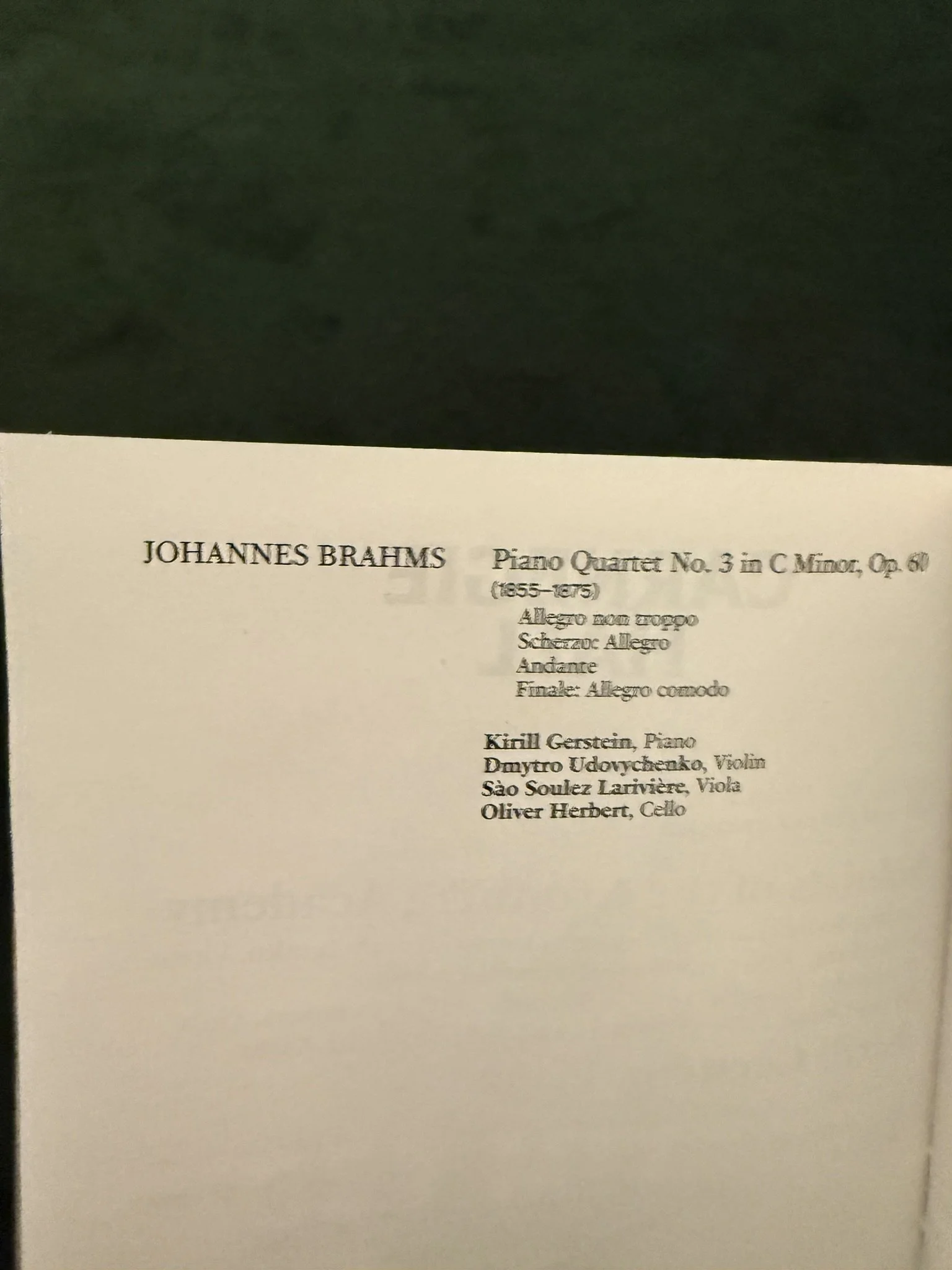
Piano Quartet No. 3
Allegro non troppo (C minor)
Scherzo: Allegro (C minor → C major)
Andante (E major)
Finale: Allegro comodo (C minor → C major)
Dmytro Udovychenko, Violin
Sào Soulez Larivière, Viola
Oliver Herbert, Cello
Kirill Gerstein, Piano
5.19.2026
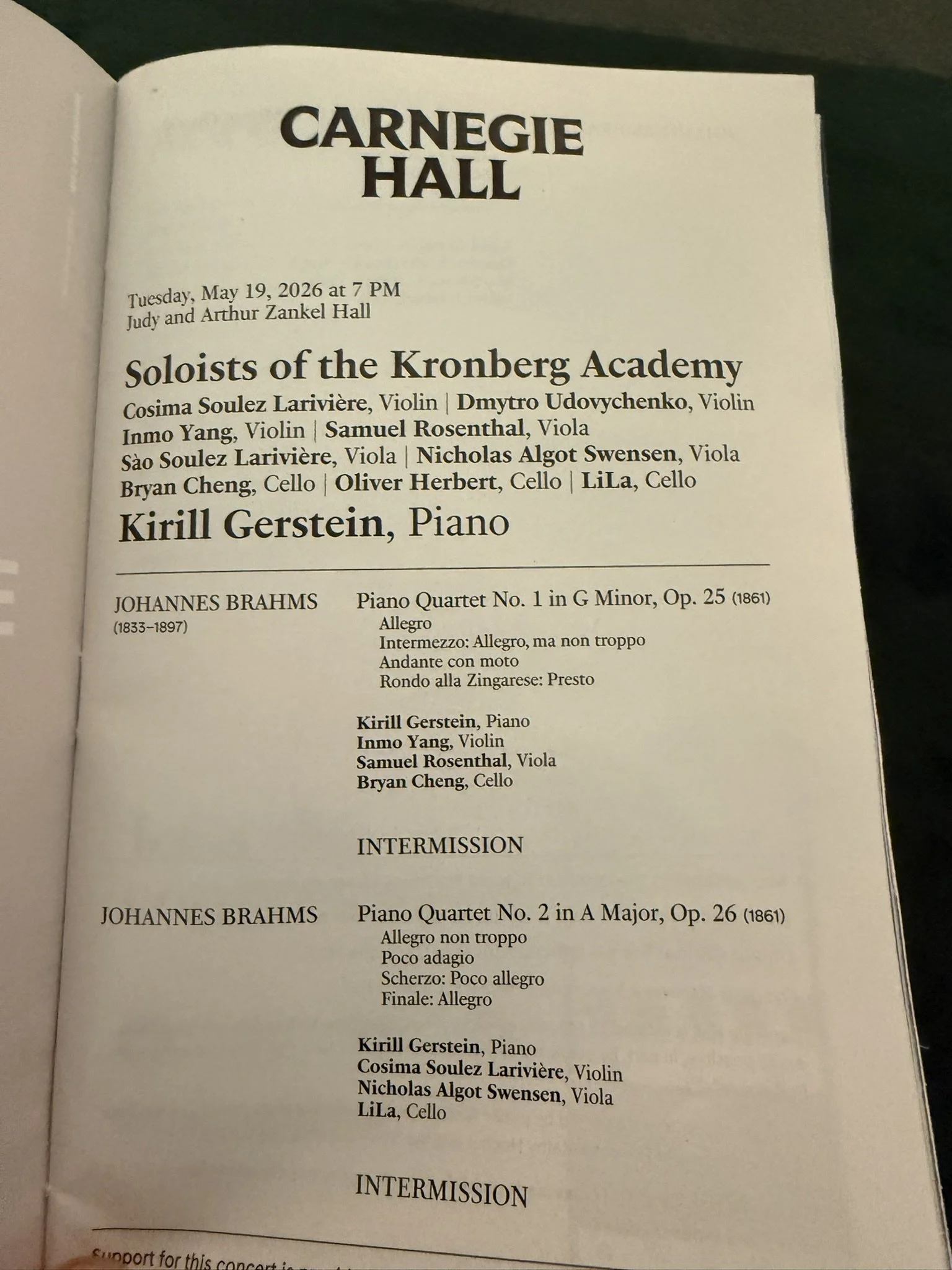
ALL-BRAHMS PROGRAM
Piano Quartet No. 1
Piano Quartet No. 2
Piano Quartet No. 3
Soloists of the Kronberg Academy
- Cosima Soulez Larivière, Violin
- Dmytro Udovychenko, Violin
- Inmo Yang, Violin
- Sào Soulez Larivière, Viola
- Samuel Rosenthal, Viola
- Nicholas Algot Swensen, Viola
- Bryan Cheng, Cello
- Oliver Herbert, Cello
- LiLa, Cello
Kirill Gerstein, Piano
5.19.2026 Zankel Hall
オリバーがカーネギーにやってきた。彼はチェリストで、昨年11月にはワイル・リサイタル・ホールで演奏している。そのとき私はこう書いた。
11.21.2025 Musicians From Marlboro at Weill Recital Hall
Felix Mendelssohn
String Quintet No. 1 in A Major, Op. 18
The Mendelssohn Quintet: 2 violins, 2 violas, and cello. Oliver's cello was excellent. His long phrases, the way he grasped the keys—his tone.
オリバーのチェロは目をつむって聴くと、ある時はビオラやバイオリンと完全に溶け込み、ある時はコントラバスの低音の迫力を感じた。一つの楽器が広い音域というよりは音楽の広がりを持っていることに驚いた。
今回は、Kronberg Academyのソリストたちとピアニスト、ゲルシュタインのコラボだ。彼らはブラームスのピアノ4重奏曲を3曲演奏した。ブラームスはひたすらユニゾン、刻み、トレモロ。そのブレンドとバランスが無限のスペクトラムを繰り広げる。理由などいらない、音そのものが内側から光を放っている。
オリバーは最後の3番を演奏した。チェロは向かって右に配置されている。開始から既に3曲目のゲルシュタインは発声が自然。ショパンかシューマンのように聴こえた。ブラームスは、ヘンデルから、バッハ、ベートーベン、ショパン、シューマンなどなど、時の音楽をよく研究していた。それを刻みとユニゾンに浮かび上がらせる。メロディや和声だけではないトリックを見せる。ベートーベンの3と5の交響曲が聴こえた。4楽章のレンディションの中にあのダダダダーンが弦楽器とピアノの間をこだまする。
目の前のステージの金具のねじを見つめ続けると浮かび上がってくる世界だった。他の2曲では体や心が彼らがはじき出すリズムや音色の美しさに反応していた。でもOp.60では、ブラームスの練られた音の関係が4人を親密に結び付けて、音同士が拮抗して、その独特の重力に引っ張られて目の焦点がずれたまま、集中が途切れなかった。彼らの音色はたっぷり空気を含んで音量は抑制され、響きは豊かで音色は芯があり、高い密度でも音色が軽い。凝縮された音楽のエネルギーは透明な世界を作る。その中をゲルシュタインのピアノのレンディションは鮮烈で脈々と鮮明に、聴き手の心の中を抜けていくブラームスが求め続けたピアノと弦楽器の最高のバランスを味わっていた。音に込める力がまるで違う。先日のビオリスト、ジンマーマンは、彼らが歯を食いしばって絞り出すブラームスを、少し撫でる程度で軽くひねり出す。
20代のブラームスの世界は刺激に溢れていた。
ブラームスは少し後に生まれて来た、ショパンやメンデルスゾーンやベートーベンやバッハ、ようは刺激万歳の世界に生まれた。若いころ受けた刺激はオーケストラではぼやけるし、ピアノや弦楽器だけだと物足りないからピアノxバイオリンxチェロの組み合わせでかっこいい音楽を考え続けた。そしてそれは40代で完成した。とても長い時間がかかった。書いては捨ての連続だ。この公演で登場した彼らも、毎日ノーを言い続けてたまにやっていてよかったと思うくらいだ。デザイン、トレンド、マーケティング、隣のDWRの書類を抱え演奏中も携帯をいじっていた客には眩しすぎて直視できなくらいの彼らの心からブラームスが数十秒でも響いていたら、それでいいとおもう。
ブラームスはこのOp.60を完成させ、翌年は交響曲1番を発表した。