
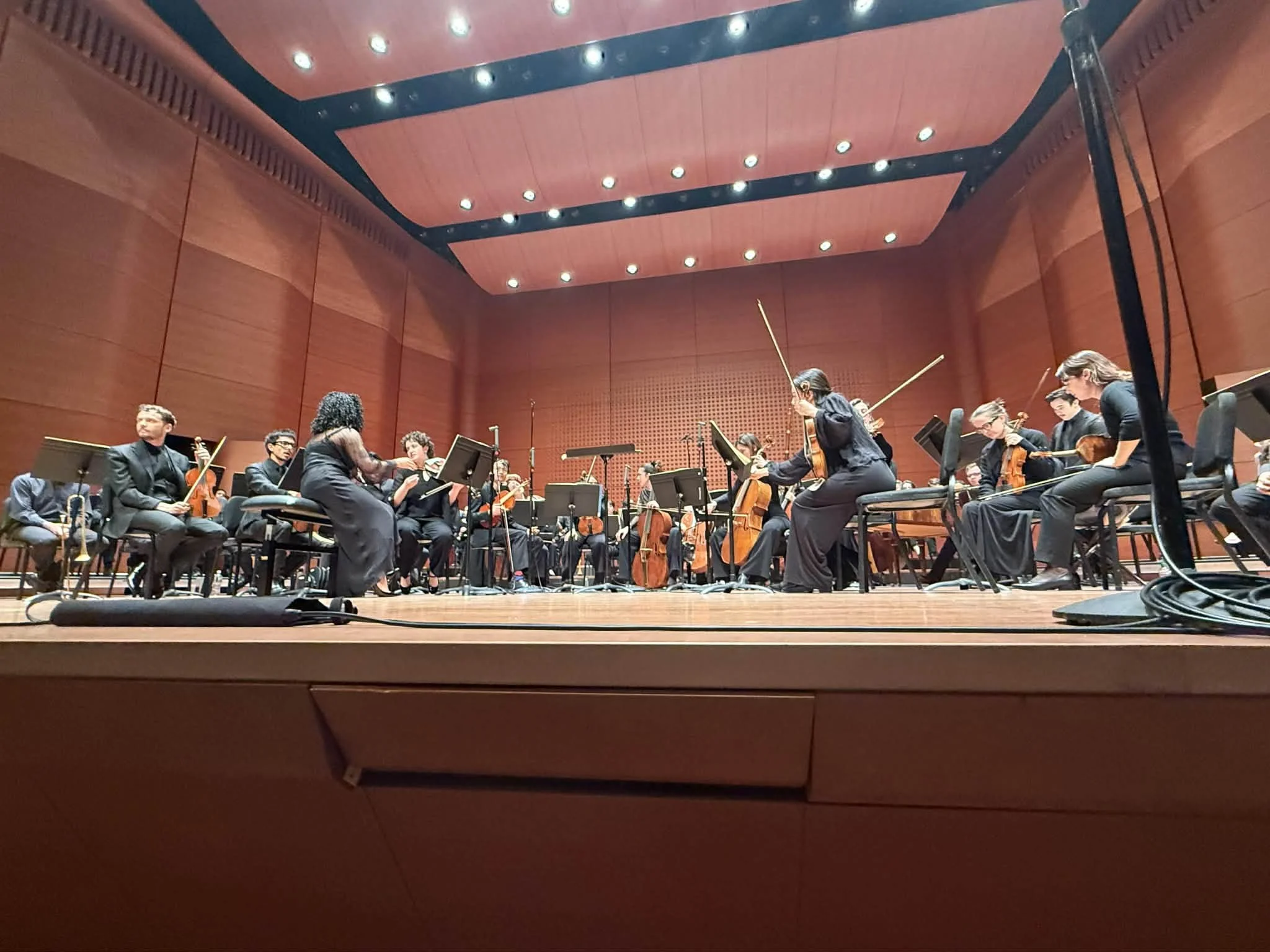
May 1, 2026 — I heard Grete Pedersen conduct Juilliard415 and Yale Schola Cantorum in Franz Joseph Haydn’s *The Creation* at Alice Tully Hall. The hall has very little reverberation, a dry acoustic in which instruments and voices are heard exactly as they are. Each individual breath and articulation becomes timbre and flashes of light, shaping chaos.
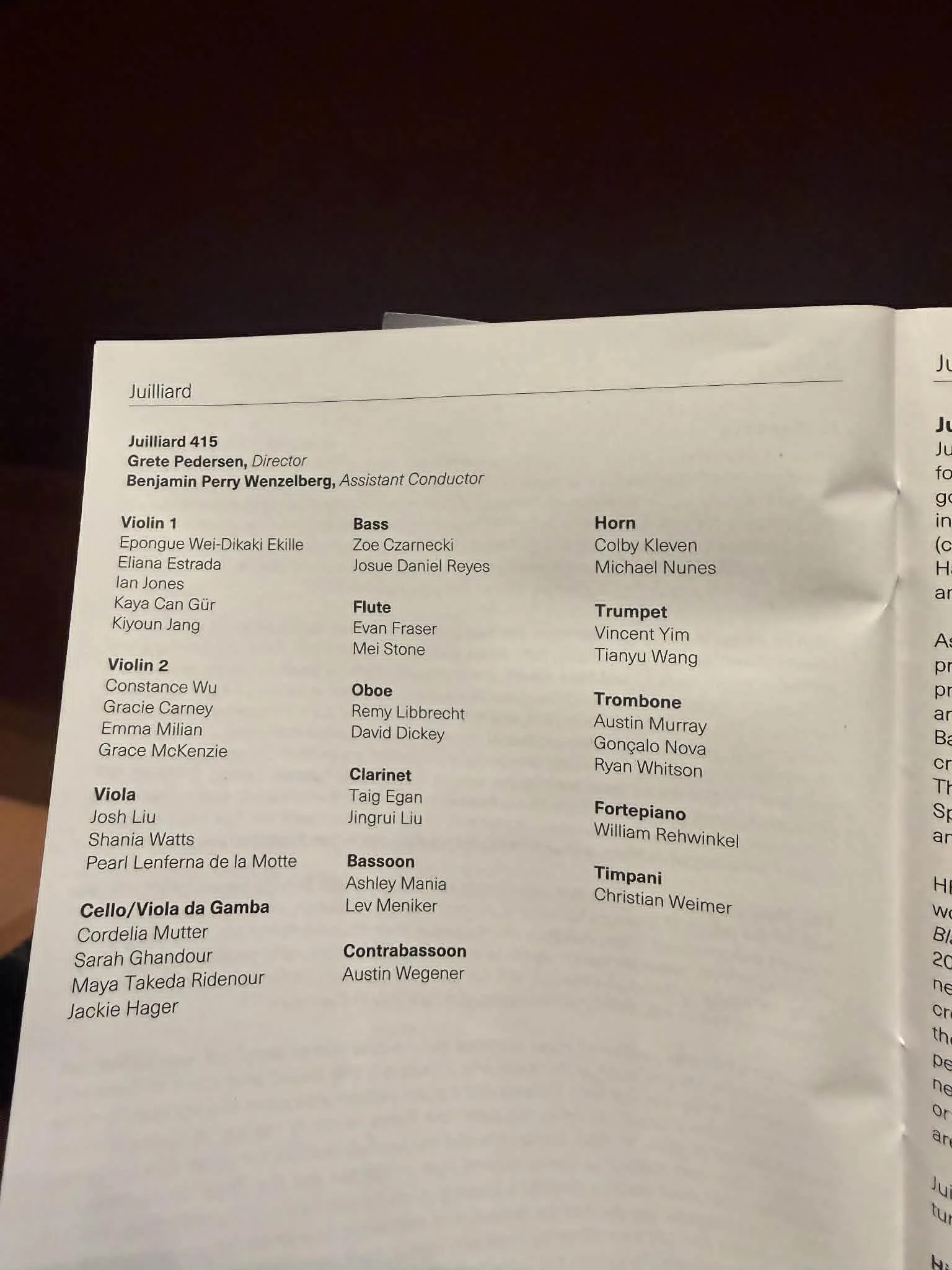
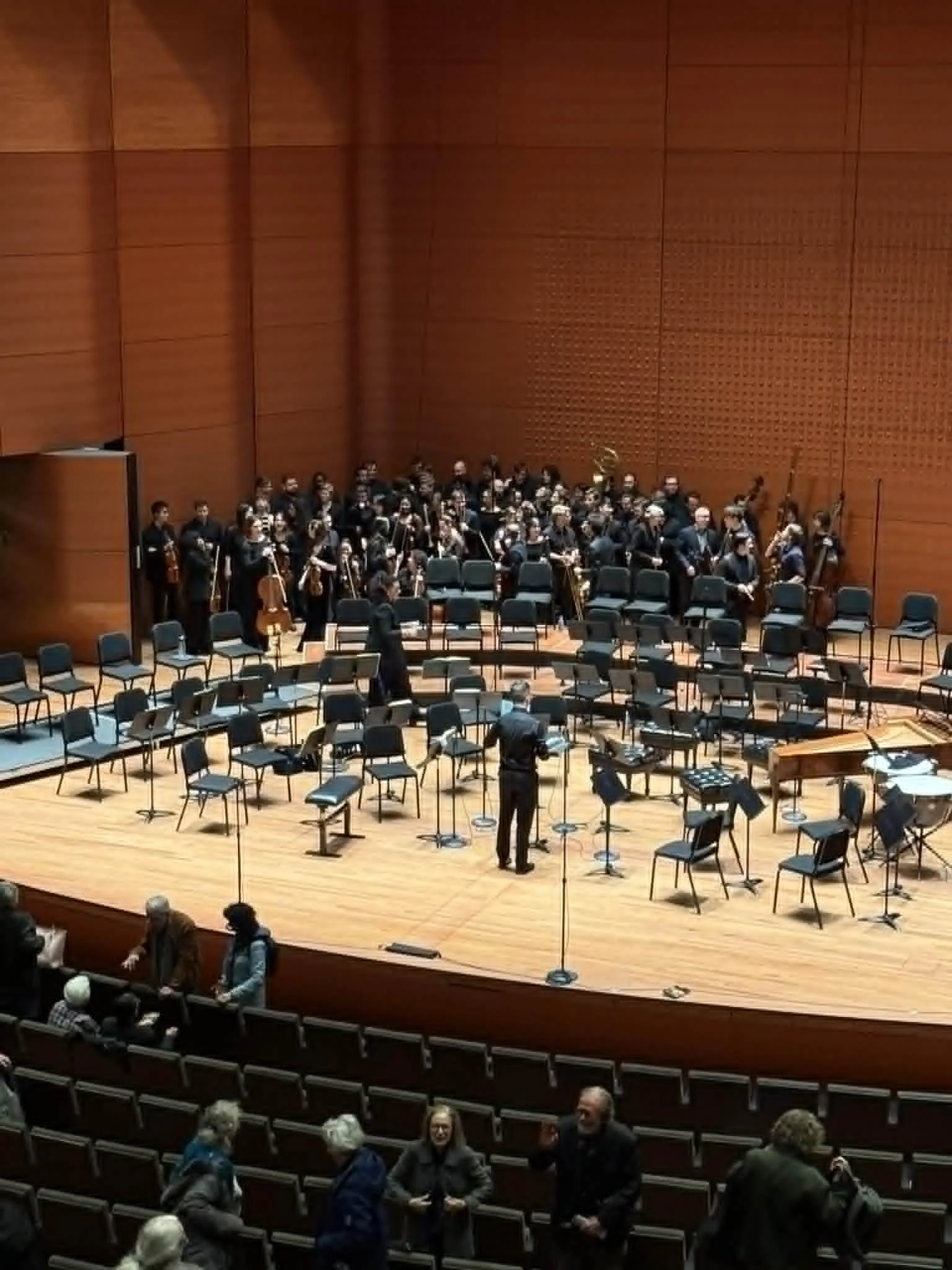
Front left: first violins; next to them, violas. Back right: cellos; front right: second violins. Behind the first violins were trombones and horns; behind the second violins, trumpets; further back, fortepiano and timpani. The work uses a contrabassoon. The chorus surrounded the orchestra, with soloists on both sides.
From chaos, the creation of heaven and earth begins. Even within the same stand, each player’s sound and articulation appeared as a succession of different explosions and flashes.
I had just moved from Brooklyn, where I had lived for 25 years, to Queens. And on the second day after the move, I heard *The Creation*. This was also my own creation.
Matthew Dexter began Raphael’s words: “In the beginning God created the heaven and the earth.” The chorus, arranged around the orchestra, seemed to cast a gentle light into the hall. The human voices formed a curve, surrounding the ensemble and casting light into the space. Rather than hearing voices, it felt like observing objects of sound transformed into light.
Sam Denler, as Uriel, narrated the emergence of the world with lightness, like Christian Gerhaher. Not human inflection, but a messenger of God. The orchestra followed and supported his words. Ian, during accompaniment, mostly watched the singers. Concertmaster Epongue attended to both conductor and orchestra; her playing stood out especially in accompanying the soloists. Emma, in the second violin, sounded richer when not in the foreground.
In No. 5, Gabriel’s aria was sung by Isabel Barbato. On the second day, God began to bring order to a world that was still unclear. Just moments before, the orchestra had been rough and chaotic, but then came *des Schöpfers Lob*. The purity of her voice, the control of breath, the quality of vowels. Remembering Gabriel helps me organize my belongings and my thoughts.
Land and sea appeared, and streams began to flow. Juilliard415 carved open the earth and created the movement of water. Upon that ground, Matthew’s Raphael sang with a voice like soil freshly dug from thawing earth. In the end, like Bach, it resonated like a stream and a rumbling ground—reassuring.
Then Isabel’s angel makes flowers bloom on the land Matthew created. Her singing was most beautiful here: the colors and sheen of her voice illuminated by woodwinds, horns, and strings, like watching a flower bloom in slow motion—almost like an aria by Wolfgang Amadeus Mozart.
Once flowers bloom, one can only sing. The chorus sparkles with countless flashes of light.
The orchestra expands upward and downward—light, stars. Closing my eyes, I see Barbeyrac. Sam creates the stars on the fourth day. With a bright, expanding orchestral and choral fugue, everyone sings together. Trumpets vibrate, timpani rumble, and Part I ends—almost like Ludwig van Beethoven. Chaos gradually acquires order: land, sky, sea, plants, stars. The sound becomes more alive; from rough beginnings, it reaches Beethoven.
Ten-minute intermission, then Part II.
The work was composed in 1797–98 after Haydn heard Messiah. The libretto had originally been prepared for Handel by Lidley, based on Milton’s *Paradise Lost* and the Book of Genesis, but remained unused after Handel’s death. Haydn brought it to Vienna, where Gottfried van Swieten reshaped it. He presents humans as rulers of nature while expressing nostalgia for a vanishing pure nature, reflecting both Enlightenment ideals and the Industrial Revolution. It reveals a longing for nature already becoming rare. The orchestra first creates chaos. From that, something begins to emerge. Raphael is earth, Gabriel light, Uriel intellect.
Part II depicts the creation of animals.
*und Liebe girt das zarte Taubenpaar*
The loving doves are expressed by Isabel’s voice and the orchestra. Matthew’s low voice sings of sea creatures. Then the three praise what has been created. Matthew continues by introducing lions, deer, and other animals. As the earth fills with life, the contrabassoon rumbles like the ground itself, and his voice resonates in the same way.
Sam sings of God creating a being in His own image. His breath felt slightly hurried, as if human emotion had entered. The inflection changes, carrying a sense of tenderness and sorrow. By the sixth day, God is satisfied. The chorus and the three angels sing, and Part II ends.
Alleluia.
Ten-minute intermission.
Haydn creates six days in about an hour. The remaining day is Adam and Eve.
Part III begins slowly, with the Alleluia still lingering. Sam narrates Adam and Eve, and Eden Bartholomew and Lucas Zuehl repeat *so wunderbar*, praising
God. Their vocal inflection differs completely from the angelic voices that contain human warmth and sorrow. Adam’s voice differs from Matthew’s; its warmth conveys human feeling toward Eve. The two sing lightly in gratitude to heaven and earth.
Unlike the rough chaos and sharp light at the beginning, the orchestra’s ostinato now fills the hall, enveloping it in human warmth. A flowing sense of time, like Mozart opera in Vienna or Cleveland. They sing their love—*Holde Gattin*. Humans, in harmony with nature and loving one another, are fulfilled.
At the end, gratitude to Haydn for creating all this.
Amen.
Grete Pedersen conducted in a way that cut through space like Frans Brüggen, sending wind and light, and like Nikolaus Harnoncourt drew out grand drama. Yet above all, she supported each performer so that their individual sounds and voices could naturally emerge and be offered directly to us.
Haydn set to music the story of God creating the world in seven days—a tale now recounted by musicians of 2026. In a new setting, having just assembled my furniture, I sit at my desk, documenting their craft. As the music unfolds, their timbres grow ever richer and more radiant; the instruments played by the soloists and the ensemble alike—along with the very sounds they produce and the music itself—have been refined into a singular work of art. I am truly delighted to have shared in the creation of this world together at the start of May.
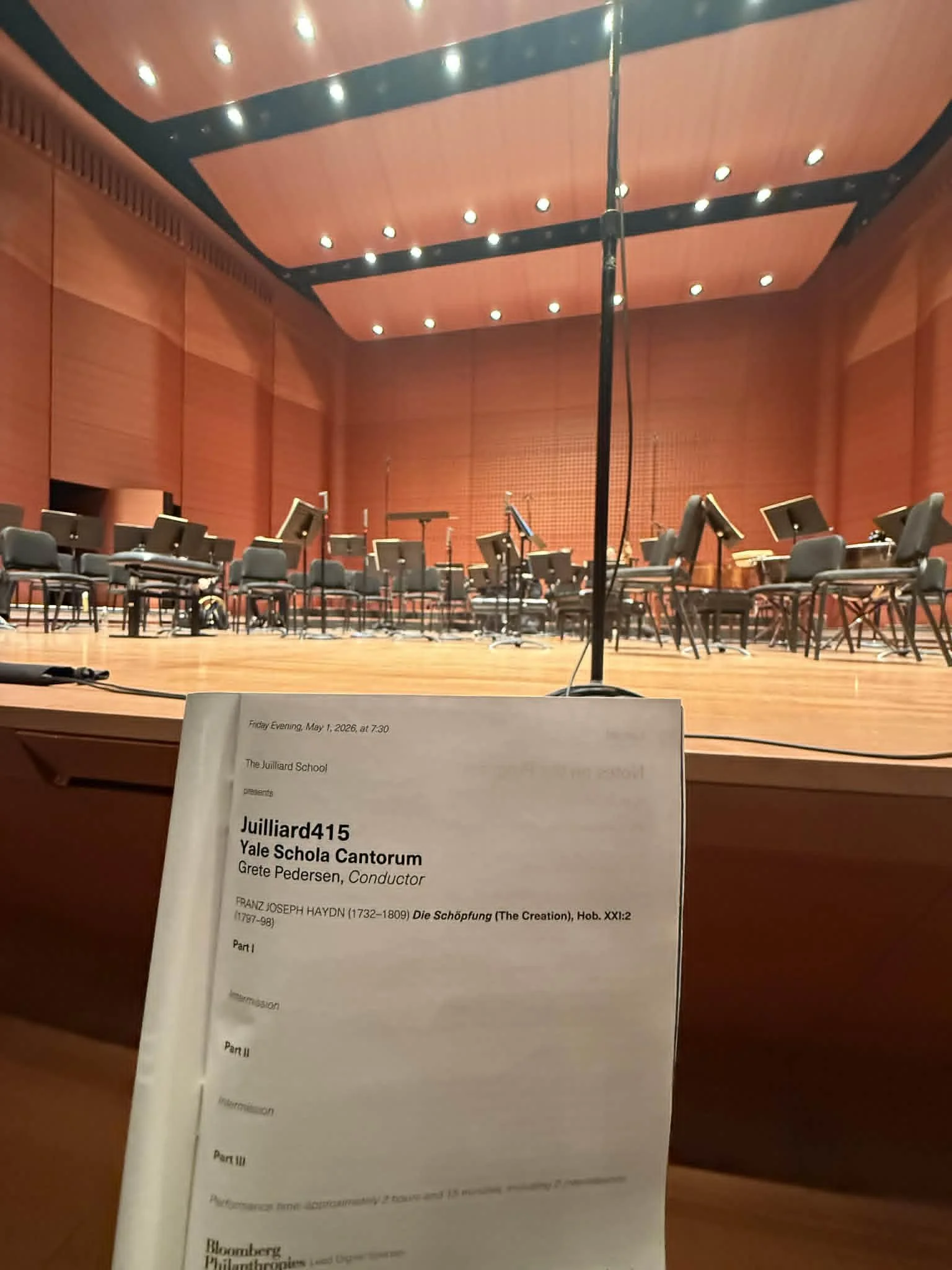
Juilliard415
Yale Schola Cantorum
Grete Pedersen, Conductor
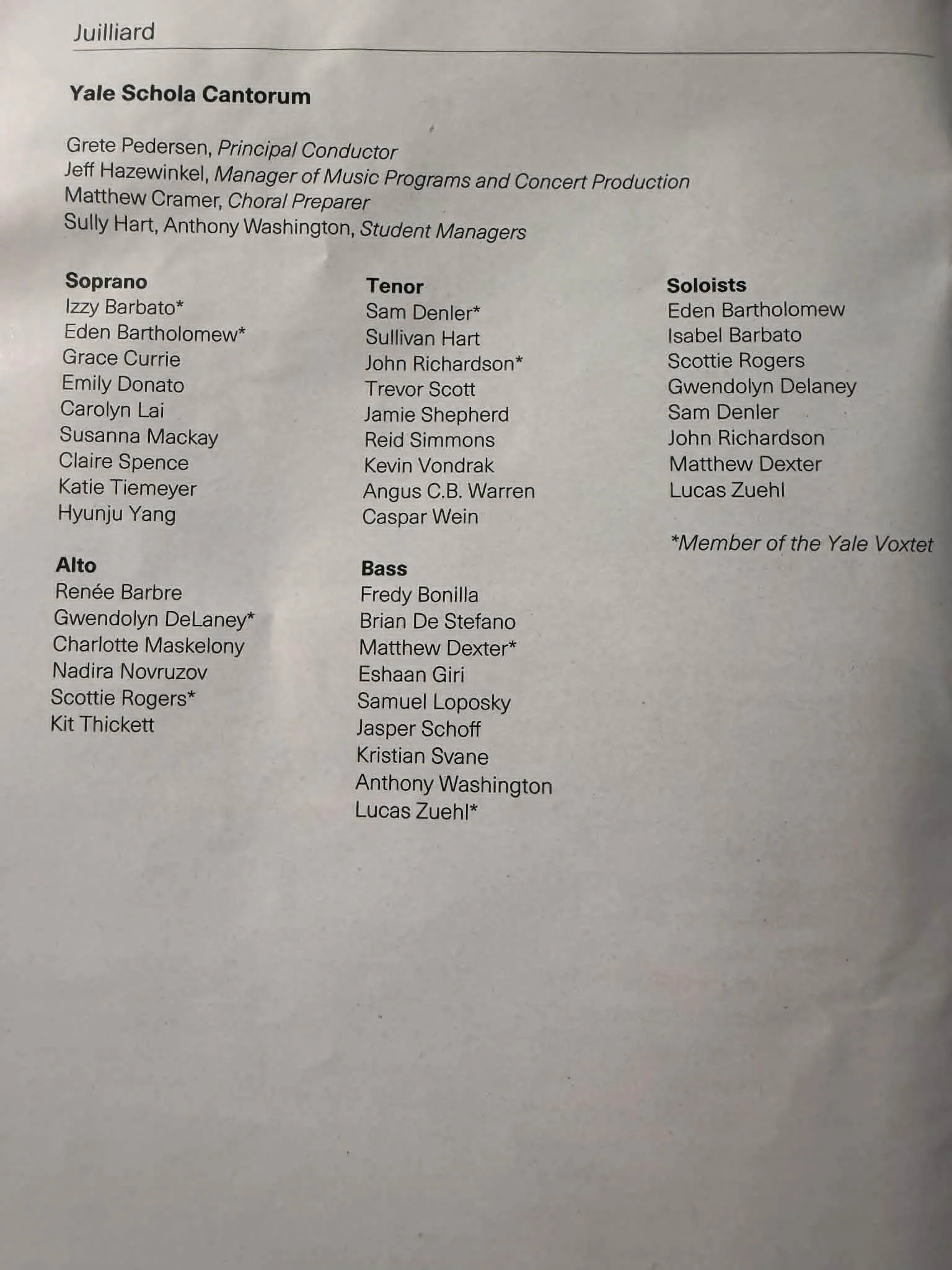
Matthew Dexter Raphael
Sam Denler Uriel
Isabel Barbato Gabriel
Eden Bartholomew Eve
Lucas Zuehl Adam
FRANZ JOSEPH HAYDN (1732–1809) Die Schöpfung (The Creation), Hob. XXI:2
(1797–98)
5.1.2026 Grete Pedersen, の指揮で、アリスタリーでジュリアード415とYale Schola Cantorumのハイドンの天地創造を聴いた。アリスタリーは残響が少なく乾いた響きでそのままの楽器や声が聴こえてくる、一人ひとりの息や発音が、音色や閃光となって混沌を描く。
左手前、1stバイオリン、横にビオラ、右奥にチェロ、右手前にセカンドバイオリン。ファーストバイオリンの奥にトロンボーンとホルン、セカンドバイオリンの奥にトランペット。その奥にフォルテピアノとティンパニ。
この曲はコントラファゴットがいる。オーケストラを取り囲む合唱。両サイドにソリストたち。
カオスから天地の創造が始まる。ひとりひとりの音色や発音が、同じスタンドでも全部違う爆発と閃光の連続が見える。
ちなみに25年住んだブルックリンを離れクイーンズに引っ越した。そしてその2日目にハイドンの天地創造を聴いている。これは私の天地創造でもある。
Matthew DexterがRaphaelの言葉、始めに神は天と地を作ったと話始める。アリスタリーの空間にオケを囲むように配置された合唱が、光をじわっとプロジェクトしている。ステージの外側にオーケストラを囲むように配置されていて、人の声がカーブになってアリスタリーの空間に光がプロジェクトされているのだ。人の声を聴くというより、光になった音の物体を眺めているような印象。
Sam DenlerのUrielが世界の出現を軽快に語りだす姿はベンブリスかゲルハーヘルのよう。人間の抑揚ではなく神の使い。彼の言葉にオーケストラが寄り添いリードしていく。イアンは、歌手のソロの伴奏の時はほぼ、歌手を見ていた。コンサートマスターのEpongueは指揮とオーケストラ全部に気を配っていた。Epongueはいろんな場面で、特にソロ歌手の伴奏の部分で面白さが際立った。セカンドバイオリンのエマは、セカンドバイオリンが主役の時以外のほうが、豊かにバイオリンがなっていた。
nr.5をガブリエルのソロをIsabel Barbatoが歌った。2日目に神がよくわからない世界を整え始めた。なぜならオケが数分前まで荒々しくてめちゃくちゃだったが、des Schöpfers Lob。その声の純度、息のコントロール、母音の質。イザベルのガブリエルを思い出すと荷物や気持ちの整理がはかどってたかる。
陸と海ができ小川が流れる。Juilliard415が地上を切り開き、水の流れ作ったりした大地にMatthew Dexterのラファエルの雪解けの大地からほった土のような声で歌い、最後にbach、小川とゴロゴロ響く安心する声だった。
今度はイザベル天使がマシューが作った大地に花を咲かせる。イザベルの歌唱は、声が持つ色や艶を、木管やホルンや弦楽器が照らして、まるで花が咲く瞬間をスローモーションで眺めているようだったし、モーツアルトのアリアのようだった。
花まで咲いたら歌うしかない。合唱の光が瞬く無数の煌めき。
オケが上下に広がっていく。光。星。目をつむるとベンブリスがいる。サムが4日目に星を作って、明るく広がるオケと合唱のフーガでみんなで歌って、トランペットもビリビリ、ティンパニもドロドロして1部が終わる。ベートーベンのように。この1部では、世間の混沌がだんだん秩序を持ち始めて、陸や空、海ができ、植物や星ができていった。音も生生してく、始めはあらあらしかったのが、ベートーベンまできた。
10分休憩して2部。
この曲は1898年にハイドンが60代でヘンデルのメサイヤを聴き書いた。もともと台本はリドリーが、ミルトンの失楽園と旧約聖書の創世記をもとにヘンデルのために用意したが、ヘンデルが1759年に亡くなり、この台本は残されていた。ハイドンはこのアイデアを気に入ったが、英語の理解が十分でなく、また台本が長大だったため、ウィーンに持ち帰ってスヴィーテンに見せた。スヴィーテンは、人間を自然の支配者として描きつつ、同時に失われつつある純粋な自然への郷愁を織り込み、啓蒙主義と産業革命期の二重の世界観を作品に刻み込んでいる。当時の人々にとって、もはや稀少な体験となりつつあった自然への渇望の表れだ。初めは、オーケストラがカオスを生む。混沌から何かが生まれる気配がする。ラファエルの低い声が地面、ガブリエルは光を、ウリエルは知性を歌う。
2部では動物の創造が描かれる。
und Liebe girrt das zarte Taubenpaar
鳥たちの愛し合う様子を、イザベルの声とオーケストラが奏でる。
マシューの低い声が海の生き物を歌う。つづいて3人で作ってきたものを賛美して歌う。マシューはさらに、オーケストラが奏でるライオンやシカなどさまざまな動物を紹介していき、やがて生き物で一杯になった大地の響きをコントラファゴットがゴロゴロ地響きのように鳴らすと、マシューの低い声もゴロゴロ低い声で鳴っていた。
サムが神が人間に似た生き物を作ったと歌う。彼の生きが少し焦っている気がした。人間の感情が少しはいっている。寄り添う男女の愛を歌う。抑揚がさっきまでと違って、切ない気がする。6日までに生き物を作って満足する神。それを合唱と3天使が歌って2部おしまい。
アレルヤ。
10分休憩
ハイドンは1時間で6日目まで作った。
残った1日はアダムとイブ。
3部の始まりはゆったり、さっきのアレルヤが漂い、サムがアダムとイブの姿を語り、Eden Bartholomew のイブと
Lucas Zuehl のアダムがso wunderbar、とても素晴らしいと繰り返し神をたたえる。3人の天使と声の抑揚が全然違う。人間の温かさや辛さを含んだ声に感じる。アダムのエデンはマシューの低い使徒の声と違う。声の温かさがイブを想う人間の気持ちを感じる。2人は天と地へ軽快に感謝を歌う。
出だしの粗いカオスや鋭い光と違い、人の温かさに包まれるような、オーケストラのオスティナートがぐんぐんアリスタリーを音で満たしていく。安心して音楽が聴ける、ウィーンやクリーブランドが奏でるモーツアルトのオペラの淀みない時の流れ。そして2人は、お互いの愛を歌いあう。Holde Gattin。自然と調和した人間が、互いを愛し、満ち足りている。
最後はこれを作ったハイドンに感謝。
アーメン。
指揮をしたGrete Pedersenは、ブリュッヘンのように空間を切り裂いたり、風や光を送り込んだり、アーノンクールの様に、壮大なドラマを引き出していたが、彼女が常に演奏者一人ひとりの音や声の輝きが自然に立ち上がるのを支え、それをそのまま聴き手に差し出しているように感じた。
神が7日で世界を作った話をハイドンは音楽にして、2026年の音楽家たちが語る。私は新たな場所で、家具を組み立て、机に向かって彼らの業と記録している。音楽が進むにつれて彼らの音色は豊かで輝きをまし、ソロやエポングたちの楽器もまた、奏でる音と音楽そのものが磨かれ一つのアートとなっていた。5月はじめに一緒に世界を創造できてとてもうれしい。
Robert Mealy
Douglas Balliett
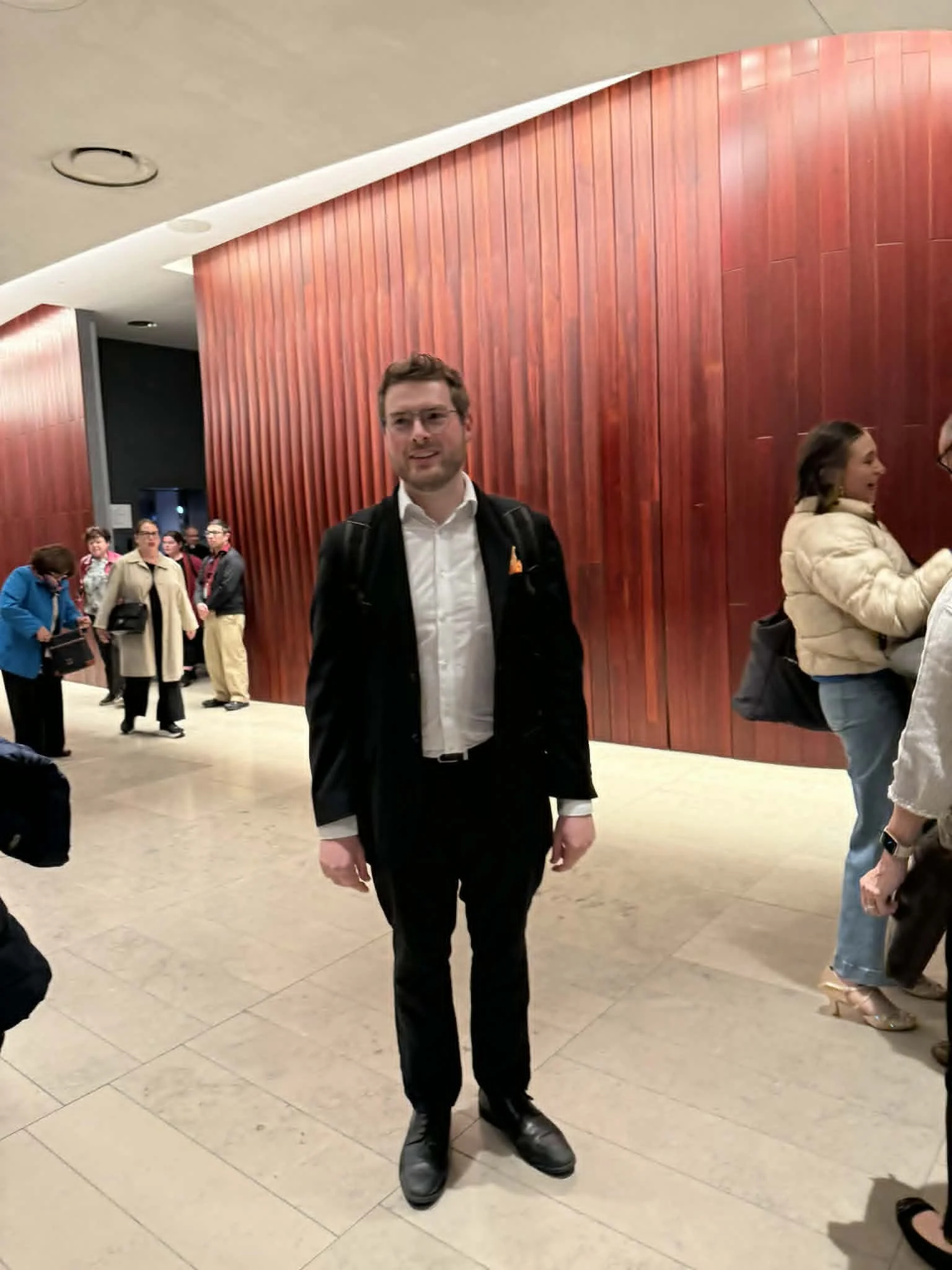
が最後にステージ呼ばれ、他の先生たちにも祝福の拍手が贈られた。
イアンが翌日、ニューヘブンでやると教えてくれたのでいくことにした。