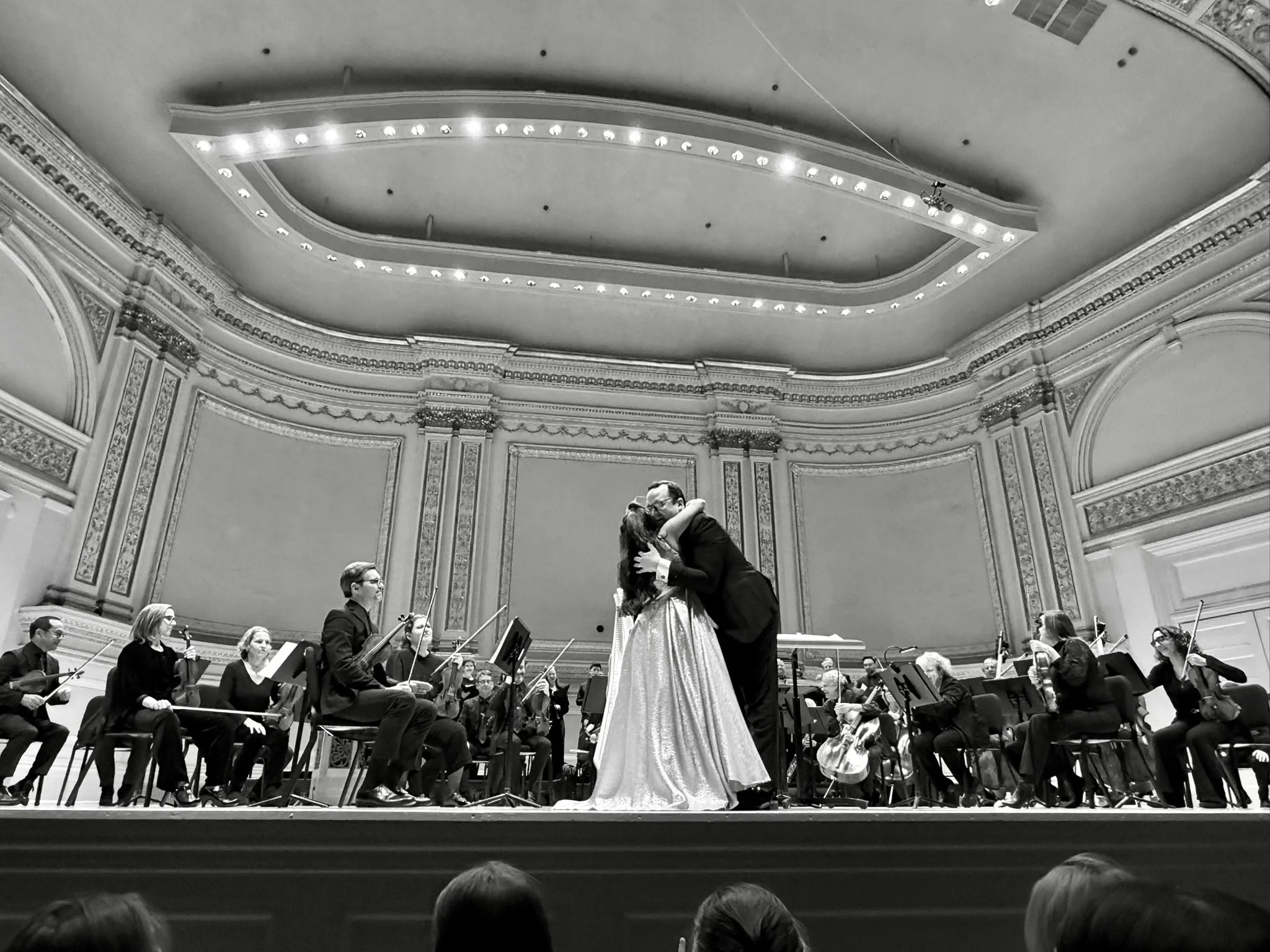
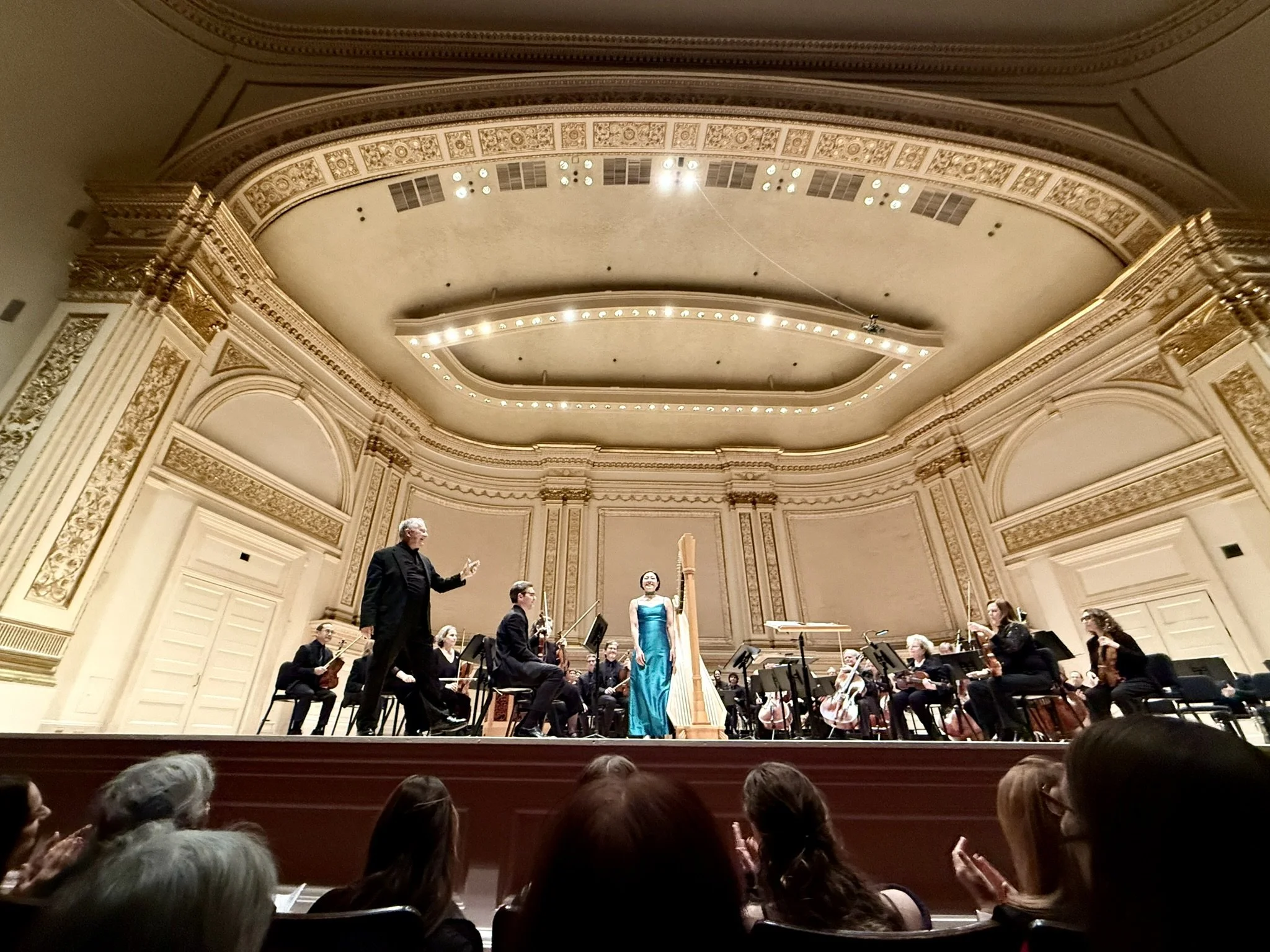
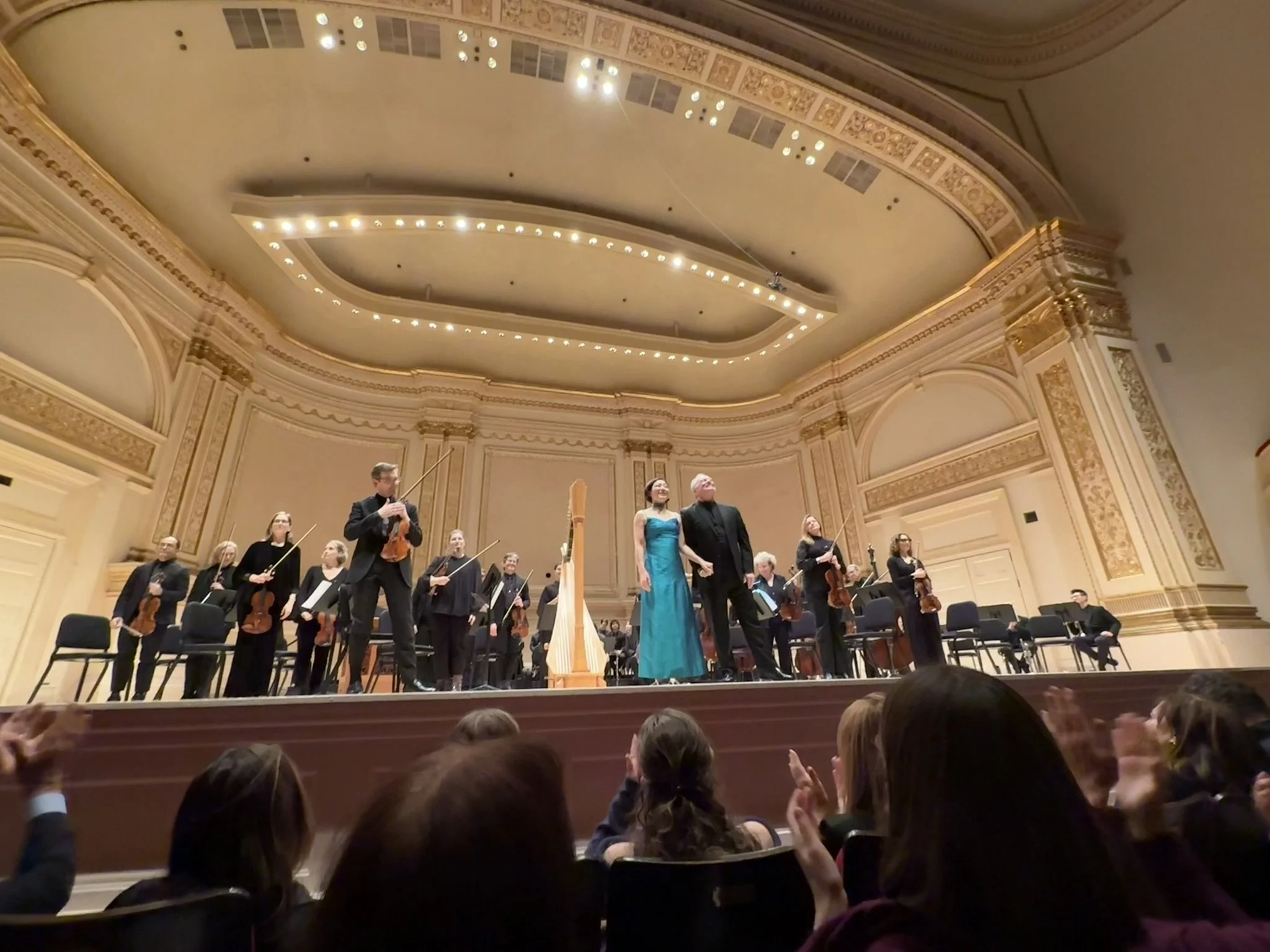
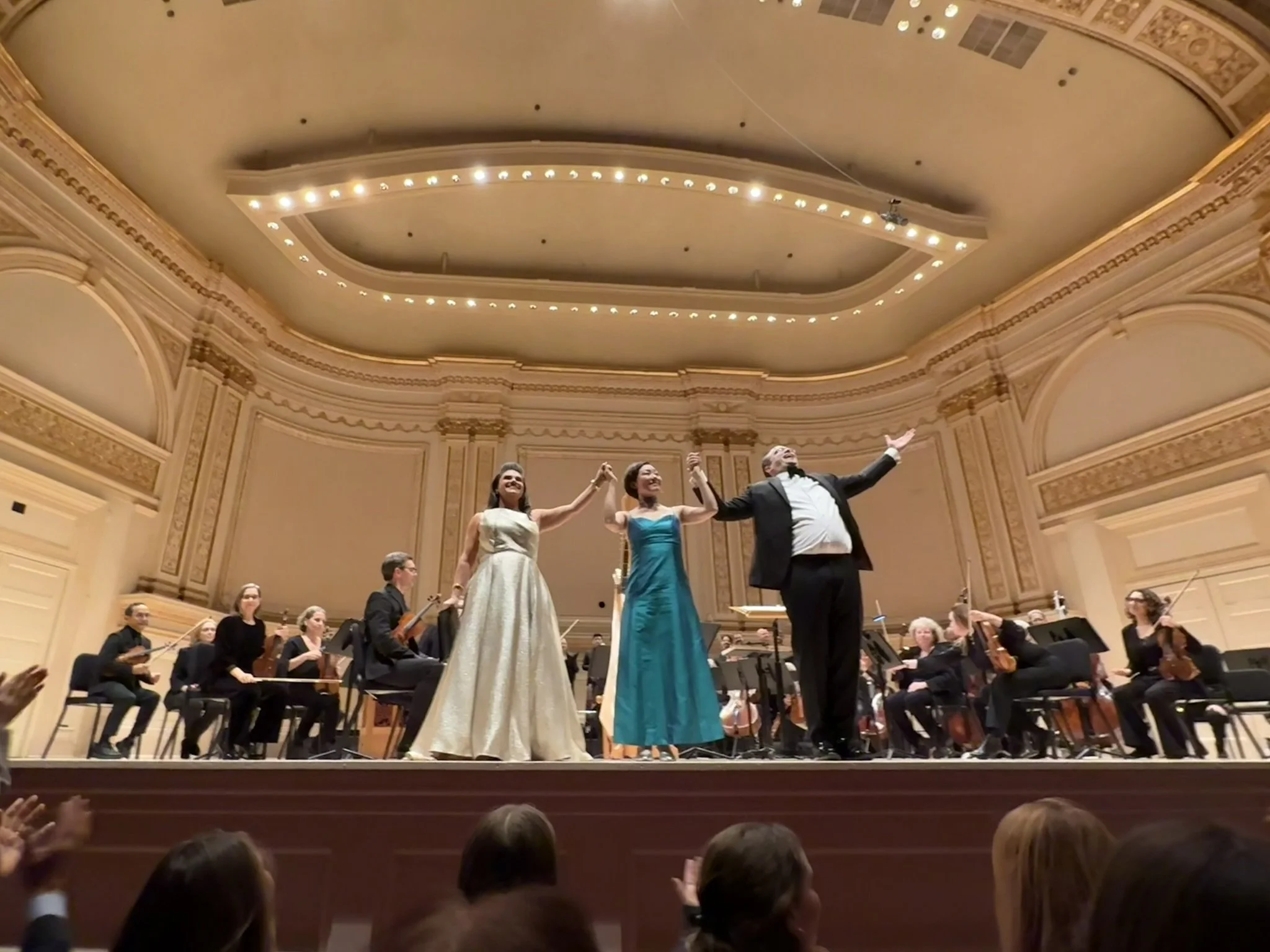
The New York–based choral and orchestral group Musica Sacra performed at Carnegie Hall on December 7, 2025. The evening featured a program of Baroque, Romantic, and 20th-century Christmas music.
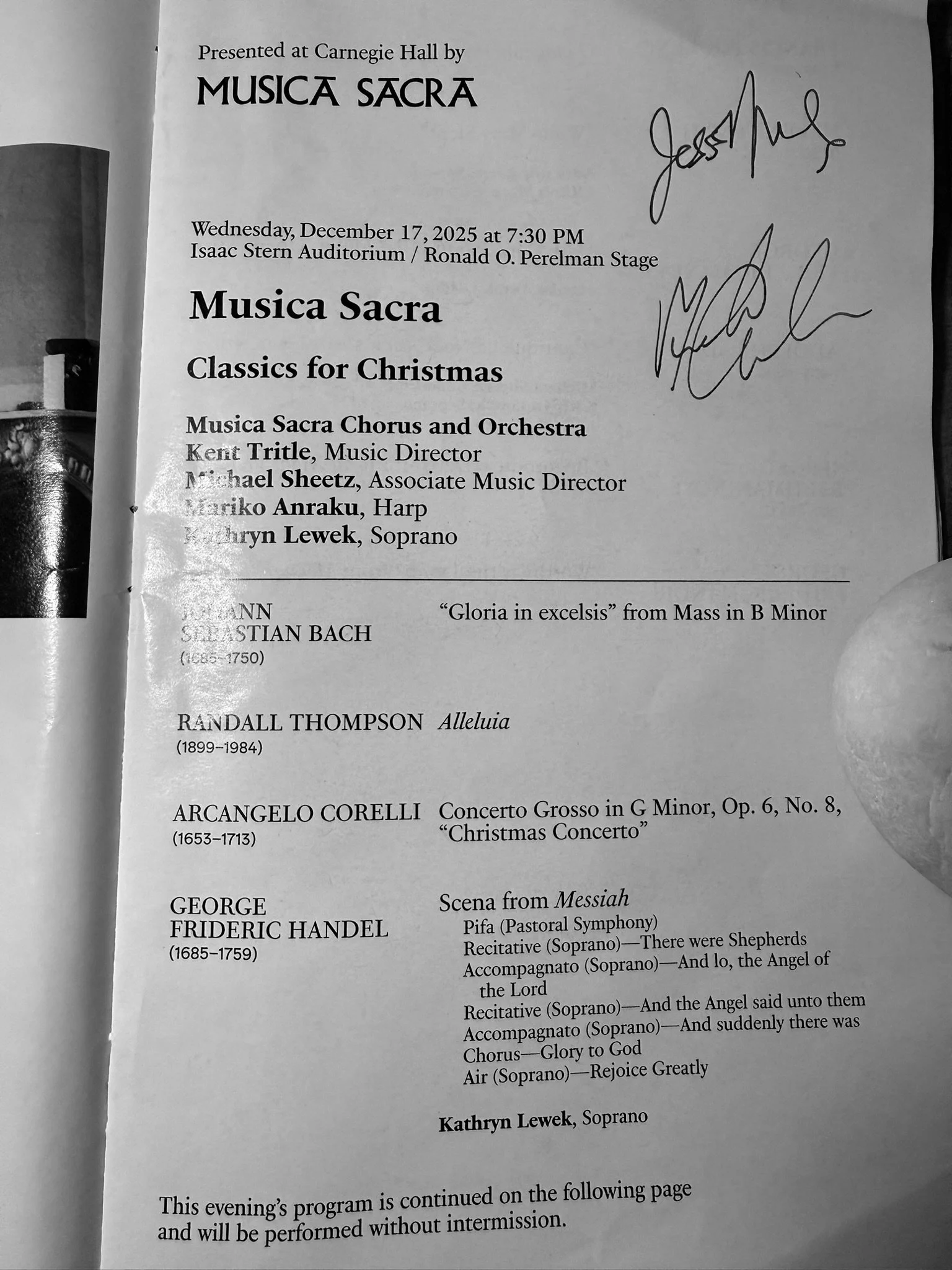
Musica Sacra Chorus and Orchestra
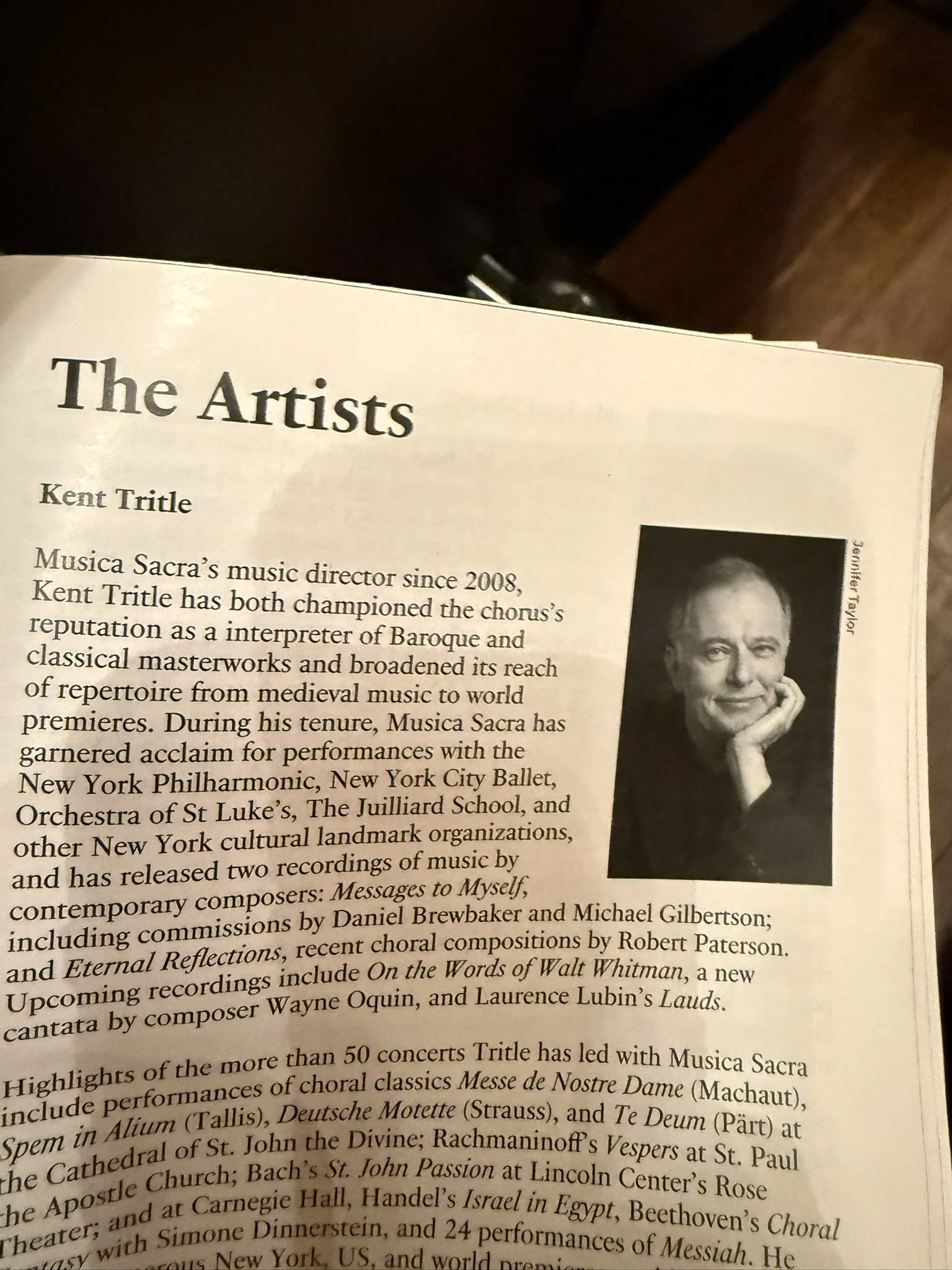
Kent Tritle, Conductor
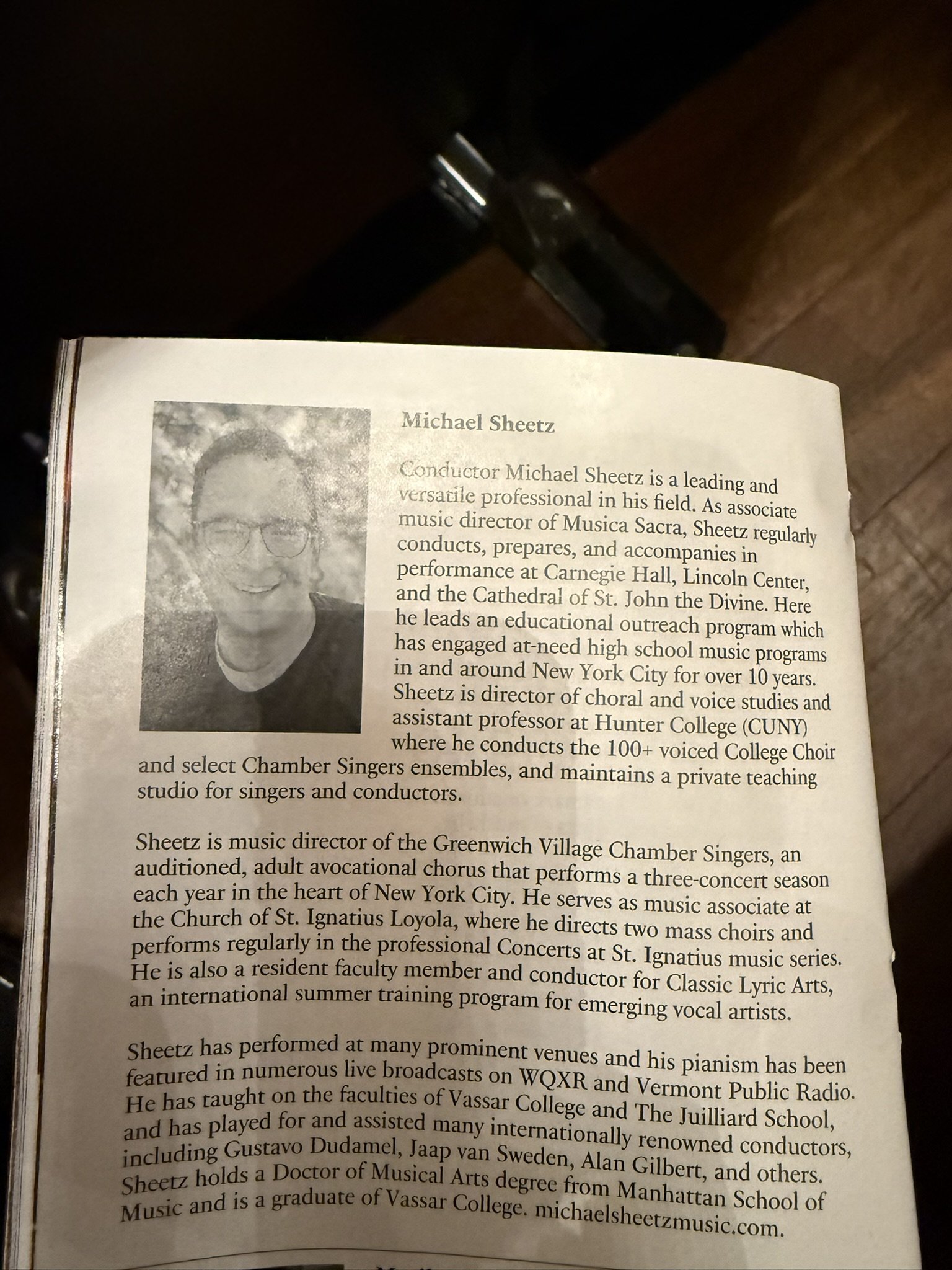
Michael Sheetz, Conductor
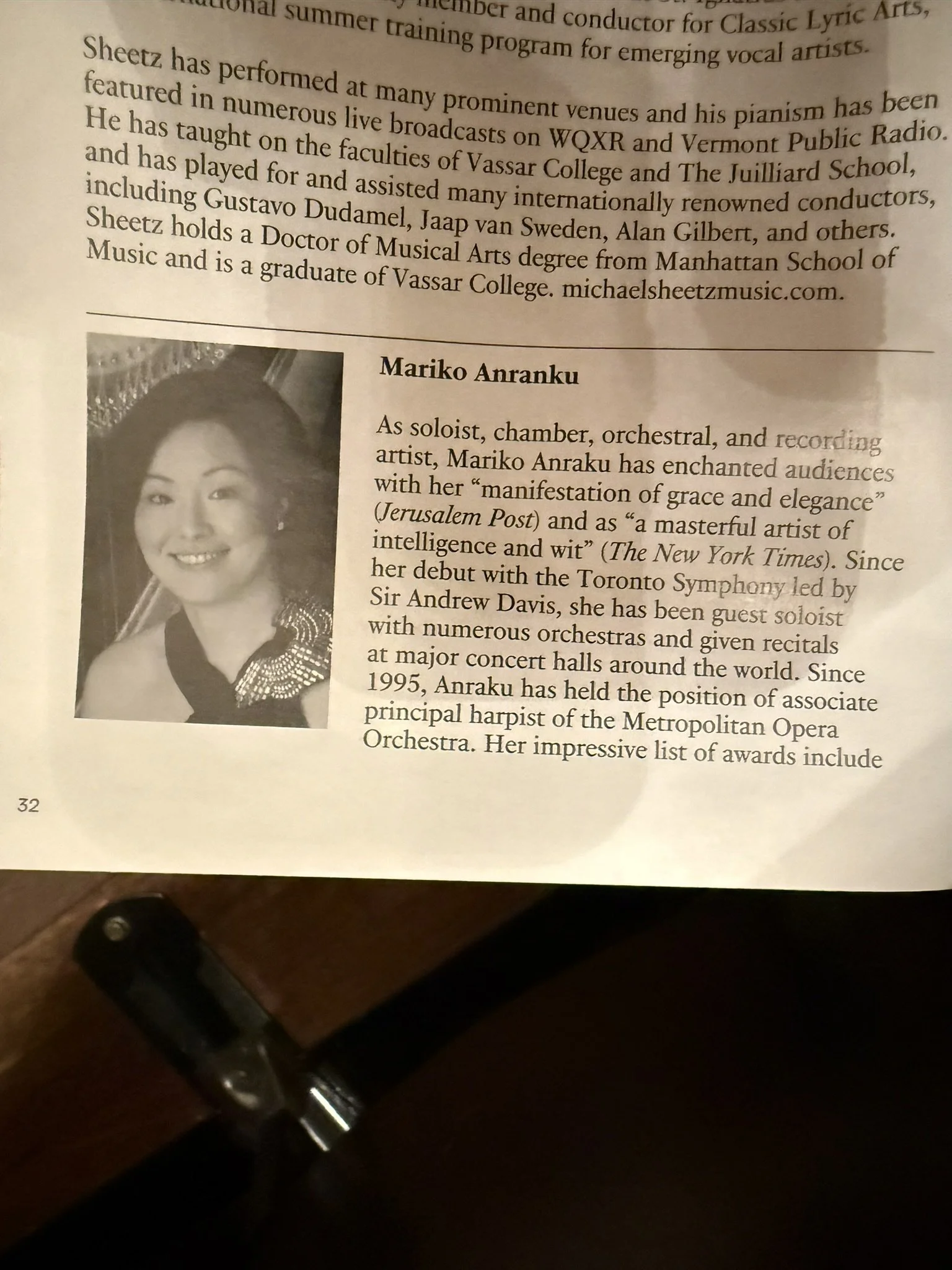
Mariko Anraku, Harp
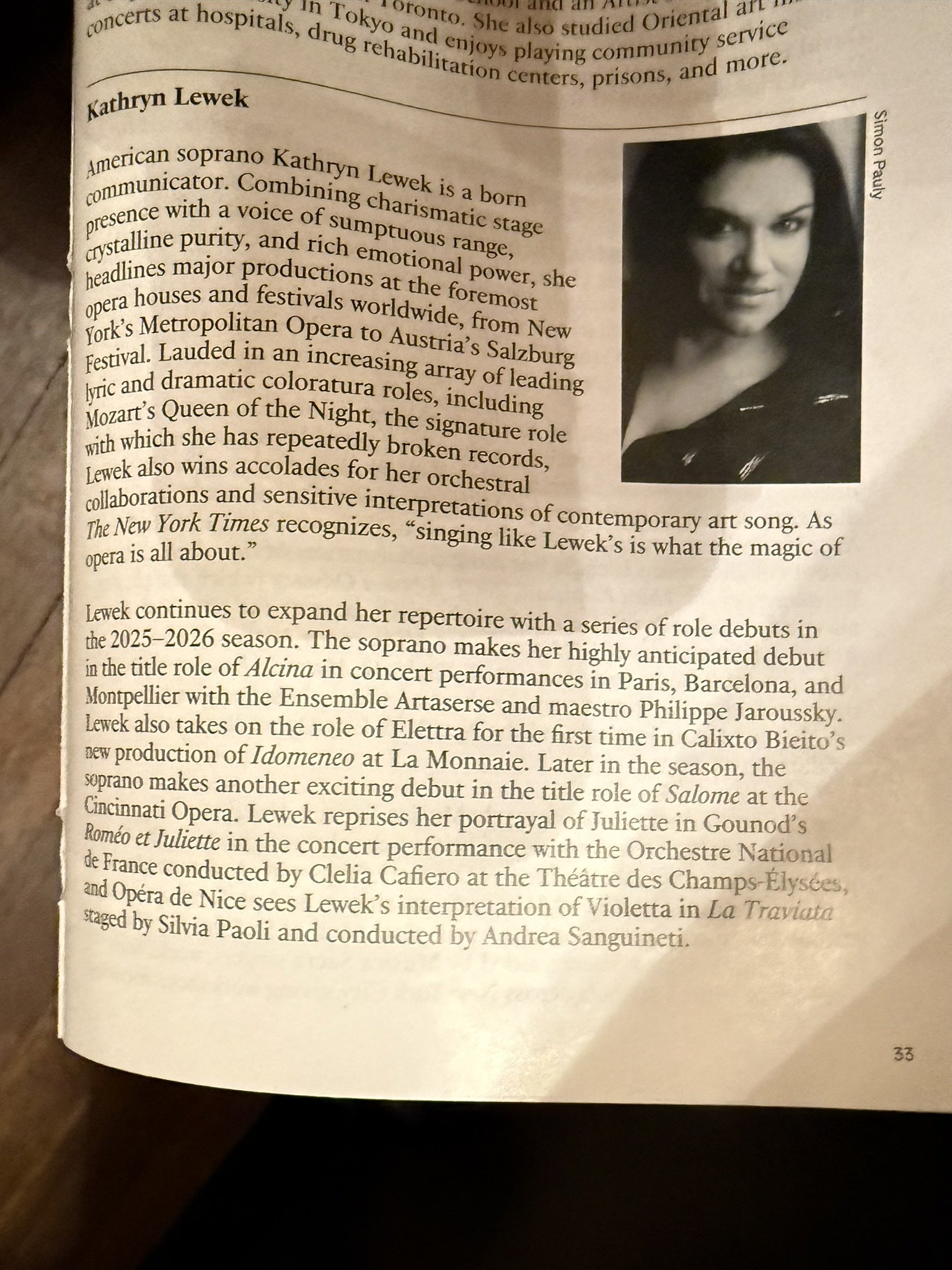
Kathryn Lewek, Soprano
J. S. BACH "Gloria in excelsis" from Mass in B Minor
THOMPSON Alleluia
CORELLI Concerto Grosso in G Minor, Op. 6, No. 8, "Christmas Concerto"
HANDEL Excerpts from Messiah
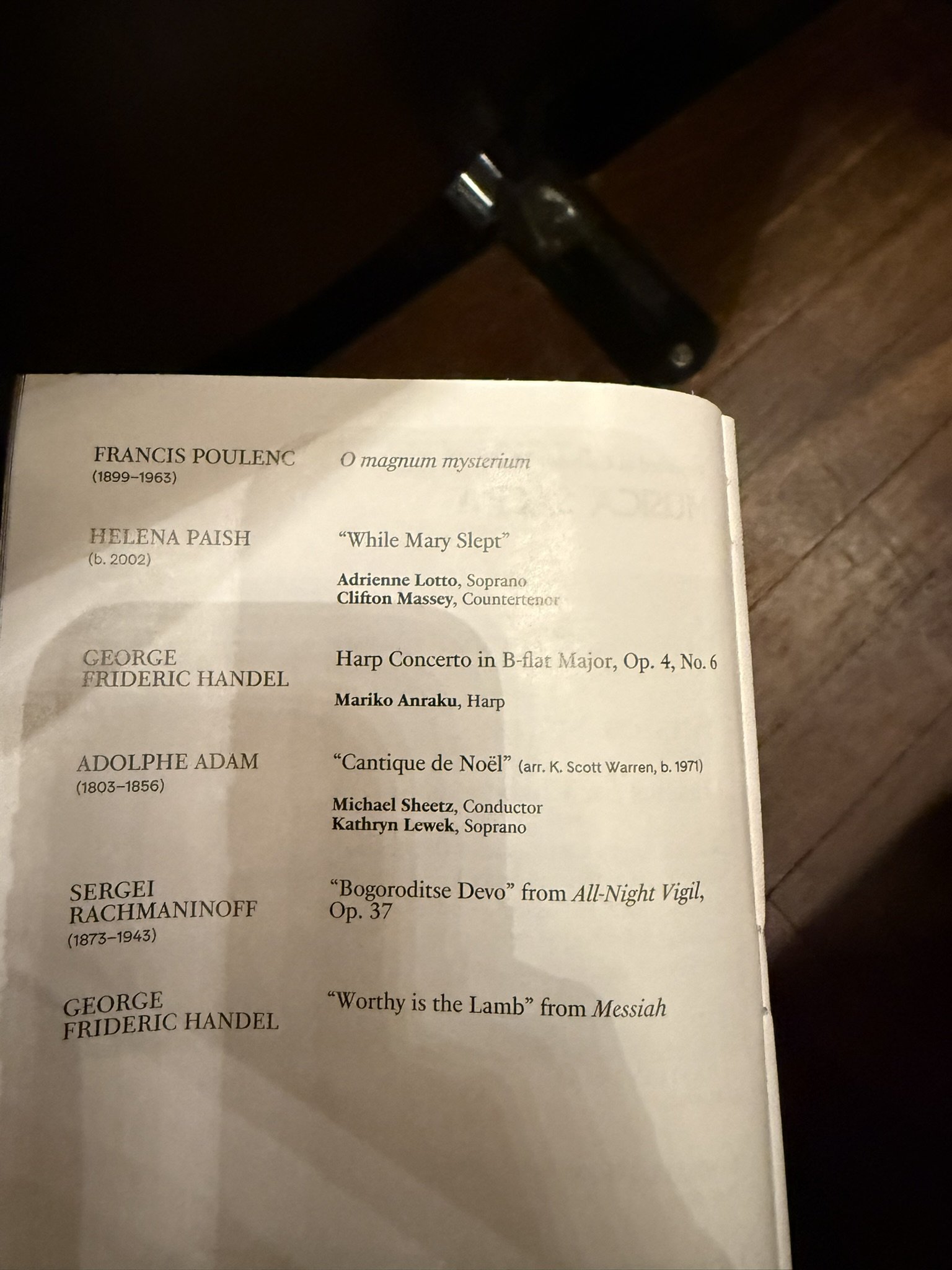
POULENC O magnum mysterium
HELENA PAISH "While Mary Slept"
HANDEL Harp Concerto in B-flat Major, Op. 4, No. 6
ADAM "Cantique de Noel"
RACHMANINOFF “Bogoroditse Devo” from All-Night Vigil, Op. 37
HANDEL "Worthy is the Lamb" from Messiah
I learned about this concert from Mariko Anraku, a harpist. Initially, I was tired of Christmas songs flooding the city during the holiday season, but I finally decided to attend after seeing a post from Opera 360. I managed to get a seat in front of Mariko for $78. Musica Sacra delivered a superb performance with no compromises from the choir, orchestra, or soloists; every musician was attentive and dedicated. The program order and content were excellent. Experiencing this program in Carnegie Hall’s acoustics this season was a true privilege. The performers clearly loved the works they were performing. They were fully prepared and waiting even before conductor Kent Tritle gave his instructions. In particular, in the Rachmaninoff piece, the instruments sounded like human voices.
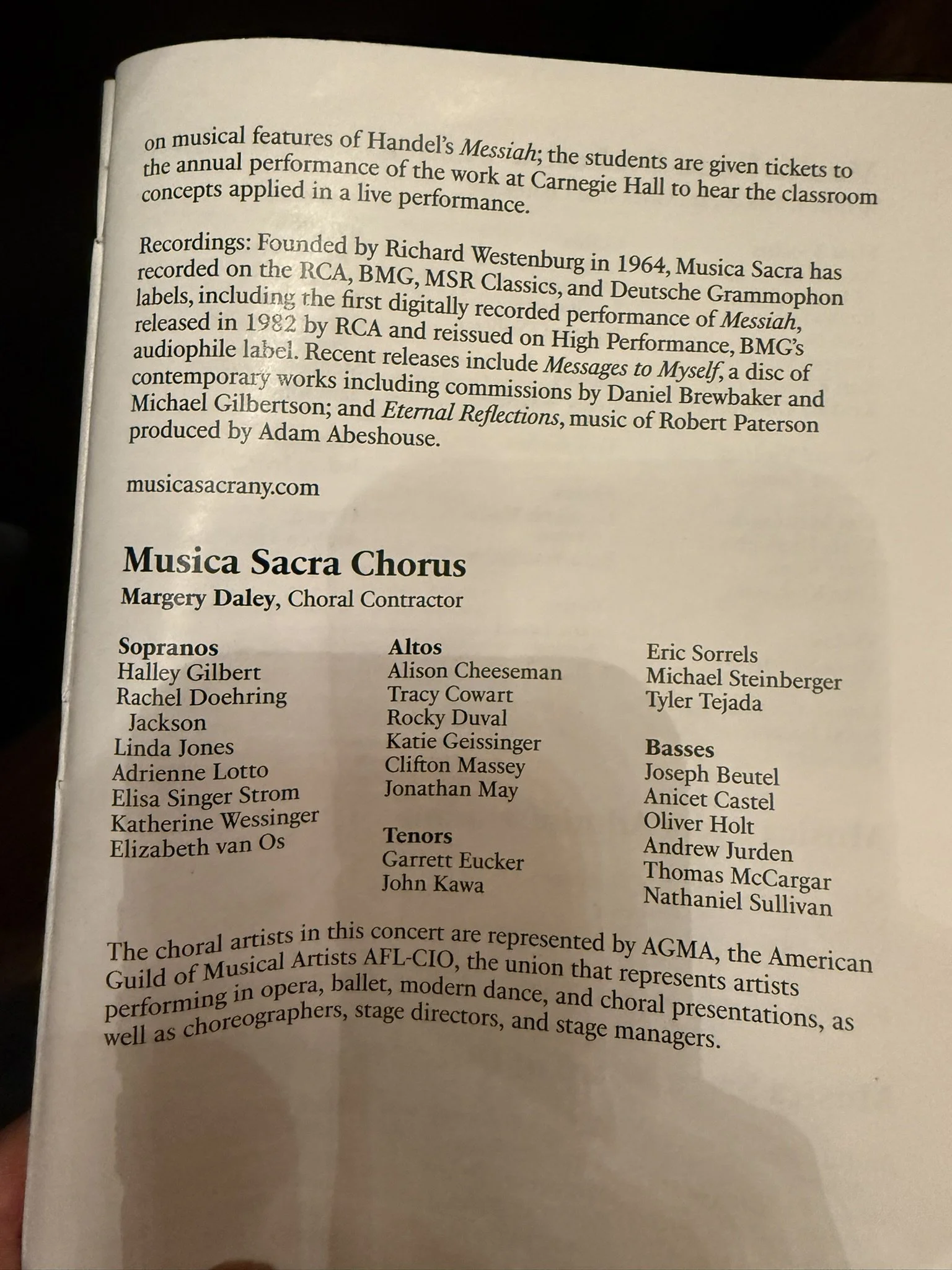
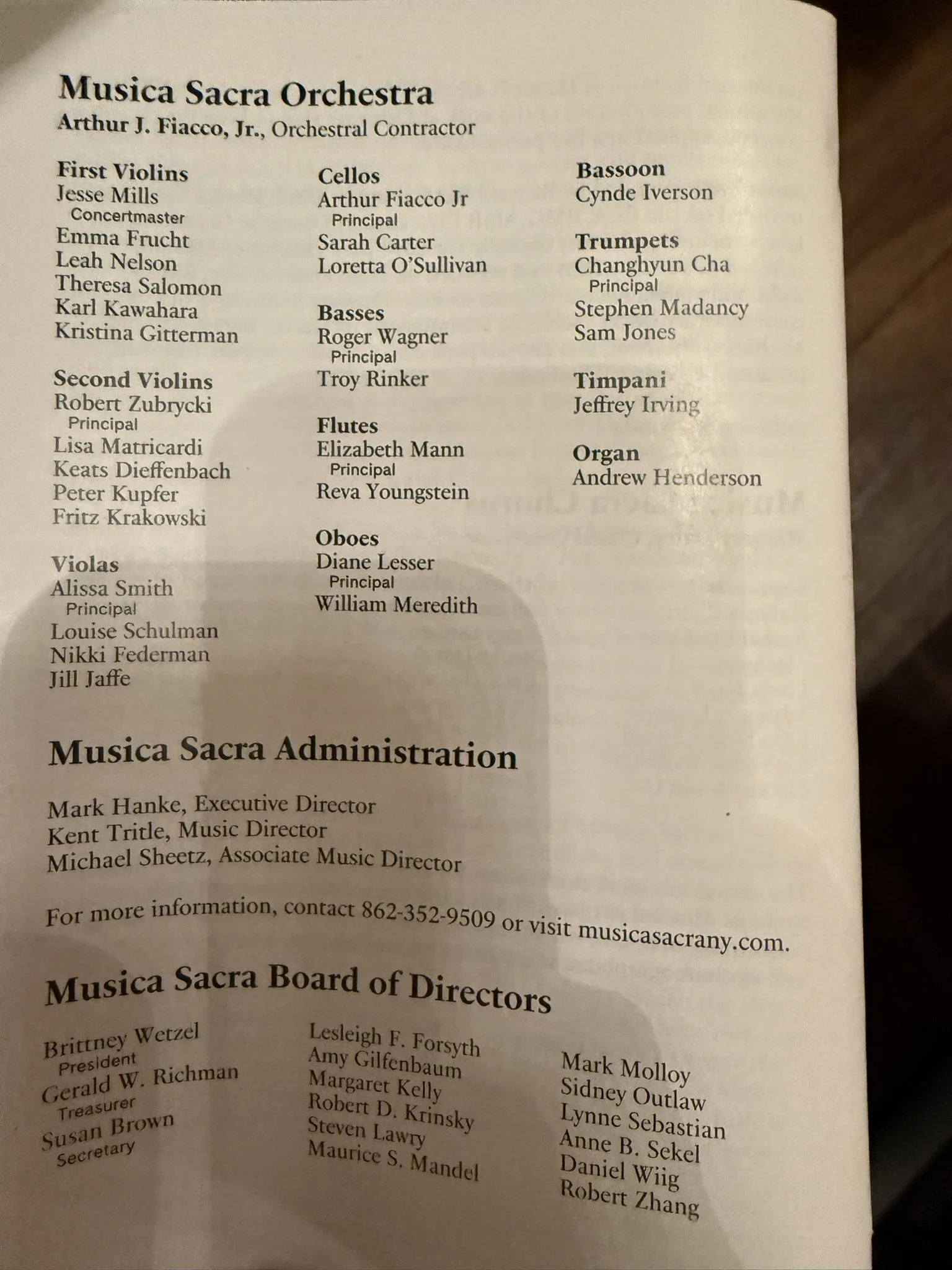
The program began with Bach. The repeated "Gloria in excelsis Deo" was moving—the orchestra had six first violins, two basses, and a 24-member, four-part choir.
Gloria in excelsis Deo.
Et in terra pax hominibus bonae voluntatis.
Laudamus te, benedicimus te,
Adoramus te, glorificamus te.
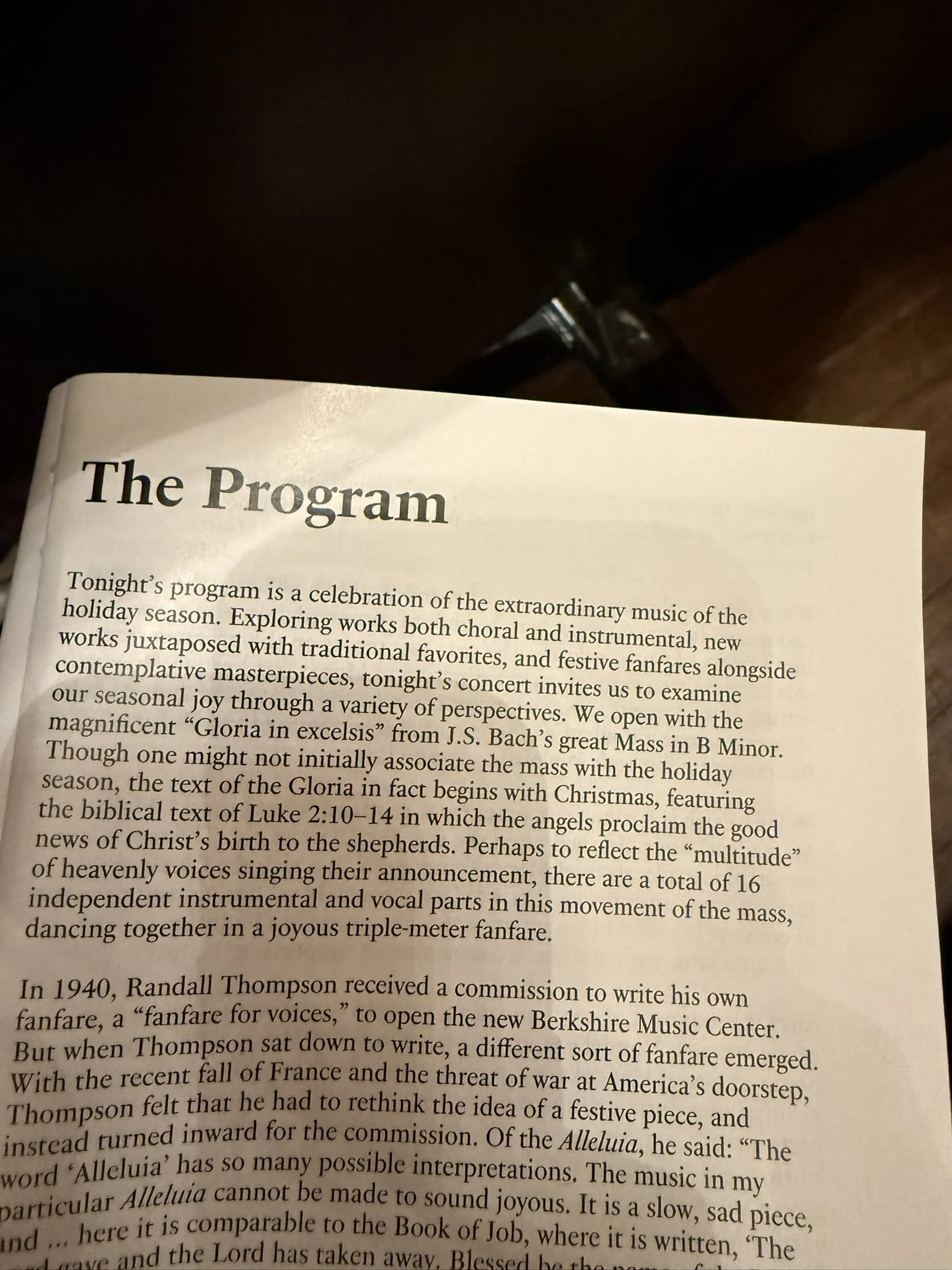
The program notes mentioned that while a Mass might not typically be associated with the holiday season, the lyrics of the Gloria actually begin with Christmas, depicting the scene from Luke 2:10–14, in which angels announce the good news of Christ’s birth to the shepherds. Just as a multitude of angels sang the news, there are a total of 16 independent instrumental and vocal parts, all resounding together in a joyful triple-meter fanfare. When the Gloria was repeated, I felt as if my whole body was being swept away. The praise, which cannot be fully expressed in words, overflowed from the Musica Sacra orchestra and choir. Their praise enveloped Carnegie Hall. In a period style, the initial ensemble evoked the scent of everyday life. It was the delicate sound of very fragile, ordinary human beings. Here, Bach, using all the choir’s vocal parts, layered ascending melodic patterns and repeatedly evoked the brilliance of the trumpets, making the Gloria an event in itself. I was standing in that vortex of praise, and my heart was filled with warmth. I witnessed a moment in their world where, regardless of faith, people and instruments joined their voices in a single breath and heartbeat of blessing—a moment that could only be called glory. That memory still resurfaces in various situations.
The second piece was Randall Thompson’s Alleluia. Commissioned by Koussevitzky in 1940, it is for choir only. Thompson composed this fanfare for voices to commemorate the opening of the new Berkshire Music Center. Amid the fall of France and the looming threat of war for America, Thompson reconsidered the celebratory work and turned inward. He conceived of the Alleluia not as a joyful piece, but as a sorrowful one, comparable to the Book of Job. This Alleluia is Thompson’s most famous work, and Musica Sacra still communicates its power today, as audiences struggle to find joy and celebration in a world of hardship.
Following this was Corelli’s Christmas Concerto:
Vivace – Grave
Allegro
Adagio – Allegro – Adagio
Vivace
Allegro
Largo
Corelli, a master of the concerto grosso, placed the Pastorale at the end of the concerto. The lively 12/8 time signature, the sweet sound of G major, and the masterful imitation of ancient Italian shepherds’ instruments evoked the scene of the shepherds in Bethlehem on Christmas night. This performance felt like a theatrical production. The concertmaster, each principal player, and the wind instrument soloists were all superb. The tone was soft, and Carnegie Hall smelled like a Christmas tree, like fir trees.
Handel: Excerpts from Messiah
Kathryn Lewek’s performance of Handel’s Messiah was full of joy. In the acoustics of Carnegie Hall, her voice was like fine powder. Her breath control was excellent. Her voice was soft yet powerful, and her phrasing was always fresh, providing a driving force that propelled the music forward. Especially in "Rejoice greatly," she vividly condensed the world’s joy—the transition from anticipation to light, and from silence to praise.
Next was Handel’s Harp Concerto. The performance felt more like UK rock than traditional elegance. The instrument looked new. In the first movement, there was a constant rattling sound. Her picking was wild, unlike the refined harp playing I recently heard in Puccini’s La Bohème at the Metropolitan Opera. The solo harp sounded like a voice rising from within the band. The tension between Handel’s improvisation and structure was maintained; the sound was controlled, and the wild playing was showcased—that’s Handel. This kind of performance can only be achieved by someone with long experience, possessing all the qualities of subtlety, vividness, and wildness. It illuminated joy and elegance with a wild intensity. In the third movement, Mariko’s harp, blending with the orchestral parts on the left and right, and the pizzicato and legato in the tutti, was divine.
Finally, Adolphe Adam’s Cantique de Noël was performed with the original French lyrics. Composed in 1847 to commemorate the restoration of the stained glass windows of a local church in Roquemaure, France, this carol has been loved across generations, arranged for solo soprano, choir, harp, and strings. Cantique de Noël was more than a hymn; it evoked the very essence of a winter landscape. The soprano solo was like the first candle lit in the darkness. Then the choir joined in, spreading the light from an individual to everyone, illuminating Carnegie Hall. The sound world created by the harp and strings captured the stillness of winter and the movement of snow. The harp’s arpeggios shimmered like falling snow reflecting light, and the strings depicted the cold air and vastness of the deep night. The harp’s timbre blended seamlessly with the string ensemble, creating a sense of being lost in a snowstorm, unable to see what lies ahead. It was an experience of music that spoke of accepting life’s difficulties, finding joy amidst suffering, and embracing hope and wonder.
Rachmaninoff’s Bogoroditse Devo from the All-Night Vigil and Handel’s Messiah final movement, Worthy is the Lamb, concluded the program. Messiah was performed to raise funds for local prisons and hospitals, and the All-Night Vigil premiered at a war relief concert in Moscow in 1915. Similar to Randall Thompson’s Alleluia, Rachmaninoff’s setting of the Slavic prayer connects to the climactic choral movement of Messiah, Worthy is the Lamb, which concludes the entire work. Handel expresses the joy of this movement with homophonic and polyphonic textures, utilizing the full power of the orchestra and choir, culminating in a magnificent fugal Amen. This final, long-lasting Amen connects all the major themes of the program: finding joy even in suffering, accepting life’s difficulties, and, above all, the desire to create music that speaks of hope and wonder.
New York’s Musica Sacra, founded in 1964 by Richard Westenburg and now under the musical direction of Kent Tritle, consistently delivers high-quality performances featuring choir, orchestra, and soloists. Even as they performed with such dedication, the audience noise occasionally intruded. During the encore, the performers stood and sang the Hallelujah Chorus. It was magnificent.
Program note by Dr. Anna C. Lenti, Lyell B. Clay Artist in Residence and Director of Choral/Vocal Activities; Lecturer in Music at Williams College, Massachusetts.
ニューヨークの合唱とオーケストラグループ、ムジカサクラは12.7.2025にカーネギーホールで演奏会を行った。クリスマスに関連するバロックからロマン派、そして20世紀をカバーするプログラムを一晩で楽しめる贅沢な夜。この公演にはメトロポリタンオペラのハーピストである安楽真理子が出演した。彼女の弟子であるキャロライン・ベンビアの別な公演で、まりこさんからヘンデルのハープ協奏曲を演奏することを知り、ヘンデルファンとしては興味深かったが、この季節に街に溢れるクリスマスのソングに吐き気がしていたため当日まで行くか迷ったが、当日、オペラ360のSNSのポストを見ていくことにした。78ドルで3列目のまりこさんの前だった。そして、ムジカサクラは合唱もオーケストラもソリストも一切妥協がない全ての演奏家が気を配る最高の演奏だった。プログラムの順番も内容も最高だった。この内容をこの季節にカーネギーのアコースティックで体験できた。彼らは作品を愛していた。指揮者のケントが指示を出す前から彼らは準備して待っていた。特にラフマニノフでは楽器が人の声に聴こえた。
プログラムはバッハから始まった。Gloria in excelsis Deoが何度も繰り返されて胸が熱くなった。1stヴァイオリンが6人、バスが2人、合唱4部、24人の編成。
Gloria in excelsis Deo.
Et in terra pax hominibus bonae voluntatis.
Laudamus te, benedicimus te,
Adoramus te, glorificamus te.
プログラムノートにはミサ曲はホリデーシーズンと結びつくものではないかもしれないが、グロリアの歌詞は実際にはクリスマスに始まり、ルカによる福音書2章10-14節の聖句、天使たちが羊飼いたちにキリスト降誕の吉報を告げる場面が描かれている。天使たちの大群がその知らせを歌うように、合計16もの独立した器楽と声楽のパートがあり、喜びの3拍子のファンファーレの中で共に響き合う。Gloriaが何度も繰り返さると身体ごと巻き込まれるような感覚になる。一度では言い尽くせない賛美がムジカサクラのオーケストラと合唱から溢れて止まらない。彼らの賛美がカーネギーを覆う。ピリオドのスタイルで、初めの合奏は彼らの普段の生活の匂いがした。とても壊れやすい普通の人間の繊細な音色だった。バッハはここで、合唱の全声部を使い上昇する音型を重ねトランペットの輝きを何度も呼び戻しGloriaを出来事として起こしている。私はその賛美の渦の中に立たされ、胸が熱くなったのだ。彼らの世界はまだ祝福されるという呼吸や鼓動に信仰に関係なく人と楽器が声を合わせて栄光と呼ばずにはいられない瞬間に立ち会った。その記憶は、いまだにいろんな場面で蘇る。
2曲目、ランドル・トンプソンのAlleluia。クーセビツキーが1940年にコミッション。合唱のみ。トンプソンが新しいバークシャー音楽センターの開館を記念して、声のためのファンファーレを作曲した。フランスの陥落とアメリカへの戦争の脅威が迫る中、トンプソンは祝祭作品を考えなおしたいと感じ内省へ向った。彼はアレルヤの呵責を喜びにあふれたものではなく、ヨブ記に匹敵する悲しい曲と考えた。このアレルヤはトンプソンの最も有名な作品で、世界が苦難の時代にある中で喜びと祝祭を見つけようと奮闘する聴衆に今も語りかける。
続くコレッリのクリスマス協奏曲。
1.Vivace– Grave
2.Allegro
3.Adagio – Allegro – Adagi
4.Vivace
5.Allegro
6.Largo
コンチェルト・グロッソの巨匠であるコレッリは、パストラーレを協奏曲の最後に配置。その軽快な12/8拍子、甘美なト長調の響き、古きイタリアの羊飼いの楽器の音色を見事に模倣し、クリスマスの夜のベツレヘムの羊飼いたちの情景を思い起こさせる。この演奏はまるで劇の様だった。コンサートマスター、それぞれのプリンシパルや管楽器のソロ。音色が柔らかい。カーネギーがクリスマスツリーのFir、もみの木の匂いがする。
HANDEL Excerpts from Messiah
Kathryn Lewek の歌うヘンデルのメサイアは喜びに溢れていた。カーネギーのアコースティックの中で彼女の声は細かい粉のようだ。腹筋のブレスコントロール。柔らかいのに芯があり、そのフレーズは毎回新鮮で、音楽が前へ進む推進力となって響く。特にRejoice greatlyはすでに世界は喜びに満ち、待望から光へ、沈黙から賛美を凝縮し鮮やかに披露。
次はヘンデルのハープコンチェルト。優雅というよりはUKロックだった。楽器は新しそうだった。1楽章では、ずっとガクガク音がしていた。彼女のピッキングは、先日、メトロポリタン歌劇場で聴いたプッチーニのラボエームとは違いとてもワイルドだった。そして、ソロハープがバンドの中から立ち上がる声のように聴こえた。ヘンデルの即興と形式の緊張が保たれ、響きを抑制し、ワイルドなプレイを魅せるのがヘンデルなのだ。こういう演奏は長く務めた人にしかできない、淡い、鮮やか、ワイルドの全て兼ね備えたヘンデル。喜びと気品をワイルドに照らしだす。3楽章では、左右のオーケストラ声部と、ピッチカートとレガートでトゥッティにブレンドする真理子さんのハープが神だった。
そして、次にアドルフ・アダムのクリスマス・キャロルがオリジナルのフランス語歌詞で演奏された。1847年にフランスのロクマールにある地元の教会のステンドグラスの修復を記念して作曲された。このキャロルは時代を超えて愛され続け、ソロ・ソプラノ、合唱、ハープ、弦楽器の編曲。Cantique de Noëlは賛歌を超えた、冬の風景その物だった。ソプラノの独唱は、闇の中で最初に灯る一本の蝋燭のよう。そこに合唱が加わり、光は個人からみんなの光に広がりカーネギーを照らしていく。ハープと弦楽器が描く音の世界は、冬の静けさと雪の動きそのものだった。ハープのアルペジオは降り続く雪が光を反射するようにきらめき、弦は、冷えた空気と深い夜の広がりをつくる。弦楽器の合奏にハープの音色掠れ、降りしきる雪の冬に前が見えない。
人生の困難を受け入れ苦しみの中に喜びを見出すこと。希望と驚きを語りかける音楽を体験した。
RACHMANINOFF “Bogoroditse Devo” from All-Night Vigil, Op. 37
ラフマニノフの徹夜祷より聖母マリアよ、乙女よと、ヘンデルのメサイアの終楽章の子羊はふさわしいが、最後に演奏された。メサイアは地元の刑務所や病院のための資金を集めるために演奏され徹夜祷は1915年にモスクワで行われた戦災救援コンサートで初演された。ランドール・トンプソンの「アレルヤ」と同様に、ラフマニノフのスラヴ語の祈りの言葉への作曲は、メサイアのクライマックスとなる合唱楽章として、作品全体を締めくくる子羊はふさわしいへと繋がる。ヘンデルはこの楽章の喜びを、ホモフォニックとポリフォニックなテクスチャーで、オーケストラと合唱の全力を駆使し壮麗なフーガによるアーメンで締めくる。この最後で長いアーメンの響きは、このプログラムの主要なテーマすべてを結びつける。苦しみの中にあっても喜びを見出すこと、人生の困難に直面しても受け入れること、そして何よりも、希望と驚きを語りかける音楽を創造したいという願いだ。
ニューヨークの Musica Sacra は、1964年にリチャード・ウェステンバーグによって創設され、現在はケント・トリトルが音楽監督を務め、合唱、オーケストラ、ソリストを伴う演奏は高い水準を誇る。彼らがこんなに大切に音楽を奏でているときにも豪華に着飾った客の容赦ないノイズ。アンコールでハレルヤを立って歌った。最高だった。