
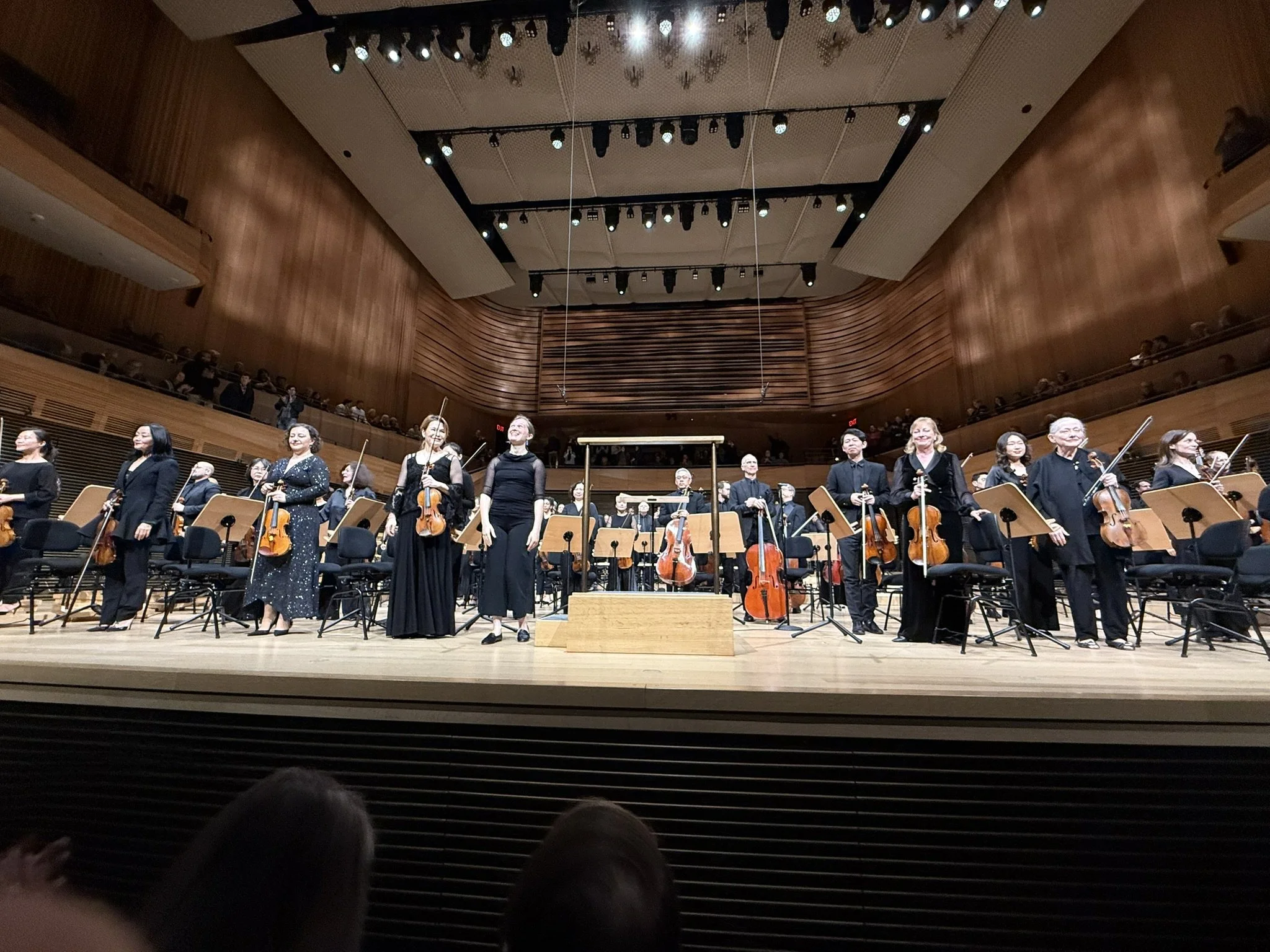
3.3.2026, New York Philharmonic, conducted by Mirga Grazinyte-Tyla, at David Geffen Hall. Ralph Vaughan Williams's Fantasia on a Theme by Thomas Tallis, based on 16th-century church modes,opened the program. The orchestra unfolded a rich, deep, romantic breath. The deep sustain of the low strings, the thick, supporting inner voices, and the wide, drawn-out harmonies created a sweeping arc in the space. The sound qualities and the volumes were precisely controlled, and from this refined resonance, the solos eventually emerged. As the solo section began, conductor Mirga quietly listened to the violins and violas, listening to the music speak naturally. Other timbres were added one after another, as if to glean from the depths of the heart and offer them to the listener. The life dwelling in the music, like an expansive, transparent veil of light, poured into the heart.
Next, John Williams' Piano Concerto premiered in New York. This was the first piano concerto the film music master wrote at the age of 93, and it was dedicated to pianist Emanuel Ax. It consists of three movements, each paying homage to different jazz pianists. Sounds reminiscent of the twelve-tone technique emerge, evoking Arnold Schoenberg and Pierre Boulez at David Geffen's. Complex and sophisticated flavors are skillfully woven together, creating a meticulous symphony. Ax's solo then joins. His piano playing sublimated the jazz fascination that captivated Europe in the early 20th century—a sensibility that captivated composers of the time—into a contemporary form. The rigorously constructed sound, punctuated by the shadows of improvisation, possessed a clear outline, like a contemporary art object.
This piece retained a sense of breath and human warmth, even as its meticulous structure created tension. Emanuel Ax played the piano as if singing. As when playing Mozart or Beethoven, Axe allows the phrases to breathe naturally and the melodies to resonate like voices. However, in John Williams's concerto, his performance, in which the gears of rhythm and sound meshed tightly and maintained focus while skillfully intertwining with the orchestra, felt as if Ax were creating a sonic sculpture of each jazz pianist. For the encore, he played Williams' Sabrina. It was a refreshing, very calm, and peaceful piece.
The third piece was Mieczysław Weinberg's Symphony No. 5. Weinberg was born in Poland in 1919, fled persecution, went into exile in Moscow, where he developed a close friendship with Dmitri Shostakovich, and left many orchestral works. Building on the orchestration techniques he learned from Shostakovich, in 1962, he portrayed the voice of the heart in Symphony No. 5, imbuing it with deep sadness, tension, and introspection born of his experiences of war and persecution.
Conductor Mirga elicited Weinberg's inner voice, delicately developing the harmonies, rhythms, and melodic lines. The orchestra's stunningly beautiful voices each pointed in a different direction, but eventually, these small combinations of sounds build up, and Weinberg's voice, born from his extreme limits, bursts forth. Silence and conflict intersect, as the brass and strings engage in a tug-of-war.
The conducting was like a sharp blade, gently cutting, suppressing, expanding, and drawing out, but always maintaining gentleness and softness, and before you knew it, you were enveloped in the music.
The second movement began with a quiet brass solo, and again, the voices did not intersect; instead, they pointed in different directions, resonating in a beautiful, solitary manner. The sense of a suffocated society and despair resonated with Weinberg's music, recreating a spirit of extreme limits.
The third movement featured a striking piccolo melody. Weinberg's harmonies and solos are constructed, looking inward and contrasting them with the external world. In one humorous scene in the scherzo, the ensemble handed over from horn to muted horn, trumpet, and clarinet. I'd never experienced such a unique world before.
Weinberg's music embodies the spirit of Viktor Frankl, who advocated for human dignity and purpose in life, no matter the circumstances. Mirga transforms sadness and anger into beauty and light, breathing life into the orchestra. While depicting despair and tension, Weinberg's unique charm unfolds, giving me a sense of the power to find meaning in life in difficult times. Towards the end of the fourth movement, the final passage of Shostakovich's Symphony No. 15 is heard.
New York Philharmonic
Mirga Gražinytė-Tyla, Conductor
Emanuel Ax, Piano
Program
Vaughan Williams
Fantasia on a Theme by Thomas Tallis
John Williams
Piano Concerto (New York Premiere)
M. Weinberg
Symphony No. 5
3.3.2026、デビッド・ゲフィン・ホールでNew York Philharmonicと指揮者のMirga Grazinyte-Tylaによる演奏を聴いた。1曲目、Ralph Vaughan Williamsのトーマス・タリスの主題による幻想曲では、16世紀の教会旋法を基盤に、New York Philharmonicは豊かで深いロマンの呼吸を繰り広げる。低弦の深い持続、厚く支え合う内声、広く引き伸ばされた和声が、空間に大きな弧を描く。音の量と質が精緻にコントロールされ、その整えられた響きから、やがて見事なソロが立ち上がる。指揮者のMirga Grazinyte-Tylaは、ソロのセクションが始まると、ヴァイオリンやヴィオラの声に静かに耳を傾け、その音楽が自然に語り出すのを聴いていた。心の奥の声をすくい上げ、聴き手に差し出すかのように、そこへ次々と他の音色が加わる。広がる透明な光のベールのような音楽に宿る命が心の内へと注ぎ込まれていく。
次に、John Williamsのピアノ協奏曲がニューヨークで初演された。映画音楽の巨匠が、93歳で本格的に書いたピアノ協奏曲で、ピアニストのEmanuel Axに捧げられた。全3楽章から成り、それぞれが異なるジャズ・ピアニストへのオマージュとなっている。12音技法を思わせる響きが立ち上がり、Arnold SchoenbergやPierre Boulezがデビット・ゲフィンに現れる。複雑で洗練されたフレーバーが巧みに織り込まれ、まるで精緻な交響曲だった。そこへアックスのソロが加わる。彼のピアノは、20世紀初頭にヨーロッパを魅了したジャズへの憧憬―当時の作曲家たちを魅了したセンスを現代のフォルムへ昇華していた。即興の影に厳密に構成された響きは、現代アートのオブジェのように、明確な輪郭を持っていた。
この曲は精緻な構造が緊張を作っていても呼吸や人の温かさを保っていた。Emanuel Axはピアノで歌うように演奏する。モーツァルトやベートーベンを弾くときのように、フレーズに自然な呼吸を与え、旋律を声のように響かせる。しかしJohn Williamsの協奏曲では、リズムや音の歯車をしっかり噛み合わせ、集中を保ちながらオーケストラと巧みに絡む演奏は、目の前でアックスがそれぞれのジャズ・ピアニストの音の彫刻を作り上げていくようだった。アンコールにウィリアムスのサブリナを演奏してくれた。爽やかでとても穏やかで平和な曲だった。
3曲目はMieczysław Weinbergの交響曲第5番。ワインベルクは1919年にポーランドで生まれ、迫害を逃れてモスクワに亡命し、Dmitri Shostakovichと親交を築き、多くのオーケストラ作品を残した。第5番では、ショスタコービチから学んだオーケストレーションを土台に、1962年に心の声を精緻に描いている。戦争や迫害の経験に由来する深い悲しみ、緊張感、内省が宿っている。
指揮者のMirga Grazinyte-Tylaは、ワインベルクの心の声を丁寧に引き出し、和声、リズム、メロディラインを繊細に展開させていく。見事で美しいオーケストラの声部はそれぞれ別の方向を向いるが、やがて、小さな音の組み合わせが積み重なっていき、極限から生まれたワインベルクの声が大きく歌いだす。静寂と衝突が交差し、管と弦が駆け引きを繰り広げる。
指揮は鋭い刃物のように、そっと切り込み、抑制し、広げ、引き出すが、常にやさしさと柔らかさを保ち、気づけば音楽に包まれていた。
2楽章は、管のソロが静かに奏でられ、ここでも声部は互いに交わらず、別の方向を向いて美しく孤独に響く。閉塞した社会や絶望の感覚がワインベルクの音楽と共鳴し、極限の精神を再現している。
3楽章は、ピッコロの奇妙なメロディが印象的だった。ワインベルクの和声やソロは他の作曲家と異なり、内面を見つめ、外の世界と照らし合わせて丁寧に構成されている。ある場面では、スケルツォのユーモラスで、ホルンからミュート付きのホルンやトランペット、クラリネットへとアンサンブルが受け渡されていた。こんな独特の世界は味わったことがない。
ワインベルクの音楽には、Viktor Franklが説いた、どんな状況でも人間が尊厳を保ち、生きる目的を見出す精神が宿っている。ミルガは悲しみや怒りを、美しさや光に変え、オーケストラに呼吸を与える。絶望や緊張を描きながらも、ワインベルクならではの独特な魅力を繰り広げていく様子に、難しい時代に生きる意味を見出す力を体感させられた。4楽章終盤はショスタコービチの15番の最後のパッセージが聴こえてきた。