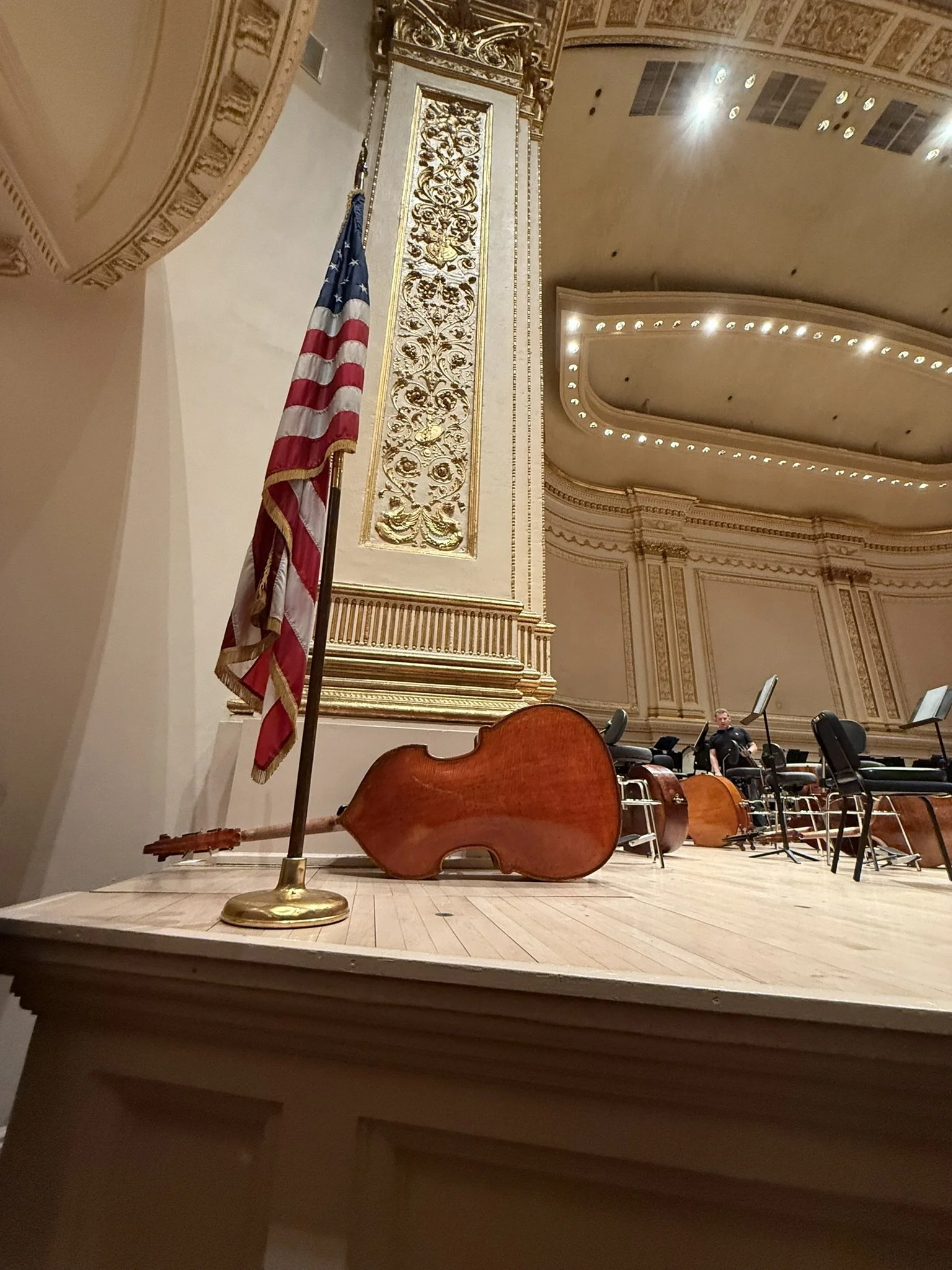
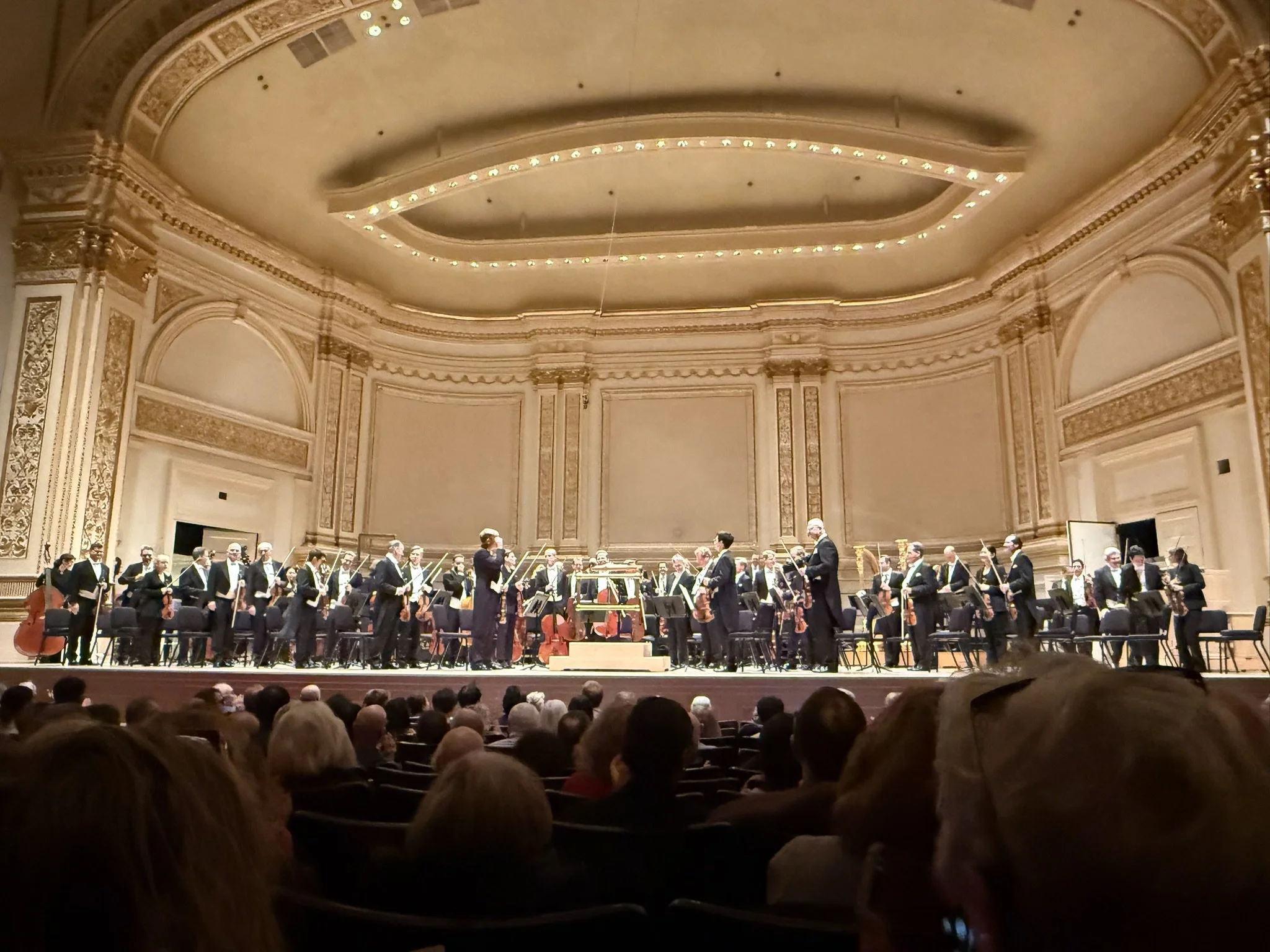
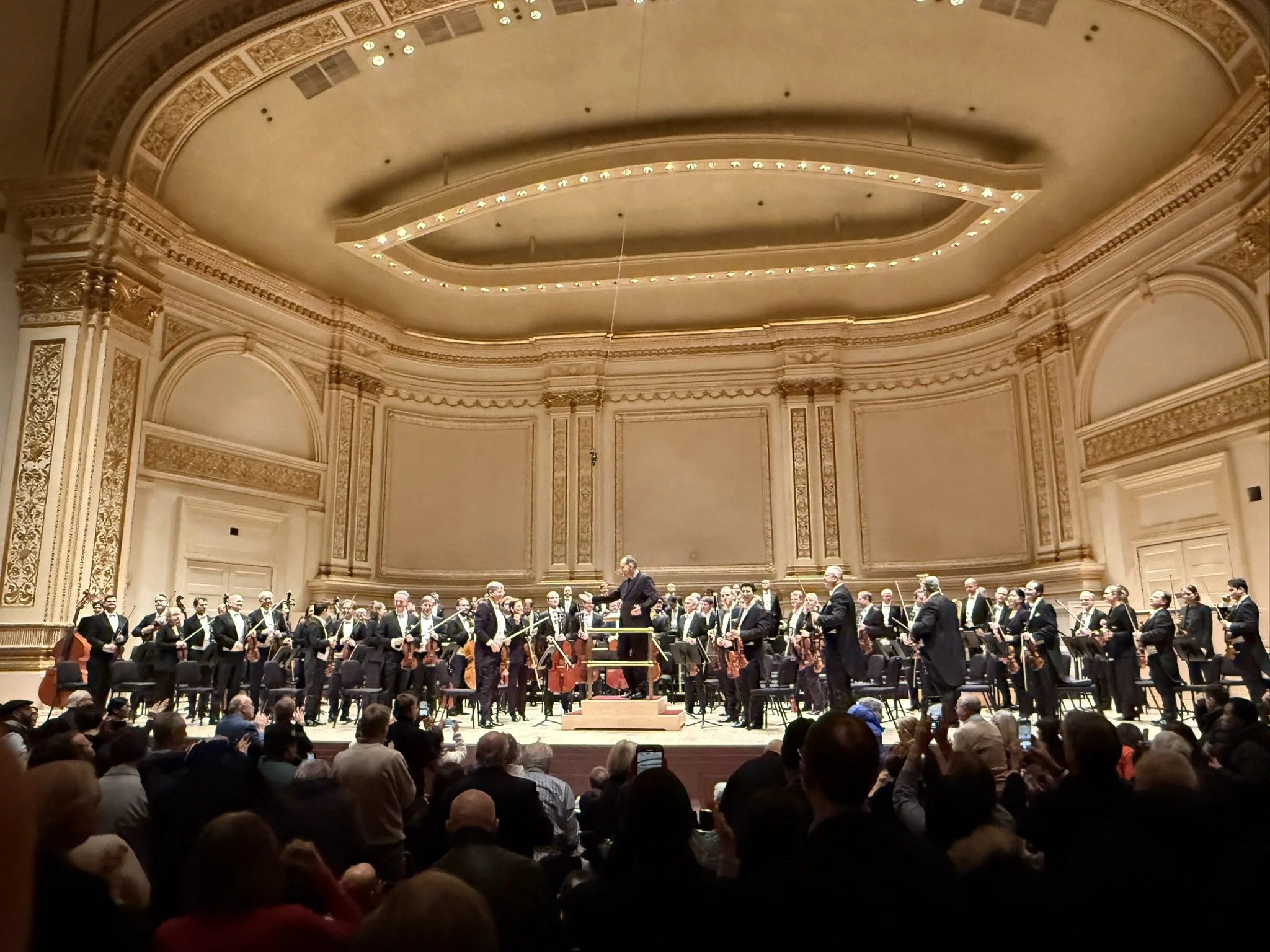
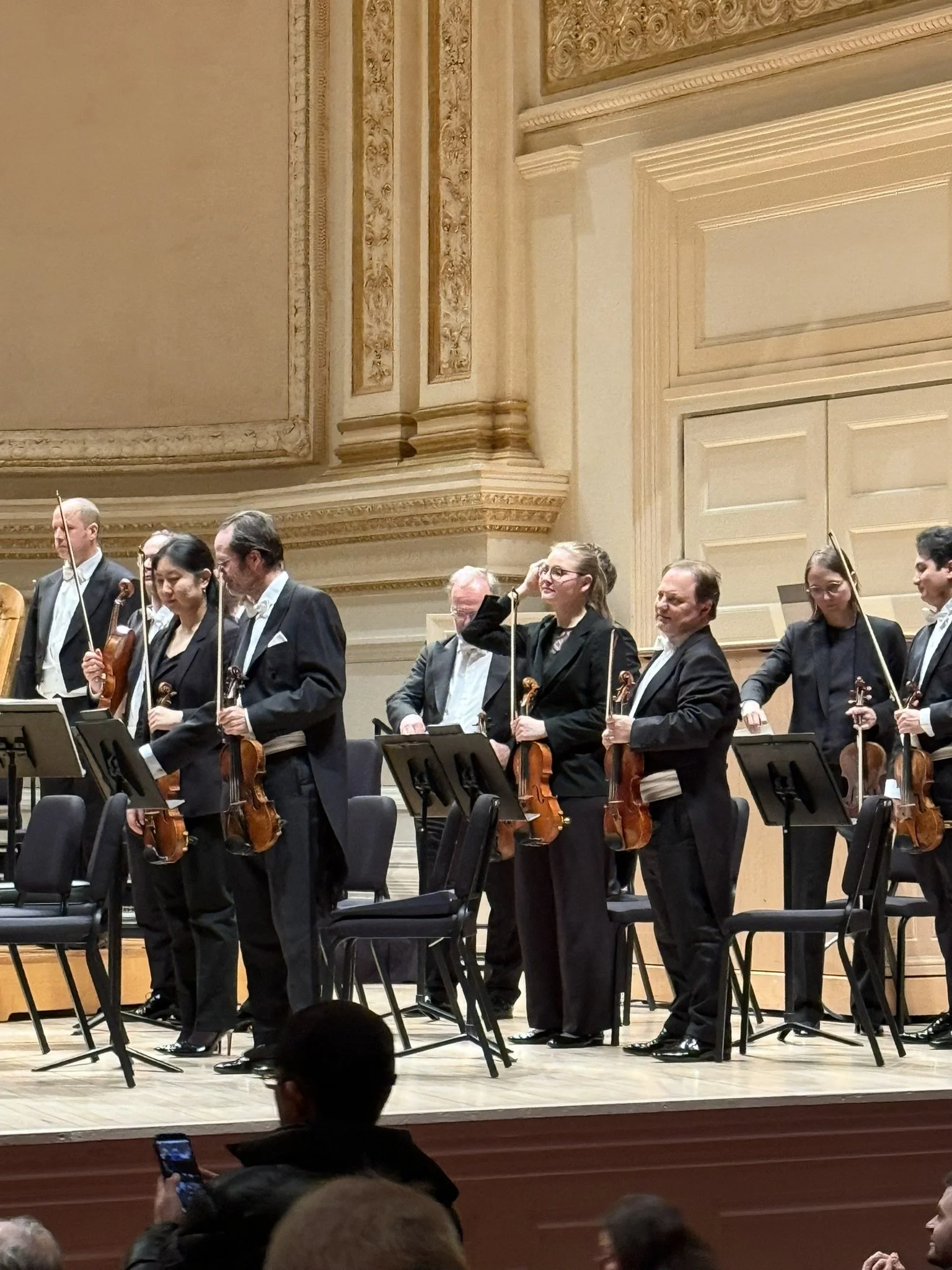
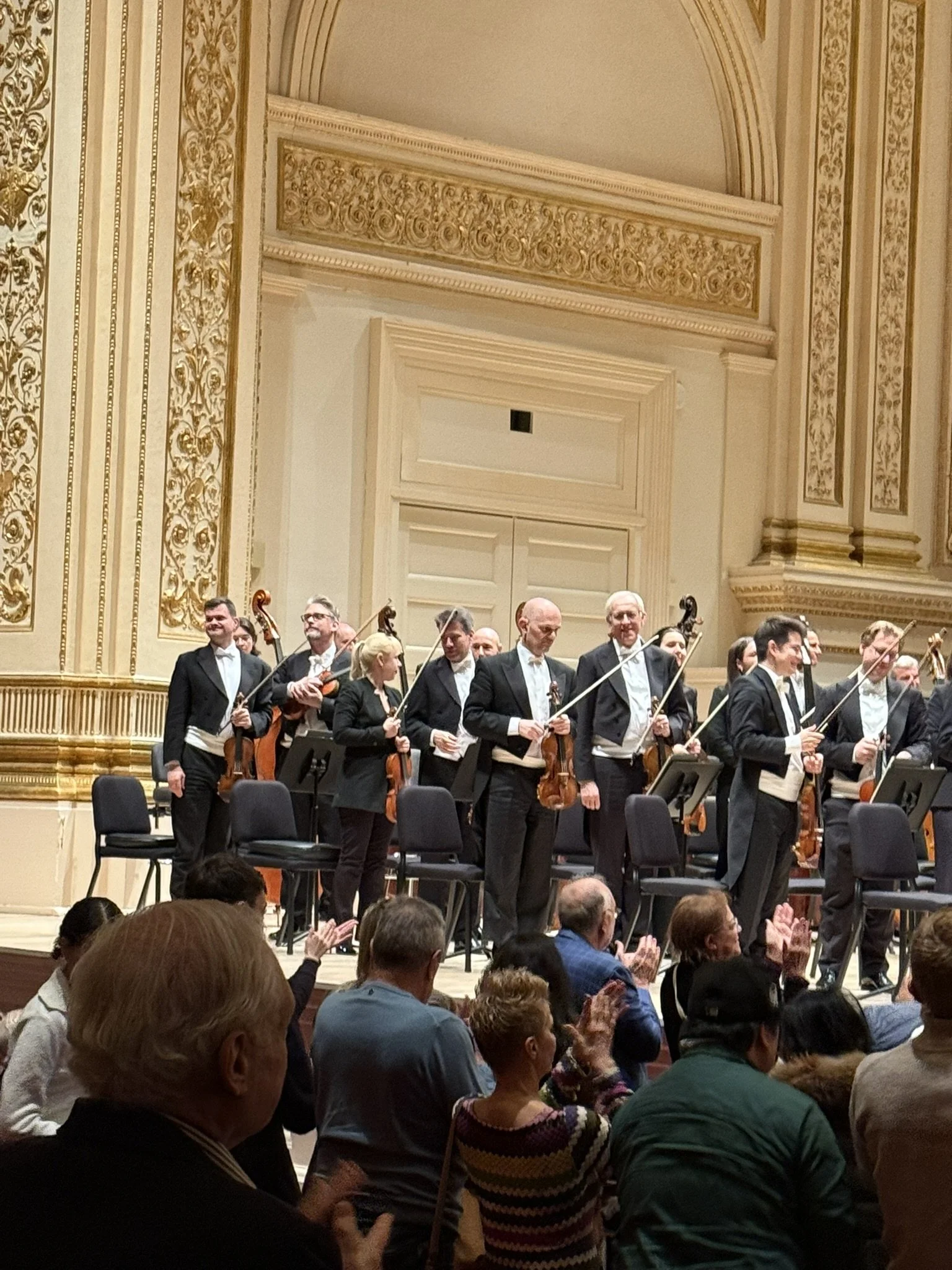
Wien and Nelsons at Carnegie 3rd day on 3.1.2026. Strauss's Zarathustra, written in 1896, freely translates Nietzsche's wisdom of life into music. In his early 30s, this piece depicts grand cosmic ideas and the limits of acoustics. It's German for "Tonedichtung," a work packed with sounds. It represents the culmination of the symphonic poem style of 19th-century Western music. It features an organ at the very edge, two harps, and two tubas of different sizes. The mid paquet offers a good view of the entire piece. Strauss followed this work with "A Hero's Life" and an opera. The opening rumble of the organ and bass leads to the rising sun of the trumpets. Nelsons and Vienna 2026 create a rumble in New York. As the sun rises, the cymbals clang, reflecting light, the surging energy of life, and the intense tremolo of the strings; finally, the organ alone remains, creating a visibly romantic, engrossing ensemble that depicts human longing. The nine episodes, beginning with sunrise, begin with the awakening of the world. Then, in the Allegro, horns and strings swell passionately from human longing to passion. Harp and timpani tremolos intertwine. In the following graveyard, natural triads in a minor key are played, accompanied by a throbbing string fugue. After a lush swell that foreshadows the end of old morals and beliefs that connect natural motives with human longing, and a scholarly and intellectual solo by Steude, the music gradually opens up as the bass quietly and steadily begins "Der Genesende" (Those Healing from Illness), and the harp and piccolo evolve into a sparkling sound reminiscent of an Alpine symphony reaching its peak. Life has its ups and downs. Das Tanzlied (The Awakening of Dionysus) begins with a duet between Steude and Danailova. Steudet's solo was dominated by cellist Peter Somodari, violist Tobias Lea, and second violinist Lucas Takeshi Stratmann, who each joined in the dance at their own. The entirety of this piece is about whether, as you witness the unfolding Wienner Solisden, you'd want to repeat your life all over again. Steudet controls the pressure and speed of his bow to concentrate the sound into a single point, tightly moving the melody. Each then joins in, dancing along. Would this be something they'd want to see in their next life? Through their dance, they transcend and become Superman. At the end, a woman percussionist rings a bell 12 times, foreshadowing the rebirth of another life, and the sound stops midway. The final measure has a three-beat rest, and Nelsons is accordingly frozen in time. They don't prepare. They don't wait until the very last moment. They don't give any hints. They don't build momentum, and there's no sense of any unnecessary energy beyond the sound they're producing. Next, we listened to Symphony No. 2 by Sibelius, who was only one year younger than Strauss. The first movement depicts the breath of the earth, stretching from the depths of the universe. The first movement depicts the budding sounds of nature. The second movement features a Finnish folk song sung in depth, while the third movement is filled with intense tension. And the fourth movement is a surge of hope. Strauss's work ends as if to raise a question, while Sibelius's work depicts the breath of the earth, flashing through our minds like a slideshow, bringing Vienna 2026's three days in New York to a close. The encore was a waltz again today. Three days, all led by Steude. Next year, three days of Mahler await. I can't wait to see who will gather. Thank you, Vienna, every year. May the world continue to be a place where many people can enjoy Vienna.
Performers
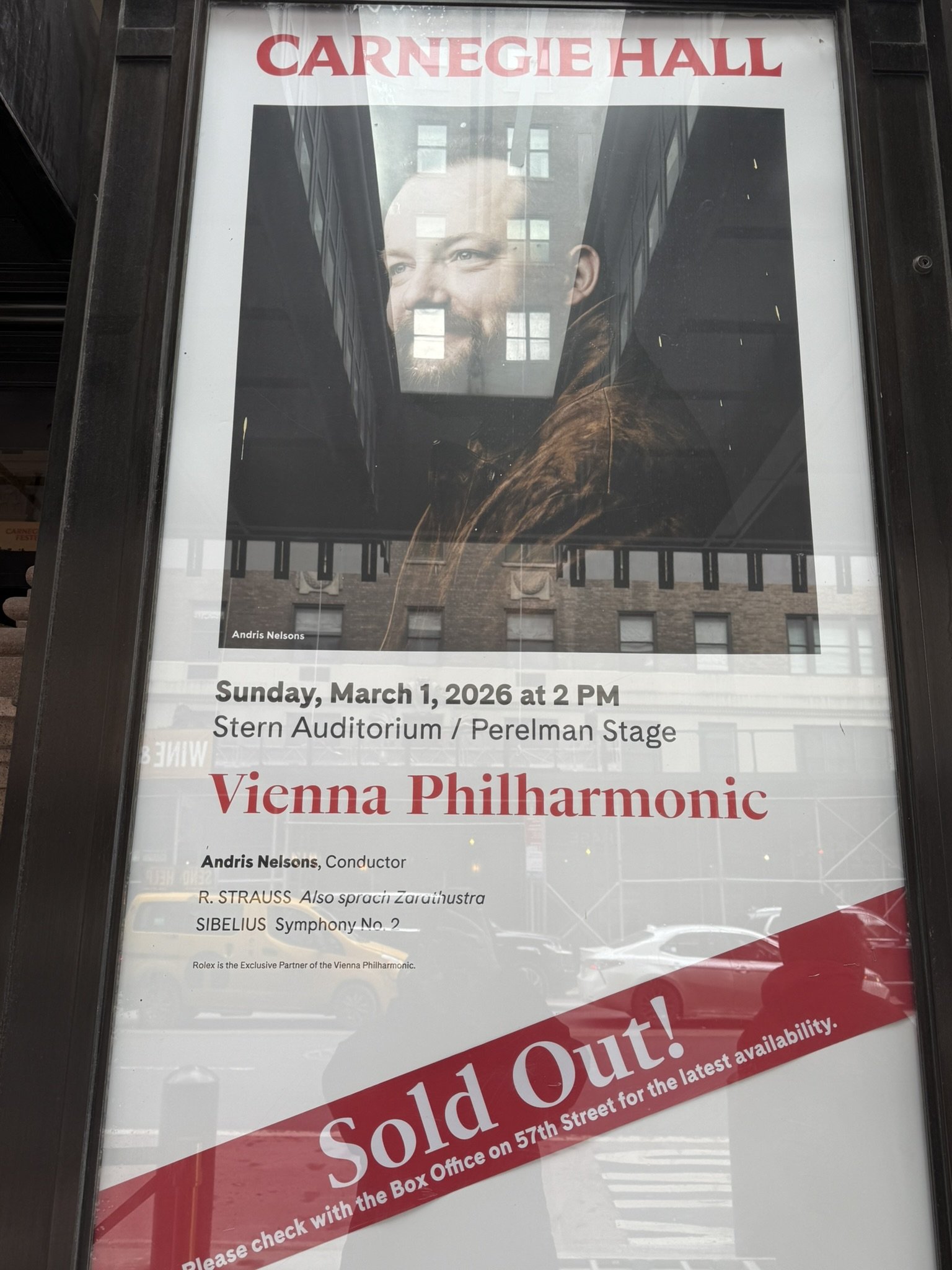
Vienna Philharmonic
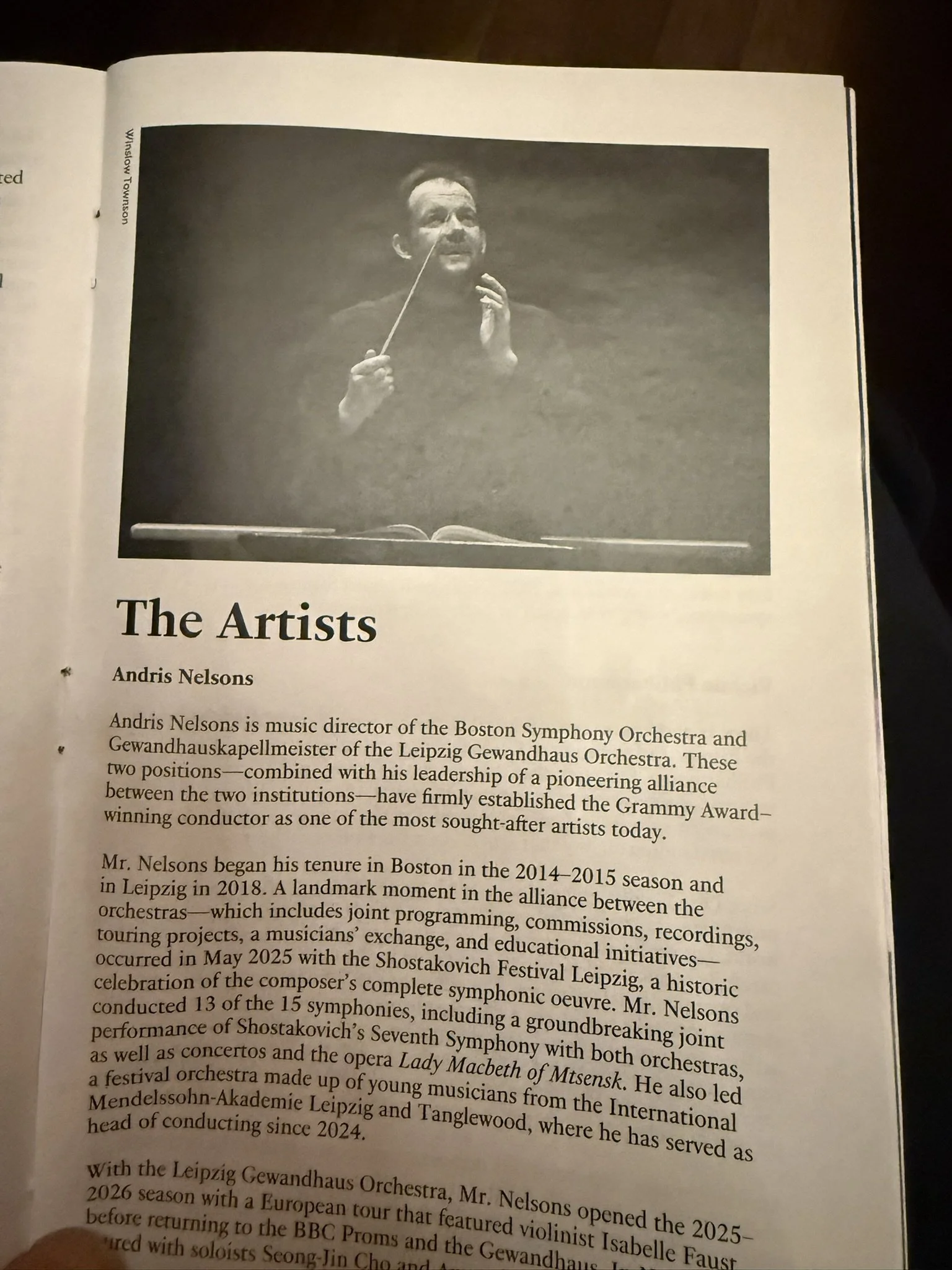
Andris Nelsons, Conductor
Program
R. STRAUSS Also sprach Zarathustra
SIBELIUS Symphony No. 2
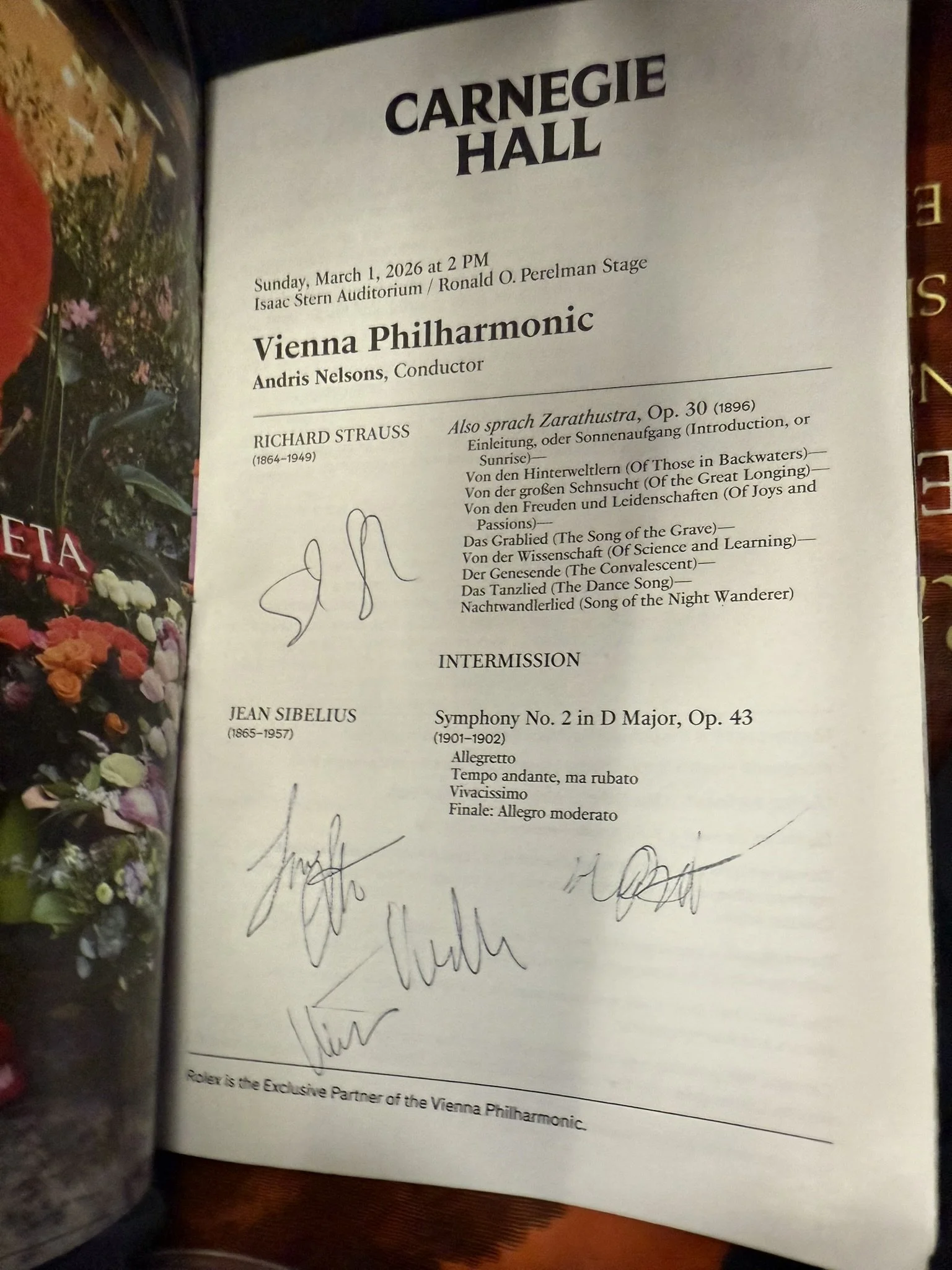
Autographed by from the top, Tuba- Christoph Gigler, 2nd vl- Lucas Takeshi Stratmann, Concertmaster-Volkhard Steude, and right- ob- Sebastian Breit
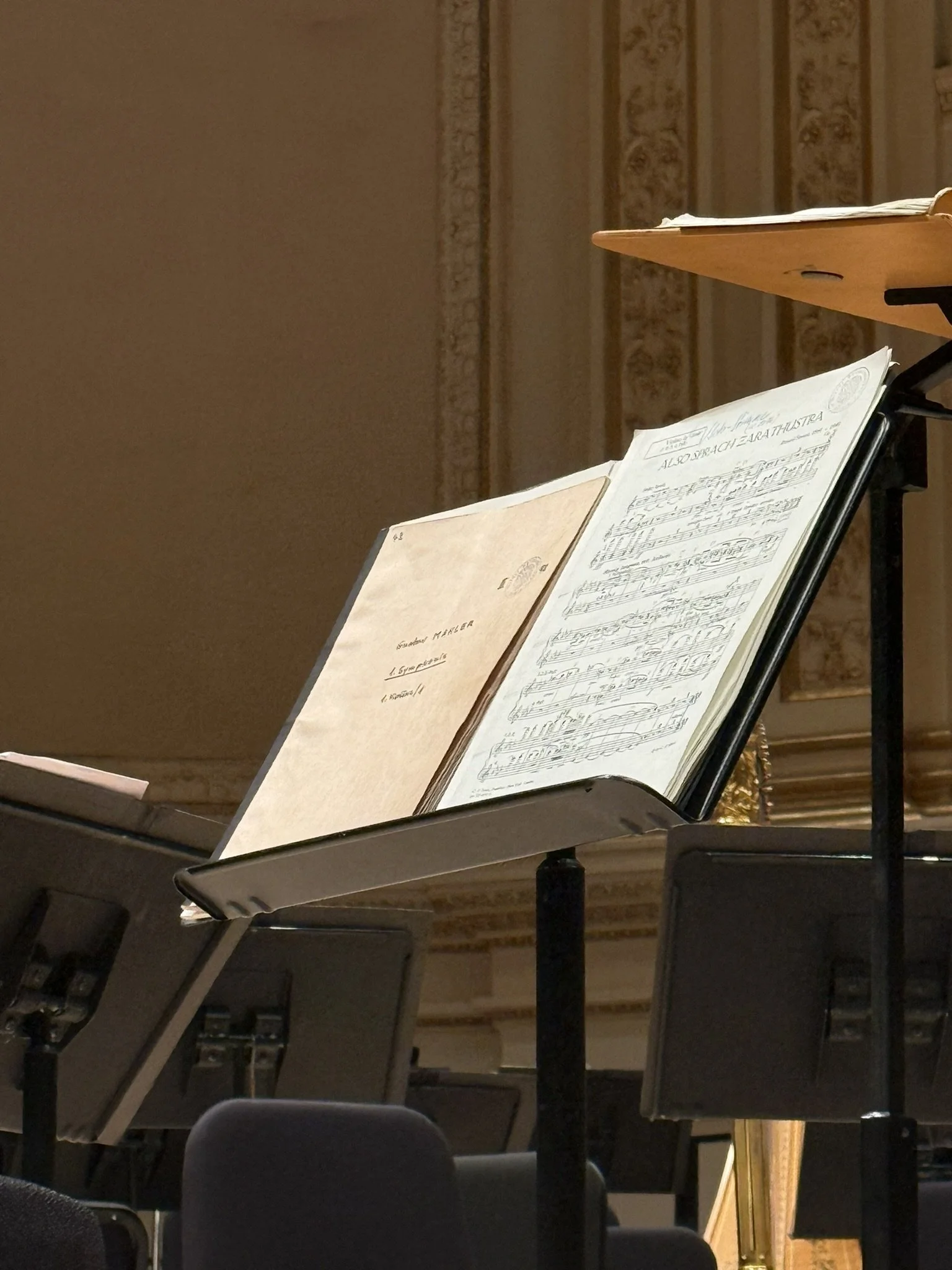
Mahler nad Strauss together on the 1st stand of 1st vl
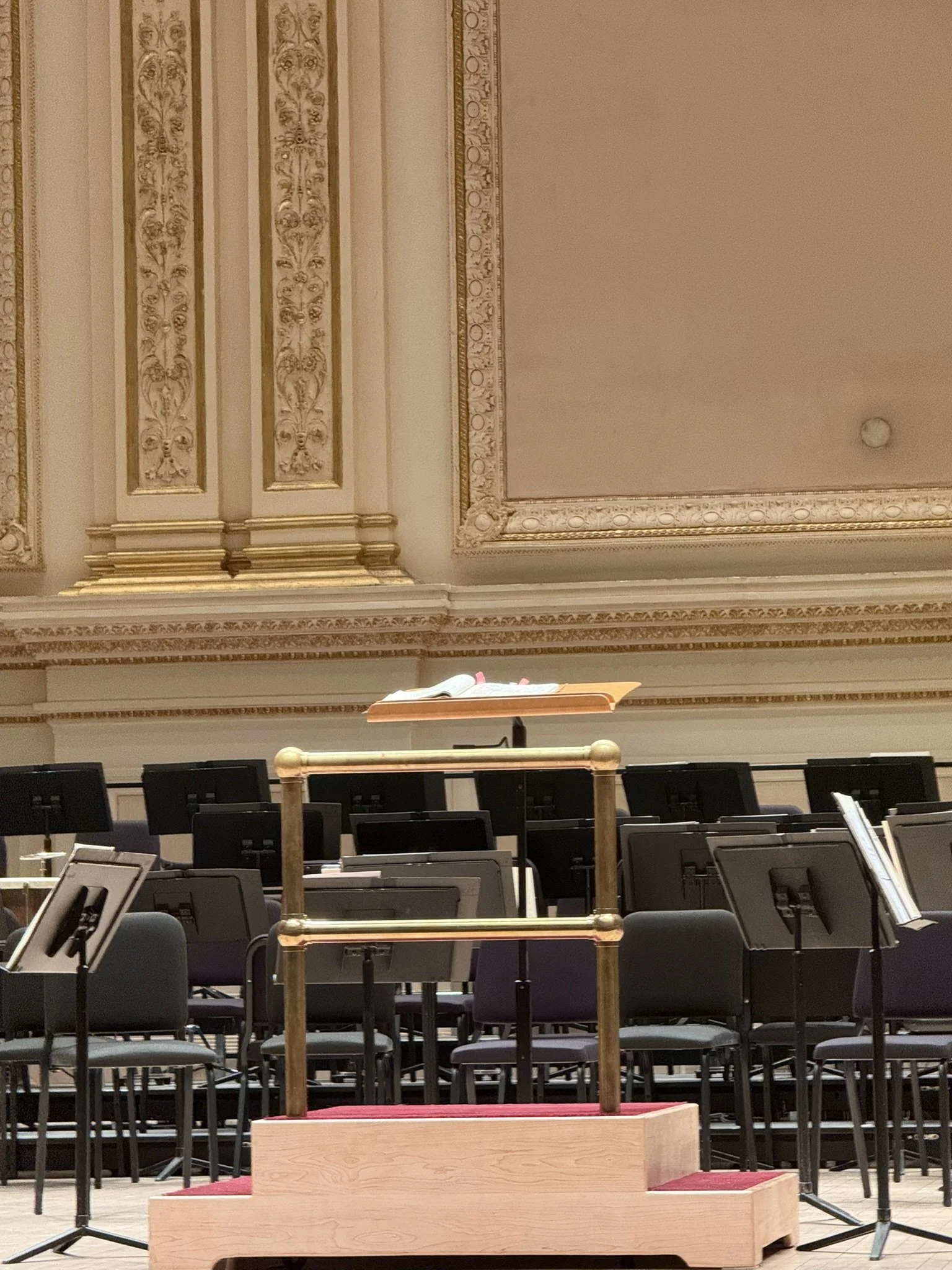
Nelsons’s socre, same as Jansons like tabs on the episodes
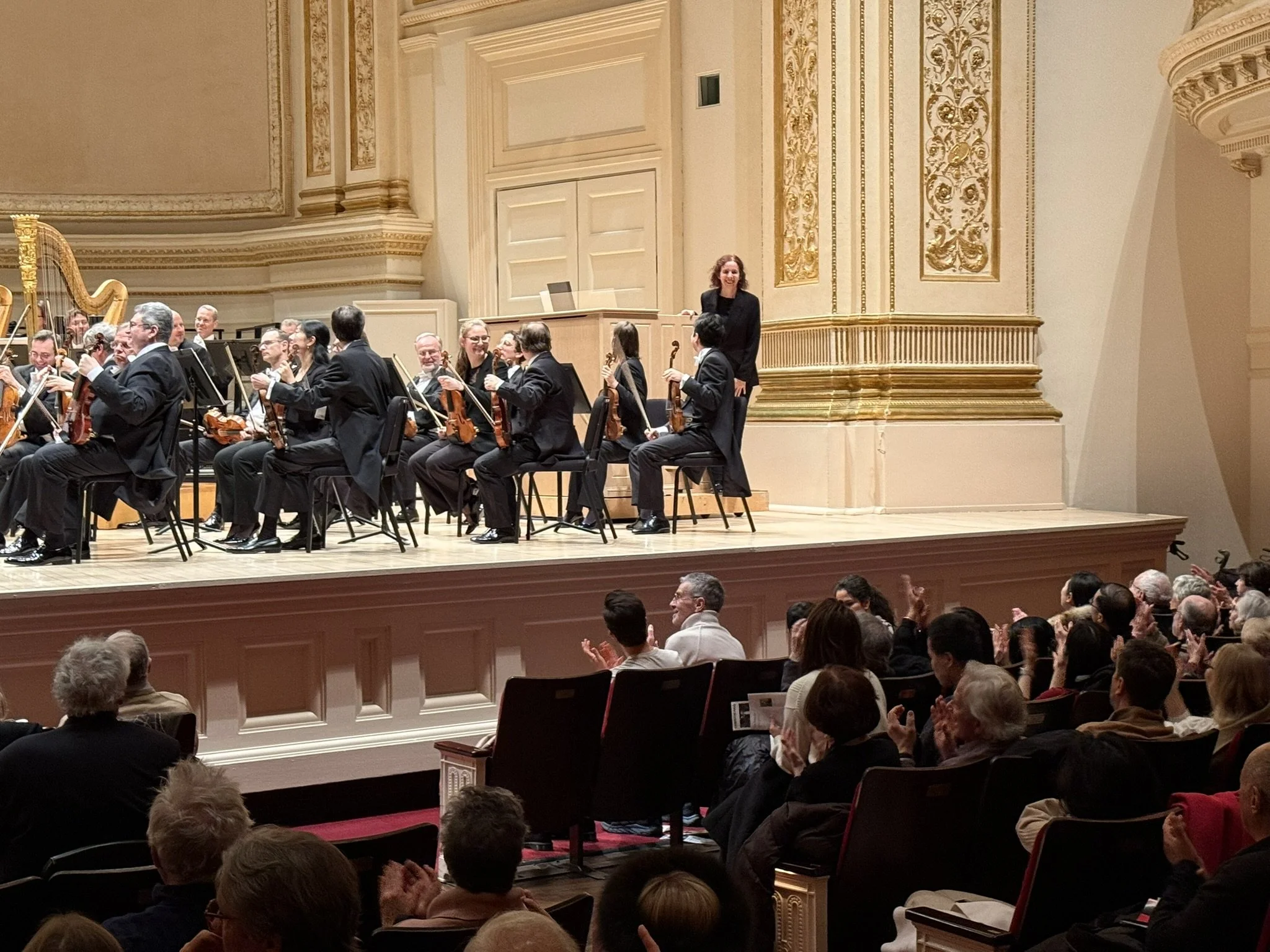
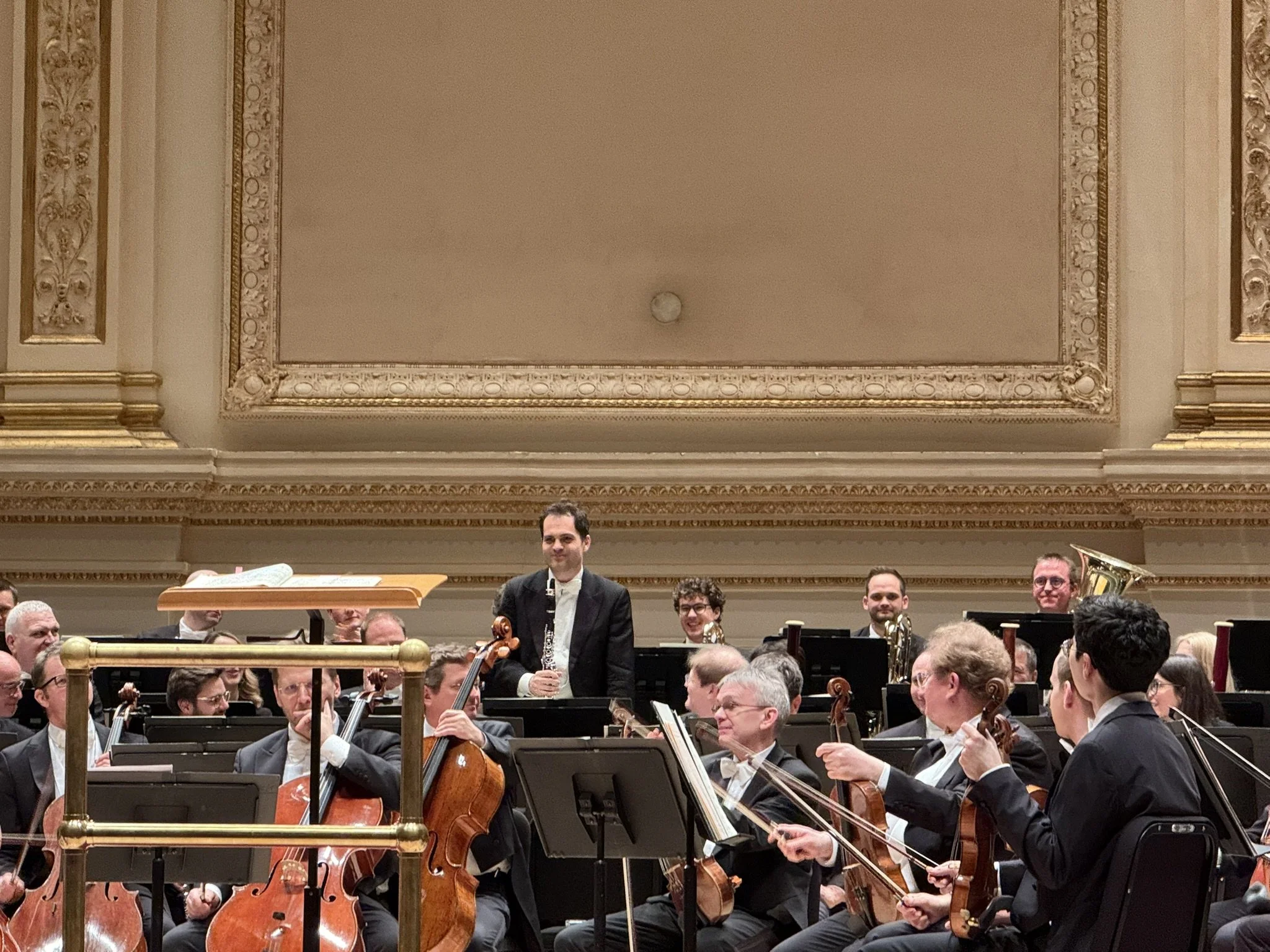
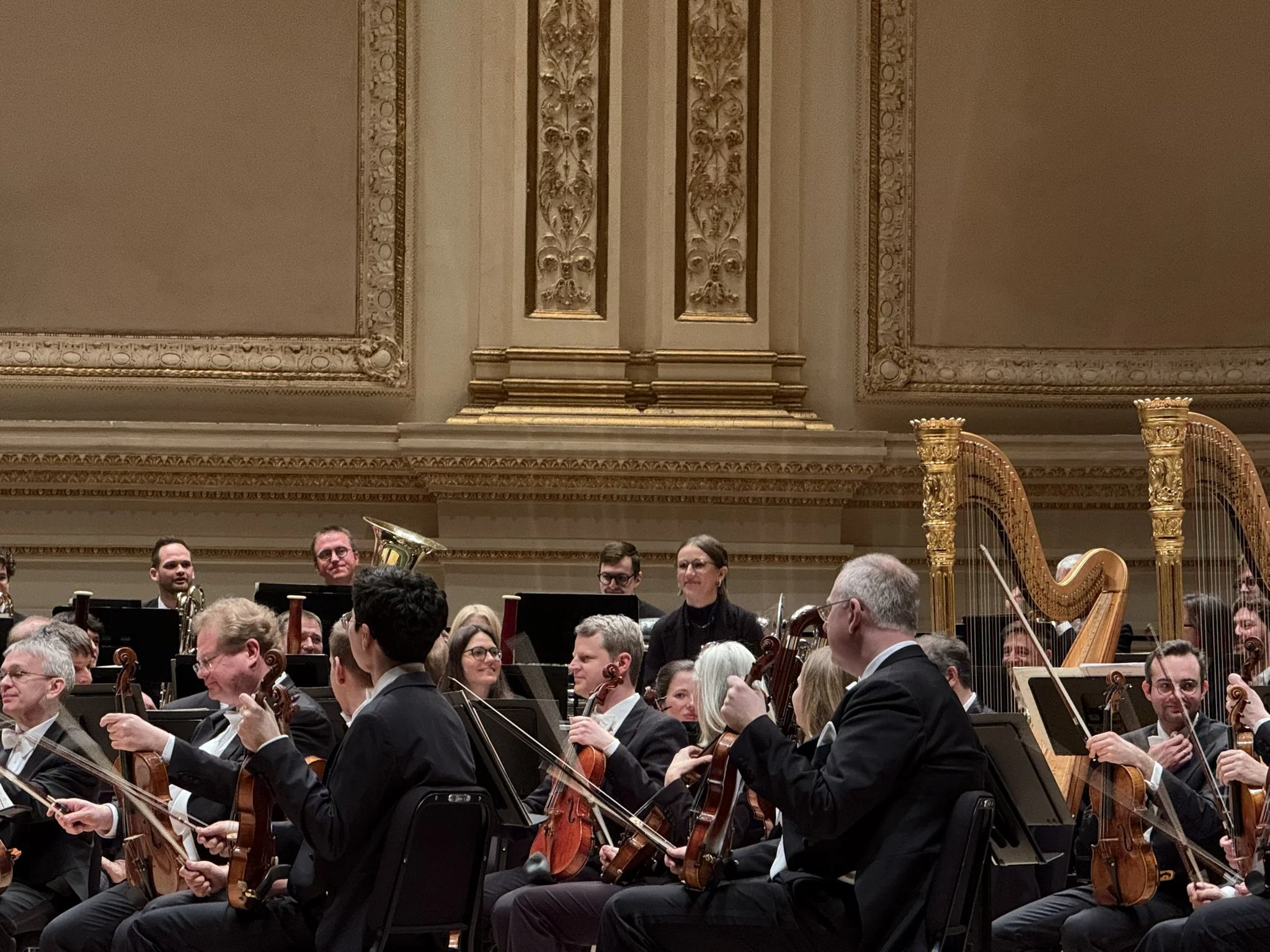
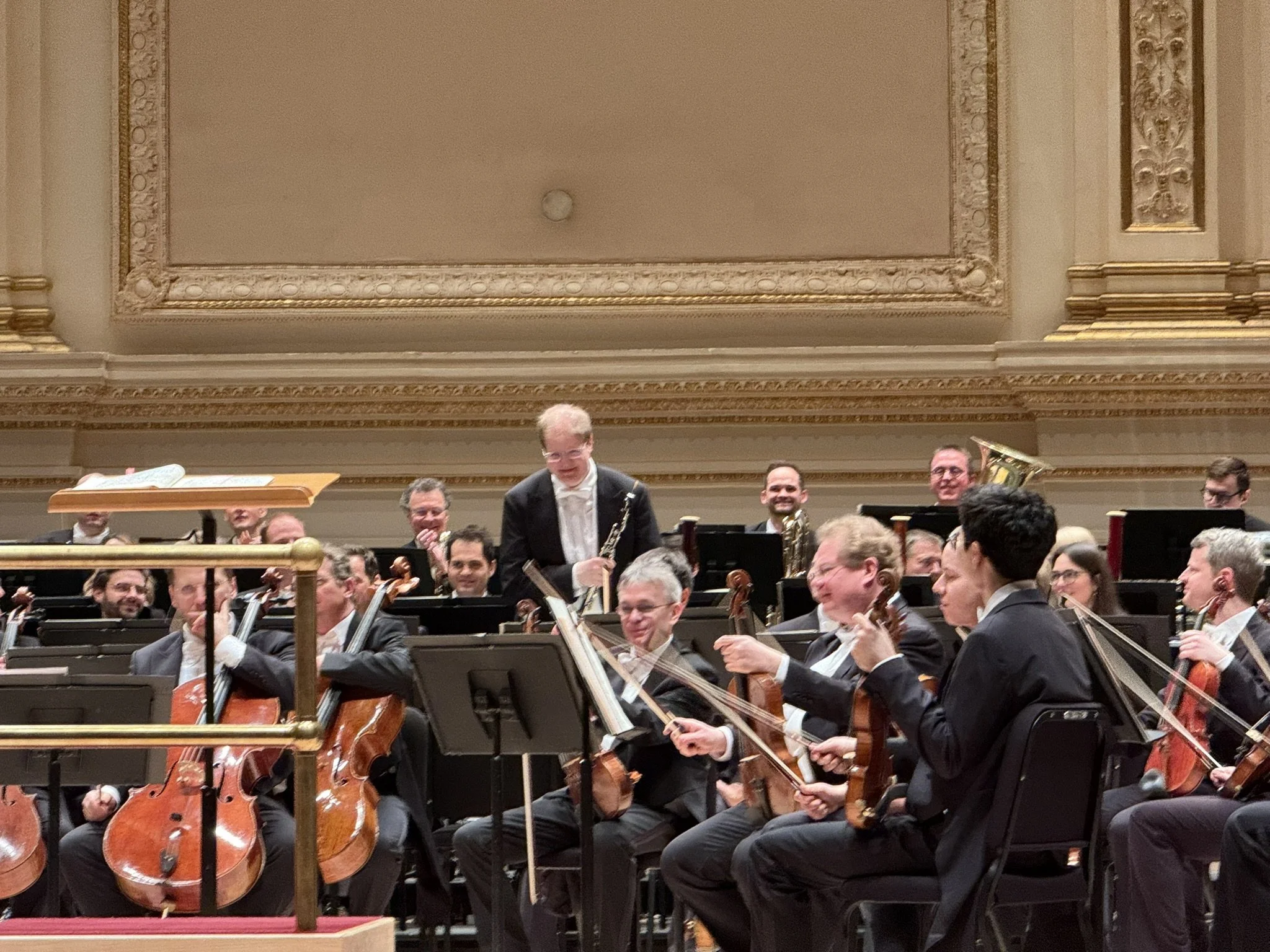
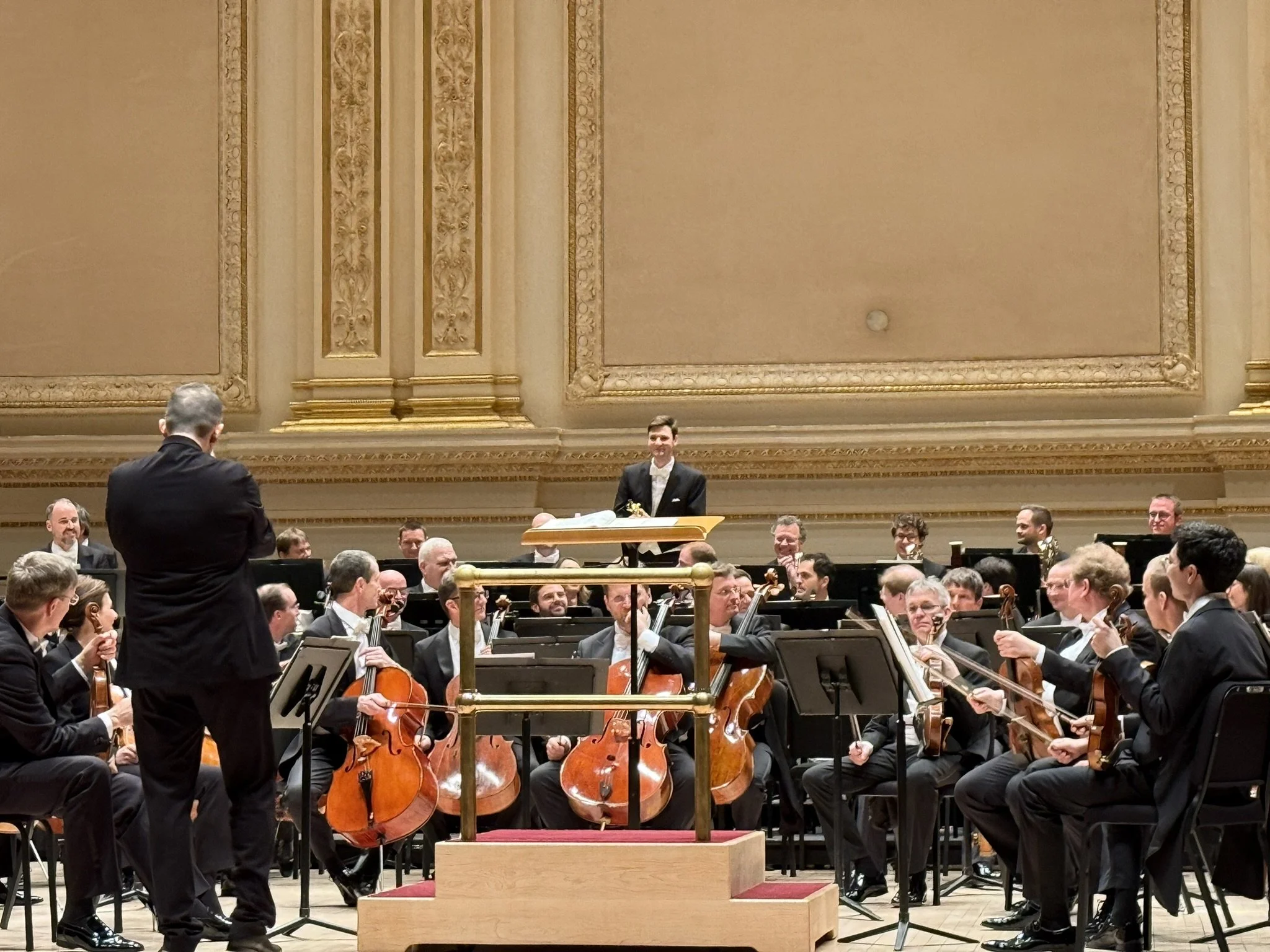
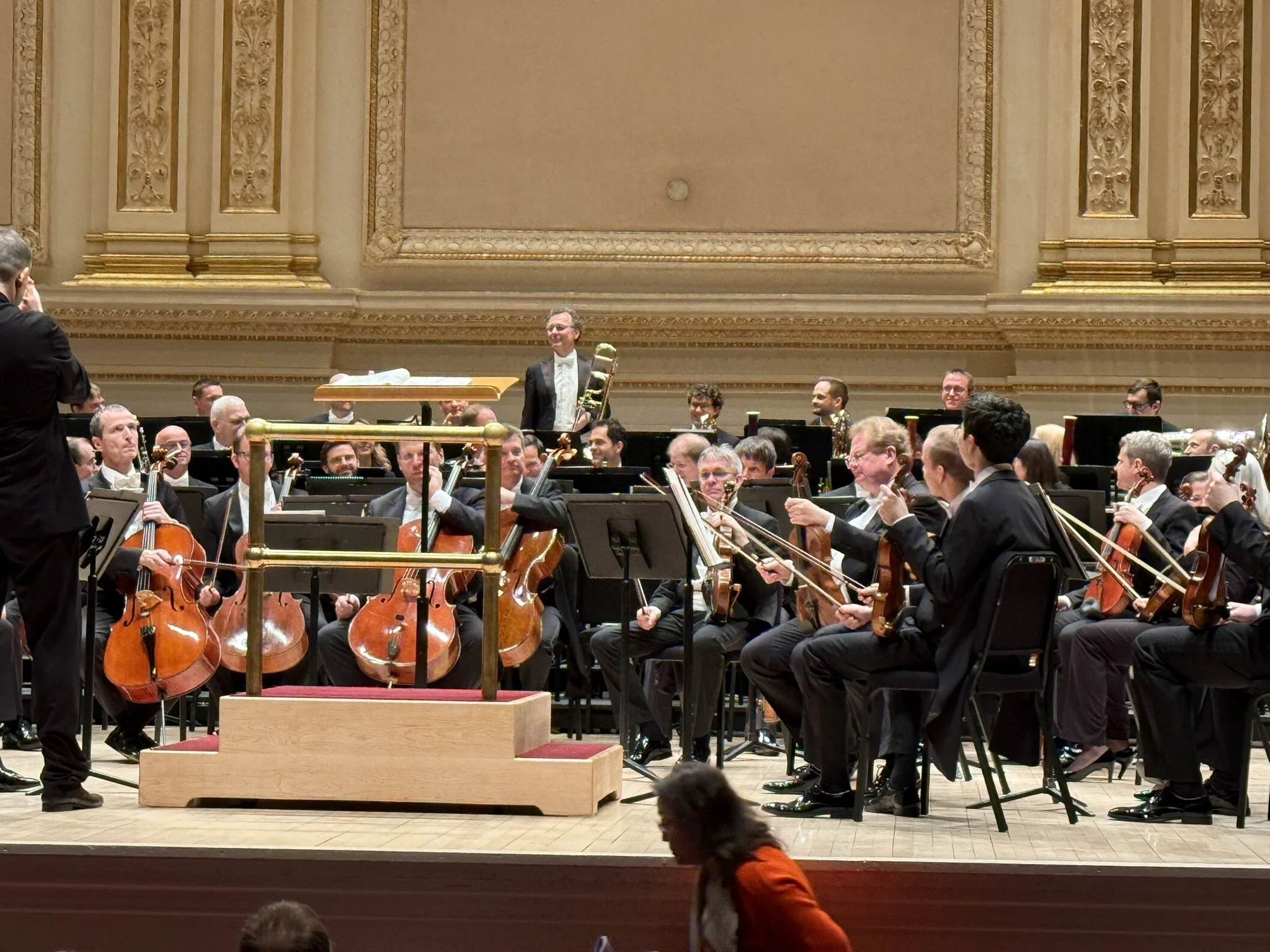
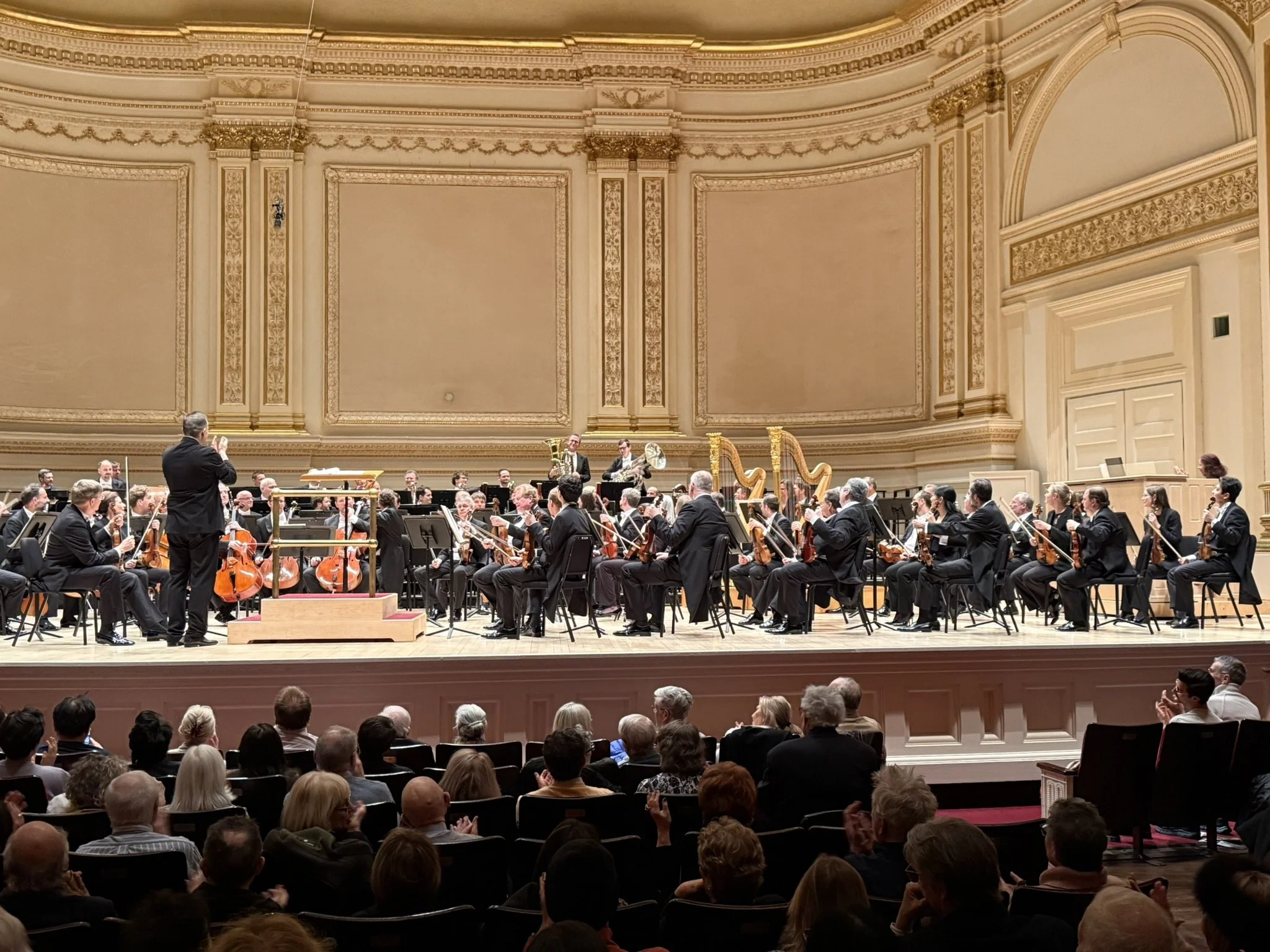
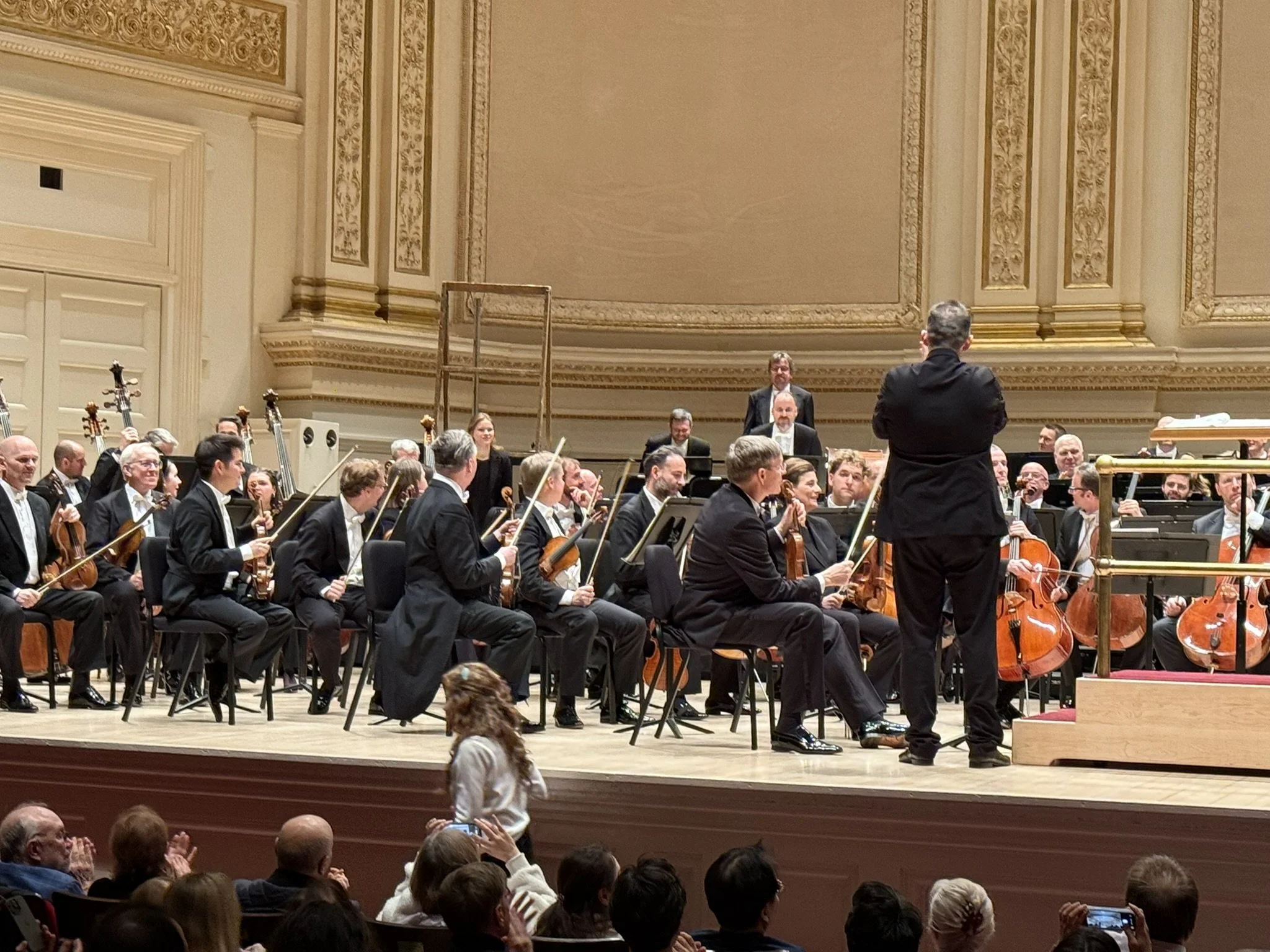
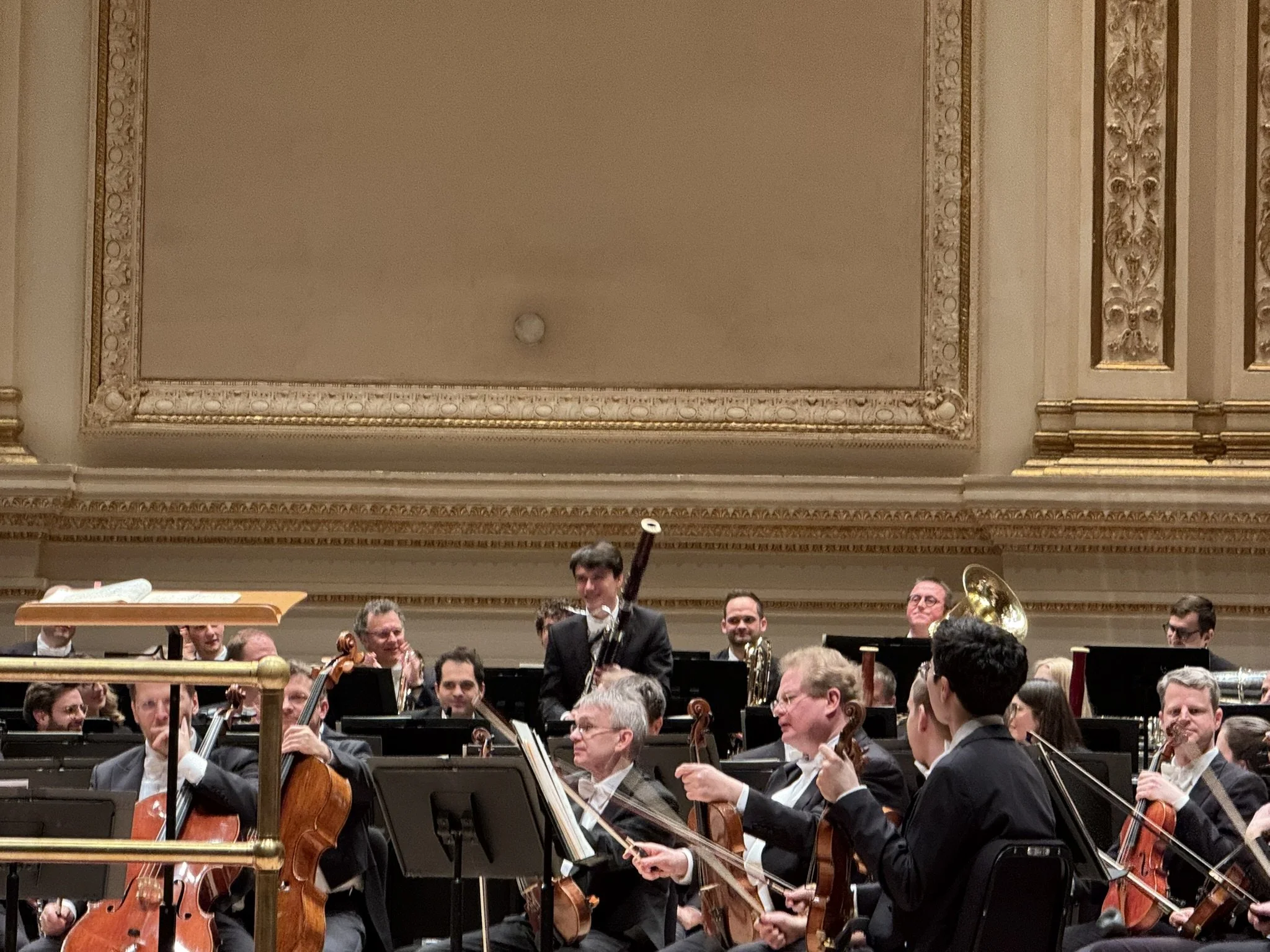
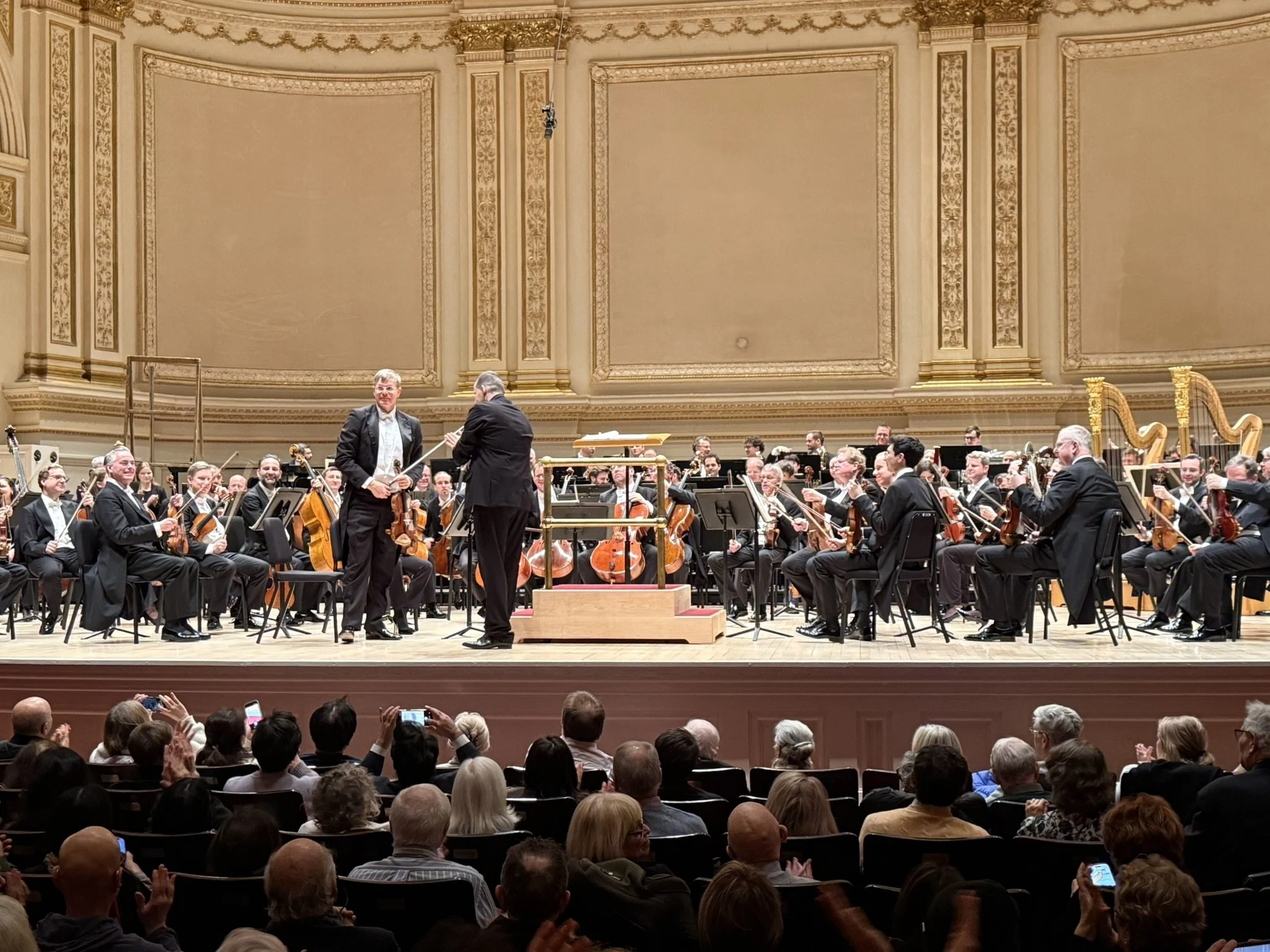
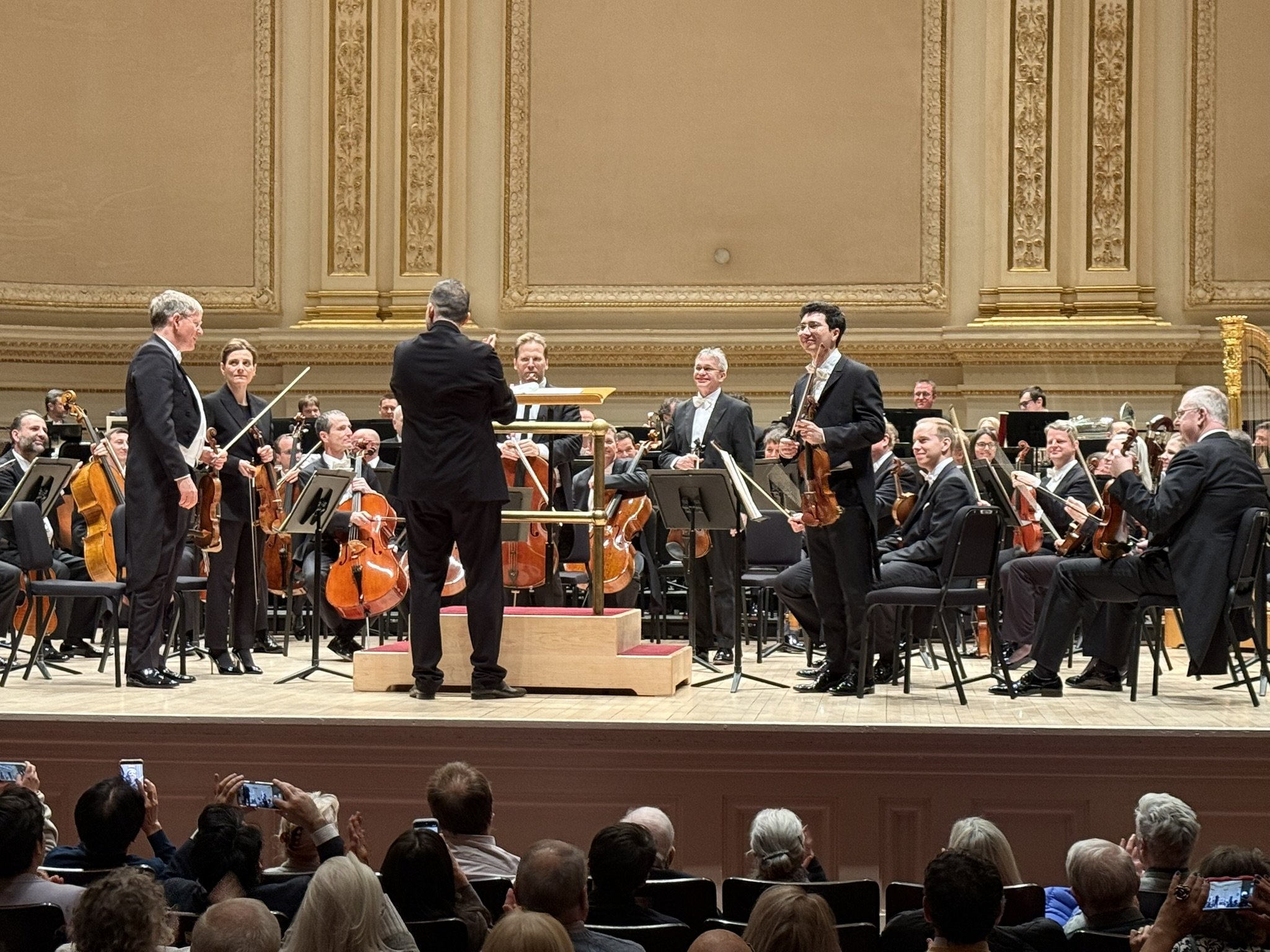
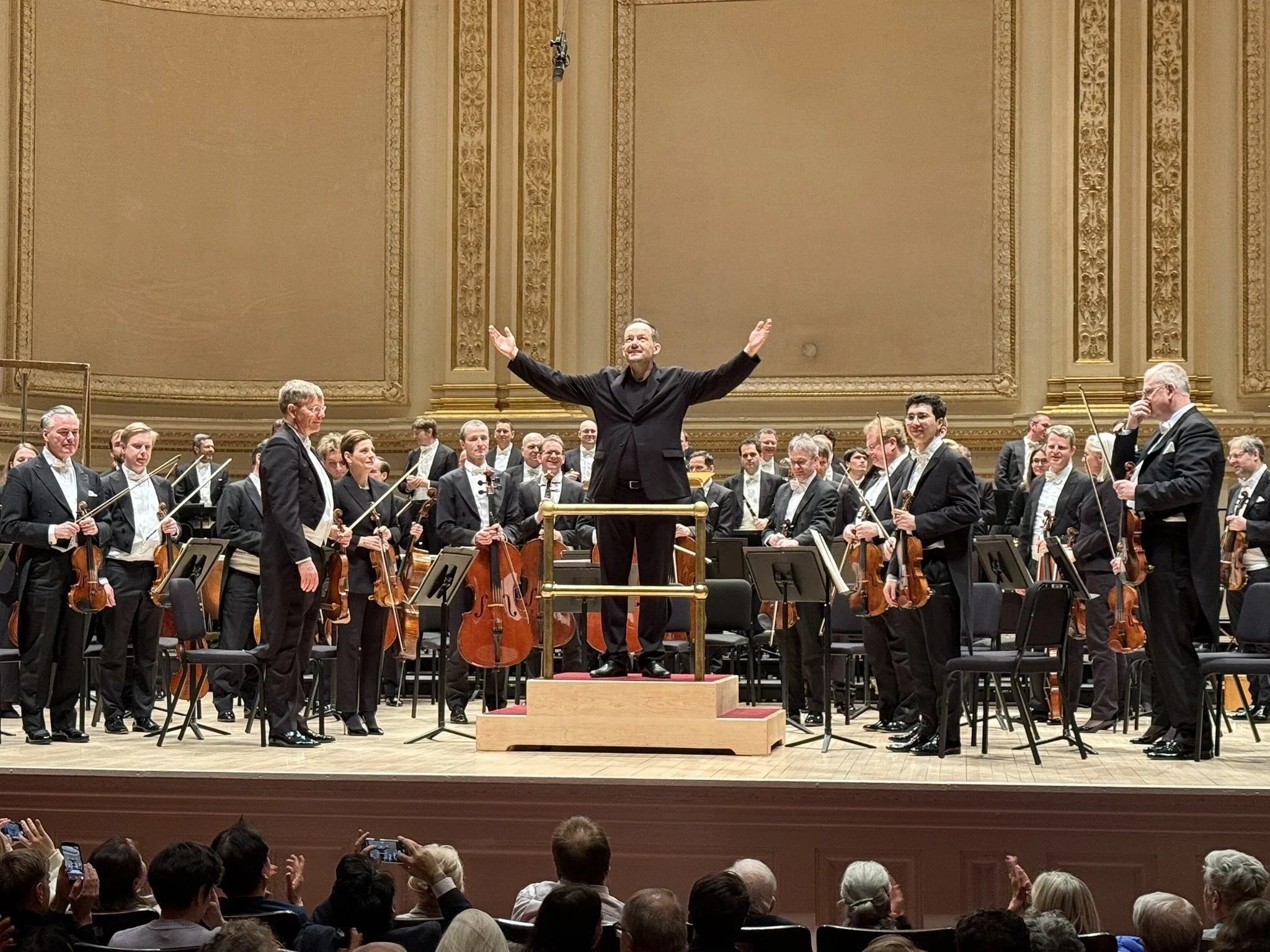
Siberius 2 set
シュトラウスのツァラトゥストラは1896年、ニーチェのプロフィット、生きる知恵を思うままに音楽にした。30代前半で壮大な宇宙の思想と音響の極限を描くTonedichtung。 ドイツ語で音の詰めもの。19世紀西洋音楽の交響詩スタイルの終着。一番はじのオルガン、2台のハープ、2つの大きさが違うチューバ。pケットの中くらいの席からは全体がよく見える。シュトラウスはこの作品の後、英雄の生涯を書き、オペラを書いた。冒頭のオルガンやバスの地響きからトランペットの太陽が昇る。ネルソンスとウィーン2026がニューヨークで起こす地響き。太陽が昇りきるとシンバルがシャーンと光の反射、漲る生命のエネルギー、続く弦楽器の激しいトレモロ、そして、オルガンだけが残り、人の憧憬を描くいかにもロマン派らしいねっとりしたアンサンブル。日の出から始まる9つのエピソードは世界のの目覚めから始まって、人の憧憬から情熱では、アレグロでホルンや弦楽器が熱くうねるよう。ハープとティンパニのトレモロが絡みつく。続く墓場では、自然の3和音がマイナーキーで、どろどろ弦楽器がフーガを奏でる。自然の動機と人の憧憬が繋がる古い道徳や信仰の終焉を予感させる鬱蒼としたうねりや、学問を思わせる知的なシュトイデのソロを経て、バスが静かにじっくりDer Genesende、病より癒え行く者が始まると音楽は徐々に開けて来て、ハープやピッコロが、アルペンシンフォニーの山頂に到達した後のようなキラキラした音楽に変わる。人生山あり谷ありだ。Das Tanzlied、シュトイデとダナイロバのデュエットで始まるデュオニソスの目覚め。ほぼシュトイデのソロに、チェロのPeter Somodari、ビオラのTobias Lea、セカンドバイオリン、Lucas Takeshi Stratmannらがそれぞれのタイミングでダンスに加わった。繰り広げられるウィーンゾリスデンを目の前にまた同じ人生を繰り返したいと思えるかどうかがこの曲の全てだ。シュトイデは弓の圧とスピードのコントロールで音を一点に凝縮し緊密にメロディを動かしていく。そこにそれぞれのトップが加わって踊ってみせるのだ。次に生まれ変わってもこれが見たいかどうか。彼らはダンスを経て超越していきスーパーマンになる。最後は女性楽員が鐘を12回鳴らし、また次の人生が蘇りますよと予見し途中で終わるように音が止まる。最後の小節は3拍休符があり、ネルソンスはその分固まっていた。彼らは準備しない。ギリギリまで構えない。気配をさせない。勢いをつけない、音を出す以外の余計なエネルギーを感じない。
続けてシュトラウスと1歳違いのシベリウスの交響曲2番を聴いた。宇宙の問から、大地の呼吸。自然が息づく音の芽吹きが成長していく1楽章。フィンランドの民謡をじっくり歌う2楽章、張り詰めた緊張が走る3楽章。そして希望の光が押し寄せる4楽章まで、シュトラウスでは私たちに疑問を投げるように終わり、シベリウスは、その走馬灯のように大地の呼吸が駆け巡り、ウィーン2026のニューヨークでの3日間は終わった。アンコールは今日もワルツ。たくさんのダンスを楽しんだ3日間。シュトイデが全てリードした。来年はマーラーの3日間が待っている。どんなメンバーが集まるのか楽しみだ。毎年ありがとう、ウィーン。これからもたくさんの人がウィーンを聴ける世界でありますように。