
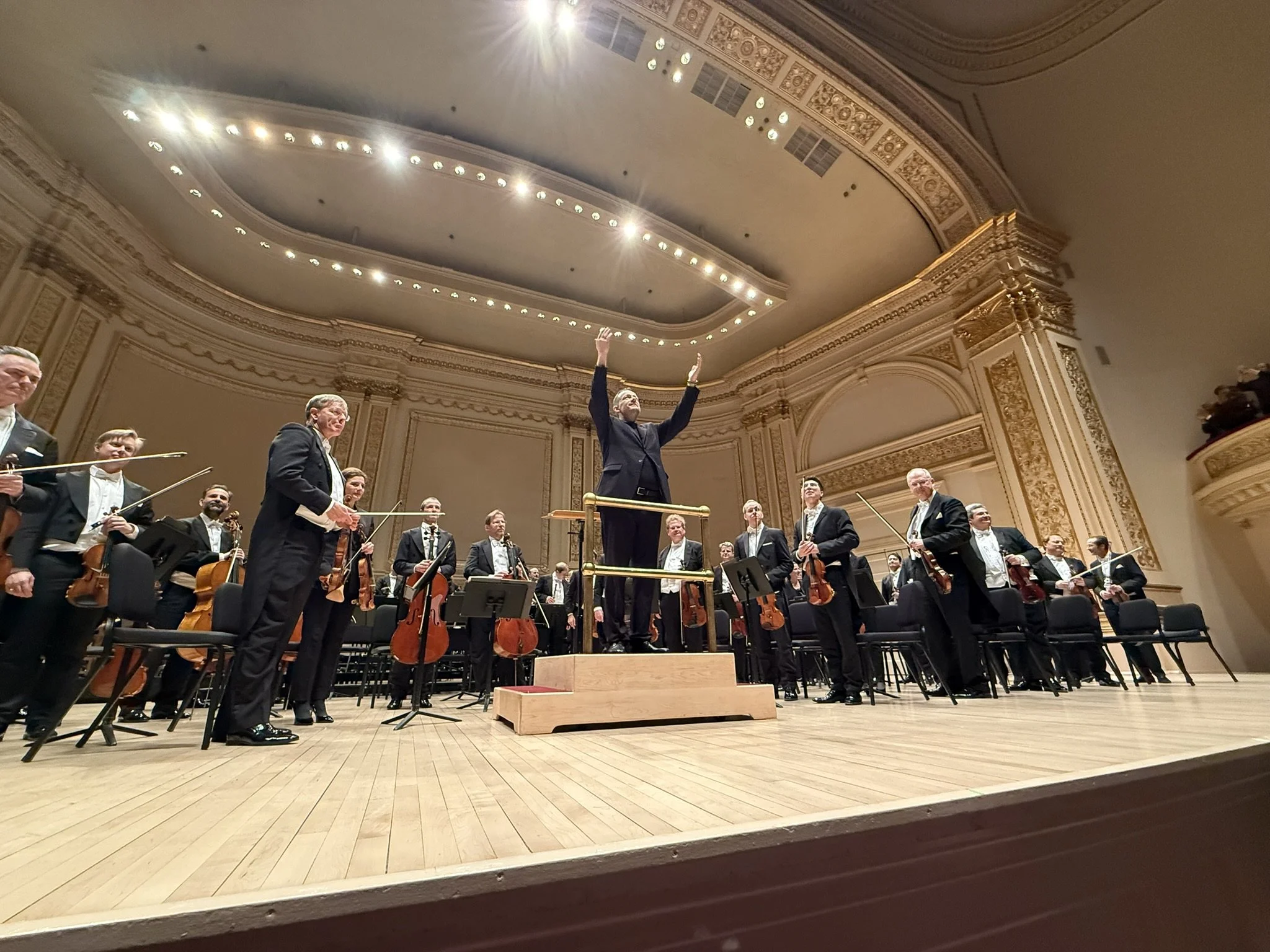
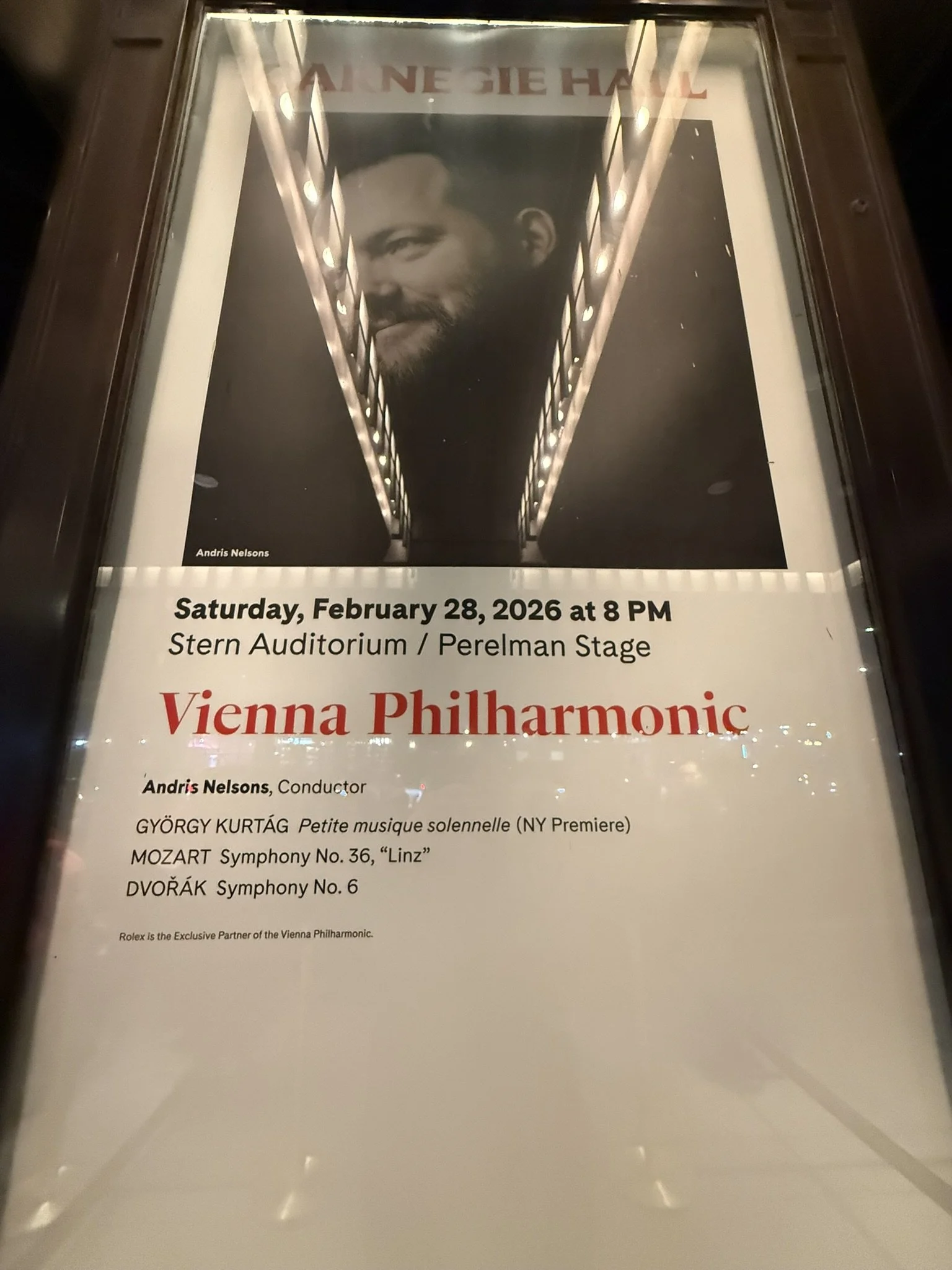
Day 2 of the Wien-Nelsons Carnegie Concert on 2.28.2026.
The opening code was Petite Musique Solenelle, composed in 1988 by György Kurtág, who turned 100 this year. This homage to Pierre Boulez at age 90 is an eloquent musical tribute. The piece we heard was about two minutes longer. Its sound was reminiscent of Olivier Messiaen's late works. Sustained chords. Brass clusters. A unique mode that doesn't belong to either major or minor. A sense of time floating by. It encapsulates the generous, rich ideas Boulez spoke of when discussing Kurtág. Andris Nelsons remained motionless, drawing out the orchestra's resonance and submerging the unique mode into Carnegie. The high notes of the strings were reminiscent of Japanese gagaku music. It was neither major nor minor. It was neither bright nor dark. I was caught in an endless, unresolved gravity.
Next was Mozart's Symphony No. 36, Linz. It was apparently composed in four days during Mozart's stay in Linz in 1783, at the end of the Habsburg Empire. At the time, it was customary to commission symphonies and operas and enjoy new works. The piece began with a robust Adagio and quickly segued into a light-hearted Allegro. Nelsons seemed to blend the stillness and movement of Kurtág's world with the graceful, dashing Viennese ensemble. A double collaboration between Mozart's improvisation and Nelsons' taekwondo. It was fresh. The second movement was slow. The cello theme had a pleasant, earthy sound reminiscent of a provincial city. In the third and fourth movements, Nelson's unique style allowed for the full appreciation of the joyous collaboration between the vibrant Viennese soloists.
Next, Dvorak's Symphony No. 6 was 100 years after Mozart's Linz Symphony. At the time, Vienna was the multi-ethnic capital of the Habsburg Empire, plagued by ethnic problems. Austrians, Czechs, Hungarians, Poles, and more—a chaotic mix similar to New York today—and ethnic tensions were rife. Despite facing class and ethnic prejudice, Dvorak, encouraged by Brahms, achieved success in Vienna as a Czech with this piece. The rich sound of Romanticism blends with Slavic folk. The music shifts from balance, clarity, and form to the voices of ethnic groups and citizens. Over the 100 years from Mozart to Dvorak, I experienced the shifting impulses of European society and the inner lives of individuals within it through Dvorak. The third movement, a folk dance called Friant, featured an upbow stringed instrument with a fairly angular descending movement. I was particularly impressed by the way Vienna, where different ethnic groups each enjoyed the Czech dance. Twenty years ago, there were only men. The number of women gradually increased, one or two at a time, but this year it seemed like there were even more. There were women on both the double bass and percussion. The fourth movement, with chords reminiscent of the fourth movement of Brahms' Symphony No. 4, was captivating, with Dvorak's distinctive earthy dynamics. The encore was a Viennese waltz. As the string bows rose and fell, the scraping and rasping sounds were enveloped in a drawn-out 3/4 time signature like a pendulum. After Nelsons disappeared from the stage, the musicians shook hands and departed, but concertmaster Volkhard Steude's final look around the venue, with a smile on his face, was memorable.
Performers
Vienna Philharmonic
Andris Nelsons, Conductor
Program
GYÖRGY KURTÁG Petite musique solennelle (NY Premiere)
MOZART Symphony No. 36, "Linz"
DVOŘÁK Symphony No. 6
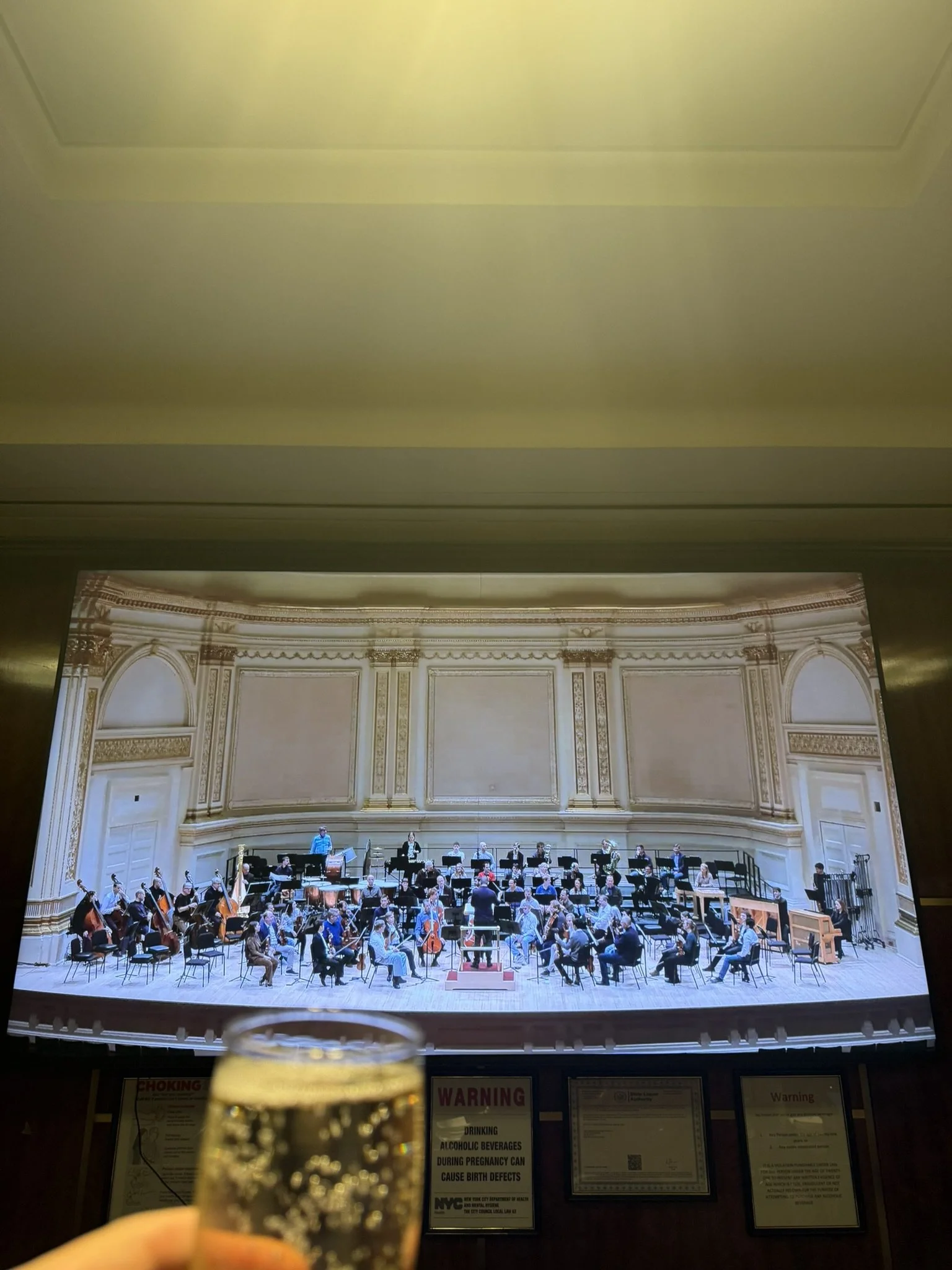
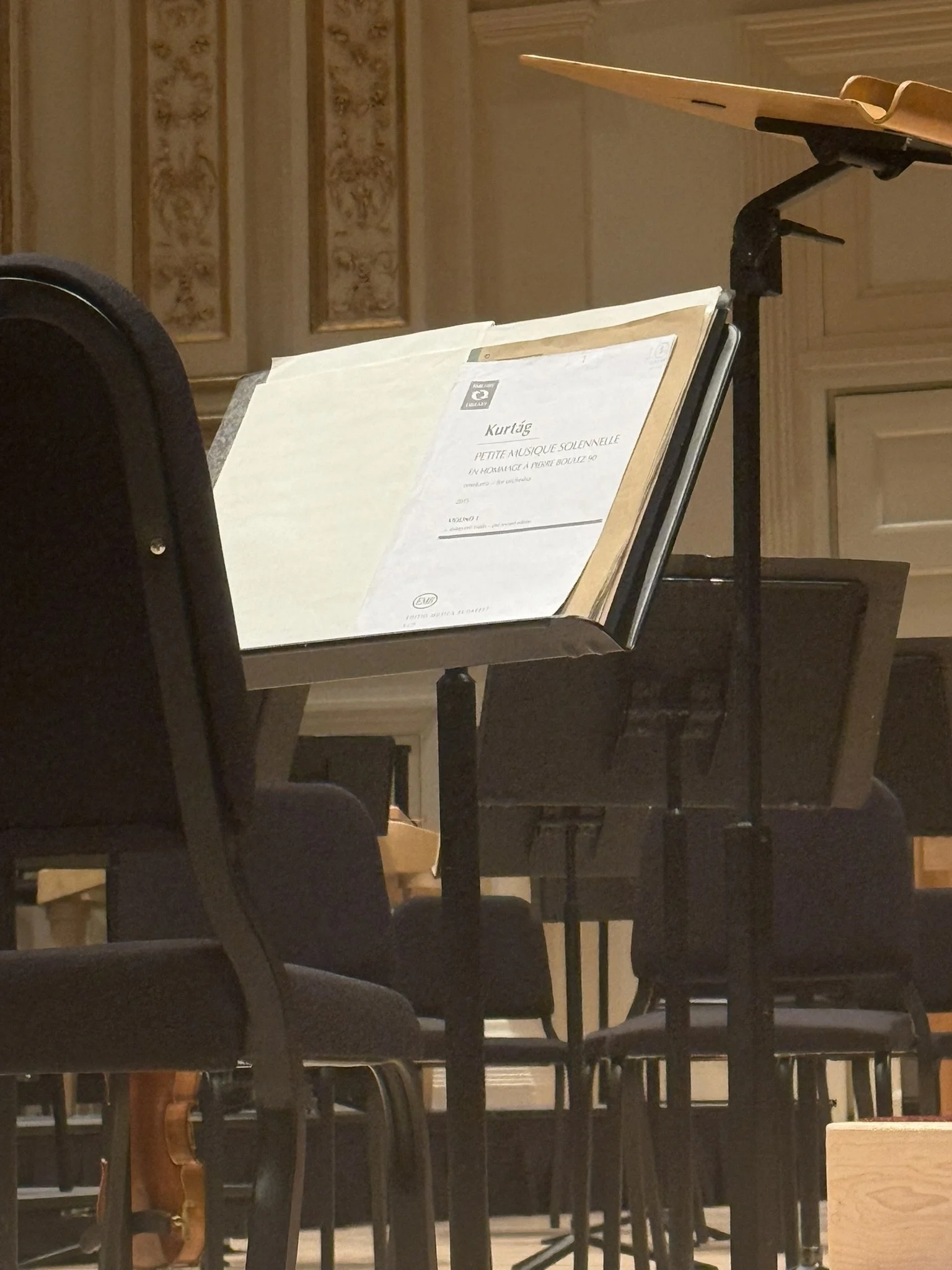
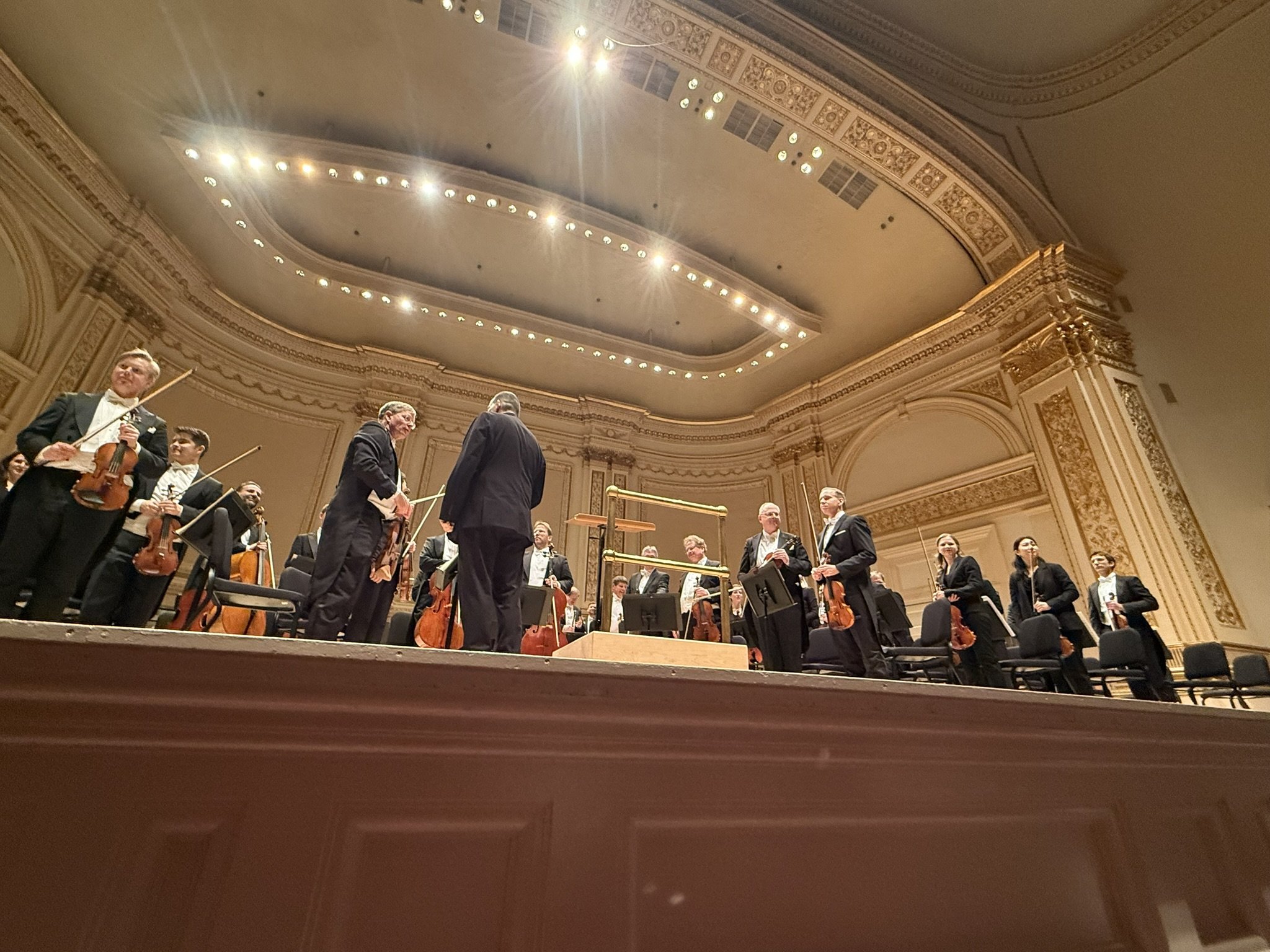
クルタークセカンドバイオリンセット
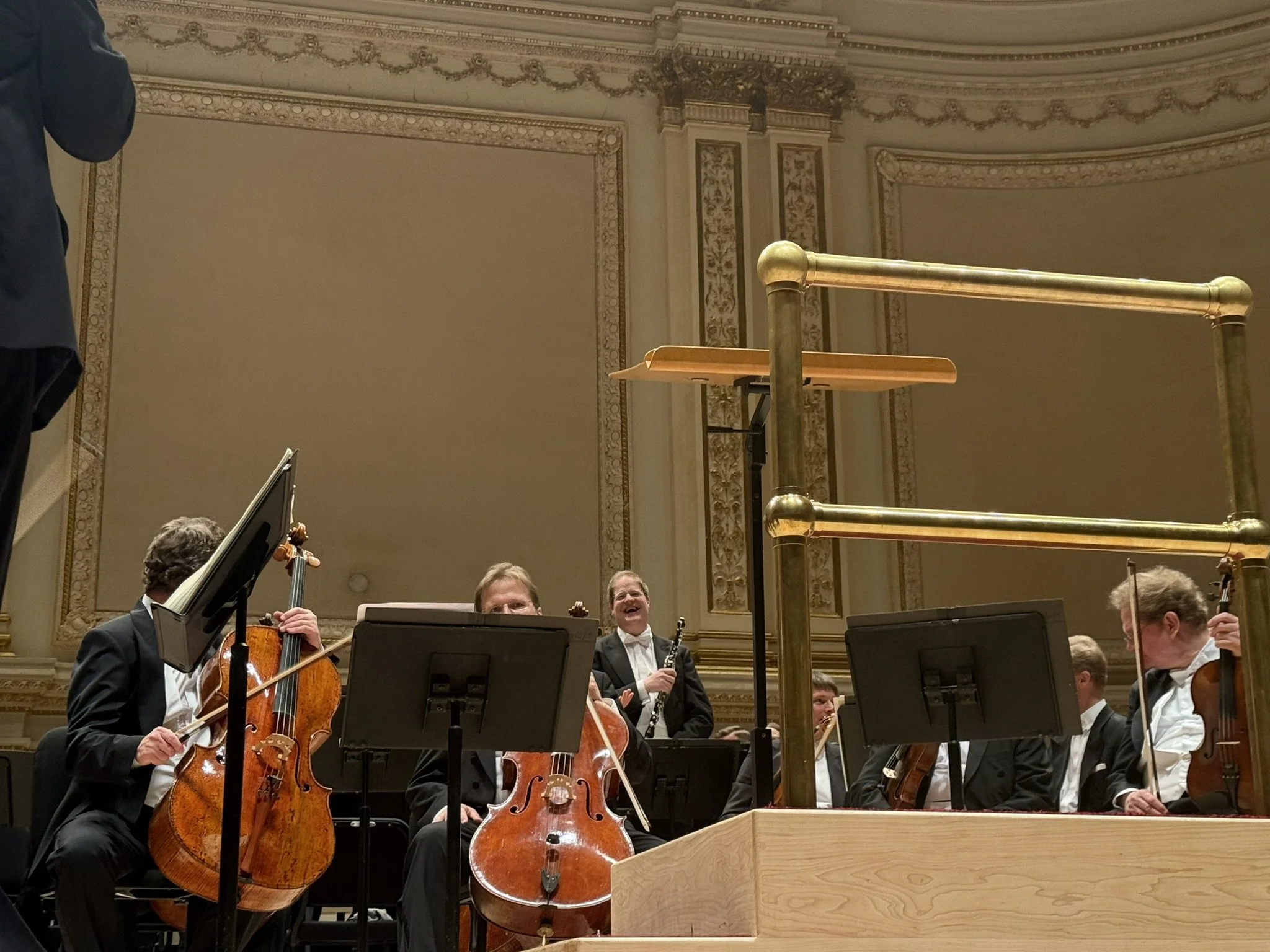
Sebastian Breit, Oboe
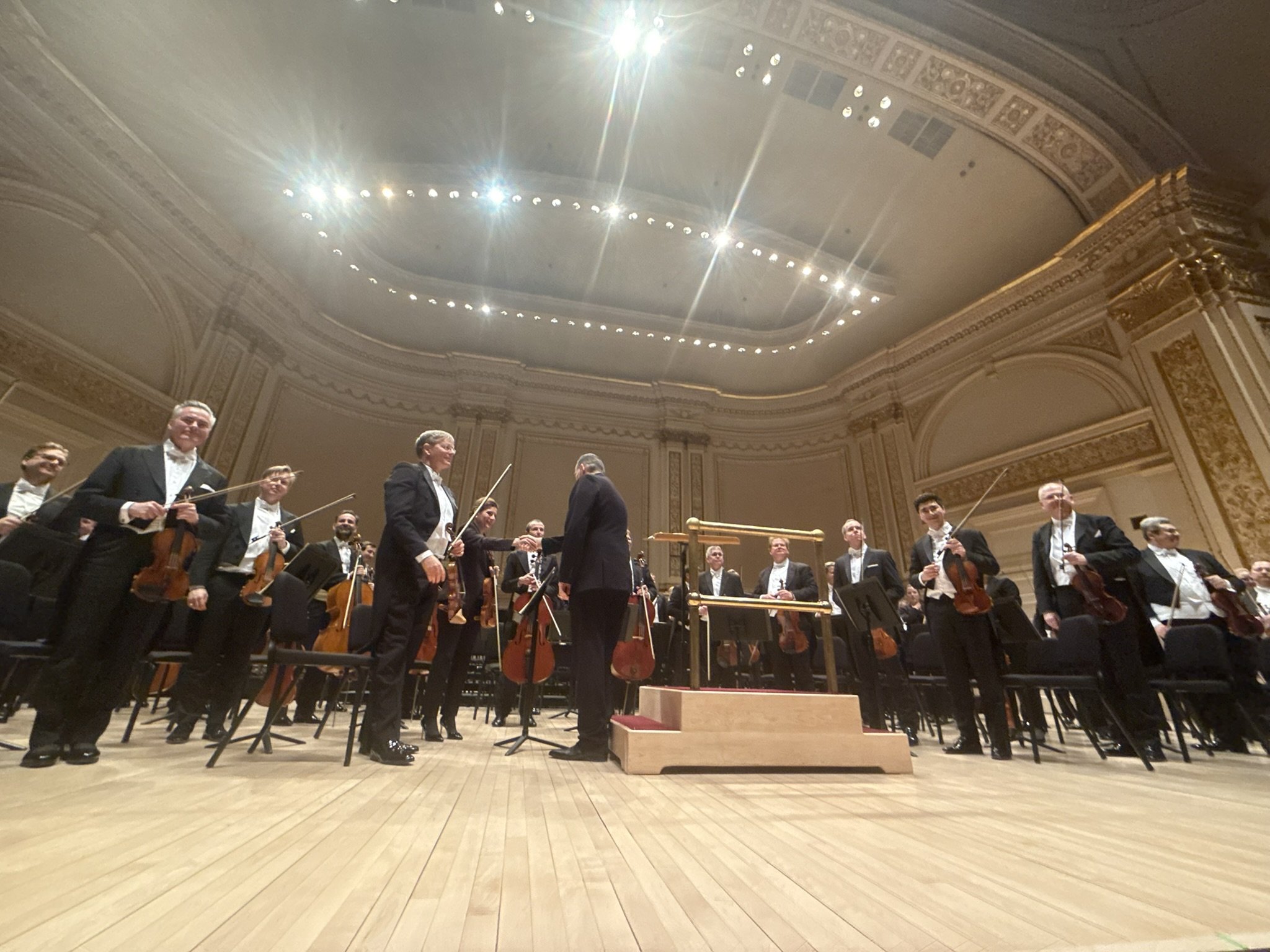
Albena Danailova and Nelsons shaking hands
ウィーンとネルソンのカーネギー演奏会2日目。2.28.2026
一曲目は、今年、100歳を迎えたクルターグ、György Kurtágが1988年に作曲したプティット・ミュジーク・ソレネル:ピエール・ブーレーズ90歳へのオマージュは、Pierre Boulezに捧げられた雄弁な音楽賛辞。私たちが聴いたのはそれより約2分長い。その響きは、Olivier Messiaen晩年の作品を思わせる。持続する和音。金管のクラスター。長短調のいずれにも属さない独特のモード。時間が漂う感覚。ブーレーズがクルターグについて語った惜しみない豊饒な着想が凝縮されている。Andris Nelsonsはじーっと構えながらオーケストラを響きを引き出し独特のモードをカーネギーに沈めていく。弦楽器の高音の響きが、日本の雅楽のようだった。長調でも短調でもない。明るいとも暗いとも言えない。解決しない果てしない重力の中にいた。
次はモーツアルトの交響曲36番 リンツ。ハプスブルク帝国末期の1783年にモーツアルトがリンツ滞在中4日で作ったそうだ。当時は交響曲やオペラを依頼して作ってもらって新作を楽しむ習慣があった。冒頭はアダージョでたっぷり始まり、すぐに軽快なアレグロへ突入。颯爽と駆け抜ける優雅なウィーンのアンサンブルに、ネルソンスが静と動のクルタークの世界をブレンドしているようだった。モーツアルトの即興とネルソンスのテコンドーのダブルコラボ。新鮮な演奏だった。2楽章はゆったり。チェロが歌う主題が地方都市らしい土臭い響きが心地よかった。3と4楽章でも、ネルソンス独特の引き出し方でウィーンのにぎやかなソリストたちの楽しいコラボをじっくり味わった。
モーツアルトのリンツから100年後のドボルザークの交響曲6番を続けて聴いた。当時のウィーンは、民族問題を抱えていたハプスブルク帝国の多民族国家の首都だった。オーストリア人、、チェコ人、ハンガリー人、ポーランド人 などなど今のニューヨークのような収集のつかない状態だったと言える。そのため民族間の緊張も高まっていた。ドヴォルザークは階級や民族の偏見を受けながら、ブラームスに後押しされて、チェコ人としてこの曲でウィーンで成功を収めた。ロマン派の豊かな響きがスラブ民謡と融合。音楽は均衡・明晰・形式から民族や市民の声に変わる。モーツアルトからドボルジャークの100年で、同じヨーロッパ社会の移り変わる衝動とその中にいる個人の内面をドボルジャークを通して体験する。特に3楽章はフリアントという民族舞曲で、弦楽器はアップボウなのに、結構角度のがある下降音型で、ウィーンが違う民族がチェコの踊りをそれぞれ楽しんでいたのが印象に残った。20年前は男しかいなかった。女性が1,2人と増えていったが、今年はもっと女性が増えた印象があった。コントラバスにも打楽器にも女性がいた。4楽章がブラームスの交響曲4番の4楽章のようなコードに、ドボルジャーク独特の土臭い躍動がたまらなかった。アンコールはウィーンのワルツ。弦楽器のボウが上下すると擦れや掠れが引き伸ばされた3拍子に振り子のように包まれた。ネルソンスがステージから姿を消すと楽員たちは握手を交わしステージを去っていったが、コンサートマスターのシュトイデが、最後会場を見渡し笑顔で去っていったのが印象に残った。
2.28.2026
ウィーンの豊かな弦
ネルソンスの情熱的な波
ブラームス的重厚さとスラヴ的熱の両方が出る。
第3楽章のフリアントはかなり躍動的になるでしょう。
透明さ
呼吸する音楽
アントニン・ドヴォルザーク
交響曲第6番 ニ長調 作品6
ドヴォルザークの晴朗で活気あふれる《第6交響曲》は、一般に彼の“飛躍作”と見なされています。しかし実際には、より有名な第7番、第8番、とりわけ第9番《新世界より》の陰に隠れがちです。
本作はひと聴きでドヴォルザークと分かる個性を備えていますが、一部の評論家はその独創性を過小評価し、特にブラームスの《交響曲第2番》からの影響を指摘しました。もっとも、ブラームス自身もまたドヴォルザークから影響を受けており、両者の関係は一方通行ではありませんでした。
チェコ人作曲家であったドヴォルザークは、ドイツ音楽が支配的だった時代において真剣に受け止められるために闘わなければなりませんでした。ブラームスが強力な支援者であったにもかかわらず、です。
熱烈な擁護者であったH・L・メンケンによれば、ドヴォルザークは階級的・民族的偏見にさらされ、「霊感を受けた無骨者のように見なされることが多かった」といいます。
しかし後年、《交響曲第9番》や《チェロ協奏曲》といったアメリカ時代の傑作を書いた頃には、その正統性をめぐる闘いはほぼ勝ち取られていました。彼はその国際的名声ゆえに、ニューヨークに国立音楽院を創設するため招かれるほどになったのです。
とはいえ、1880年——第6番を書いた当時——状況はまだ異なっていました。ドヴォルザークはこの作品を、彼の《スラヴ狂詩曲第3番》を指揮したハンス・リヒターの依頼で、わずか2か月足らずで作曲します。リヒターは熱烈な支持者でしたが、ウィーン・フィルハーモニー管弦楽団内部の「チェコ音楽」への反発を抑えることができませんでした。
初演は1881年、リヒター不在のままプラハで行われます。皮肉にもチェコの音楽界からは「ドイツ的すぎる」と批判されていたドヴォルザークでしたが、チェコ舞曲のリズムを取り入れた躍動的なスケルツォが人々の心をつかみ、評価を一変させました。
翌年、ロンドンでリヒターが指揮した演奏は大成功を収め、これがドヴォルザーク国際的名声の出発点となりました。
第1楽章は、夢見るような旋律で始まります。大きく弧を描くように広がり、やがて神秘的な変奏へと緩やかに移ろいます。異なる拍子を重ね合わせるリズムの活力は抗いがたく、これはチェコ的手法の典型です。楽章を通して木管楽器が輝きを放ち、最後はささやくように締めくくられます。
緩徐楽章もまた歌謡的で広がりに満ち、絶えず花開く旋律に基づいています。ドナルド・フランシス・トーヴィーが述べた「無数の後思案へと枝分かれする、長く曲がりくねった文」というドヴォルザーク特有の構文が想起されます。
冒頭楽章のクロスリズムは、スケルツォで再び姿を現します。ここではチェコの民族舞曲フリアントが基盤となり、熱狂的な躍動を生み出します。トリオは木管の牧歌的な見せ場であり、主題の繊細な変奏となっています。
終楽章冒頭がブラームスの第2番を思わせることはしばしば指摘されますが、音楽が勢いよく走り出すと、それは明らかにドヴォルザーク自身の声となります。終盤ではコラール風のクライマックスが築かれ、やがて狂おしいほど歓喜に満ちた終結和音へと突き進みます——それは後の《新世界より》終結を予感させるものです。