
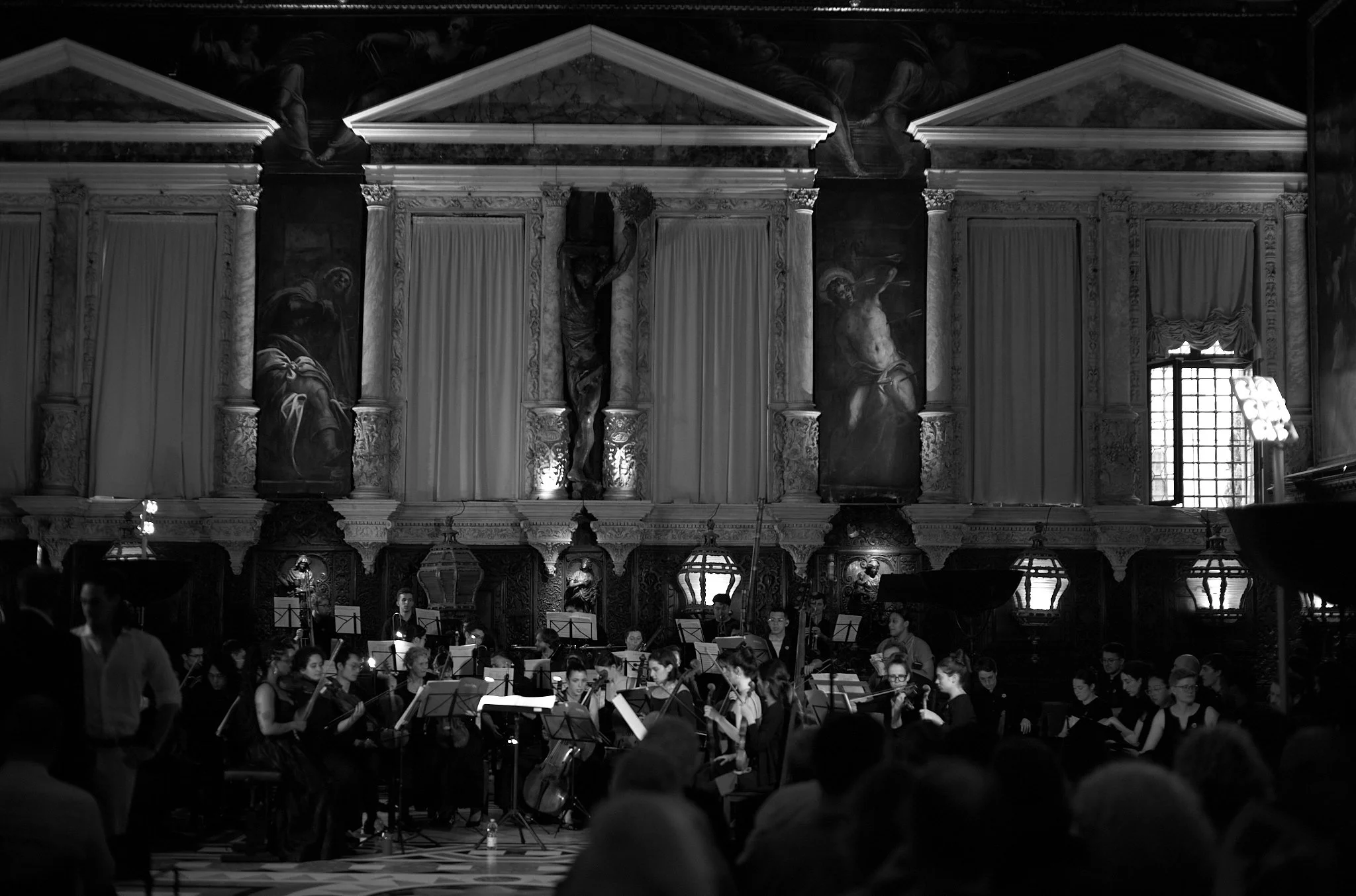
Juilliard’s 2026–27 season pick-up compelling is the way it reveals a larger narrative: where music comes from and where it continues to go.
Bach’s St. Matthew Passion in October represents one of the spiritual foundations of European music. For Bach, music was an act of faith and community. At its center lies a profound exploration of the relationship between humanity and the transcendent. Performed by Juilliard415 and the Yale Schola Cantorum using historical performance practices, this promises to be a rare opportunity to encounter that world up close.
Handel’s Messiah in December opens the perspective further. From the inward, contemplative world of Bach, we move toward a more public and celebratory musical space. Although rooted in sacred tradition, Messiah possesses a remarkable ability to unite large audiences in a shared experience of joy. It reflects the expansion of musical culture from the church into the life of the city.
The orchestral programs trace a continuous lineage between contemporary and classical music. In Gemma New’s concert, works by Kelly-Marie Murphy and Aaron Jay Kernis lead into Brahms’s Symphony No. 2. Brahms stands as a composer who absorbed tradition deeply while expanding the possibilities of the symphonic form. His presence creates a natural bridge between the past and the present.
Dalia Stasevska’s March program is equally intriguing. Anna Thorvaldsdottir’s ARCHORA unfolds as a vast sonic landscape. It is followed by Beethoven’s Piano Concerto No. 4 and Sibelius’s Symphony No. 2. Together, these works form a journey through ideas of nature, space, and atmosphere, linking the nineteenth and twenty-first centuries through a shared sensitivity to landscape and sound.
The season’s most ambitious statement comes in April with Ives’s Symphony No. 4 paired with Beethoven’s Symphony No. 9. Beethoven’s Ninth stands as one of the great summits of the European symphonic tradition. Ives’s Fourth represents an equally expansive vision emerging from America. Its overlapping layers of music, memory, and experience evoke a society in which many voices coexist simultaneously. Heard together, these works illuminate the symphony's journey from Europe to America and its transformation into something new.
Viewed as a whole, the season offers a condensed history of nearly three centuries of music. From Bach and Handel to Brahms, Beethoven, Sibelius, Ives, and leading contemporary composers, a long artistic continuum unfolds across a single year. Tradition and innovation, Europe and America, the sacred and the secular, past and future—all are woven together into a coherent musical narrative. That sense of connection and evolution is what makes this season so fascinating.
Juilliard Orchestra
Gemma New, Conductor
Kelly-Marie MURPHY A Thousand Natural Shocks
Aaron Jay KERNIS Viola Concerto
BRAHMS Symphony No. 2
Alice Tully Hall
Juilliard415
Yale Schola Cantorum
Grete Pedersen, Conductor
BACH St. Matthew Passion
10.31.2026
Woolsey Hall
Juilliard415
Yale Schola Cantorum
Grete Pedersen, Conductor
BACH St. Matthew Passion
Juilliard415
TENET Vocal Artists
HANDEL Messiah
3.31.2027
Juilliard Orchestra
Dalia Stasevska, Conductor
Anna THORVALDSDOTTIR ARCHORA
BEETHOVEN Piano Concerto No. 4
SIBELIUS Symphony No. 2
Juilliard415
Robert Mealy, Director
David Robertson, Conductor
Featuring students of the Vocal Arts program
Juilliard Community Chorus
Adrian O. Rodríguez, Director
IVES Symphony No. 4
BEETHOVEN Symphony No. 9