
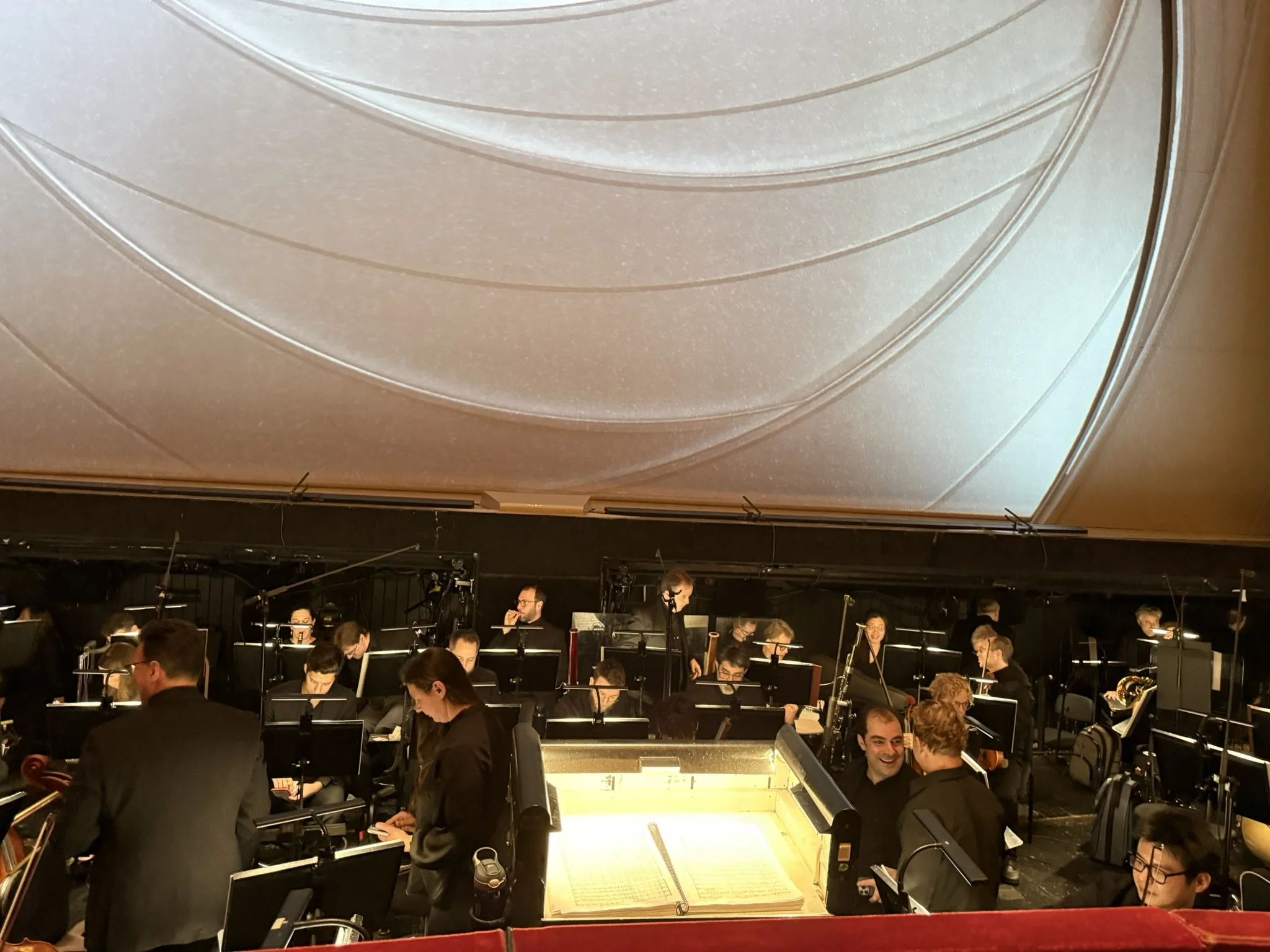
Metropolitan Opera’s new Tristan und Isolde opened. I had 2 times: 3.9.2026, the 1st on the middle of the orchestra seats; 2nd, 3.17.2026, was behind the conductor. But the tunnel on stage distorted the singers' voices in an unnatural way.
While the acoustics of the opera house are designed to allow unamplified voices to project naturally, here the voices reverberated within the tunnel, causing specific tones to swell and become unnaturally emphasized. Because these reflected sounds reached the audience sooner and with greater intensity than the orchestra, it felt as though the singers and the orchestra did not inhabit the same acoustic space. The sound image seemed to waver whenever a singer moved or shifted their face angle, making it difficult to discern subtle nuances.
Conversely, the sailors' songs and the *banda* (offstage ensemble)—heard from a distance—rang out naturally, conveying a palpable sense of physical distance before seamlessly reintegrating with the orchestra. The movement of sound traveling through space was fascinating and deeply moving. Pedro’s English horn solos—even when played from within the tunnel— did not suffer from the same acoustic issues as the voices.
Yannick and the Met Orchestra provided meticulous support for the singers' extended musical dialogues, which are built on simple motivic material, by skillfully modulating tempos and dynamics; the performance never felt tedious. Yannick and the Met Oechstra approached Wagner’s work—unfettered by the weight of tradition or the "authoritarianism" that Richard Strauss once criticized as merely "clinging" to Wagner—by infusing it with their own immediate breath, love, pain, and joy, thereby giving birth to a *Tristan* that felt entirely new and alive. Although the members for the second performance differed slightly from the first, the playing of the violas, clarinets, brass, basses, and all the string sections was magnificent. Solos that, on a recording, one might assume were played by a cello often turned out to be played by a viola; moreover, every solo passage blended seamlessly into the ensemble fabric woven by Yannick and his players.
Lise Davidsen poured her very life force into her portrayal of this new Isolde. The sensation of that intense energy—singing the Wagner we desire, regardless of the environment—permeating to the very depths of one’s soul felt like the true essence of Wagner, and it marked a magnificent collaboration with the Met Orchestra.
Opera is an art form in which live voices and instruments transform the very space they inhabit into music; I believe that the true significance lies in the experience of having one’s auditory senses nurtured within that natural acoustic environment. The moment a faint whisper is shared across the entire auditorium—that delicate sensation, emerging simultaneously among a multitude of people—constitutes the very essence of opera.
The performance began after tuning, followed by the theatrical effects; the audience was subtly drawn into the unfolding atmosphere, which flowed seamlessly into the start of the music, with the score unfolding against a backdrop of projected visuals. Although I observed this from a slight remove during my first viewing, I felt that this method of engaging the entire audience right from the start—bypassing the customary bows and applause for the musicians—was an excellent concept for making opera more accessible and familiar to newcomers.
Since opera utilizes live sound to recreate its fictional world within a physical space, the design of that space and its acoustics are of paramount importance. Furthermore, the experience of having one’s auditory senses—rather than merely one’s visual perception—cultivated in this manner is truly invaluable. Even the faintest whisper can elicit a collective sigh from the large audience. Sound and voice reach into the innermost recesses of the human heart—those hidden folds that lie deep within us all—and the opportunity to share that profound experience simultaneously with so many others reaffirmed for me just how critical the design of space and acoustics truly is.
This is 3.21.2026 Live recording.
メトロポリタン歌劇場で新制作のトリスタンとイゾルデを、3月9日と17日の2回聴いた。オーケストラ席中央と指揮者の後ろで体験したが、いずれも舞台上のトンネルが歌手の声を不自然に変えていた。
歌劇場のアコースティックは生声でも自然に飛ぶように設計されているが、声はトンネル内部で反響し、特定の音だけが膨らんだように強調される。その反射音がオーケストラよりも早く、強く届くため、声とオーケストラが同じ空間に存在しているように感じられない。歌手が動いたり顔の角度を変えたりするたびに音像が揺れ、繊細なニュアンスを追うことが難しかった。
一方で、遠くから聴こえる水夫の歌やバンダは、物理的な距離を伴って自然に響き、オーケストラへと回帰していく。空間を移動する音の動きが面白く感動した。ペドロのイングリッシュホルンはトンネル演奏でも、声と違い残念な気持ちにならなかった。
ヤニックとメットオーケストラは歌手たちの長いやり取りに、少ない動機を、テンポをうまく切り替えたり、ダイナミクスを切り替え丁寧に工夫しサポートしていて飽きることが一度もなかった。ヤニックとワーグナーはシュトラウスが言うようなワーグナーにぶら下がる権威やこれまでの習慣関係なく、自分たちの今の呼吸、愛、痛み、喜び、全て新しいワーグナーの命として与えていた。2回目は1回目のメンバーと少し違っていたが、ビオラ、クラリネット、ブラス、バス、全ての弦楽器がすばらしかった。録音だとチェロかなと思うソロは大体ビオラだったし、どのソロもヤニックたちのアンサンブルの中でうまく溶け合っていて楽しかった。
リーゼ・ダヴィドセンは自らの生命を新しいイゾルデに注ぎ込んでいた。どんな環境でも私たちが望むワーグナーを歌う強烈なエネルギーが魂の奥まで染み渡る感覚は、まさにワーグナーだったし、メットオーケストラとの素晴らしいコラボレーションだった。ただトンネルがないほうがずっと楽に自由に楽しめるのでありがたい。
オペラは生の声と楽器によって空間そのものを音楽化する芸術であり、その自然な響きの中で聴覚が育まれていく体験こそが重要だと思う。小さなささやきが客席全体に共有される瞬間——その繊細な感覚が、多くの人と同時に立ち現れることに、オペラの本質がある。
出だしは、チューニングが終わると、演出効果が始まり、聴衆はなんとなく引き込まれて、その流れで音楽が始まり、映像が映る中で音楽が繰り広げられる。1回目は離れてみていたが、お辞儀や演奏家へのアプローズなしでみんなを巻き込む入りは、オペラに親しむいいアイディアだとおもった。
オペラは生音を使って大きな空間でその世界を再現していくため、空間と音響の設計は大切。そして、聴衆たちの視覚より聴覚の感覚が養われていくのはとても貴重な体験。小さなささやきでも沢山の聴衆が溜息をもらしてしまう。音や声が誰もが秘めている人の心のひだに触れ、それを沢山の人たちと同時に体験できるので、空間と音響設計はとても重要だと改めて感じた。