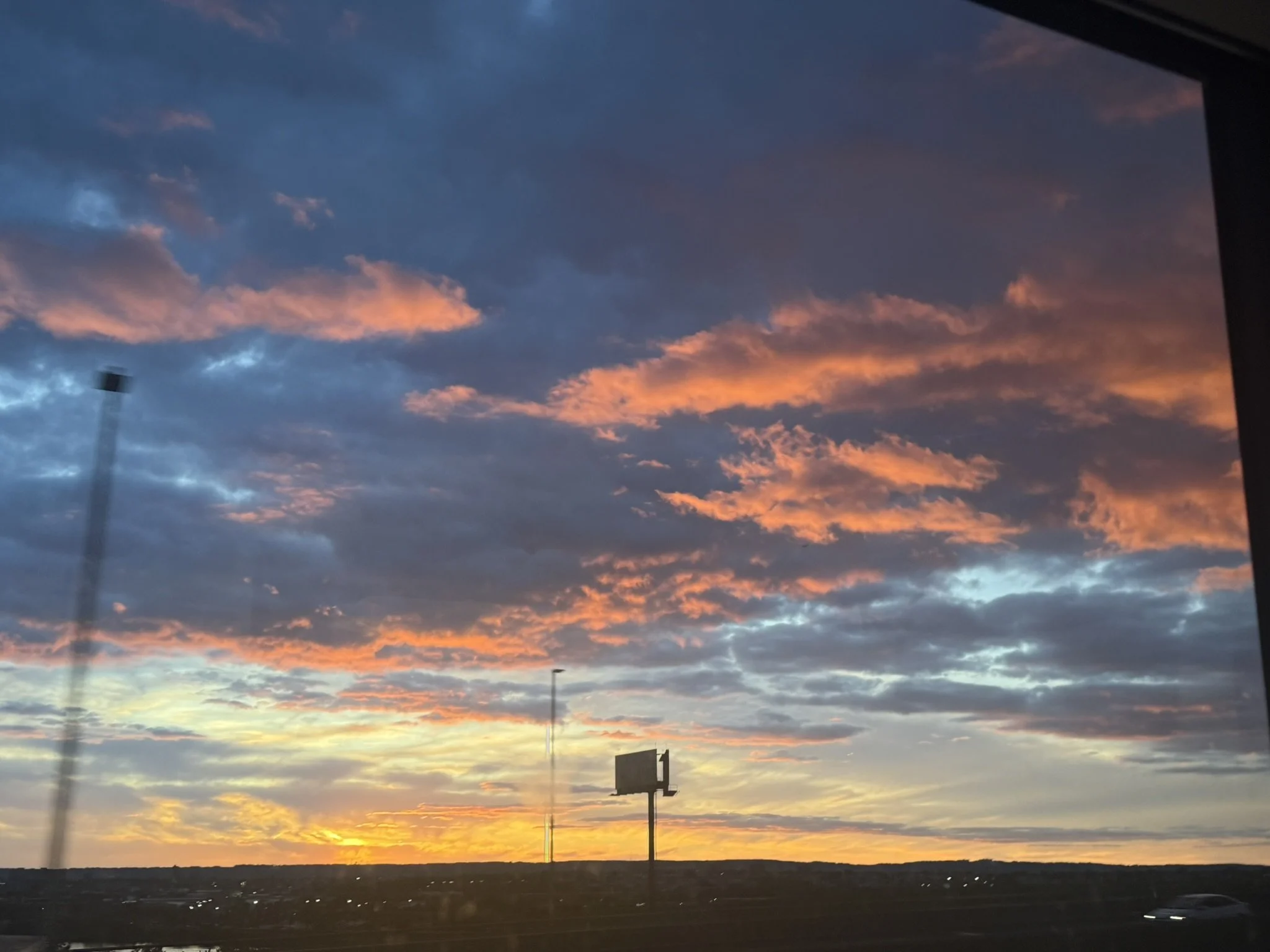
5.15.2026 — Philadelphia Orchestra in Anderson Hall
Tyshawn Sorey is from Newark, New Jersey. A drummer with extraordinary improvisation. The moment you try to “grasp the form,” nothing appears. You have no choice but to let yourself go, open your perception, and receive. Only then does something begin to emerge.
Small sounds, long silences, slow repetitions—the more I watched the moments when sound disappears, the more I began to hear something that belonged to a loosened, unbound state of mind.
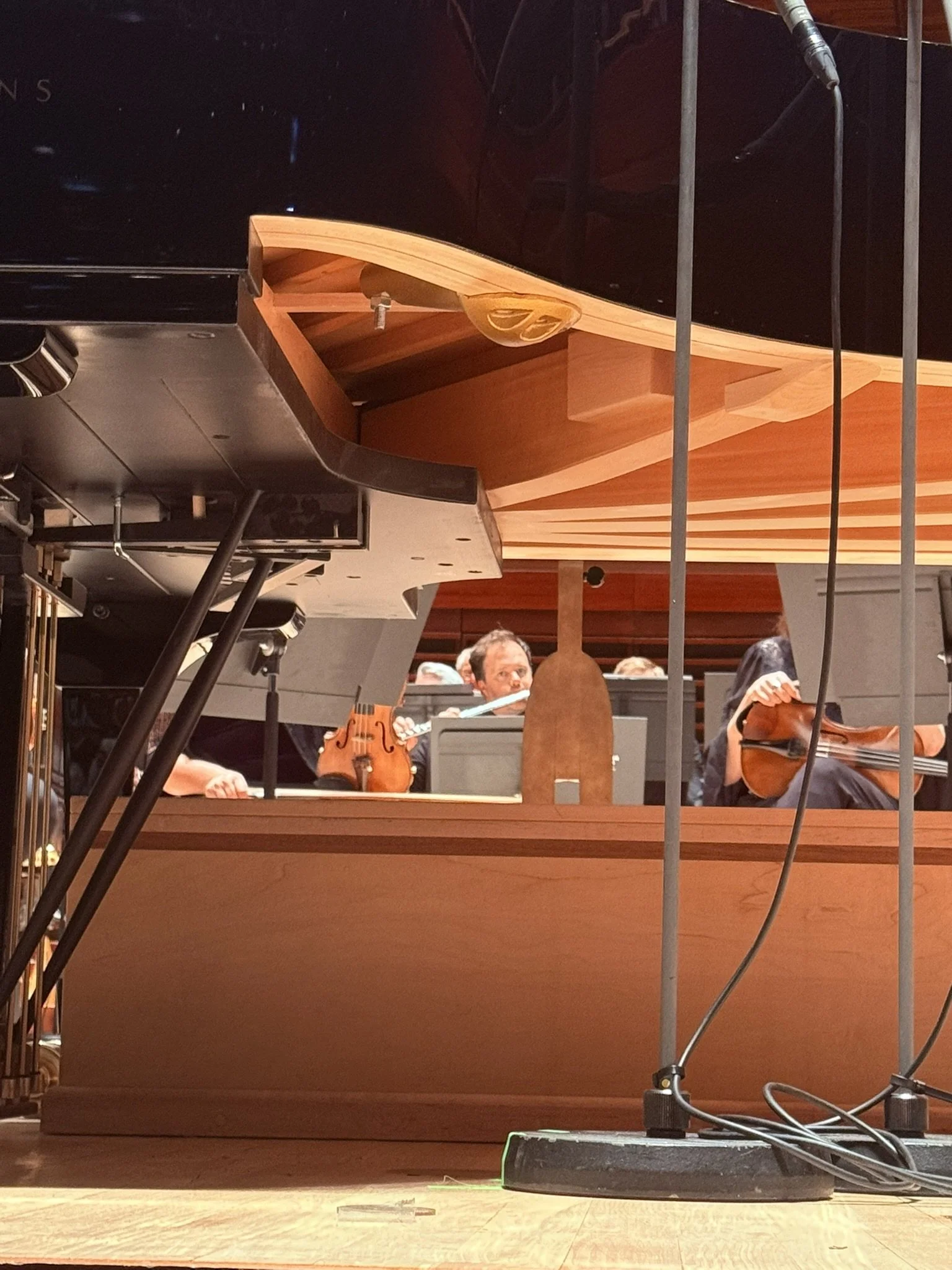
A Steinway in the center of the stage, and there was a large percussion set: a bass drum, vibraphone, and other metallic instruments that made the sound shimmer. There were two sets of timpani.
Before the performance began, Yannick Nézet-Séguin spoke about Sorey, asked the audience to listen quietly, to perceive how silence, resonance, and breath are experienced—to truly receive them.
At first, clusters of sound seemed to sink downward. Strings and winds descended from above at different timings. The piano picked up those sonic shapes and produced something that was neither melody nor harmony.
Yannick’s baton showed real swing. The noise in my head disappeared. His conducting carried a stronger, invisible force than last December. My intention to “listen” vanished.
These concerts are anonymously sponsored in admiration of Music and Artistic Director Yannick Nézet-Séguin.
Because of this support, this music exists in the world. I felt Yannick's intentions and the orchestra's from the very beginning.
A grand, entrance-like energy moved toward the center. The tuning A from the piano was struck bluntly. Sorey’s world had already begun.
From the back right, Joseph Conyers’s double bass resonance lingered to the very end, and then Yannick appeared on stage. Everything felt connected, part of a carefully but naturally constructed experience for the audience in Philadelphia.
All ushers are information centers; the city of American independence still carries its history and pride, which comes through the local audience itself.
On a bright, sharply clear Friday afternoon, you could feel older audience members becoming quietly excited.
Sorey was born in Pennsylvania, studied there, and now teaches there. What he does cannot be sung as melody or harmony. Yet the tactile quality of sound is deeply affecting.
Aaron Diehl’s piano tone is strikingly beautiful—Steinway overtones and resonances of clusters are stretched through the orchestra, like walking through a gallery of contemporary art. He left clusters suspended under the pedal, their resonance lingering in the hall. That mass of sound seemed to shift directly into the orchestra’s ensemble, where winds, strings, and percussion merged into a single evolving resonance. From there, the orchestra unfolded like a series of contemporary art installations.
The experienced Philadelphia audience, with decades of listening under its belt, seemed to fully understand this. Their 60, 70, 80 years of listening perception met Sorey’s world, and something quietly expansive emerged.
As the opening sonorities continued sinking, suddenly a large wave of sound struck, followed by a piano solo.
In the pitch-black depths of the sea, with eyes closed, I saw lines of light and patterns. Steinway overtones rose from within my body itself.
I was experiencing sound as touch.
After the solo—or perhaps after that wave of sound—the initial sinking sensation transformed into a feeling of sound falling from above.
Then the orchestra and ensemble returned.
I understood why there were two sets of timpani: the same rhythmic figures were offset, creating a clear displacement of the perception of time.
Multiple sound patterns expanded outward. It felt like walking through a series of small galleries, opening each door one by one.
At the end, I heard what seemed like a flute line—Patrick Williams and others shaping a kind of song.
Sound continues, and subtly transforms. These minute shifts were perceived not through the lens of jazz or classical music, but as pure manipulation of vibration, tension, blur, and imitation.
It was a vast musical play between Sorey, Philadelphia, and Nézet-Séguin.
The orchestral sound tradition, stretching back to Stokowski, expanded perception itself. It “overhauled” the most essential act of listening.
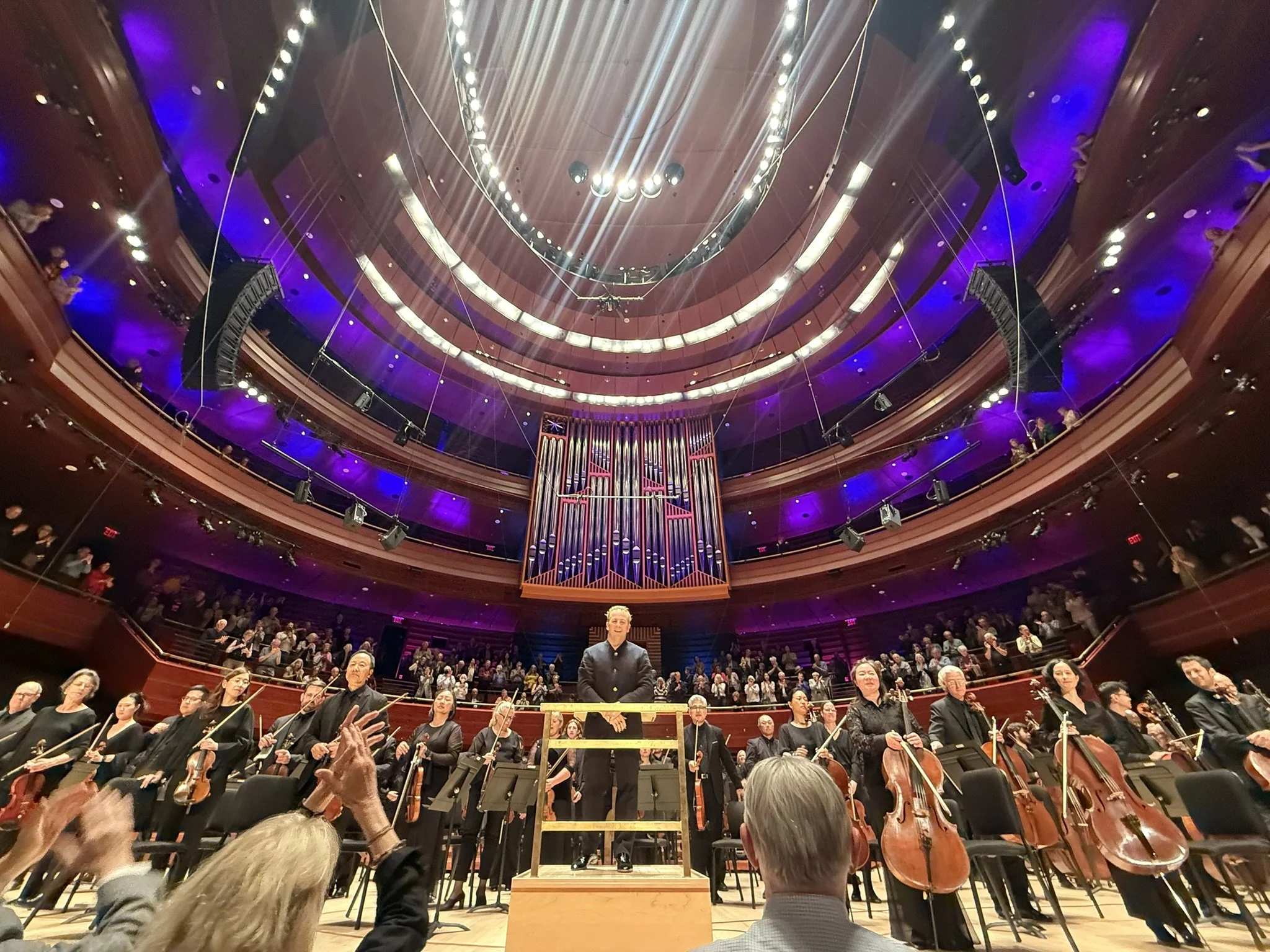
When Sorey was called to the stage, he walked to the center and waved with a smile, though something unspoken seemed to well up behind his expression.
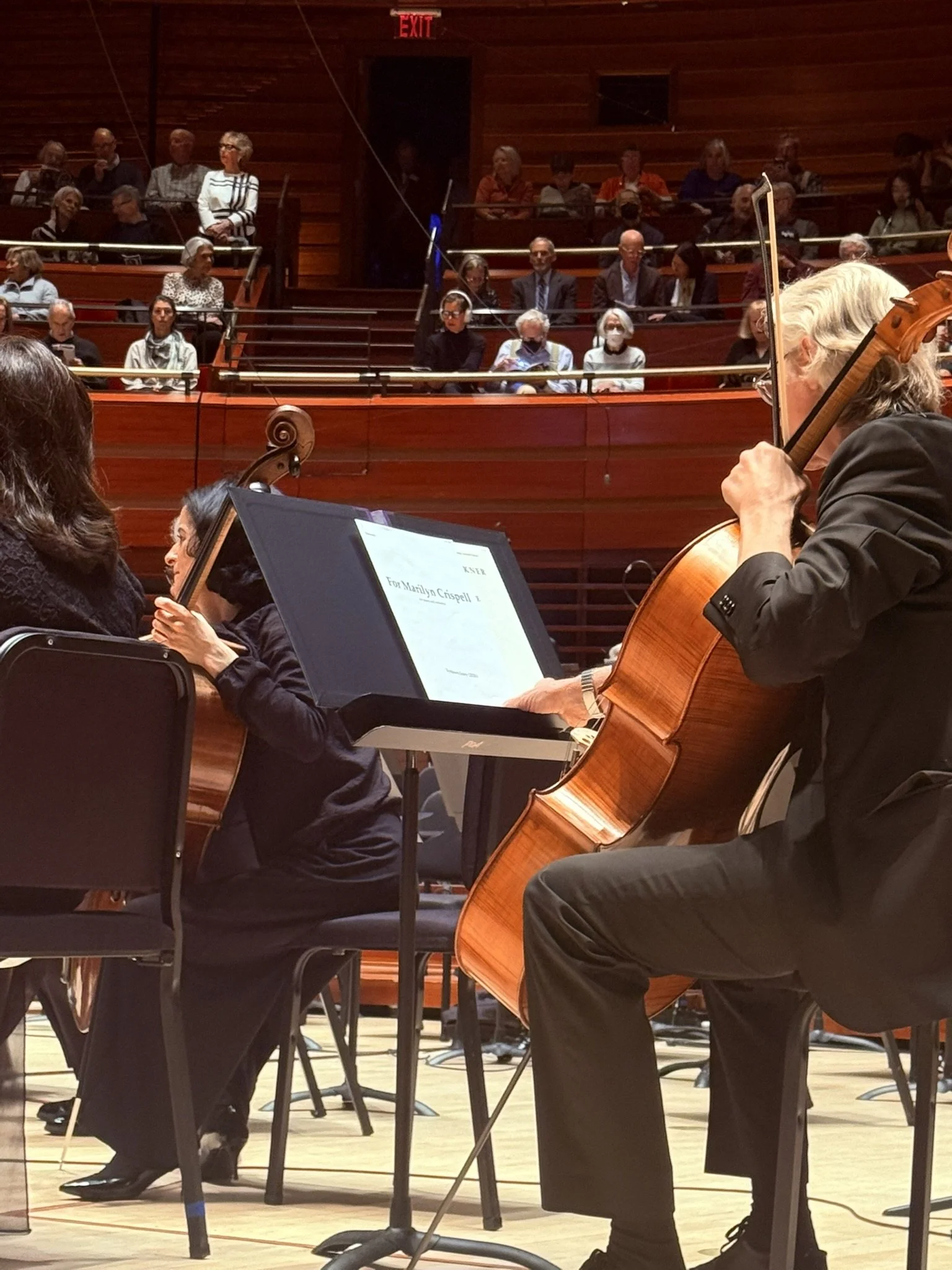
Looking toward the cello section, Richard Harlow raised his score in acknowledgment.
Even after everything ended, I could not move for a while.
The work is small in setup, but enormous in the force it carries—not in the number of notes, but in the transformation of listening itself.
Yannick’s intention, the orchestra’s sensitivity, and their shared resonance were all present.
It felt similar to the energy of sessions at St. Luke’s with Midori.
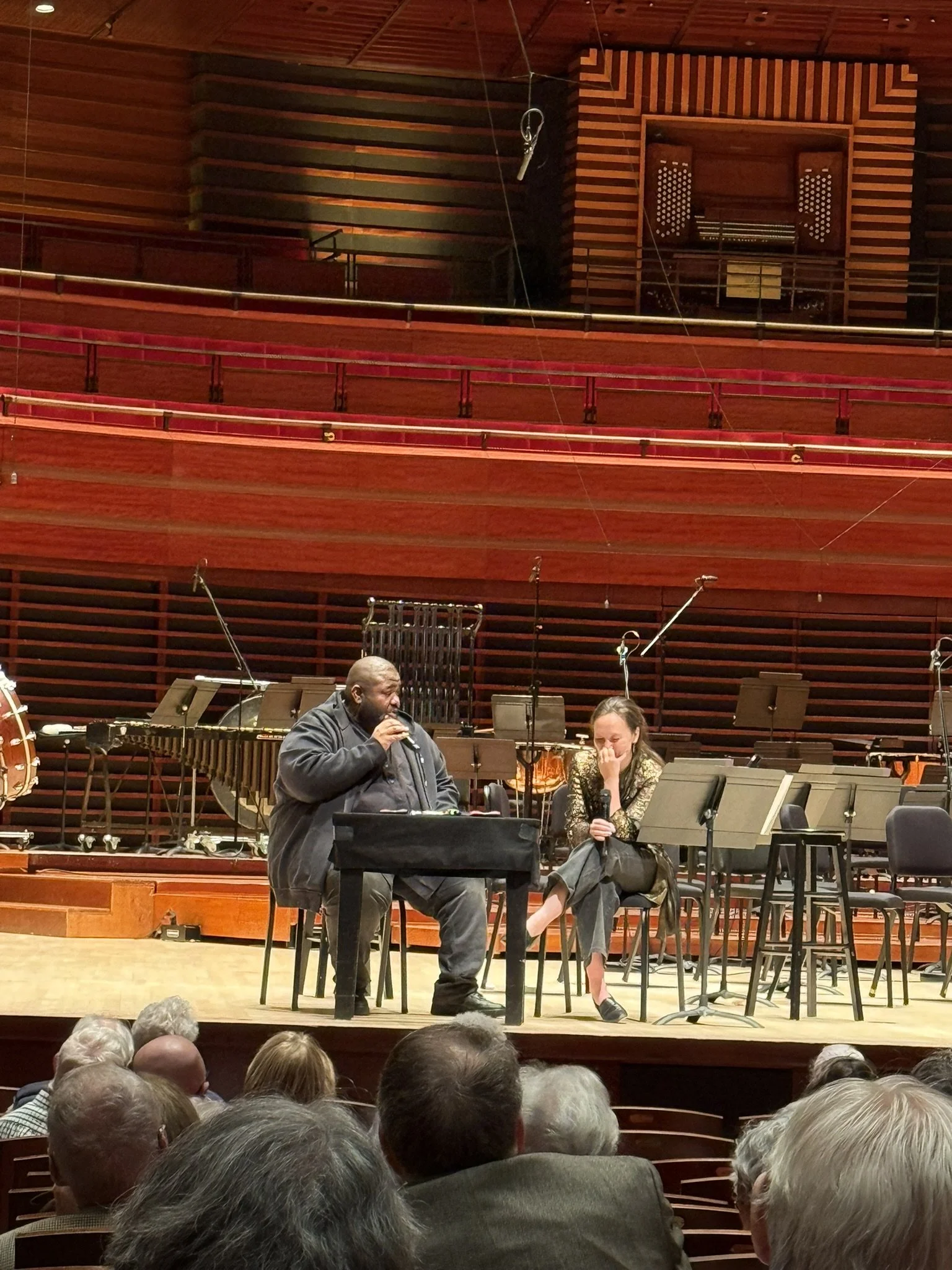
Tyshawn Sorey’s words:
An audience that can savor art for its own sake
True perception, that expands consciousness
Let go of expectations when listening
Stay within the moment
Let music do what it wants to do
And let its mystery itself
Tell you what you feel
Biography:
Studied with Anthony Braxton
PhD, Columbia University
Teaches at Wesleyan University and the University of Pennsylvania
MacArthur Fellow
2024 Pulitzer Prize in Music
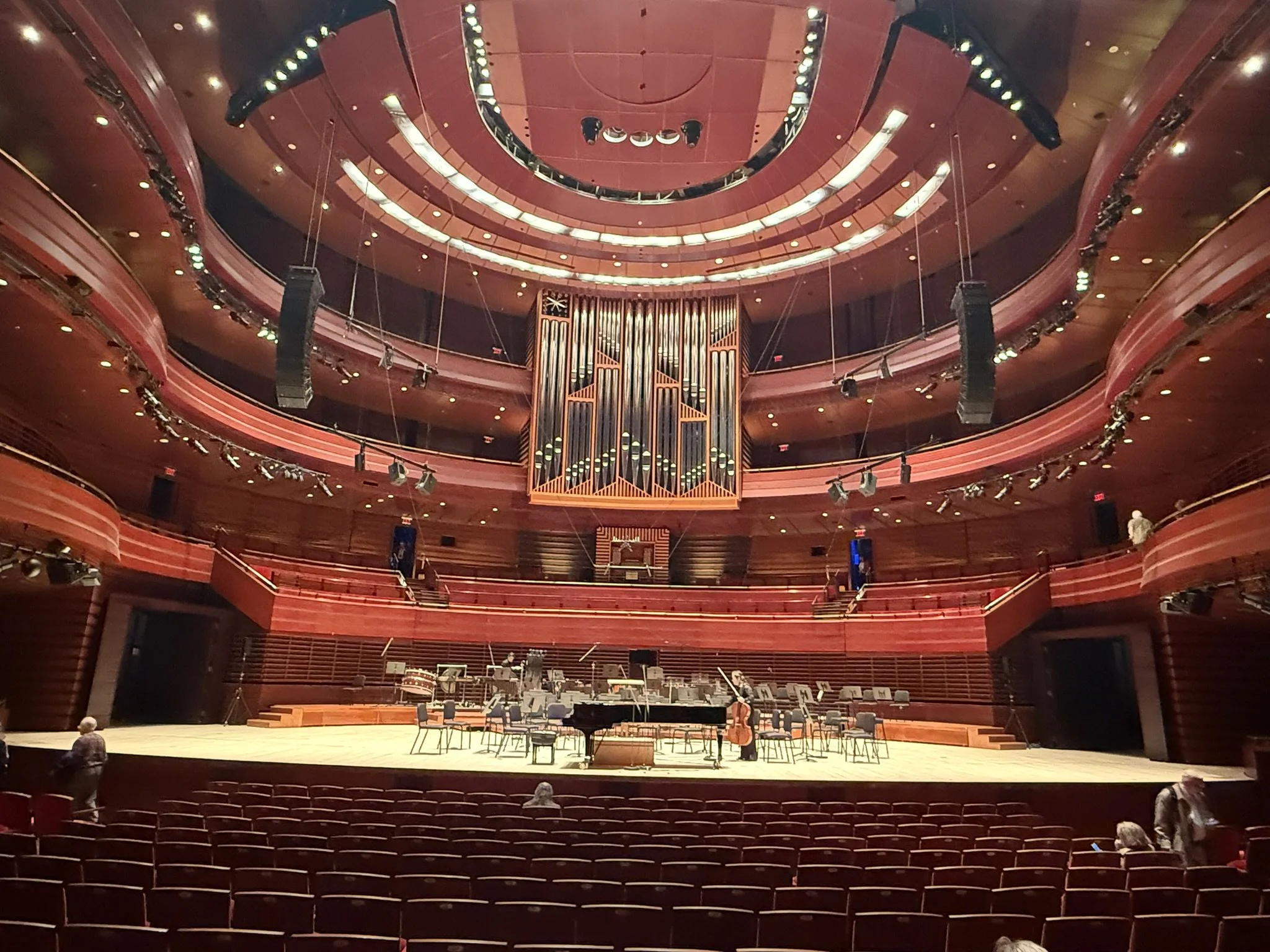
Note
Sorey’s way of hearing sound has the potential to be widely received and to expand the capacities of many listeners.
From major orchestras in Chicago, Philadelphia, Cleveland, San Francisco, Los Angeles, New York, Boston, to regional ensembles—wherever an orchestra can be formed, there is a possibility to elevate perception itself.
This is not “music that is explained,” but closer to an experience that transforms the condition of listening.
Like a kind of “auditory LASIK,” the resolution of perception changes.
The mental noise quiets. Sound arrives more directly.
As a result, thought and sensation begin to arise naturally from within.
Second Half: Bruckner Symphony No. 3 (1873 version)
Bruckner, upon hearing Wagner’s Tannhäuser, experienced an awakening—just as many listeners today may experience an awakening after hearing Sorey.
When Bruckner met Wagner, he reportedly asked whether he could dedicate the work to him. Wagner’s name is printed prominently on the score.
The symphony is filled with echoes of Wagner’s works. What is fascinating is how clearly certain quotations are exposed in the viola and other parts, almost as if pointing: “Here it is.”
Yannick has also mentioned that in modern performance practice, editions often incorporate later revisions.
He has recorded this symphony twice; the Montreal recording uses an earlier version. It reveals a more unadorned and generous Bruckner.
Although it contains fragments of Wagner’s musical world, Bruckner remains simple, awkward, yet powerful. It is filled with pure light.
His symphonic writing feels like organ-like vastness and orchestral imagination.
After Sorey, listening to Bruckner is no longer about structure, melody, or history. It becomes the living sound festival unfolding right here and now with Yannick and Philadelphia.
To borrow Wagner’s words:
“Thus! Yes! A heartfelt greeting!”
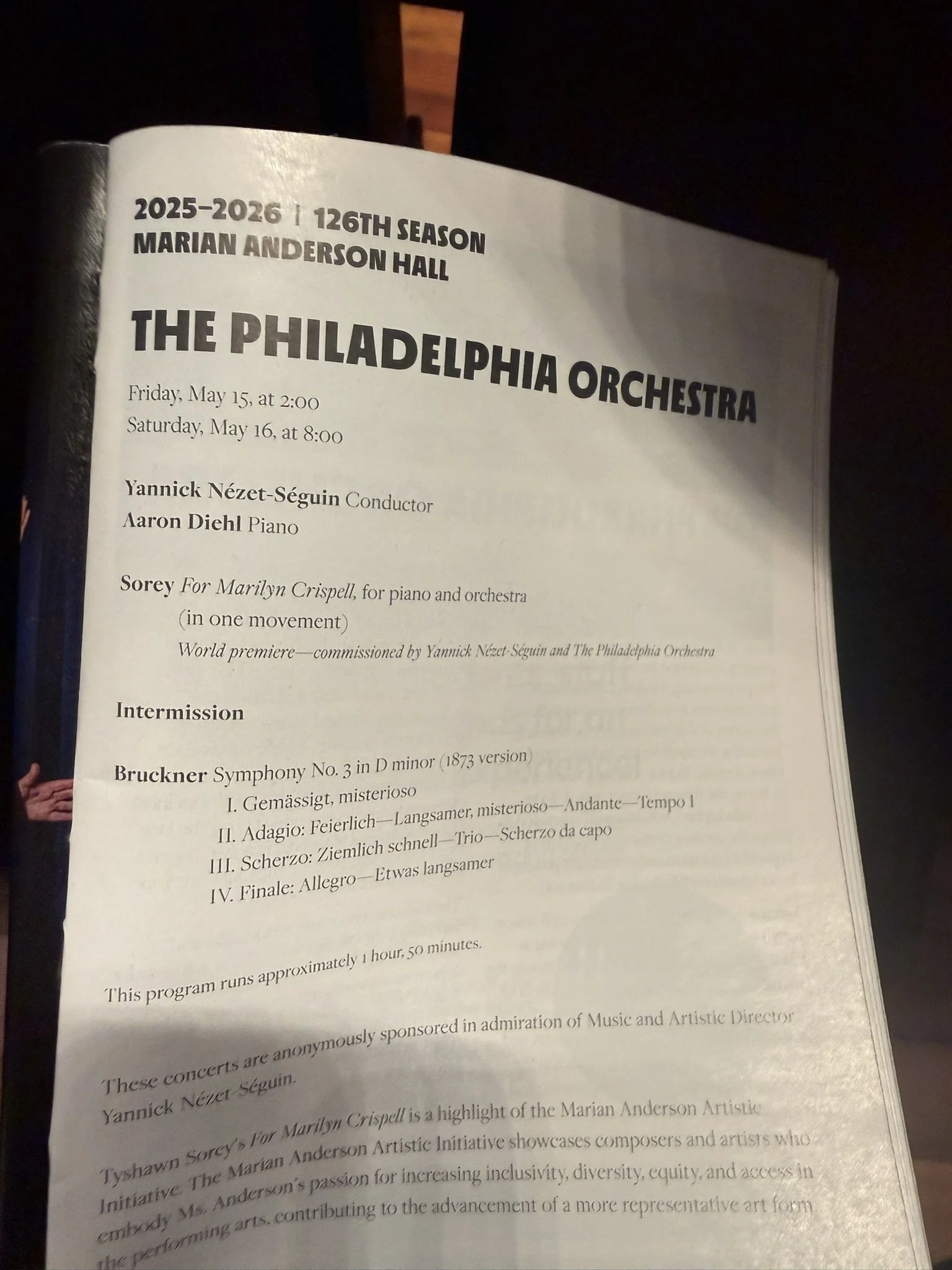
Saturday, May 16, at 8:00
Yannick Nézet-Séguin Conductor
Aaron Diehl Piano
Sorey For Marilyn Crispell, for piano and orchestra
(in one movement)
World premiere—commissioned by Yannick Nézet-Séguin and The Philadelphia Orchestra
Intermission
Bruckner Symphony No. 3 in D minor (1873 version)
I. Gemässigt, misterioso
II. Adagio: Feierlich—Langsamer, misterioso—Andante—Tempo I
III. Scherzo: Ziemlich schnell—Trio—Scherzo da capo
IV. Finale: Allegro—Etwas langsamer
Tyshawn Sorey’s For Marilyn Crispell is a highlight of the Marian Anderson Artistic Initiative.
The Marian Anderson Artistic Initiative showcases composers and artists who embody Ms. Anderson’s passion for increasing inclusivity, diversity, equity, and access in the performing arts, advancing a more representative art form.
5.15.2026 Philadelphia Orchestra in Anderson Hall
アンダーソンホールでタイショーン・ソレイを初めて生で体験した。ニュージャージーのニューアーク出身。ドラマーで即興がめちゃうまい。型を見ようとすると何も見えない。自分を忘れて心を開いてうけとるしかない。そうすると見えてくる。
小さい音、長い静止、ゆっくりした反復、音が消える瞬間を見つめ続けると、自分の解けた心が感じる音があった。中央にスタインウェインが置かれ、後ろには左から大太鼓や、ビブラフォンなど、金属の音色で音が揺れる打楽器、ティンパニは2セット。はじまる前にヤニックがタイショーンの音楽について話した。沈黙や響き、呼吸をどう感じ知覚するか。それを受け取るために静かに聴いてほしい、と丁寧に語っていた。
初めは沢山の音のクラスターが沈んでいくような感覚だった。弦楽器や管楽器が別なタイミングで上から下に向かって沈んでいく、ピアノはその音の形を拾いメロディでもハーモニーでもない音を鳴らす。ヤニックの棒がぶるっとスウィングした。頭のざわざわが消えた。彼の棒は12月よりも見えない力が強く宿っている気がした。自分の聴こうとする意志が消えた。ヤニックにただ聴けと言われているようだった。
These concerts are anonymously sponsored in admiration of Music and Artistic Director Yannick Nézet-Séguin.
この曲は誰かが応援したおかげで聴くことが出来る。ヤニックやオーケストラの想いを最初から感じた。ステージに登場するジュリエッタの大きなストライドで中央にやってくる意気込み。チューニングのピアノでぶっきら棒にAを鳴らす。タイショーンの世界が始まっている。チューニングで右奥からJoseph Conyersのコントラバスの音色が最後までゆっくり残って、ヤニックがステージに現れた。こういった全ては、フィリーのお客さんを楽しませる要素として全て繋がっている。飾らない親切な温かさ。とてももてなされている気がする。アッシャーもみんな気さくで温かいく親切。フィリーはアメリカ建国の街。歴史とプライドが今でも残っていて、それは地元の聴衆を通じて伝わってくる。しかし、金曜午後のとてもシャープによく晴れた空気の中で、沢山のシニアが心をウキウキさせているのが伝わってくる。ショーレイはペンシルバニアに生まれペンシルバニアで学び、ペンシルバニアで教えている。彼のやっていることはメロディやハーモニーを口ずさめるようなものではない。でも、その時の音の感触は心に刺さる。Aaron Diehlが奏でる音色がなんでこんなに奇麗なんだろうと、スタインウェイの倍音や、ピアノのクラスターの残響がオーケストラのアンサンブルにそのまま映って引き伸ばされたり、トータルセリエのような現代アートのギャラリーをめぐる旅だったり。フィリーの金曜午後のベテランたちはその面白さを味わっている。彼らの60-70-80年の音を捉える感覚がタイショーンの感覚を捉えて面白さがこみ上げてくる。Aaron Diehlが音の塊をペダルを踏んだまま残響を残したまま、その塊がそのままオーケストラの管楽器や弦楽器や打楽器が混ざったアンサンブルに響きがシフトして、そこから始まるオーケストラのアンサンブルがまるでコンテンポラリーアートの数々だった。
初めの音が沈んでいく感覚が続くと、今度は一回バーンと大きな波動が襲ってきて、ピアノのソロが続いた。深い海の底の真っ暗な中に、目を閉じると見える光の線や模様の様な感覚。スタインウェイの倍音が自分の中から湧き上がるようだ。物を触った時に感じる音のタッチを味わっていた。ソロの後か大きな波動の後か忘れたが、最初の沈む感覚の後で、音が上から降ってくる感覚にもなった。そして、今度はオーケストラとアンサンブルが始まる。なぜティンパニが2セットあるか、同じ音型をずらして演奏していて、それははっきり時間の感覚がずれていくのが解った。沢山の違う、音のパターンが広がる。小さなギャラリーを自分でドアを開いてめぐるような感覚だった。そして、最後はPatrick Williamsのフルートなどが奏でる歌が聴こえた。心が静かだった。電話の鳴る音、客席とステージからの咳の音、いろんなノイズがこの時間の一部だった。
音が続く、それが少し変わっていく、そういった微妙な変化をとてもはっきり、ジャズやクラシックといった感覚を抜きに、純粋に音を揺らしたり緊張させたりぼかしたり、真似したり。タイショーンとフィリーとヤニックの壮大な音遊びだった。
ストコフスキーから続く伝統のオーケストラの音色はタイショーンと一緒に人の知覚を拡大させ、音楽を知り楽しむ一番大切な感覚をオーバーホールしてくれた。ステージにタイショーンが呼ばれ中央まで進むと笑顔で手を振ってくれたが、表情の奥には隠し切れない気持ちがこみ上げているのが解った。チェロに目を向けるとRichard Harlowが楽譜を振ってくれた。全てが終わった後もしばらく動けなかった。セットは小さいが、聴く感覚に対しては音符の数ではないパワーが宿る曲と仕組みだった。ヤニックのインテンションや彼の耳を澄ます感覚、そして共鳴するオーケストラ。セントルークスとみどりさんのセッションの感覚に似ていた。
タイショーンの言葉
芸術をそれ自体のために味わえる聴衆
意識を拡張するもの、本当の知覚
聴くときは期待を手放し
瞬間に留まる
音楽にやりたいことをやらせる
その神秘そのものが
あなたに何を感じさせるか
略歴
Anthony Braxton に師事
Columbia University で博士号取得
Wesleyan University や University of Pennsylvania で教える
MacArthur Fellowship を受賞
2024年に Pulitzer Prize 音楽部門受賞
注記
タイショーンのような音の感覚は、広く受け入れられ、沢山の人たちの可能性を引き出す。
彼はシカゴ、フィラデルフィア、クリーブランド、サンフランシスコ、ロサンジェルス、ニューヨーク、ボストンなどの大規模オーケストラから地方まで、オーケストラが成立するあらゆる場所で、人の知覚そのものを更新していく可能性を持っている。
それは「説明される音楽」ではなく、「聴覚の状態そのものを変える経験」に近い。
耳のレーシックのように、世界の解像度が変わる感覚として現れることがある。
頭のざわつきが静まり、音がより直接的に届くようになる。
その結果として、思考や感覚が内側から自然に立ち上がってくる。
後半はブルックナーの3番。1873年版。 ブルックナーはワーグナーのタンホイザーを聴いて、覚醒した。今日もタイショーンを聴いて覚醒した人が沢山いるように。ワーグナーに会った時これを献呈してもいいかきいたそうだ。表紙にもワーグナーと大きく印刷されている。ワーグナーのいろんな曲の影が詰まっている。面白かったのは、ビオラなどが、その引用をここですよ!と言わんばかりに物凄くはっきり演奏している。ヤニックも行っていたが、現代ではブルックナーが書いたあとに手をいれたエディションをよく耳にします。ヤニックもこの曲を2回録音していて、モントリオールの録音が最初の版。飾らない豊かなブルックナーの面白さを感じる。ワーグナーの数々のあの作品のあの部分が詰まってはいるが、それでもブルックナーの素朴で不器用で、でも力強い。純粋な光が詰まっている。オーケストラでシンフォニーを鳴らす彼の創造力とオルガンのような巨大な響き。タイショーンの後に聴くブルックナーは、構造でもメロディでも歴史でもない。たった今、ヤニックとフィリーが繰り広げる音の祭典だ。
ワーグナーの言葉を借りるとこうなる。
「そう!そうだ! 心からの挨拶を!」
See Phily next season