
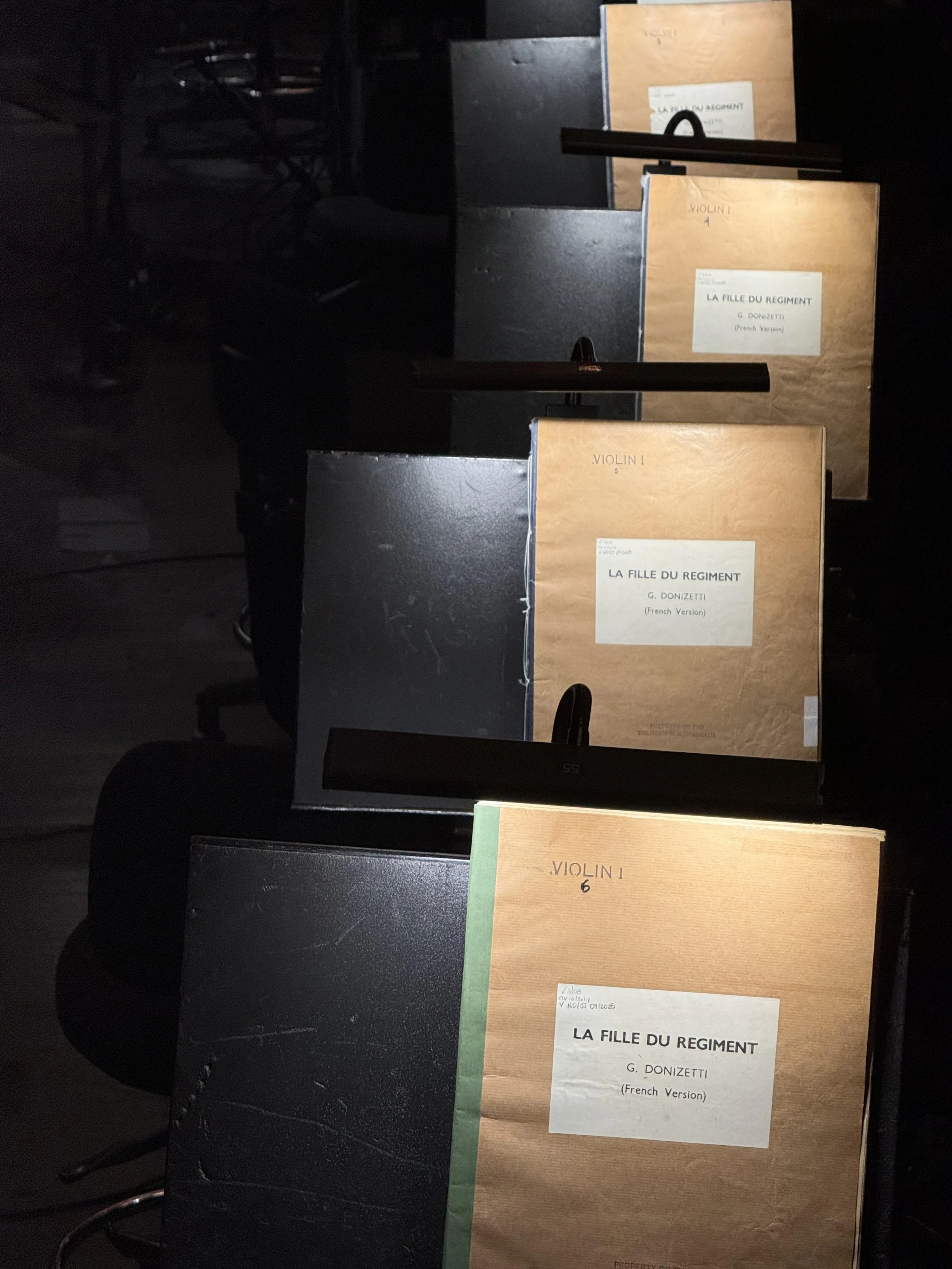
Donizetti’s La Fille du Régiment, which premiered in 1840, opened at the Met Opera on 10.17.2025. Refined and flexible overture. The strings flowed in a legato unlike Mozart or Bellini—light, supple, smooth as silk. Under Sagripanti’s brushwork, the Met Orchestra’s colors spread like a live fresco on an autumn night in New York.
Read More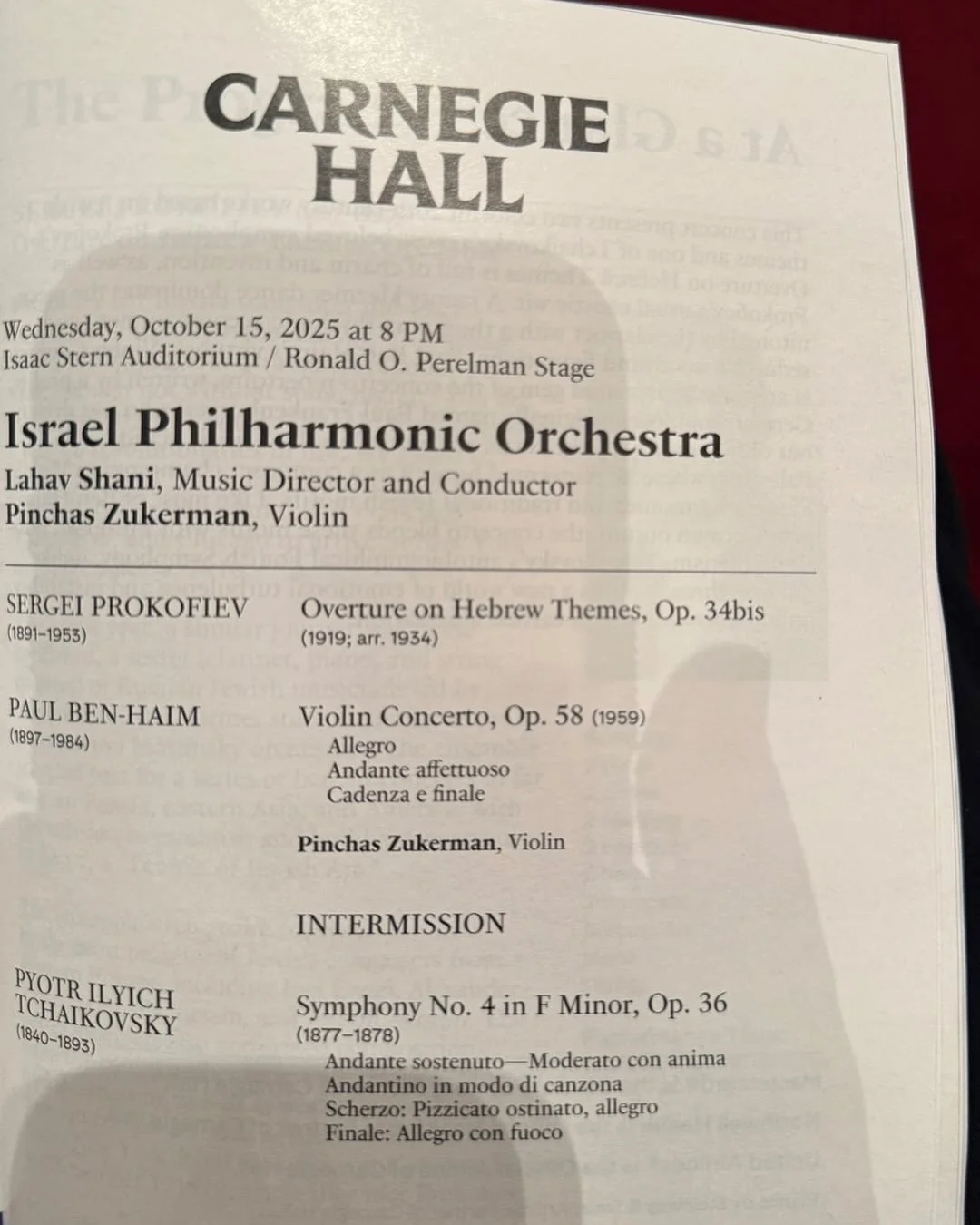
2nd day Israeli and Shani at Carnegie Hall
The Israel Philharmonic Orchestra and Lahav Shani’s second Carnegie Hall concert on October 16, 2025, opened with Bernstein’s Halil (1981), a haunting memorial to a young flutist killed in war. Principal flutist Guy Eshed’s faint singing and scraping sounds intensified the music’s atonal and tonal shifts, evoking Hindemith, Berg, and postwar American composers, blending menace, hope, and prayer. A silent tribute followed the final non-vibrato flute note. Ben-Haim’s Symphony No. 1 then burst forth with Wagnerian power in the strings, revealing Mahlerian structure infused with Yemeni prayers, marches, and oriental rhythms. The lyrical second movement recalled Adagietto, while a lively tarantella showcased violist Dmitri Ratush’s dark tone. Tchaikovsky’s Symphony No. 5 closed the evening with a heavy, lingering opening and surging brass power, as Shani led the orchestra through intensifying repeated themes, building to a feverish, triumphant finale.
Read More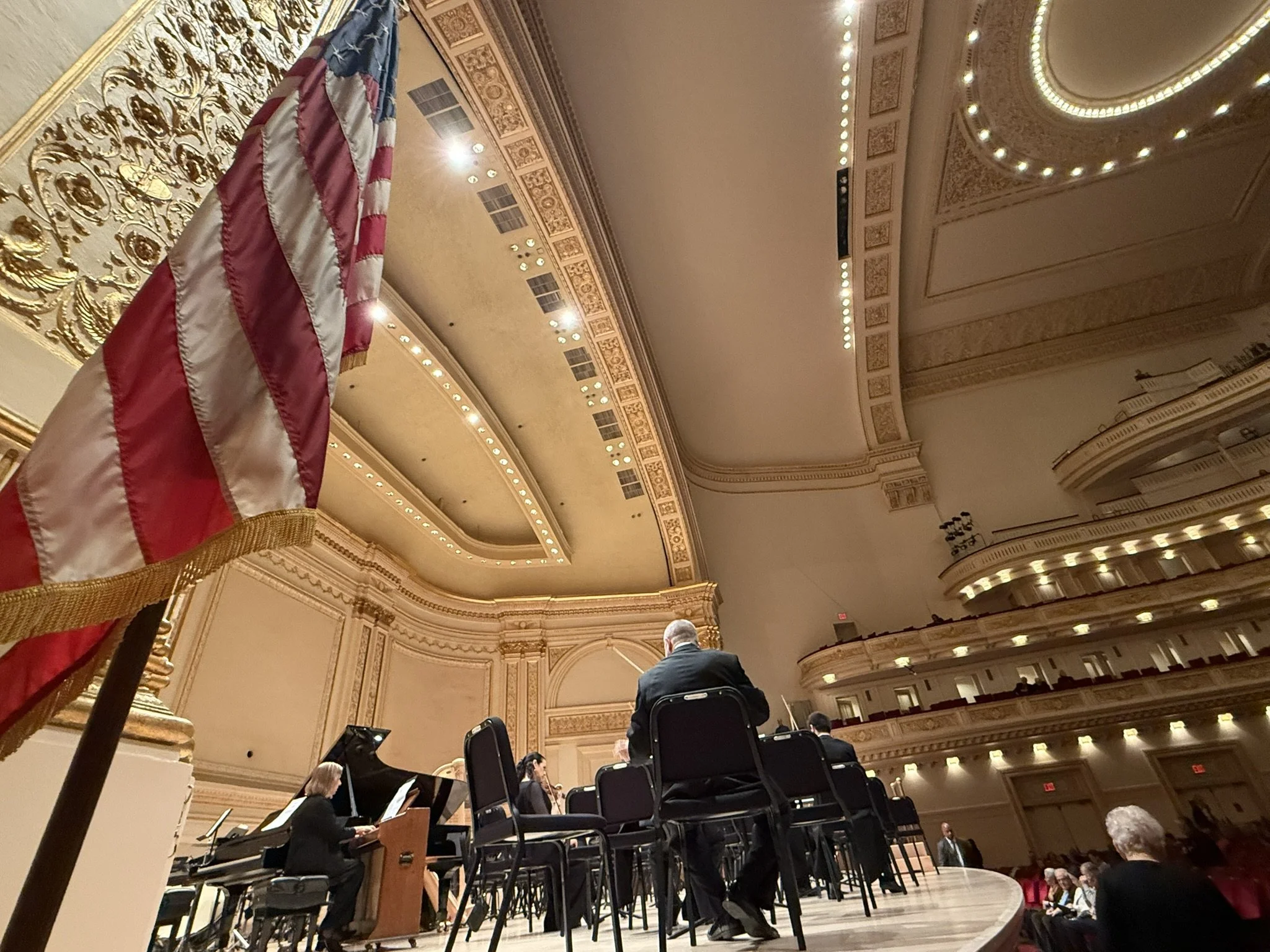
Israeli and Shani at Carnegie Hall
The Israel Philharmonic and Lahav Shani at Carnegie Hall on 10.15.2025. Each one, thoroughly prepared and crafted with exquisite attention to detail, was an absolute joy. This is not only their deep understanding of the music, of the conductor, and of each other, but also the sense that they must exchange ideas, sometimes even clash, and ultimately build something together. I felt that they all spoke the same language, no matter what they were playing. All was playing for the others, and everyone was playing for one.
Read More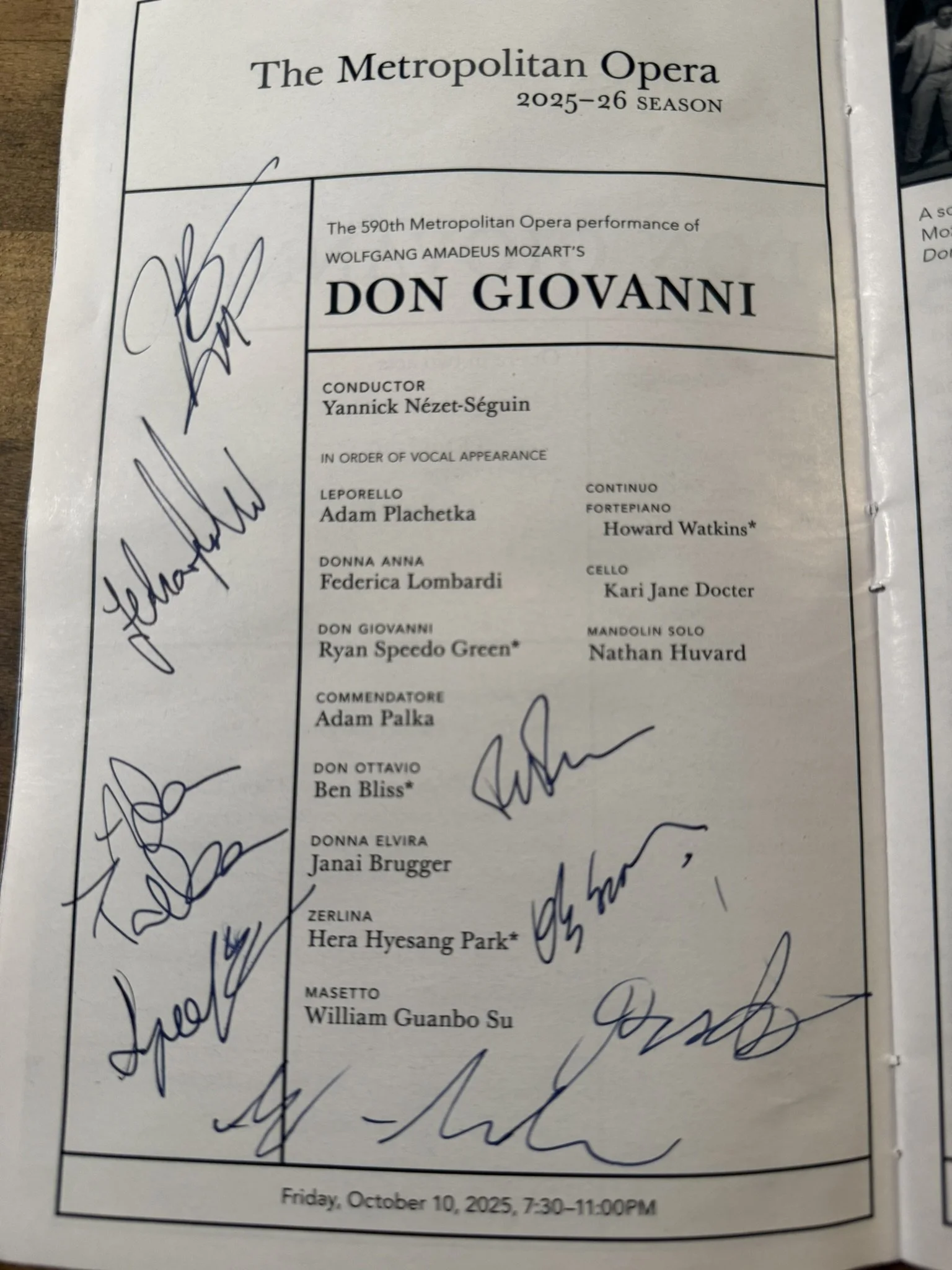
Autographed by from left top, Janai Brugger, Federica Lombardi, Adam Palka, Ryan Speedo Green, right top, Ben Bliss, Hera Hyesang Park, Benjamin Bowman, and Milan Milisavljević
Met Don Giovanni 6th
I saw the 6th performance of Don Giovanni at the Met. Compared to the first performance, the orchestra’s more polished, period-informed approach felt intimate, light, and like a playful conversation. Against this backdrop, the singers’ refinement and subtle humor allowed Mozart’s modernity to shine at the Met. From beginning to end, the music was alive—overflowing with vitality. The texture of the orchestra’s sound was completely different when the Commendatore was alive versus after he was killed. The orchestra masterfully distinguished between a human brimming with life and one on the verge of death. When I focused on the singers, the orchestra’s sound came through even more vividly.
Read More
Crystal resonance, Chelsea Knox, Flute at Met Oprchestra on 1st La Sonnambula.
Villazón’s La Sonnambula
Rolando Villazón’s production depicts the village as strict and repressive, using minimalist sets and Alpine projections to contrast Amina’s sleepwalking freedom with societal pressures when awake. Nadine Sierra skillfully portrayed both her liberated and vulnerable sides, while the orchestra mirrored this with bright string tuttis for waking scenes and ethereal textures for dreamlike moments, emphasizing Amina’s innocence and marginalization.
Read More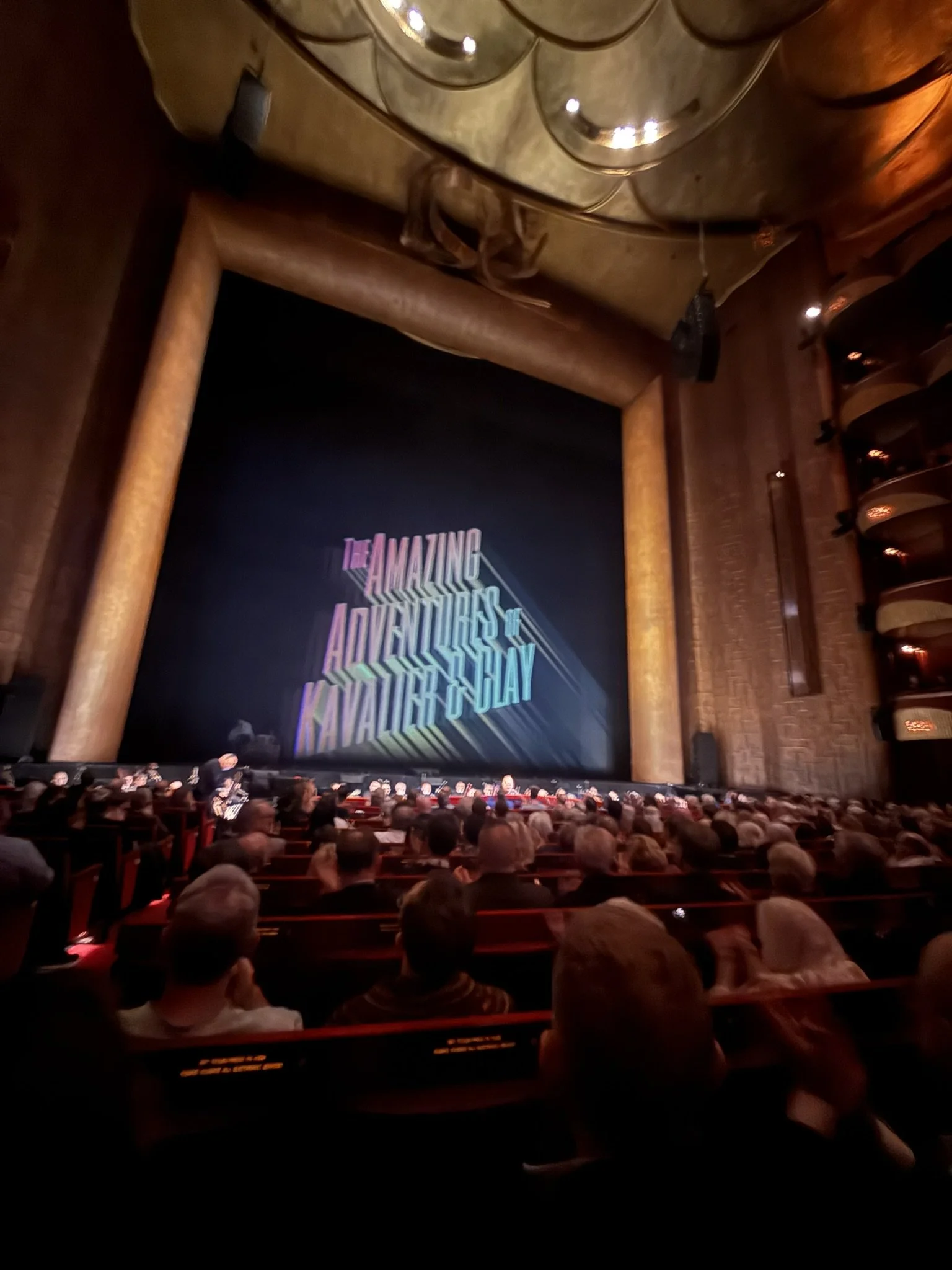
Hung on! Met Opera's active speaker
Mason Bates hung speakers from the ceiling of the world’s largest opera house, which convinced someone who had enjoyed Detroit, German techno, or other electronica that a fine symphonic experience was the event. The sound filled the vast space of the Met. Met orchestra, including Wagner tubas, was layered with electronics. Speakers were positioned on both sides of the stage and from the ceiling, blending electronic sound as if to create a new species, resonance, and power in the orchestra. Whereas I usually find PA effects distracting, they were intricately integrated. For someone like me, who has enjoyed both classical and electronic music, it was a new sensation to experience The Amazing Adventures of Kavalier & Clay at the Metropolitan Opera.
Read More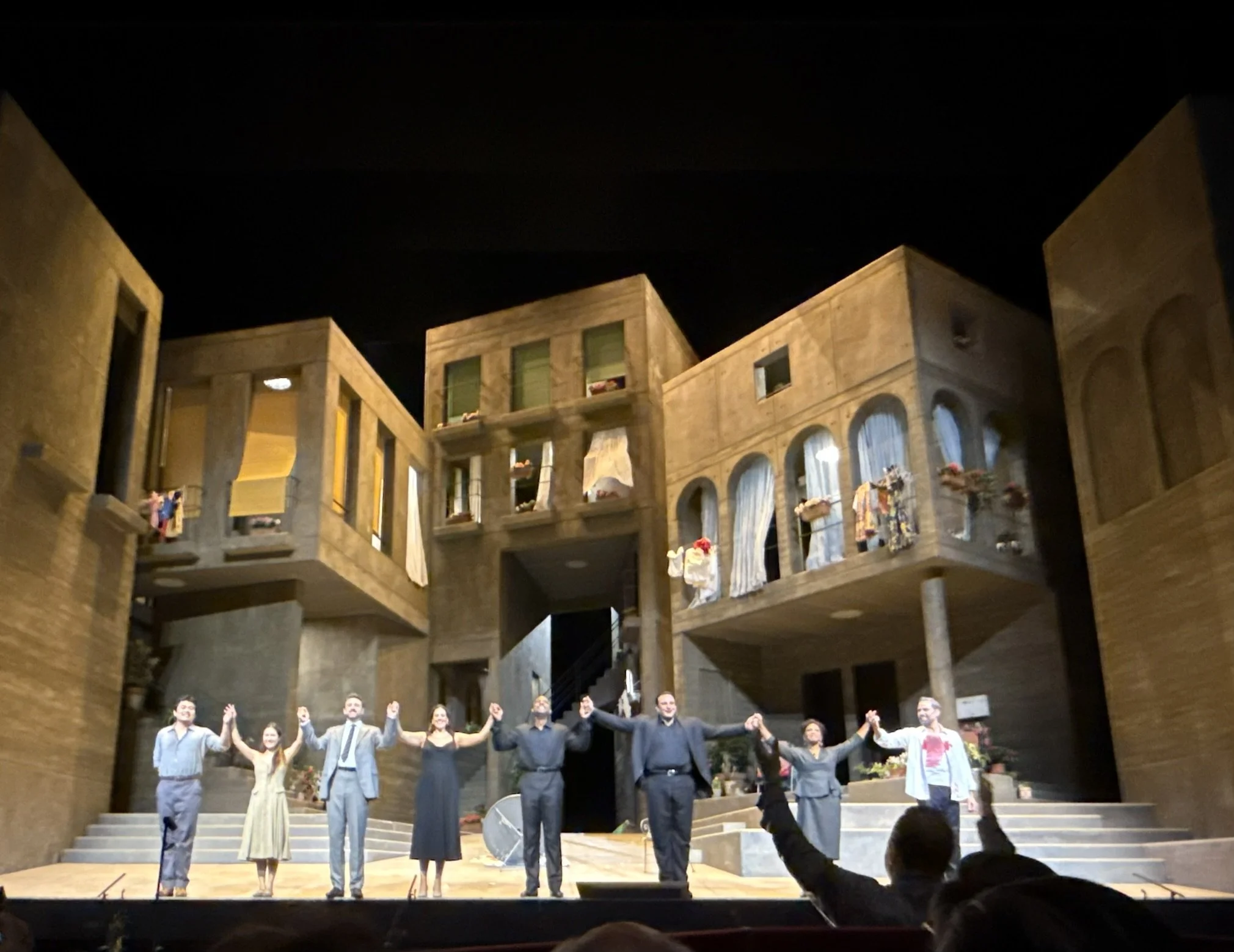
Music Talks / Don Giovanni at Met
Mozart’s masterpiece comes vividly to life. Emotion infused the score, where even a sigh became music, and the Met orchestra and singers revealed the complexity of human ties. Yannick Nézet-Séguin let Mozart’s voice emerge freshly, alive with individuality and truth.
Read More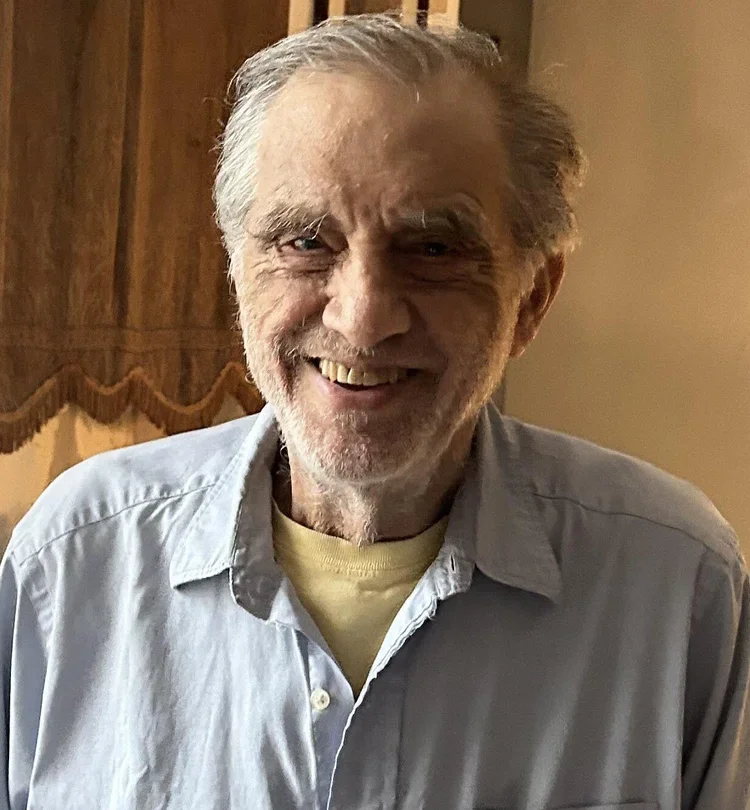
Inward Journey by Philip Ellis Foster
Although the sound directions are random, each line of notes continues at regular intervals. Each line repeats small crescendos and decrescendos, and while composed of limited elements, the notes are placed with high precision yet randomly. Double stops make me perceive two distinct characters, and the harmonics follow a consistent pattern. As these sound lines pass through, the combination of scattered notes and the regularity of the harmonics prevents any sense of déjà vu in thought, dissolving tension and expectation, and creating a natural space and quiet openness in the mind. This is healing for the heart and discipline for the mind that cleans up my brain trash.
音の方向はばらばらでありながら、それぞれの音のラインは一定の間隔で続く。各ラインは小さなクレッシェンドとデクレッシェンドを繰り返し、要素は少ないが、音は高い精度で、かつランダムに配置されている。ダブルストップをかけると、音から二つの異なるキャラクターを同時に感じることができ、ハーモニクスには一定のパターンが存在する。こうした音のラインが自分の中を通り過ぎると、ばらばらに置かれた音と規則的なハーモニクスの組み合わせによって思考に既視感は生まれず、緊張や期待が解け、心に自然な余白と静かな開放感が生まれる。それはまるで脳にたまったごみを取り除いてくれるような感覚。この方の近くにいると気配に圧倒される。気取りがなくユーモアに溢れ、しかしとても厳しい目で、温かく作品を眺めたり楽しんだりしている。
"Inward Journey" by Philip Ellis Foster, performed by the JACK Quartet
Recommended work : C-A-G-E-D
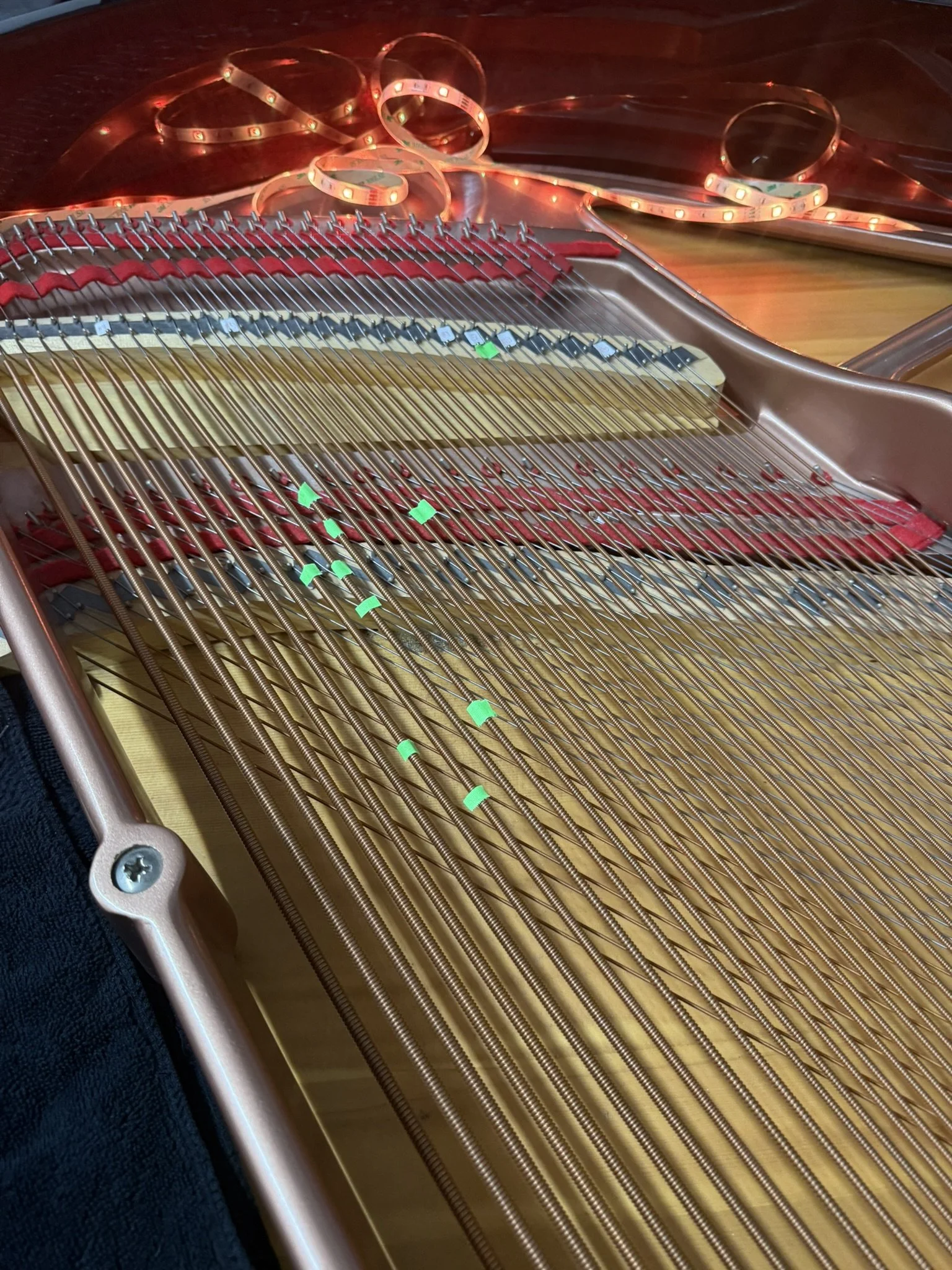
The house of contemporary, Yarn/Wire’s Bushwick studio.
On the way there, Mäkelä’s Berlioz is playing in my head. Yarn/Wire’s studio in Bushwick, Brooklyn, where they've been fifteenth year. The program began with Igor Santos’s living to fall [music and rain]. As fragments of video unfolded alongside live sound, the consciousness of the four performers made the images—rain, shattering glass—appear vividly.
Read More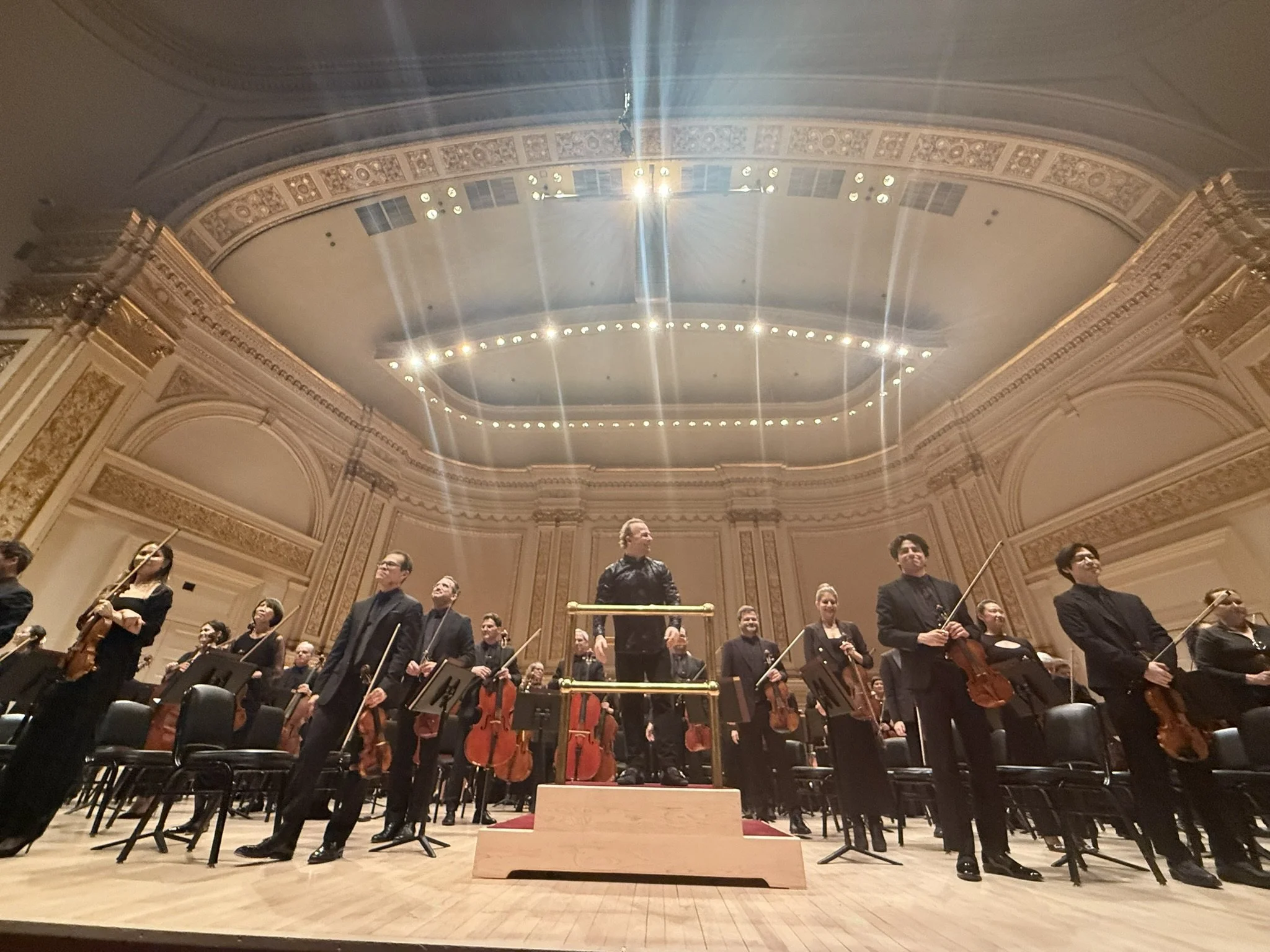
2025 Concerts
Attendance that were not in my previous reviews, including Aida at Met Opera, Nina Stemme, Soprano, and Roland Pöntinen, Piano, at Carnegie Hall, Juilliard415 and Lionel Meunier, Pierre-Laurent Aimard, Piano at Carnegie Hall, Antony and Cleopatra at Met Opera, Evgeny Kissin and Friends at Carnegie Hall, Wagner’s Tristan and Isolde, Yannick Nézet-Séguin at the Philadelphia Orchestra.The Met Orchestra at Carnegie Hall
Read More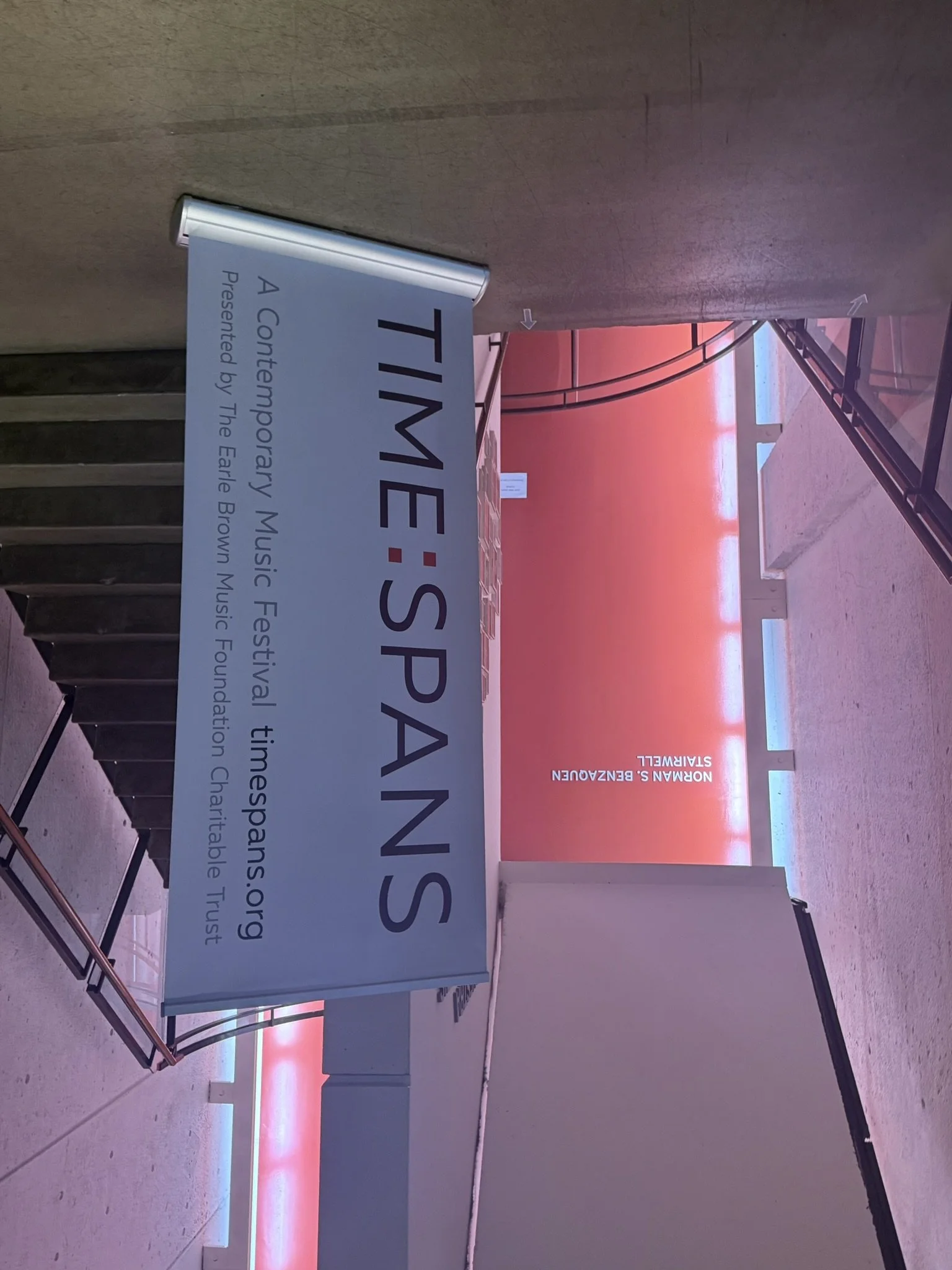
TIME:SPANS 2025
Attended four concerts at the 2025 TIME:SPANS Contemporary Music Festival in NYC, featuring Ensemble Nikel, Christopher Trapani, Bekah Simms, and more, showcased cutting-edge sound art and offered a glimpse of the present and future of global contemporary music.
Read More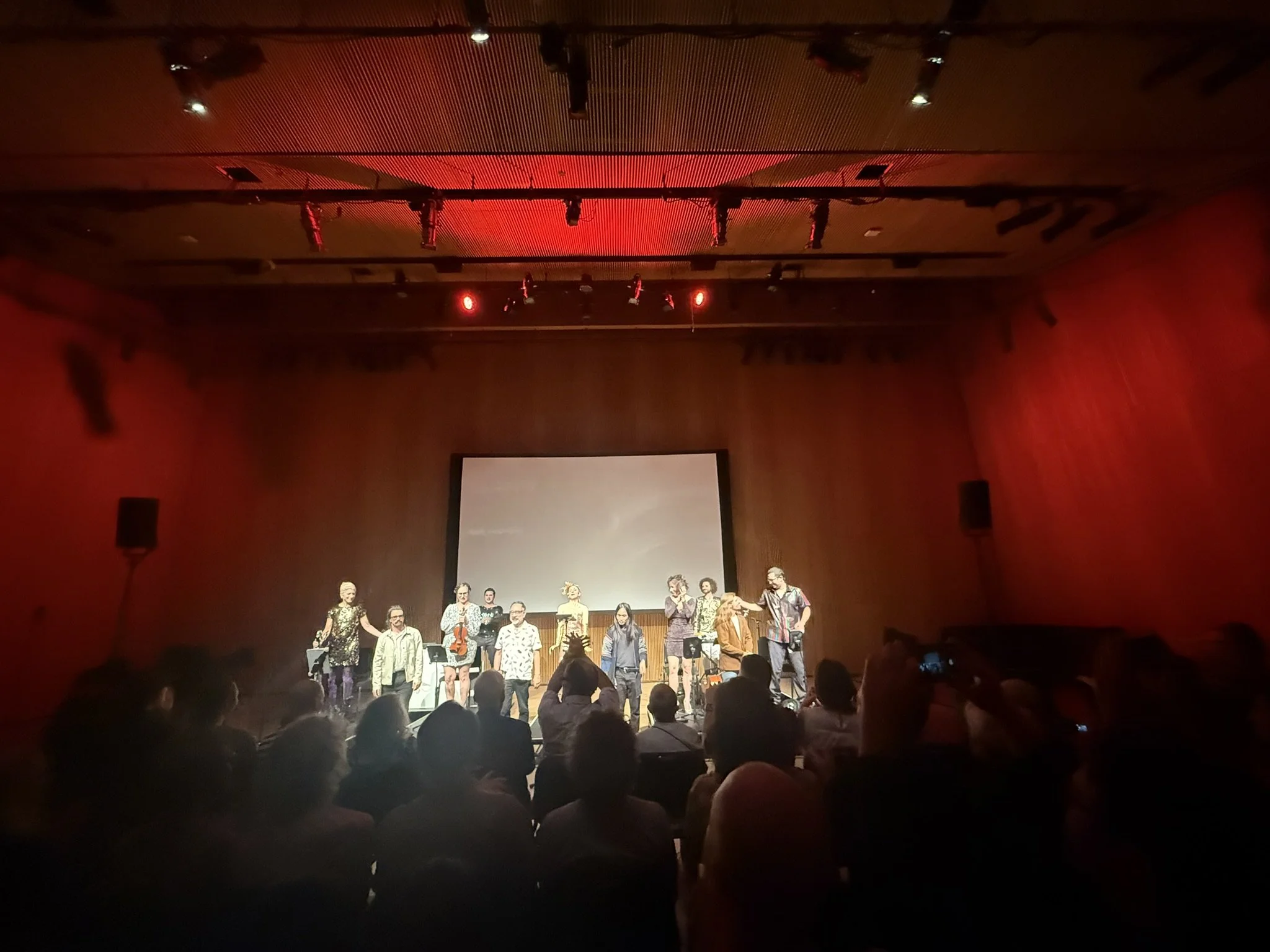
From the left, Lori Freedman (Bass Clarinet), Gabriel Dufour-Laperrière (Sound Engineer), Geneviève Liboiron (Violin), Daniel Aniez García (Piano), Steven Kazuo Takasugi (Musical Direction), Sarah Albu (Soprano), Huei Lin (Video Artist), Emilie Girard-Charest (Cello), Noam Bierstone (Percussion, and production leader), Jeff D’Ambrosio (Lighting), and Felix Del Tredici (Bass Trombone) TIME:SPANS 2025
Il Teatro Rosso - 赤い劇場
Montreal's Red Theater merges poetry, sound, video, and performance into a total artwork. Takasugi and Huei Lin’s score, performed by seven vaudevillians, blends chaotic microtones with vivid visuals, dissolving illusions and evoking infinity. At Time: Spans 2025, the ensemble, led by Noam Bierstone, revealed mastery over time, space, and perception.
Read More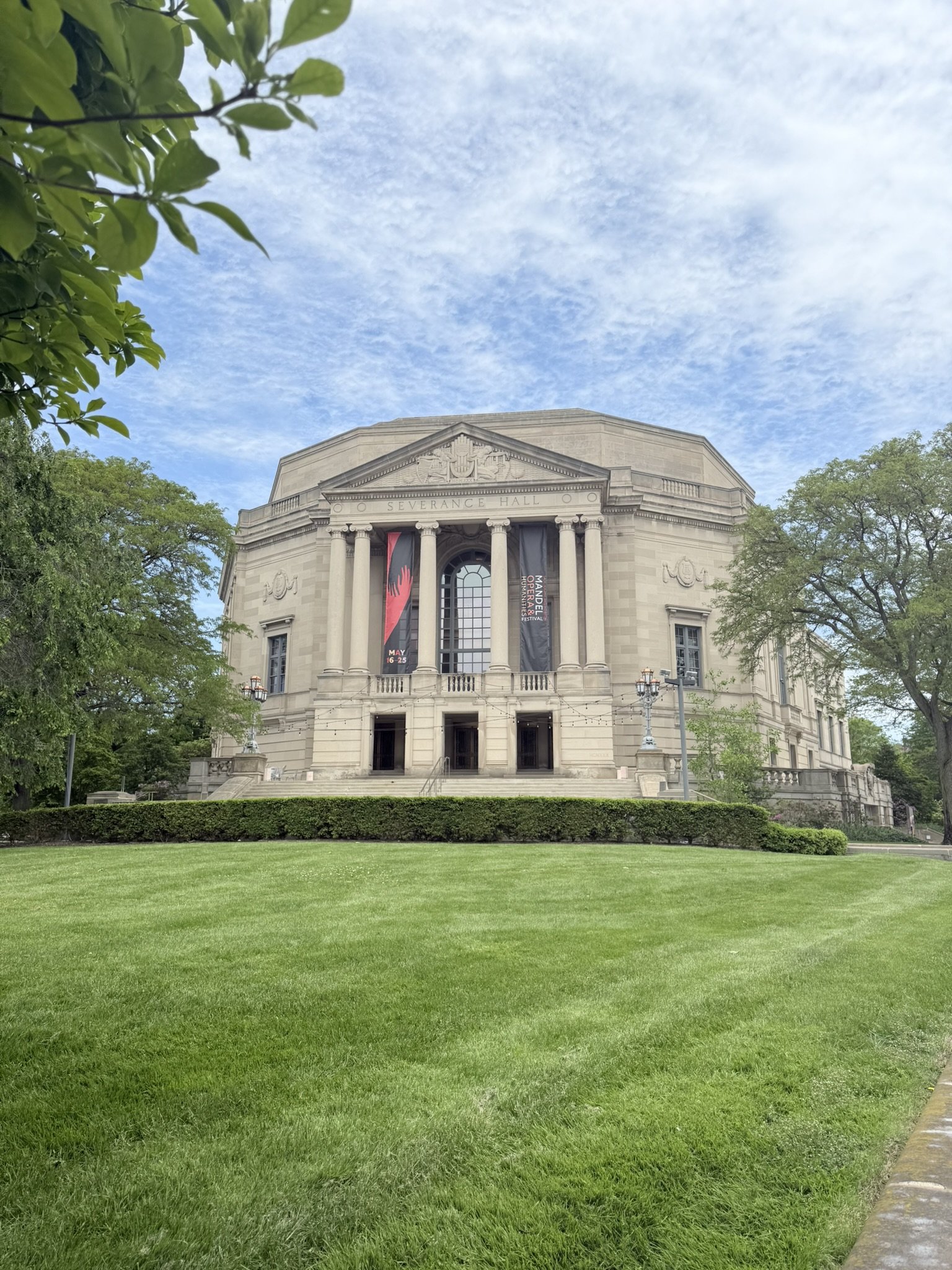
Severance Hall, Cleveland
THE ROOTS OF FORGIVENESS, Cleveland Orchestra at Severance Hall, Ohio
The Cleveland Orchestra under Franz Welser-Möst performed Janáček’s Jenufa at Severance Hall (May 25). With Nina Stemme as Kostelnička, the music’s raw motifs and immediacy revealed Janáček’s deep empathy for ordinary lives. Unlike New York, the intimacy of Severance Hall revived the author’s youthful passion for music.
Read More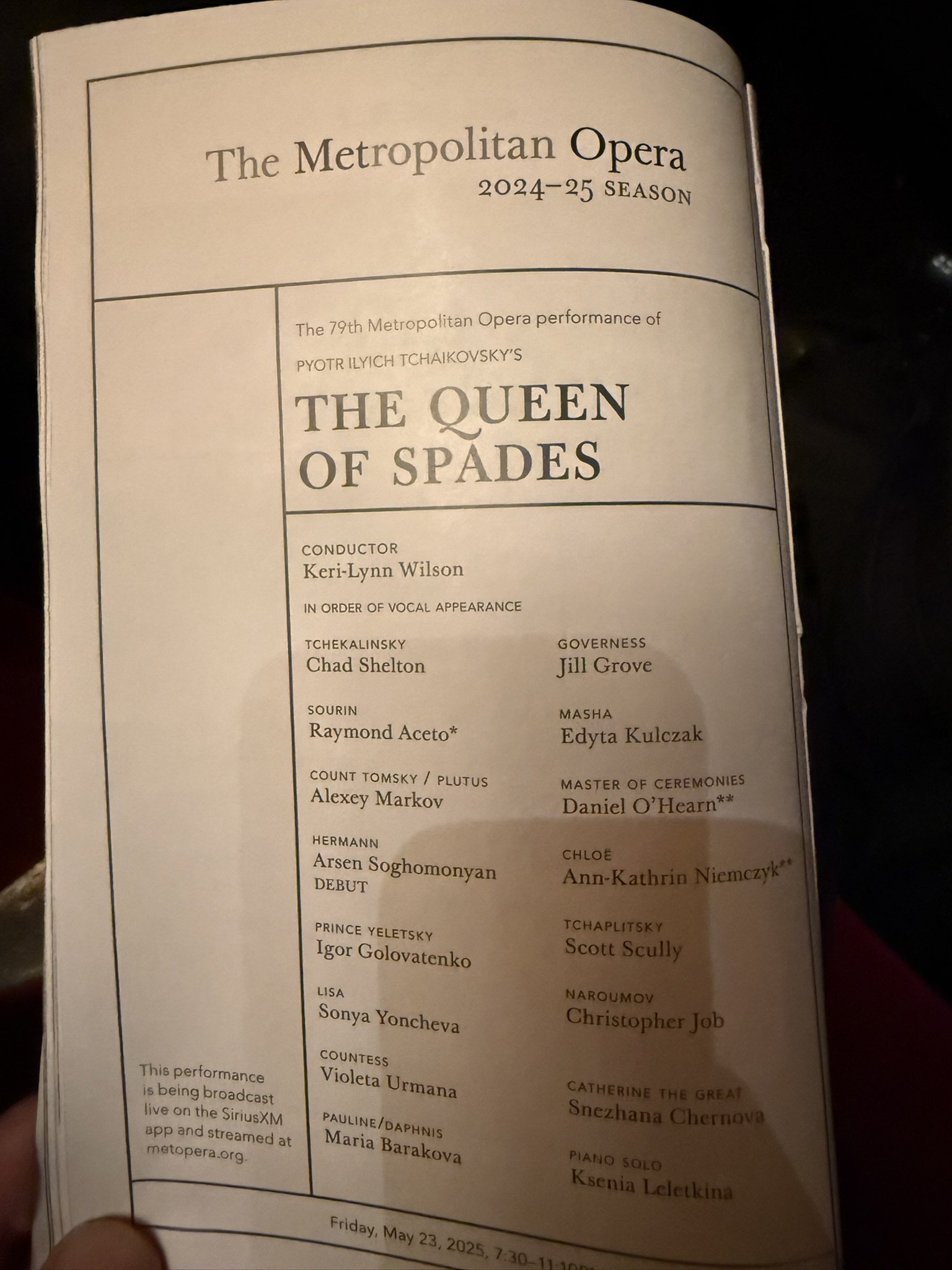
Tchaikovsky's Salvation, Queen of Spades at Met Opera
At the Met’s Queen of Spades, Herman, consumed by gambling, betrays Lisa to learn the Countess’s secret, leading to Lisa’s suicide and his own. Tchaikovsky’s drama blends corrupted aristocracy, aching folk songs, and Herman’s tormented passions. Stunning contrasts of love, riveting choruses, and Sonya Yoncheva’s tragic Lisa made it unforgettable.
Read More
New Salome at The Met
Claus Guth’s new Salome at the Met reimagines Strauss’ 1905 shocker with seven Salomes, tracing abuse, obsession, and fractured identity. Transparent orchestral colors heighten the perverse, ecstatic drama, while Elsa’s portrayal adds compassion over pure decadence. Childhood, violence, and desire fuse in a haunting 21st-century vision.
Read More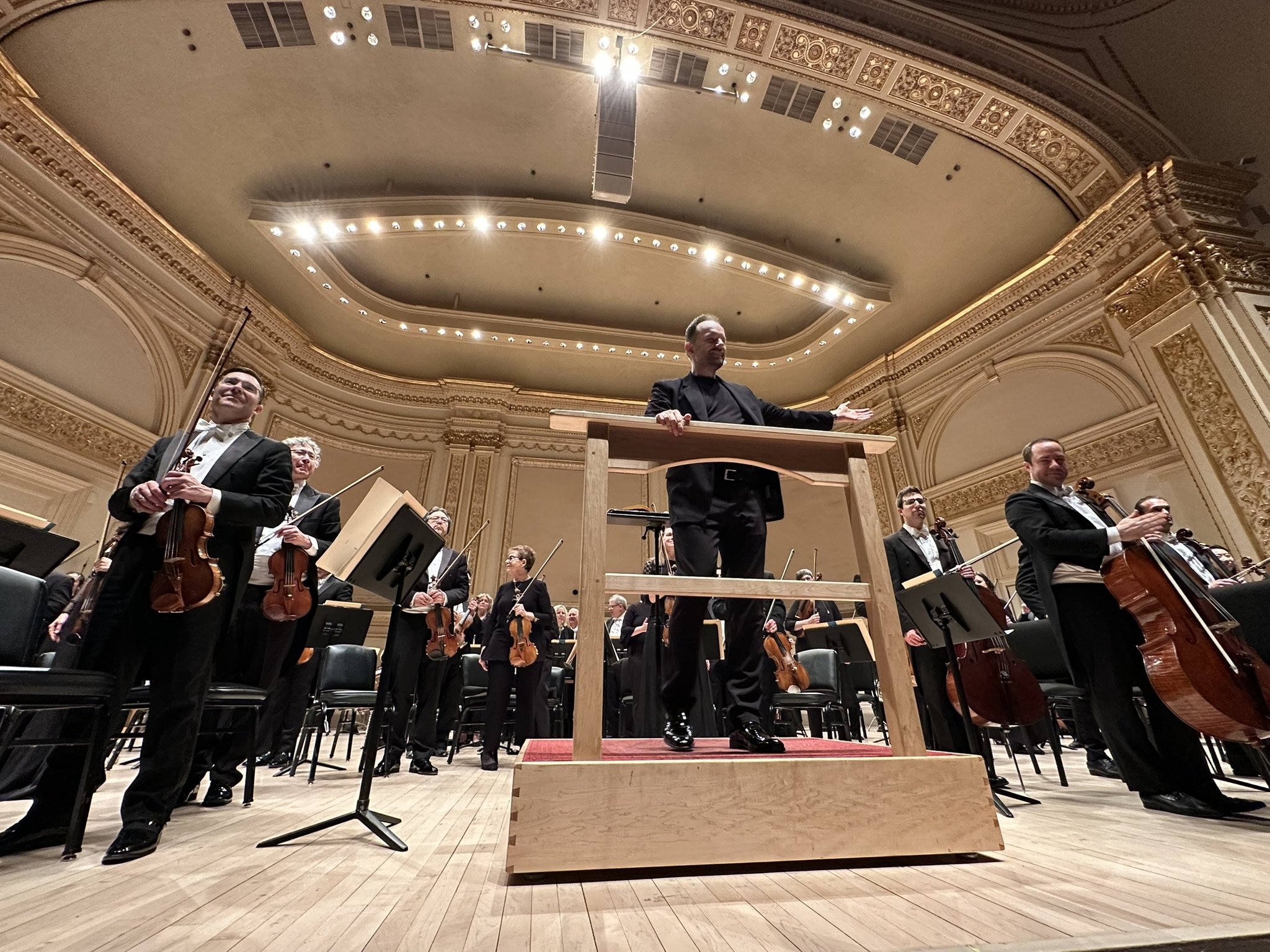
Nelsons and Boston Symphony tell Shostakovich's Nabat
At Carnegie Hall, the BSO and Andris Nelsons performed an all-Shostakovich program with Yo-Yo Ma in the Cello Concerto No. 1 and the Symphony No. 11. Before playing, Ma said, “We play Shostakovich so that no death is ever just a statistic.” The concerto’s D-S-C-H motif, ironic colors, and Russian soul resonated deeply, honoring the composer’s legacy.
Read More
Boston Symphony and Nelsons tell Shostakovich's magic spel at Carnegie Hall
4.23.2025. Andris Nelsons led the BSO with Mitsuko Uchida in Beethoven’s Piano Concerto No. 4, her quiet intensity evoking a sense of struggle, fragility, and resolve. Shostakovich’s final Symphony No. 15 followed—whimsical, grotesque, and haunted by death. The concert felt less about form than shared spirit, Boston’s essence shining through.
Read More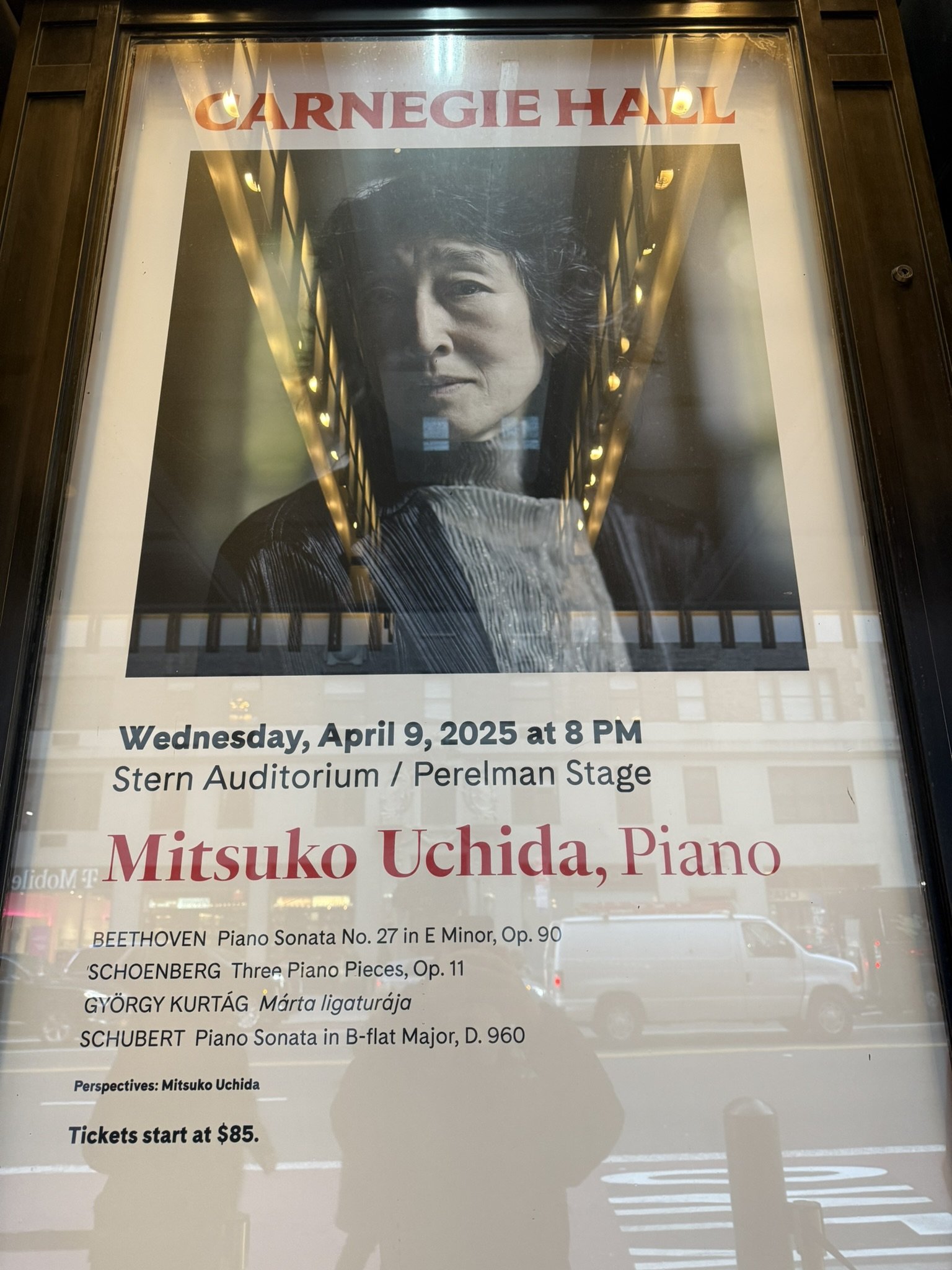
Mitsuko Uchida Carnegie Hall Recital
Pianist Uchida's recital (Apr 9) paired Beethoven’s Sonata Op.90, Schoenberg’s atonal Op.11, Kurtág’s elegy, and Schubert’s final Sonata D960. With clarity and depth, she traced battles of head and heart, Schoenberg’s freedom, Kurtág’s grief, and Schubert’s fragile late beauty—an intimate journey across centuries of sound.
Read More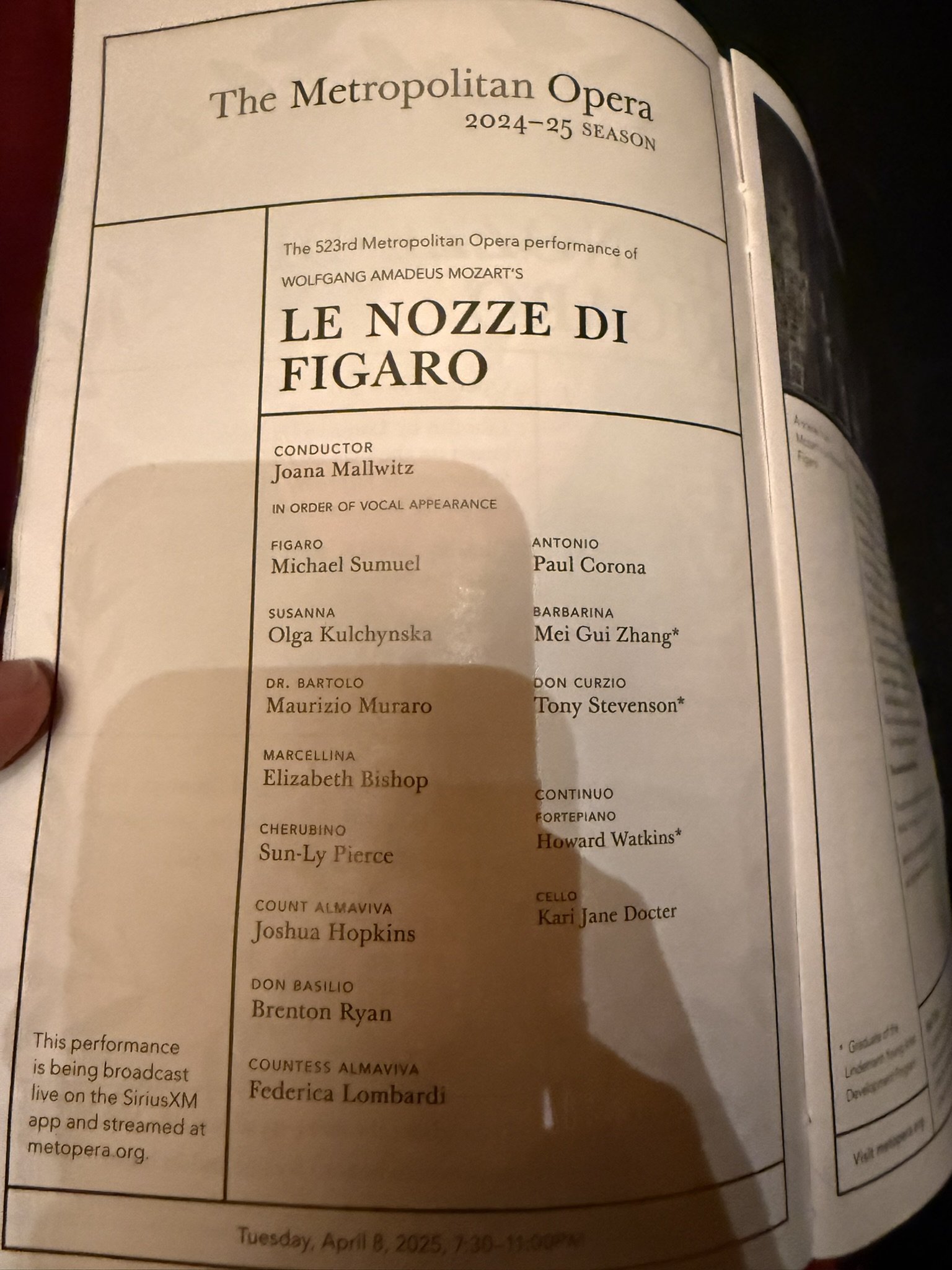
Joana Mallwitz - Metropolitan Opera debut by true globalist comedy
At the Met, Mozart’s Le nozze di Figaro reveals 18th-century aristocratic life through human drama and elegant polyphony. Under Joana Mallwitz, the orchestra’s dynamics highlight solos and recitatives, while a diverse cast portrays love, jealousy, and forgiveness. The Count’s apology brings a moving coda, blending humor, emotion, and harmony.
Read More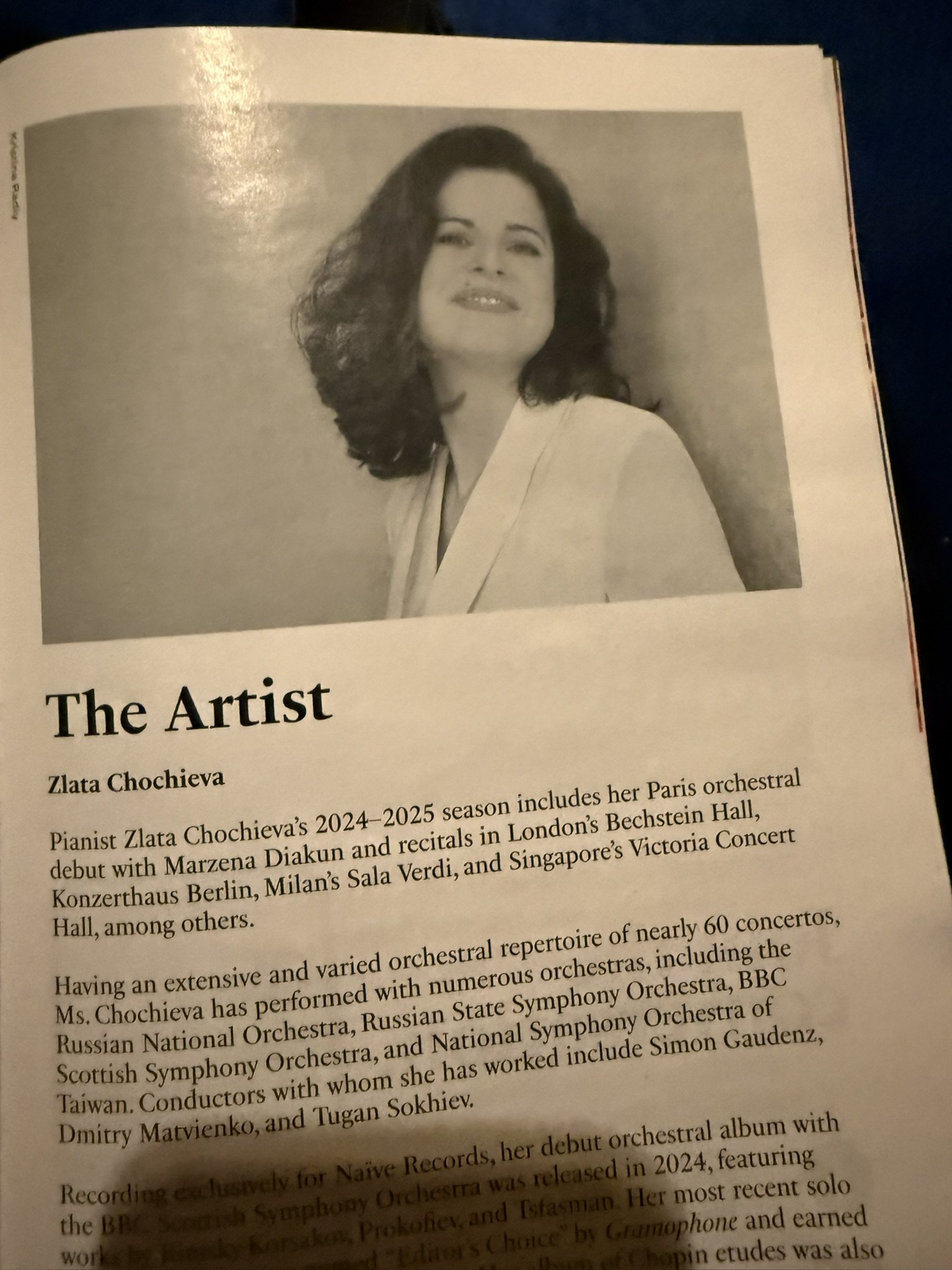
Chochieva's Carnegie Debut
Zlata Chochieva’s Carnegie Hall debut (Apr 2) showcased Bach, Schumann, Brahms, Rachmaninoff, and Mendelssohn. Her delicate tone, deep expression, and nuanced control brought out both youthful intensity and mature depth. The recital, capped by Rachmaninoff and Villa-Lobos encores, was a masterful and memorable debut.
Read More