

The LA Phil’s 2024–2025 season features Robin Ticciati with Lisa Batiashvili (Beethoven Violin Concerto, Dvořák Symphony No. 8), Susanna Mälkki (Schubert “Unfinished,” Saariaho HUSH, Strauss), Gustavo Dudamel with Sasha Cooke (Mahler songs and Symphony No. 5), and Joana Mallwitz with Augustin Hadelich (Tchaikovsky Violin Concerto, Schubert Symphony No. 9). Emmanuelle Haïm leads Le Concert d’Astrée in Handel’s The Triumph of Time and Disillusion, Esa-Pekka Salonen with Pierre-Laurent Aimard explores Boulez, Debussy, and La mer, and Evgeny Kissin gives a solo recital of Beethoven, Chopin, and Shostakovich.
Read More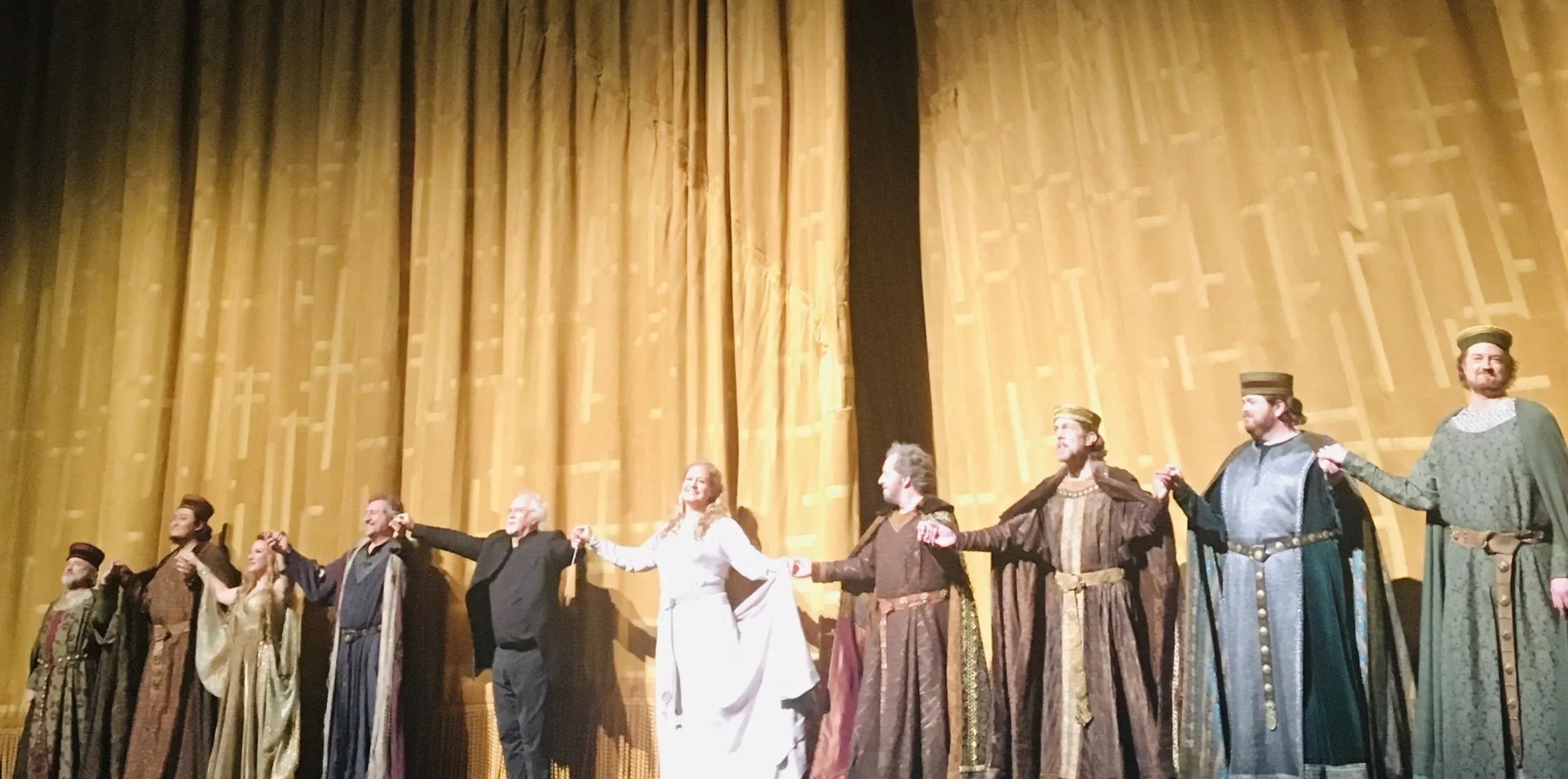
Original image by There Stands the Glass.
Tannhauser, the old-school at Met, proves just as presentable — and arguably more necessary in 2023
Schenk’s 2023 Met production of Tannhäuser showcased a thrilling contest of skill among singers, with each performer elevating the others. Andreas Schager (Tannhäuser) ranged from joy to despair; Christian Gerhaher (Wolfram) conveyed elegance and warmth; Ekaterina Gubanova (Venus) thrilled with her voluptuous tone; Elza van den Heever (Elisabeth) impressed with luminous, effortless singing. Donald Runnicles led the orchestra with color and clarity. The Pilgrims’ Chorus was overwhelming, leaving a lasting impression.
Read MoreBeglückt darf nun dich, o Heimat, ich schauen -Tannhauser
Beglückt darf nun dich, o Heimat, ich schauen,
und grüssen froh deine lieblichen Auen;
You can now be happy, O homeland, I look,
and greet your lovely meadows with joy;
nun lass' ich ruhn den Wanderstab,
weil Gott getreu ich gepilgert hab'.
now I'll let the walking stick rest,
because I have made a pilgrimage true to God.
Durch Sühn' und Buss' hab' ich versöhnt
den Herren, dem mein Herze frönt,
I have reconciled through atonement and repentance
the Lord, in whom my heart indulges,
der meine Reu' mit Segen krönt,
den Herren, dem mein Lied ertönt.
who crowns my repentance with blessing,
the Lord to whom my song sounds.
Der Gnade Heil ist dem Büsser beschieden,
er geht einst ein in der Seligen Frieden!
Salvation is granted to the penitent by grace,
He will one day enter blessed peace!
Vor Höll' und Tod ist ihm nicht bang,
drum preis' ich Gott mein Lebelang.
He is not afraid of hell and death,
Therefore I will praise God as long as I live.
Halleluja in Ewigkeit!
Halleluja in Ewigkeit!
O du, mein holder Abendstern - Tannhauser
O du, mein holder Abendstern,
wohl grüsst' ich immer dich so gern:
vom Herzen, das sie nie verriet,
grüss sie, wenn sie vorbei dir zieht,
wenn sie entschwebt dem Tal der Erden,
ein sel'ger Engel dort zu werden!
Oh thou my fair evening star,
I'm always happy to greet you:
from the heart that never betrayed her,
greet her when she passes you,
when she floats away from the valley of the earth,
to become a blessed angel there!
おお、我が美しい宵の明星よ、
いつも喜んでご挨拶させていただきます:
彼女を決して裏切らなかった心から、
彼女があなたとすれ違ったら挨拶してください。
彼女が地の谷から漂っていくとき、
そこで祝福された天使になるために!
Dich, teure Halle -Tannhauser
Dich, teure Halle, grüss' ich wieder,
froh grüss' ich dich, geliebter Raum!
I greet you again, dear Halle,
I greet you with joy, beloved space!
もう一度ご挨拶します、親愛なるハレ、
喜びをもってあなたをお迎えします、最愛の空間!
In dir erwachen seine Lieder,
und wecken mich aus düstrem Traum. -
Da er aus dir geschieden,
wie öd' erschienst du mir!
Aus mir entfloh der Frieden,
die Freude zog aus dir. -
His songs awaken in you,
and wake me from a dark dream. -
Since he left you,
how desolate you seemed to me!
Peace escaped from me,
the joy came from you. -
彼の歌があなたの中で目覚め、
そして暗い夢から私を目覚めさせてください。 -
彼があなたと別れてから、
あなたは私にはなんと寂しいように見えたのでしょう!
平和が私から逃げ出し、
喜びはあなたから来ました。 -
Wie jetzt mein Busen hoch sich hebet,
so scheinst du jetzt mir stolz und hehr;
der dich und mich so neu belebet,
nicht länger weilt er ferne mehr.
As my bosom now heaves high,
you now seem proud and noble to me;
that revitalizes you and me so much,
He no longer lingers far away.
私の胸が今高く盛り上がるにつれて、
あなたは今、私にとって誇り高く高貴に見えます。
それはあなたと私をとても活気づけます、
彼はもう遠くに留まることはありません。
Sei mir gegrüsst! sei mir gegrüsst!
Greetings! Greetings!
こんにちは! こんにちは!
Geliebter, komm! Sieh dort die Grotte - Tannhauser
Geliebter, komm! Sieh dort die Grotte,
von ros'gen Düften mild durchwallt!
Beloved, come! See the grotto there,
Mildly suffused with rosy scents!
愛する人よ、来てください! そこの洞窟を見て、
ほんのりバラの香りが漂います!
Entzücken böt selbst einem Gotte
der süss'sten Freuden Aufenthalt:
Even a god can be delighted
the sweetest joys stay:
神様も喜ぶ
最も甘い喜びが残ります:
besänftigt auf dem weichsten Pfühle
flieh' deine Glieder jeder Schmerz,
soothed on the softest of beds
flee your limbs from every pain,
最も柔らかいベッドで癒されました
あらゆる痛みから手足を逃れ、
dein brennend Haupt umwehe Kühle,
wonnige Glut durchschwell' dein Herz.
let coolness blow around your burning head,
blissful glow swells through your heart.
燃える頭の周りに涼しさを吹き込みましょう。
至福の輝きがあなたの心に広がります
Aus holder Ferne mahnen süsse Klänge,
dass dich mein Arm in trauter Näh' umschlänge:
Sweet sounds remind us from a gentle distance,
that my arm would wrap around you in intimate closeness:
優しい距離から甘い音が思い出させてくれる、
私の腕が親密にあなたを包み込みますように。
von meinen Lippen schlürfst du Göttertrank,
aus meinen Augen strahlt dir Liebesdank: -
from my lips you sip the drink of the gods,
Thanks to you shines from my eyes: -
あなたは私の唇から神の飲み物を飲みます、
あなたのおかげで私の目は輝きます: -
ein Freudenfest soll unsrem Bund entstehen,
der Liebe Feier lass uns froh begehen!
there shall be a celebration of joy for our covenant,
Let us celebrate the celebration of love with joy!
私たちの契約に対する喜びの祝賀が行われます。
愛の祭典を喜びをもって祝いましょう!
Nicht sollst du ihr ein scheues Opfer weihn, -
nein! - mit der Liebe Göttin schwelge im Verein.
You shouldn't offer her a shy victim, -
no! - revel in the association with the love goddess.
彼女に内気な犠牲者を差し出すべきではない -
いいえ! - 愛の女神とのつながりを楽しみましょう。
Mein Ritter! Mein Geliebter! Willst du fliehn?
My knight! My beloved! Do you want to escape?
私の騎士よ! 私の愛する人よ! 逃げたいですか?

Contemporary Artist,Trifonov at New York
He was considered a classical music concert pianist, but just a contemporary artist to me. His live art would fundamentally change New York's commercial art scene, but it was taken place at Carnegie Hall on 12.12.2023.
Hammerklavier sounded like paint being thrown onto a huge canvas.
It was a sound installation that blew away my knowledge and experience.
"Finger is heart", he said in this interview. What I saw was like his spirit through Steinway.
Read More
Bruckner 8th by Julliard Orchestra
Fresh Bruckner 8th by Juilliard Orchestra, conducted by Donald Runnicles. So precious to have their discovery and sensation together under amazing the maestro’s navigation.
Juilliard Orchestra
Donald Runnicles, Conductor
BRUCKNER Symphony No. 8 in C Minor
Read More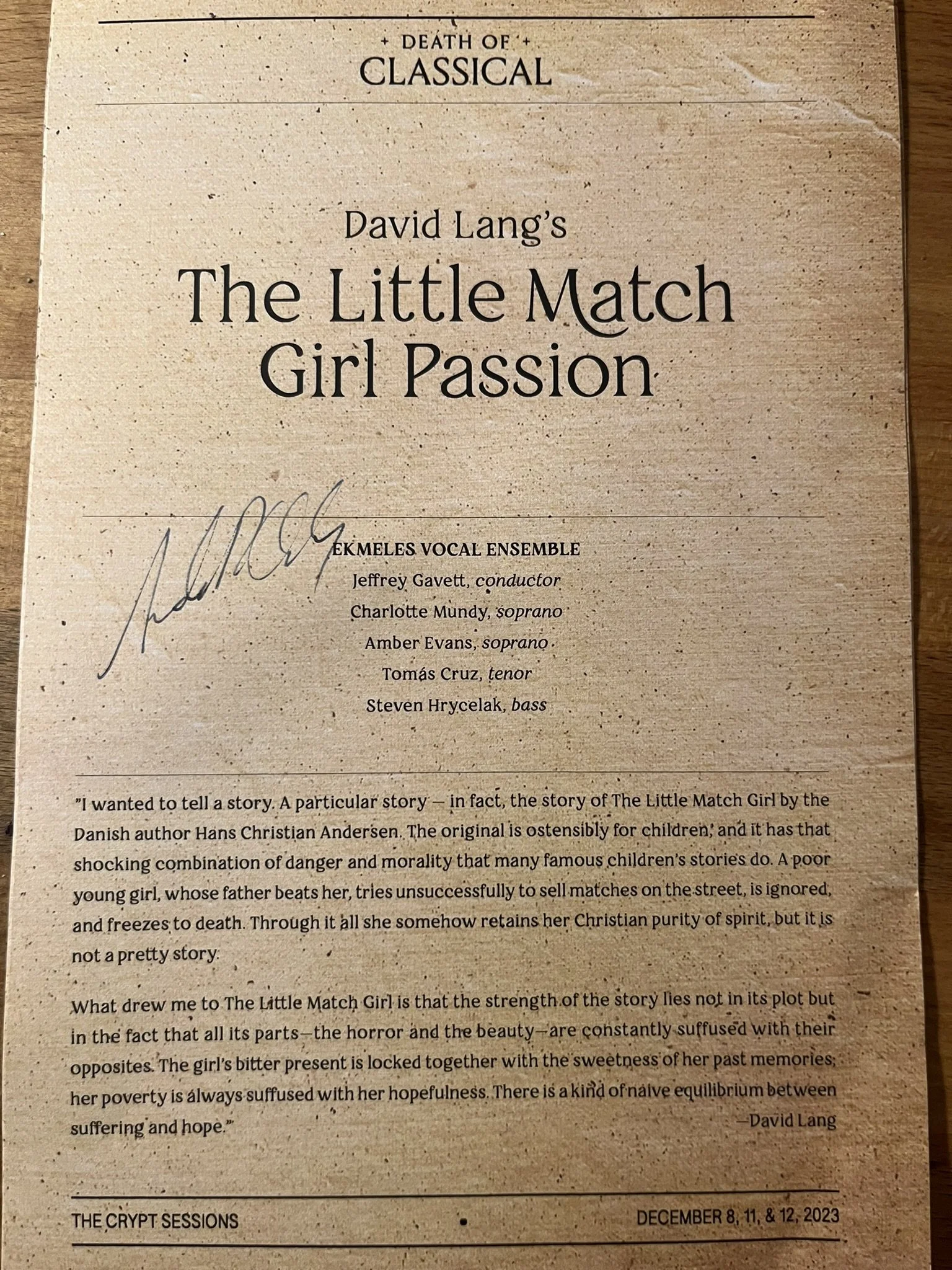
In the Crypt Session
On a December Friday night in a Manhattan church basement, Andrew Ousley curated The Crypt Session, an intimate concert for 40–50 attendees. The program included David Lang’s Four Voces and Minimized Effective Instruments and The Little Match Girl Passion. Every detail of the performance, from the acoustics of the curved stone space to the musicians’ preparation, created a deeply immersive experience, connecting centuries of Western musical development and delivering an unparalleled, profoundly moving sound.
Read More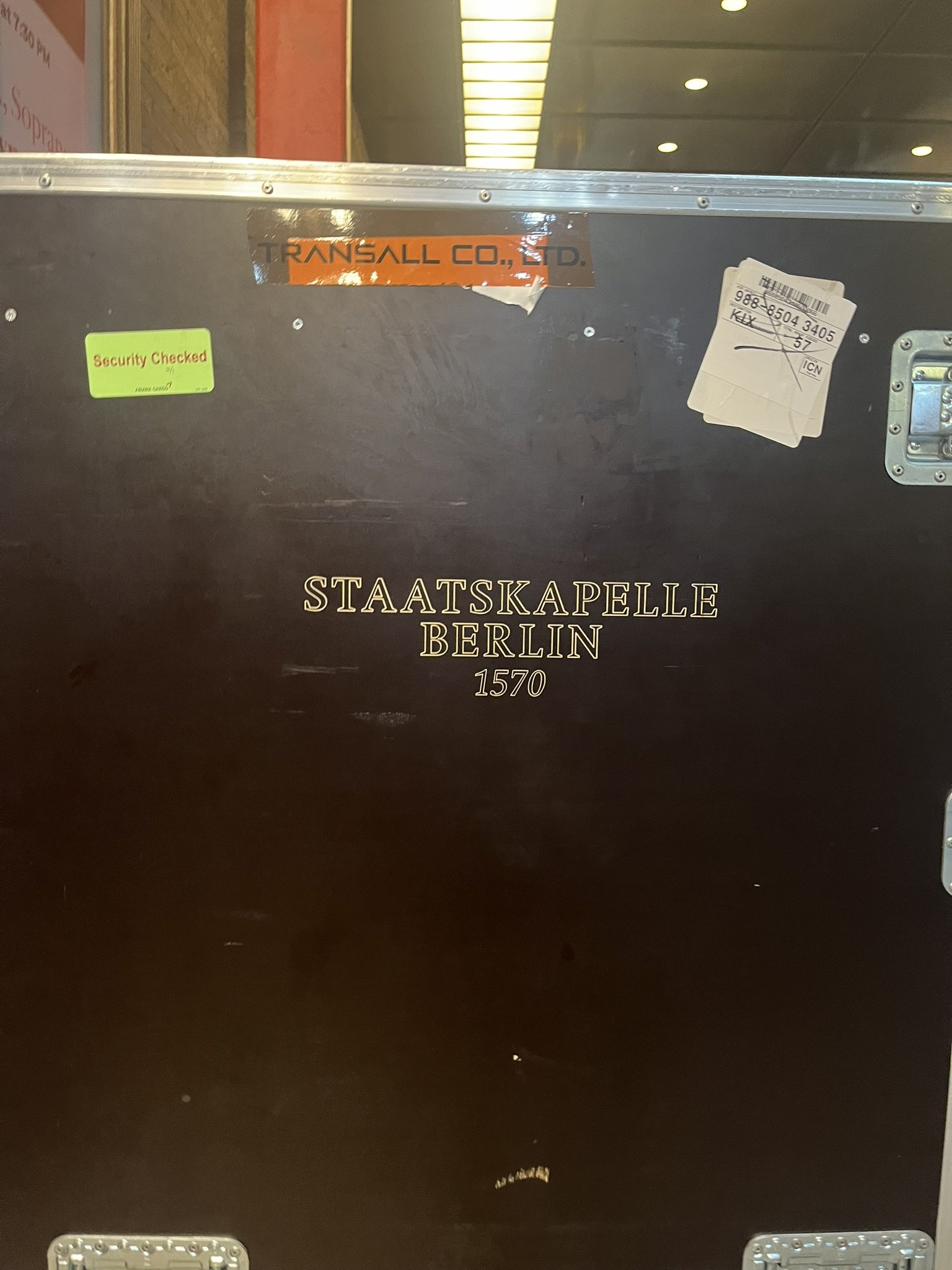
Staatskapelle Berlin's Brahms, "Heart and Mouth and Deed and Life"
Brahms’s music, with its “subtle symmetries,” blends Bach’s structure, Beethoven’s dynamism, Schubert’s lyricism, Schumann’s romanticism, and German folk influences, while reflecting the modernity of Wagner and Strauss and admiration for Baroque composers. At Carnegie Hall, the Staatskapelle Berlin under Yannick Nézet-Séguin performed all Brahms symphonies, offering a rare view of his complete vision. Combining dark sonorities with sensuous brilliance, Brahms’s works—admired even by Schoenberg—came vividly to life through virtuosic solos, choral brass, and delicate wind blends, testifying to both his humanity and the shared artistry of musicians and audience.
Read More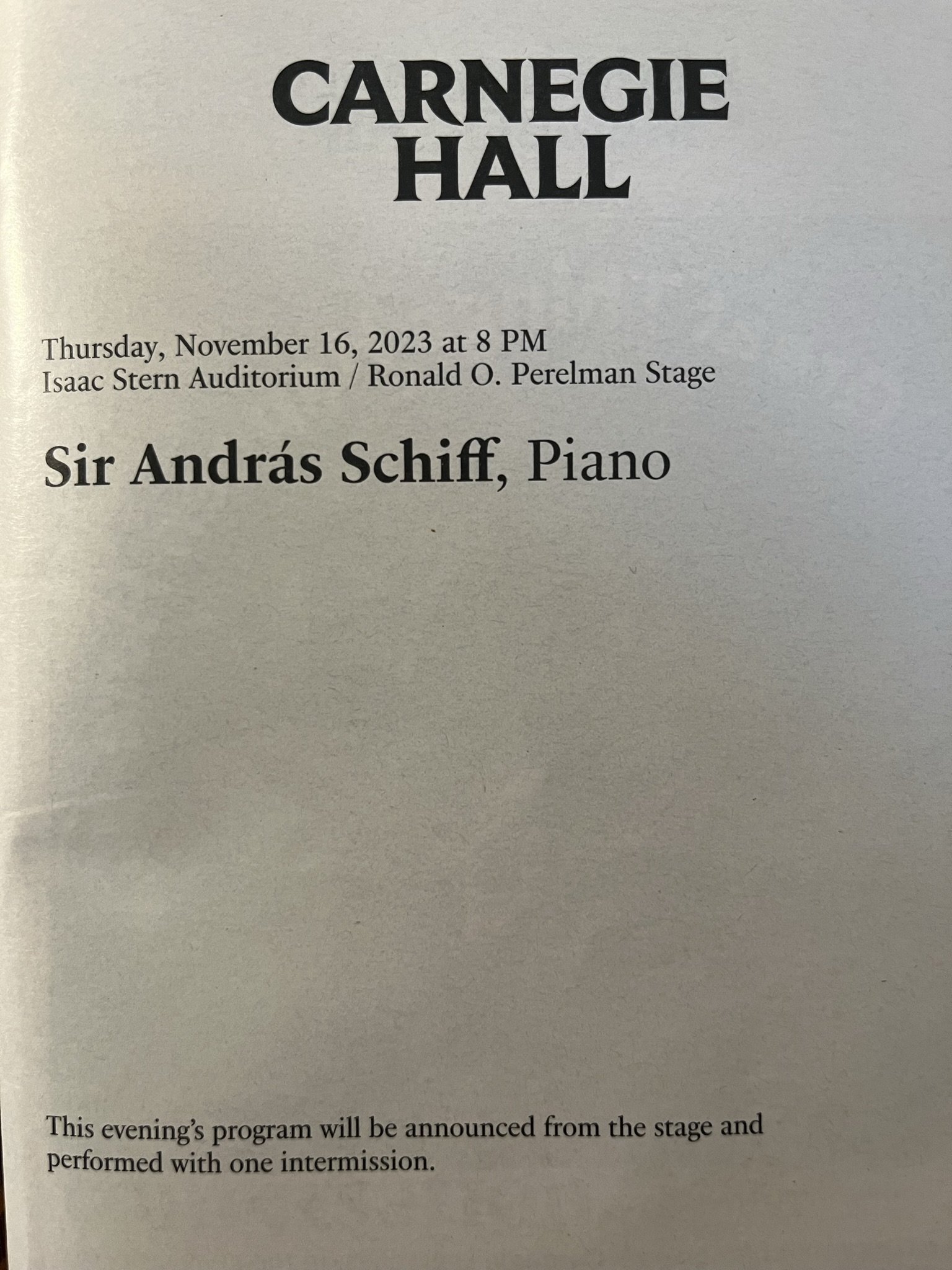
Bösendorfer by Schiff at Carnegie Hall
At András Schiff’s Carnegie Hall recital, given without a program, the atmosphere felt intimate, almost like being at home with the pianist. He spoke and played with remarkable presence, his Bach sounding spontaneous, as if the composer himself were improvising. This sense of immediacy shone in his Mendelssohn and Haydn, where he shaped each line with clarity and boldness, letting the music’s narrative emerge effortlessly and resonating with listeners of all tastes.
Read More
Symphonic Artist, Schaghajegh Nosrati, Carnegie Debut
In her performance, the dynamics of her mentor Barenboim and the clarity of Schiff seemed to merge, while her own extraordinary humanity shone through, projecting a unique vision across the works. The depth of sound and harmonic richness she created was remarkable—not from volume or technical display, but from her profound connection to the music. From Beethoven’s Pastoral to Haydn’s tremolos and Alkan’s Piano Symphony, every passage revealed her insight and curiosity, bringing the Steinway at Weill Recital Hall to life in a way that felt both intimate and monumental.
Read More
Anna Vinnitskaya at Boston 11.4.2023
The clip begins with Tchaikovsky’s Piano Concerto, featuring a “scherzo-like” interlude from Belgian soprano Désirée Artôt’s repertoire, highlighting Vinnitskaya’s emphasis on singing. In Boston, her performance conveyed a rhapsodic, selfless freedom. For the encore, she played Rachmaninoff’s Étude-tableau Op. 39, No. 5 as an eruptive inner monologue, reminiscent of Sergei Babayan’s New York recital, whose playing has been praised for its unmatched touch, phrasing, and virtuosity. The reviewer felt personally moved by Vinnitskaya’s passion.
Read More
Mallwitz debut Boston Symphony with Schubert 9th
Mallwitz’s performance of Schubert captivates with its vibrant energy and masterful structure. In the Fourth Movement of the Ninth Symphony, strings and brass gradually intertwine, building into a massive wave of sound that fully realizes the work’s emotional scope. The lyrical melodies, sudden orchestral outbursts, the Allegro non troppo’s relentless energy, and unexpected harmonic shifts highlight the symphony’s dynamic contrasts. Mallwitz’s positive, lively interpretation vividly brings out Schubert’s free musical spirit, guiding the listener to the work’s exhilarating heights.
Read More
Sergei Babayan Recital at Carnegie Hall
Sergei Babayan impressed at Carnegie’s Zankel Hall with meticulously controlled, emotionally rich performances of Rachmaninoff, Liszt, and Ryabov’s Fantasia. His Schumann Kreisleriana reshaped structure with improvisatory freedom, yet he avoided late-Romantic clichés, balancing turbulent passages with expressive design and slow sections with glittering, melancholic lyricism. Hailed for his emotional intensity, tonal color, and virtuosity, Babayan has been called “a genius” by Le Devoir and praised by Le Figaro for his unmatched touch and phrasing.
Read More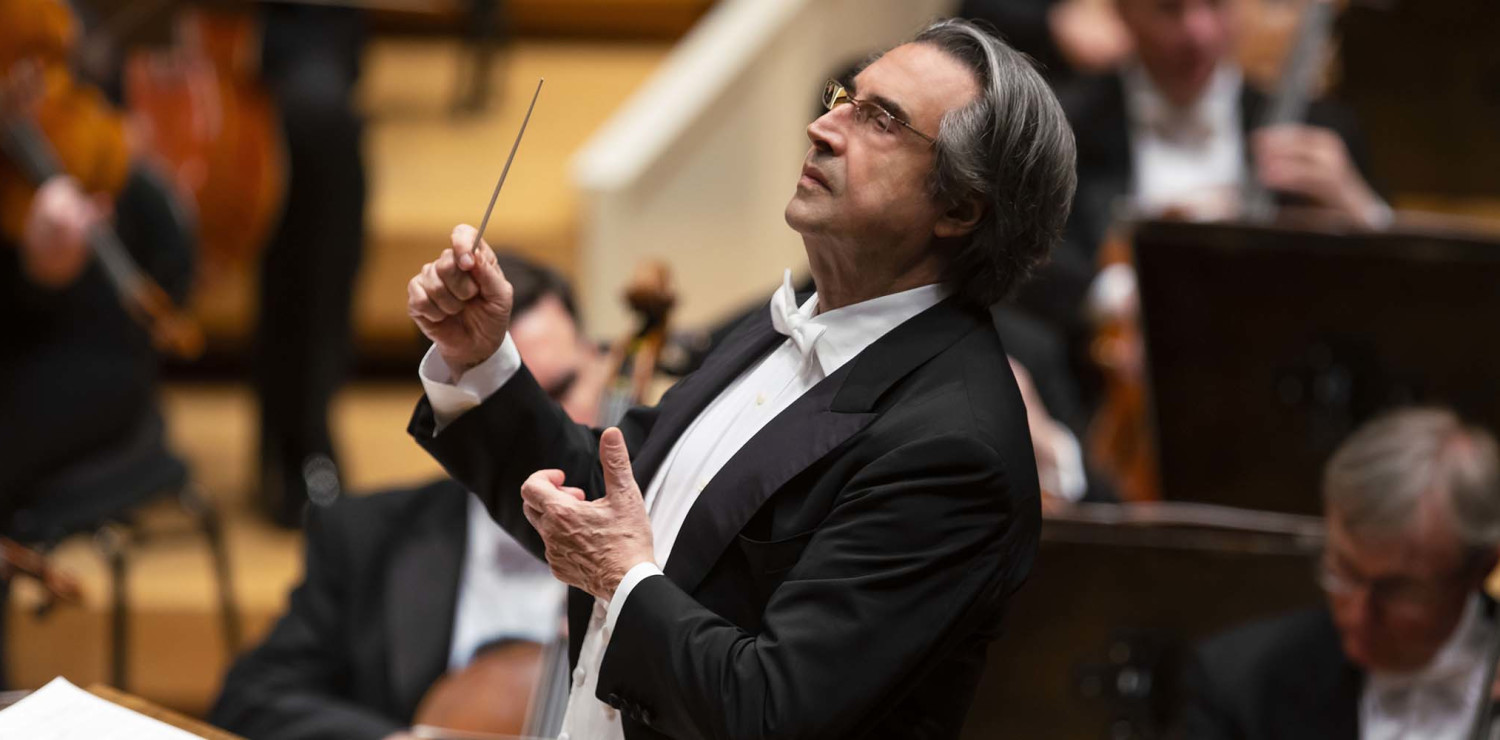
Riccardo Muti and Chicago Symphony Orchestra at Carnegie Hall
Revered conductor Riccardo Muti leads the Chicago Symphony Orchestra in Mendelssohn’s Italian Symphony, Strauss’s Aus Italien, and a New York premiere by Philip Glass, inspired by Italy and written in honor of Muti. Mendelssohn’s sunny Fourth Symphony remains a beloved favorite, serving as a companion to Strauss’s rarely performed “symphonic fantasy,” last heard at Carnegie Hall nearly 50 years ago. In both works, these great German composers transform their eye-opening travels through Italy into vividly evocative music.
Read More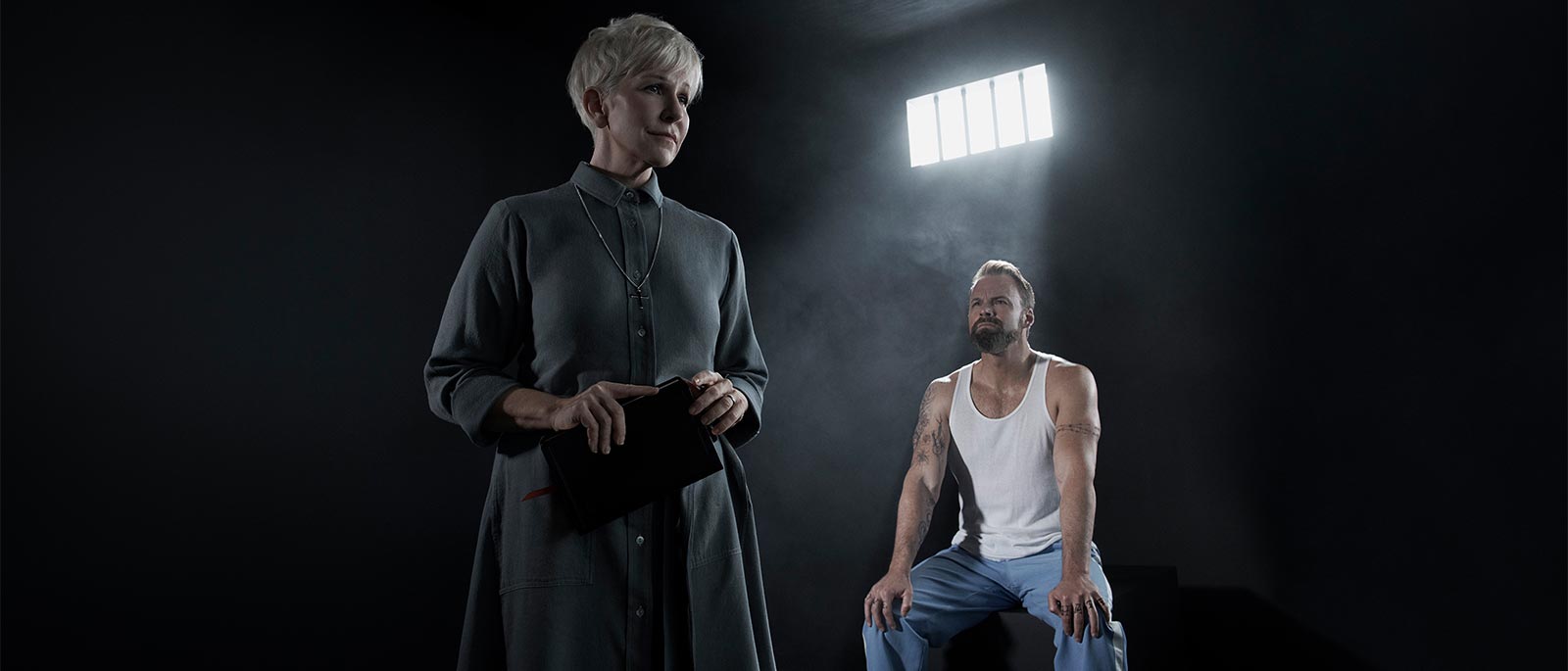
Jake Heggie's Dead Man Walking
The opera follows Prejean’s introduction to the world of capital punishment, portraying the moral complexity and inner lives of its characters rather than debating the issue directly. Heggie’s score uses an American musical vernacular to reflect character and conflict. Sister Helen is written for a lyric mezzo-soprano, expressing both grounded realism and idealism, while Joseph De Rocher evolves from a hardened criminal to reveal vulnerability and humanity. Mrs. De Rocher’s role conveys deep pathos. Ambient elements—including car radio songs, Elvis-style rock, and an original hymn—enhance the drama, with their impact shifting depending on the context and performers.
Read More
Der Rosenkavalier at met 2023 Vast and complex as it is humane and charming
Strauss’s Der Rosenkavalier (1911) is a beloved opera set in an idealized 18th-century Vienna, where a worldly woman must give up her young lover. Hofmannsthal’s libretto blends comedy, drama, and philosophy, while Strauss’s lush score combines waltzes, romance, and complex, demanding passages. The Met’s current production updates the setting to 1911, preserving its timeless charm and musical richness.
Read More
Giuseppe Verdi, Falstaff at Met
Verdi’s Falstaff is a masterful comic opera portraying the vain, indulgent, yet philosophically curious Falstaff. Set in post–WWII England, it eschews traditional arias, relying on naturalistic ensembles and sophisticated counterpoint to depict human folly and interconnected lives. The opera blends comedy, lyricism, and ritualistic moments, culminating in a fugue that unites chaotic energy and guides the younger generation to reconciliation and love, showcasing Verdi’s inventive expansion beyond tragic drama.
Read More
Mahler Chamber Orchestra, Mitsuko Uchida, Concert at Carnegie Hall
“Compositions which I keep for myself or for a small circle of music-lovers and connoisseurs (who promise not to let them out of their hands).” by Mozart
With the 2022–2023 season, the Mahler Chamber Orchestra (MCO) celebrates its 25th birthday.
Mitsuko Uchida is an incomparable interpreter of Mozart. From her deeply studied readings and performances to her leadership of the Mahler Chamber Orchestra from the keyboard, there is no better way to experience this repertoire. The program boasts two of Mozart’s late piano concertos, each of them a standout work even among the master’s timeless oeuvre. Also featured is Schoenberg’s Kammersymphonie No. 1, a work of constant motion and flowing interplay. by Justin Pumfrey / Decca
Performers
Mahler Chamber Orchestra
Mitsuko Uchida, Piano and Director
José Maria Blumenschein, Concertmaster and Leader
This concert presents two late Mozart piano concertos that represent Viennese Classicism at its peak of perfection. One of 12 piano concertos written by Mozart between 1784 and 1786, No. 25 is imperious and commanding, a forerunner of Beethoven’s “Emperor” Piano Concerto. No. 27—Mozart’s last piano concerto—is a work of great intimacy and repose, premiered the last year of his short life. Between the two concertos on the program is Schoenberg’s Kammersymphonie No. 1, Op. 9, an important landmark in the journey of the New Viennese School from late Romanticism to modernism and atonality. Its extreme concision is unique, and its turbulent sound world seems disconnected from the world of the piano concertos. Yet Schoenberg was a Classicist as well as a modernist—as demonstrated by the symphony’s compressed sonata form—and he regarded himself as “a pupil of Mozart.”
このコンサートでは、完成度の高いウィーンの古典主義を代表する後期モーツァルトのピアノ協奏曲を 2 曲紹介します。 モーツァルトが 1784 年から 1786 年の間に書いた 12 のピアノ協奏曲の 1 つである第 25 番は、ベートーベンの「皇帝」ピアノ協奏曲の前身であり、威厳があり威厳があります。 第27番—モーツァルトの最後のピアノ協奏曲—は、彼の短い人生の最後の年に初演された、非常に親密で安らかな作品です。 プログラムの 2 つの協奏曲の間には、シェーンベルクの室内交響曲第 1 番 Op. 9、後期ロマン主義からモダニズムと無調への新ウィーン学派の旅の重要なランドマーク。 その極端なまでの簡潔さは独特で、その乱れた音世界はピアノ協奏曲の世界から切り離されているように見えます。 それでもシェーンベルクは、交響曲の圧縮されたソナタ形式が示すように、古典主義者であると同時にモダニストでもあり、自分自身を「モーツァルトの弟子」と見なしていました。
Program
MOZART Piano Concerto No. 25 in C Major, K. 503
https://play.qobuz.com/album/0002894702872
Track4
Score
https://dme.mozarteum.at/DME/nma/nma_cont.php?vsep=157&gen=edition&l=1&p1=163
Allegro maestoso
Andante in F
Allegretto
A Jubilant Concerto
Piano Concerto No. 25 was the last in this series. Written in 1786—the same year as The Marriage of Figaro—it has been compared by some to his final symphony, the “Jupiter,” and by others to Beethoven’s “Emperor” Piano Concerto. Certainly, the piece looks forward in its ambition, assertiveness, and sense of scale. It is Mozart’s most grandiose concerto, opening with a C-major theme for trumpets and drums that is imperious and commanding, one that makes us sit up in our chairs, followed by a poignant and gentle melody, a dramatic juxtaposition in a work full of contrasts. The pianist’s entrance is virtuosic and cadenza-like—no written-out cadenza exists for this concerto, as Mozart wrote it for himself—and the excitement never lets up. This is very much a work of C-major jubilation, including a march that sounds a bit like the French national anthem, “La Marseillaise,” but here and in the other movements the piece subtly shifts in and out of minor-key melancholy, delivering the emotional complexity that by now was common in Mozart’s major works. Even the rapidly moving sonata-rondo finale, which takes the excitement of the opening movement to a new level, has a sudden drooping melody near the end that is so tender it nearly steals the show before the final rush toward the finish. The slow movement is a tranquil contrast, with delicate woodwind writing and a sparse piano line that looks forward to the simplicity of Mozart’s final works.
ピアノ協奏曲第25番はこのシリーズの最後でした。 フィガロの結婚と同じ年である 1786 年に書かれたこの曲は、彼の最後の交響曲「ジュピター」と比較される人もいれば、ベートーベンのピアノ協奏曲「皇帝」と比較される人もいます。 確かに、この作品はその野心、自己主張、スケール感において先を見据えています。 それはモーツァルトの最も壮大な協奏曲であり、トランペットとドラムのための威厳と威厳のあるハ長調のテーマで始まり、私たちを椅子に座らせ、その後に感動的で優しい旋律が続きます。 対照的です。 ピアニストの登場は名人芸的でカデンツァのようであり、モーツァルトが自分で書いたように、この協奏曲には書き下ろしのカデンツァはありません。 これは、フランスの国歌「ラ・マルセイエーズ」に少し似た行進曲を含む、ハ長調の歓喜の作品ですが、ここや他の楽章では、マイナーキーのメランコリーに微妙にシフトします。 モーツァルトの主要な作品で今では一般的だった感情的な複雑さを提供します. オープニング楽章の興奮を新しいレベルに引き上げる急速に変化するソナタ・ロンド・フィナーレでさえ、終わり近くで突然垂れ下がったメロディーがあり、フィニッシュに向かう最後のラッシュの前にショーを盗みそうになります。 ゆっくりとした楽章は、モーツァルトの最終作品のシンプルさを期待させる繊細な木管楽器とまばらなピアノの旋律との静かなコントラストです。
SCHOENBERG Kammersymphonie No. 1
https://play.qobuz.com/album/piq6dvbaog7rb
Track1
Fanatical Concision
Schoenberg wrote that his goal in composing this 1906 Chamber Symphony was to create “a style of concision and brevity in which every technical or structural necessity was carried out without unnecessary extension, in which every single unit is supposed to be functional.” This manifesto of brevity and functionality may sound cold, but the emotional impact of the piece is strong, the melodies distinctive, even though they are radically compressed and economically organized. In a single 20-minute movement, we get a short introduction ending in a deceptively gentle major chord, a frenetic exposition presenting one idea after another, a rapid-fire scherzo, an intricate development, a dream-like adagio, and an affirmative finale that recapitulates everything and builds toward hard-earned triumph. The disguised “movements” come one after another, with little room to breathe between them, and despite the wealth of thought and feeling, the piece is over before we know it.
シェーンベルクは、この 1906 年の室内交響曲を作曲する際の目標は、「あらゆる技術的または構造的な必要性が不必要な拡張なしに実行され、すべてのユニットが機能することになっている、簡潔で簡潔なスタイル」を作成することであると書いています。 この簡潔さと機能性のマニフェストは冷たく聞こえるかもしれませんが、根本的に圧縮され、経済的に編成されているにもかかわらず、作品の感情的な影響は強く、メロディーは独特です. 20 分間の 1 つの楽章の中で、一見穏やかなメジャー コードで終わる短いイントロダクション、次から次へとアイデアを提示する熱狂的な説明、急速なスケルツォ、複雑な展開、夢のようなアダージョ、そして肯定的なフィナーレが得られます。 それはすべてを要約し、苦労して獲得した勝利に向けて構築されます。 偽装された「動き」が息をつく間も無く次々とやってきて、思考と感情の豊かさにもかかわらず、作品はいつの間にか終わってしまう。
Virtuosity from Every Player
It’s hard to expect any listener to take in all the work’s complex interrelations in a first hearing; there are multiple ideas tossed out breathlessly and mashed together, instantly vanishing only to reappear later in different contexts. Nonetheless, the visceral excitement of the piece, the sense of forward movement even in the wispy slow section, makes it one of Schoenberg’s most thrilling and accessible pieces despite its complexity. The melodies and motifs keep reappearing in new ingenious forms, a technique going back to Liszt, though he used thematic transformation in a far more expansive way. The final major chord toward which everything builds is jubilant, though like everything else, it is terse.
すべてのプレーヤーの妙技
最初の聴聞会で、作品の複雑な相互関係をすべて聞き取れるとは期待しがたい。 複数のアイデアが息を切らして放り出され、マッシュアップされ、すぐに消えて、後で別のコンテキストで再び現れるだけです。 それにもかかわらず、曲の本能的な興奮、わずかに遅いセクションでも前進する感覚は、その複雑さにもかかわらず、シェーンベルクの最もスリリングでアクセスしやすい作品の1つにします. メロディーとモチーフは新しい独創的な形で再登場し続けています。これはリストにまでさかのぼるテクニックですが、彼ははるかに広範な方法で主題の変換を使用しました。 すべてが構築される最後の主要な和音は歓喜ですが、他のすべてと同様に簡潔です。
Another attraction is the constant virtuosity required of every player, both in ensembles and solos. The heroic horn calls in the finale are particularly breathtaking; the string sighs in the slow movement—ghostly echoes of Mahler—require extreme subtlety and soulful repose. Schoenberg was aware of what he required of players and was frequently disappointed, though the precision of the Mahler Chamber Orchestra and other contemporary ensembles who are now accustomed to his extreme demands would probably make him smile. “My music is not modern,” he famously complained, “it is merely badly played.”
もう 1 つの魅力は、アンサンブルとソロの両方で、すべてのプレーヤーに求められる絶え間ない妙技です。 フィナーレの英雄的なホーンコールは特に息をのむほどです。 弦はゆっくりとした動きの中でため息をつきます—マーラーの幽霊のような反響—極度の繊細さと魂のこもった休息が必要です。 シェーンベルクは、彼が奏者に何を求めているかを認識しており、しばしば失望していましたが、彼の極端な要求に慣れているマーラー室内管弦楽団や他の現代のアンサンブルの正確さは、おそらく彼を笑顔にするでしょう. 「私の音楽は現代的ではありません」と彼は有名に不平を言いました。
MOZART Piano Concerto No. 27 in B-flat Major, K. 595
https://play.qobuz.com/album/0002894683672
Track4
Score
https://imslp.org/wiki/Piano_Concerto_No.27_in_B-flat_major%2C_K.595_(Mozart%2C_Wolfgang_Amadeus)
Allegro
Larghetto in E♭ major
Allegro
A Spiritual Farewell?
Perhaps no other Mozart piano concerto presents a more radical juxtaposition of simplicity and sophistication than his final one. The former is apparent in the lack of flash and pomp (the kind we hear in Piano Concerto No. 25 on this program) and in the innocent charm of the themes, including a children’s song; Charles Rosen writes in The Classical Style: Haydn, Mozart, Beethoven that the slow movement attains “a condition of absolute simplicity.” Yet the concerto also has a subtle continuity—everything seems to flow together, even though Mozart uses Classical structures—and the harmonies are often daring.
おそらくモーツァルトの最後のピアノ協奏曲ほど、シンプルさと洗練が過激に並置されているものはないでしょう。 前者は、フラッシュと威風堂々の欠如 (この番組のピアノ協奏曲第 25 番で聞くようなもの) と、童謡を含むテーマの無邪気な魅力に明らかです。 チャールズ・ローゼンは『クラシック・スタイル: ハイドン、モーツァルト、ベートーベン』の中で、ゆっくりとした楽章は「絶対的な単純さの状態」に達すると書いています。 しかし、協奏曲には微妙な連続性もあり、モーツァルトは古典的な構造を使用していますが、すべてが一緒に流れているように見え、ハーモニーはしばしば大胆です.
Current scholars scoff at previous writers who hear in the work a farewell to the world—Alfred Einstein, for example, writing that the concerto “stands at the gate of heaven”—pointing out that Mozart had no idea he would die within a year. Yet from the opening sighs until the final gentle affirmation, there is something otherworldly about the piece. Mitsuko Uchida, tonight’s soloist, finds this quality to be unmistakable, though she believes it shouldn’t be taken too far. “I do have a sense of spiritual farewell playing it,” she says, “though the B-flat Piano Sonata, K. 570, of 1789 has the same flavor, as a warning that we shouldn’t hear it as a premonition.”
現在の学者は、作品の中で世界との別れを聞いた以前の作家を嘲笑し、たとえば、アルフレッド・アインシュタインは協奏曲が「天国の門に立っている」と書いています。 しかし、冒頭のため息から最後の穏やかな肯定まで、作品には別世界の何かがあります。 今夜のソリストである内田光子は、このクオリティは紛れもないものだと感じていますが、行き過ぎてはいけないと彼女は信じています。 「私はそれを演奏することで精神的な別れの感覚を持っています」と彼女は言います。」
Piano Concerto No. 27 is one of two piano concertos composed after No. 25, the last of the 12 written in Vienna between 1784 and 1786. It is part of a stream of final masterpieces, many his greatest works, including the G-minor and “Jupiter” symphonies, the E-Flat String Quintet, the Clarinet Concerto, and The Magic Flute. Again, practical considerations were the inspirati on. Burdened by debt and depressed by the collapse of his independently organized concerts, Mozart needed more pieces to play; he completed the work in 1791 after he was presented with a concerto opportunity on a program given by clarinetist Joseph Bahr. Despite his declining popularity, he was still revered by many, as was reported in the Wiener Zeitung: “Herr Kapellmeister Mozart played a concerto on the fortepiano, and everyone admired his art, in composition as well as performance …”
ピアノ協奏曲第 27 番は、第 25 番の後に作曲された 2 つのピアノ協奏曲のうちの 1 つであり、1784 年から 1786 年の間にウィーンで書かれた 12 曲の最後のものです。 「Jupiter」交響曲、E-フラット弦楽五重奏曲、クラリネット協奏曲、魔笛。 繰り返しになりますが、実用的な考慮事項がインスピレーションでした。 借金に悩まされ、独立して組織したコンサートの崩壊に落ち込んでいたモーツァルトは、もっと多くの曲を演奏する必要がありました。 彼は、クラリネット奏者ジョセフ・バールのプログラムで協奏曲を演奏する機会を与えられた後、1791 年に作品を完成させました。 人気の衰えにもかかわらず、ウィーン・ツァイトゥング紙に次のように報じられたように、彼は依然として多くの人々から尊敬されていました。
Despite its lack of overt drama—it omits the trumpets and drums of Piano Concerto No. 25—this concerto offers considerable harmonic experimentation, with intriguing modulations throughout the first movement, especially in the unpredictable development section where soloist and orchestra seem to be talking to each other from different harmonic worlds. The intimate slow movement, with its supple main tune, communicates the tenderness we find in so much late Mozart. The rondo finale dances in with a children’s song, “Longing for Spring,” one of a series Mozart wrote for publication in Vienna. Many scholars view this choice not only as hope for better weather in the chill of winter but optimism about a brighter future. It ends the concerto, like all three pieces on this concert, with joyful affirmation.
Program note from Carnegie Hall
https://www.carnegiehall.org/Calendar/2023/03/09/Mahler-Chamber-Orchestra-Mitsuko-Uchida-Piano-and-Director-0800PM
Since 2016, Ms. Uchida has been an artistic partner of the Mahler Chamber Orchestra, with which she is currently engaged on a multi-season touring project in Europe, Japan, and North America. She also appears regularly in recital in Vienna, Berlin, Paris, Amsterdam, London, New York, and Tokyo, and is a frequent guest at the Salzburg Mozart Week and Festival.
Born in 1985, Mr. Blumenschein received his first violin lesson at the age of four in Freiburg, Germany, at the Pflüger Institute for Highly Gifted Children. In 1990, he began studies with Vera Kramarowa in Mannheim. In 2001, Mr. Blumenschein was accepted to the Curtis Institute of Music, where he studied with conductor and violinist Joseph Silverstein and served as concertmaster of the Curtis Symphony Orchestra.
With the 2022–2023 season, the Mahler Chamber Orchestra (MCO) celebrates its 25th birthday.
The MCO was founded in 1997 based on the shared vision of being a free and international ensemble, dedicated to creating and sharing exceptional experiences in classical music. With 45 members spanning 20 different countries at its core, the MCO works as a nomadic collective, uniting for specific tours in Europe and across the world. It is governed collectively by its management team and orchestra board.
The 25th season kicked off with the finale of the Mozart Momentum 1785/1786 project, with Leif Ove Andsnes taking the stage at the BBC Proms. Traveling extensively through Europe and the US, the MCO reunites with Mitsuko Uchida. Innovation through exploring new concert formats and rethinking tradition will be a focal point in the orchestra’s meeting with Pekka Kuusisto, resulting in an event at the Radialsystem in Berlin where the audience can experience the orchestra both live and in virtual reality. The orchestra returns to the Festival of Aix-en-Provence in July for the creation of George Benjamin’s newest opera, Picture a Day like this. Before that, the orchestra embarks on a tour across some of the most prestigious venues in Europe with Andris Nelsons, Lang Lang, and Christiane Karg. A new horizon appears in the 2024 season, when the MCO becomes artistic director of the Musikwoche Hitzacker for a period of five years.
https://mahlerchamber.com/
Arms outstretched before their first chords, she seemed about to give her colleagues a whopping hug. Given their staggering musicianship during this concert, I’d have happily hugged them myself.”
https://imgartists.com/news/alls-right-with-the-world-mitsuko-uchida-and-mahler-chamber-orchestra-magnificent-at-royal-festival-hall/
https://seenandheard-international.com/2023/02/uchida-and-the-mco-mellifluous-mozart-and-searing-schoenberg-combine-to-lift-the-heart/