
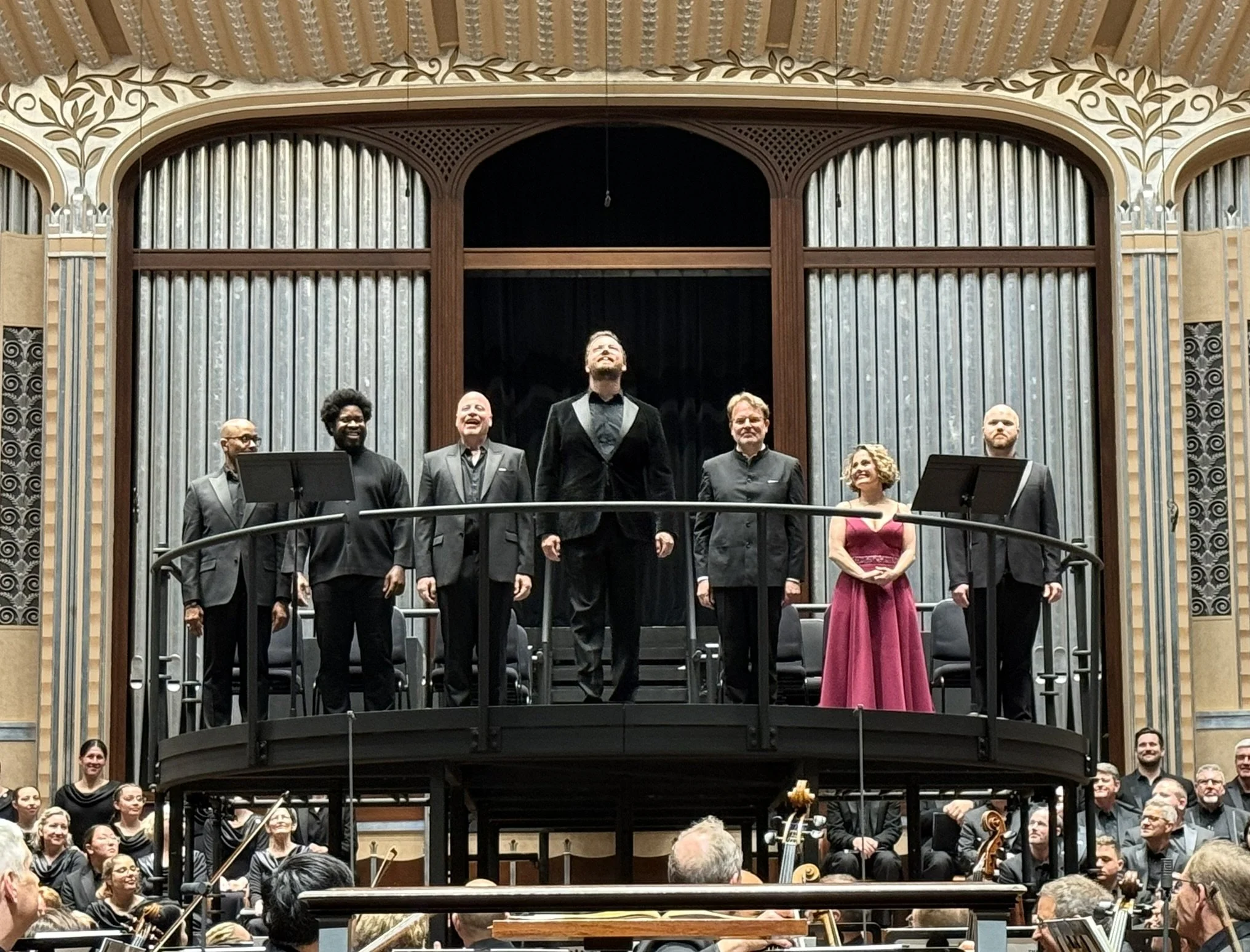
Severance Hall transforms Fidelio into a site-specific perceptual event. Compared with Carnegie Hall’s distance, it feels immediate and electric. The music itself doesn’t change—reality does. Freedom emerges as unstable energy within sound, shared yet individually perceived. Music becomes an event shaped by space, attention, and presence rather than meaning or work.
Read More
Sorey x Bruckner x Yannick x Phily (SBYP)
Tyshawn Sorey’s musical stance shifts attention away from external structures—form, narrative, and architecture—toward the internal conditions of listening itself. It produces a recalibration of perception in which interpretive noise is reduced and auditory awareness becomes unusually transparent, sharpening both time perception and bodily presence.
In this state, Anton Bruckner’s Symphony No. 3 in D minor (1873 version) is heard less as an object of analysis and more as a field of density, spatial depth, and sustained sonic pressure. With the Philadelphia Orchestra and Yannick Nézet-Séguin, this heightened listening reveals subtle fluctuations within a stable architectural surface, turning the work into a perceptual environment rather than a historical artifact.
Within this field, function not as isolated roles but as part of a continuous timbral continuum. Even ambient sounds are absorbed into the listening space, blurring the boundary between music and environment.
Sorey’s influence here is not interpretive in the conventional sense; it reorganizes listening itself. Music becomes an event—an ongoing shift in perception rather than an object to be understood.
Read More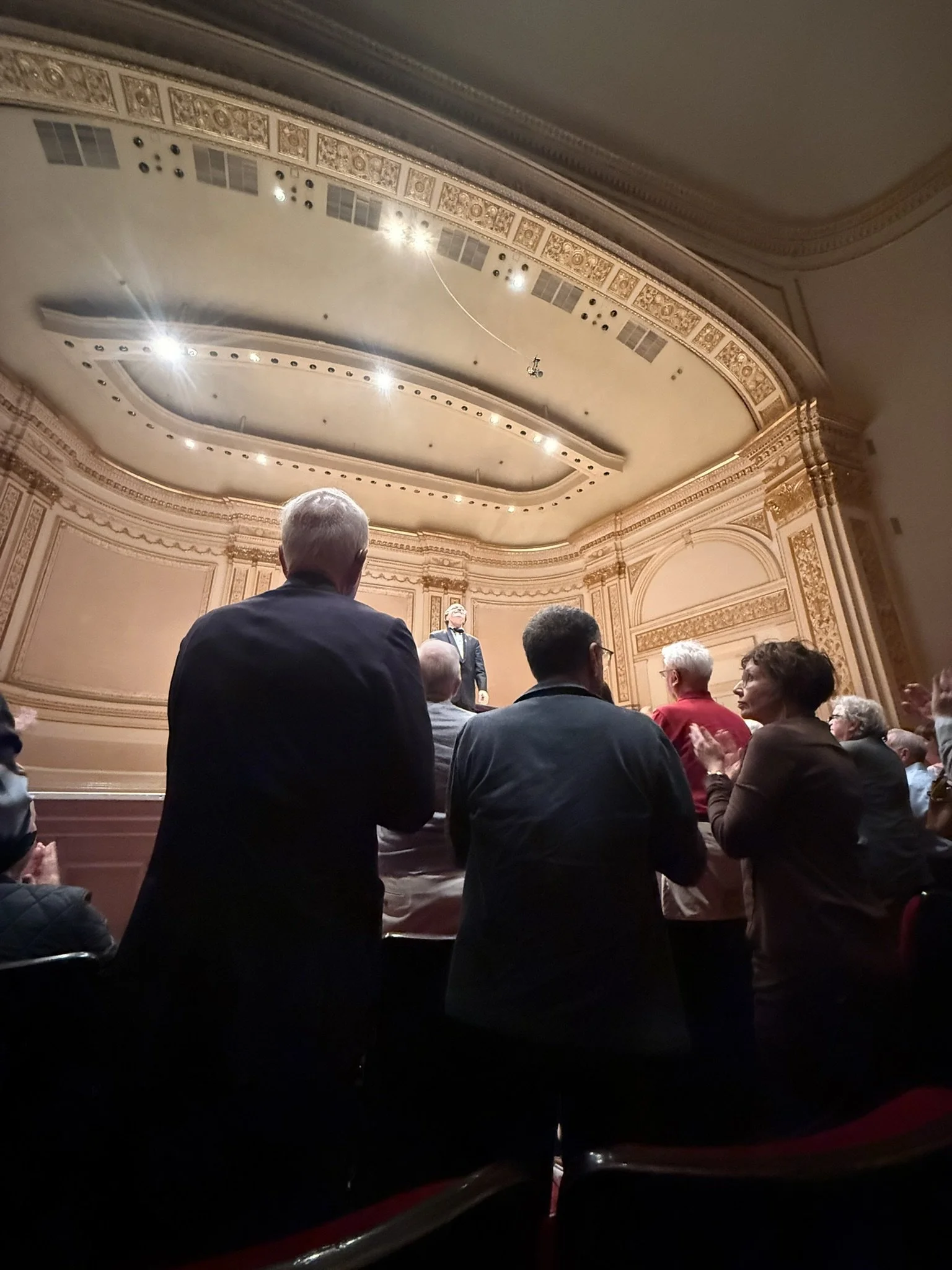
Kissin at Carnegie
Kissin at Carnegie: May 13, 2026
The consummate master generates the music as if swaying with its flow. Even his errors and momentary breaks felt not like lapses, but rather like a continuation of his thought process. Children, ambient noise, the rustling of turning pages—and indifferent parents intoxicated by the artist's fame—were all present. With his concentration constantly under siege, Carnegie Hall became a perceptual interference machine, where multiple streams of attention collided. The performer’s inner world, the audience’s scattered consciousness, and the spatial noise proceeded simultaneously—a ceaseless cycle of creation and disintegration.
Read More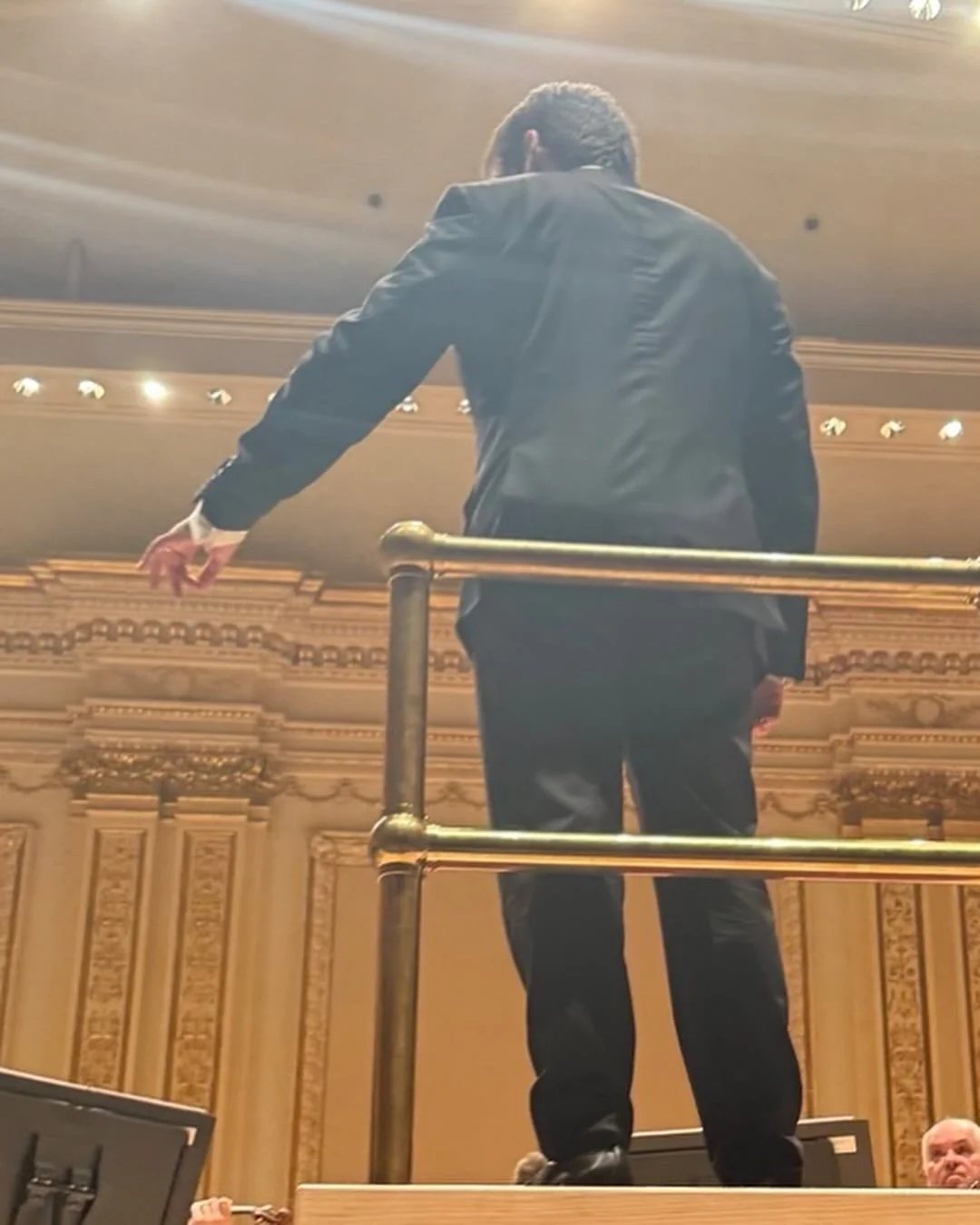
Where Sound Changes How You Hear the World
classicasobi is an ongoing observational practice that records how music changes perception in real time. Through continuous presence in major opera houses and concert halls, it documents the often-unwritten shifts of experience—how sound alters the body, how attention and time dissolve, and how the atmosphere of a space reshapes consciousness itself.
This work exists only through sustained self-funded field observation. Each entry depends on travel, access to performances, and the time required to remain present with what is happening in the moment of listening. Without continued support, this field-based record cannot be maintained at its current depth and continuity.
To support classicasobi is to enable the continuation of this perspective in the world’s cultural spaces: a living archive of how listening transforms human perception as it happens.
Read More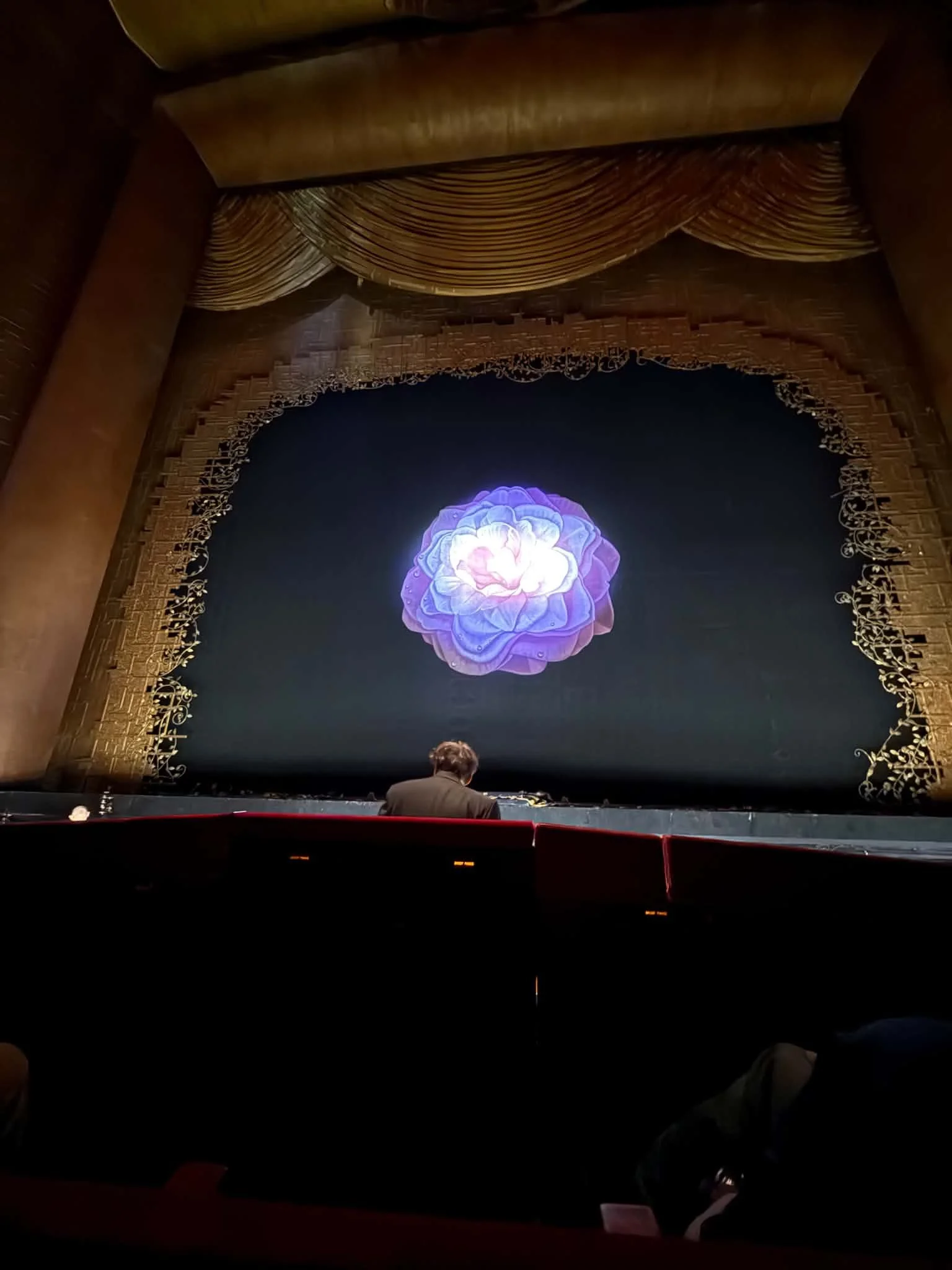
Trinity: Rosa Feola’s New York Violetta Debut
Trinity: Rosa Feola’s New York Violetta Debut
5.3.2026 La Traviata at the Metropolitan Opera
Rosa Feola’s Violetta was experienced as a gradual stripping-away of mask and identity, where voice, breath, and body seemed to dissolve into pure sound as she moves toward death. In the Met’s intense acoustic clarity, her singing felt physically tangible—tremors of breath, fading pianissimi, and vocal fragility becoming the drama itself.
As Violetta discovers love in Alfredo, that love immediately becomes inseparable from her decline. Her voice shifts from brilliance to disappearance, and existence itself feels like it is being rewritten as music.
Maestro Armiliato shapes the orchestra with extreme sensitivity, expanding and compressing musical space around her voice, as if co-producing a single living organism of sound.
Together—Rosa Feola, Armiliato, and New York itself—the performance forms a kind of trinity in which La Traviata is not reenacted but re-born: a present-tense experience of life turning into sound, and sound into extinction.
Read More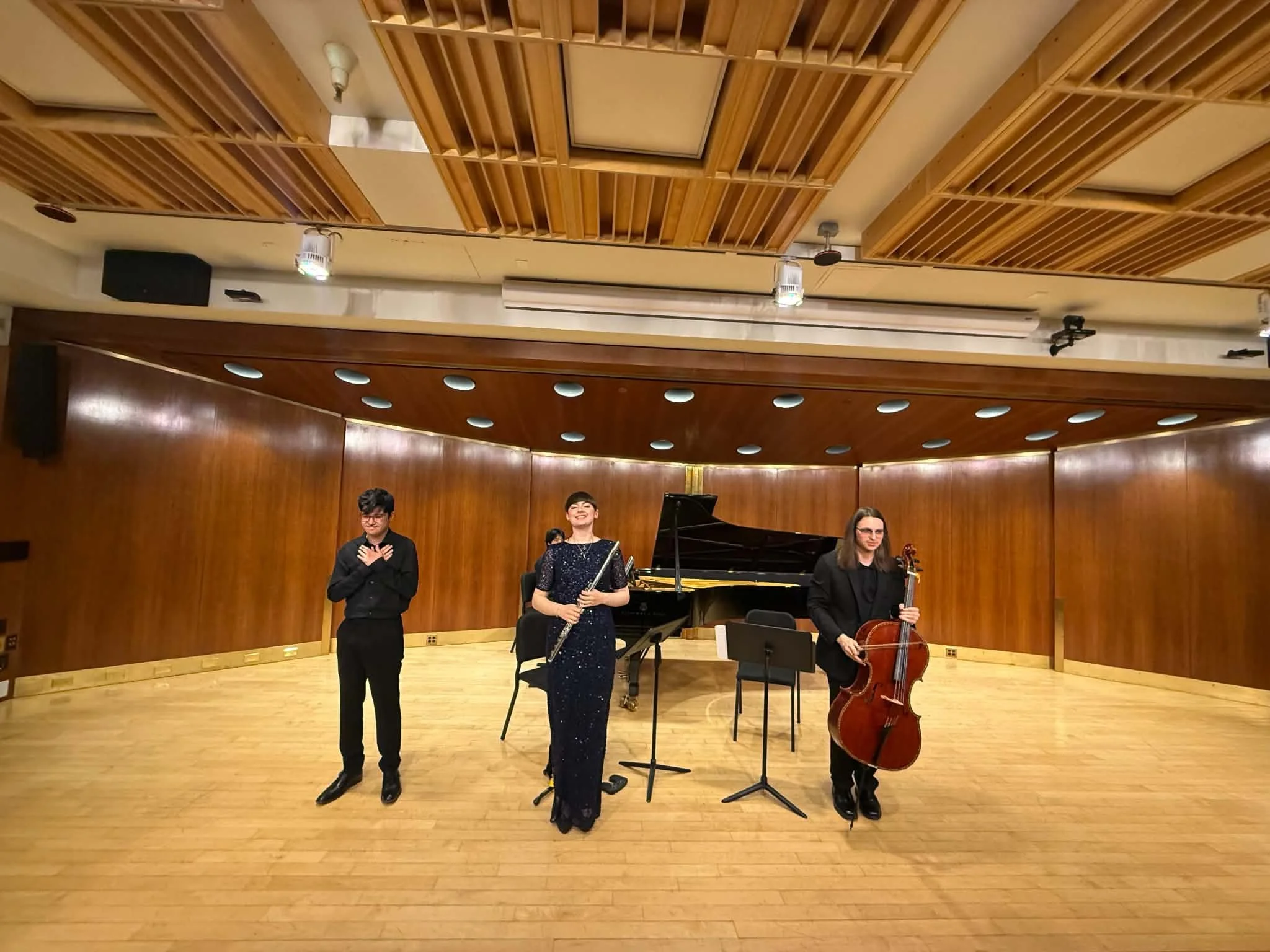
Metamorphosen: A Black Sound Carnival
Metamorphosen — a black amusement park of sound where collapse and loss are constantly reshaped through transformation.
At Morse Hall at Juilliard, Nikka’s arrangement of Shostakovich’s Piano Trio for flute trio became a pleasure of metamorphosis. Elliot opens the theme with harmonics on cello, joined by Nikka’s flute and Cosmo’s piano. The three do not dwell in sentiment, but in the motion of sound itself.
In Allegro, the music becomes a runaway ride; in Largo, a floating stillness; in Allegretto, a dance of death that turns into play. Rather than fear or anger, what emerges is the pleasure of transformation—sound colliding, shifting, and reforming in real time.
Read More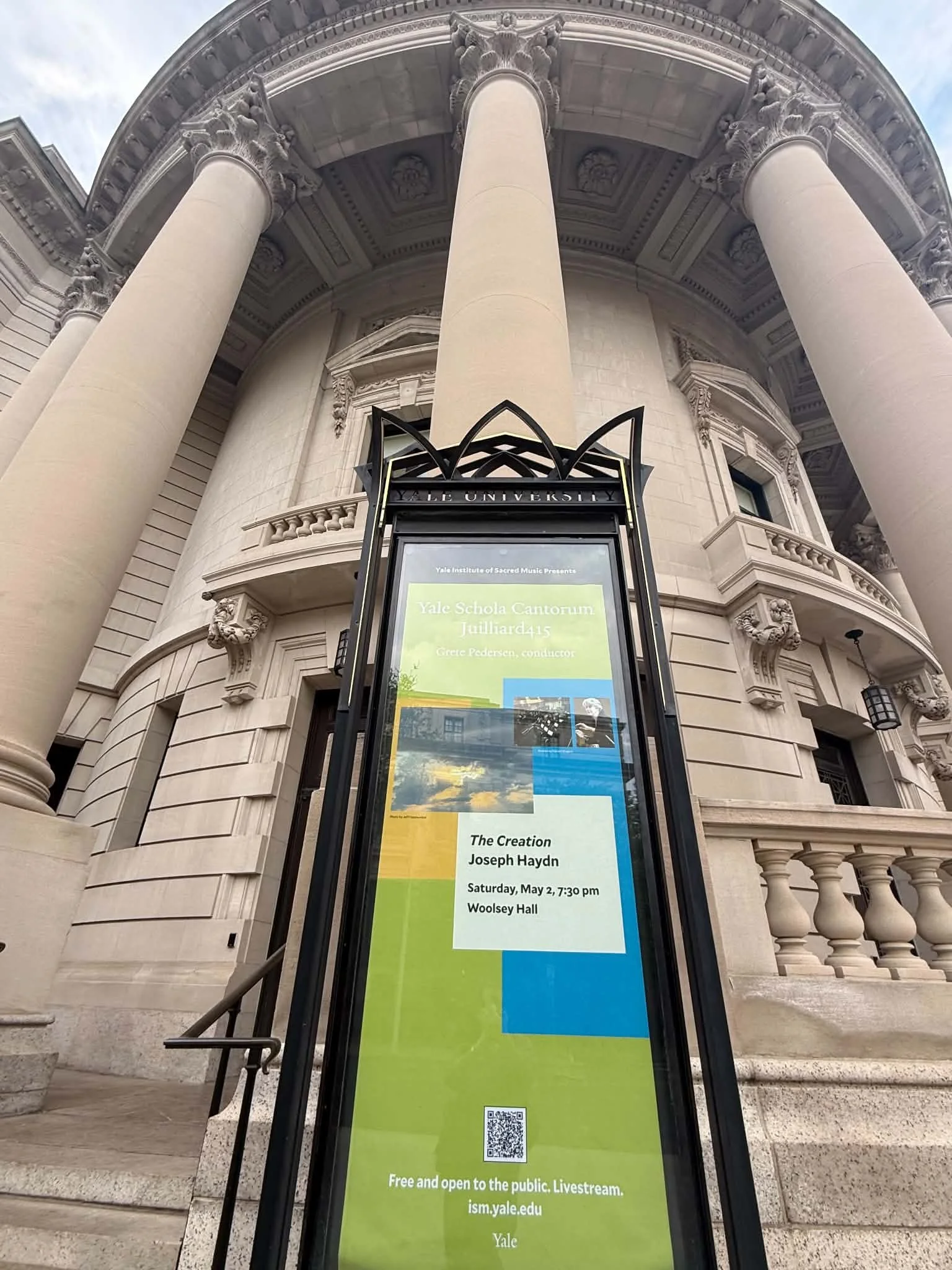
Juilliard415 x Yale Schola Cantorum at Woolsey Hall
At Woolsey Hall, Haydn’s Die Schöpfung by Juilliard415 and Yale Schola Cantorum unfolded in a vast, air-filled space unlike the previous night at Alice Tully Hall. Natural light, enormous scale, and soft acoustics transformed the work’s universe. Epongue Wei-Dikaki Ekille’s playing intertwined solistically with the singers, while the three angels felt vividly theatrical. Isabel Barbato’s Gabriel revealed both the focused core of her voice and its expansion into the hall’s thick air. The chorus no longer formed sharp lines but dispersed like particles through space. As creation progressed, the sound grew rounder and more expansive, culminating in Mozart-like overtones reminiscent of the Vienna Philharmonic. By Part III, Adam and Eve seemed almost like Papageno and Papagena, absorbed into Haydn’s creation itself.
Read More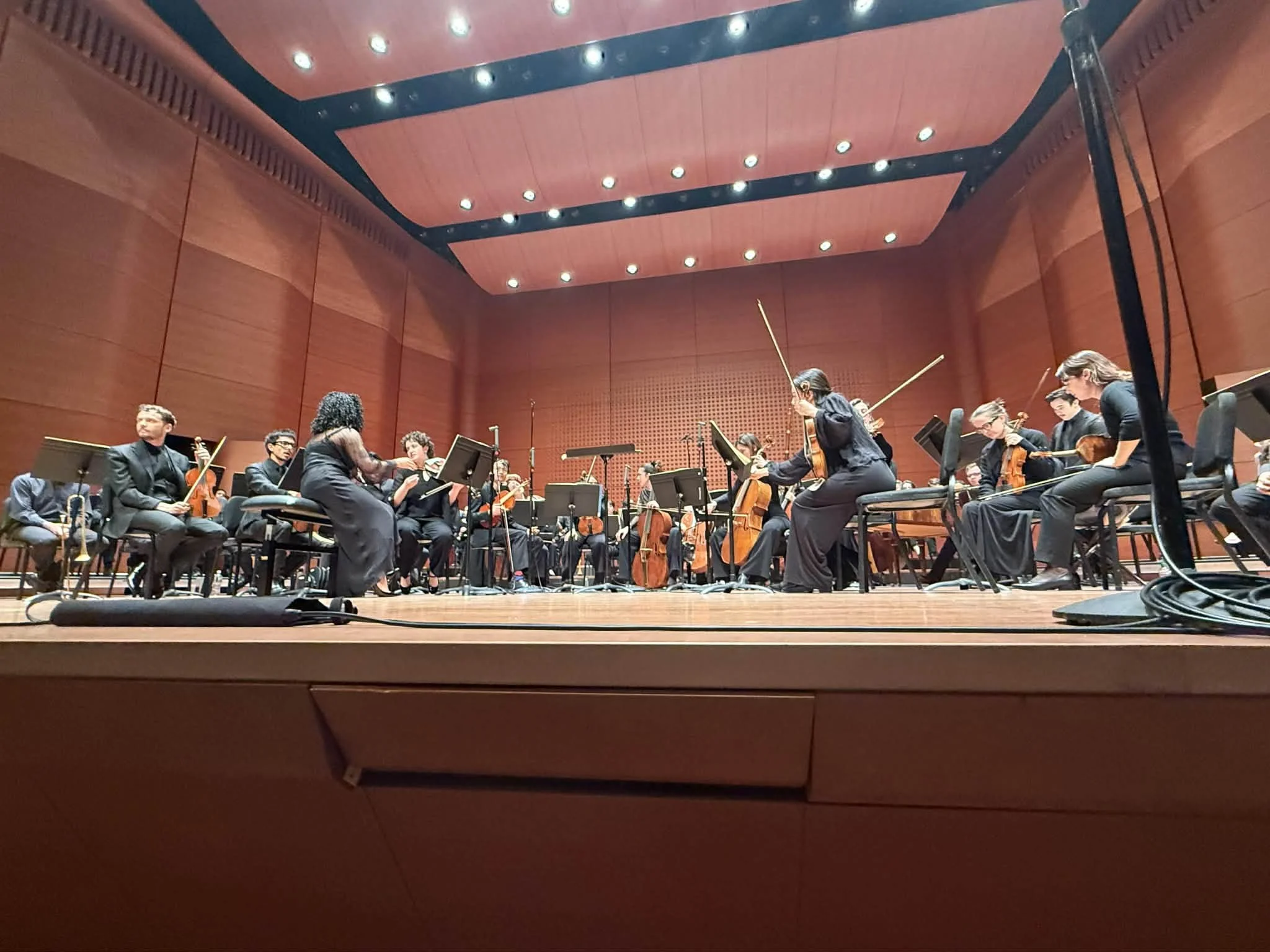
Creation in May: Juilliard415 x Yale Schola Cantorum
Grete Pedersen conducts Juilliard415 and Yale Schola Cantorum in Haydn’s The Creation at Alice Tully Hall. The dry acoustic exposes every breath, and each sound rises like particles of light. On my second day in a new home, the music felt like the beginning of my own act of creation.
Raphael gives the music a sense of weight and earthiness, while Uriel speaks with clarity and narrative force. Gabriel brings a sense of order. Nature and the world are generated through voices and orchestra, and Adam and Eve emerge, their duet forming a state of harmony.
The work closes in “Amen,” and creation becomes inseparable from a personal beginning.
Read More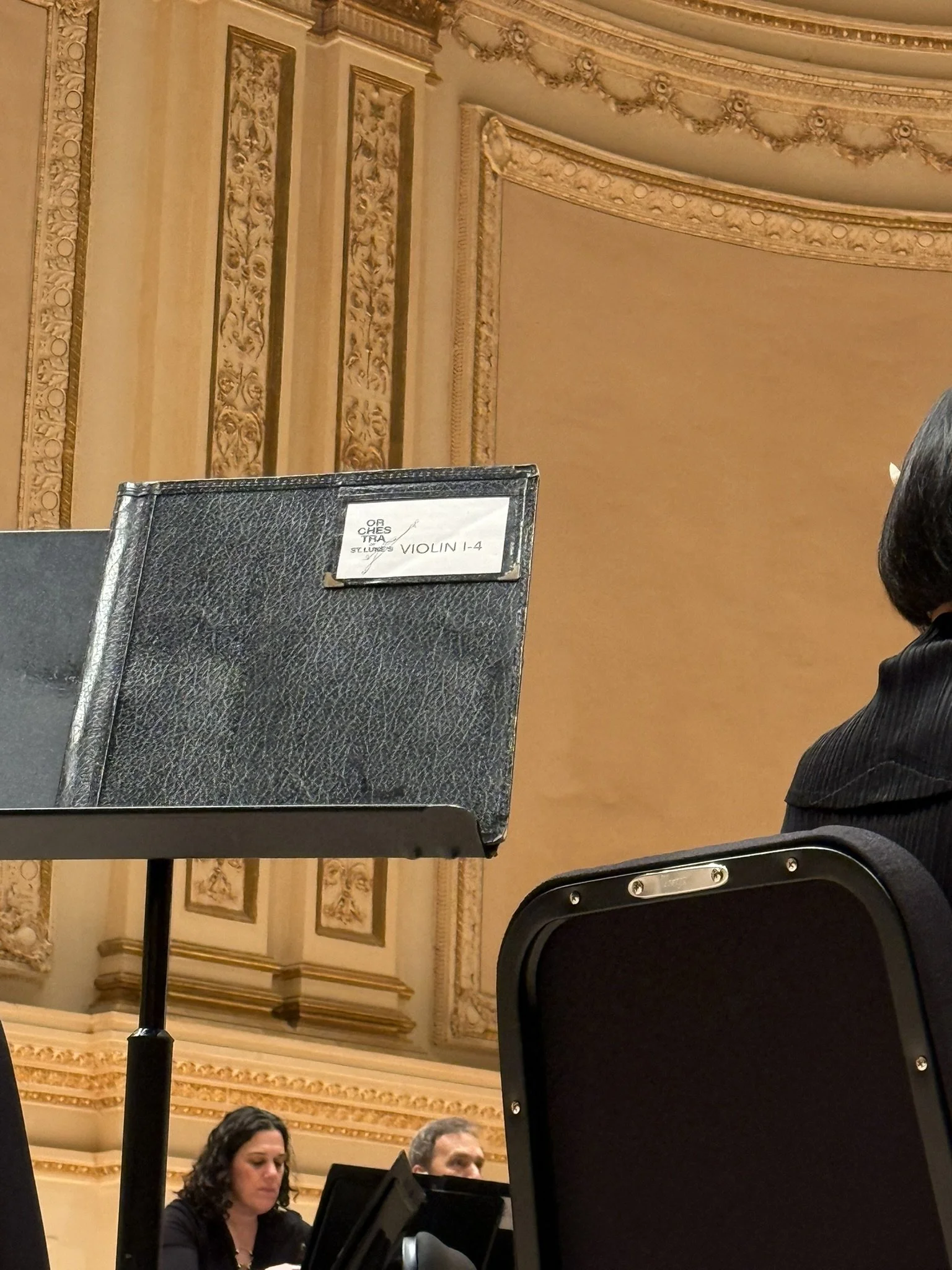
One Opera: Orchestra of St. Luke’s at Carnegie Hall
This was a performance defined not by volume, but by something that pierced deep into the heart. The opening D minor sounded like a universal proclamation, shaping the entire experience. Inner voices and spatial placement created both tension and expansion, as sound continuously shifted dimension.
Midori approached Beethoven’s concerto as if it were opera, shaping it as a dialogue rather than display. Rawness and individuality were essential to her expression. In moments when time seemed to stop, the music surfaced vividly within the mind.
The entire program felt like a single continuous flow, where individual voices ultimately converged into a transparent, unified light-like sonority.
Read More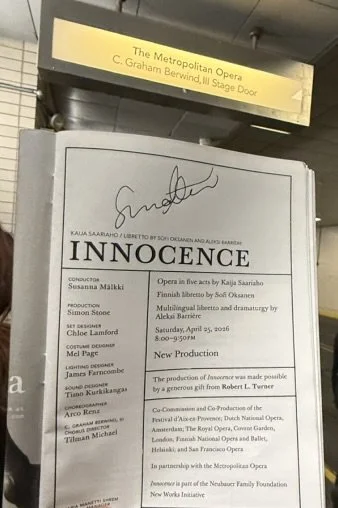
After Innoncence
Innocence is an experience of witnessing art in the process of becoming. Conceived in 2013, premiered in 2021, and staged at the Met in 2026, it reveals art not as a finished object but as a living process unfolding in time. Through repeated viewings, its structure and characters gradually emerge, as music and theatre merge into a single total artwork. At the stage door, where performers and audience meet, the boundary between stage and reality dissolves. Within a personal journey that began with Joyce DiDonato, Innocence becomes part of an ongoing artistic trajectory, leading to deep gratitude.
Read More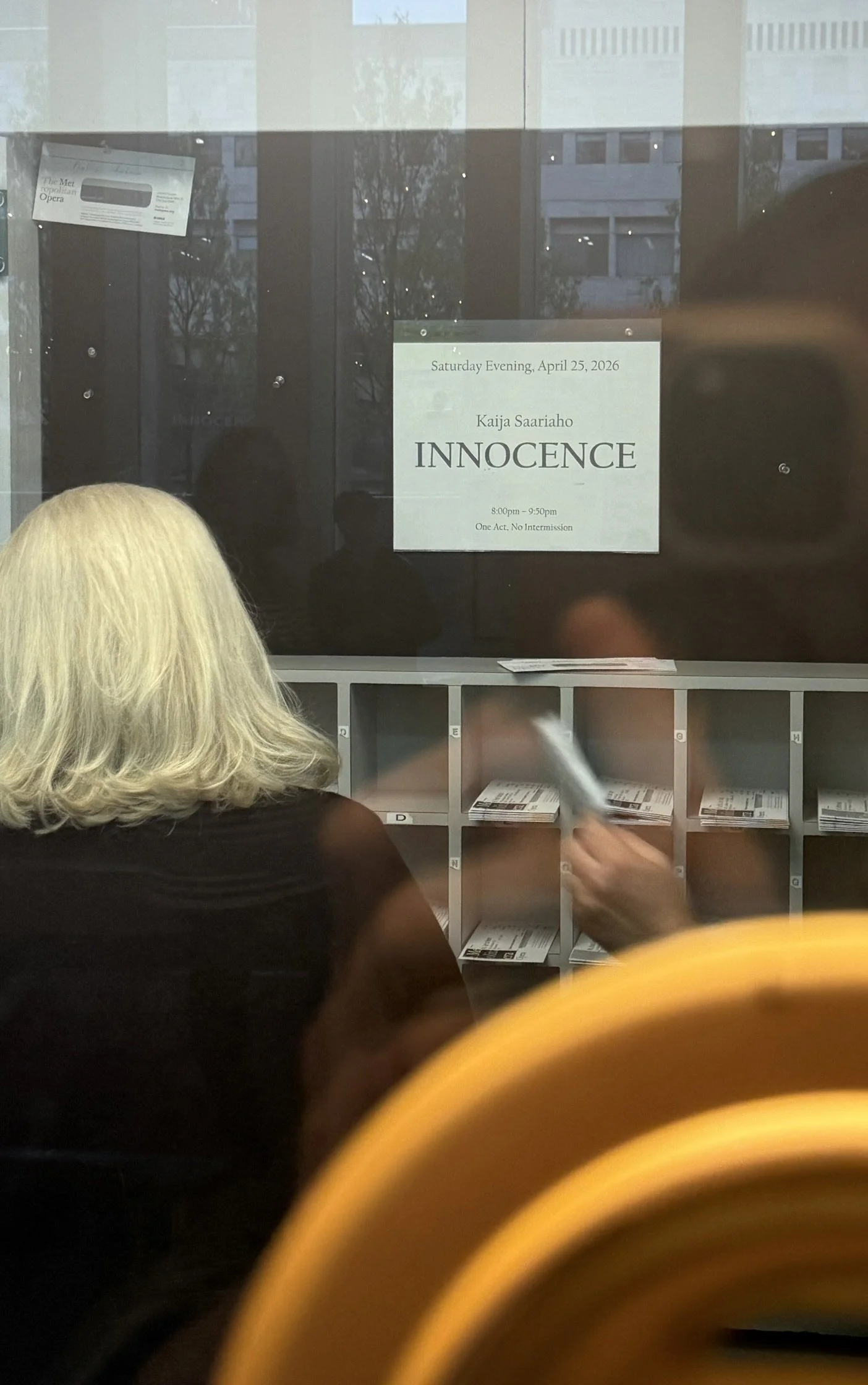
Missy x Charli x Nikka and waht?
After listening to Saariaho’s opera, becoming interested in Missy Mazzoli, and encountering performances by Nikka and Kantorow, I feel as if various things are being drawn toward something that comes next.
It is “after certainty.”
In Saariaho, sound is like light or skin.
In Mazzoli, structure keeps orbiting continuously.
In Kantorow’s Beethoven Op. 111 and Scriabin, music becomes a trajectory of transformation.
In Nikka’s Prokofiev, melody gives way to presence itself.
The next energy is a force of mutual attraction.
Charli XCX is already there.
How it exists.
Read More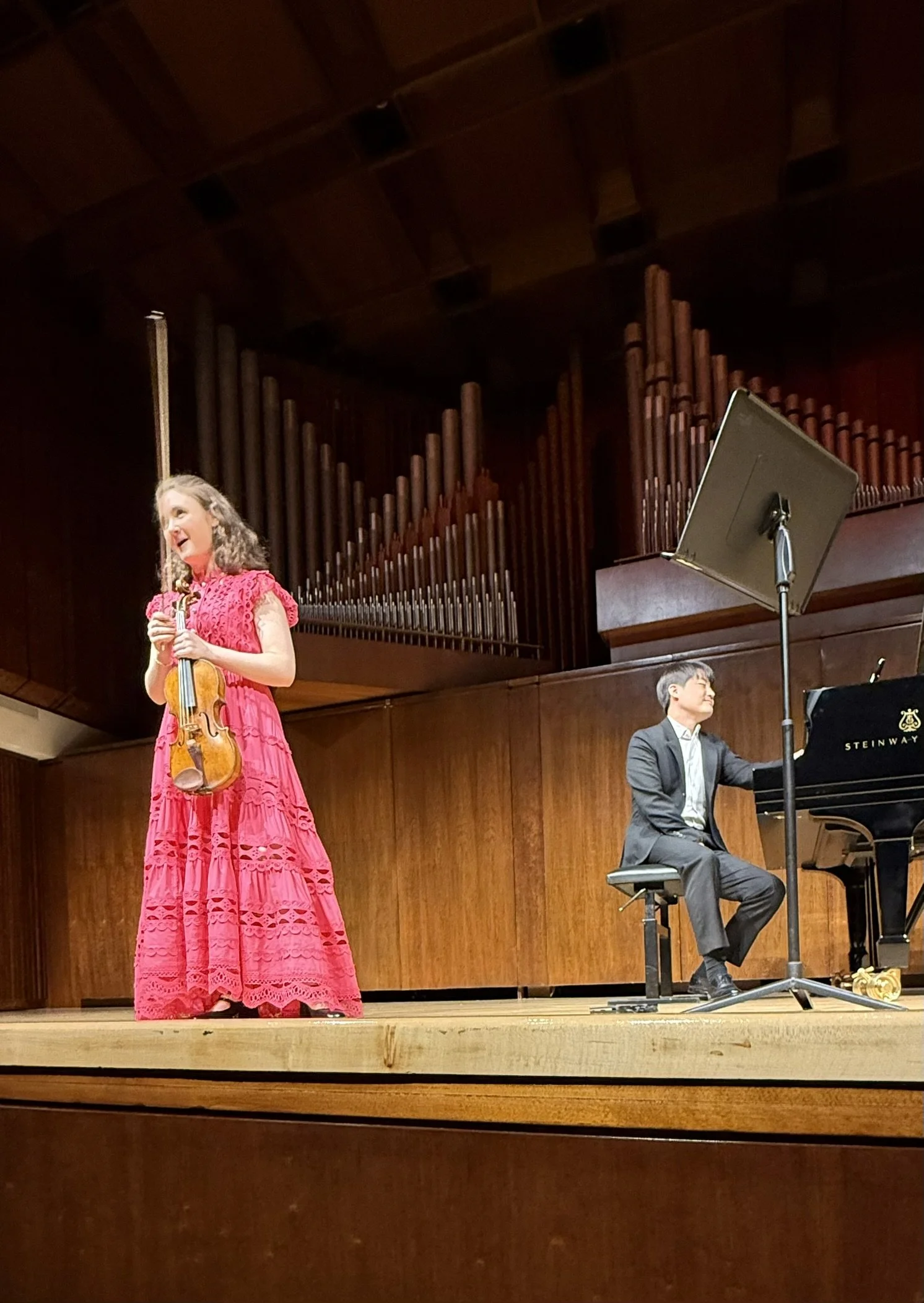
Tone and heart. Clara talks.
Violinist Clara Neubauer gave a recital at The Juilliard School on April 23. Through works by Clara Schumann, Prokofiev, and Bach, it became an experience in which love, pain, and joy were transformed into combustion and prayer.
Read More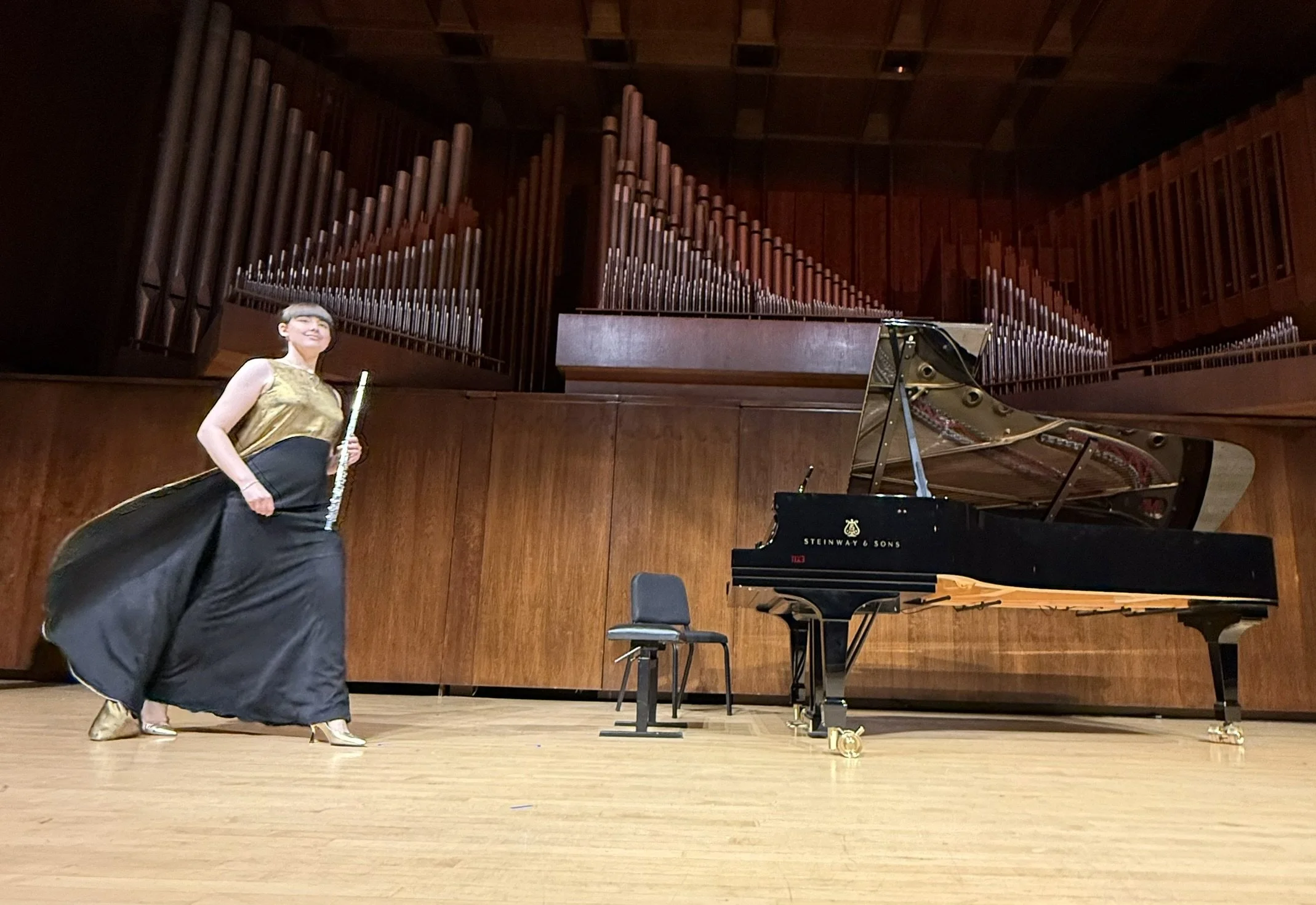
Nikka Gershman x Prokofiev in Juilliard School
My 1st Nikka and Cosmo, they rendered Prokofiev’s irony with remarkable flexibility and vivid brilliance, as if painting both a theater and a picture book that resounded through Juilliard. I thoroughly enjoyed this unguarded, almost naïvely joyful Prokofiev.
Read More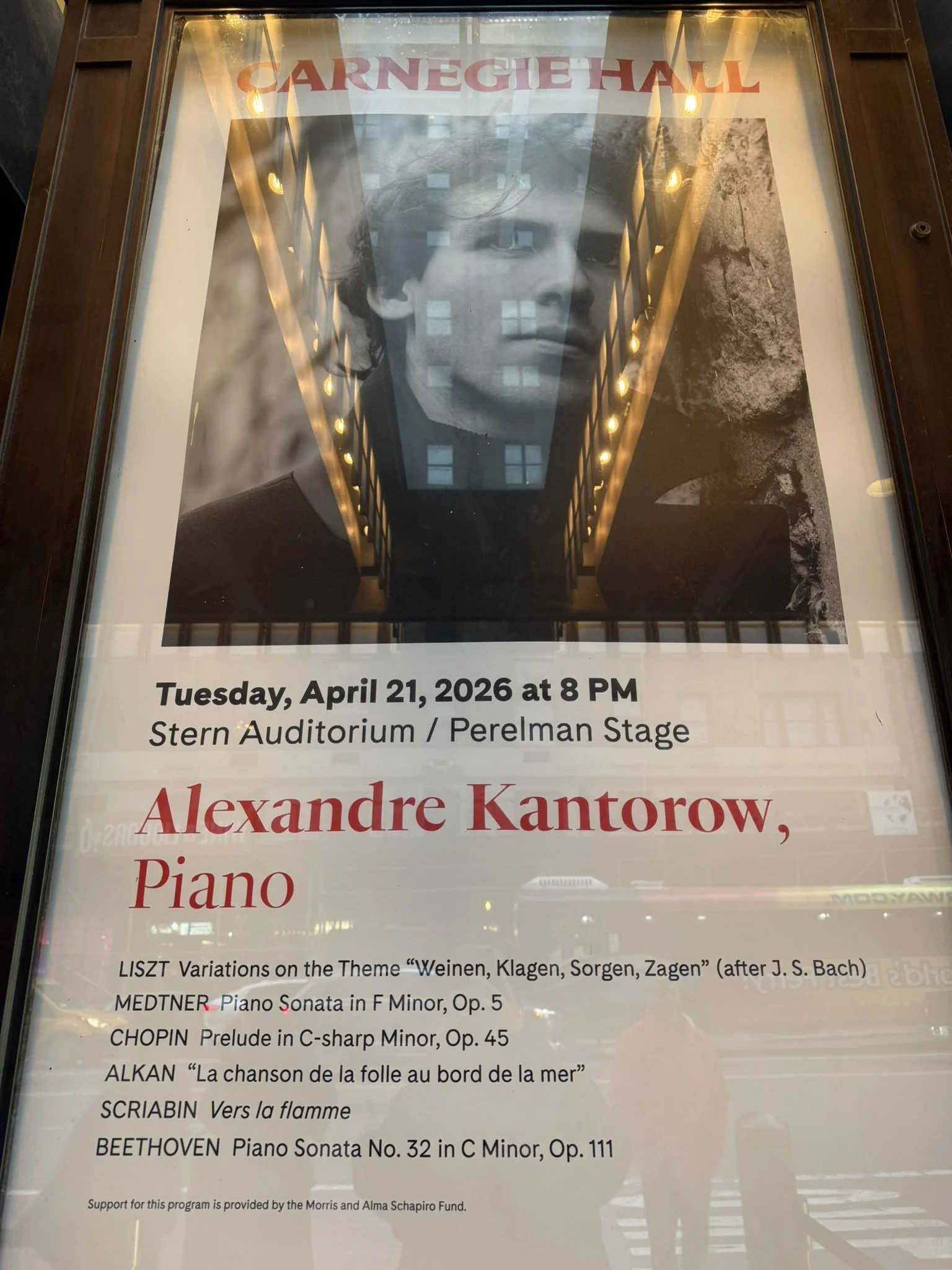
Alexandre Kantorow at Carnegie Hall
Experiencing Alexandre Kantorow’s piano in person, the boundary of what it means to “listen to music” becomes blurred.
The sound is clear and shadowed, yet it sinks deeply. Even when he plays with great force, the tone never breaks, allowing the inner structure of sound itself to be heard. As a result, one is not simply overwhelmed by emotion; rather, the sound is gradually absorbed into consciousness itself.
The music moves beyond symbols or images and begins to resemble physical phenomena—light, heat, and pressure. It becomes something closer to witnessing than to listening, as if one has seen rather than merely heard it.
And yet, when it ends, there is a return to reality: silence, applause, and the simple fact that he was there.
Read More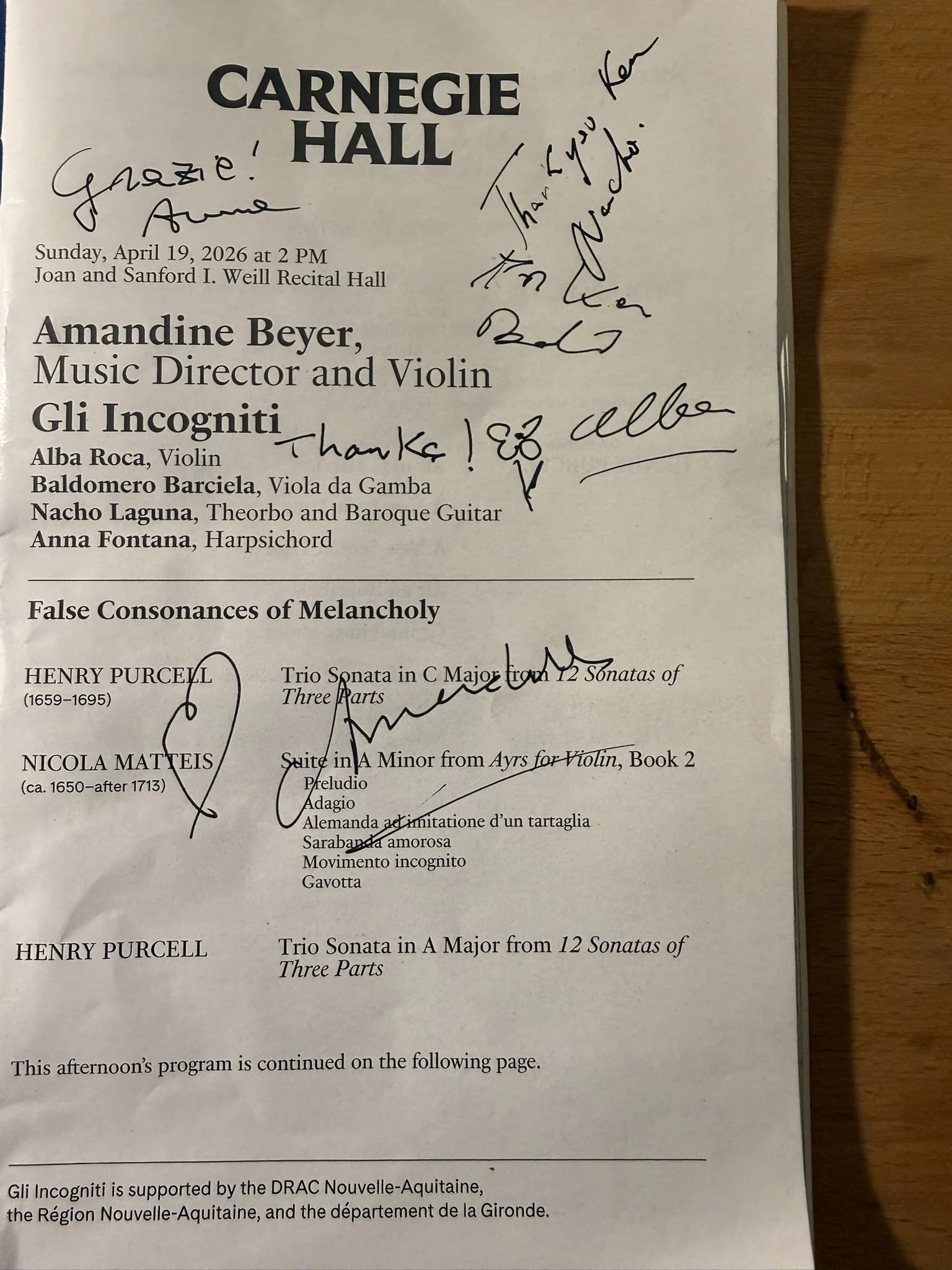
proto-punk x classicasobi = Amandine Beyer x Gli Incogniti at Weill
Light and shadow, human draw.
Fragments oscillate between the tangible and intangible, like a puzzle; each piece found along the way becomes a pearl. Habits, gestures, affect, and bizarrerie—everything fits onto a single chair. Touch melancholy notes sweetly and delicately. Look again and again. At Carnegie Hall, I found the melancholy notes Amandine Beyer has been searching for.
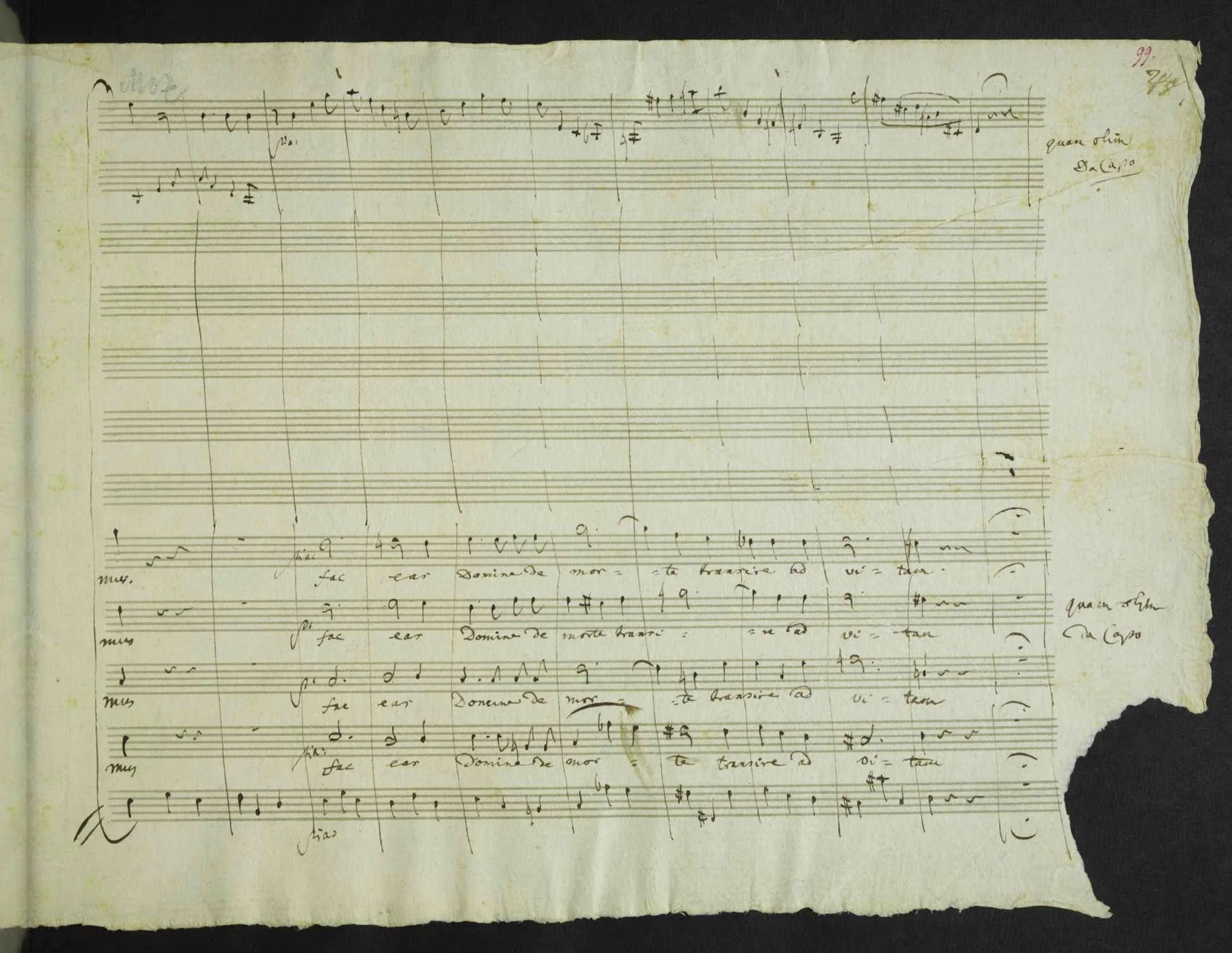
Requiem: When Loss Becomes Music
Mozart in the Face of Loss
When people lose something precious—money, health, work, or even small things like keys or ID—they are initially thrown into distress.
A Requiem is music for the prayer for the souls of the dead. When Mozart composed this work, he was in poor health and under severe pressure in daily life. In these circumstances, his music developed into a profound confrontation with death itself. Within it, terror (Dies irae), sorrow (Lacrimosa), and hope (Lux aeterna) intertwine, reflecting the human struggle to accept mortality and the possibility of salvation beyond it.
Read More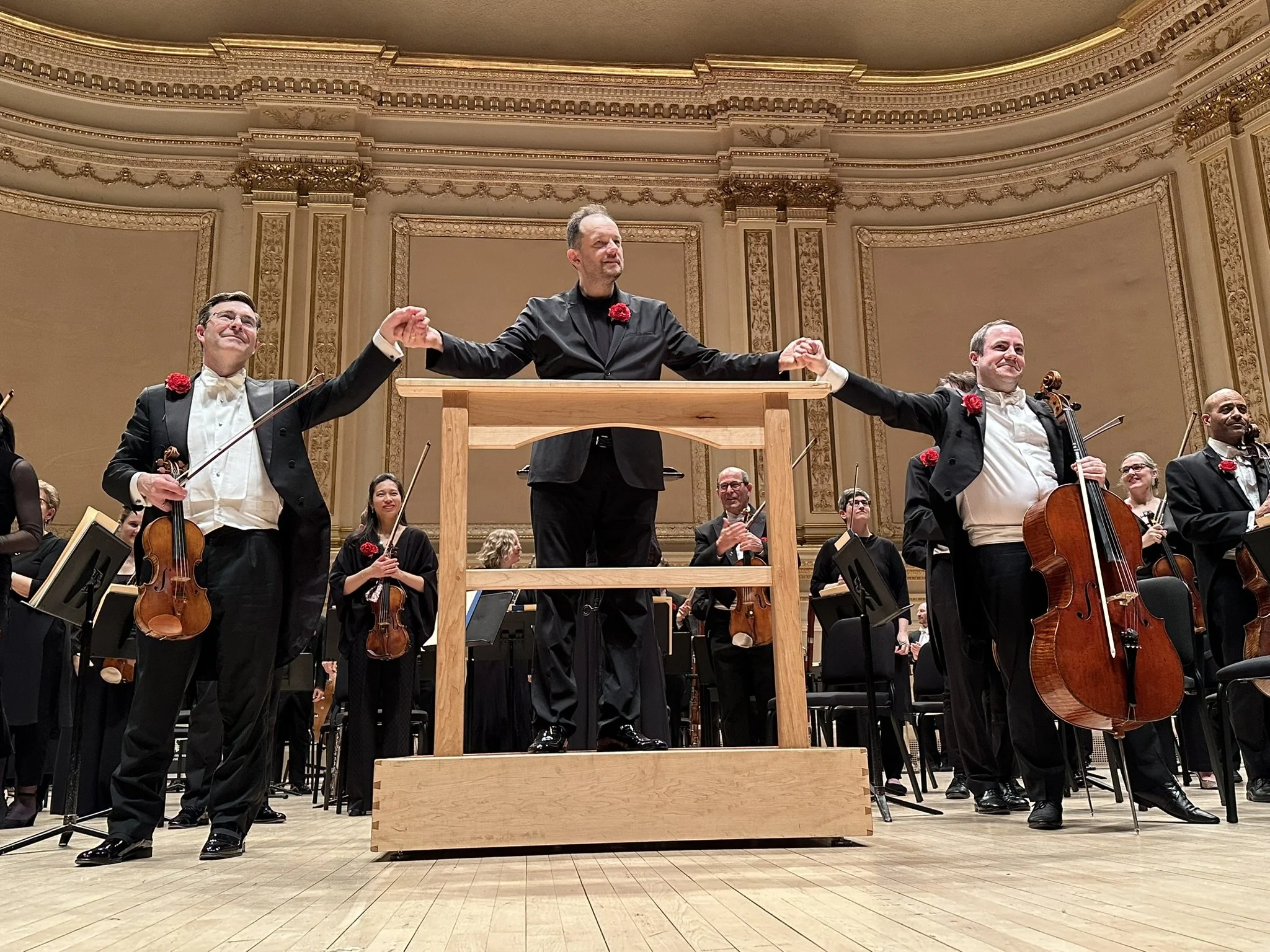
BSO x Nelsons sound
On April 10, the Boston Symphony Orchestra and Andris Nelsons presented their second Carnegie Hall program, moving across contrasting sonic worlds while revealing a unified orchestral identity. Outi Tarkiainen’s Day Night Day opened with delicate, transparent sonorities evoking Arctic light and nature; the music unfolded like a shifting landscape, as if sound itself became scenery. Grieg’s Piano Concerto followed, combining Romantic brilliance with folkloric energy, where piano and orchestra formed a flowing narrative balancing virtuosity and lyrical clarity. The program closed with Sibelius’s Symphony No. 1, a tightly structured, highly focused work whose intensity and coherence generated a strong sense of momentum from beginning to end.
Read More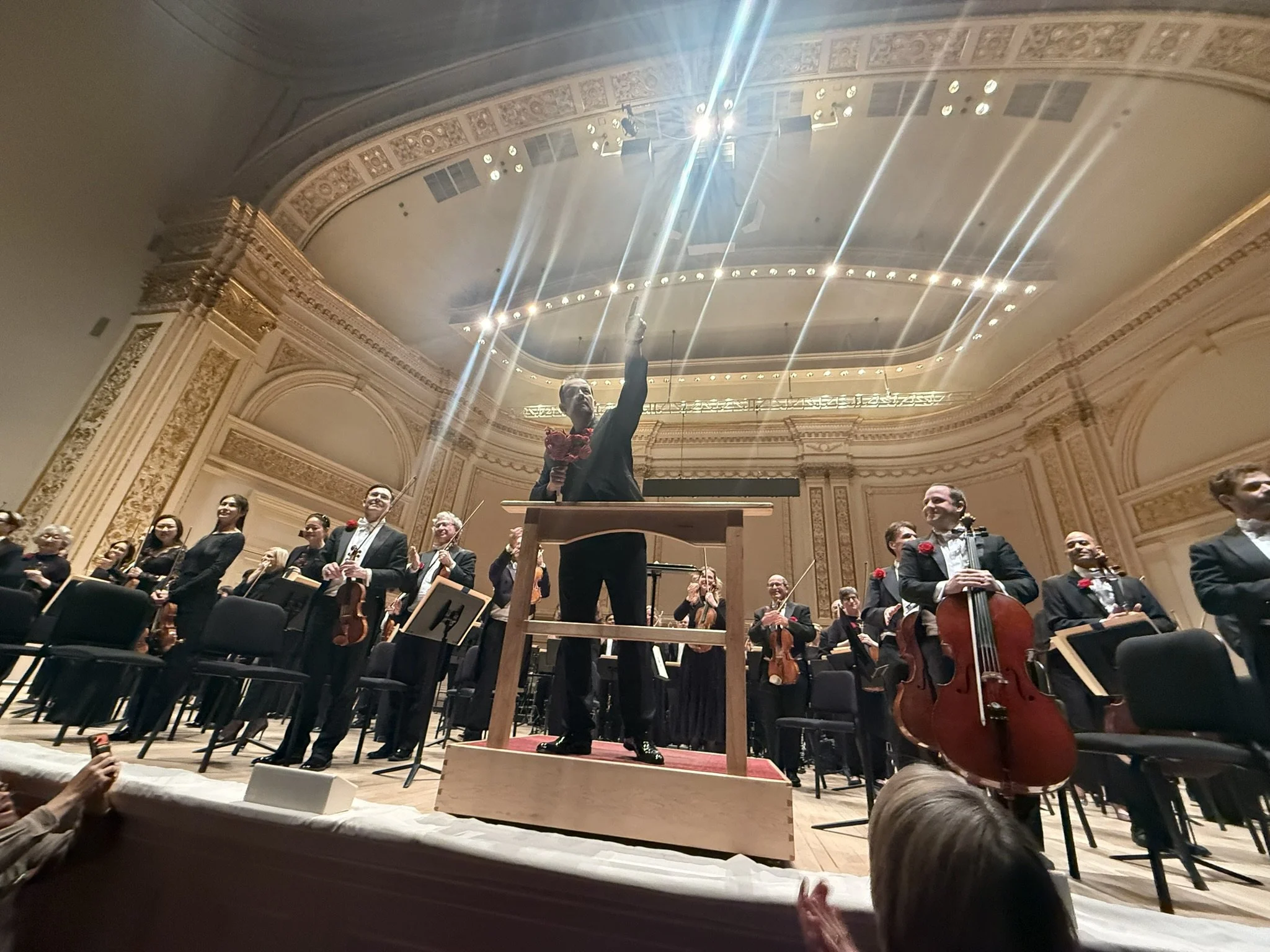
Boston in America at Carnegie Hall
The Boston Symphony Orchestra and Andris Nelsons at Carnegie Hall on 4.9.2026. The concert becomes a study in contrast: from verbal density and rhythmic pressure to expansive lyricism and structural clarity. Even after Nelsons left following the fourth curtain call, the orchestra remained on stage; for a fifth call, he returned, closing the evening in a shared gesture with the audience. The prolonged ovation underscored the sense that Nelsons and the Boston Symphony are central to this musical vision.
Read More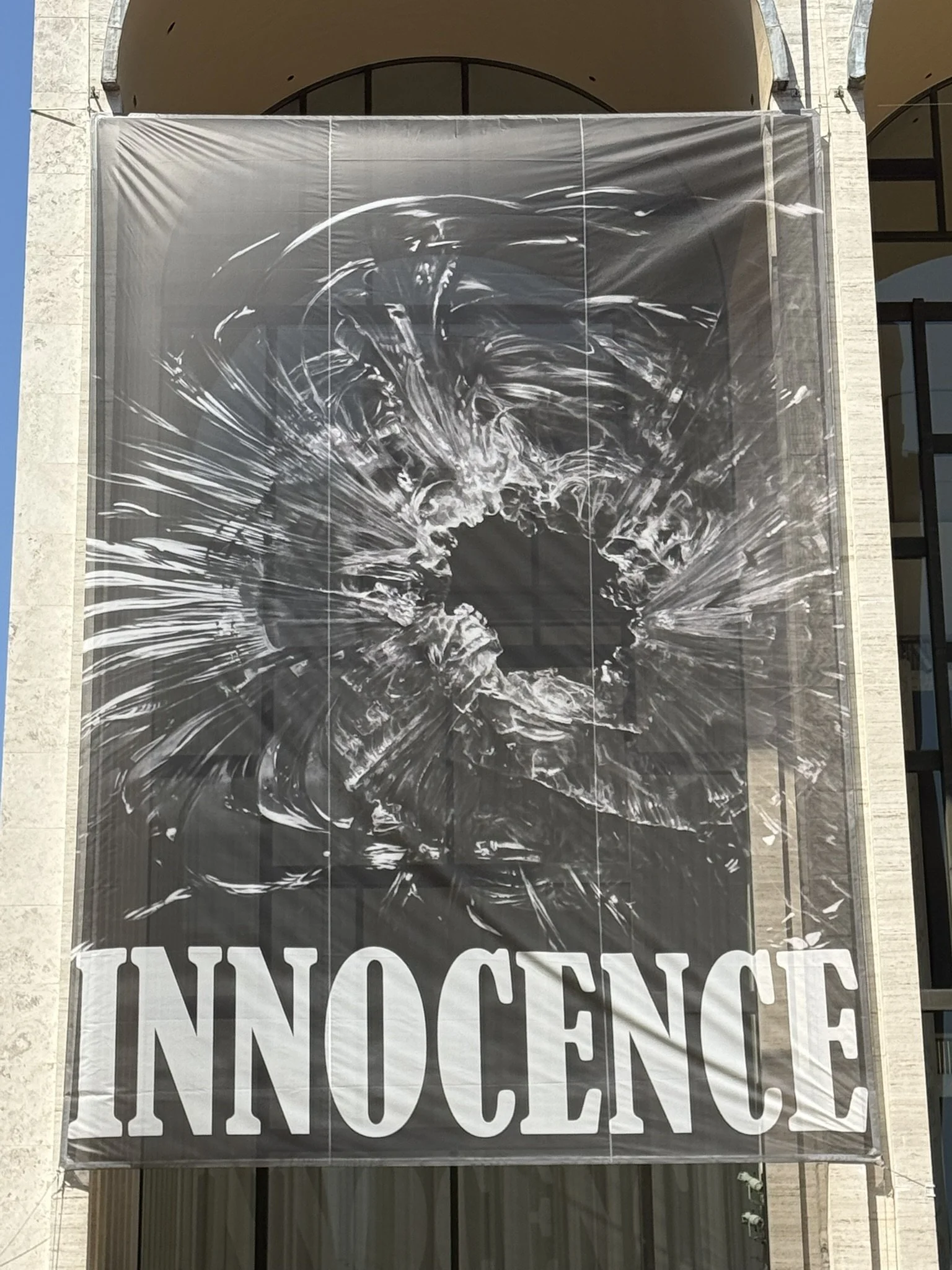
I gazed vaguely at this banner for two or three minutes, but I still didn't really understand it.
Post Spectrum- Innocence out at Met
Post-Spectralism: Innocence. Premiered on April 6 at the Metropolitan Opera. Depicting the journey from condemnation to empathy—exploring how those scarred by trauma navigate the path toward recovery, and how a single act of violence casts ripples that run both wide and deep through human lives—this work stands as Kaija Saariaho’s final magnum opus. Weaving together a distinctive musical idiom with a multilingual perspective, she confronts the senseless violence that continues to plague contemporary society, illustrating within a magnificent sonic fresco how human beings may nonetheless find a way to coexist; it is a Gesamtkunstwerk—a total work of art—unprecedented in the history of the Met.
Read More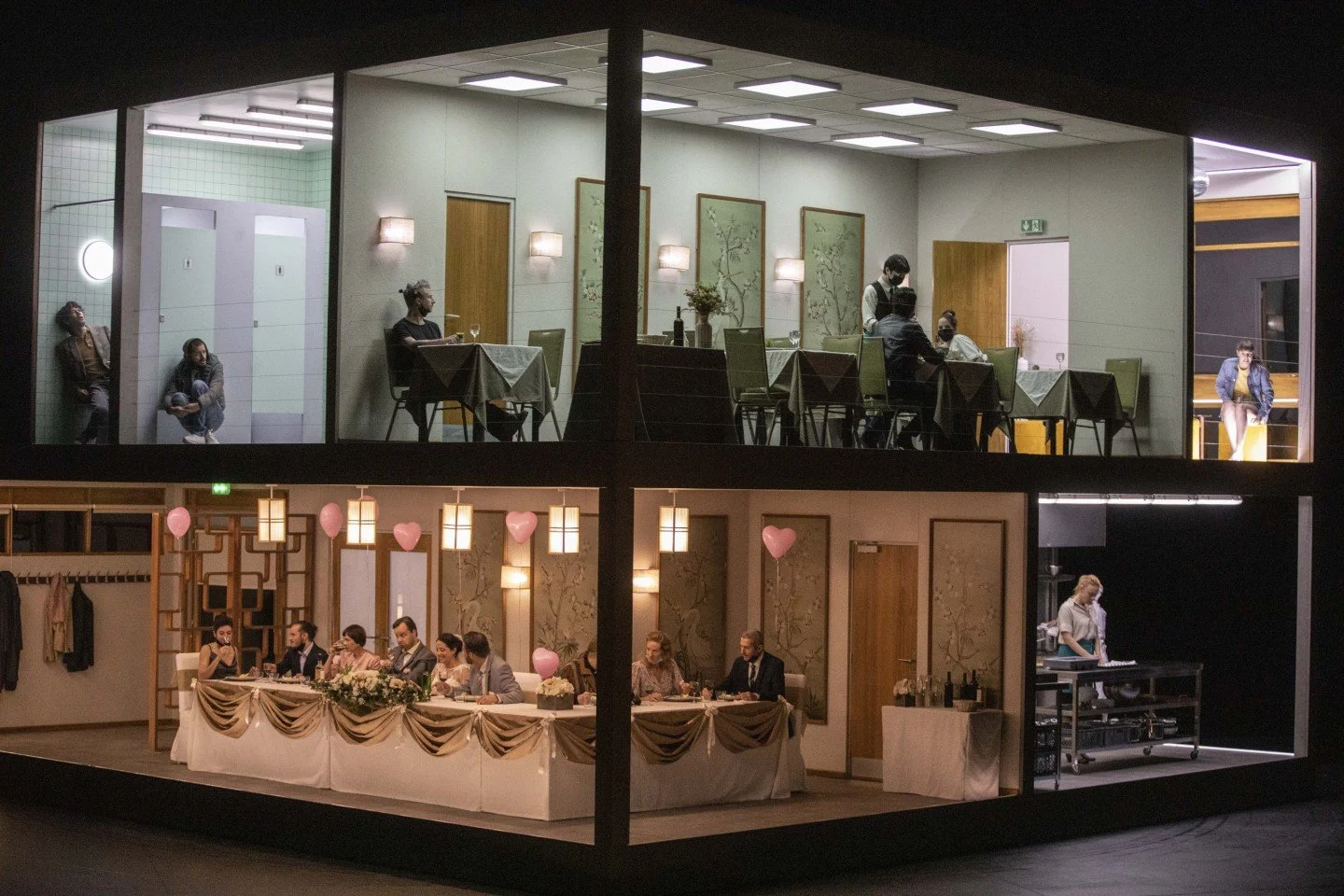
Innocence - an Opera for recovery and healing
Innocence: Regeneration and Healing. Saariaho’s Final Opera Premieres at the Met in April.
It has been nearly three years since the passing of Finnish composer Kaija Saariaho. Her final opera, Innocence (originally titled The Uninvited Guest), is set to premiere at the Metropolitan Opera this April.
—*Innocence* is a story of regeneration and healing—a grand fresco depicting the human spirit. A single horrific event intertwines the lives of thirteen individuals across two generations.
—Kaija Saariaho, 2019
Read More